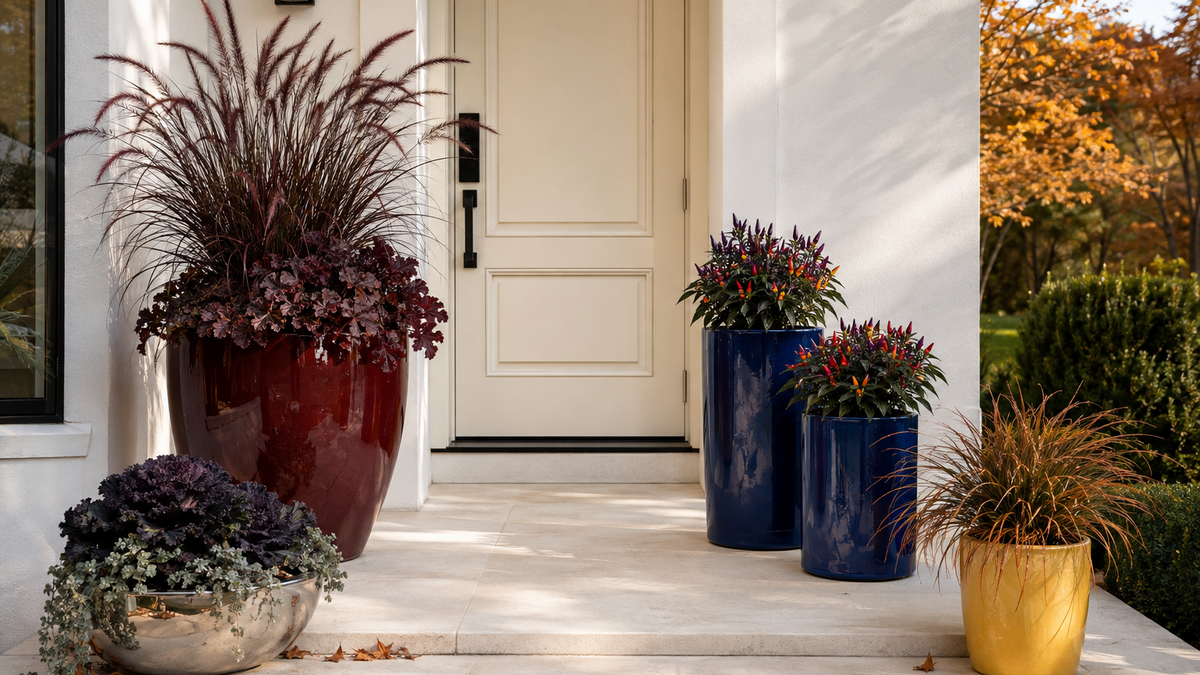
A few pots of mums can make a porch look seasonal, but they rarely make it look distinctive. The most memorable fall front porch planters use stronger shapes, unexpected color pairings, and plants that stay attractive after the first flowers begin to fade.
These 18 ideas trade familiar farmhouse formulas for ornamental peppers, sculptural kale, rippling grasses, polished metal, and saturated Gen Z color. Each composition is designed for a real entrance, with practical attention to drainage, weather exposure, door clearance, and everyday upkeep.
1. Build an Oxblood Planter Tower
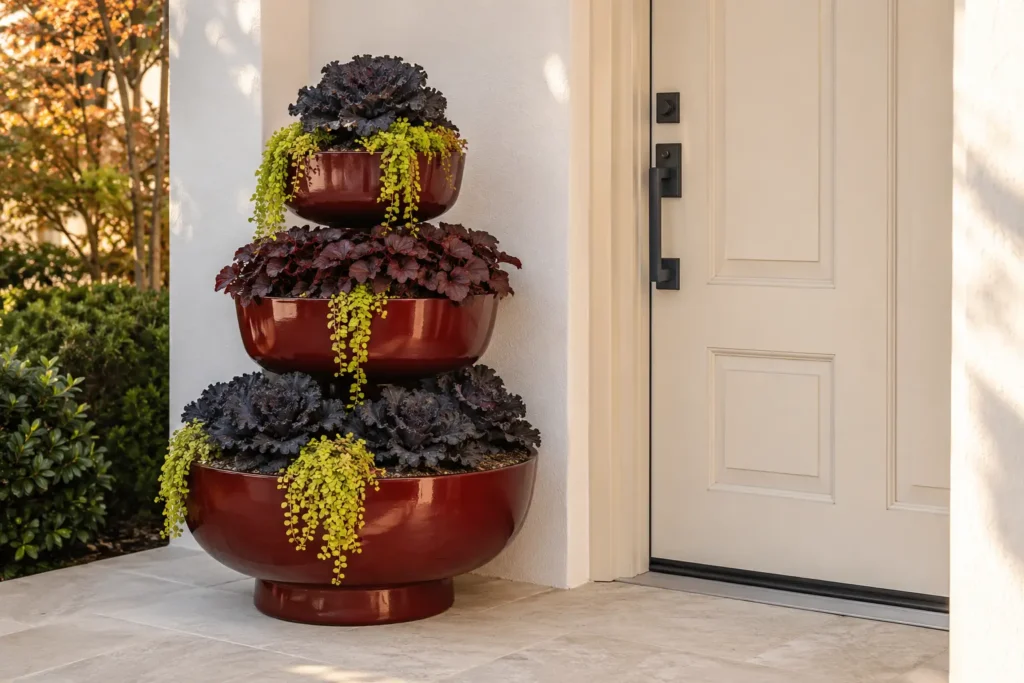
Stack three wide oxblood-red planters in decreasing sizes to create a compact tower. Secure each level around a concealed center rod rather than balancing loose containers. Fill the tiers with black ornamental kale, burgundy heuchera, and controlled trails of chartreuse creeping Jenny.
The glossy, monochromatic containers make the arrangement feel more like outdoor sculpture than a collection of flowerpots. Choose frost-resistant fiberglass or glazed stoneware, and keep the finished tower away from the door’s swing path. A broad, weighted bottom container is essential on an exposed porch.
2. Fill Cobalt Pots With Ornamental Peppers
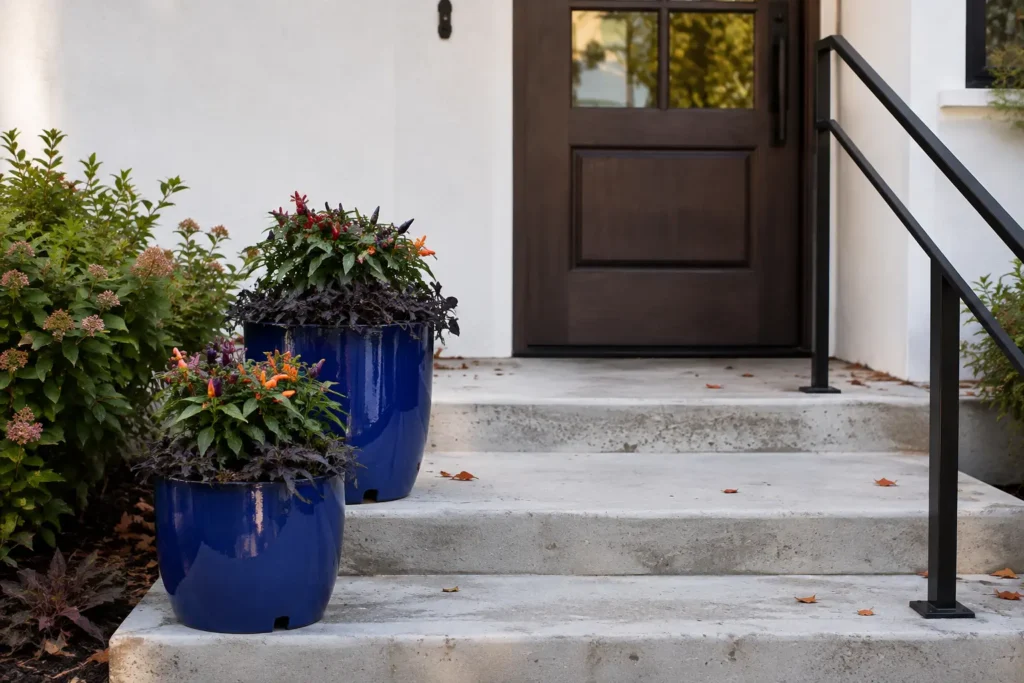
Place two glossy cobalt cylinders at staggered heights and fill them with compact ornamental peppers bearing red, orange, and deep-purple fruit. Dark sweet potato vine can circle the rim in warmer regions, while plum heuchera is a more cold-tolerant substitute.
Blue sits opposite orange on the color wheel, so cobalt makes fiery pepper colors appear particularly vivid. Use one 16- to 18-inch planter and a second pot several inches shorter. That difference creates a deliberate composition while keeping both plants visible from the sidewalk.
3. Float Black Kale in a Chrome Bowl
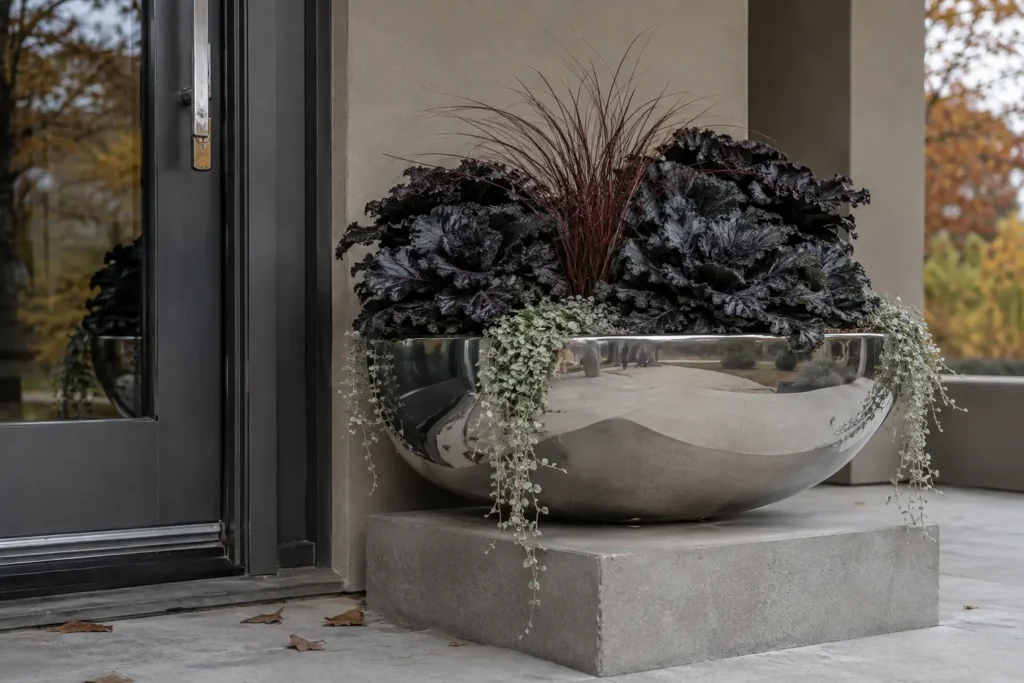
Fill a broad, outdoor-safe polished-steel bowl with ruffled black kale, silver dichondra, and one airy tuft of burgundy grass. Raise it on a low concrete plinth so the reflective finish can be seen instead of disappearing at floor level.
Chrome creates a cool, futuristic contrast with the kale’s organic texture. It will show water spots and fingerprints, so wipe the exterior occasionally with a soft cloth. Choose a bowl with drainage holes or place a draining nursery insert inside it; pooled fall rain can quickly damage roots.
4. Go Moody With a Butter-Yellow Cylinder
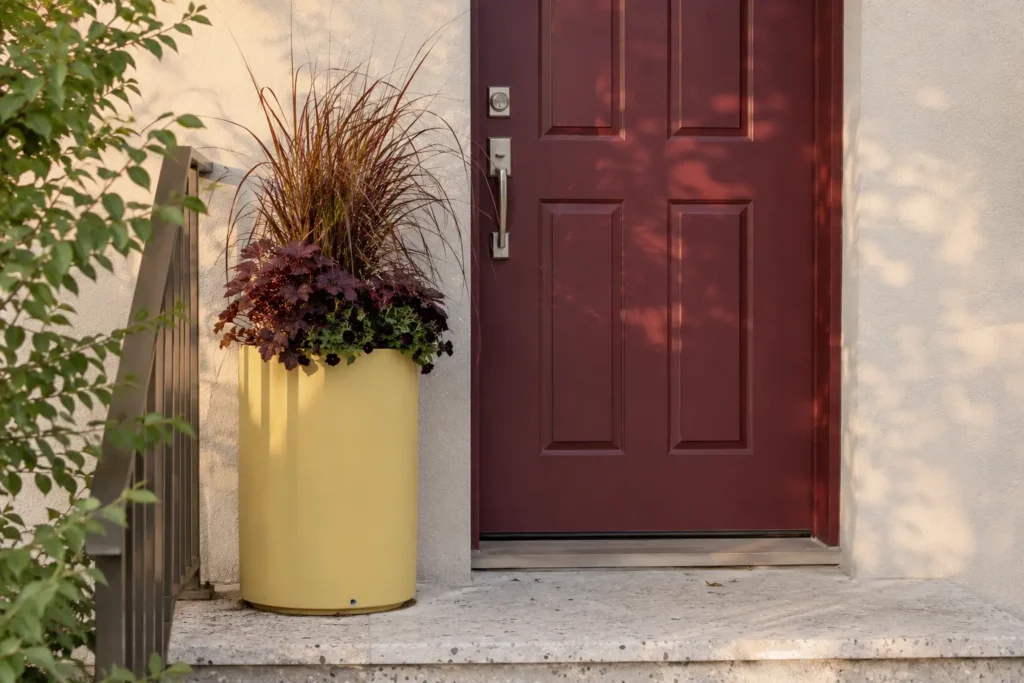
Plant a tall butter-yellow cylinder with bronze sedge, plum heuchera, and small black or deep-purple violas. Allow the sedge to lean naturally rather than trimming it into a stiff, upright tuft.
Butter yellow feels youthful, but the darker foliage keeps it from looking like a spring display. A narrow 14- to 16-inch-wide container suits a small stoop because it provides height without taking over the walking area. Leave at least 36 inches of clear passage wherever local space allows, especially near steps and door hardware.
5. Raise Plants on a Tiled Mocha Plinth
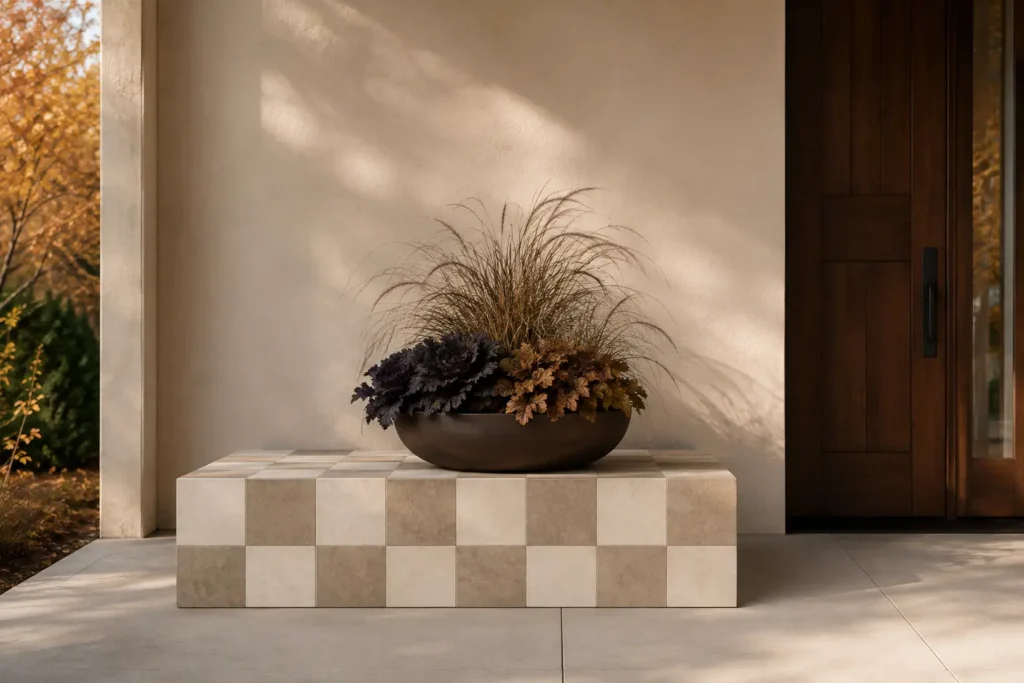
Cover a low outdoor plinth with large cream-and-mocha checkerboard tiles, then top it with a simple espresso-brown bowl. Plant the bowl with dark ornamental cabbage, caramel heuchera, and soft bronze grass.
Shifting the pattern from the planter to its base makes checkerboard feel architectural rather than crafty. Use frost-rated porcelain tile and exterior mortar; indoor peel-and-stick products tend to lift when exposed to moisture and temperature changes. The plinth should remain low enough that the planting doesn’t block a porch window or door-side sight line.
6. Grow a Purple Pepper Forest
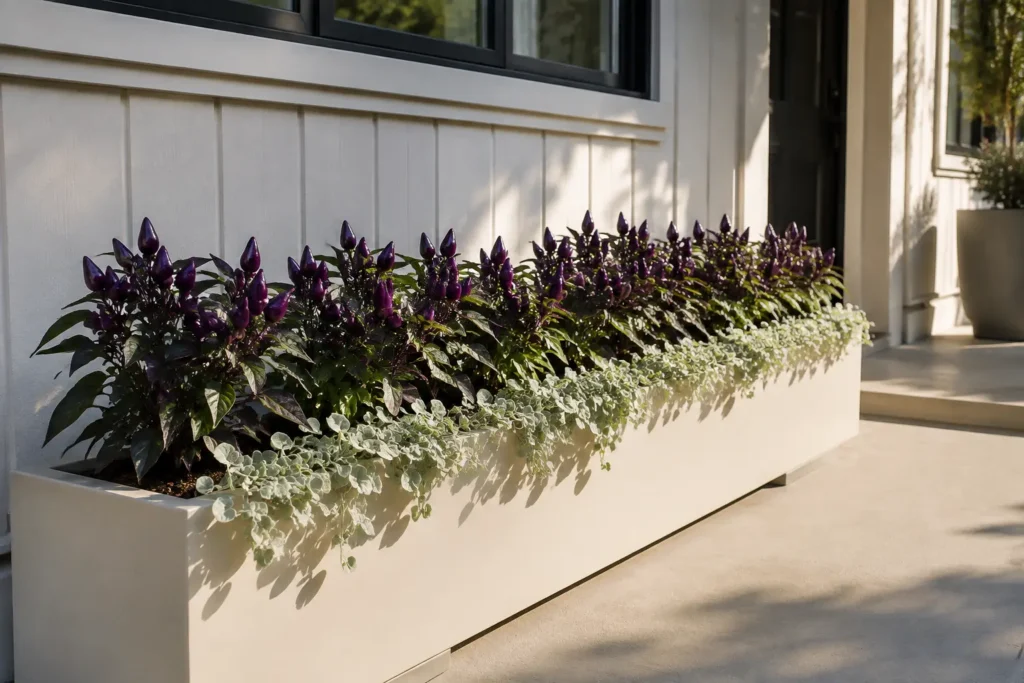
Fill a long matte-cream trough with a repeated row of compact purple ornamental pepper plants. Keep the composition simple by adding silver dichondra only along the front edge, where it can soften the container without hiding the glossy fruit.
Repeating one unusual plant has more visual impact than mixing several unrelated flowers. Check the mature width before planting, since overcrowded peppers are more vulnerable to mildew. These plants need strong light and protection from early frost, making the arrangement best for a sunny porch during the first part of fall.
7. Let One Giant Burgundy Grass Take Over
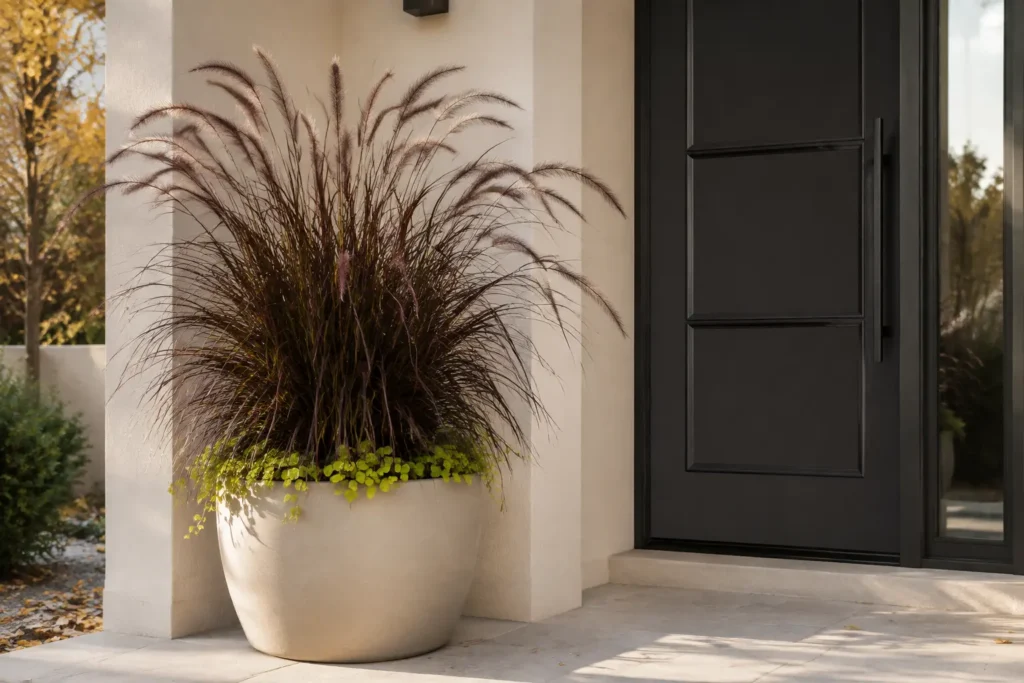
Place one mature burgundy fountain grass in a matte-cream planter approximately 18 to 22 inches wide. Finish the base with a narrow collar of chartreuse foliage rather than packing the pot with extra flowers.
A single oversized plant creates a cleaner focal point than several undersized containers. The grass catches low autumn light and moves in the breeze, so it changes character throughout the day. Fountain grass can become top-heavy when wet; use a substantial frost-resistant vessel and add weight below the planting insert if the porch is windy.
8. Shape a Plum-and-Lime Foliage Cloud
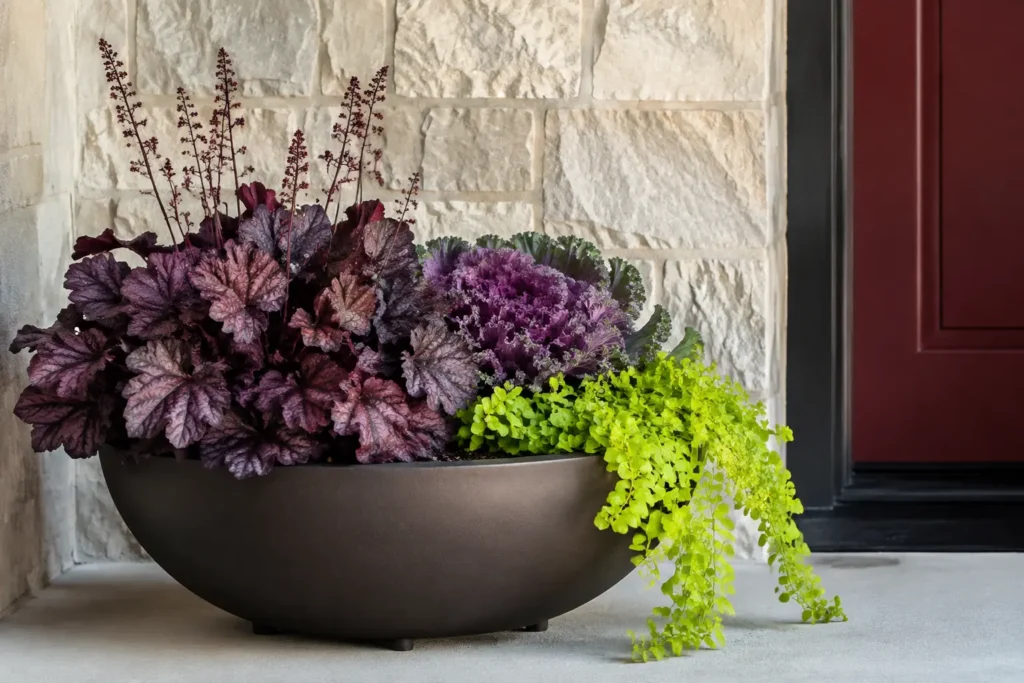
Combine plum heuchera, purple ornamental kale, and chartreuse creeping Jenny in a low, wide planter. Build an irregular mound, allowing the bright foliage to spill over one side instead of forming an even ring.
The off-center cascade gives the planter a looser, more editorial silhouette, while the limited palette keeps it controlled. Turn the container every week if it receives light from only one direction. Creeping Jenny may spread beyond the pot in some climates, so trim the stems or substitute a less vigorous chartreuse spiller where necessary.
9. Stretch Out a Stainless-Steel Planter Bench
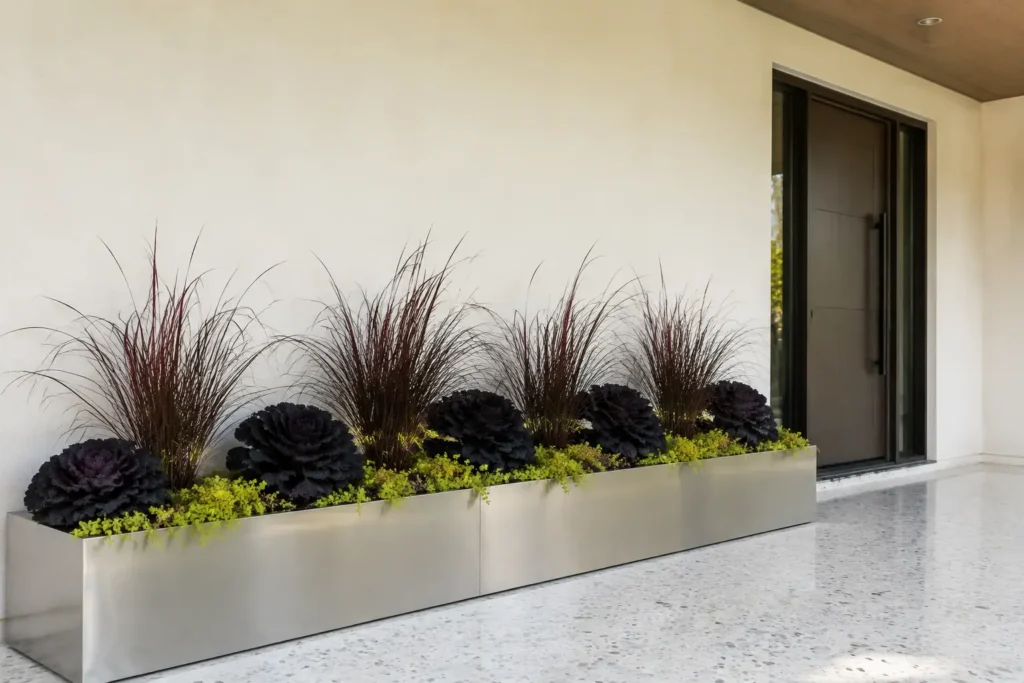
Choose a long, low stainless-steel trough with the proportions of a narrow bench. Create a continuous planting band using black kale, burgundy grass, and acid-green lysimachia, then position it against an empty porch wall.
The horizontal shape grounds a tall façade and looks distinctly different from ordinary upright pots. Stainless steel can heat up in direct afternoon sun, so use an insulated nursery insert and leave a small air gap between it and the metal shell. This arrangement is most comfortable on a covered or east-facing porch where the roots won’t overheat.
10. Install an Oxblood Wave Window Box
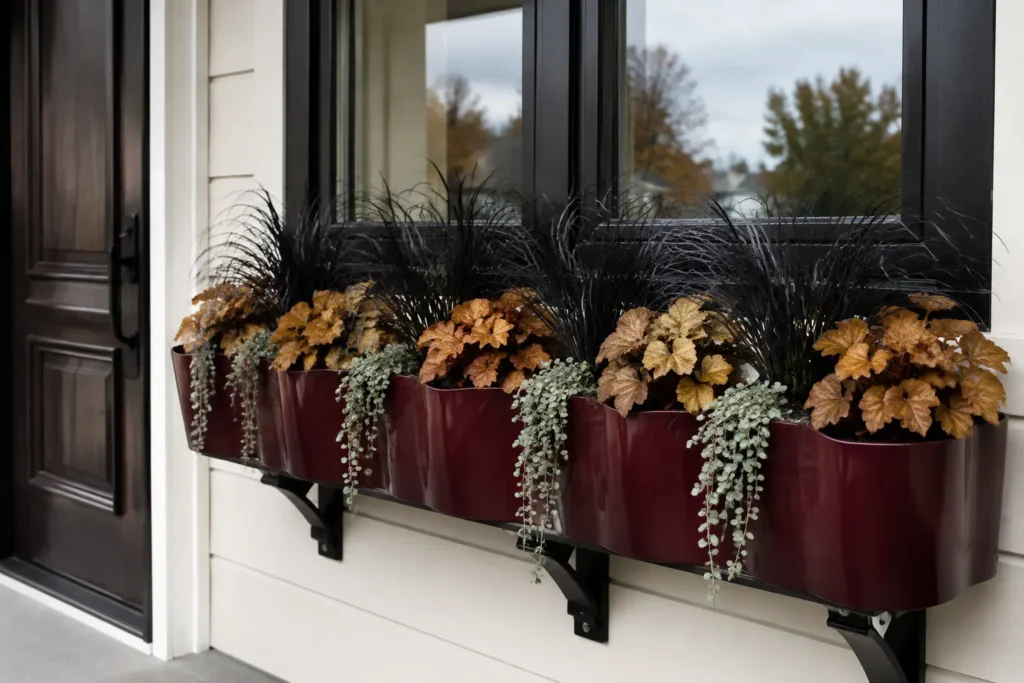
Mount an outdoor-rated oxblood window box with a softly scalloped or wavy upper edge. Repeat black mondo grass, caramel heuchera, and trailing silver foliage across its length, allowing each variety to form a visible band.
The curved edge supplies playful Gen Z character, while repetition prevents the planting from looking busy. Secure the box to framing or use brackets rated for its full wet-soil weight. A planter can become surprisingly heavy after rain, so lightweight potting mix and unobstructed drainage matter more than decorative filler.
11. Sculpt a Giant Plum Foliage Sphere
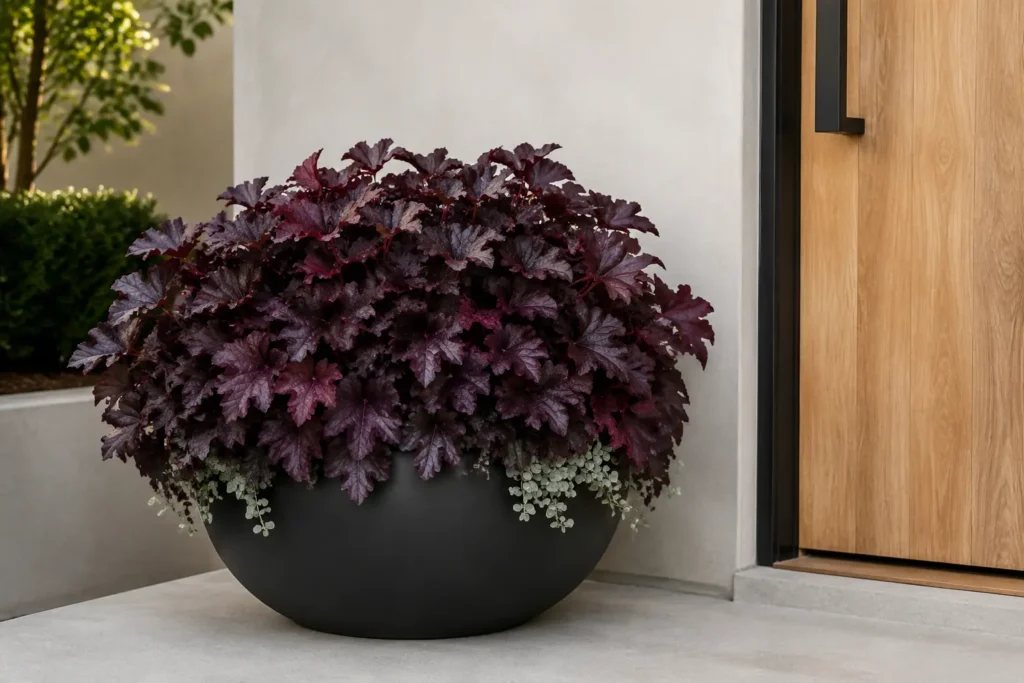
Fill a rounded espresso or matte-black planter densely with one plum heuchera variety. Allow the leaves to form a natural dome, then add only a small amount of silver dichondra around the lower edge.
Using one plant in volume creates a stronger silhouette than a mixed collection of small specimens. Don’t trim heuchera into an exact ball; its overlapping leaves look better with slight variation. Remove damaged foliage at the base and water beneath the leaves when possible, since constantly wet crowns can encourage rot in cool weather.
12. Pair Espresso With Pistachio
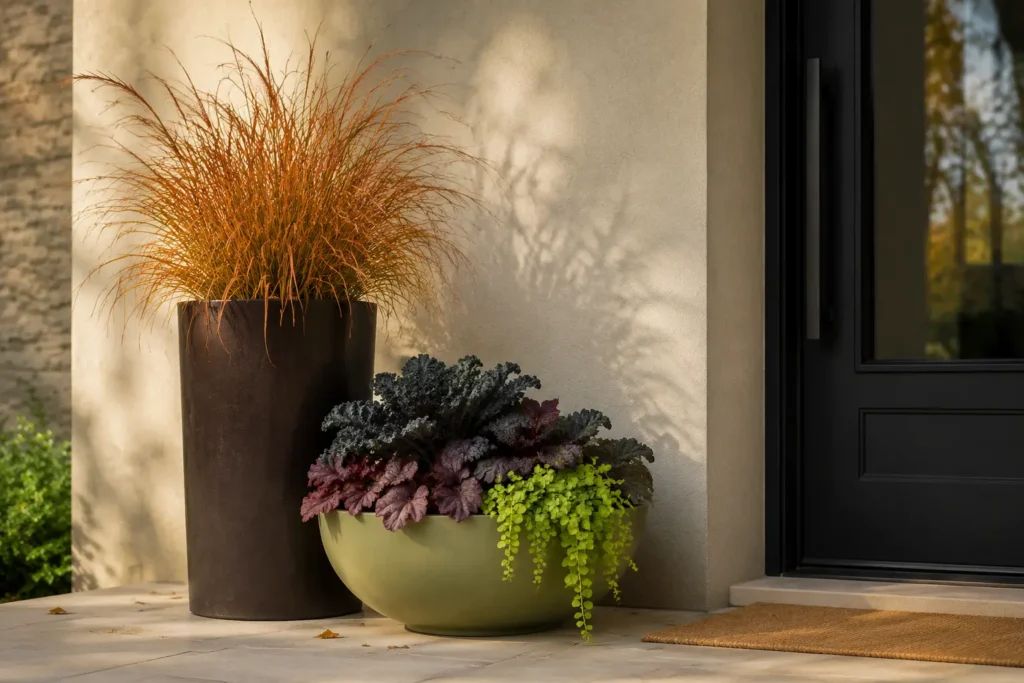
Group one tall espresso-brown cylinder with a lower pistachio-green bowl. Fill the taller pot with loose rust-colored sedge, then plant the bowl with black kale, plum heuchera, and a controlled chartreuse spiller.
The unequal heights create a layered arrangement without requiring many containers. Espresso provides visual weight, while pistachio lifts the darker fall palette. Keep 4 to 6 inches between the pots so each outline remains visible. When containers touch, the grouping can read as storage rather than intentional styling.
13. Plant a Gothic Edible Trough
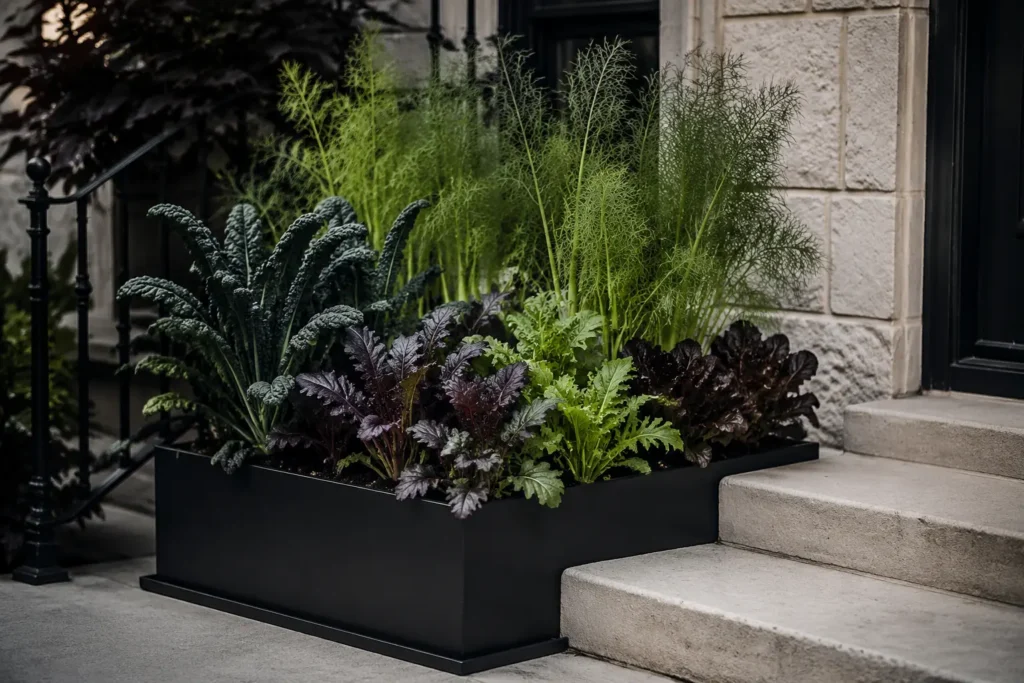
Fill a matte-black trough with Tuscan kale, purple mustard greens, bronze fennel, and dark-leaf lettuce. Position the tallest fennel toward the back and keep harvestable greens within easy reach along the front.
The near-black foliage gives the planter a moody fall identity while supplying ingredients for the kitchen. Most edible greens need at least four to six hours of light, although they tolerate cooler temperatures better than many flowering annuals. Use food-safe soil and avoid chemically treated decorative moss if you plan to harvest the leaves.
14. Use a Ribbed Chrome Cylinder
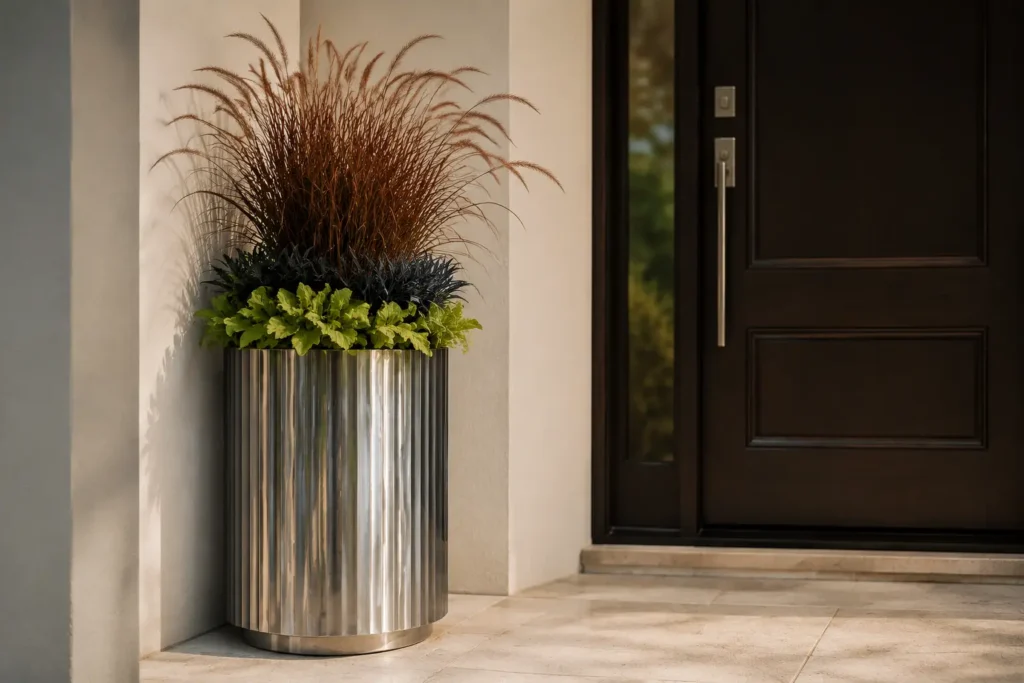
Plant a tall ribbed stainless-steel cylinder with rust-colored sedge, black mondo grass, and a low collar of chartreuse heuchera. Keep the grasses loose and asymmetrical so the shiny container doesn’t feel too formal.
The vertical ribs break up reflections and make minor water marks less obvious than they would be on mirror-flat metal. Add a weighted insert at the bottom, particularly if the cylinder is taller than 24 inches. Place it under partial cover when possible, since constant rain will require more frequent cleaning and careful drainage.
15. Commit to an All-Burgundy Planter
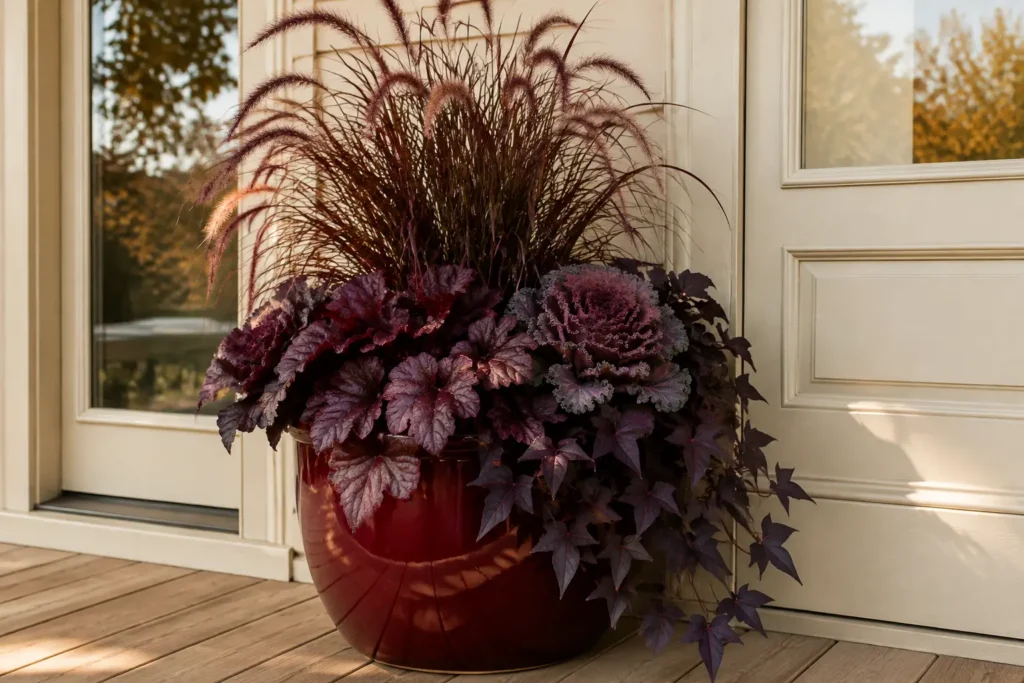
Layer burgundy fountain grass, plum heuchera, purple ornamental cabbage, and dark trailing sweet potato vine inside a deep oxblood vessel. The colors should remain within one family, but the foliage forms need to be sharply different.
Narrow grass blades, broad cabbage rosettes, and trailing leaves prevent a tonal planting from appearing flat. Dark arrangements look richest in bright indirect light; in a deeply shaded entry, they can collapse into one indistinct mass. A cream wall or pale front door supplies enough contrast to preserve the individual shapes.
16. Build a Modular Planter Grid
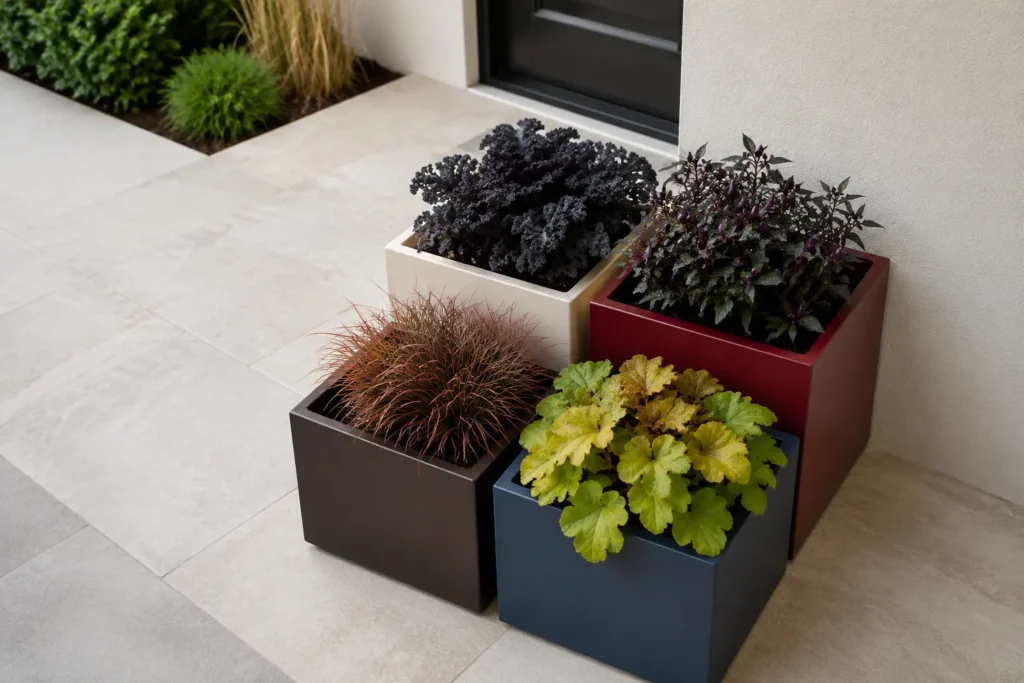
Arrange four low cube planters in a compact two-by-two grid, using cream, oxblood, espresso, and muted cobalt containers. Give each cube one distinct plant: black kale, purple peppers, bronze sedge, or lime heuchera.
The repeated container shape unifies four different colors and plant silhouettes. Leave approximately 1 to 2 inches between the cubes so the grid remains clear, and use matching 12- to 14-inch pots for a balanced footprint. The modules can also be separated into a straight line when a narrow porch can’t accommodate a square arrangement.
17. Create a Smoked-Acrylic Planter Illusion
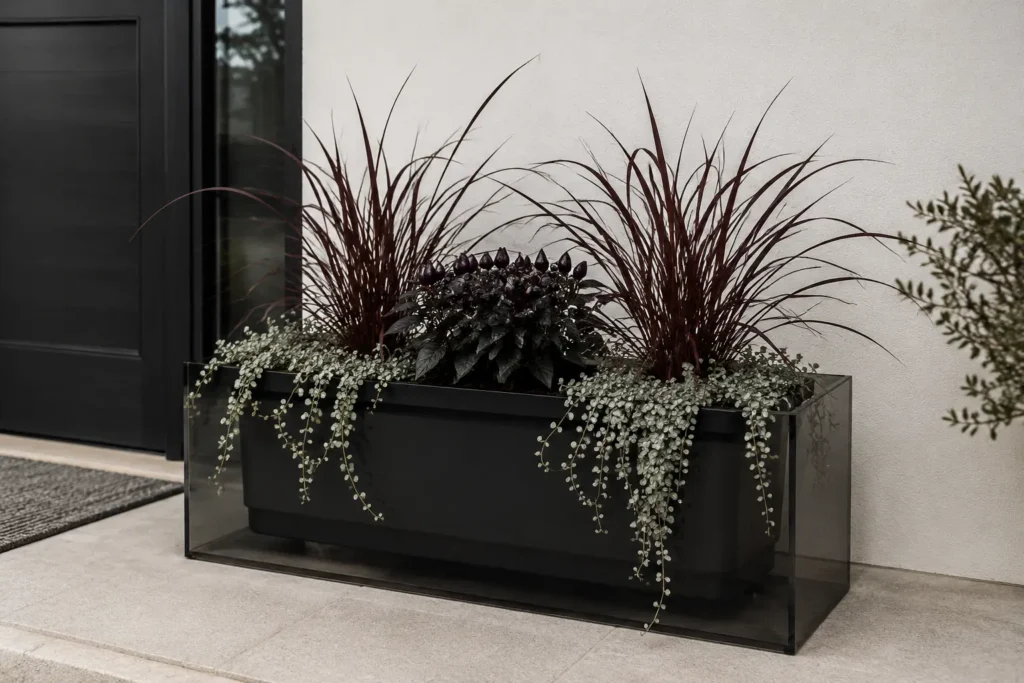
Place a draining black nursery pot inside an outdoor-rated smoked-acrylic planter shell. Fill the inner pot with burgundy grass, a compact black ornamental pepper, and silver dichondra so the foliage appears to emerge from a dark translucent base.
The hidden insert keeps soil and muddy water from clouding the acrylic. Smoked material looks especially striking against light siding, where its edges remain visible. Acrylic scratches more readily than ceramic or metal, so clean it with a soft microfiber cloth and avoid placing it where shoes, packages, or pets will repeatedly brush against it.
18. Take Fall Front Porch Planters Up the Wall
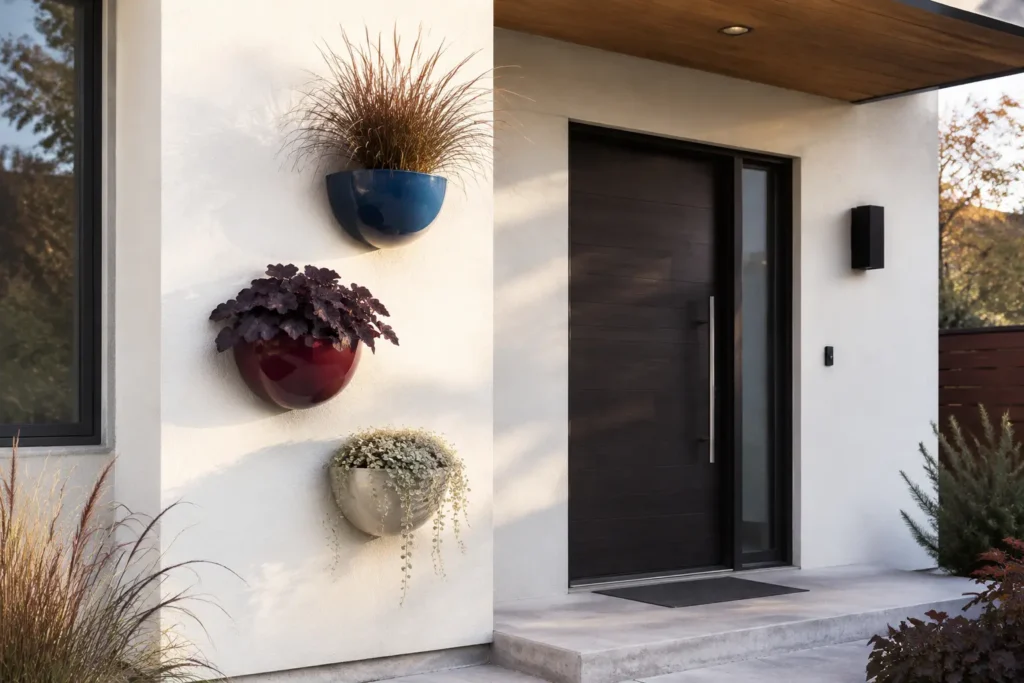
Install three weather-rated wall planters in cream, oxblood, and muted cobalt beside the front door. Fill them separately with silver dichondra, plum heuchera, and rust-colored sedge, leaving enough wall visible for every vessel to read as an individual shape.
The vertical arrangement preserves floor space and creates a strong view from the sidewalk. Attach the planters to suitable framing or masonry anchors rather than relying on lightweight adhesive strips outdoors. Renters can recreate the composition on a freestanding outdoor ladder frame, provided it has a wide, weighted base and cannot tip.