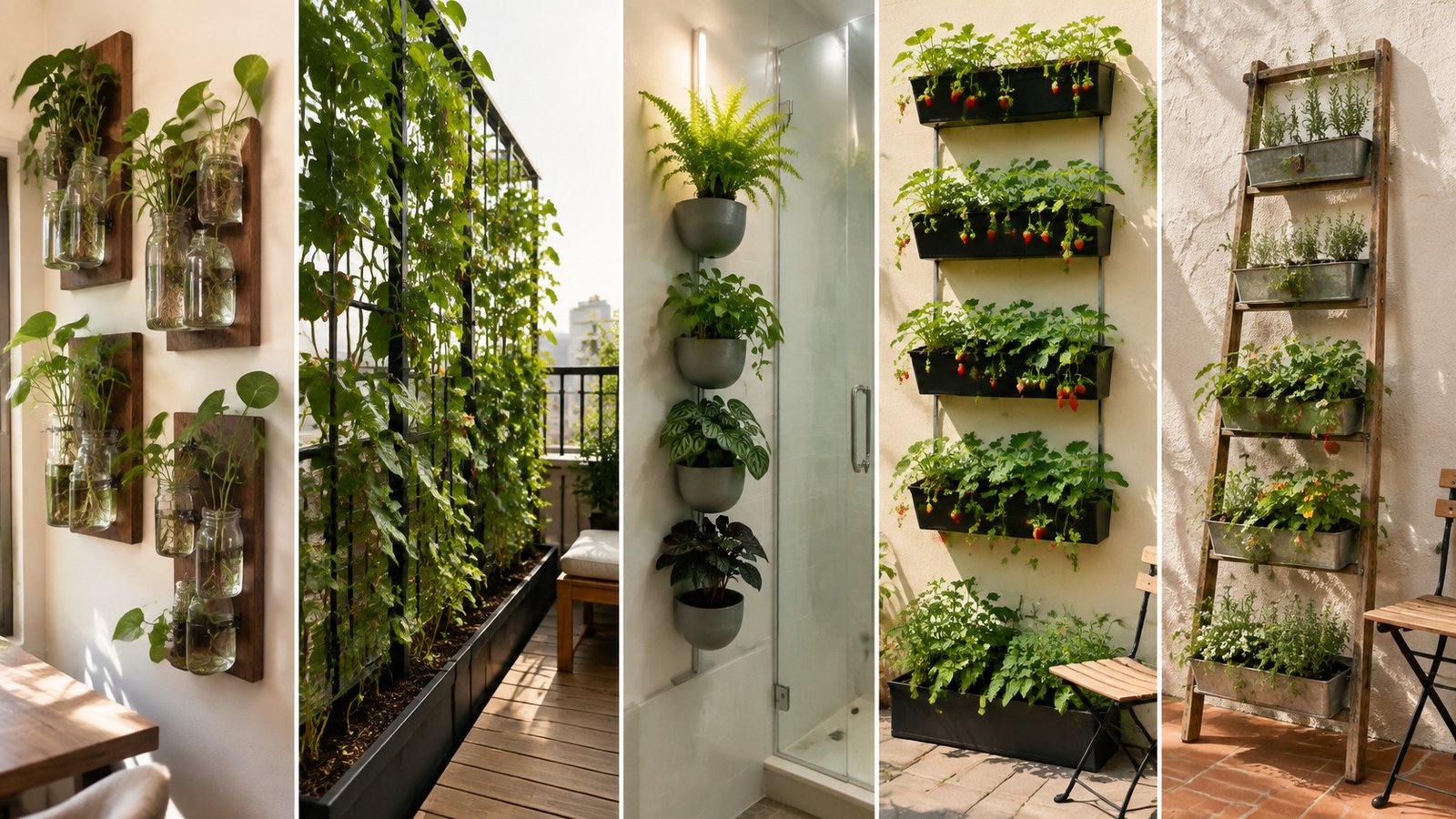
In a small home, plants often begin on a windowsill and slowly spread across counters, tables, and valuable floor space. Before long, you’re stepping around pots, moving leaves to open curtains, and searching for brighter places to keep everything alive. The solution isn’t necessarily fewer plants—it’s using the vertical surfaces your home already has.
These vertical garden ideas for small spaces make use of walls, railings, windows, fences, ceilings, and narrow outdoor passages. Some create privacy, others grow herbs and vegetables, and several work without permanent construction. Each idea also considers the less glamorous details that matter in real life: wet soil, wall protection, mature plant size, sunlight, safe mounting, and everyday maintenance. The result is greenery that feels integrated into your home instead of squeezed into whatever space remains.
1. Hang a Living Room Divider
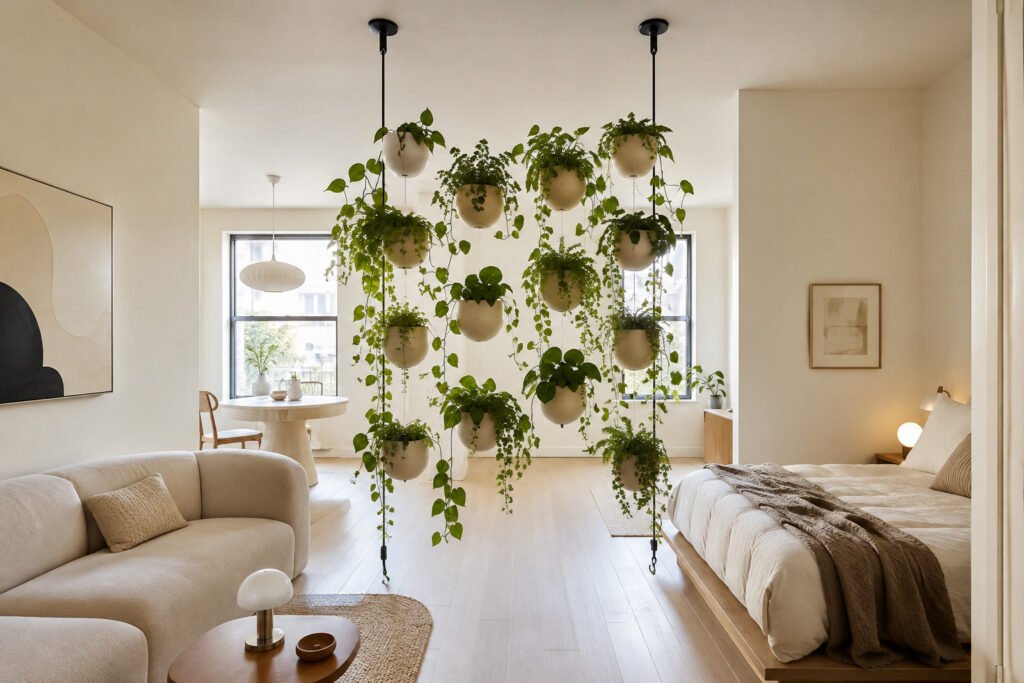
Replace a bulky folding screen with lightweight planters suspended from ceiling cables or held by tension poles. Arrange small hoyas, peperomias, heartleaf philodendrons, and ferns at varied heights so the foliage provides privacy without blocking all the light.
Leave the lowest 30 to 36 inches open to keep the divider visually light and preserve clear sight lines across the room. Use removable nursery pots inside sealed decorative containers to simplify watering. Because both sides remain visible, choose planters with clean backs and concealed drainage rather than unfinished hanging baskets.
2. Frame the Window With Plants
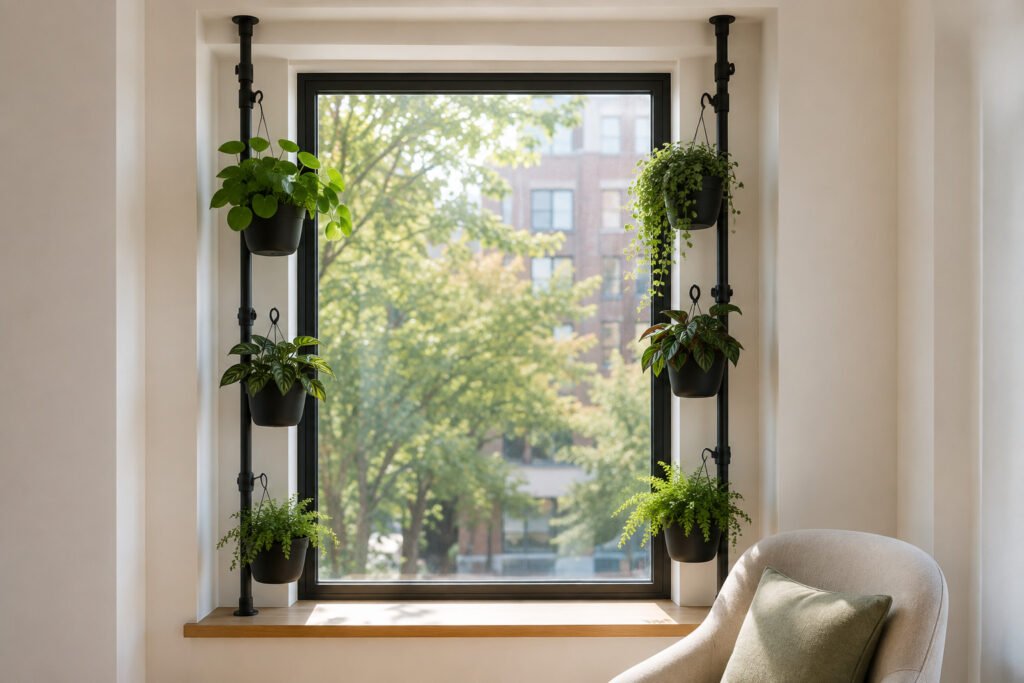
Turn a deep window reveal into a miniature garden by fitting one or two strong tension rods inside the opening. Hang small reservoir planters at staggered heights, keeping the center open so you can still enjoy daylight, airflow, and the outdoor view.
Match the plants to the window’s direction. Herbs and succulents can handle strong southern exposure, while pilea, peperomia, and small ferns prefer softer eastern light. Always check the rod’s weight rating and include wet soil in your calculation. A plant-filled container is considerably heavier after watering than it appears in the store.
3. Grow Herbs Off the Counter
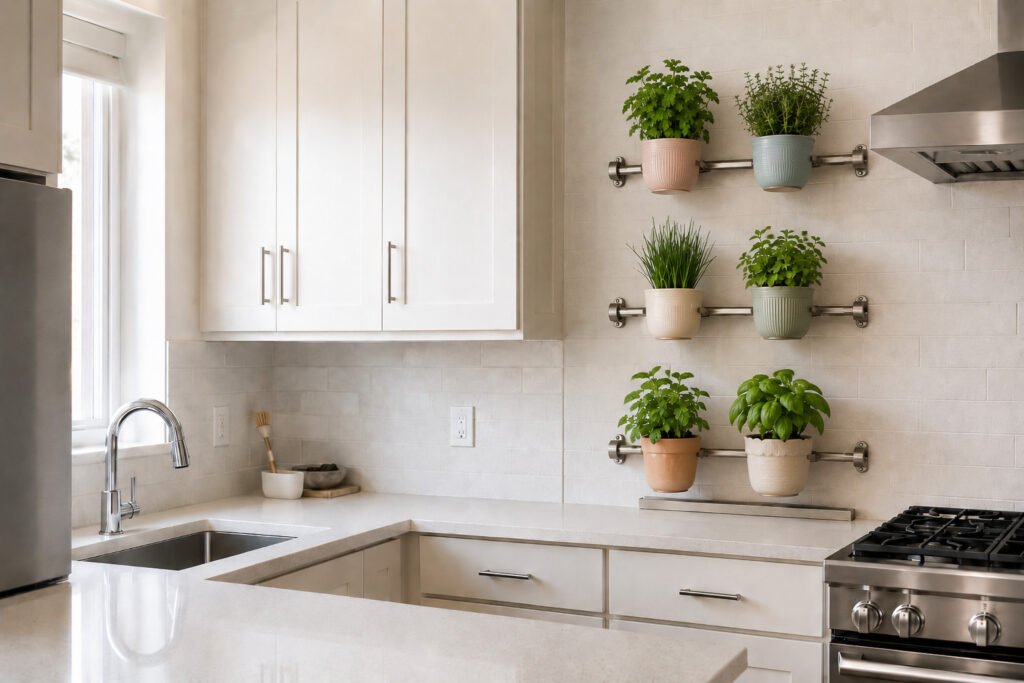
Mount shallow herb pots on stainless-steel rails beside your kitchen prep area. Parsley, thyme, chives, oregano, mint, and dwarf basil stay close enough for cooking without occupying the counter or crowding a windowsill.
Choose matching four- to six-inch containers in terracotta, matte cream, or black for a clean, organized appearance. Leave approximately 10 to 12 inches between rows so the herbs have room to mature. Avoid placing the garden directly behind the range, where heat and cooking grease can damage leaves. A narrow drip channel beneath the lowest row will protect the backsplash and counter.
4. Plant a Balcony Salad Wall
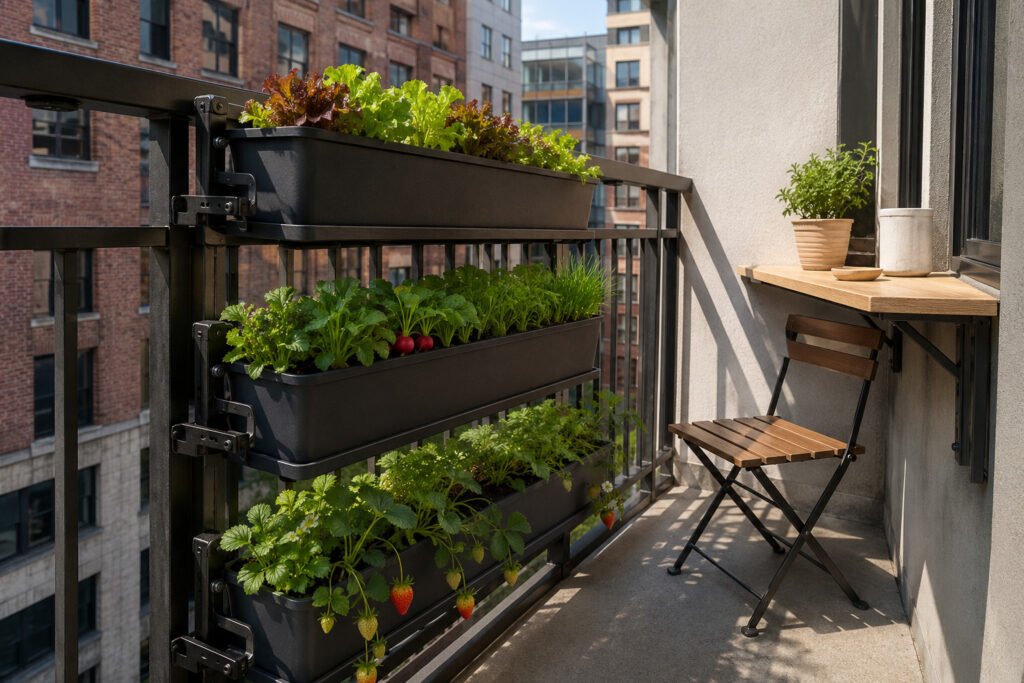
Attach two or three levels of inward-facing planters to a sunny balcony railing. Fill them with loose-leaf lettuce, arugula, baby kale, radishes, chives, and trailing strawberries for a compact garden that looks abundant and produces something useful.
Group crops with similar watering needs in the same container. Use lightweight potting mix and brackets rated for the combined weight of wet soil, plants, and planters. Nothing should project over the exterior of the balcony. Preserve a walkway of roughly 30 inches so the space remains comfortable once the plants reach their mature size.
5. Add a Floor-to-Ceiling Plant Pole
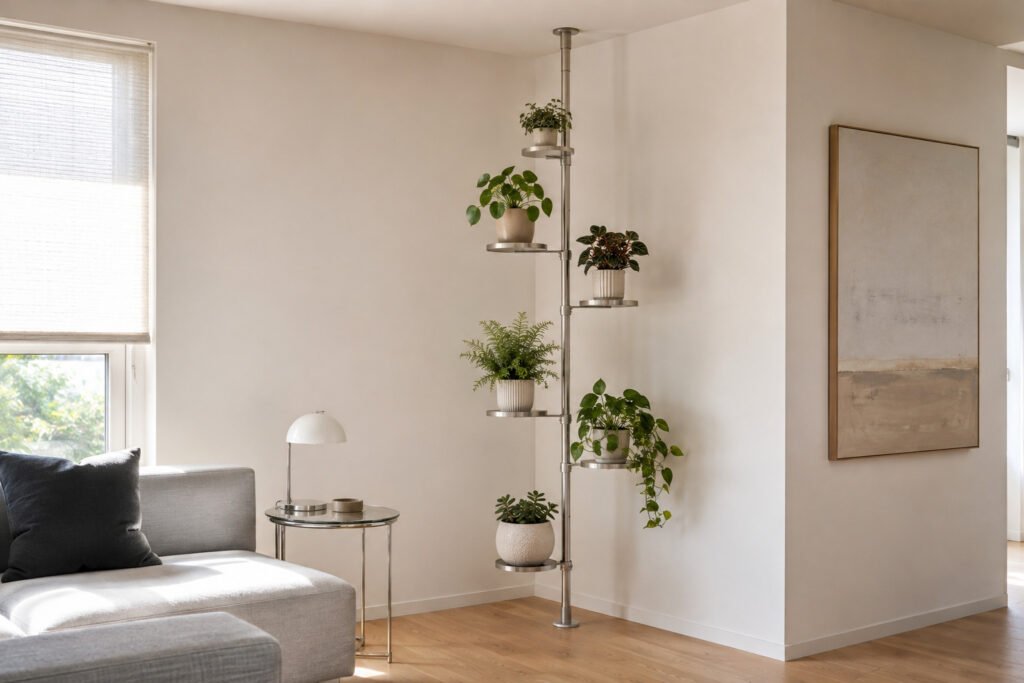
A tension-mounted plant pole can hold several pots while taking up about as much floor space as one planter. Select a metal pole with adjustable platforms and arrange compact plants from bottom to top, placing heavier containers lower for better stability.
Try small ferns, pilea, peperomia, succulents, and a trailing pothos at the highest level. Position the pole near useful natural light but outside the swing of doors and cabinet fronts. This is one of the most practical options for renters, although it must be tightened correctly and kept within the manufacturer’s weight limit.
6. Train One Vine Across the Wall
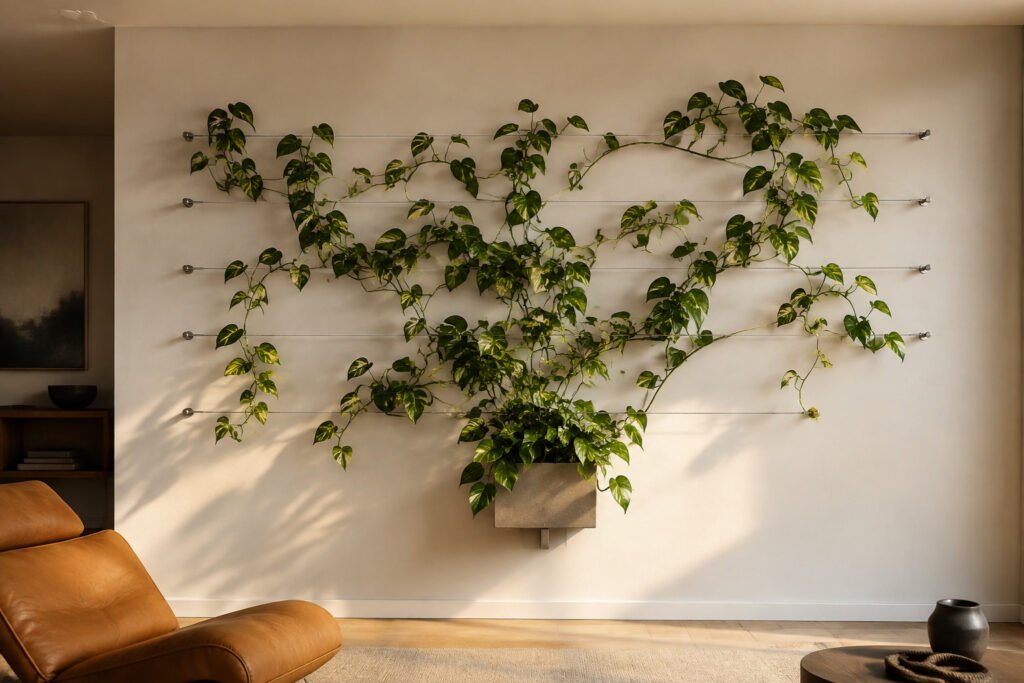
Instead of hanging many separate pots, let one healthy climbing plant cover a larger area. Fix thin stainless-steel cables or a powder-coated grid a few inches from the wall, then guide a hoya, satin pothos, or mini monstera across it with soft plant ties.
Shape the vines into a loose fan or asymmetrical arch. Leave visible wall between the stems so the result feels deliberate rather than overgrown. Regular pruning is essential, especially near outlets, vents, and light fixtures. One narrow container at the base can eventually create the visual impact of a much larger planted display.
7. Make the Entryway a Living Wall
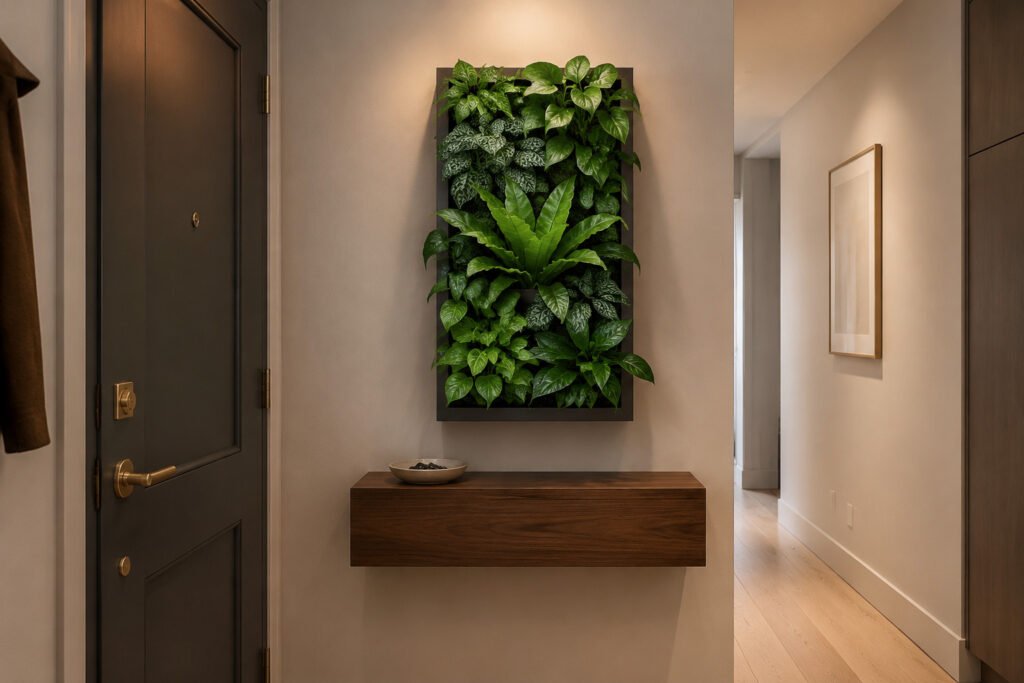
A compact self-watering panel can give a narrow entrance a lush focal point without adding furniture. Choose a framed system measuring approximately 24 to 36 inches wide, with removable planting cells and a lower reservoir.
Build the arrangement from a limited plant palette such as pothos, fittonia, bird’s-nest fern, and compact philodendron. Repeating a few leaf shapes looks more polished than filling every cell with something different. Add waterproof backing even if the system claims to be leak-resistant. The panel should also remain shallow enough that coats, bags, and passing shoulders won’t brush against damp leaves.
8. Green the Shower Wall
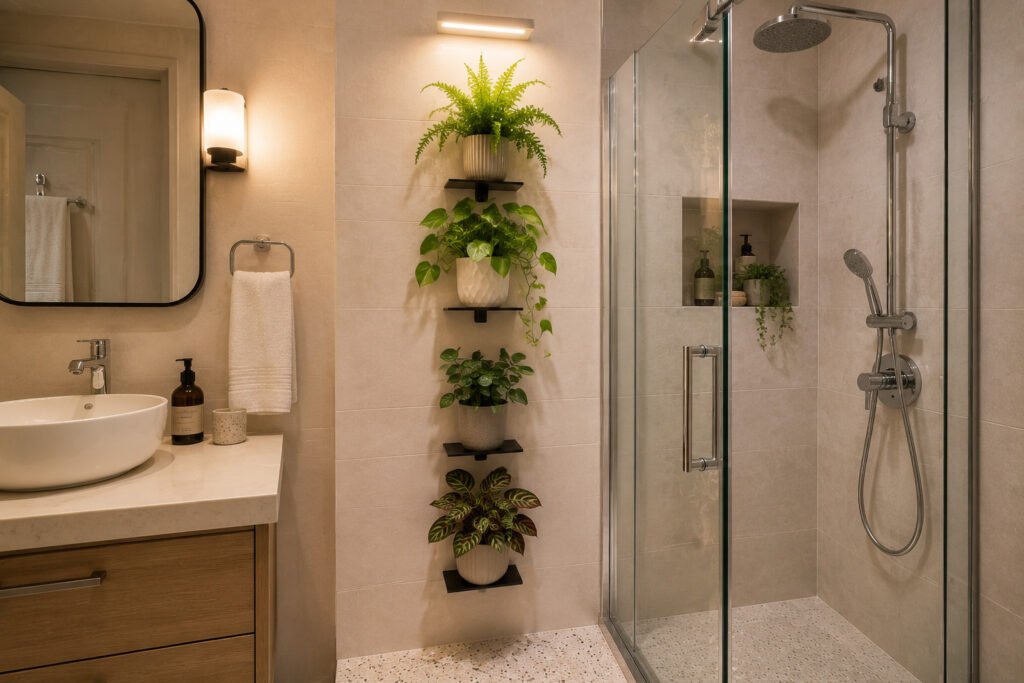
Use an empty wall beside the shower for a narrow column of humidity-loving plants. Mount four ceramic or powder-coated planters vertically, keeping them beyond the direct spray zone. Ferns, pothos, peperomia, and compact calathea can handle bathroom humidity when they also receive enough light.
Steam doesn’t replace daylight, so install a slim grow light on a timer if the room is dim. Choose rust-resistant hardware and removable liners that let you water plants at the sink. This prevents mineral marks from running down the wall and makes it easier to inspect the containers for trapped moisture.
9. Build a Flexible Pegboard Garden
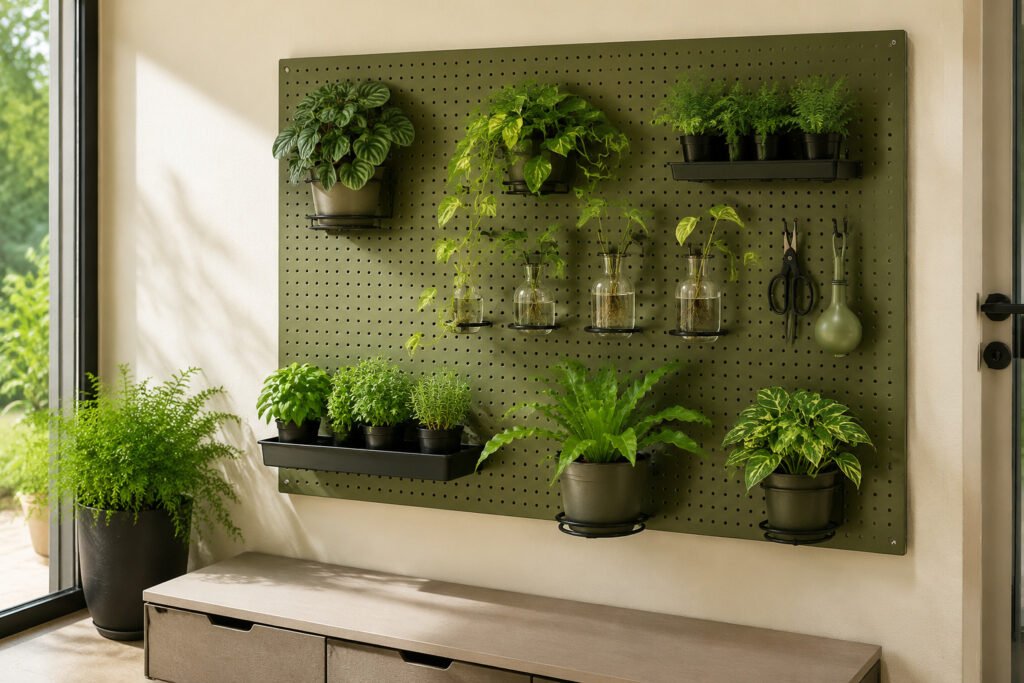
Install a moisture-resistant metal pegboard and fit it with movable pot rings, narrow trays, propagation vessels, and a few hooks for plant-care tools. Unlike permanent shelves, the layout can change as foliage grows or seasonal herbs need replacing.
Keep heavy pots toward the bottom and allow open areas between plants. That breathing room helps leaves dry after watering and prevents the wall from looking like crowded storage. Use individual saucers because pegboard holes won’t stop water from reaching the wall. Matte black feels graphic and modern, while cream or soft green produces a gentler look.
10. Fill a Fence With Plant Boxes
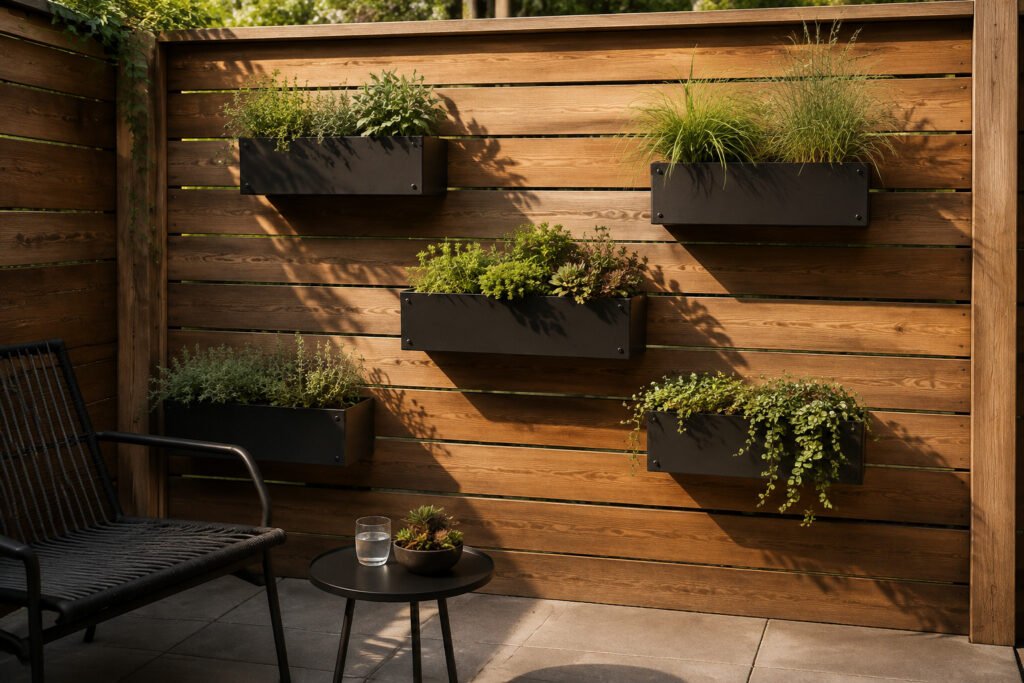
Mount shallow wooden or powder-coated metal boxes across a patio fence, staggering their heights instead of creating a rigid grid. Place removable nursery pots or lined troughs inside each box so plants can be taken down for watering, pruning, or seasonal replacement.
Mix upright herbs, compact grasses, sedums, and one or two trailing plants according to the available sun. Leave 8 to 12 inches between boxes for mature growth. Untreated craft crates may look appealing at first, but they often split or warp outdoors. Sealed wood, galvanized metal, and exterior-rated fasteners will hold up far better.
11. Grow an Edible Privacy Screen
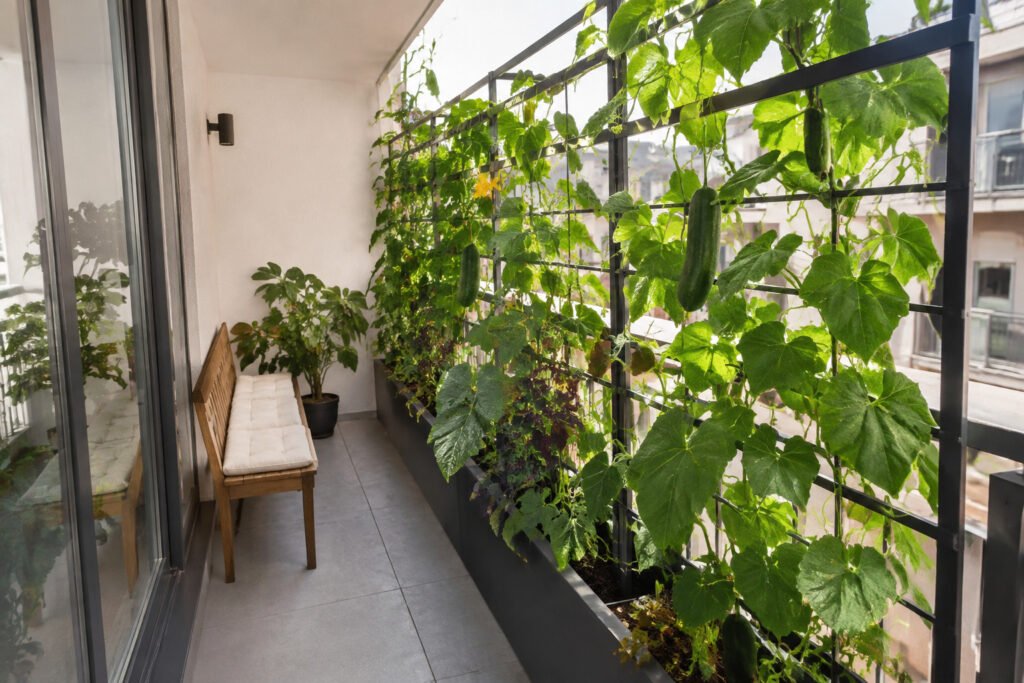
Fit a slim trellis to the inside of a balcony railing or privacy partition, then place one narrow trough along its base. Dwarf peas, climbing beans, patio cucumbers, and Malabar spinach can soften the boundary while producing food.
Train the stems evenly across the support rather than allowing them to gather in one dense section. A looser pattern improves airflow, makes harvesting easier, and filters neighboring views without darkening the balcony. Check building regulations before attaching a trellis to a railing, and prune regularly so vines don’t reach another apartment or obstruct emergency access.
12. Plant Up an Old Ladder
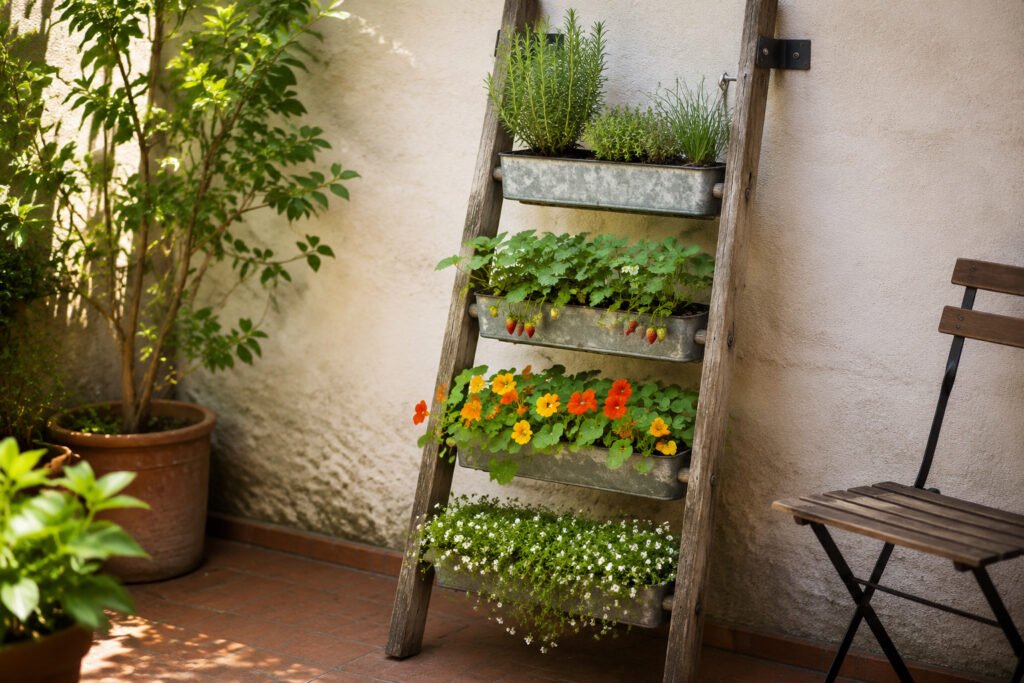
A narrow vintage ladder can support several planting levels without the depth of a traditional shelving unit. Secure it against a bright patio wall, then attach shallow troughs to selected rungs. Place upright herbs near the top and cascading strawberries, nasturtiums, or bacopa lower down.
Inspect secondhand ladders carefully for rotten wood, loose joints, and unstable feet. Reinforce the frame and apply an exterior sealant before adding wet soil. A single leaning ladder has a slimmer footprint than an open A-frame, making it better suited to tight balconies and narrow patios where every walking inch matters.
13. Grow a Strawberry Wall
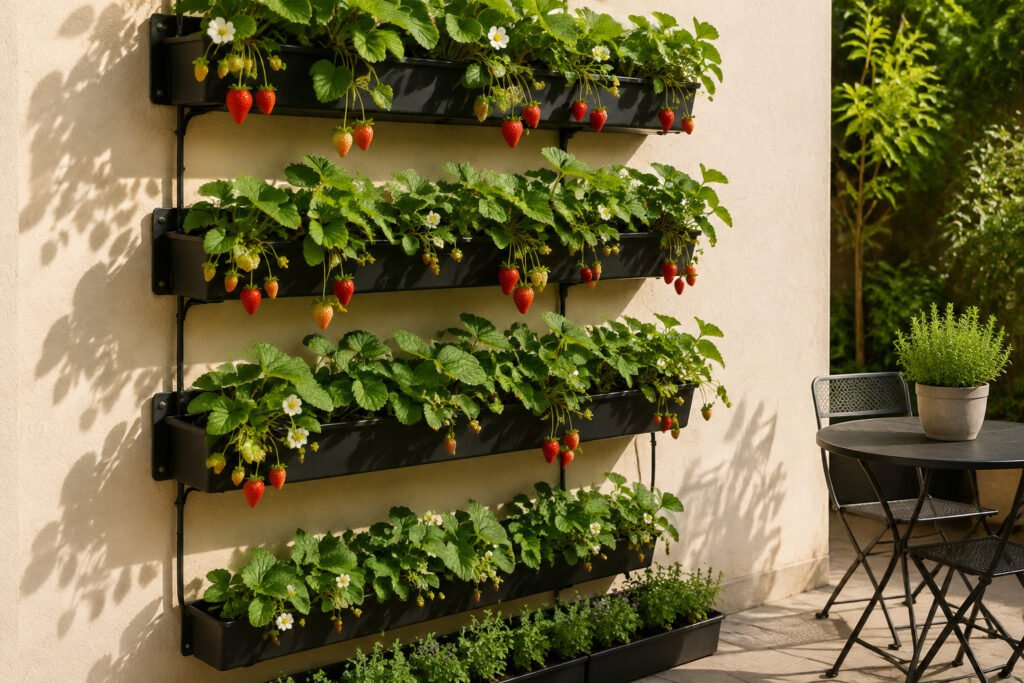
Mount three or four deep, food-safe troughs vertically on a sunny exterior wall. Strawberries naturally spill over the edges, creating layers of green leaves, small white flowers, and red fruit without covering the patio floor.
Avoid ordinary shallow rain gutters, which lose moisture quickly and don’t provide enough root space. Position each trough so the plants don’t shade the level below, and direct runoff into a lower reservoir or planted bed. A simple drip line can keep watering consistent during hot weather. Day-neutral varieties are particularly useful where the climate supports a longer growing season.
14. Display Cuttings and Roots
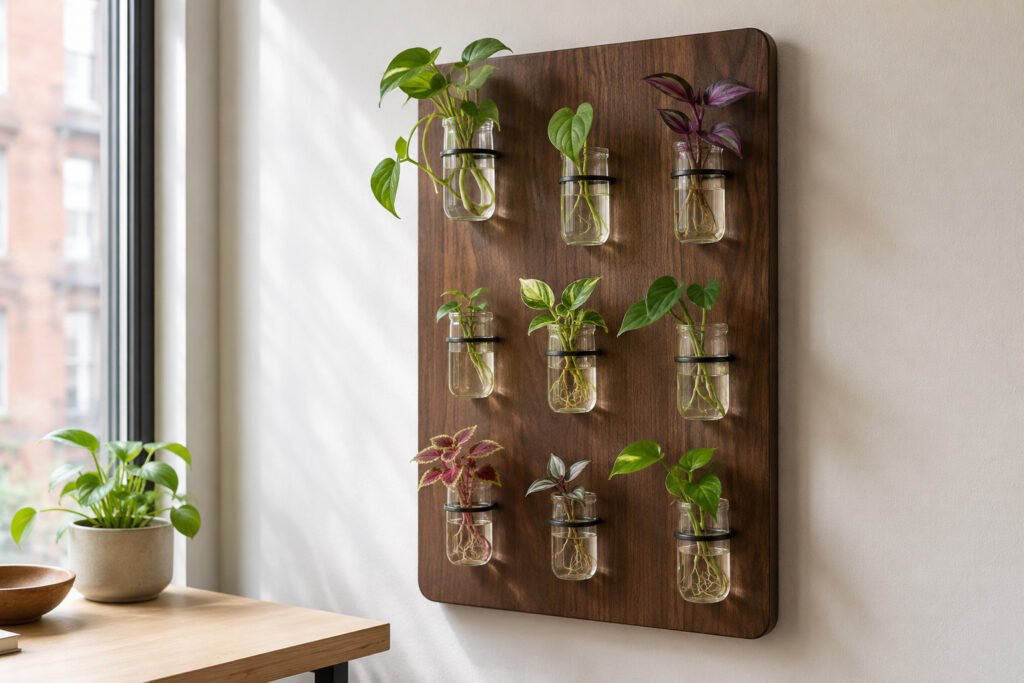
Create a botanical propagation wall with removable glass tubes or small water vessels fixed to a sealed wood or metal panel. Arrange pothos, philodendron, tradescantia, and coleus cuttings in an irregular pattern near a bright window.
Transparent glass keeps the display visually light, which is valuable in a narrow room. It also makes roots part of the design. Leave enough space to lift out every vessel for cleaning because algae and hard-water marks become visible quickly. Once the cuttings develop substantial roots, transfer them to soil before the arrangement becomes overcrowded or difficult to maintain.
15. Grow a Garden Overhead
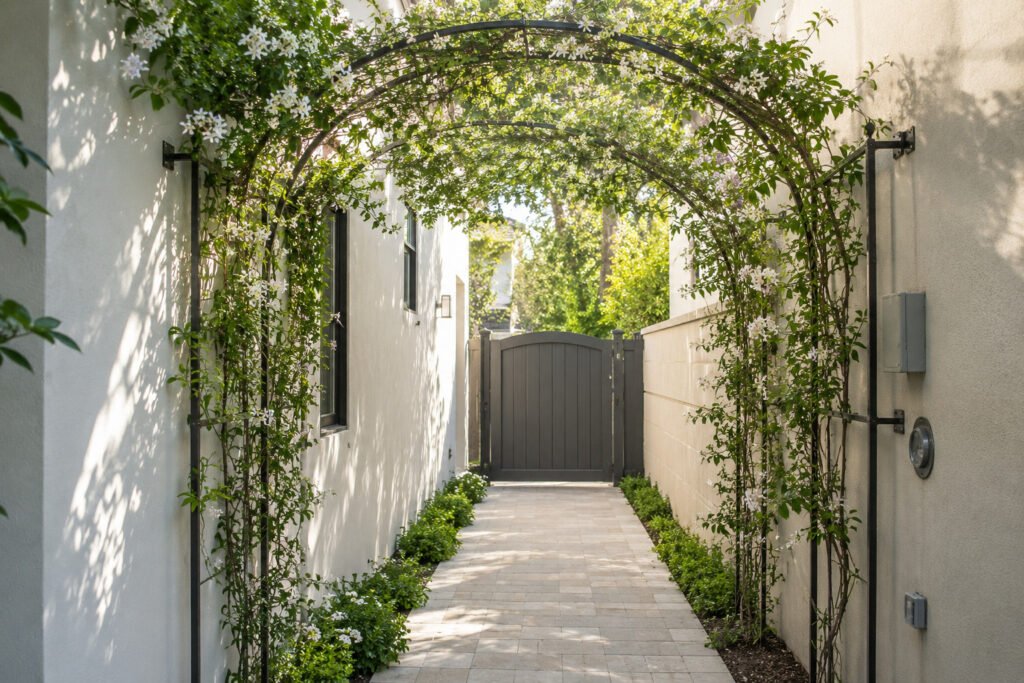
When a side yard is too narrow for rows of containers, place a slim metal arch over the walkway and move the garden upward. Train star jasmine, clematis, compact climbing roses, or annual vines across the sides and upper curve.
Anchor the frame securely and maintain at least 7 feet of clear headroom. Keep growth away from gates, utility meters, gutters, and neighboring property. The open path remains functional, but the foliage creates a green ceiling that makes an overlooked passage feel like a deliberate garden route. Choose thornless plants where children or pets regularly pass beneath it.
Plan Before You Plant
Start by observing the intended location at different times of day. Note direct sun, reflected heat, drafts, shadows from nearby buildings, and how easily you can reach the plants for watering. A beautiful wall system won’t keep sun-loving herbs healthy in a dark hallway.
Next, calculate the loaded weight of the garden, including wet soil and mature plants. Use anchors made for the actual wall material—not generic adhesive hooks. Indoors, include waterproof backing, removable liners, or individual saucers. Outdoors, account for wind and control runoff so water doesn’t reach neighbors, doors, or seating areas.
Vertical arrangements also dry unevenly. Containers near a sunny window or at the top of an outdoor wall may need water sooner than shaded plants below. Check each level rather than pouring the same amount into every pot.