
A shared dorm room has to do more than look good in move-in photos. Two people may be studying, sleeping, getting dressed, eating, charging devices, and taking calls in the same compact room, often on completely different schedules. That’s why the best shared dorm room ideas two roommates will both love solve small daily problems before they become annoying ones.
Instead of filling the room with matching decor, focus on clear personal zones, better lighting, movable storage, and systems that make sharing easier. These 18 ideas help a dorm feel organized and balanced without wasting valuable floor space.
1. Make a Door Drop Zone
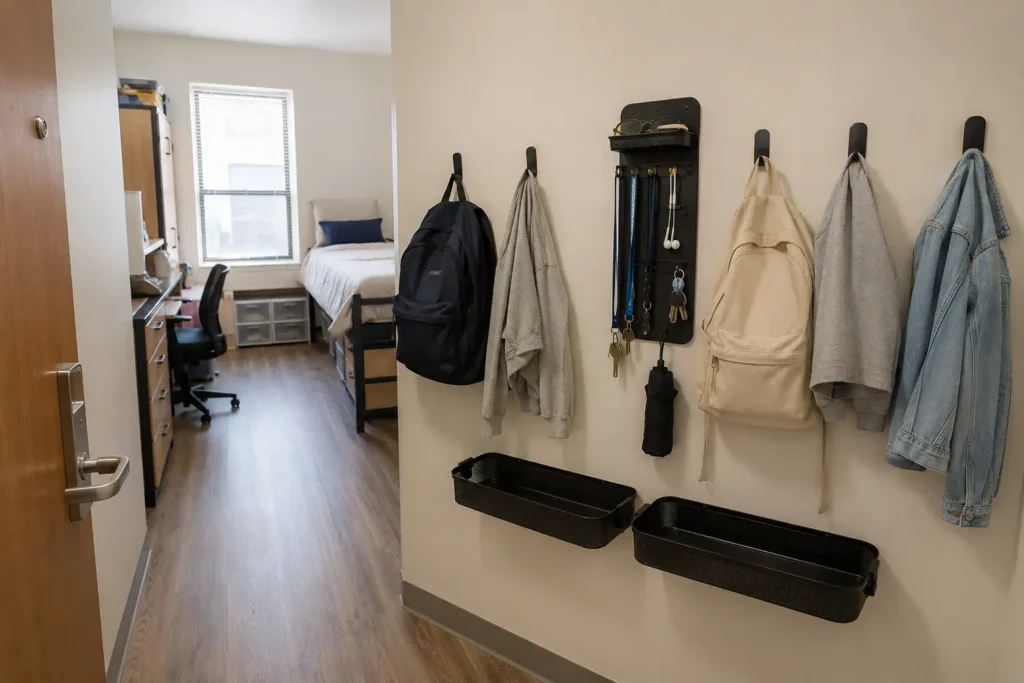
The area beside the door is one of the most useful spots in a shared dorm. Add a narrow wall organizer, a small divided tray, or removable hooks for student IDs, keys, earbuds, umbrellas, and tote bags. Give each roommate a clearly defined section instead of tossing everything into one basket.
Keep the setup shallow so backpacks and coats don’t crowd the walkway. If wall mounting isn’t allowed, use an over-the-door organizer or a slim freestanding rack. The result is a cleaner entrance and fewer morning searches for missing essentials.
2. Give Each Bed Its Own Charger
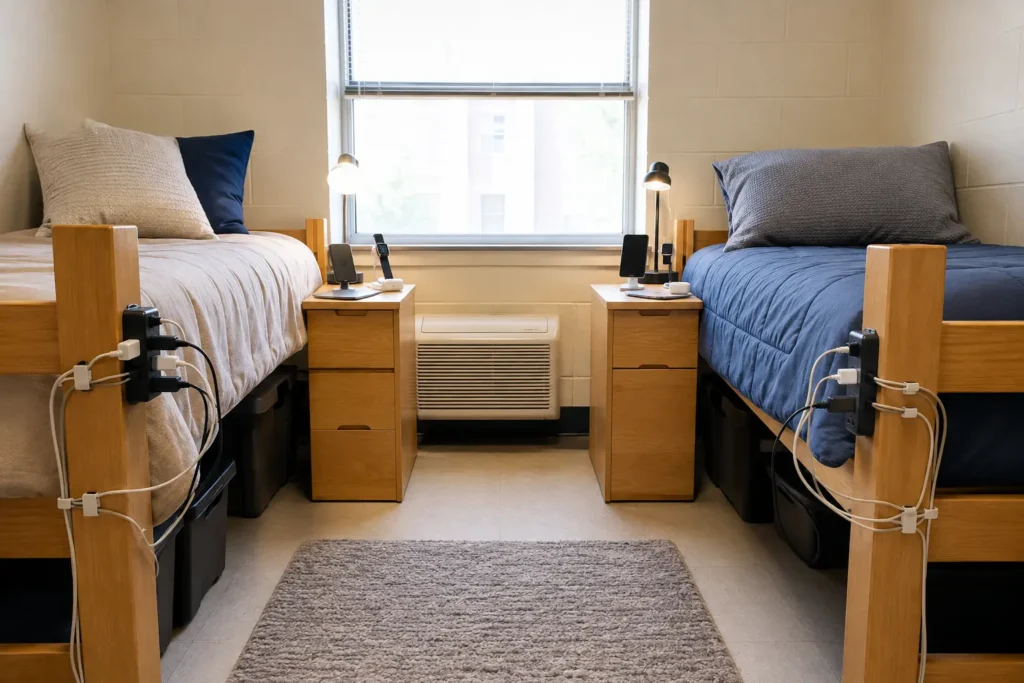
Sharing one hard-to-reach outlet gets frustrating quickly, especially when both phones, laptops, earbuds, and watches need power. Give each roommate a personal charging point beside the bed using a compact surge protector, clamp-on outlet hub, or securely mounted extension strip.
Keep cords routed along the bed frame rather than stretched across the floor. A small cable clip can prevent charging cords from falling behind the bed every night. Visually, this keeps wires contained within each personal zone while making late-night charging possible without reaching across your roommate’s side of the room.
3. Add Quiet-Hours Lighting
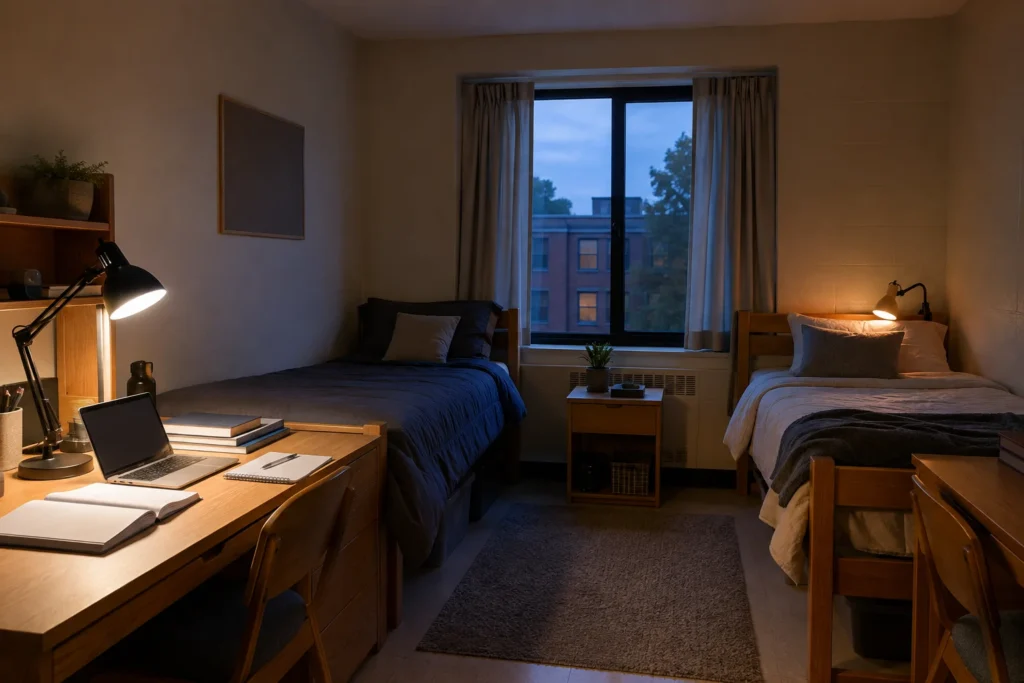
One bright ceiling fixture forces both roommates onto the same lighting schedule. Instead, give each desk or bed its own directional lamp so one person can read or study while the other sleeps.
Choose a lamp with an adjustable head and keep the beam aimed toward the desk surface or wall, not across the room. Warm light around the bed feels softer at night, while a neutral task light works better at a study desk. Clip-on lamps are especially useful in tiny dorms because they don’t take up valuable desktop or nightstand space.
4. Try a Two-Sided Divider
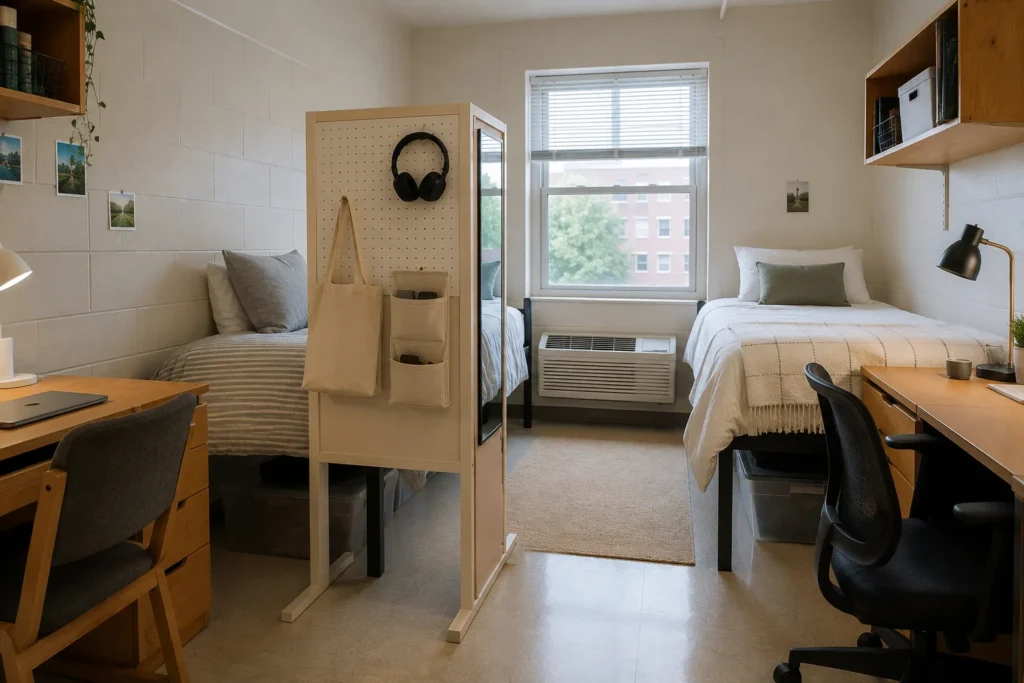
A room divider is far more useful when both sides actually do something. Instead of a plain folding screen, consider a lightweight divider with hooks, pockets, a pegboard surface, or a small mirror attached to one side.
Place it between beds or beside a changing area, but don’t block the main path through the room. A screen around 4 to 5 feet tall can create useful visual separation without making a low-ceiling dorm feel boxed in. Keep the finish light or neutral so the divider provides privacy without becoming a heavy visual wall.
5. Build a Shared Essentials Drawer
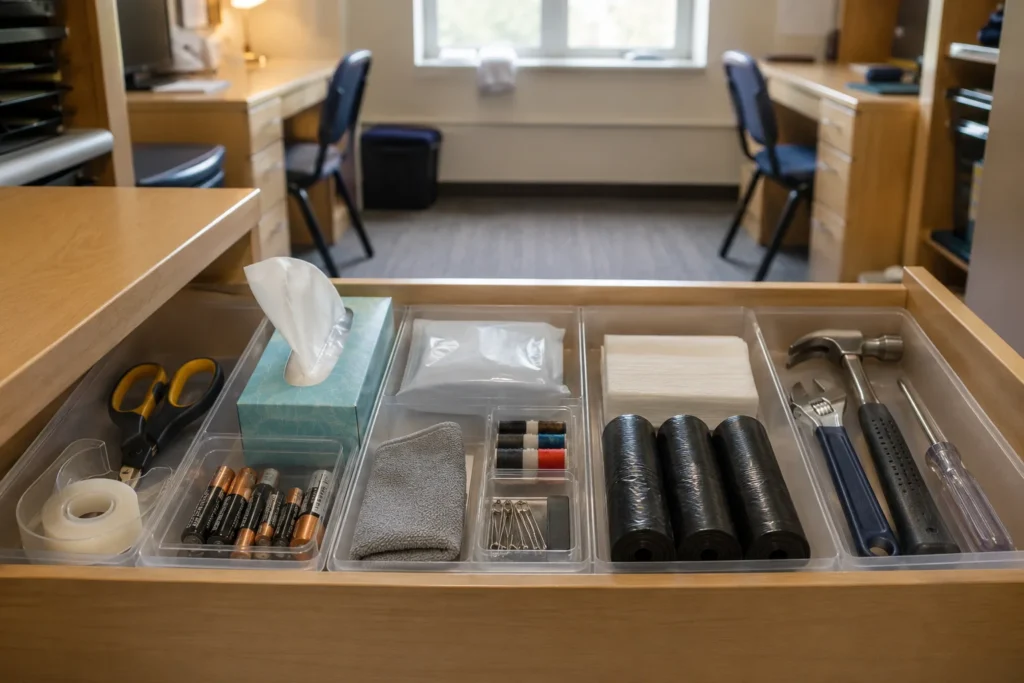
Not everything in a dorm needs to exist twice. Create one drawer, bin, or lidded box for items both roommates regularly use, such as scissors, tape, batteries, tissues, stain remover, basic tools, extra trash bags, and a small sewing kit.
The important part is defining what actually belongs there. Personal cosmetics, chargers, medications, and school supplies should stay in individual storage. A shared essentials zone works best when it contains practical household items rather than becoming a catchall. It also frees up room in two already-small personal storage areas.
6. Split the Laundry Setup
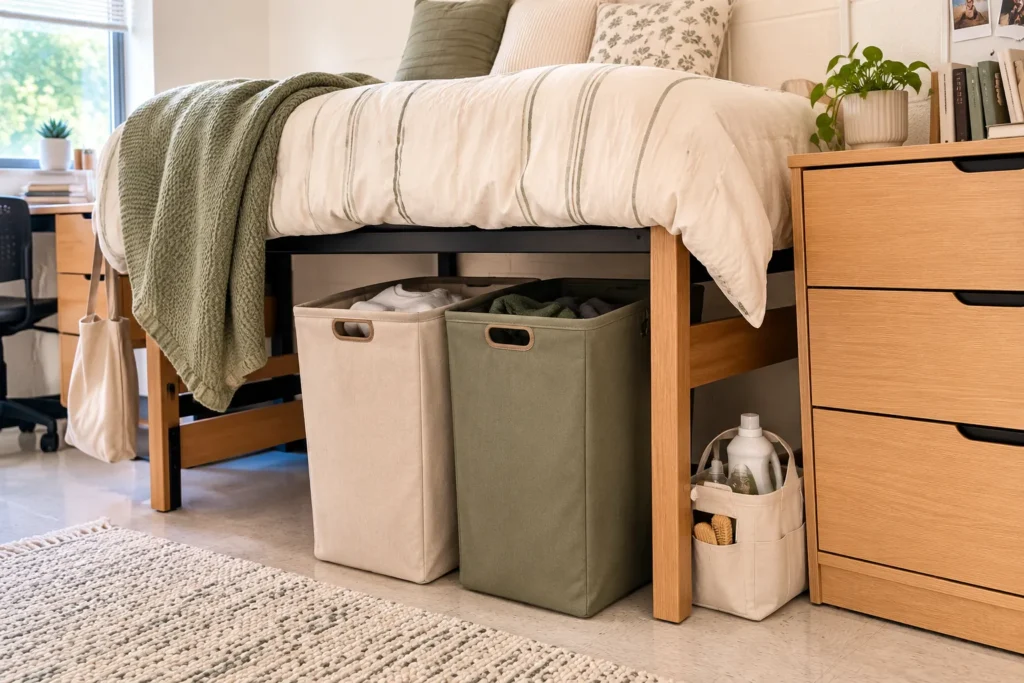
A single oversized hamper may save a few inches, but it usually creates more sorting and confusion later. Two narrow hampers or one divided laundry sorter make a shared dorm easier to manage.
Look for tall, slim designs that can tuck beside a dresser, underneath a lofted bed, or at the end of a closet. Soft-sided hampers are useful because they collapse when empty and are easier to carry to a residence hall laundry room. Keeping clothes separated also prevents one roommate’s overflowing laundry from visually taking over the room.
7. Use a Simple Focus Signal
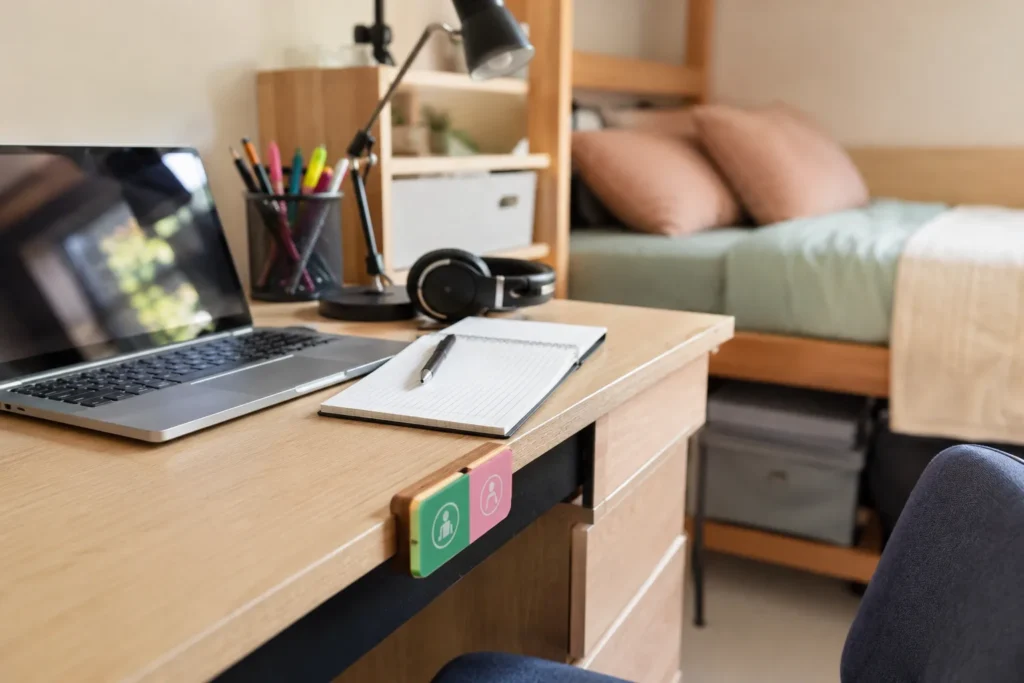
Sometimes the most helpful dorm solution isn’t furniture. A small reversible card, desk clip, or magnetic marker can quietly tell your roommate when you’re studying, taking a call, or open to chatting.
Keep the system simple rather than turning the room into a collection of signs. Two settings such as “focused” and “free” are usually enough. Place the signal near the desk where it’s visible without becoming decor clutter. It gives both roommates an easy boundary when headphones alone don’t communicate that someone needs uninterrupted time.
8. Replace Nightstands With Bed Caddies
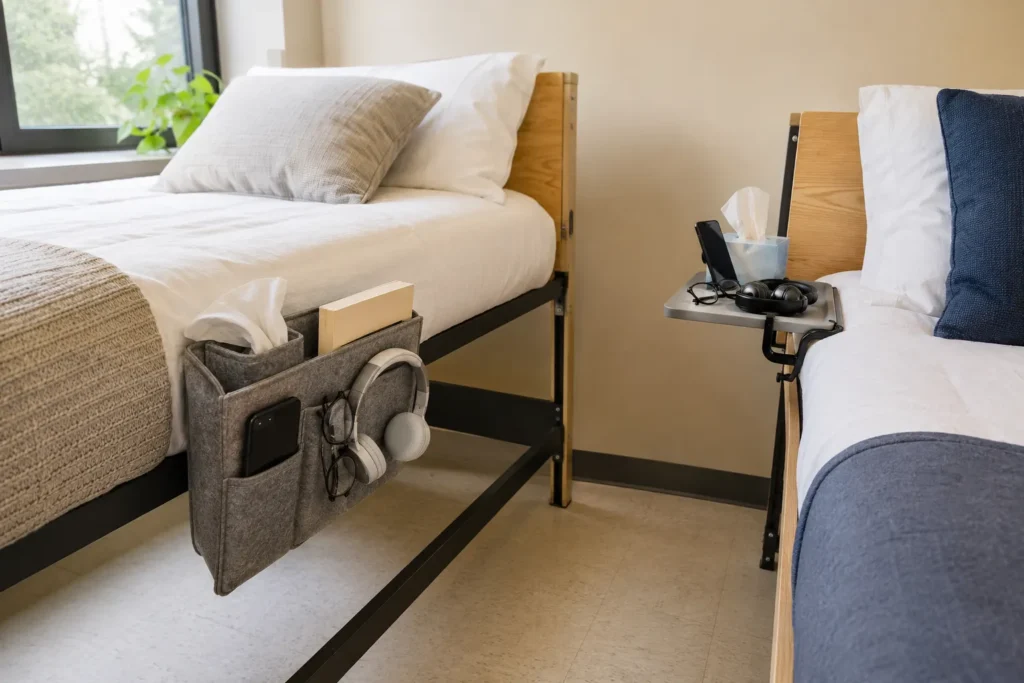
Traditional nightstands use precious floor space and often don’t fit beside dorm beds anyway. A fabric bedside caddy, clip-on tray, or bed-rail shelf keeps nighttime essentials close without adding another piece of furniture.
Use it for a phone, glasses, lip balm, tissues, headphones, or a small book. Avoid overloading the caddy until it sags or starts looking messy. A structured canvas or felt version generally holds its shape better than very thin fabric. Keeping personal items directly beside each bed also helps maintain a clear boundary between roommate zones.
9. Divide the Snack Shelf
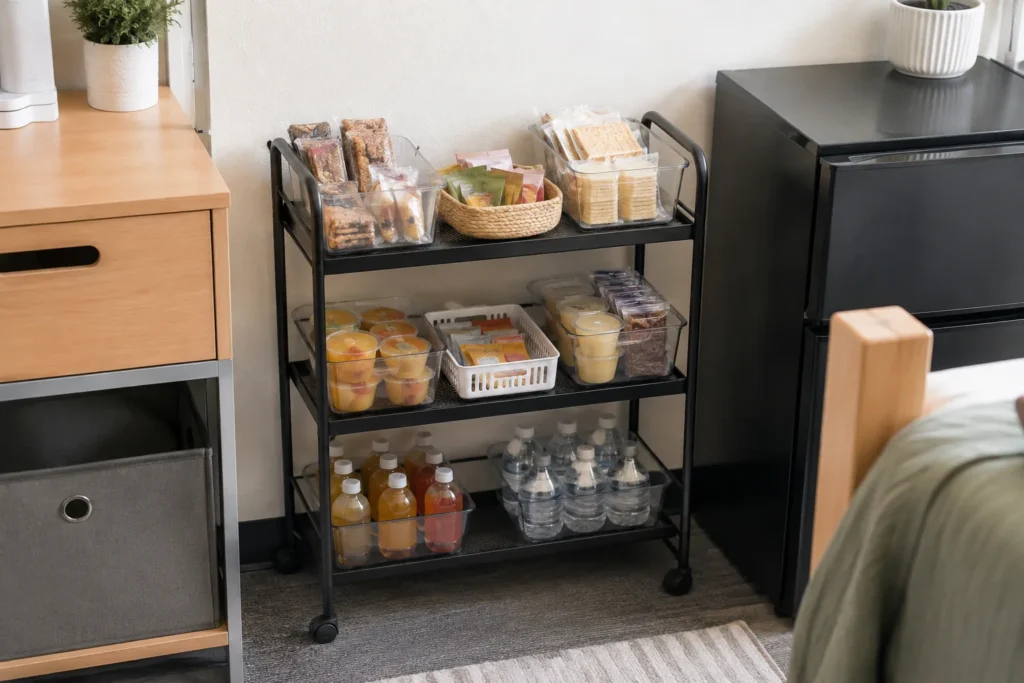
Food can become surprisingly complicated when it isn’t obvious what’s shared. Set aside one shelf or compact rolling cart for snacks and divide it into three zones: one for each roommate and one small area for items anyone can use.
Clear bins work well because you can see what needs restocking, while opaque bins hide bright packaging and make the room look calmer. Keep food a few inches away from electronics and choose sealed containers for anything that can spill or attract pests. The setup feels organized without turning the dorm into a mini pantry.
10. Set Up a Morning Prep Spot
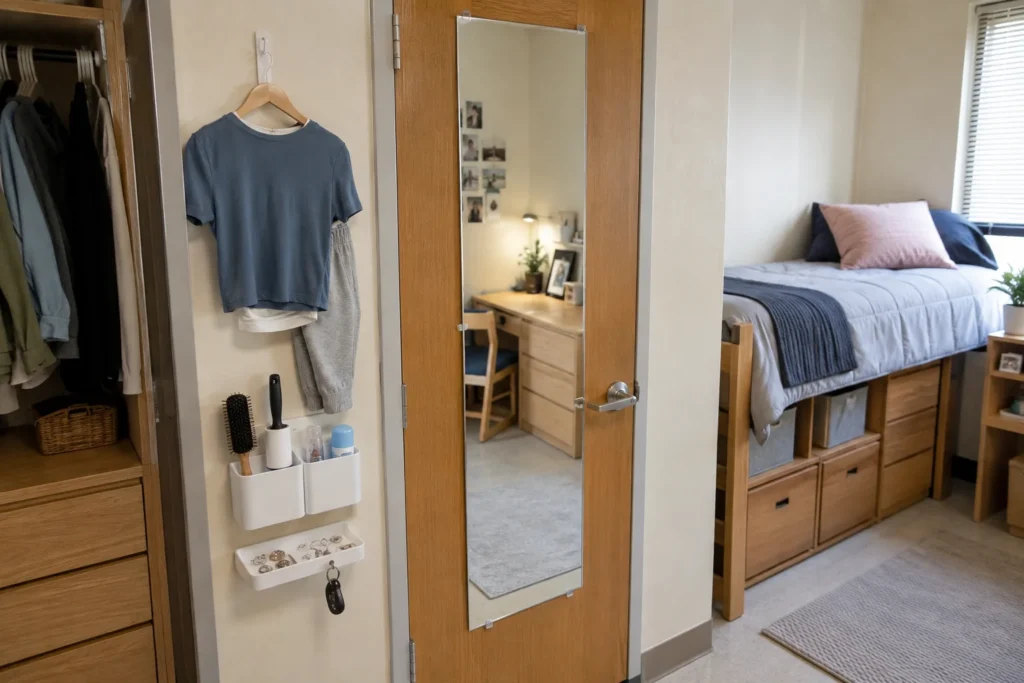
When one roommate wakes earlier, getting dressed can easily disturb the person still sleeping. A small preparation zone near the door or closet helps keep morning activity away from the beds.
Add a mirror, lint roller, hairbrush, jewelry tray, and a hook for the next day’s outfit. If floor space is tight, use the back of the door instead of adding a vanity. A full-length mirror mounted securely on a door can serve both roommates while taking up almost no usable space. Good placement matters more here than adding more furniture.
11. Plan for Different Sleep Schedules
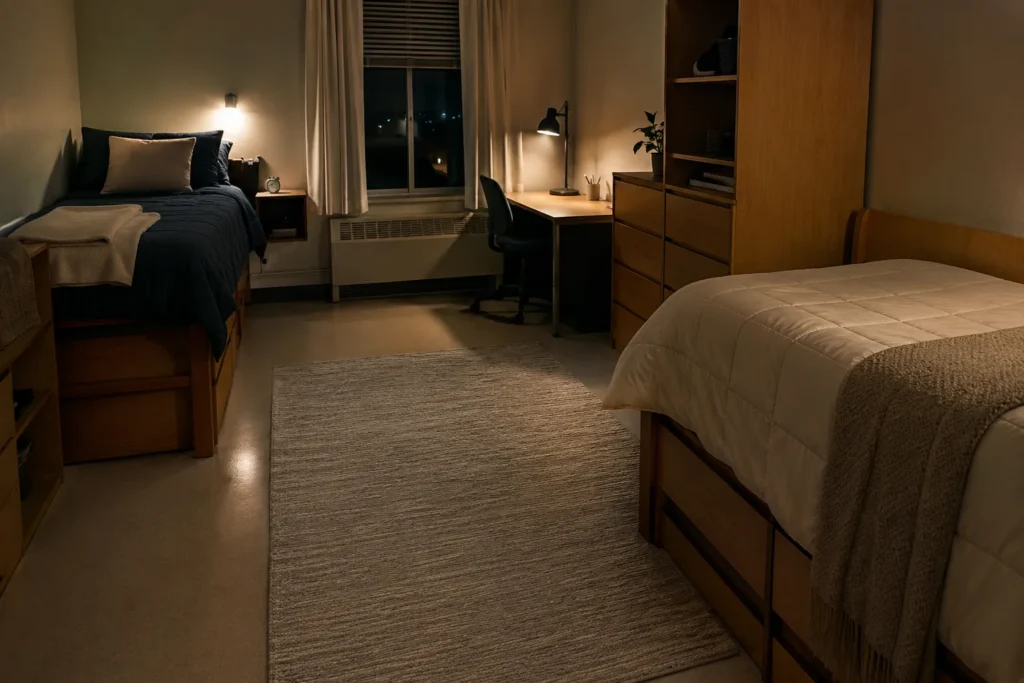
A symmetrical dorm layout may photograph nicely, but it isn’t always the most comfortable layout for two real routines. If one roommate studies late, place that desk as far from the early sleeper’s pillow as the room allows.
Aim task lighting toward a wall or desktop, and position frequently used drawers so they can open without bumping the other person’s bed. If you’re allowed to rearrange the furniture, protect the main walkway first; roughly 30 inches of clear passage feels much easier to move through than a narrow path between bags and chairs.
12. Light the Nighttime Path
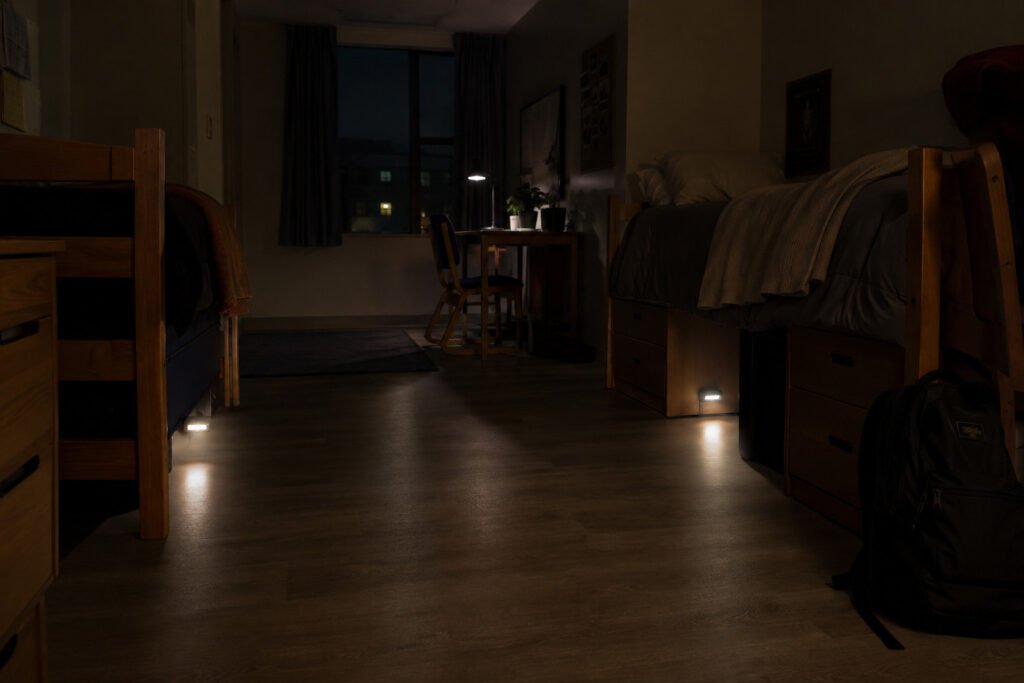
Coming back after your roommate is asleep shouldn’t require switching on the overhead light. A low-level motion-sensor light under a bed, beneath a desk, or near the entrance can illuminate the floor without filling the whole room with glare.
Look for removable battery-powered options if you can’t alter dorm wiring. Keep the light low and directed downward so it helps with navigation rather than shining toward a sleeping face. This is particularly helpful in rooms where backpacks, desk chairs, and bed frames create obstacles after dark.
13. Split Storage Clearly
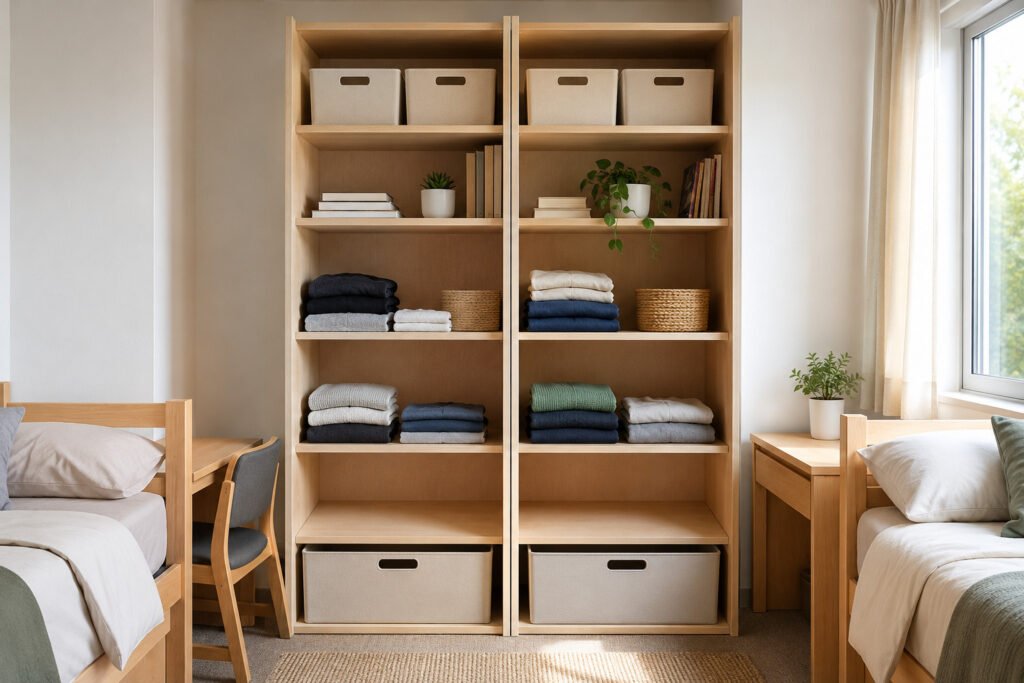
Shared storage works better when ownership is visible at a glance. Instead of casually mixing belongings across shelves, assign each roommate a defined vertical section, drawer group, or closet side.
Vertical division often feels fairer than giving one person the highest shelves and the other the easiest-to-reach ones. Matching bins can make the room look cohesive even when the contents are completely different. Leave a small amount of open shelf space, too. Packing every inch makes a dorm feel smaller and gives you nowhere to place new items during the semester.
14. Keep One No-Share Zone Each
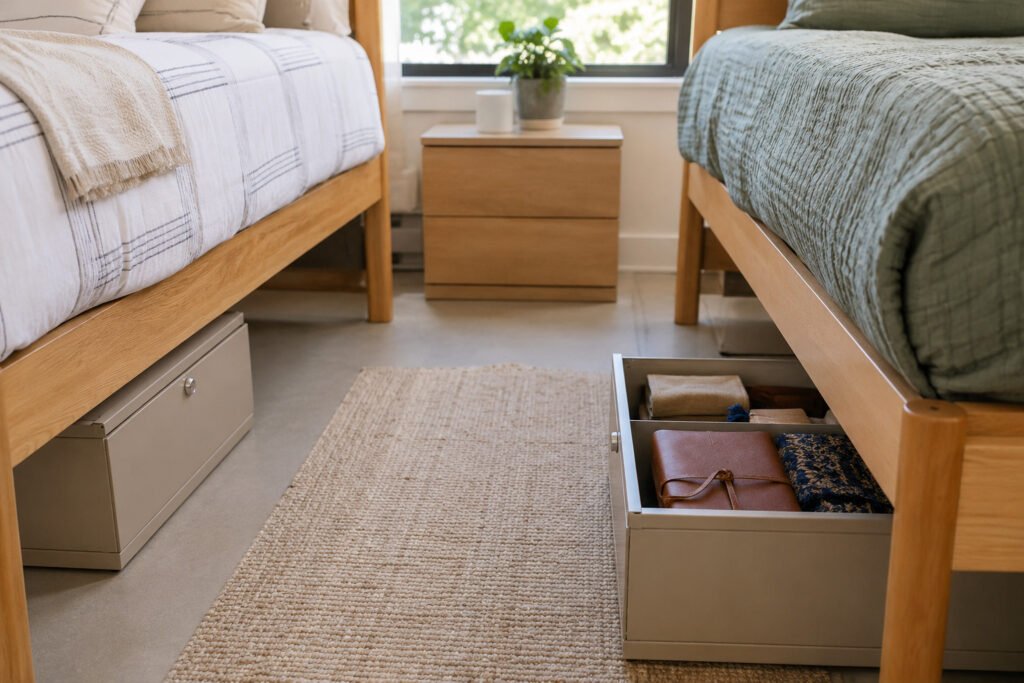
A shared room still needs private territory. Give each roommate one drawer, basket, locking box, or shelf that’s clearly understood to be personal and not borrowed from.
This doesn’t require a dramatic visual boundary. Two identical lidded boxes under the beds can maintain the room’s clean appearance while giving each person a private place for important papers, sentimental objects, or personal supplies. The idea is less about hiding things and more about making ownership obvious, which is especially useful when most other parts of the room are shared.
15. Add Video-Call Privacy
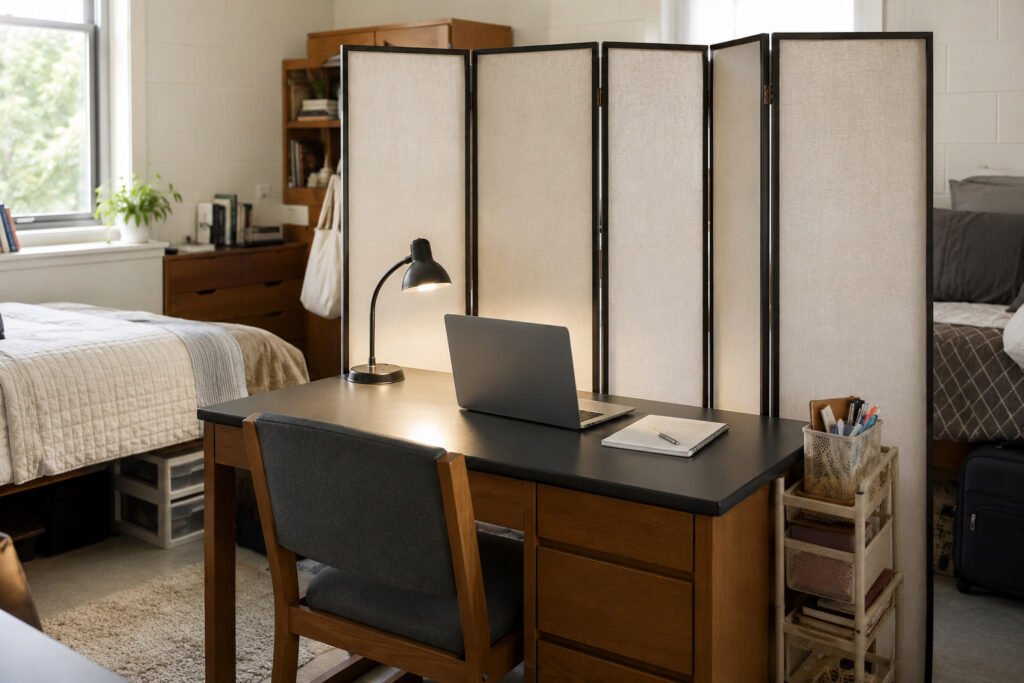
Online classes, interviews, family calls, and meetings can make a shared dorm feel more exposed than expected. A lightweight folding screen, bed curtain, or removable fabric panel can create a temporary background without permanently dividing the room.
Keep it easy to fold away so you don’t lose floor space when the call ends. Solid cream, taupe, soft gray, or muted olive usually looks calmer on camera than a busy pattern. Position the screen behind the chair rather than directly beside the laptop so the backdrop reads as intentional instead of cramped.
16. Use a Room Logistics Board
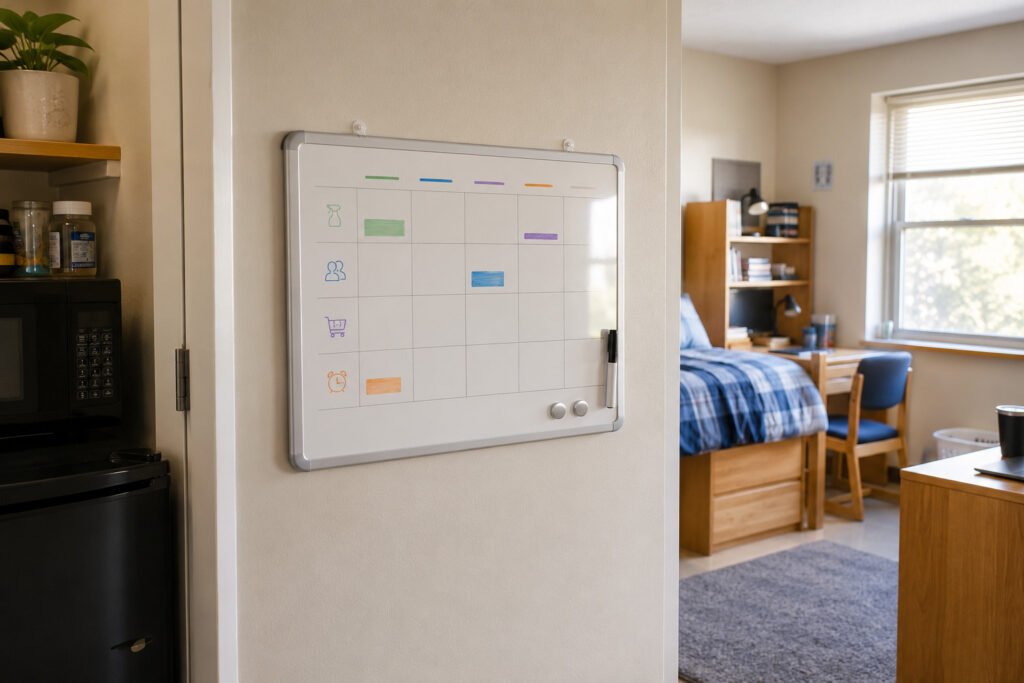
A small whiteboard or dry-erase calendar can manage shared-room information that doesn’t belong in a group chat. Use it for cleaning turns, grocery reminders, visitor plans, quiet nights, or notes about an unusually early alarm.
Mount it in neutral territory, such as near the door or mini fridge, rather than above one person’s bed. Keep the board practical rather than filling it with quotes and decoration. When the surface stays mostly clear, important notes are easier to notice and the room still feels visually calm.
17. Choose Seating With Storage
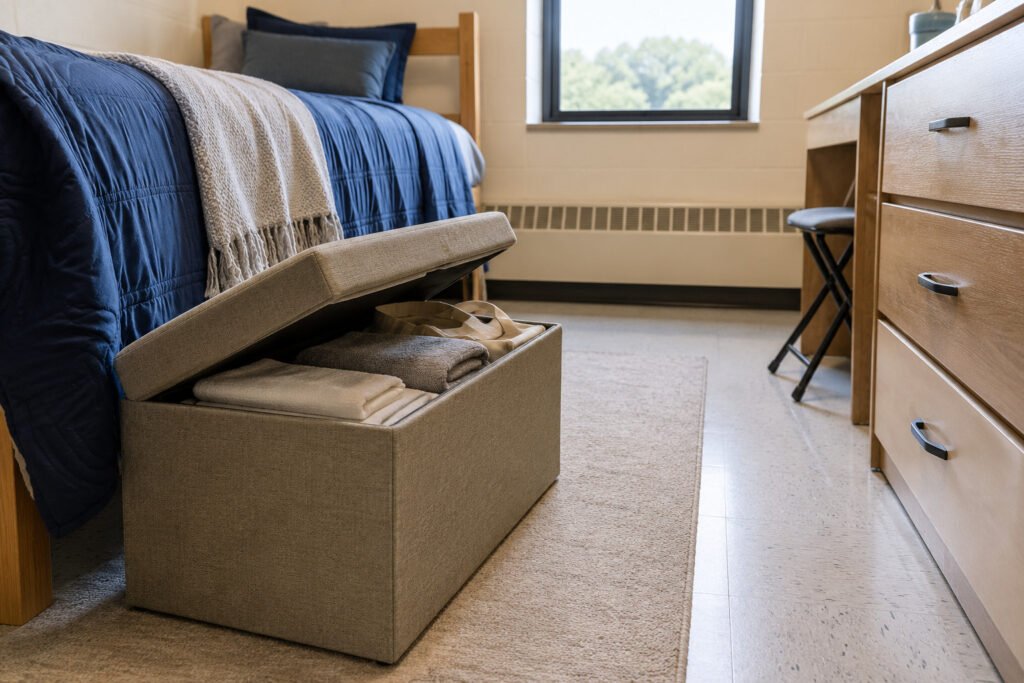
An extra chair is useful when a friend visits, but in a small dorm it spends most of the week occupying floor space. A compact storage ottoman or folding stool does more work within the same footprint.
Use an ottoman for extra bedding, tote bags, towels, or less frequently used supplies. Choose a flat, supportive top rather than an overstuffed style that’s awkward to sit on. If the room is especially narrow, a folding stool may be smarter because it can slide behind a dresser or beneath the bed when it isn’t needed.
18. Keep a Roommate Reset Basket
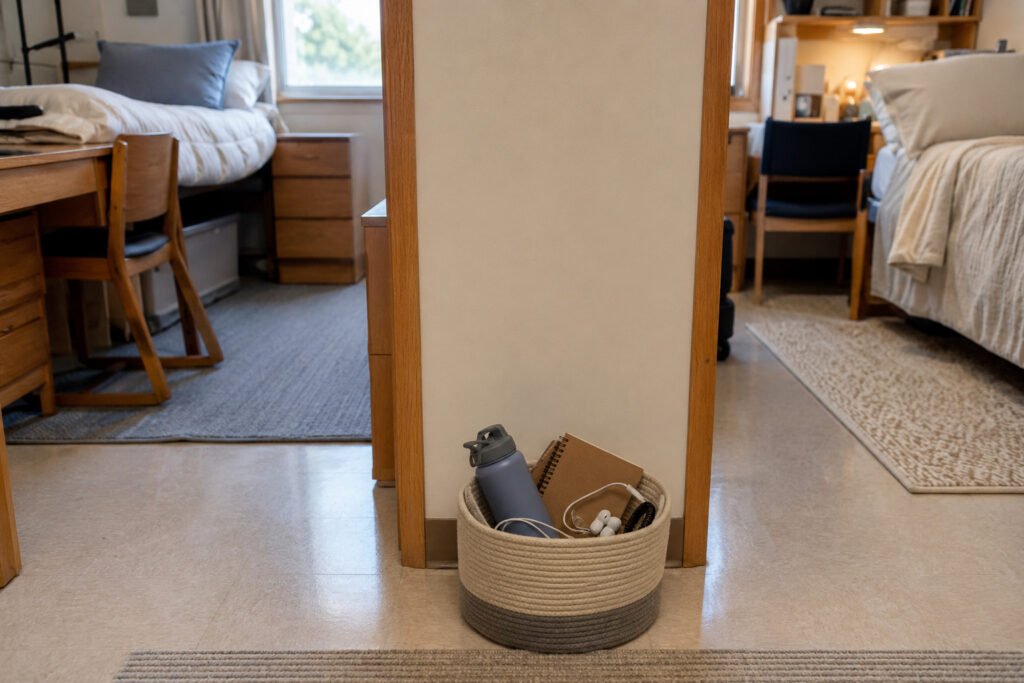
Small belongings inevitably travel across a shared dorm. Instead of placing your roommate’s charger, notebook, hair tie, or water bottle on their pillow, create one small “reset” basket in a neutral spot.
Anything found on the wrong side of the room can go there until its owner puts it away. Keep the basket intentionally small; a large bin can quickly become permanent clutter storage. This simple system is especially useful before cleaning or when friends have been over because it lets you tidy shared surfaces without reorganizing someone else’s belongings.