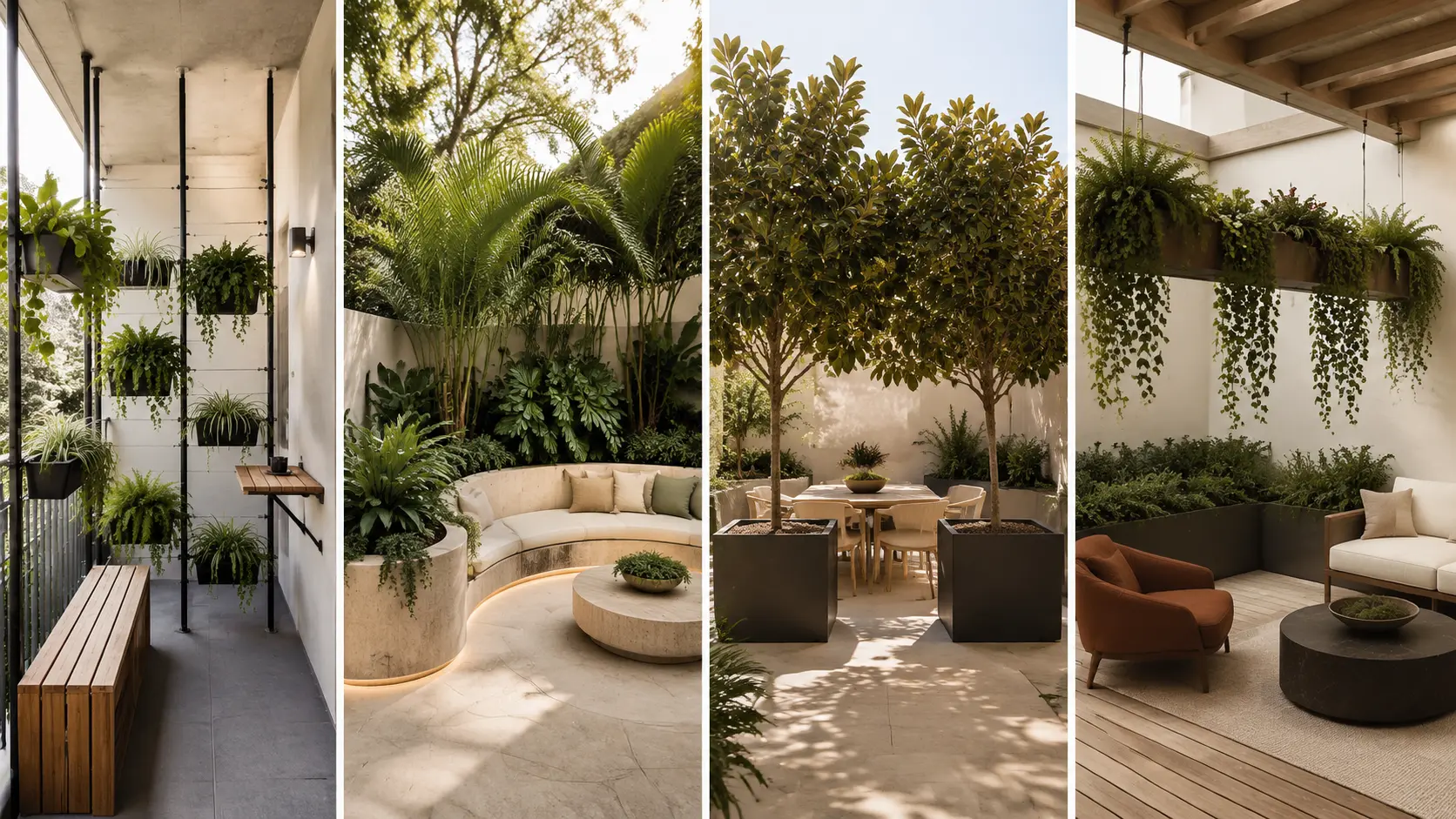
A patio can feel beautifully furnished and still remain unused if neighbors, shared walkways, or nearby balconies leave it too exposed. Plants offer a softer and more attractive alternative to a solid fence, but effective privacy requires more than placing a few tall pots along the edge. The right layout can block specific sightlines, frame a seating area, filter harsh sunlight, and make even a small patio feel like a private outdoor room.
These patio privacy ideas combine layered planting, modern trellises, movable dividers, overhead greenery, and architectural planters to create natural screens for different spaces and budgets. Whether you are improving a narrow apartment balcony, a rental-friendly terrace, or a large designer patio, each concept balances privacy with light, airflow, mature plant size, and maintenance. The result is an outdoor space that feels secluded, stylish, and intentionally designed rather than simply hidden behind plants.
1. Sliding Living Panels on a Modern Track
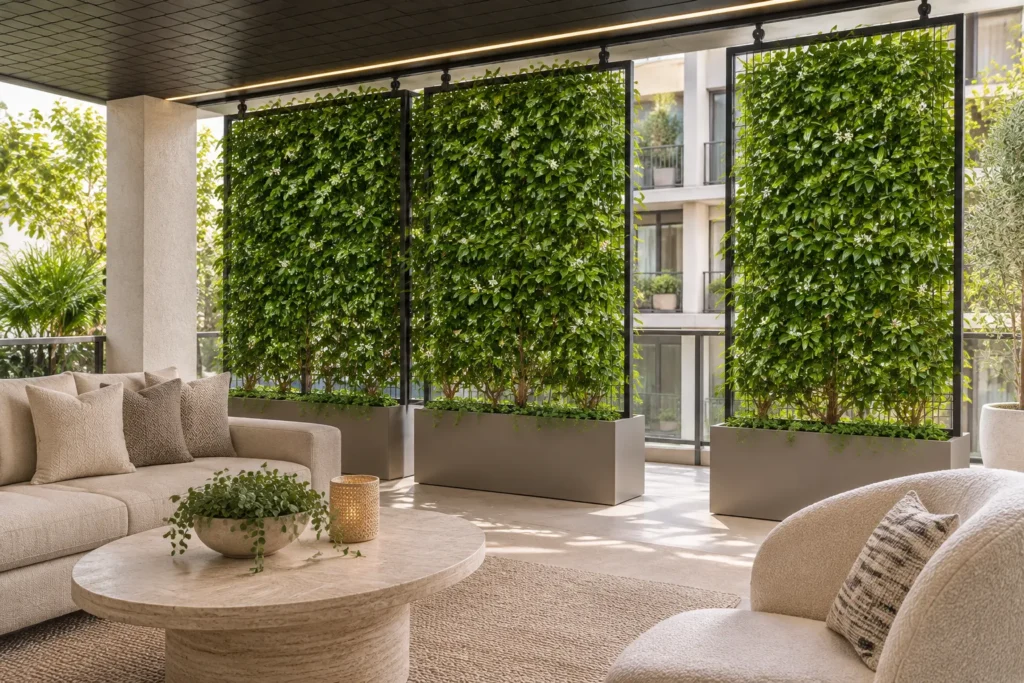
Install three slim black metal mesh panels on a weather-rated ceiling or pergola track so they can slide across the patio’s most exposed side. Anchor star jasmine, evergreen clematis, or mandevilla in 20-inch-deep rectangular fiberglass planters beneath each 6 to 7-foot panel, then train the vines upward without allowing them to cross between moving sections. This system provides adjustable partial to full privacy for covered patios, apartment terraces, and outdoor dining spaces, but the track must be professionally secured and rated for wind. Why It Works: The panels can close around the seating area when privacy is needed and slide apart later to restore light, views, and openness.
2. Stepped Planter Staircase for Diagonal Views
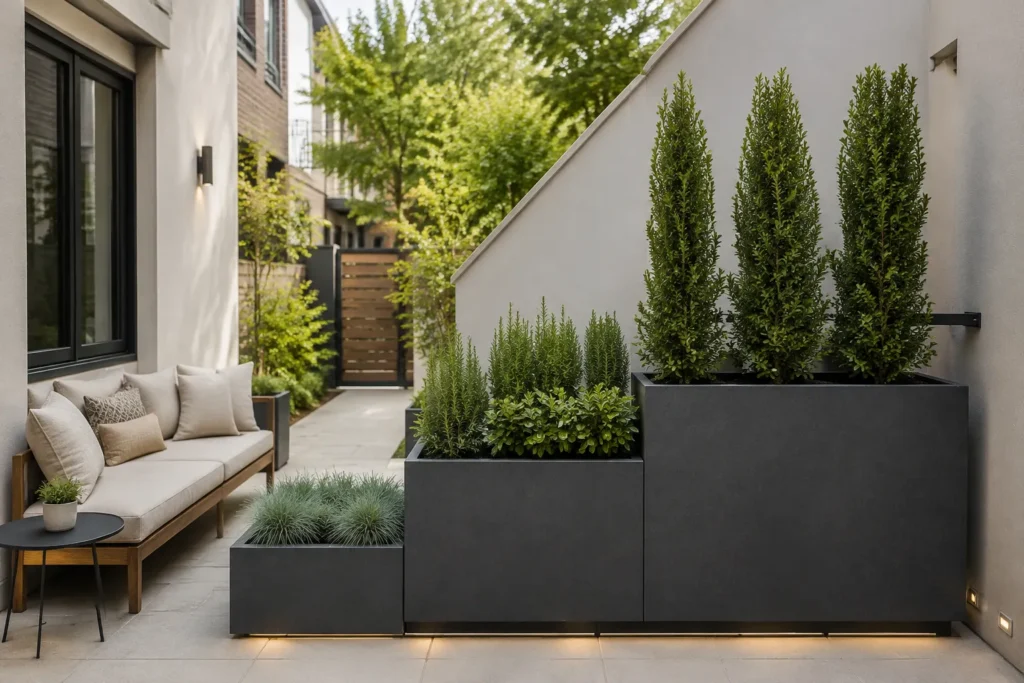
Arrange three rectangular planters in ascending heights, beginning with an 18-inch planter near the patio entrance, followed by 26-inch and 34-inch versions toward the exposed corner. Plant compact ornamental grasses in the lowest level, upright rosemary or pittosporum in the middle, and Sky Pencil holly, compact podocarpus, or clumping bamboo in the tallest planter. This staggered structure creates partial to full privacy from diagonal sightlines and works especially well on narrow patios or balconies where one deep planter would consume too much space; use lightweight frost-resistant fiberglass and secure the tallest container against wind. Why It Works: The rising silhouette blocks views exactly where they become most intrusive while giving a flat patio a strong architectural rhythm.
3. Offset Green Portal Around the Lounge
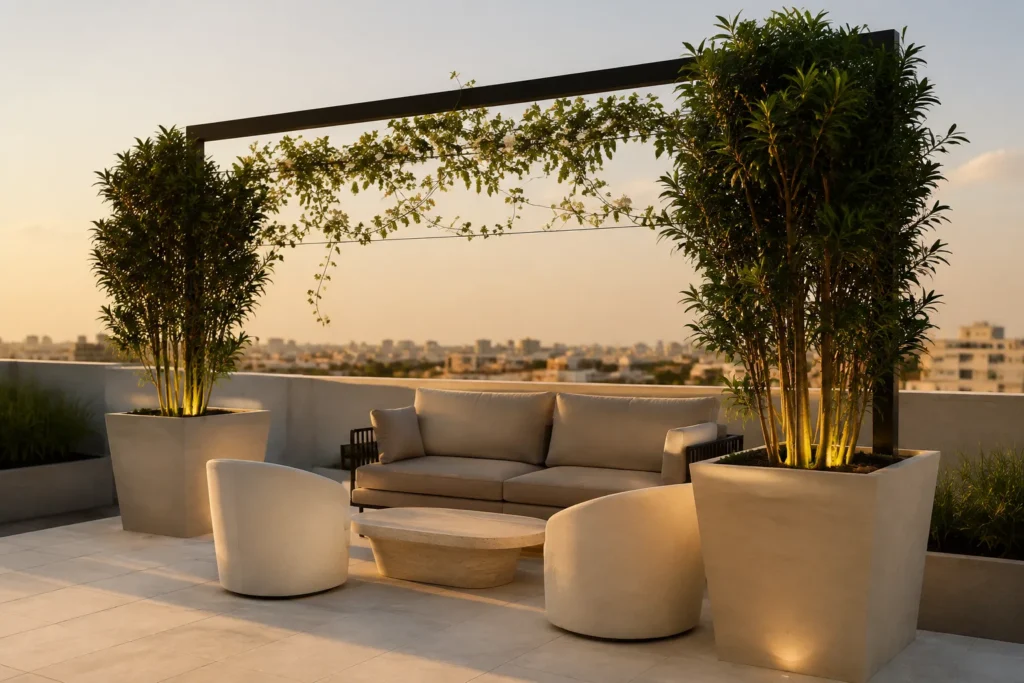
Frame only the main seating area with two tall planted columns connected by an open overhead beam, creating a green portal instead of screening the entire patio boundary. Use two 30-inch-high stone-look planters with Italian cypress, podocarpus, or clumping palms, then train a lighter vine such as star jasmine across stainless-steel wires attached to the 7-foot cedar or matte black aluminum frame. The composition provides partial side and overhead privacy for medium patios, rooftop lounges, or exposed conversation areas; allow adequate root depth and keep the overhead growth lightly pruned. Why It Works: The portal directs attention toward the lounge and interrupts important sightlines without making the rest of the patio feel boxed in.
4. Pivoting Plant Fins for Adjustable Privacy
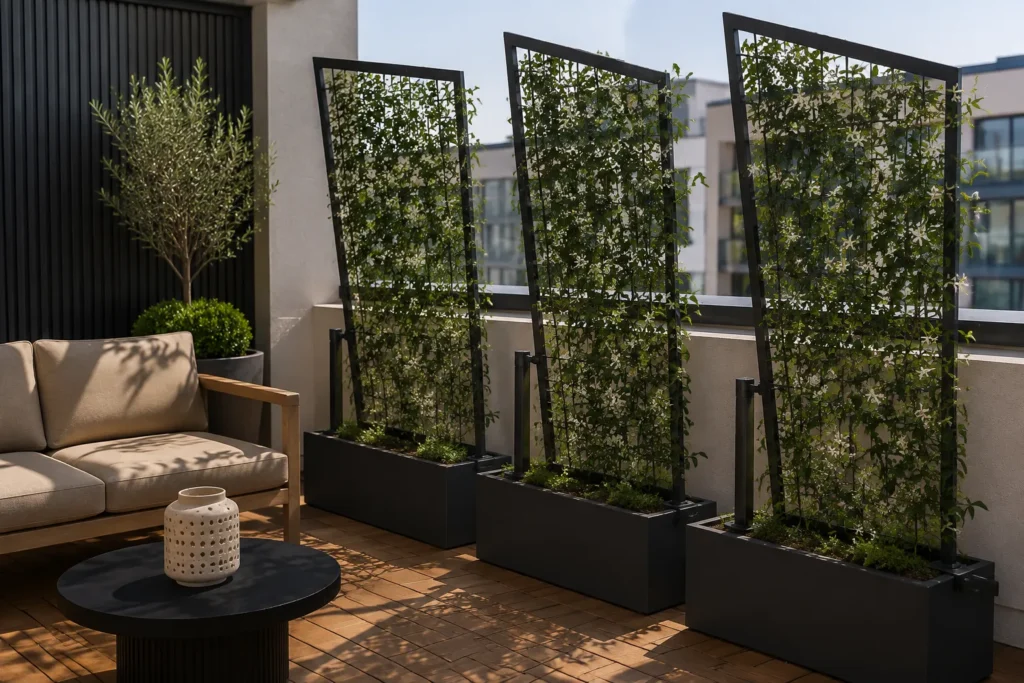
Position three narrow freestanding trellis panels in a row, mounting each one to a weather-rated pivoting base so its angle can be adjusted throughout the day. Each 6-foot matte black aluminum fin should sit inside an 18-inch-wide planter containing star jasmine, compact clematis, or annual hyacinth bean, with vines trained tightly to the frame. These fins provide adjustable light-filtering to full privacy on urban terraces where sunlight, wind, and neighboring views come from changing directions; lock each panel securely after repositioning it. Why It Works: Angled panels overlap visually to close sightlines using less planting mass, while their sculptural formation creates changing patterns of greenery, shadow, and negative space.
5. Serpentine Grassy Screen
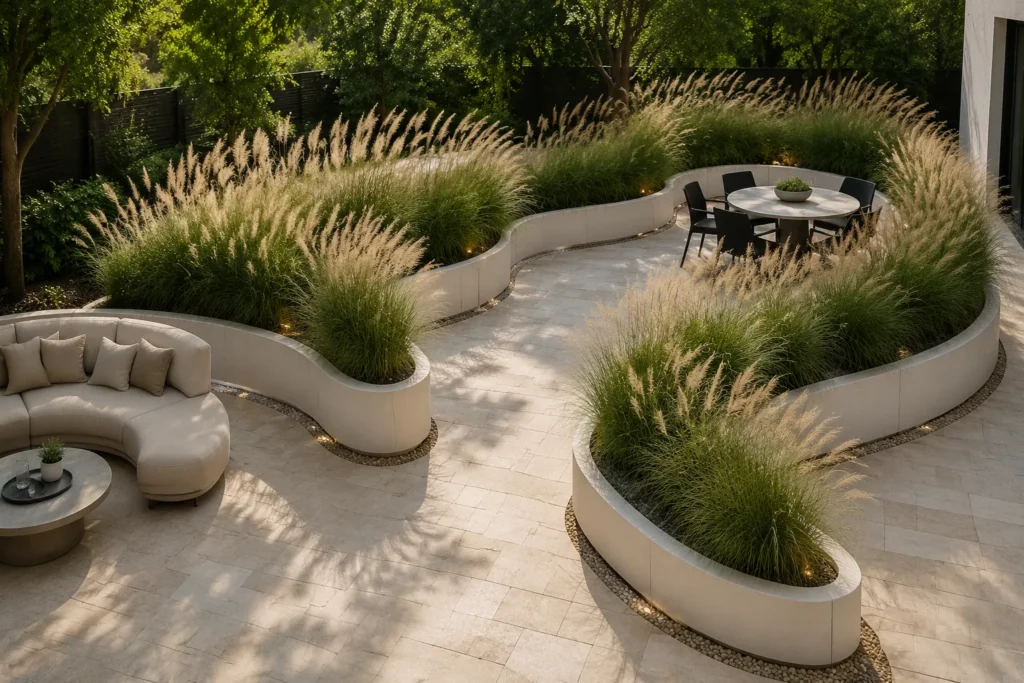
Use a sequence of curved modular planters to create a gentle S-shaped boundary instead of a straight row along the patio edge. Choose 24-inch-high smooth concrete-look fiberglass sections planted with switchgrass, feather reed grass, or locally suitable noninvasive fountain grass, spacing plants according to their mature width. The screen provides light-filtering to partial privacy for long patios, poolside terraces, and contemporary courtyards in full sun; confirm local invasiveness and cut the grasses back at the correct seasonal time. Why It Works: The curve produces depth and movement, making the patio appear larger while preventing people outside the space from seeing straight through it.
6. Two-Level Canopy for Upper-Floor Privacy
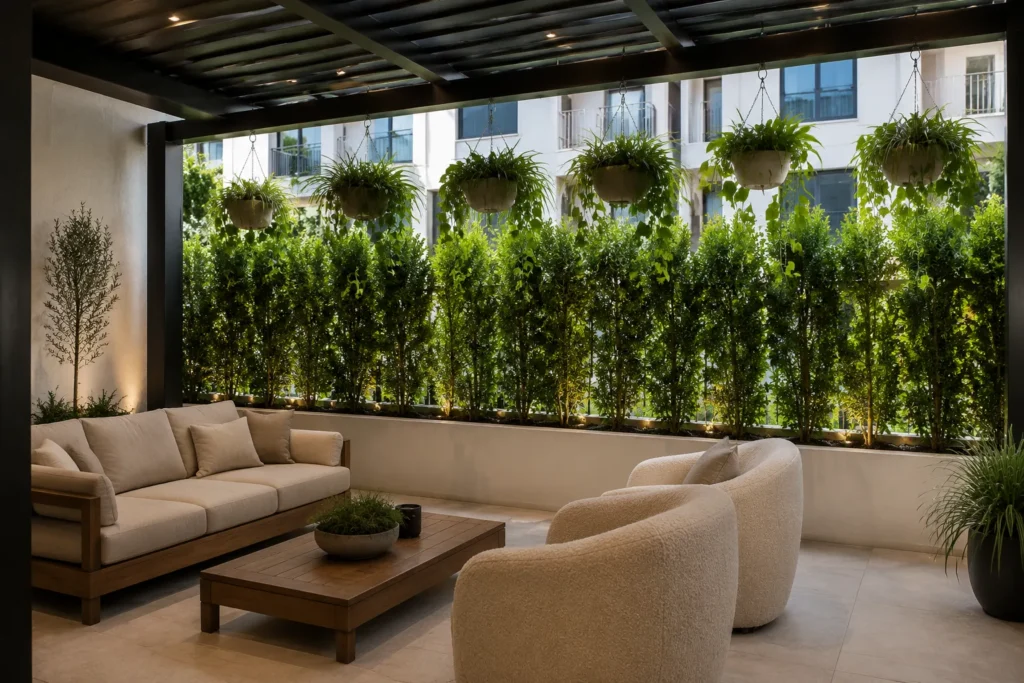
Create a lower green hedge at the patio boundary and suspend a second layer of trailing plants from a pergola directly above it. Use a 24-inch-high built-in cedar or stucco planter filled with compact pittosporum, podocarpus, or clumping bamboo, then hang lightweight planters containing pothos, creeping fig, spider plant, or trailing ivy from the 7 to 8-foot overhead frame. This two-level arrangement provides full privacy from neighboring balconies and upper windows on covered patios; use plants suited to the available light and install controlled irrigation to prevent dripping. Why It Works: The lower hedge blocks ground-level views while the hanging foliage closes the difficult gap above without requiring one oversized wall of greenery.
7. Perforated Stone Screen With Planting Pockets
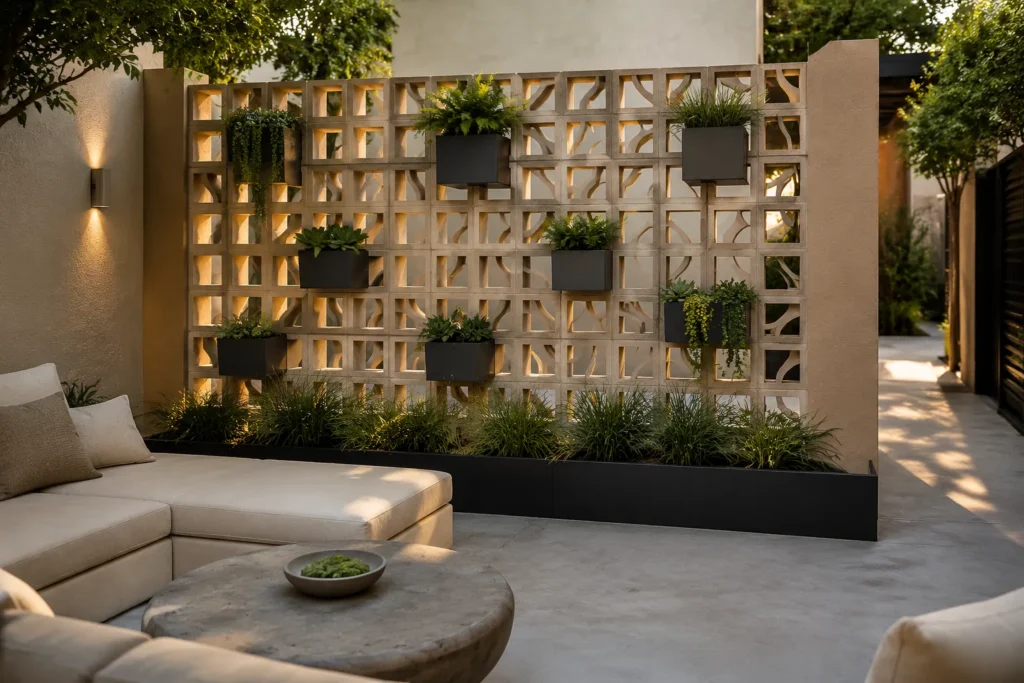
Build a 6-foot freestanding screen from modern perforated concrete blocks and leave selected openings large enough to hold removable planting inserts. Position ferns, trailing dichondra, compact peperomia, hardy sedges, or small succulents inside the pockets according to sunlight, then add a slim 16-inch-deep planting trough at the base for soft grasses or low shrubs. This premium structure offers immediate partial privacy and greater coverage as plants mature, making it ideal for contemporary courtyards and warm-climate patios; include internal drainage so water cannot collect inside the blocks. Why It Works: The patterned masonry blocks direct views from outside, while planted openings add life, shadow, and depth without hiding the screen’s modern geometry.
8. Foldable Accordion Vine Screen
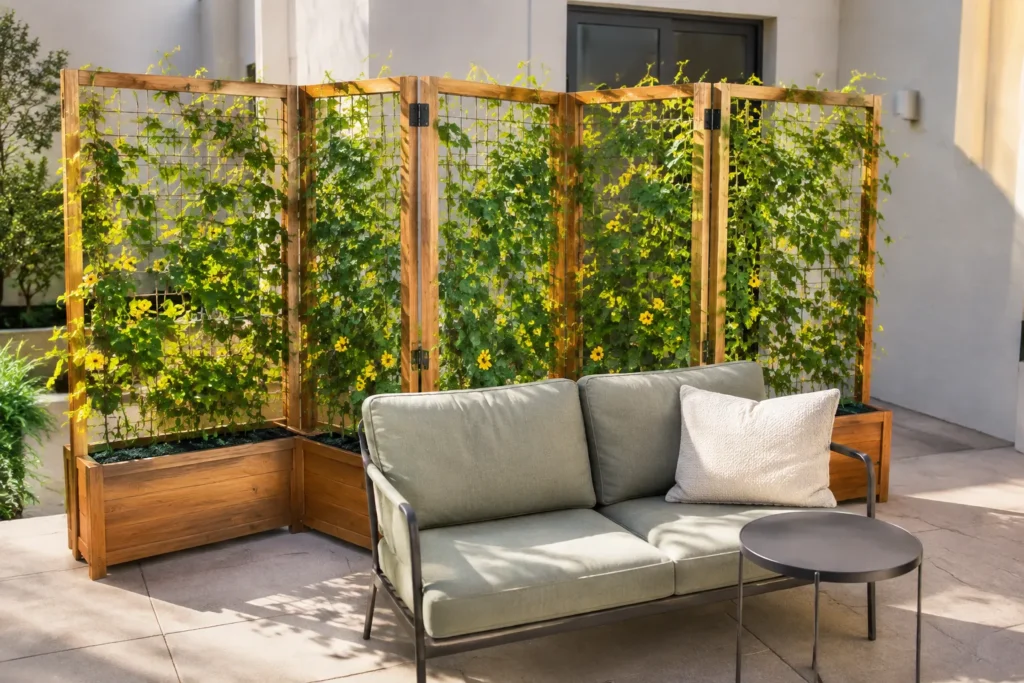
Set a freestanding three or four-panel accordion trellis behind the seating area, opening or folding it according to the privacy required. Use a 6-foot powder-coated aluminum or sealed cedar frame with separate 18-inch-deep planter boxes containing annual black-eyed Susan vine, hyacinth bean, star jasmine, or compact clematis. It creates partial to full privacy for rental patios, temporary outdoor rooms, and balconies where drilling is not permitted; keep each plant trained within its own panel so the screen remains foldable. Why It Works: The zigzag shape is naturally stable, blocks several viewing angles, and can be compressed when the patio needs more open floor space.
9. Floating Planter Shelf Wall
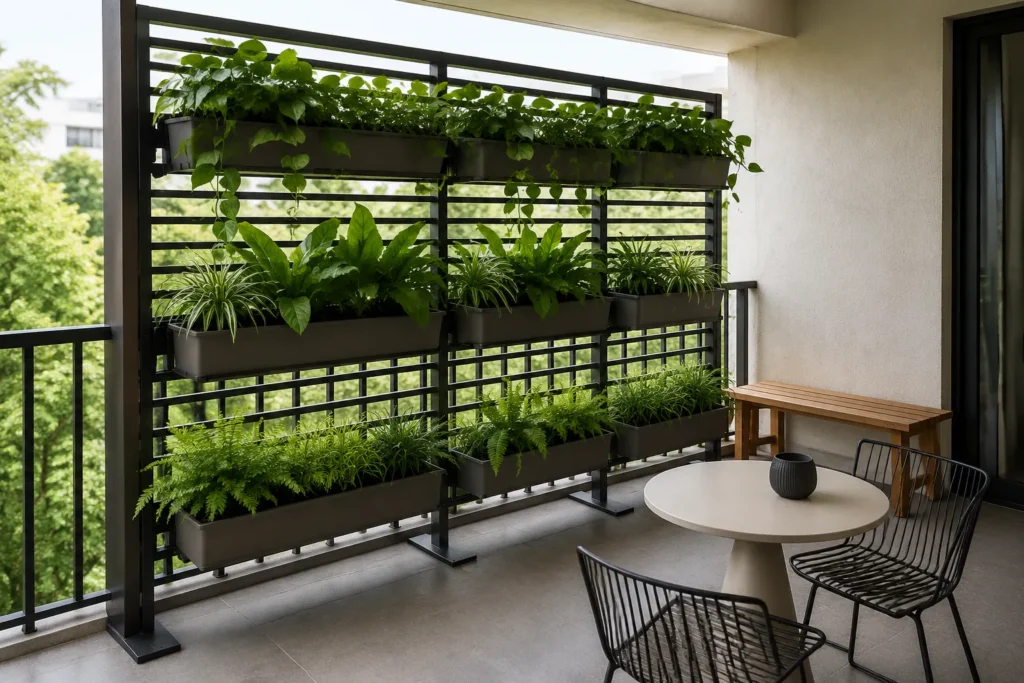
Install a freestanding 6-foot slatted frame with three narrow planting shelves placed at knee, seated-eye, and standing-eye levels. Use matte black aluminum shelves with removable 8 to 10-inch-deep troughs containing upright ferns, trailing pothos, spider plants, compact herbs, sedges, or shade-tolerant begonias. The layered foliage produces light-filtering to partial privacy for covered balconies and small patios where full-sized shrubs would feel too bulky; confirm the structure’s load capacity and use lightweight potting mix. Why It Works: Greenery appears to float across the frame, interrupting views at several heights while preserving enough open space for daylight and airflow.
10. Living Arch at the Patio Entrance
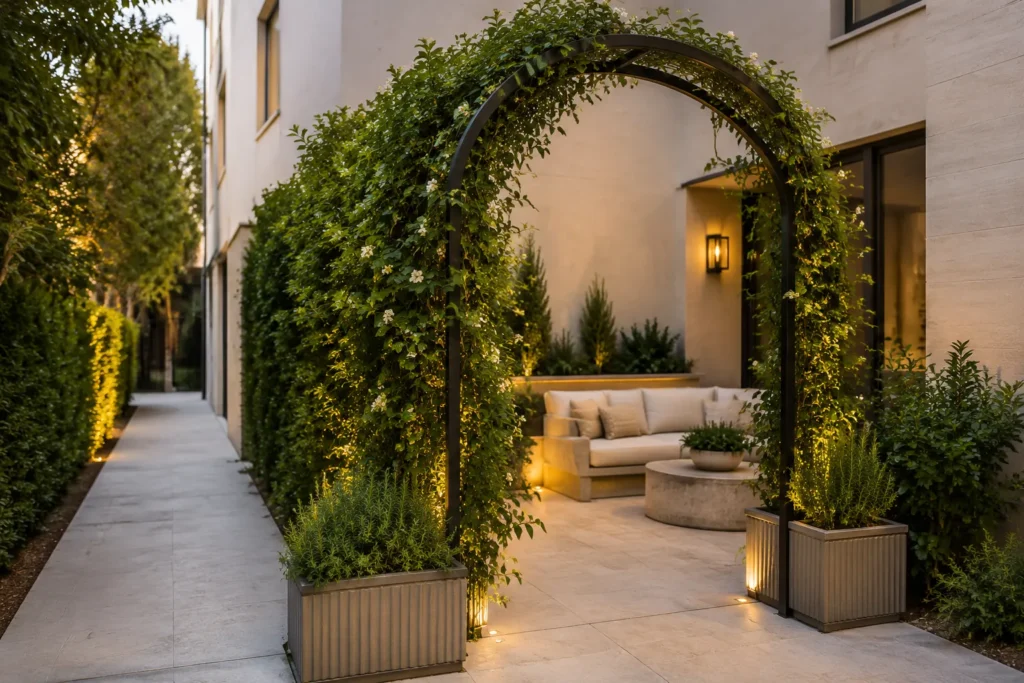
Place a 7-foot arched frame where the patio connects to a shared walkway, positioning the opening so it hides direct views into the lounge or dining space. Anchor the powder-coated black metal or natural cedar arch inside two 22-inch-deep planters filled with star jasmine, climbing rose, evergreen clematis, or grapevine suited to the local climate. The planted entrance provides partial privacy immediately and fuller seasonal coverage later, working best for courtyard patios and townhome gardens; tie new growth with soft reusable plant ties and keep the center opening clear. Why It Works: The arch shields both the entrance and the interior sightline while turning a functional privacy element into a strong visual destination.
11. Sunken Banquette With an Integrated Green Rim
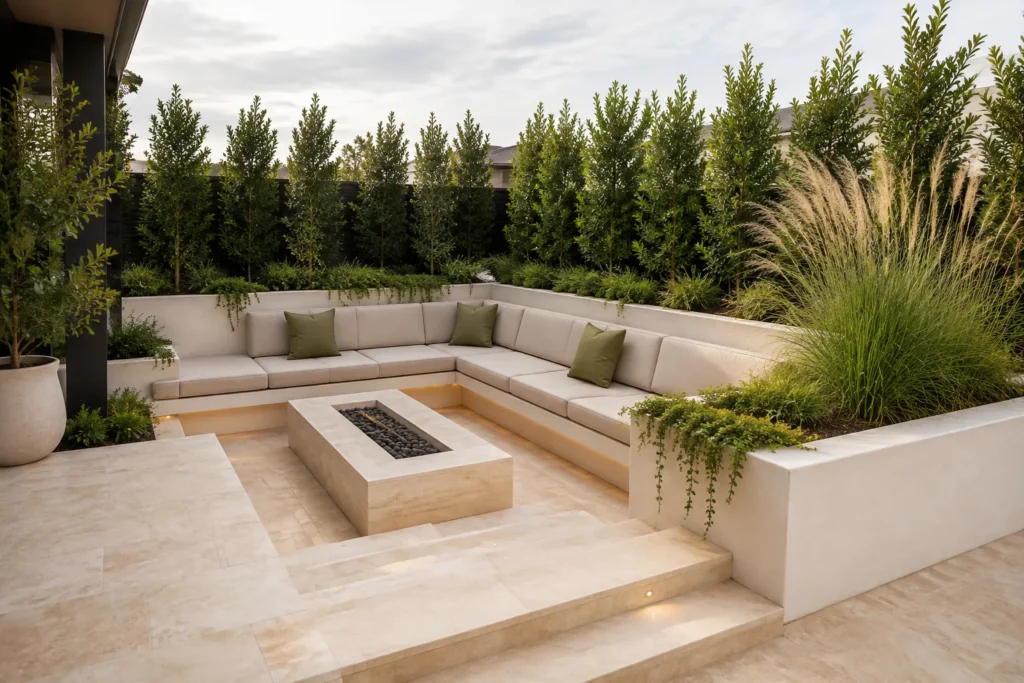
Build a low outdoor banquette into one corner and place raised planters directly behind its back and along one exposed side. Use 28 to 32-inch-high smooth stucco, limestone, or board-formed concrete planters containing compact podocarpus, dwarf olive, bay laurel, or ornamental grasses, then soften the edges with trailing rosemary or dichondra. This arrangement provides full seated privacy for medium and large patios without relying on extremely tall plants; incorporate drainage, irrigation access, and suitable root depth before completing the built-in structure. Why It Works: Raising the plants behind low seating places the foliage exactly at eye level, producing an intimate outdoor room with a clean, custom-designed finish.
12. Backlit Translucent Green Screen
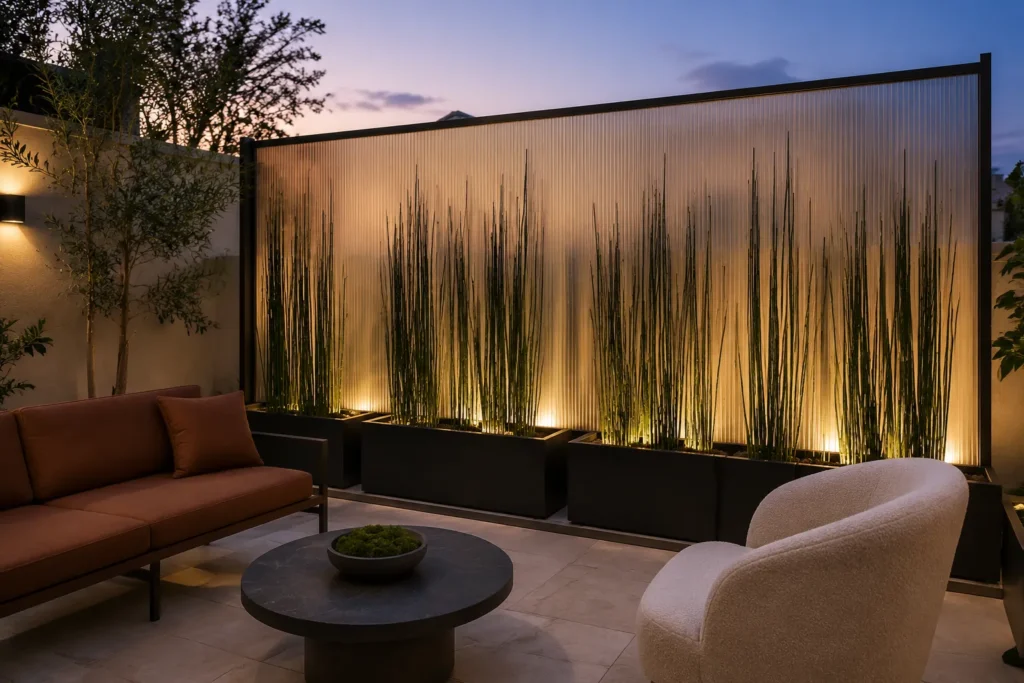
Install a 6-foot ribbed or frosted polycarbonate panel inside a slim black frame, then place layered plants on the patio side rather than covering the whole surface with vines. Position tall horsetail reed in sealed contained planters, upright grasses, or narrow podocarpus against the panel, adding low-voltage warm lighting at the base to illuminate their silhouettes after dark. The panel creates full visual privacy for small urban patios while the planting adds depth and softness; use waterproof outdoor lighting and keep aggressive or moisture-loving plants completely container-controlled. Why It Works: The translucent background admits daylight but obscures outside views, while the backlit foliage turns a practical screen into an elegant nighttime feature.
13. Modular Planter Islands on Concealed Casters
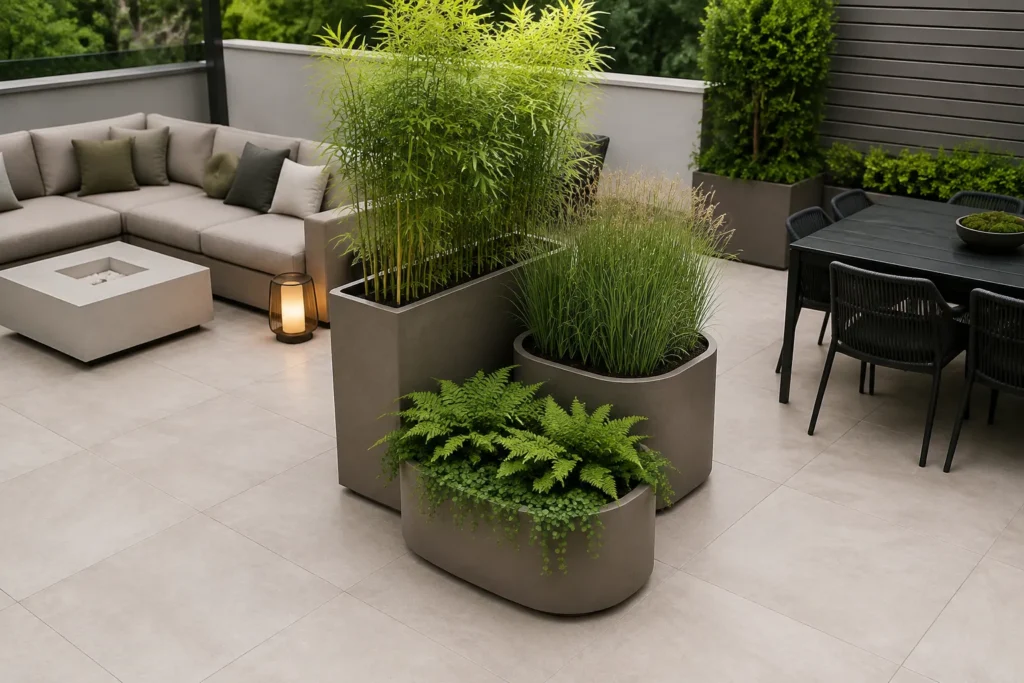
Group three different planter modules into an asymmetrical island between the seating area and the unwanted view instead of placing them directly against the boundary. Use one 36-inch-tall planter with clumping bamboo or podocarpus, one 26-inch planter with ornamental grass, and one 18-inch planter with ferns or trailing greenery, all in matching matte taupe fiberglass with concealed locking casters. The cluster supplies adjustable partial to full privacy for multipurpose patios, rental homes, and entertaining spaces; wheels must be rated for the containers’ fully watered weight. Why It Works: Overlapping heights block the view with a relatively small footprint, while the movable island can redefine the patio for dining, lounging, or gatherings.
14. Sculptural Olive Grove Screen
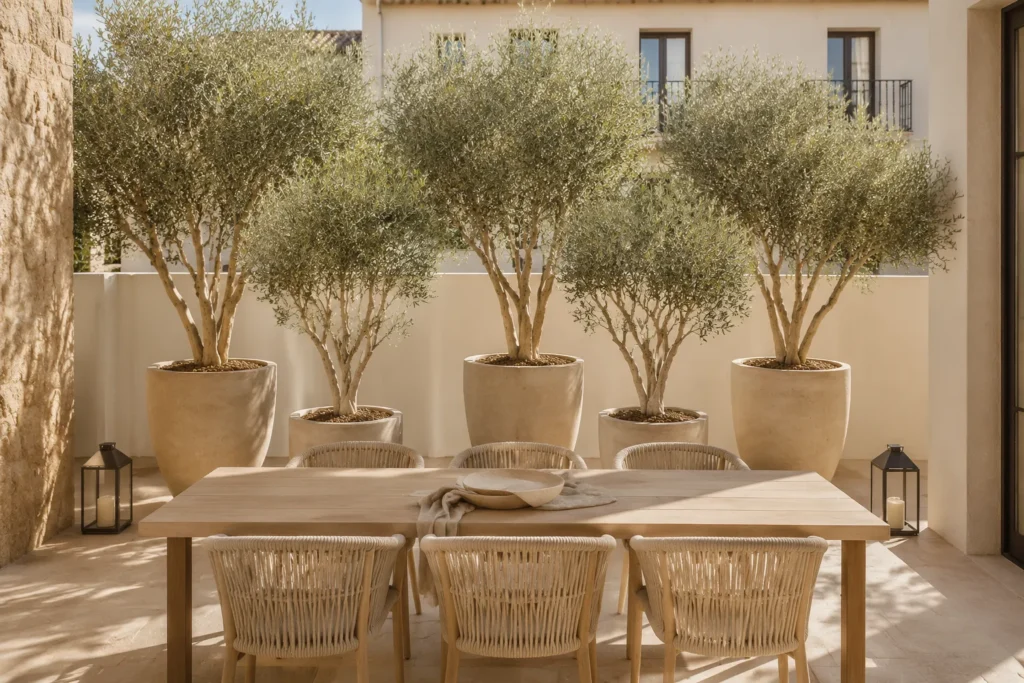
Place three or five multi-stem dwarf olive trees in an offset formation behind the dining area, avoiding the stiff appearance of a conventional straight hedge. Use 28 to 32-inch-high tapered terracotta or limestone-look planters, positioning the first row near the boundary and the second row slightly forward to overlap gaps between the canopies. This Mediterranean-inspired arrangement provides partial privacy for sunny patios and dry climates; olives require excellent drainage, strong sunlight, and winter protection in colder regions. Why It Works: The layered silvery canopies obscure seated views while their open trunks and sculptural forms retain light, negative space, and an expensive courtyard character.
15. Corner Fan Trellis With Radiating Vines
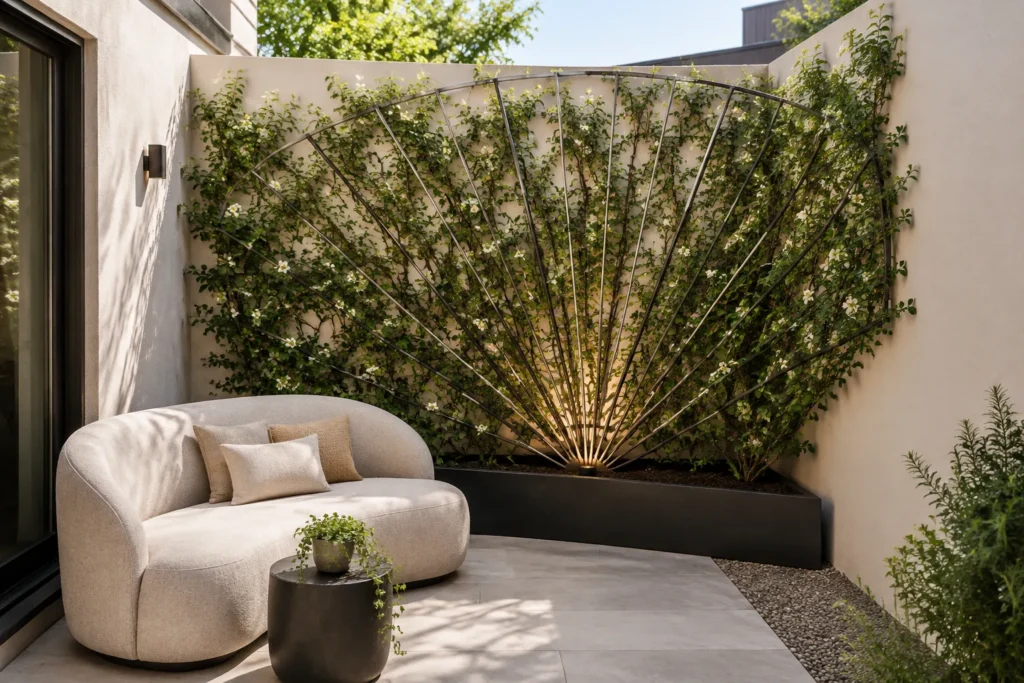
Fit a fan-shaped trellis into an exposed patio corner so its supports radiate outward rather than forming another flat rectangular screen. Anchor the 6 to 7-foot cedar or matte bronze metal frame inside a single 24-inch-deep triangular planter, then grow star jasmine, climbing hydrangea, evergreen clematis, or mandevilla across the spreading ribs. It provides partial to full privacy where two boundaries meet and works well on compact patios with one particularly exposed corner; rotate and tie stems during the growing season to prevent a dense center with empty outer edges. Why It Works: The fan shape transforms an awkward corner into a focal point while overlapping leaves block views arriving from two directions.
16. Vertical Edible Espalier Screen
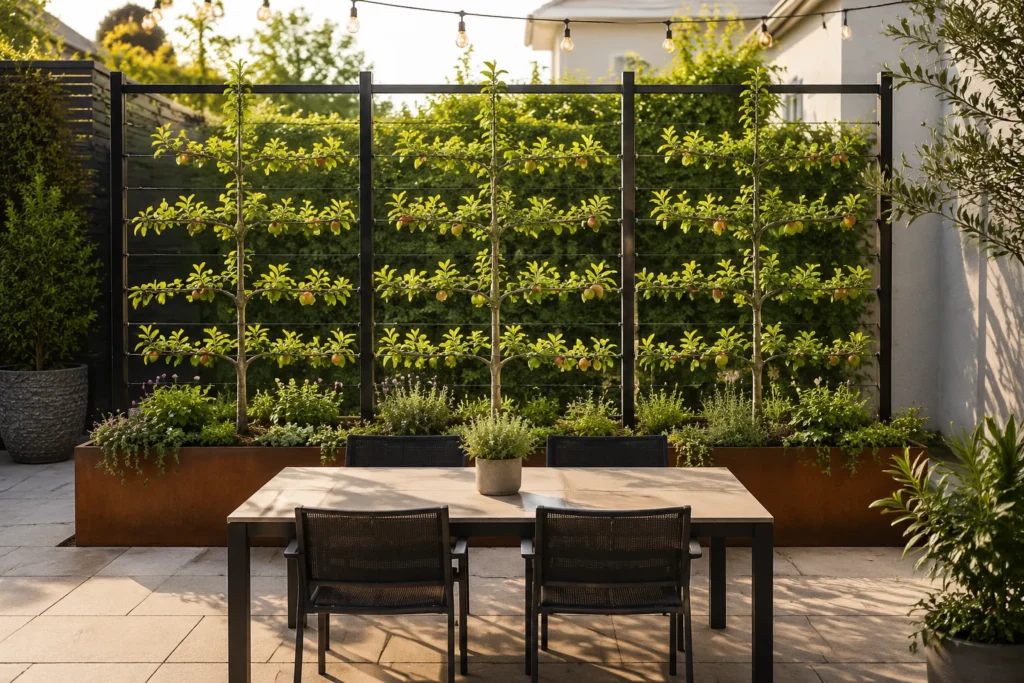
Train dwarf apple, pear, fig, citrus, or bay laurel into flat horizontal tiers against a freestanding wire framework. Use a 6-foot black steel grid positioned inside a continuous 24-inch-deep, 26-inch-high corten steel or sealed cedar planter, underplanting it with thyme, chives, strawberries, or trailing oregano. This edible screen provides partial privacy for sunny dining patios and outdoor kitchens, though fruit trees must be selected for the local climate and pruned regularly to preserve the espalier form. Why It Works: The horizontal branches create clear visual structure and block views while turning a narrow planting footprint into a productive designer feature.
17. Suspended Vine Frames for a Tiny Balcony
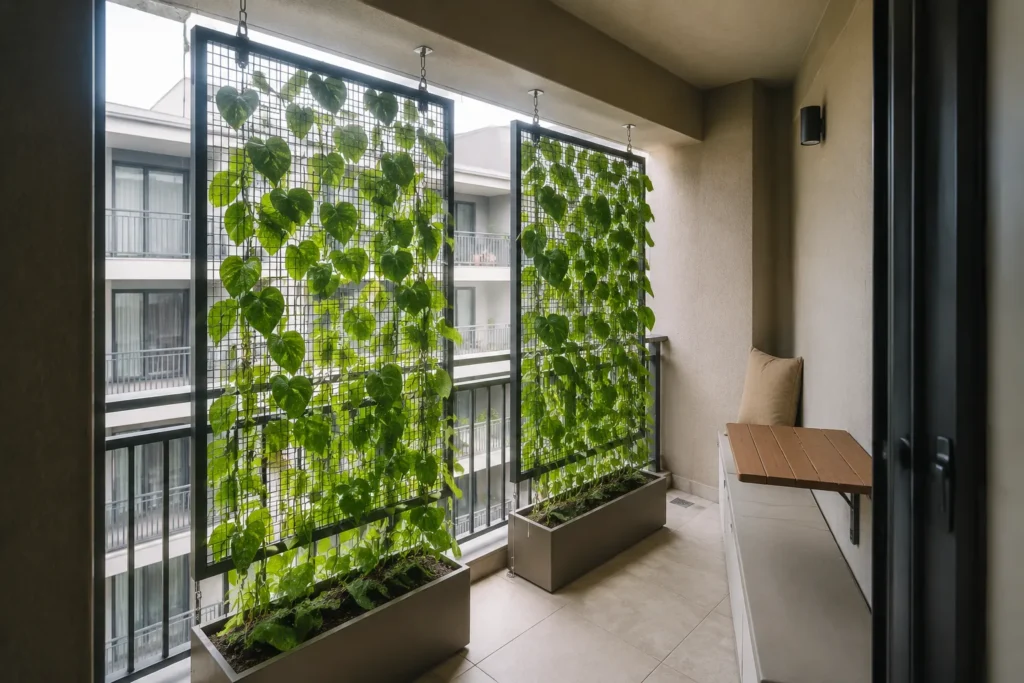
Hang two lightweight rectangular frames vertically from a structurally approved overhead beam, stopping them above the floor to preserve the balcony’s usable width. Place narrow 16-inch-deep planters directly beneath the frames and train pothos, philodendron, star jasmine, annual cypress vine, or another light-appropriate climber upward and across each 5 to 6-foot frame. The suspended system offers light-filtering to partial privacy for narrow balconies and covered apartment terraces; use safety cables, wind-rated fixings, and drip trays that prevent water from reaching lower balconies. Why It Works: Elevating the frames makes the privacy screen feel visually light and leaves the floor line open, which helps a tiny balcony appear less crowded.
18. Luxury Layered Landscape Wall With Green Niches
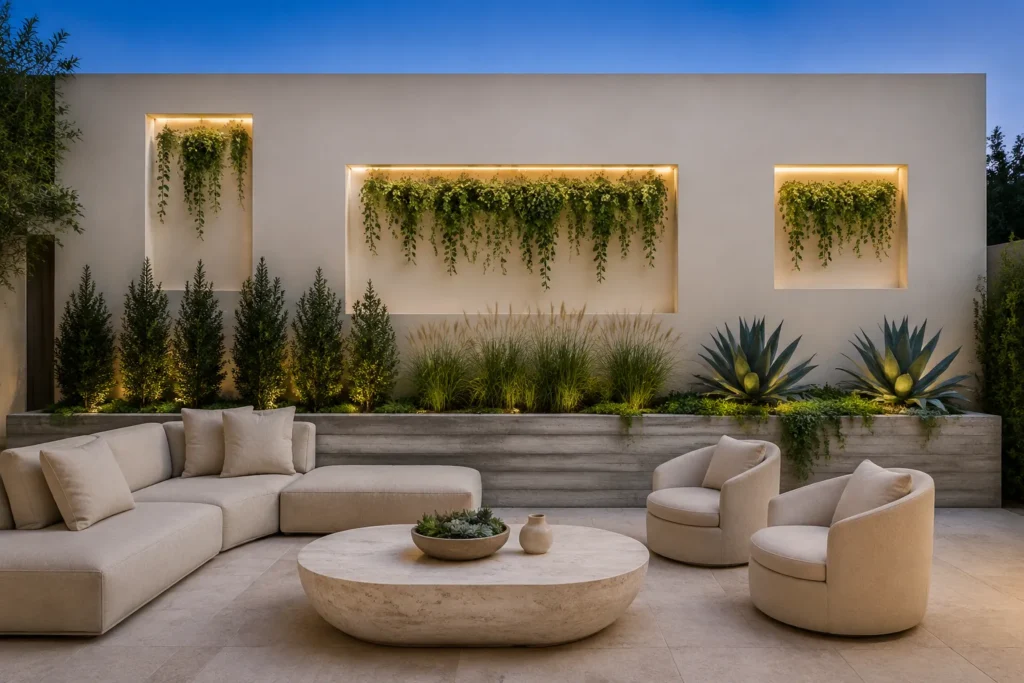
Construct a 6-foot smooth stucco wall with three large recessed niches and a continuous raised planter running across its base. Fill the planter with a restrained combination of upright podocarpus, feathery grasses, sculptural agave, or Fatsia according to climate and exposure, then allow one trailing plant to fall from each niche while concealed warm lights highlight the foliage. The wall supplies immediate full privacy for high-end patios and larger urban gardens; professional planning is required for foundations, drainage, waterproofing, electrical work, and the mature size of every plant. Why It Works: The solid wall delivers dependable screening, while the planted niches break up its mass and create the layered depth of a professionally designed outdoor resort.
How to Choose the Right Plant Privacy Screen
Begin by identifying the unwanted sightline, since privacy from a neighboring balcony requires a different solution than privacy from a ground-level walkway. Track the patio’s direct sunlight, reflected heat, shade, wind exposure, and seasonal conditions before selecting plants.
Check each plant’s mature height, width, root system, growth rate, and local climate requirements. A fast-growing plant may provide quicker coverage, but it can also demand frequent pruning or become too large for its container.
Trees, bamboo, and large shrubs need deep, stable containers with enough soil to support healthy roots. Bamboo and other aggressive plants must remain in properly contained planters, while every container needs effective drainage and a surface-appropriate method for handling runoff.
Balcony and rooftop planters become significantly heavier after watering, so verify structural limits and secure tall screens against wind. Choose a concept that matches the amount of watering, pruning, feeding, seasonal cleanup, and winter protection you can realistically maintain.