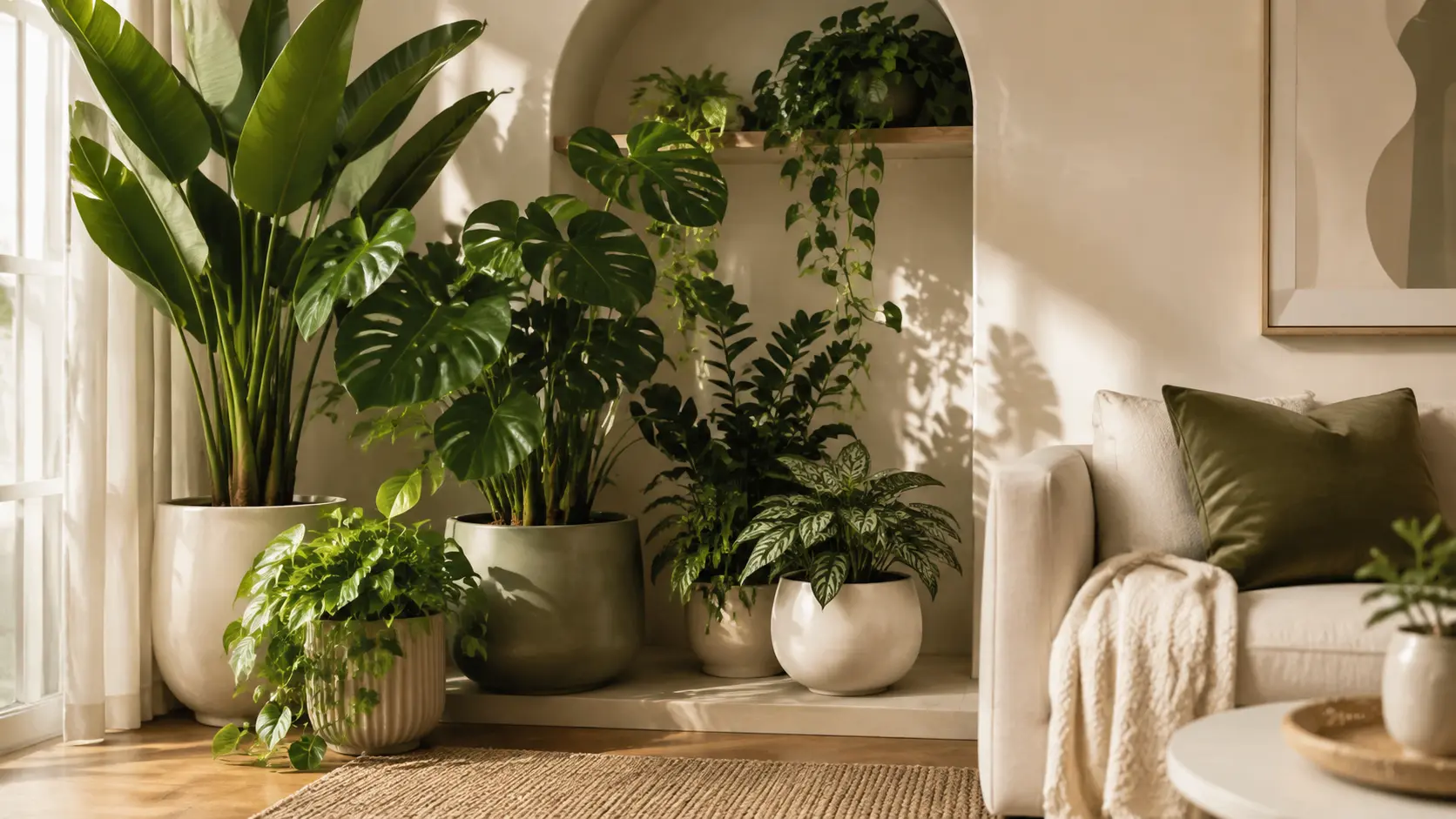
A plant corner can look surprisingly unfinished when it’s simply a collection of pots pushed against a wall. The most memorable living room plant corner ideas treat greenery as part of the room’s architecture, using height, lighting, furniture, and negative space to create a complete composition.
These 18 ideas move beyond standard plant stands and crowded shelves. Each one creates a distinct focal point while accounting for natural light, watering, floor space, rentals, and the way your living room functions every day.
1. Make One Giant Plant Look Like Living Sculpture
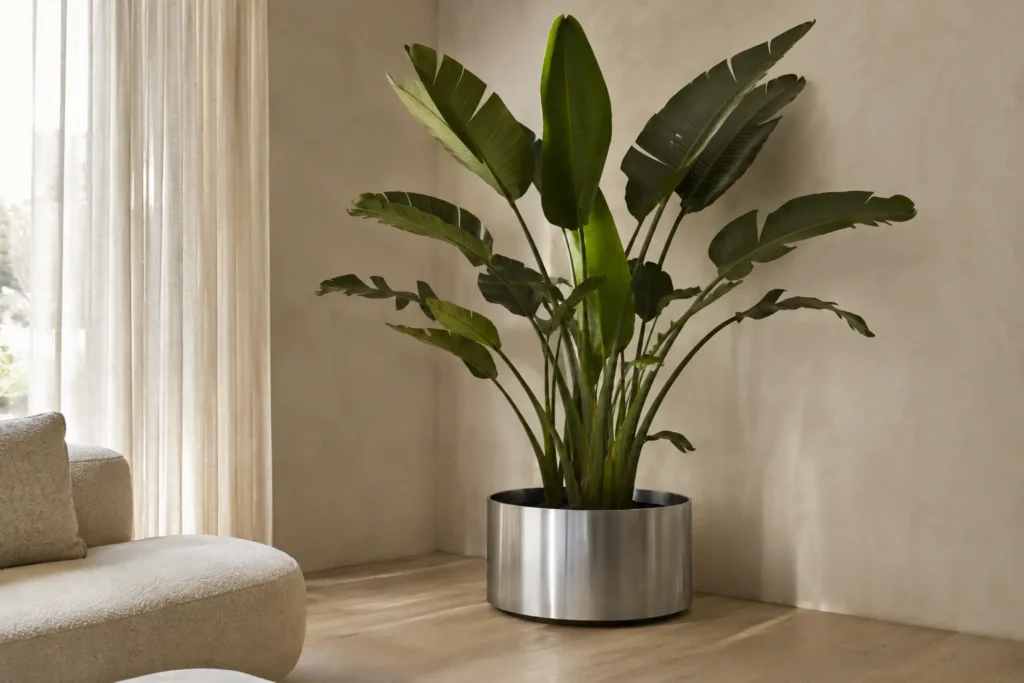
Choose one mature bird of paradise, rubber tree, fiddle-leaf fig, or kentia palm rather than several undersized plants. Place it in a broad chrome, resin, or lightweight stone-look planter measuring roughly one-third the width of the plant’s canopy.
Leave at least 12 inches of open floor around the planter so the foliage has a clean silhouette. A wheeled plant caddy hidden underneath makes watering and cleaning much easier. Fiberglass planters often look convincing, while thin faux-marble finishes tend to reveal their price at close range.
2. Build a Floor-to-Ceiling Green Column
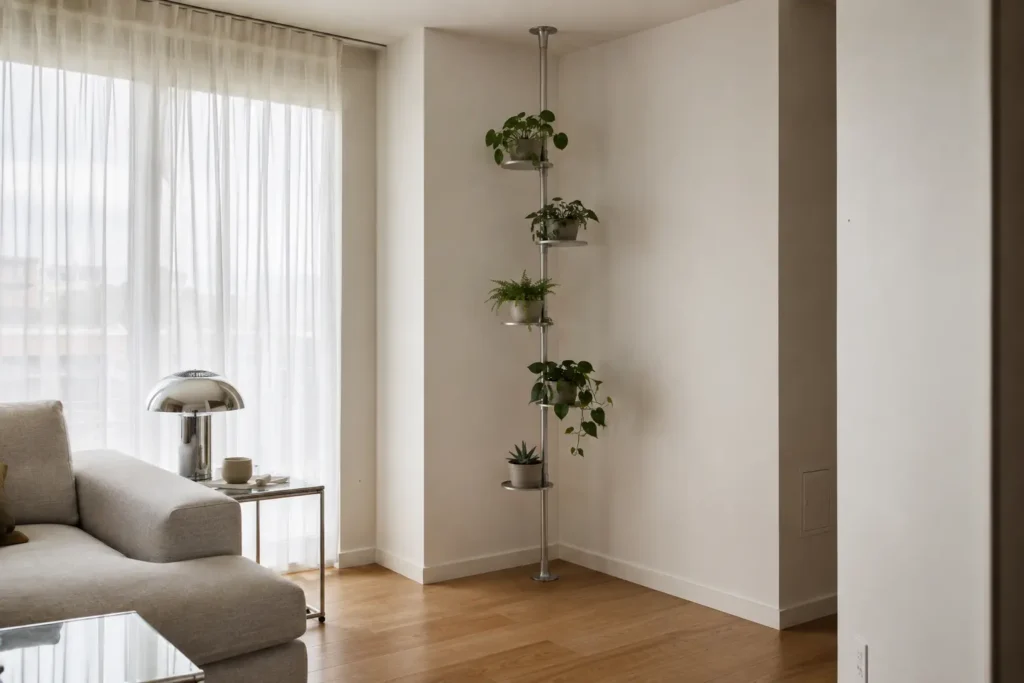
A tension-mounted plant pole uses vertical space without taking over the floor. Choose a slim black, white, or brushed-metal model with adjustable platforms, then distribute four compact plants from knee height to just below the ceiling.
Keep the foliage varied but controlled: pair an upright peperomia with a rounded pilea and one trailing philodendron. Lightweight nursery pots slipped inside decorative covers reduce stress on the supports. This arrangement is particularly useful for renters because it requires no drilling, though you should check the pole’s tension regularly.
3. Float a Plant Cloud Above the Corner
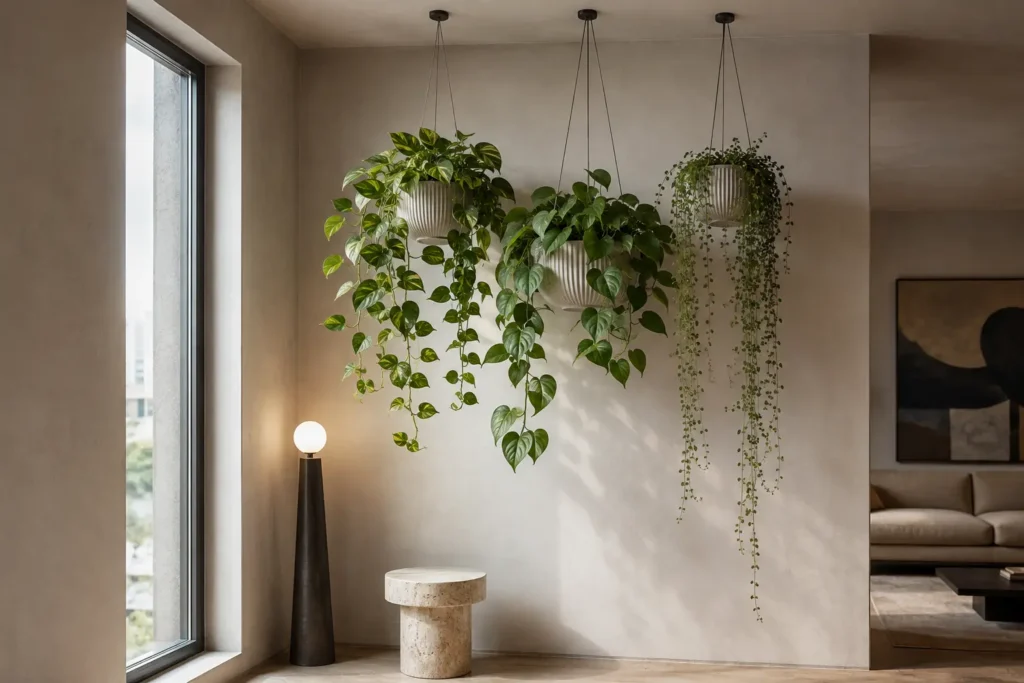
Suspend two or three trailing plants near a bright corner window to create a loose canopy rather than a rigid row. Hang them at different levels, keeping the lowest planter at least 6 feet 6 inches above a walkway or comfortably above nearby furniture.
Simple ceramic, metal, or ribbed glass-fiber planters look cleaner than bulky macramé hangers in a modern room. Use secure ceiling anchors rated for more than the filled planter’s weight. Removable liners also matter because carrying a dripping hanging pot across the living room quickly becomes inconvenient.
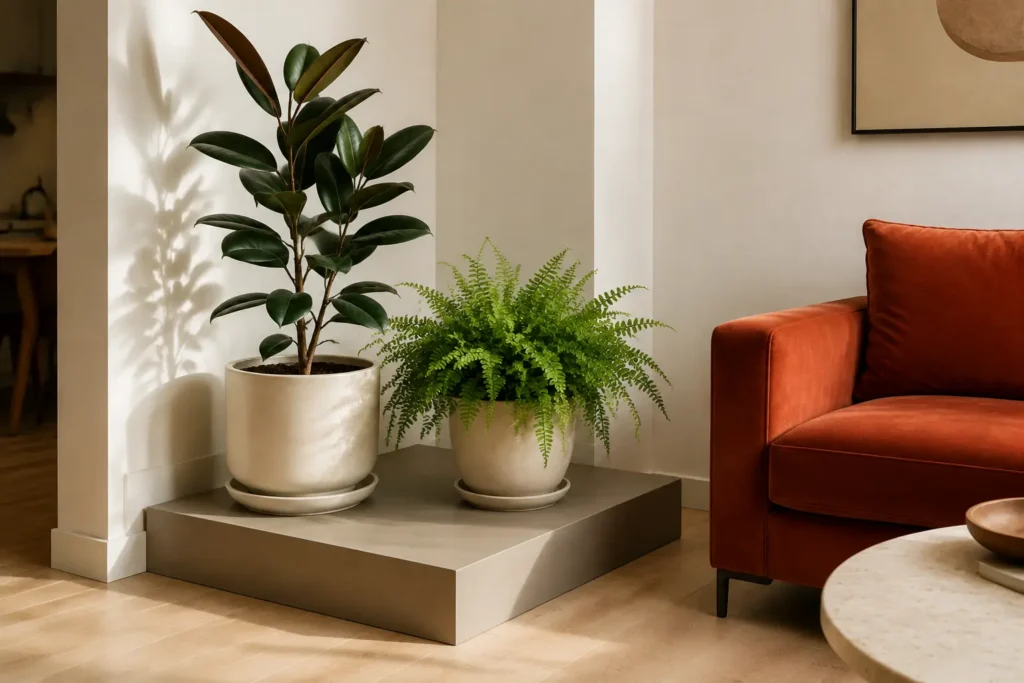
4. Create a Sunken Indoor Garden on a Low Platform
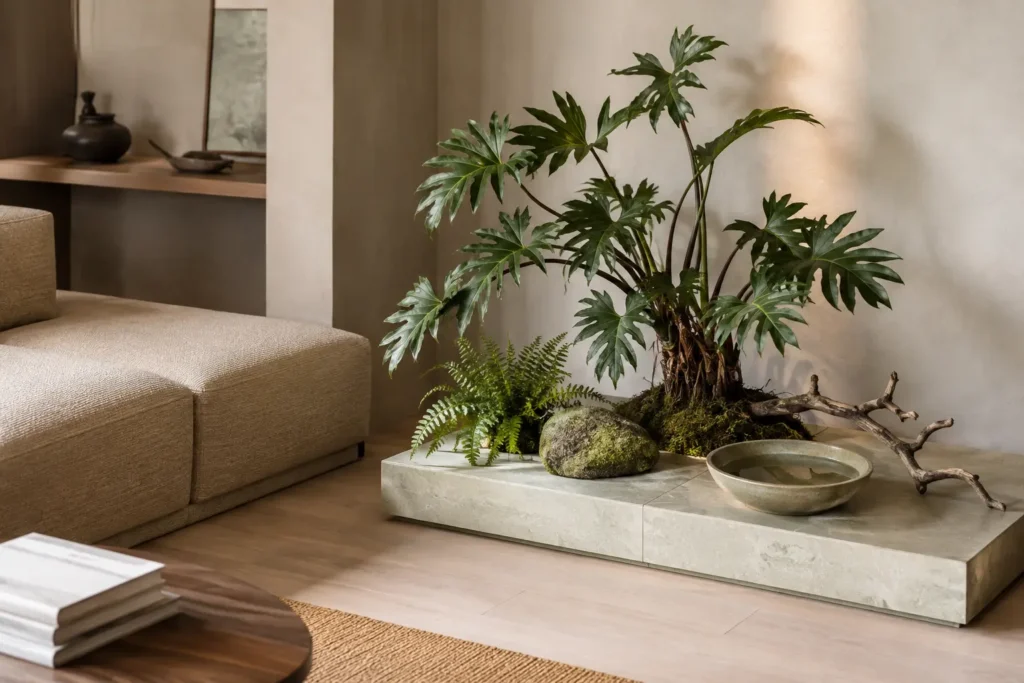
Build a low, 3- to 5-inch platform from sealed plywood, large-format tile, or moisture-resistant composite decking. Arrange two sculptural plants, a low fern, and a shallow stone bowl across it with deliberate gaps between each element.
The raised base visually connects separate containers and makes the grouping read like one miniature landscape. Keep the platform under 36 inches wide in a compact room and soften sharp corners if children use the space. Stone-look porcelain provides the depth of natural stone without the same cost, weight, or sealing requirements.
5. Place a Curved Sofa Inside a Green Embrace
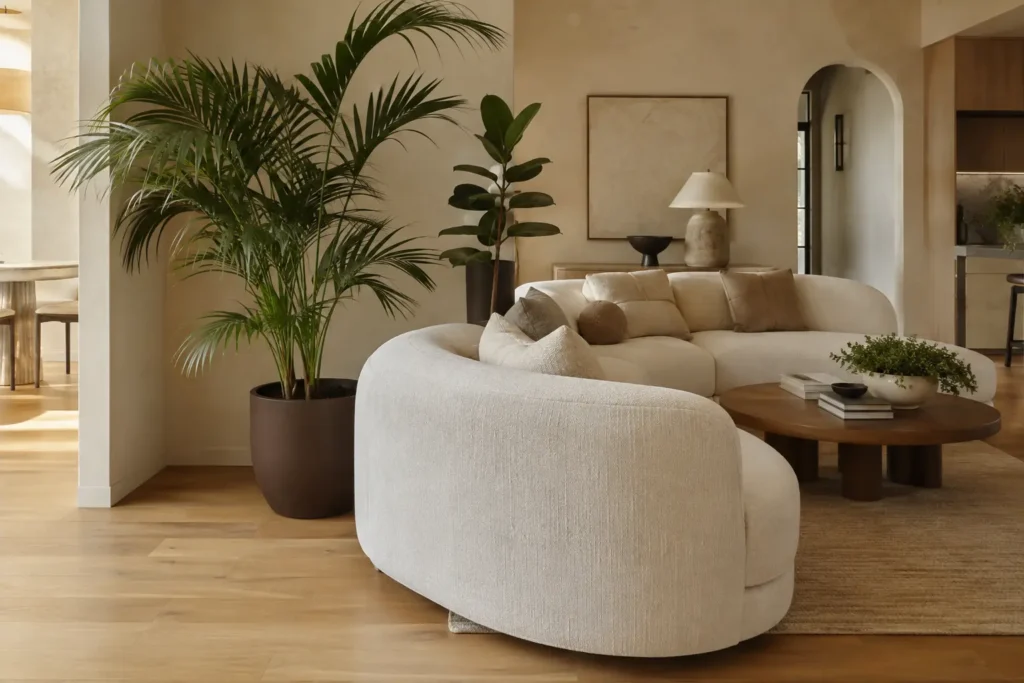
Use tall, narrow plants to soften the exposed end of a curved sofa or sectional. Position an arching palm 8 to 12 inches behind the upholstery, then place a second upright plant farther into the corner to create depth.
The greenery should frame the seating rather than spill onto it. Repeated contact damages leaves and can leave damp marks on fabric, so allow room for growth. This layout works especially well in open-plan living rooms because the plants create a gentle boundary without introducing a solid screen that blocks light or conversation.
6. Display a Plant on a Stainless-Steel Pedestal
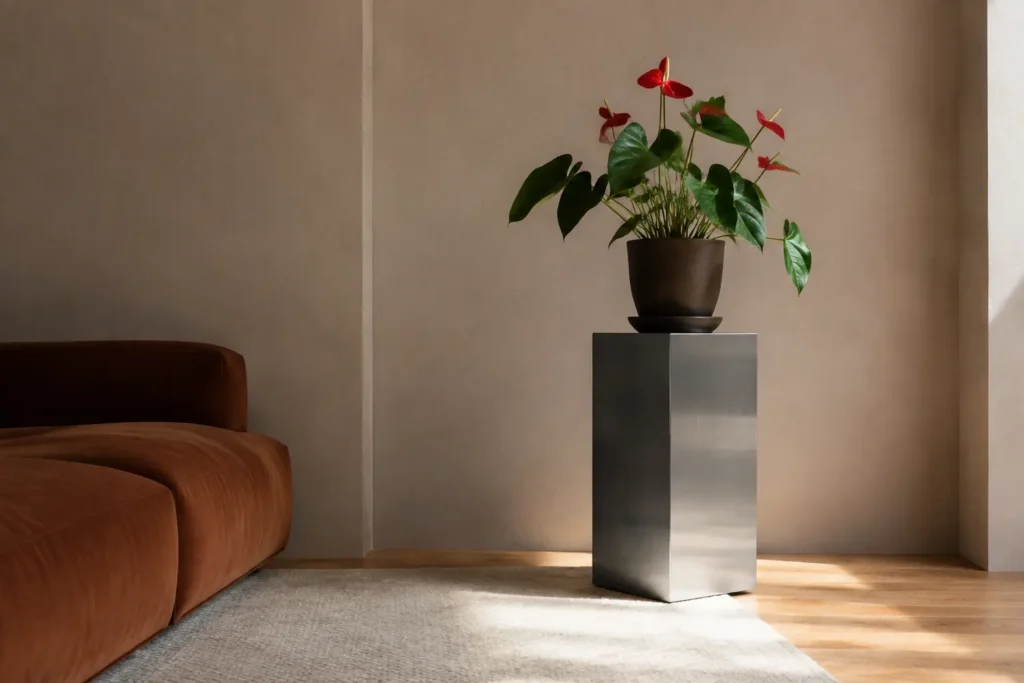
Treat one beautifully shaped plant as you would a piece of art. Place a compact monstera, anthurium, or trailing philodendron on a 24- to 30-inch stainless-steel plinth, leaving the surrounding wall and floor largely bare.
Polished steel reflects foliage and daylight, while brushed steel shows fewer fingerprints. A secondhand metal side table or commercial kitchen pedestal can provide a less expensive substitute. Add a waterproof tray beneath the pot because rust marks, mineral rings, and swollen furniture edges will quickly undermine an otherwise precise, gallery-like composition.
7. Design a Backlit Green Silhouette
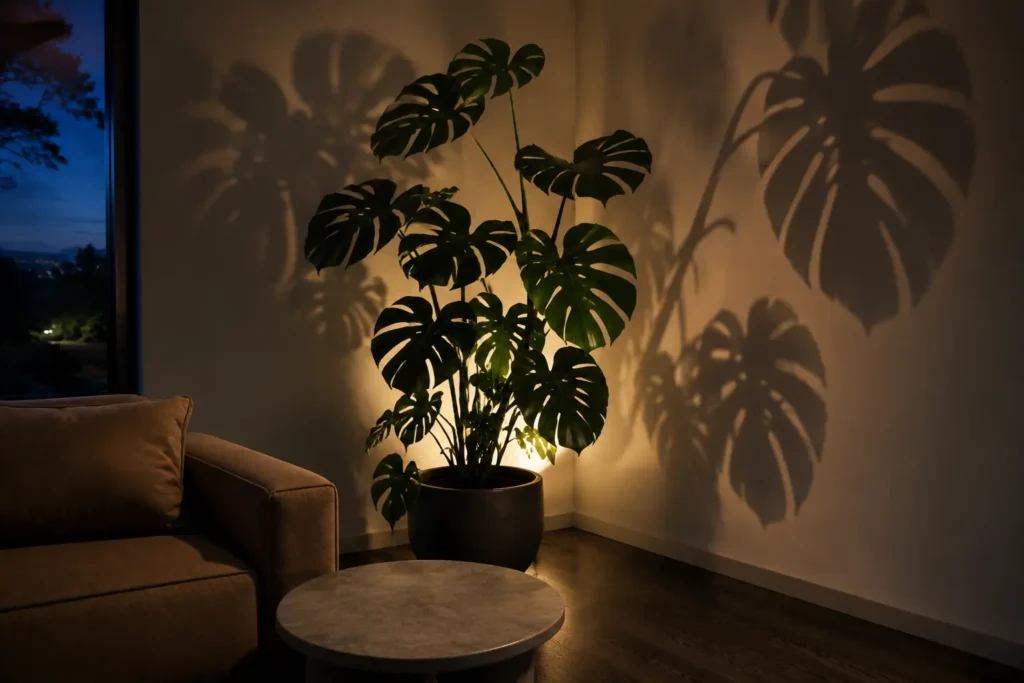
Place a tall, open-form plant in front of a concealed uplight or narrow LED floor lamp. After sunset, the light will outline the leaves and cast oversized botanical shadows across the corner walls.
Keep the bulb below eye level and choose a warm 2700K to 3000K color temperature for evening use. Cooler light can make pale walls and green leaves appear sharp or gray. If the lamp also serves as a grow light, confirm that its output suits the plant; an ordinary decorative bulb may create a beautiful shadow without supporting healthy growth.
8. Frame the Corner With a Living Green Portal
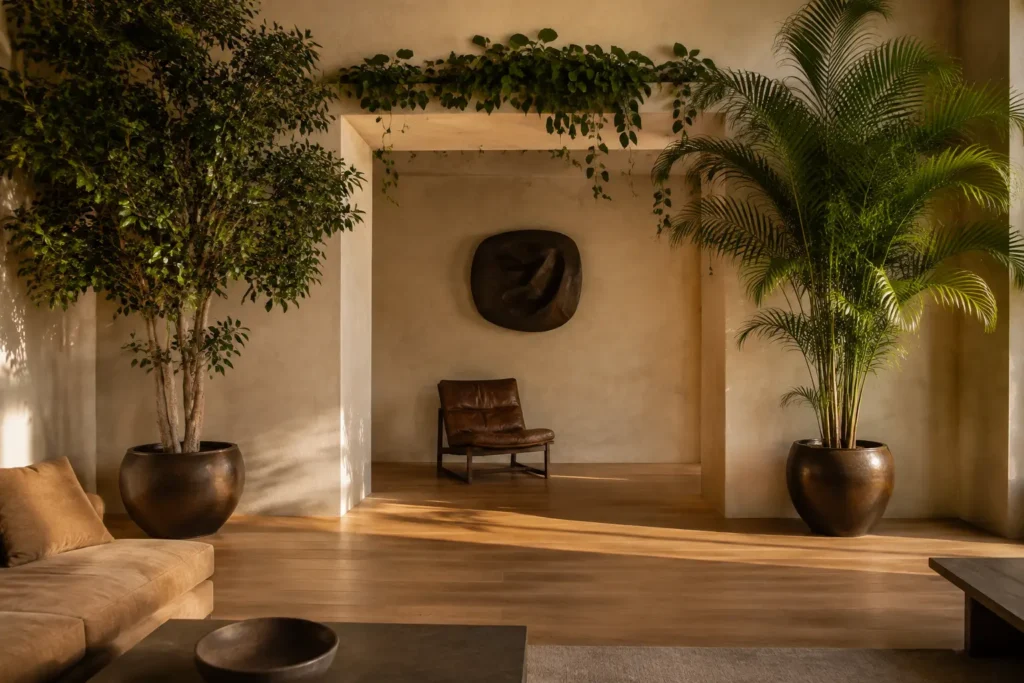
Position two tall plants on opposite sides of a shallow recess, window, or narrow console. Add one controlled trailing plant above or between them so the foliage forms a loose frame while the center remains open.
Use different growth habits rather than two identical plants: an upright ficus can balance a softer palm without creating rigid symmetry. Keep at least 30 to 36 inches of clear passage if the composition surrounds a doorway. The result draws attention toward the corner and gives an awkward architectural gap a clear role within the living room.
9. Make the Planter Disappear Into the Wall
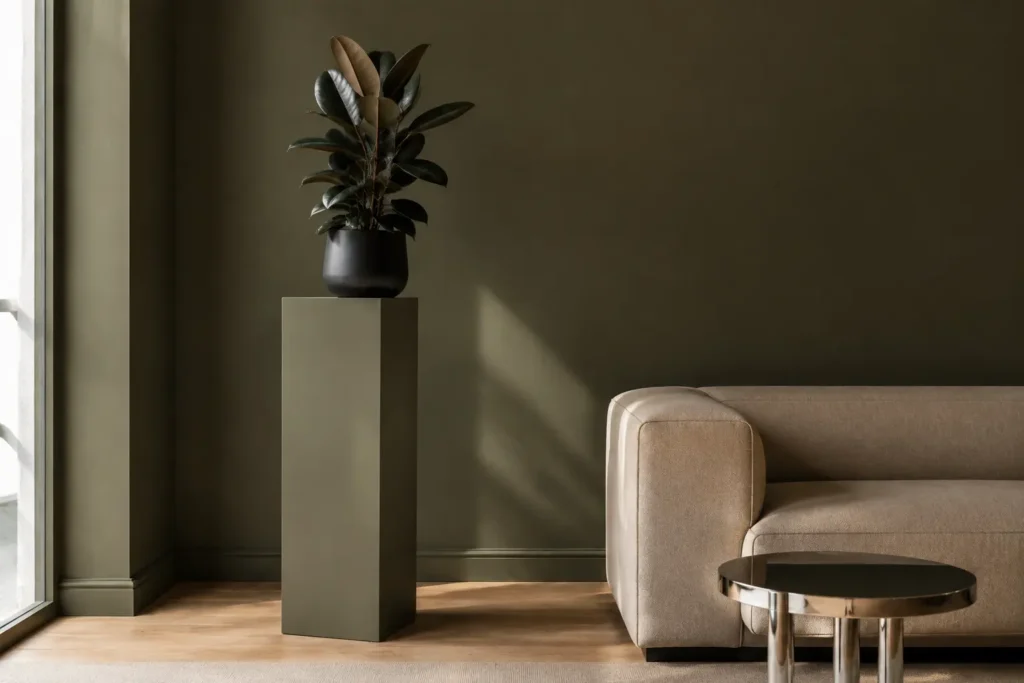
Paint a simple planter and its pedestal the same color as the wall so the container recedes and the leaves appear almost suspended. This approach is most effective with a saturated matte shade such as clay, olive, dusty blue, or deep brown.
Use bonding primer before painting glazed ceramic, plastic, or laminate surfaces, and finish the planter with a water-resistant topcoat. Matte finishes conceal minor surface imperfections better than gloss, but they can show water splashes. Matching the pot precisely creates calm visual continuity without sacrificing the drama of the plant’s shape.
10. Turn a Burl-Wood Cabinet Into a Plant Laboratory
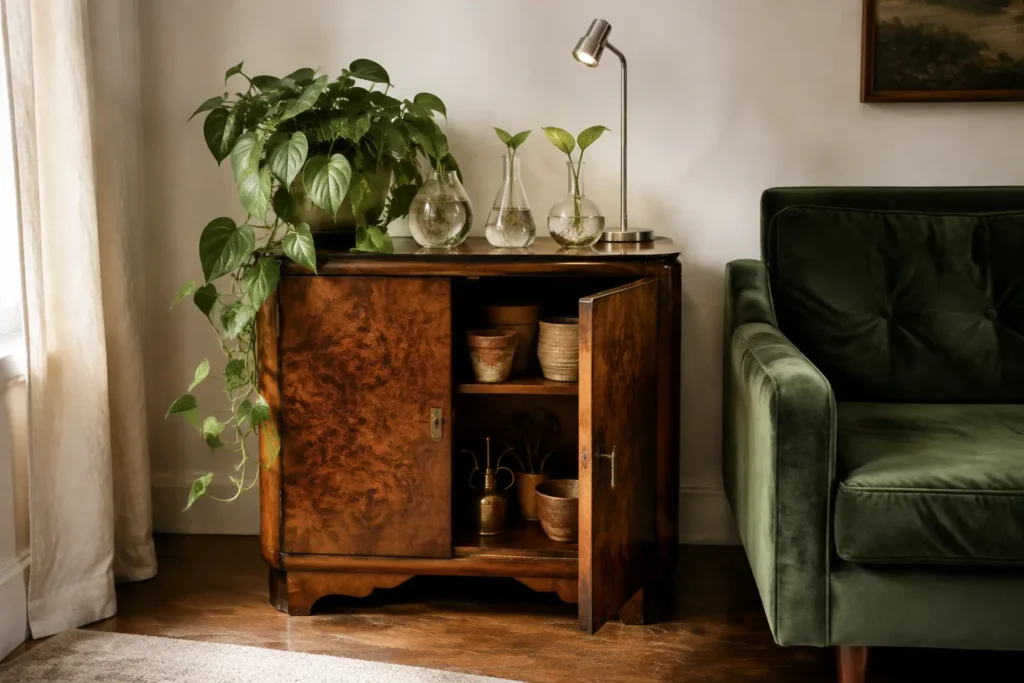
Top a compact vintage burl-wood cabinet with clear propagation vessels, one established mother plant, and a small directional grow lamp. The figured wood brings movement to the corner, while the transparent glass keeps the arrangement visually light.
Limit the display to three or four vessels and change cloudy water promptly; an overfilled propagation station can look more like a workbench than living room decor. Use the cabinet interior for pruning scissors, fertilizer, spare pots, and towels. Burl-patterned laminate is affordable, but inspect repeated grain patterns before buying because poor prints look noticeably artificial.
11. Introduce a Graphic Checkerboard Plant Platform
Set one or two pots on a tiled platform finished in checkerboard, grid, or alternating tonal squares. A 24- to 30-inch square base is usually large enough to register as a design feature without swallowing a modest corner.
For a restrained result, combine cream with terracotta, pale green, or muted burgundy rather than stark black and white. Peel-and-stick tile can work for a removable platform, but it should cover a rigid board rather than adhere directly to a rental floor. Sealed grout and a waterproof pot tray will prevent watering from staining the surface.
12. Create a Monochromatic Burgundy Plant Corner
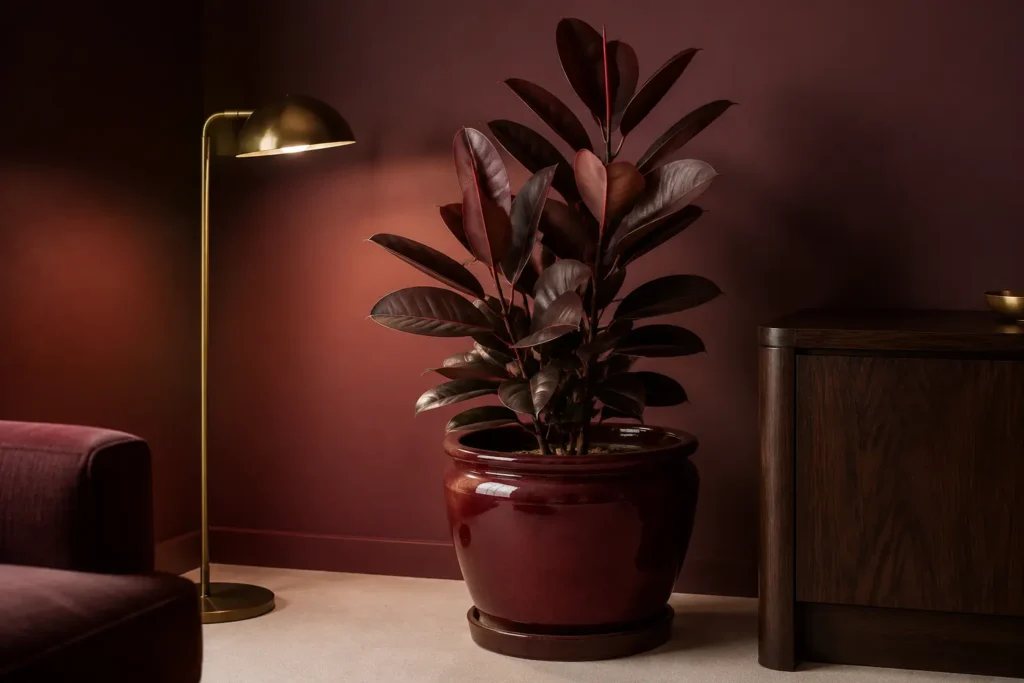
Build the palette around a burgundy rubber plant or another variety with wine-colored leaves. Pair it with an oxblood, plum, or dark red planter against a related wall color, then use warm brass or dark wood as a small contrasting finish.
Deep reds look rich in controlled daylight but can become flat in a poorly lit corner. Add a warm lamp or choose a wall shade with enough brown to prevent it from turning purple under cool LEDs. The limited palette makes the plant corner feel immersive without requiring a large collection of greenery.
13. Grow a Canopy Over a Lounge Chair
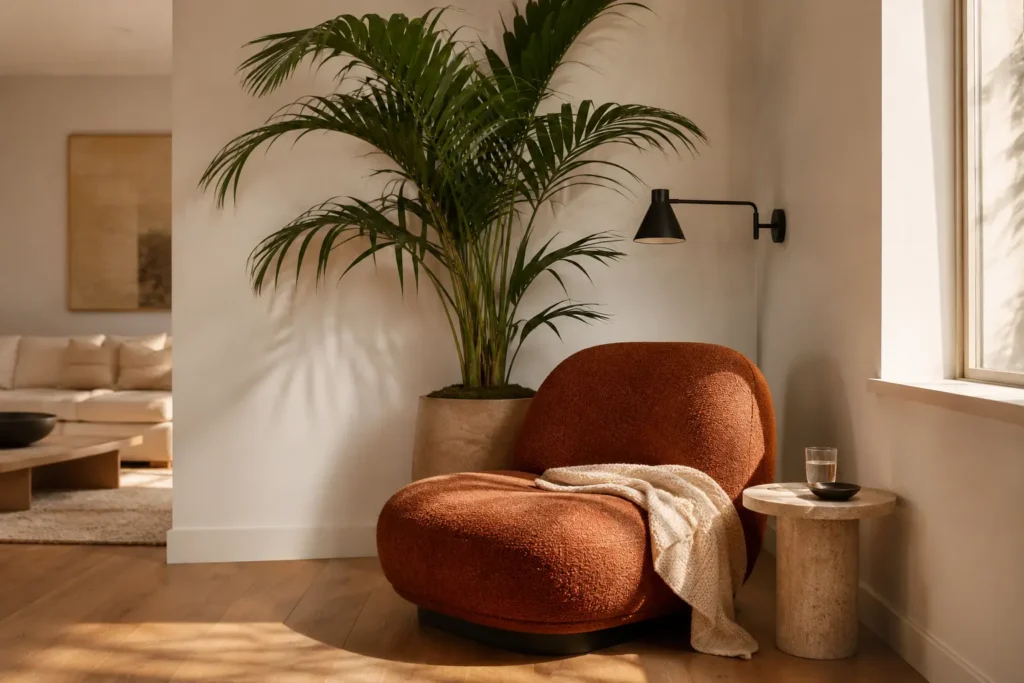
Place a compact lounge chair beneath the arching leaves of a kentia palm or similar soft-frond plant. The pot should sit behind one shoulder of the chair, allowing the canopy to curve overhead without brushing the reader’s face.
A seat width of 28 to 32 inches works well in many smaller living rooms, especially when paired with a wall-mounted reading light instead of a floor lamp. Avoid sharp-leaf plants beside frequently used seating. The finished corner feels sheltered and lush, yet it still functions as a comfortable place to read or have coffee.
14. Use Clear Acrylic to Make Plants Appear to Float
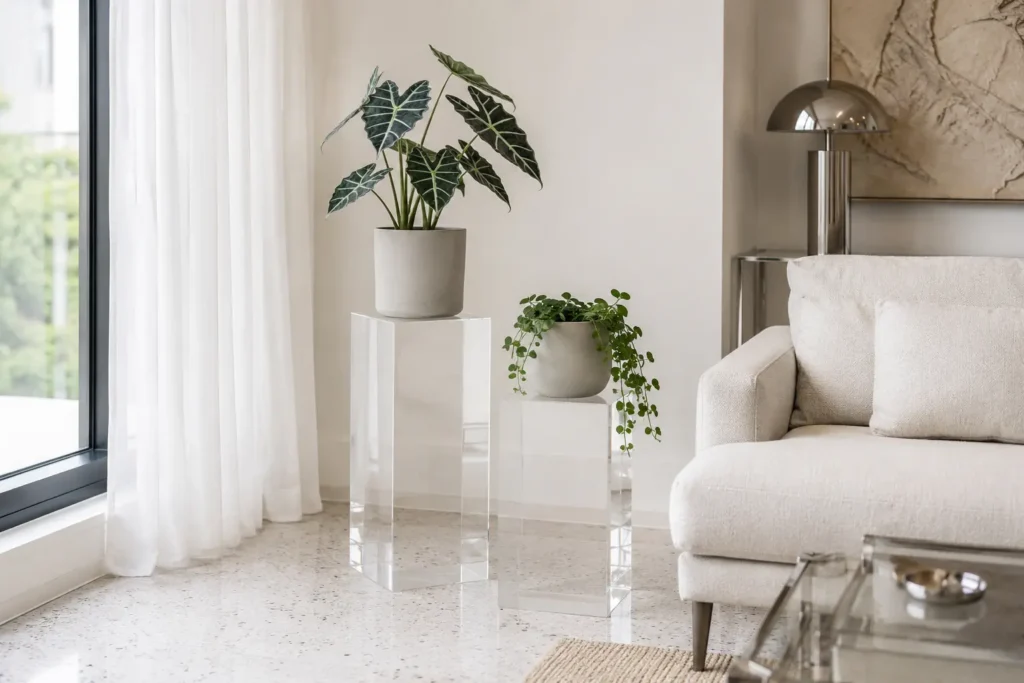
Arrange two clear acrylic plinths at different heights and place a sculptural plant on each. Because the supports visually recede, the leaves and containers become the main focus without adding another heavy furniture finish to the room.
Choose thick acrylic with polished edges; thin, flexible stands can look temporary and may bow under wet ceramic pots. Clear surfaces also show dust, mineral drips, and fingerprints, so this isn’t a maintenance-free option. Acrylic is most effective in a small living room where solid stands would interrupt sight lines or make the corner appear crowded.
15. Compose a Japanese-Inspired Miniature Plant Landscape
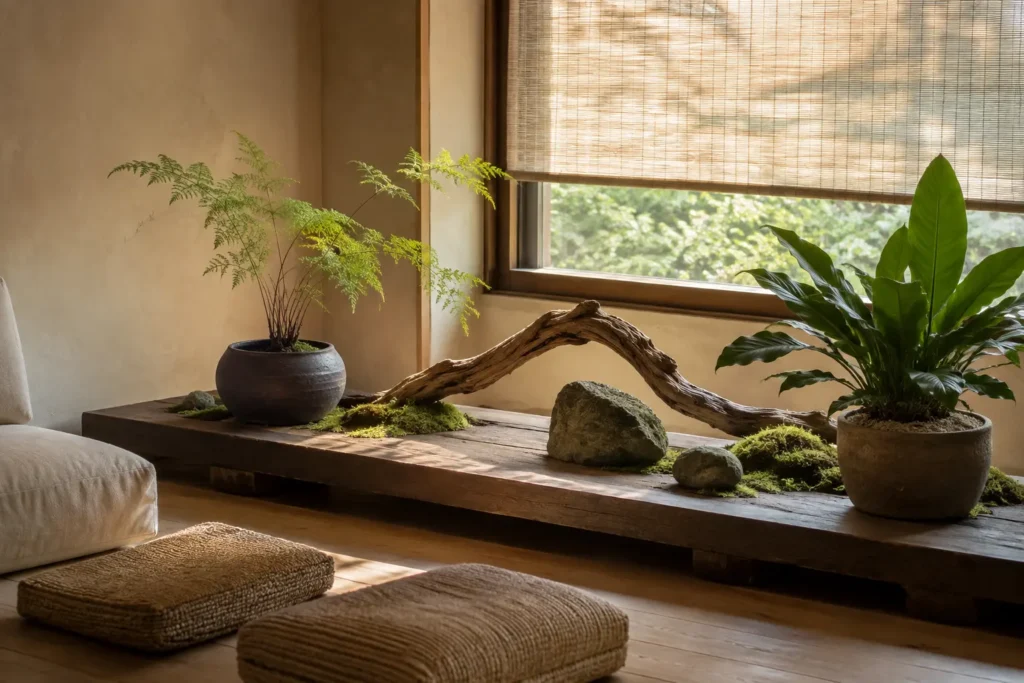
Replace a collection of separate stands with one long, low platform holding a carefully spaced fern, sculptural branch, mossy stone, and broad-leaf plant. Use dark clay, aged wood, or unglazed ceramic containers rather than highly decorative pots.
The arrangement depends on asymmetry and open space, so resist filling every gap. Preserved moss is easier to maintain than living moss, which usually needs more humidity and specific light than the average living room provides. This low composition works below windows because it adds greenery without blocking daylight or competing with the view.
16. Wrap an Awkward Structural Column With Greenery
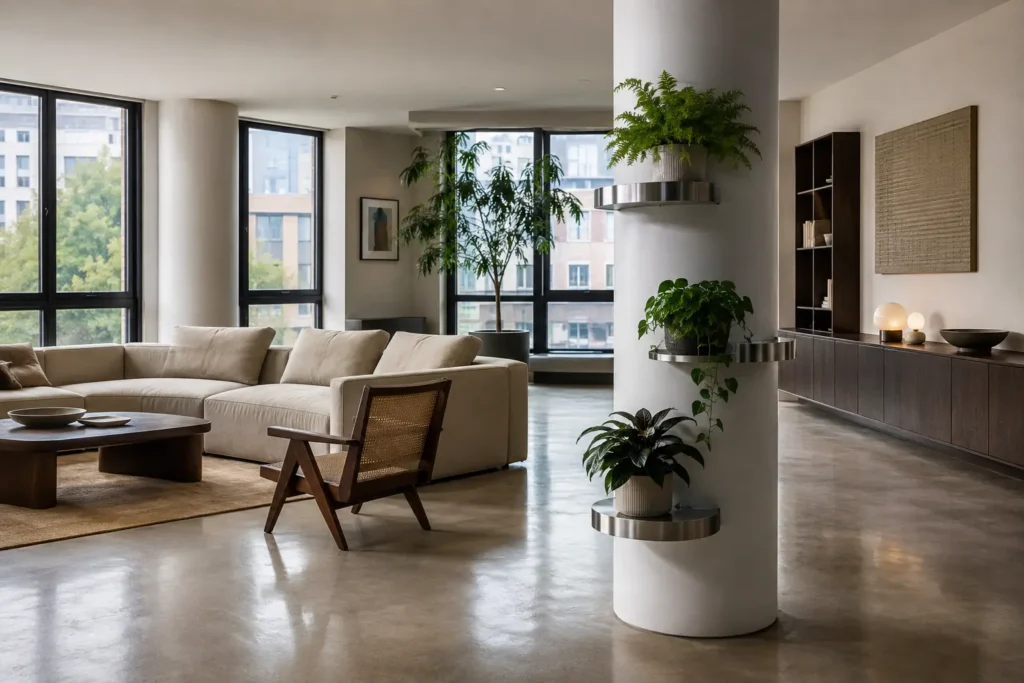
Turn a freestanding column into part of the plant display using removable circular ledges, a tension-mounted support, or slim metal brackets attached only when permanent installation is allowed. Stagger compact plants around the column instead of placing them in one straight vertical line.
Maintain at least 36 inches of circulation around the finished arrangement in a main walkway. In a rental, avoid adhesive shelves carrying live plants; moisture, weight, and changing temperatures can weaken the bond. A custom-looking effect is possible with a freestanding collar that wraps around the column without drilling into it.
17. Paint a Color-Blocked Plant Niche
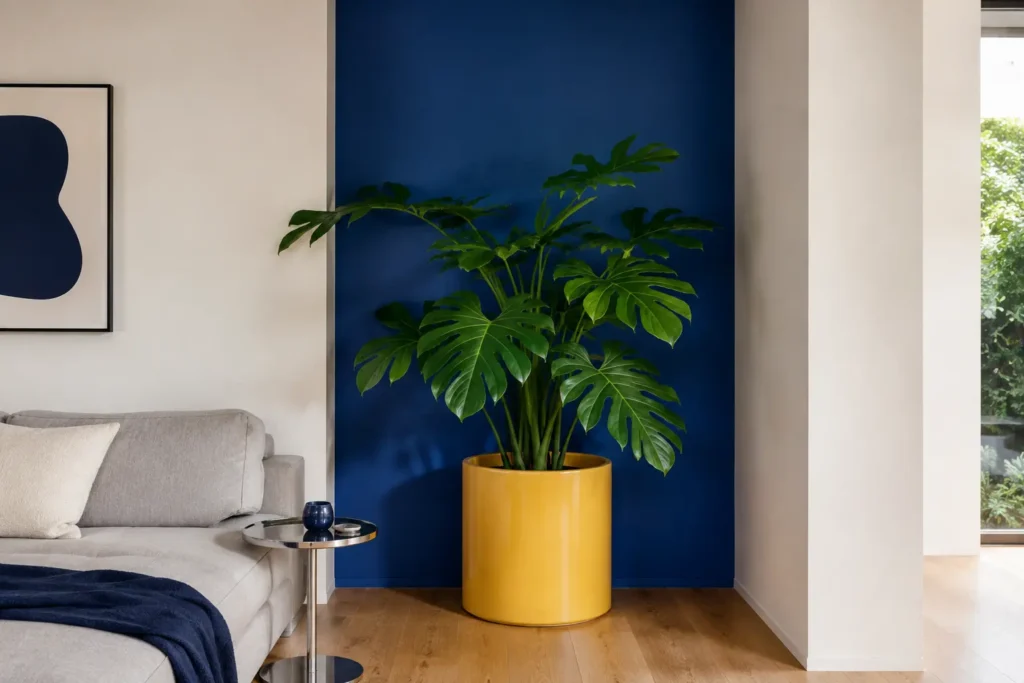
Define the corner with a block of cobalt blue, earthy red, butter yellow, or smoky green, then place one contrasting plant and planter inside the painted area. Extend the color from the baseboard to the ceiling, or create a clean rectangle slightly wider than the plant canopy.
Measure and tape the shape carefully because uneven edges become obvious beside architectural lines. Matte wall paint reduces glare and hides small imperfections, though an eggshell finish cleans more easily in busy households. Renters can achieve a similar result with removable wall panels painted off-site.
18. Build a Living Curtain Across the Corner Window
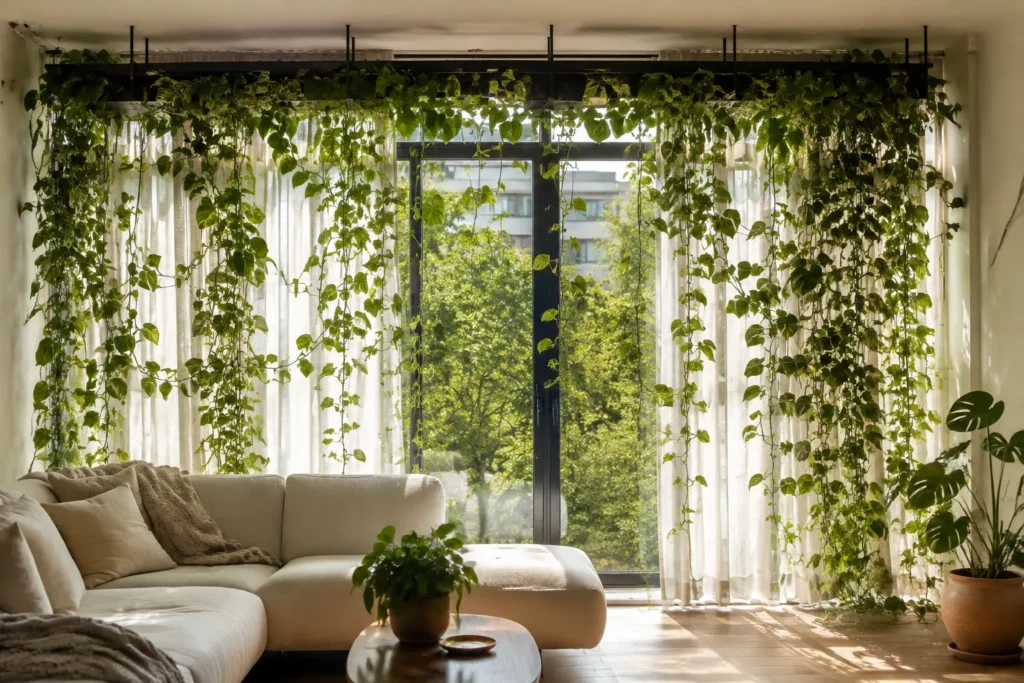
Mount a slim ceiling track 8 to 12 inches beyond the window edges and train lightweight vines along fine supports. Keep the center partially open so daylight still reaches the room, allowing foliage to gather more heavily along the sides like soft drapery.
Choose vines with manageable growth and avoid attaching stems directly to painted walls, where aerial roots and moisture may cause damage. Individual nursery pots hidden inside a removable overhead trough simplify replacement. This final composition turns the window into a layered green focal point while preserving access for cleaning and ventilation.
What to Consider Before Creating a Living Room Plant Corner
Start with actual light conditions, not the plant arrangement you hope will work. Watch the corner from morning through late afternoon and note direct sun, reflected light, heat from vents, and drafts from windows. A grow light can support a dark location, but it shouldn’t become an excuse to choose plants with incompatible care needs.
Protect the room as carefully as you style it. Every pot should have a waterproof saucer or liner, and heavy planters benefit from felt pads or wheeled caddies. Keep toxic plants away from curious pets and children, and don’t reduce a main walkway below approximately 36 inches simply to fit more foliage.