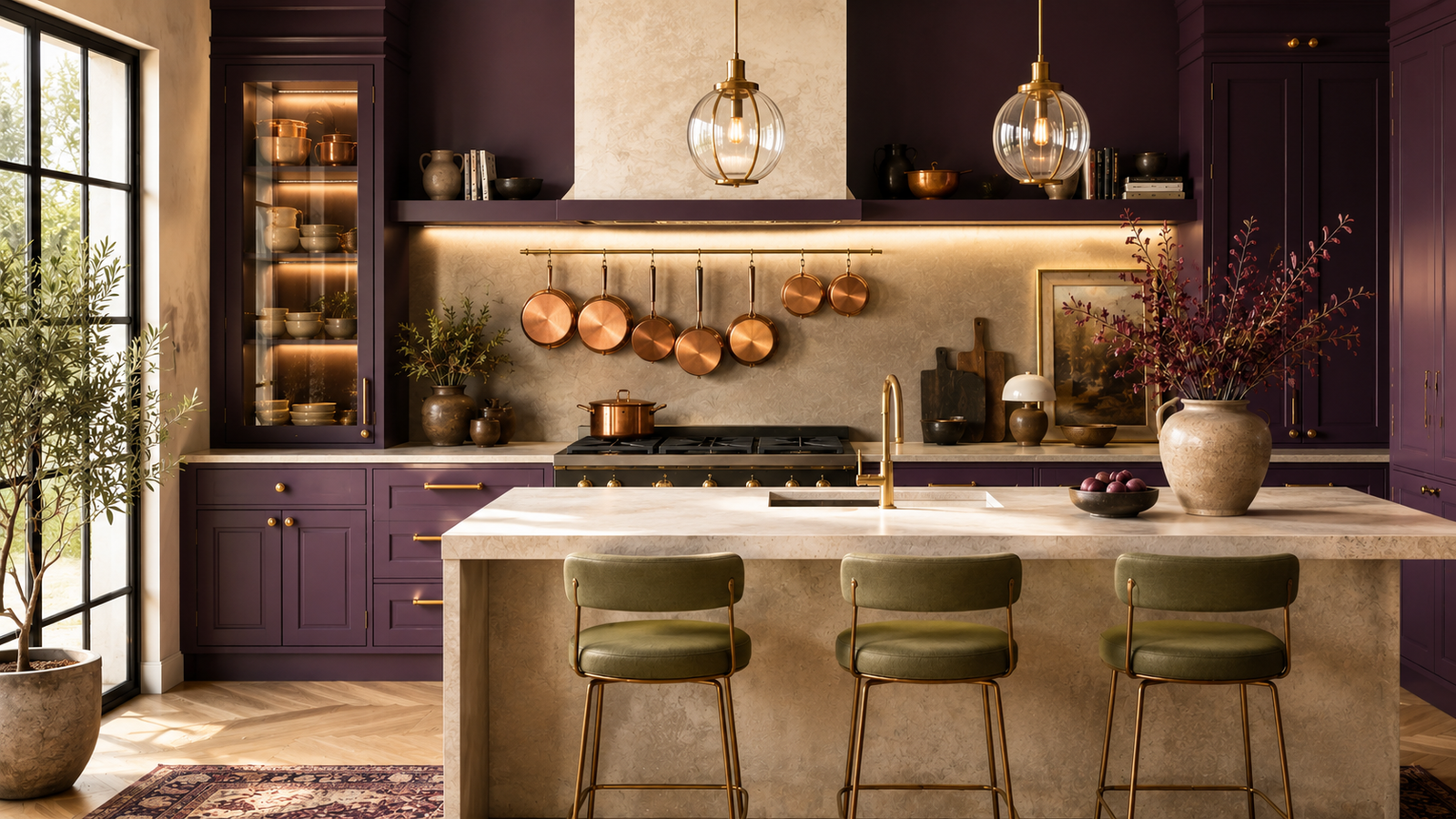
For years, white kitchens and soft greige cabinets have dominated design feeds. They’re beautiful, but after seeing the same palette over and over, many kitchens are starting to feel a little forgettable. That’s why designers are embracing richer colors that bring warmth, personality, and a more collected look without sacrificing sophistication.
Aubergine is leading that shift. Sitting somewhere between deep plum, wine, and eggplant, it adds drama while still feeling timeless. These aubergine kitchen decor ideas explore the trend through completely different architectural styles, layouts, and materials, so every space feels like its own editorial photoshoot instead of another variation of the same kitchen.
1. Turn the Kitchen Into a Parisian Apartment
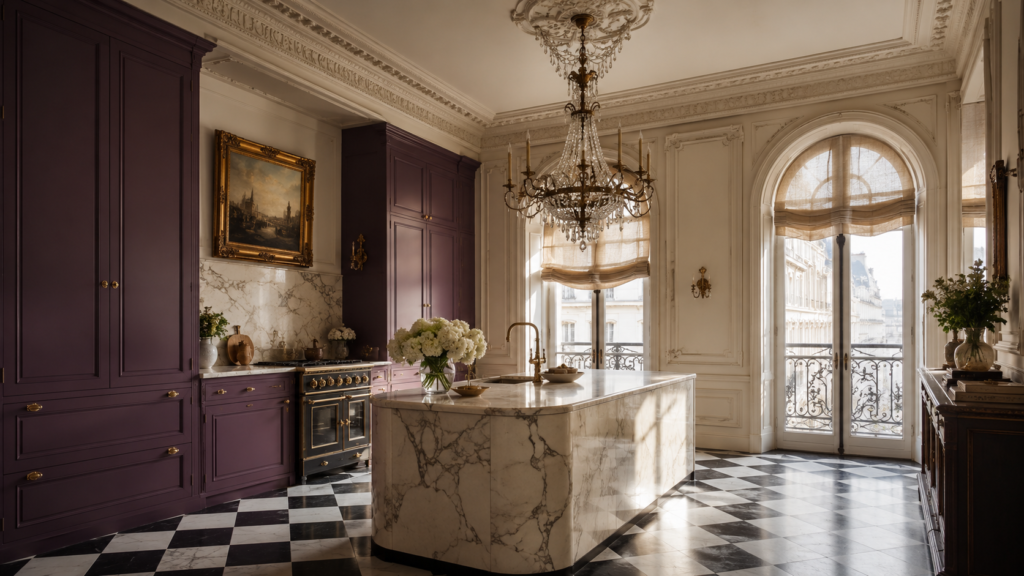
Imagine an elegant Paris apartment where aubergine feels as natural as marble fireplaces and ornate ceiling moldings. Paint full-height shaker cabinets in a velvety aubergine, then pair them with creamy limestone walls, antique brass hardware, and a dramatic black-and-white checkerboard marble floor. Hang a vintage crystal chandelier over the island to soften the darker cabinetry.
The classic architecture keeps the bold color feeling refined rather than trendy. If your ceilings are at least 9 feet high, extend cabinets to the crown molding to emphasize height and create one continuous architectural statement.
2. Design a Glasshouse Kitchen
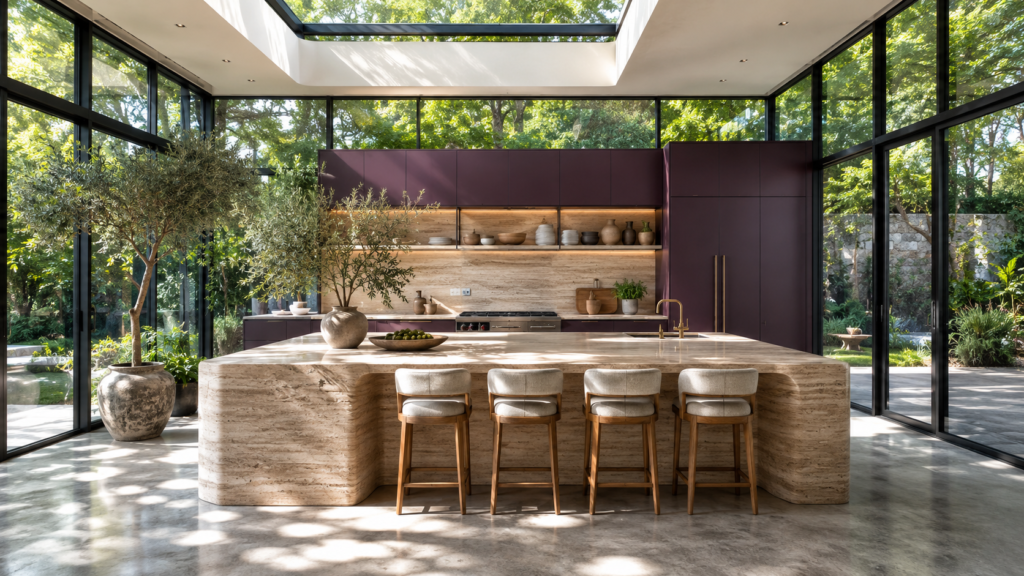
Flood the room with light by surrounding an aubergine kitchen with floor-to-ceiling steel-framed glass walls overlooking a lush garden. Instead of upper cabinets, use oversized windows that allow daylight to transform the cabinet color throughout the day. A sculptural travertine island, polished concrete floors, and oversized indoor trees complete the greenhouse-inspired atmosphere.
Natural light reveals aubergine’s warm burgundy undertones, preventing it from looking too dark. Keeping the upper half of the room visually open also creates better balance between the rich cabinetry and expansive glazing.
3. Create a Boutique Wine Library
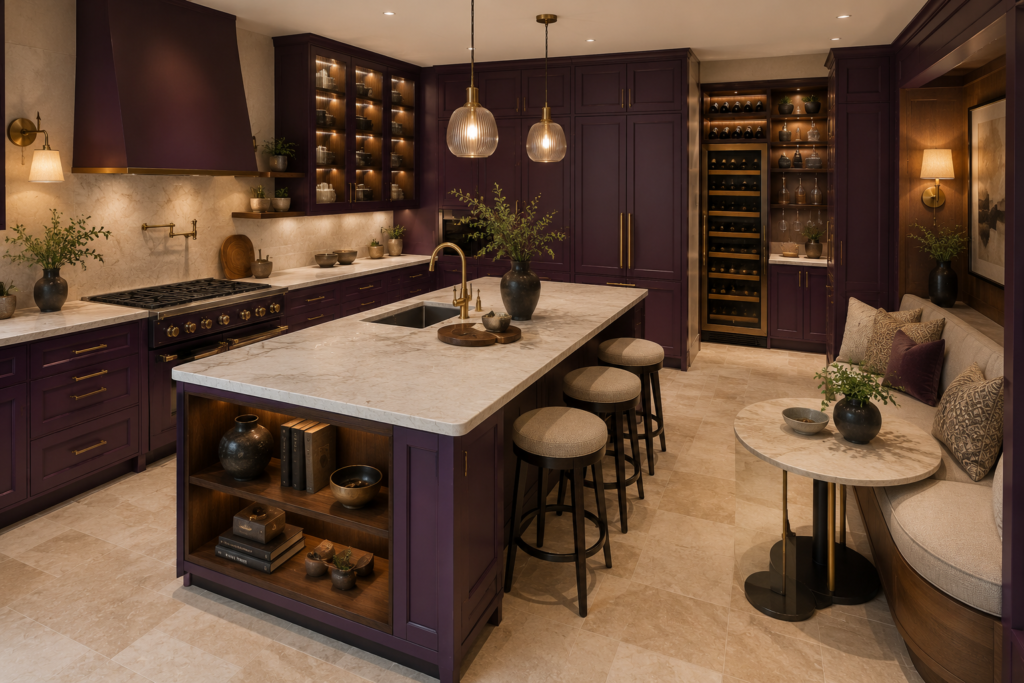
Take inspiration from luxury wine bars instead of traditional kitchens. Wrap the walls in aubergine cabinetry, then carve out illuminated oak niches to display wine bottles, cookbooks, and handcrafted pottery. A rolling library ladder instantly becomes the focal point while smoked glass cabinet doors add another layer of texture.
Repeating vertical shelving creates rhythm across the room, making even a narrow kitchen feel intentionally designed. Warm 2700K LED lighting inside each niche gives the cabinetry a soft evening glow that’s incredibly photogenic.
4. Blend Aubergine With Mediterranean Arches
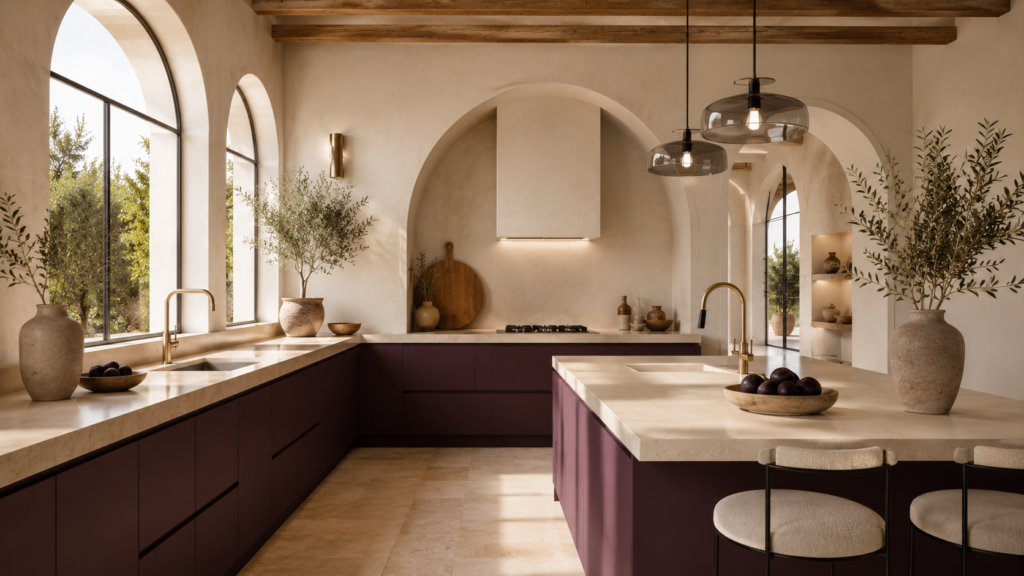
Instead of sleek square cabinetry, surround the kitchen with oversized plaster arches, rounded doorways, and softly curved alcoves. Aubergine base cabinets paired with creamy limewashed walls, rustic limestone flooring, and aged brass faucets create a relaxed Mediterranean feeling without becoming overly rustic.
The curved architecture softens the visual weight of such a rich cabinet color while introducing gentle movement throughout the space. Complete the room with oversized clay vessels and linen Roman shades that filter afternoon sunlight beautifully.
5. Build a Kyoto Tea Kitchen
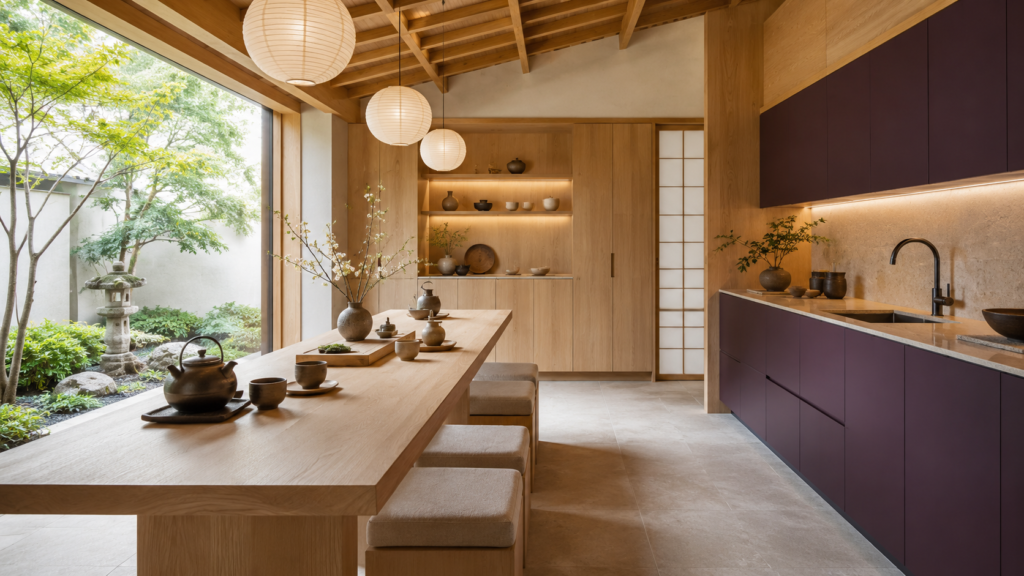
Inspired by contemporary Japanese tea houses, this kitchen combines flat-panel aubergine cabinetry with pale ash wood, handmade plaster walls, and low open display ledges. Replace a traditional dining table with a long oak tea counter facing a peaceful courtyard or oversized picture window.
Limiting decorative accessories allows natural materials to become the artwork. Keep open shelving sparse, leaving generous negative space between ceramics to maintain the calm rhythm that’s central to Japandi-inspired interiors.
6. Wrap the Ceiling in Aubergine
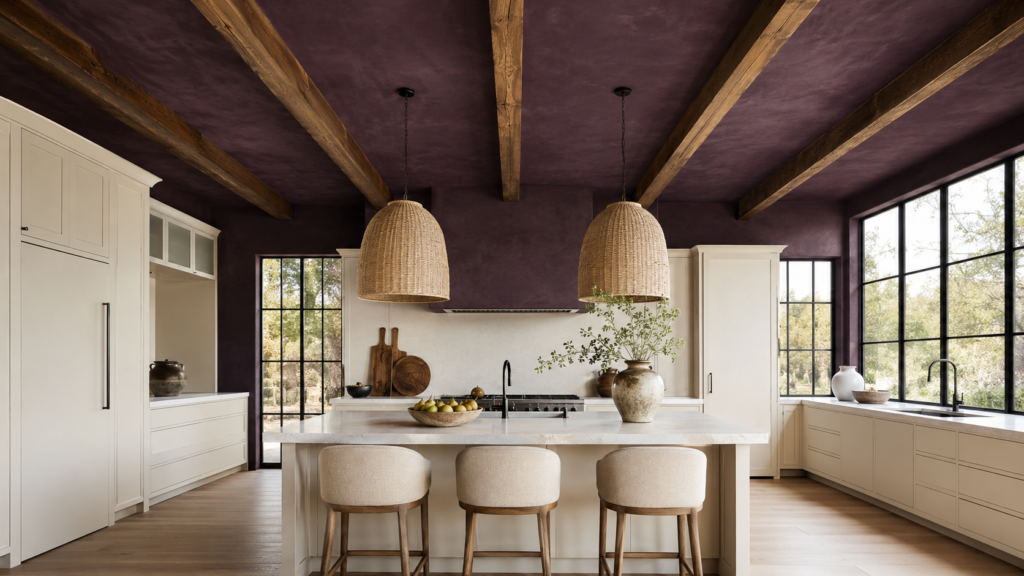
Instead of painting the cabinets, leave cabinetry warm white and color-drench only the ceiling in a rich aubergine limewash finish. Pair it with walnut beams, oversized woven pendants, and creamy quartz countertops for an unexpected architectural twist.
A darker ceiling visually lowers very tall rooms, making oversized kitchens feel warmer and more intimate. This approach works particularly well in spaces with ceilings above 10 feet, where the color becomes a dramatic fifth wall rather than overwhelming the room.
7. Hide a Secret Butler’s Pantry
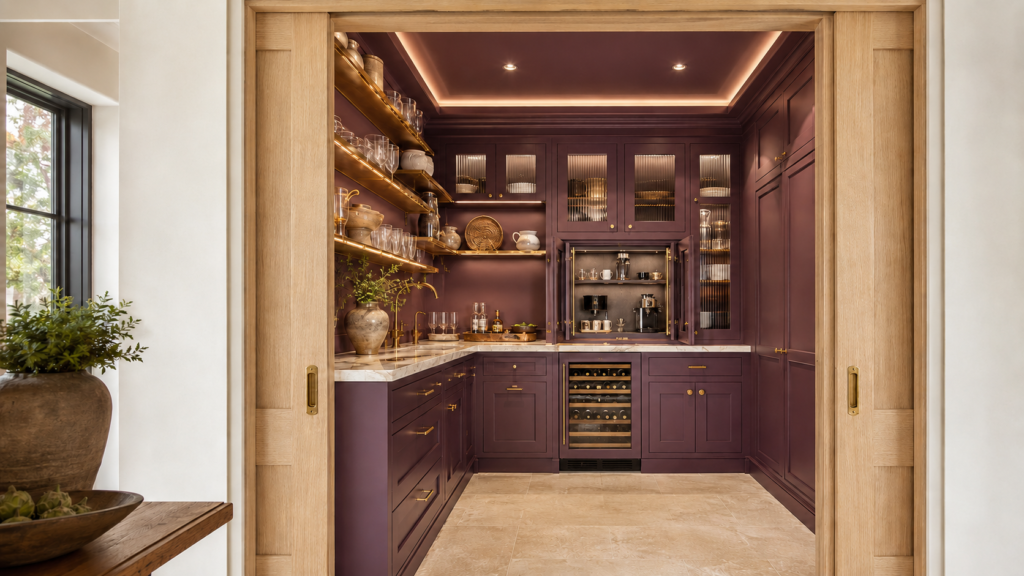
Behind a pair of full-height oak pocket doors, reveal a completely different world. Inside, every wall, cabinet, shelf, and ceiling is finished in deep aubergine with unlacquered brass shelving, marble counters, and softly illuminated glass-front cabinets.
Creating a dramatic color transition makes the pantry feel like discovering a hidden boutique kitchen. Since the darker palette is tucked away, homeowners can enjoy bold color without committing to it throughout the main cooking space.
8. Design an Art Gallery Kitchen
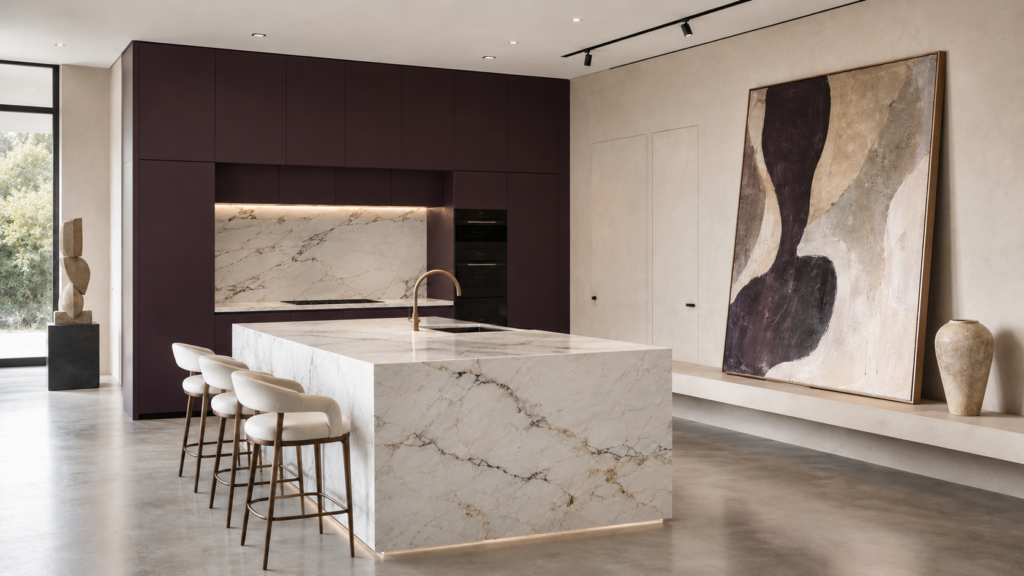
Treat the kitchen like a modern art gallery rather than a workspace. Use handleless aubergine cabinetry with flush doors, seamless plaster walls, and oversized abstract paintings leaning casually on deep floating ledges. Sculptural stone stools and museum-quality lighting complete the look.
The simplicity of the architecture allows every object to feel intentional. Leave at least 36 inches of uninterrupted wall between artwork and tall cabinetry so each piece has enough breathing room to command attention.
9. Create a European Flower Market Kitchen
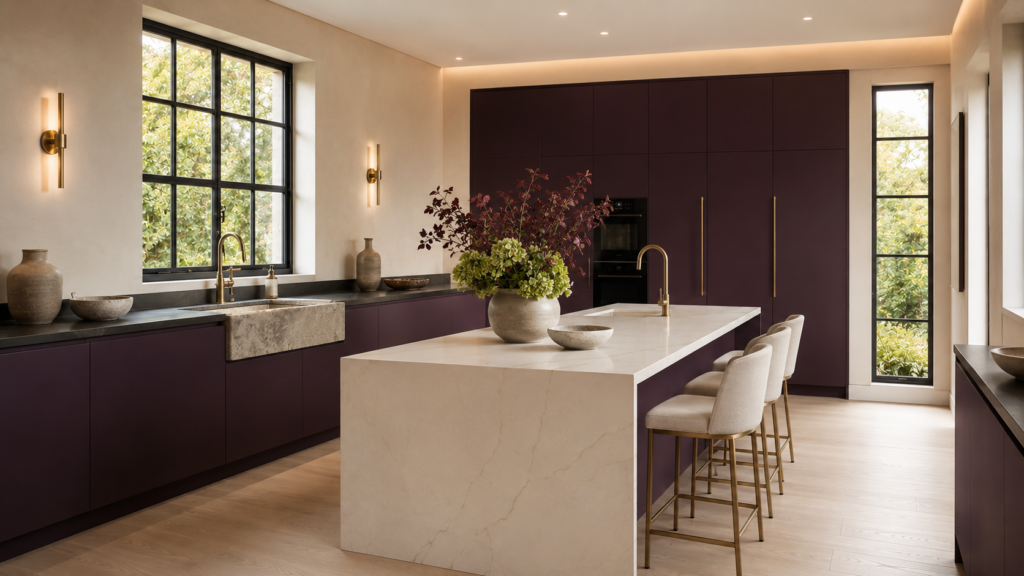
Capture the feeling of walking into a neighborhood flower shop in Paris or Copenhagen. Aubergine cabinetry forms the backdrop while oversized stone sinks, antique bronze shelving, fresh seasonal blooms, woven baskets, and weathered oak prep tables bring life into the space.
Instead of filling every surface, style one generous floral arrangement that changes with the seasons. Repeating organic textures against the rich cabinet color creates beautiful contrast and keeps the room feeling relaxed rather than overly polished.
10. Bring in a Sculptural Marble Kitchen
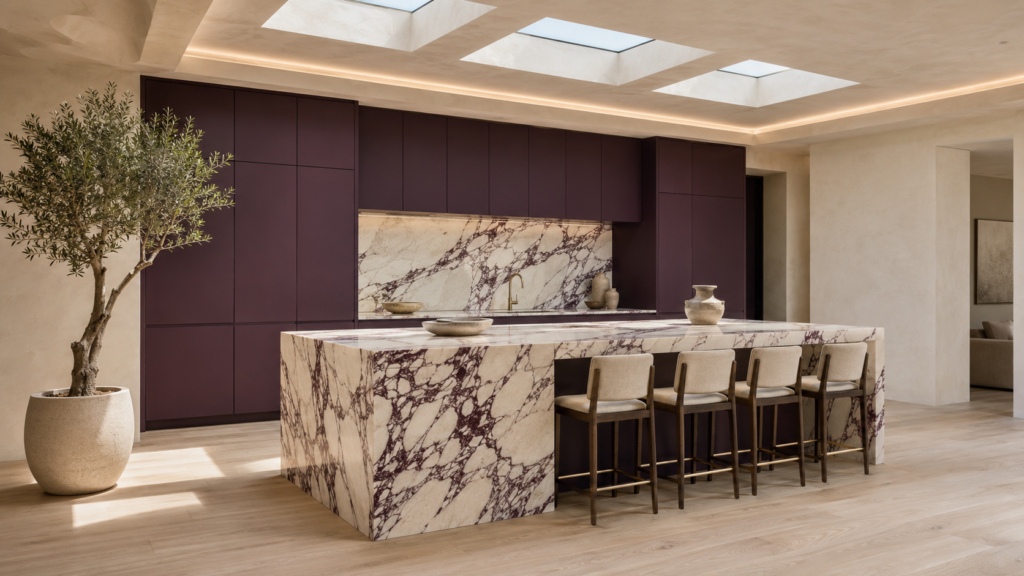
Let aubergine play a supporting role by pairing it with one showstopping piece—a monolithic marble island. Choose heavily veined Calacatta Viola or Arabescato marble that echoes aubergine’s plum undertones, then surround it with flat-panel aubergine cabinetry and concealed appliances. Keep the backsplash in the same stone to create one uninterrupted slab that feels custom and architectural.
Using one dominant material creates a clear focal point while preventing the darker cabinetry from overwhelming the room. For the most balanced proportions, make the island about one-third of the kitchen’s visual width so it anchors the space without blocking circulation.
11. Create a Cozy English Scullery
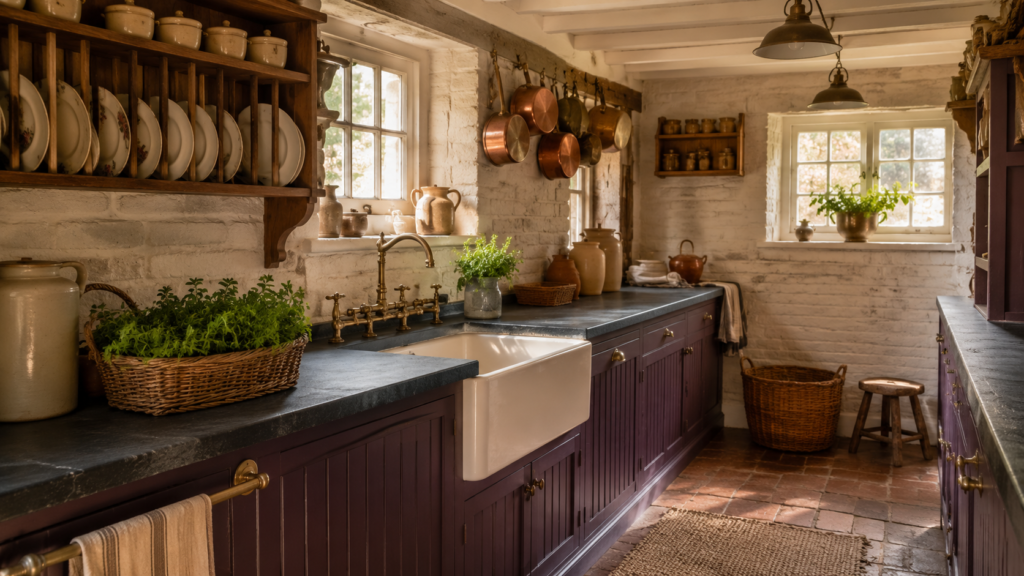
Take inspiration from traditional English country homes by designing a hardworking scullery tucked just beyond the main kitchen. Paint beadboard cabinetry in a muted aubergine, pair it with honed soapstone countertops, unlacquered brass taps, and reclaimed brick flooring. Open plate racks, woven baskets, and aged copper cookware add warmth without feeling cluttered.
Because sculleries are naturally smaller, the richer color creates intimacy instead of making the room feel cramped. Use wall sconces rather than recessed lighting to enhance the cozy atmosphere.
12. Pair Aubergine With a Clay Plaster Hood
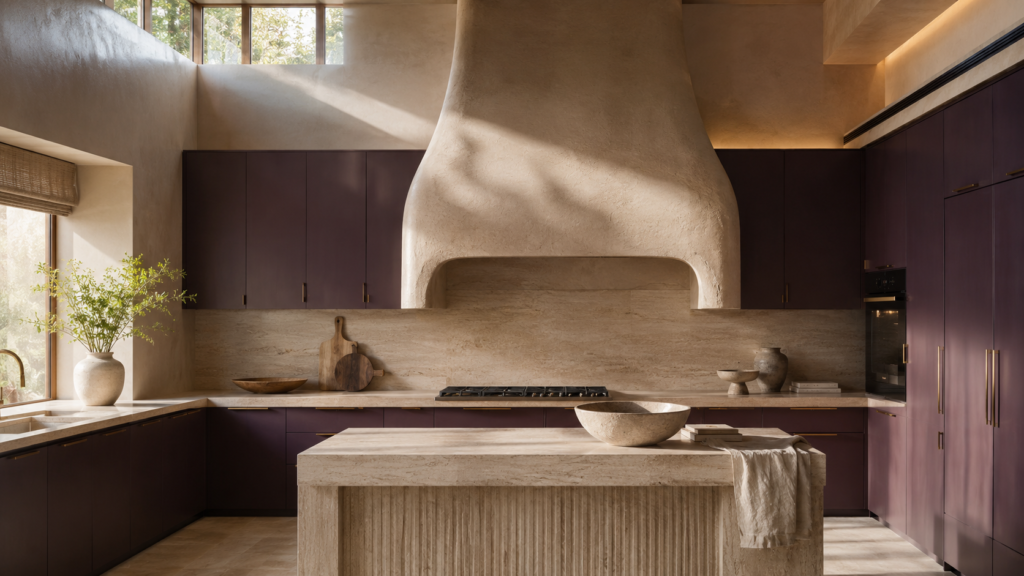
Skip stainless steel and make the range hood the artwork. Build a large hand-finished clay plaster hood with softly rounded edges, then frame it with aubergine cabinetry on either side. Pale travertine counters, brushed bronze hardware, and oak flooring balance the bold color palette while keeping the room airy.
The contrast between the earthy plaster texture and smooth cabinetry adds depth without introducing another competing color. Position the hood 30 to 36 inches above the cooktop for proper scale and function.
13. Style a Boutique Breakfast Café
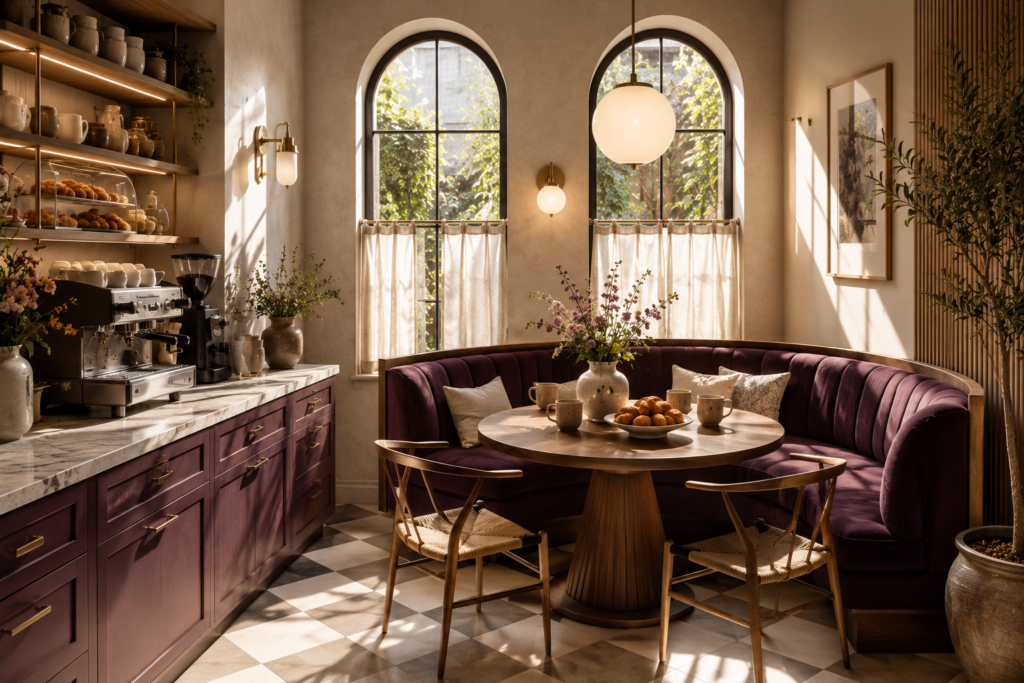
Transform one end of the kitchen into a café-inspired breakfast corner. An aubergine banquette curves around a round walnut pedestal table beneath oversized globe pendants, while fluted wall paneling and linen café curtains soften the space. Add a built-in pastry shelf and handcrafted mugs displayed inside shallow arched niches.
Rounded seating naturally encourages conversation and breaks up the straight lines found in most kitchens. Leave at least 24 inches behind dining chairs or the banquette opening for comfortable movement.
14. Mix Aubergine With Soft Olive and Copper
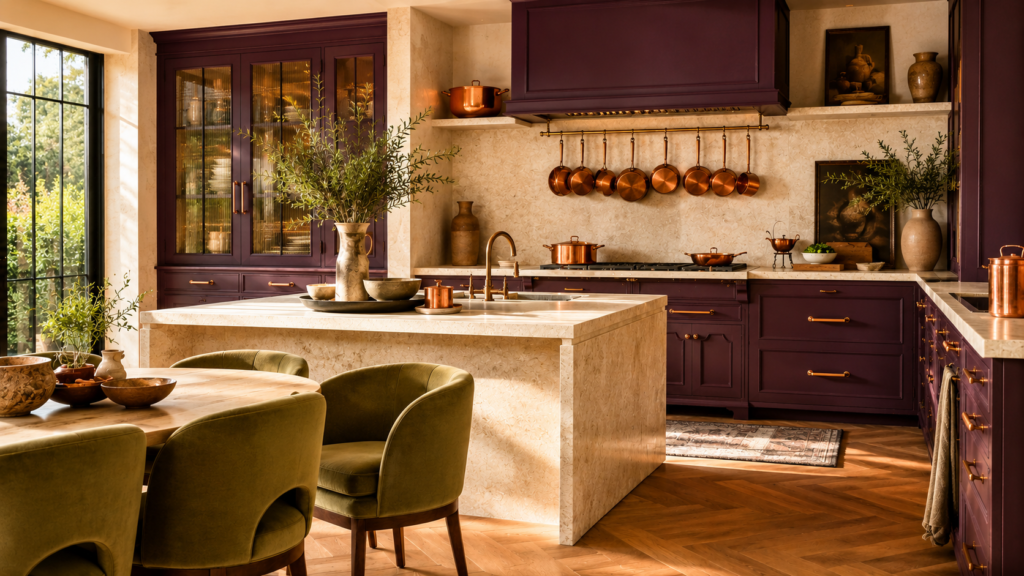
Instead of pairing aubergine with predictable neutrals, introduce muted olive through dining chairs, artwork, or Roman shades while layering warm copper cookware above the range. The earthy combination feels collected and lived-in rather than perfectly coordinated.
Repeating each accent color three or four times throughout the room creates visual rhythm without making the palette feel busy. White oak flooring ties the entire scheme together while preventing it from becoming too dark.
15. Design a Skylit Loft Kitchen
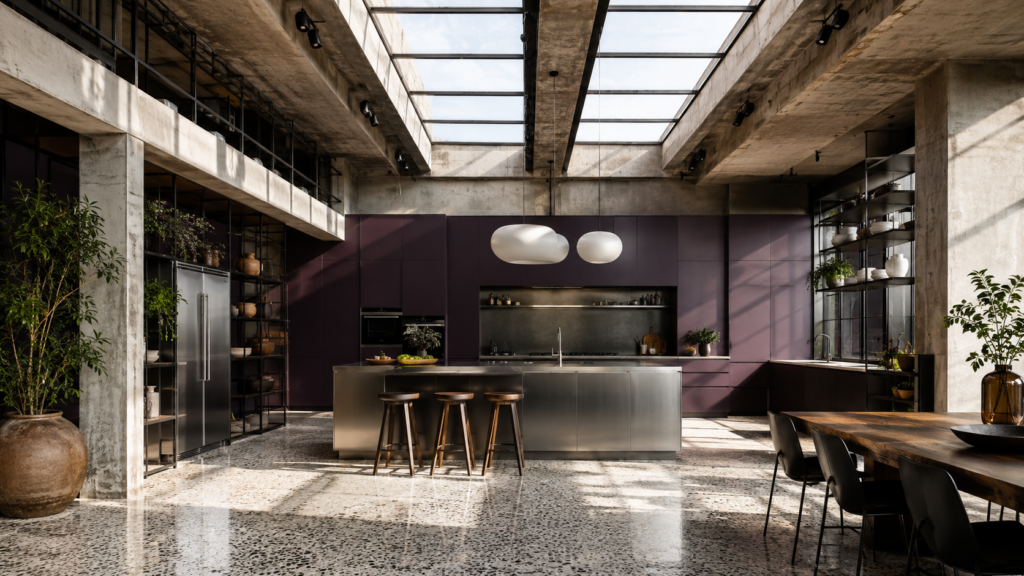
Imagine a converted warehouse loft where oversized skylights flood an aubergine kitchen with changing daylight. Exposed concrete ceilings, polished terrazzo flooring, and extra-long cabinet runs create a dramatic contemporary setting, while oversized linen pendants soften the industrial shell.
Natural light constantly changes the appearance of aubergine, making the cabinetry feel lighter in the morning and moodier by evening. Keeping upper cabinetry minimal ensures the skylights remain the room’s defining feature.
16. Build a Hidden Coffee Lounge
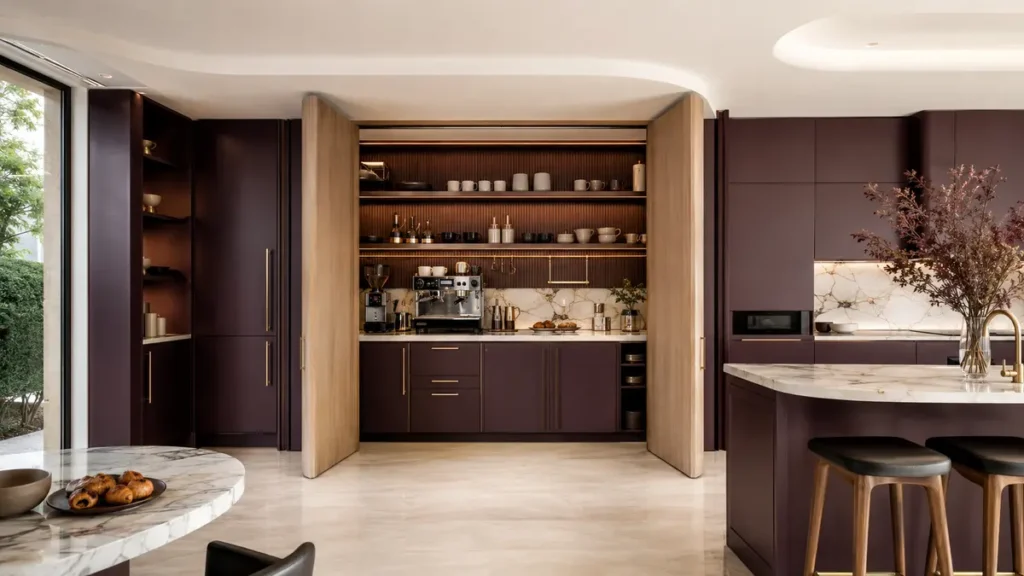
Instead of placing a coffee machine on the countertop, conceal an entire beverage station behind pocket doors. Inside, aubergine cabinetry wraps every surface while fluted walnut shelves, integrated lighting, stone counters, and brass cup rails create the feeling of a luxury hotel lounge.
Pocket doors allow the station to disappear completely when not in use, maintaining clean sightlines across the kitchen. A counter depth of 24 inches provides enough room for coffee equipment without sacrificing storage.
17. Blend Vintage Furniture Into the Kitchen
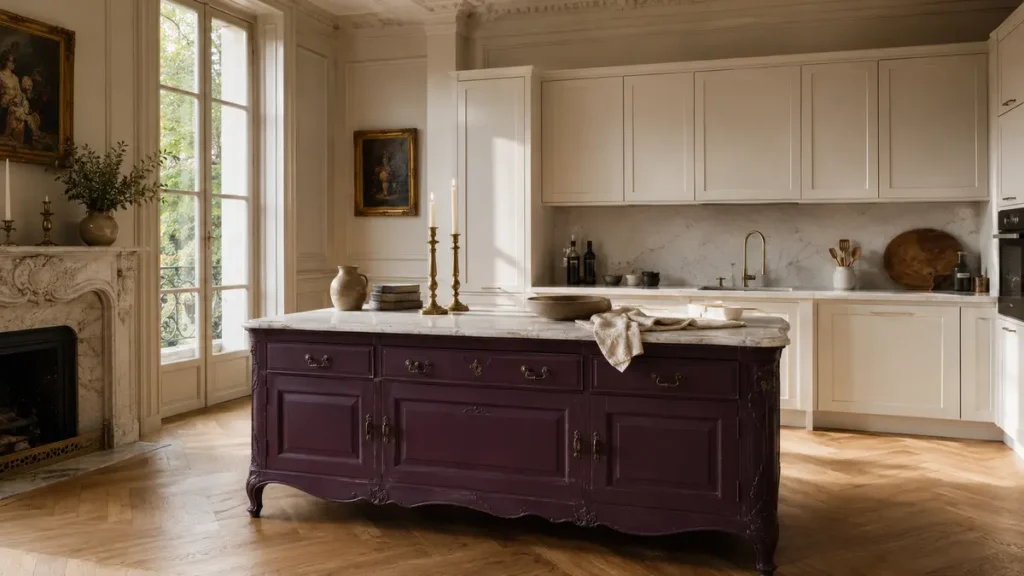
Break away from the fitted-kitchen look by introducing a freestanding antique furniture piece painted in aubergine. A vintage apothecary cabinet, French sideboard, or old bakery table can become a beautiful prep station or storage island alongside modern cabinetry.
Mixing freestanding furniture with built-in cabinets adds character that brand-new kitchens often lack. Leave a small 2- to 4-inch shadow gap between furniture and surrounding cabinetry so every piece feels intentionally collected instead of squeezed into place.
18. Finish With a European Market Palette
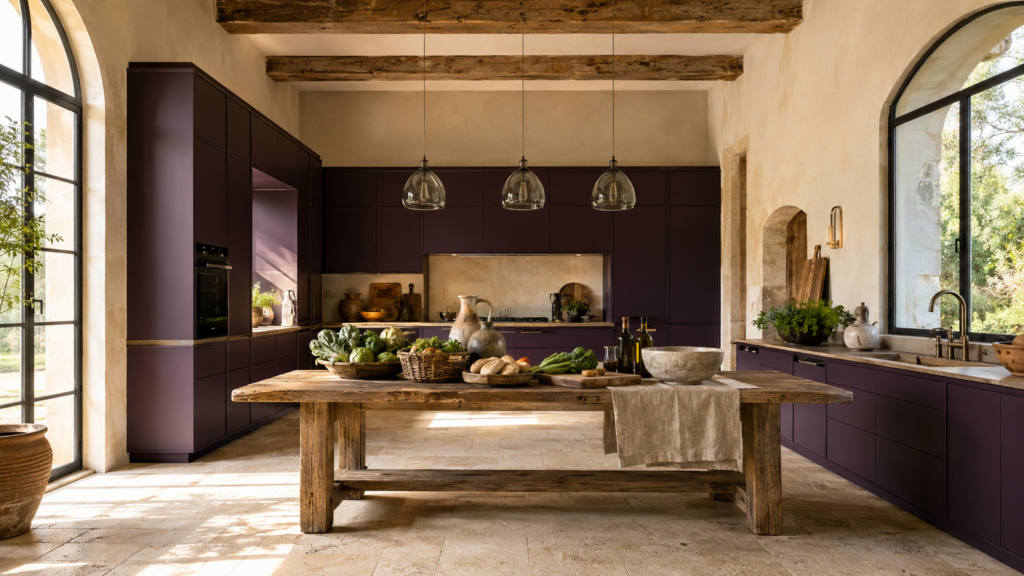
Rather than relying on decorative accessories alone, layer natural materials that feel gathered over time. Pair aubergine cabinetry with creamy linen runners, hand-thrown pottery, woven market baskets, olive branches, vintage cutting boards, smoked glass pendants, and textured limestone walls. The result feels warm, effortless, and distinctly European.
Limiting decorative objects to a few larger statement pieces prevents visual clutter while allowing the rich cabinet color to remain the star. The layered natural textures also help the kitchen photograph beautifully from every angle.