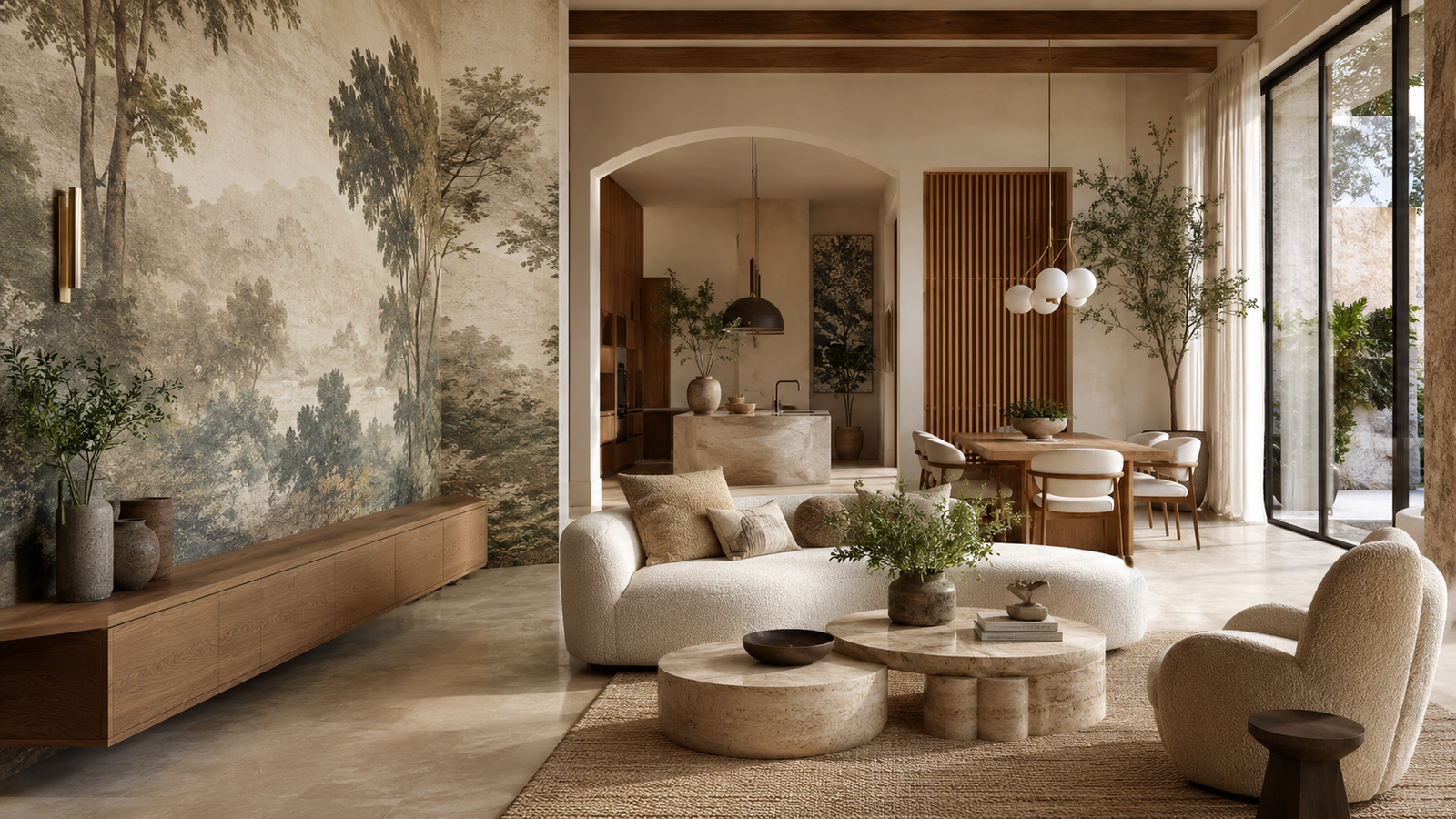
Wallpaper has come a long way from the busy floral prints of decades past. Today’s designs feel artistic, textured, and architectural, making an accent wall one of the easiest ways to transform a room without committing to wallpapering every surface.
The best wallpaper accent wall ideas don’t just add pattern—they create a focal point, balance the room, and highlight the home’s architecture. Whether you love warm minimalism, quiet luxury, Japandi interiors, or bold contemporary spaces, the right wallpaper can completely change how a room feels. These designer-inspired ideas combine timeless styling with the Pinterest-worthy looks homeowners are saving right now.
1. Floor-to-Ceiling Linen Wallpaper Behind the Bed
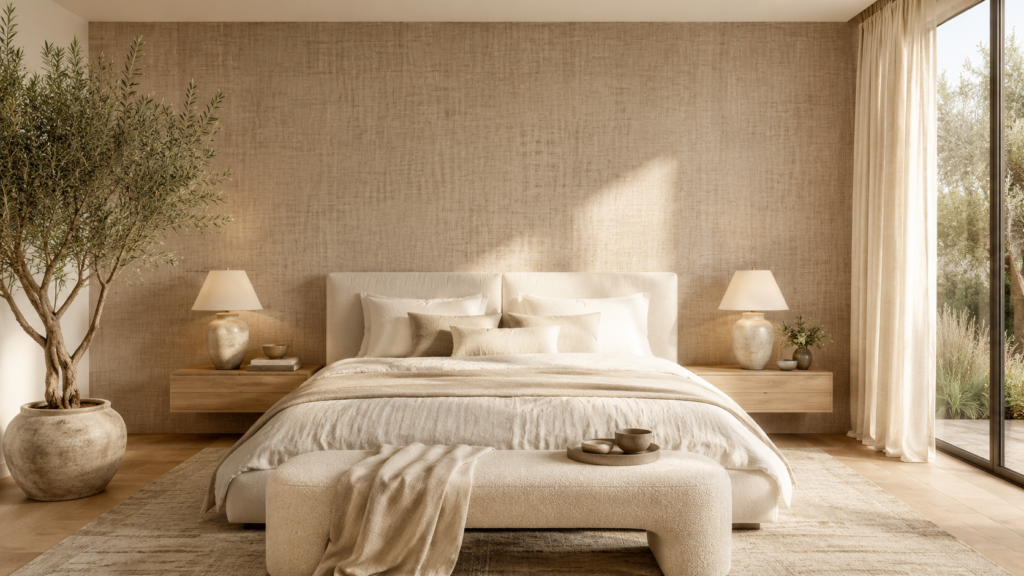
Nothing creates a calm, luxury hotel feel quite like a textured linen wallpaper stretching from floor to ceiling behind the bed. Instead of relying on bold patterns, choose a wallpaper that mimics woven fabric in warm oatmeal, ivory, mushroom, or soft greige tones. The subtle texture catches daylight beautifully while adding warmth that painted walls often lack.
This works because the bed naturally becomes the room’s focal point. Center the wallpaper behind the headboard and extend it at least 24 inches beyond each bedside table for balanced proportions. Pair it with white oak furniture, layered linen bedding, ceramic lamps, and soft boucle accents to reinforce the relaxed, organic aesthetic.
2. Frame Wallpaper Inside Traditional Wall Molding
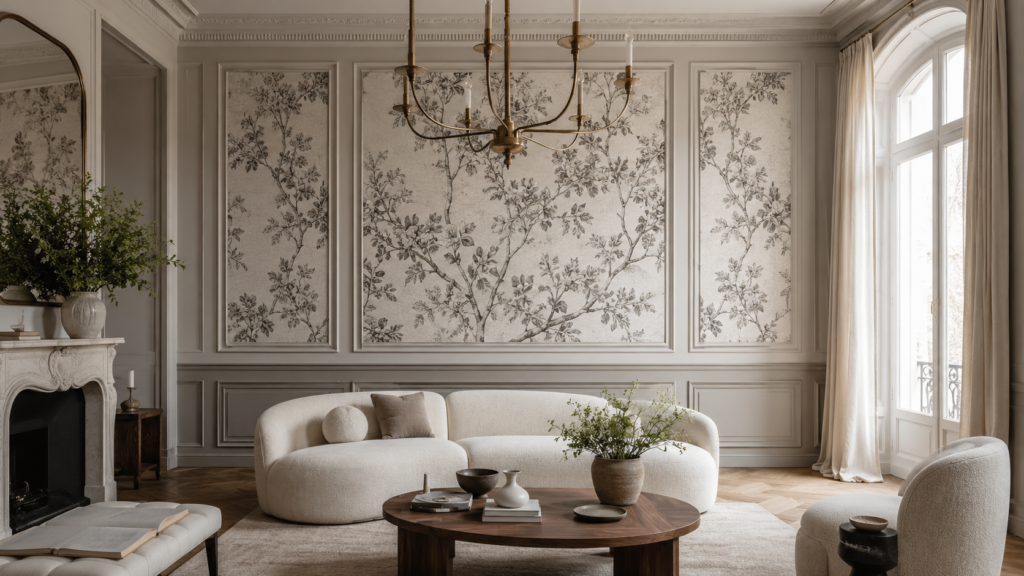
Instead of covering the entire wall, install decorative molding first, then wallpaper only inside each panel. This layered approach blends classic architecture with modern wallpaper, creating an expensive custom look without overwhelming the room.
Large-scale botanical sketches, watercolor murals, or subtle marble-inspired designs work especially well within oversized panels. Keep the molding painted the same color as the surrounding walls so the wallpaper becomes the artwork. For the most polished appearance, use panels at least 24 inches wide with evenly spaced borders that create visual rhythm across the wall.
3. Make a Statement With an Oversized Scenic Mural
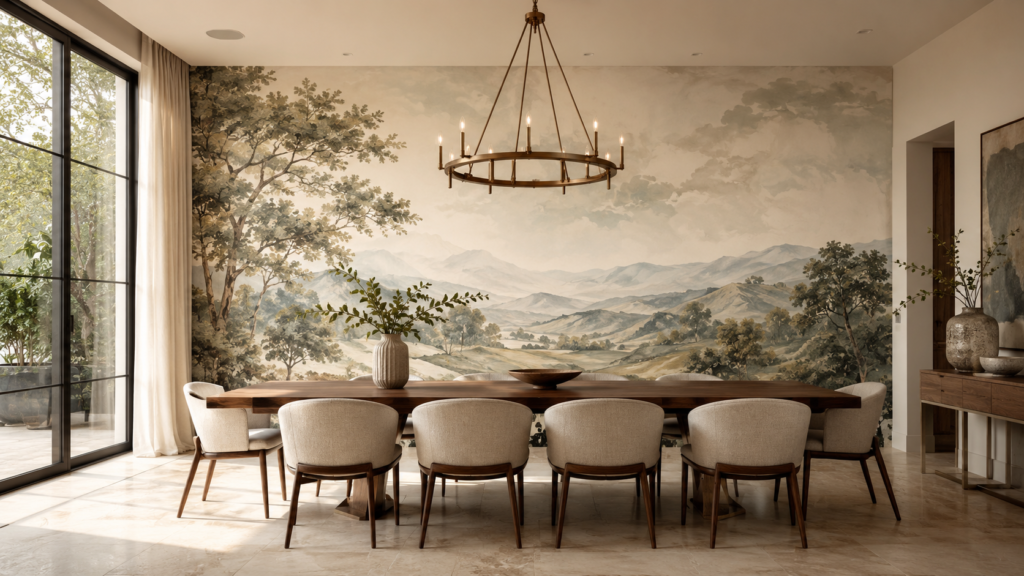
A panoramic wallpaper mural instantly transforms a blank wall into the room’s main attraction. Instead of repeating patterns, choose hand-painted landscapes, misty forests, rolling hills, abstract mountains, or soft European countryside scenes that stretch across the entire wall.
Dining rooms, living rooms, and primary bedrooms benefit most from this approach because large uninterrupted walls allow the artwork to shine. Keep the remaining décor intentionally simple so the mural remains the star. Natural wood furniture, neutral upholstery, and understated lighting help maintain visual balance while letting the scenery tell the story.
4. Highlight an Arched Accent Wall
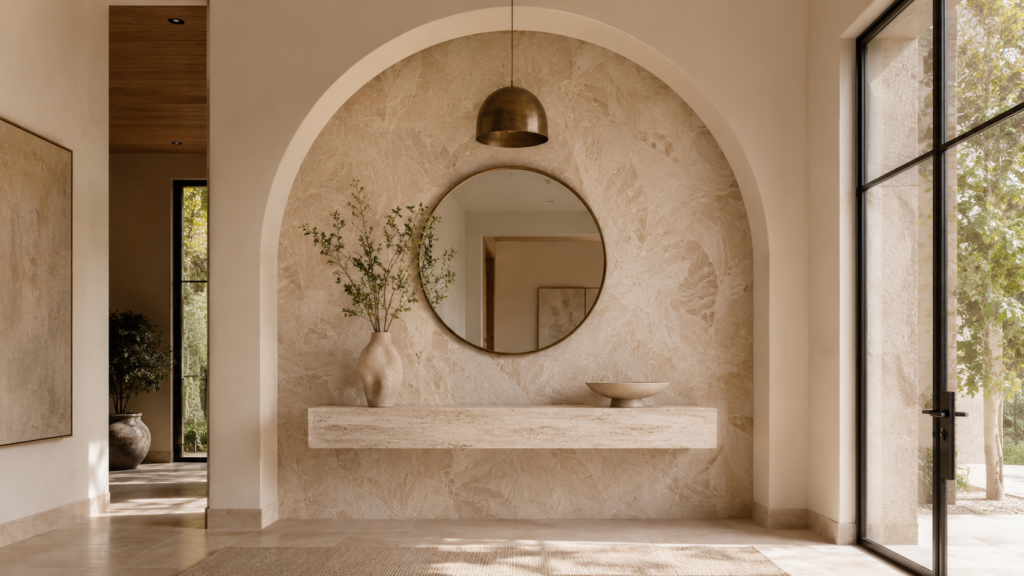
If your home features an arched niche or doorway, wallpaper can emphasize its beautiful curves instead of hiding them. Even in newer homes, creating a faux arch with trim before adding wallpaper introduces architectural character that feels custom designed.
Choose soft plaster-effect prints, delicate watercolor textures, or oversized organic patterns that follow the arch’s shape rather than competing with it. This technique works especially well in entryways, reading corners, and dining rooms where the curved silhouette naturally draws the eye and creates a memorable first impression.
5. Wrap a Cozy Reading Nook
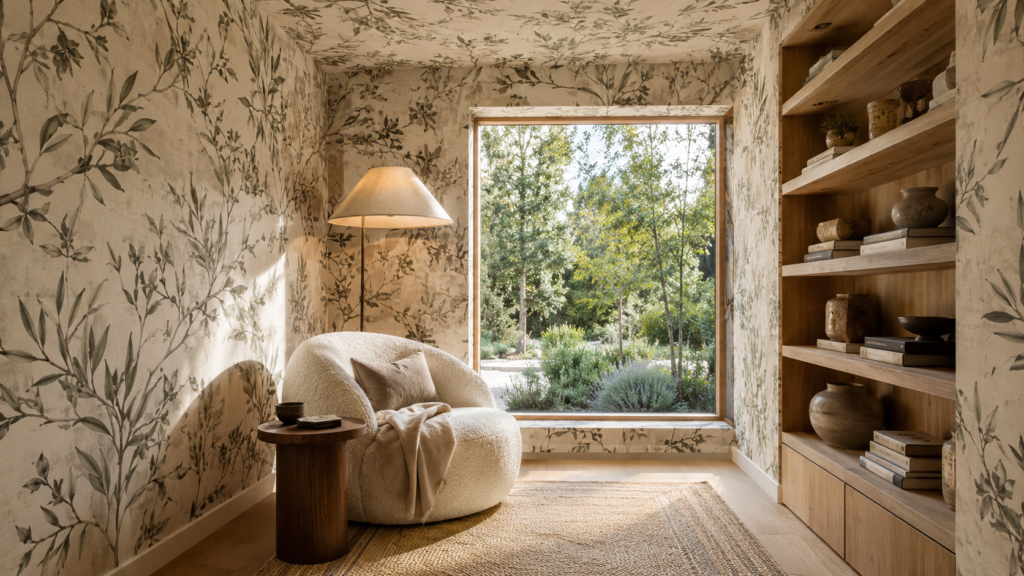
Small alcoves often become forgotten corners, but wallpaper can turn them into one of the home’s most inviting spaces. Instead of wallpapering only the back wall, continue the paper onto the side walls to create an immersive cocoon-like effect.
Deep olive botanicals, textured grasscloth, vintage-inspired illustrations, or warm neutral prints all work beautifully here. Complete the nook with a comfortable lounge chair, a small round side table, layered lighting, and one oversized piece of artwork. The enclosed wallpaper creates intimacy while making the reading area feel like its own thoughtfully designed room.
6. Pair Wallpaper With Vertical Wood Slats
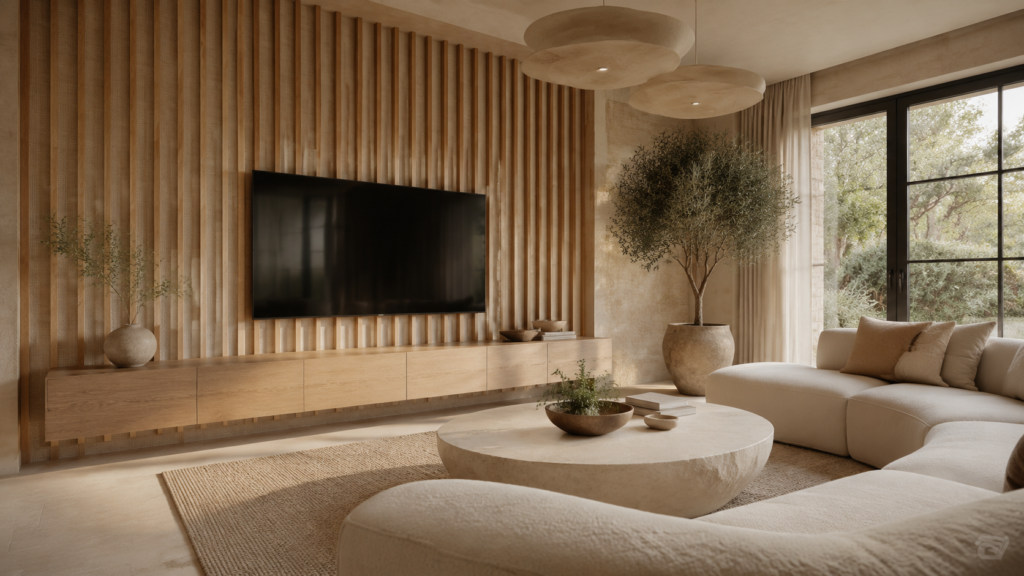
One of the biggest interior design trends is combining wallpaper with natural wood paneling instead of choosing one or the other. Install evenly spaced vertical white oak or walnut slats over sections of the wallpaper, allowing the pattern to peek through between each slat.
The layered textures add remarkable depth while softening bold wallpaper designs. Keep slats approximately 1½ to 2 inches wide with consistent spacing for a clean contemporary appearance. This combination looks especially striking behind floating media consoles, beds, or dining buffets where natural wood adds warmth and architectural structure without hiding the wallpaper entirely.
7. Create a Ceiling-to-Wall Wallpaper Feature
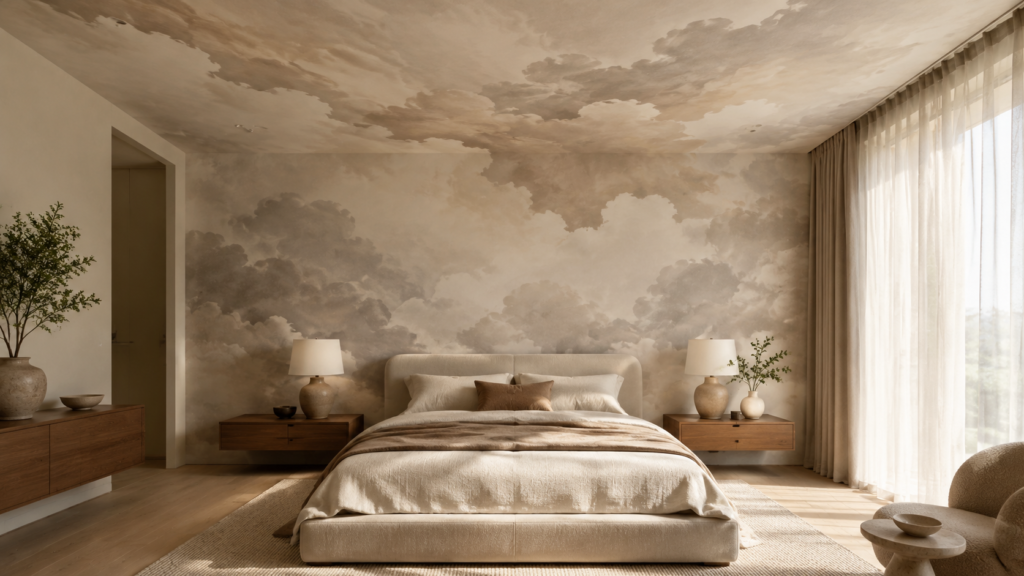
Instead of stopping wallpaper at the ceiling line, continue the same design onto the ceiling for one seamless architectural statement. This approach makes the room feel intentionally designed while creating a dramatic focal point that draws the eye upward. Soft cloud murals, watercolor landscapes, or subtle linen textures work especially well because they don’t overwhelm the space. Keep surrounding walls painted in a coordinating neutral so the continuous wallpaper becomes the room’s defining feature.
8. Style a Japandi Washi Accent Wall
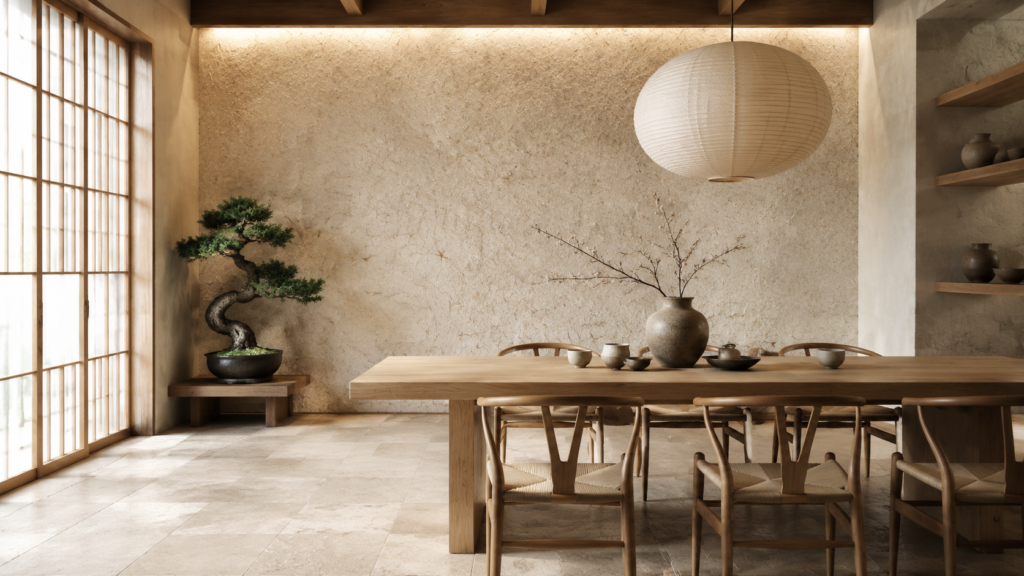
For a calming, minimalist look, choose wallpaper inspired by traditional Japanese washi paper. Look for soft fibers, delicate textures, and muted shades like warm ivory, sand, stone gray, or pale taupe. The understated finish brings depth without relying on bold patterns, making it ideal for bedrooms, dining rooms, or home offices. Pair it with low-profile oak furniture, linen textiles, and handcrafted ceramics to create a space that feels balanced and effortlessly serene.
9. Transform the TV Wall With Plaster-Effect Wallpaper
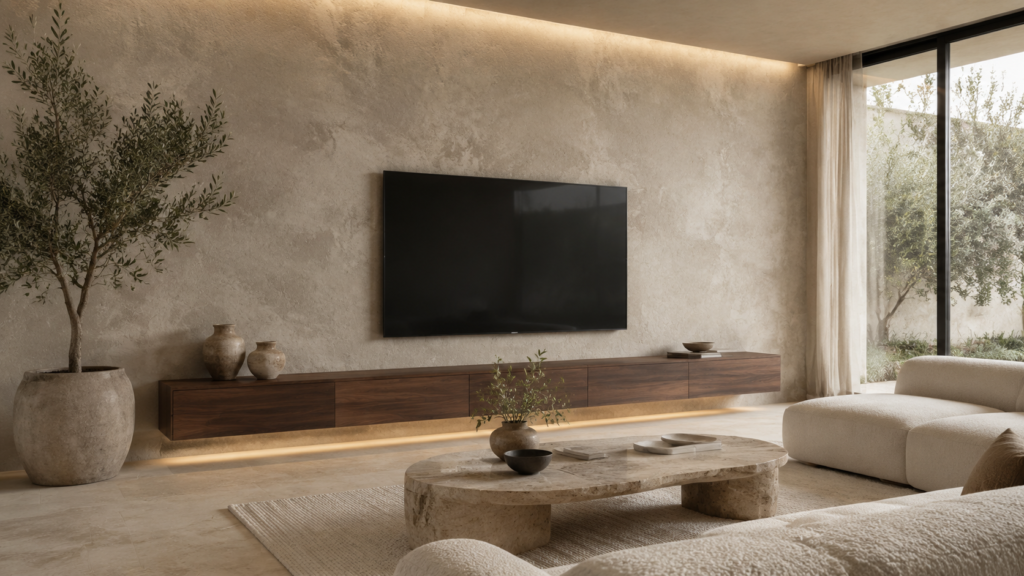
A television can easily dominate a living room, but textured plaster-look wallpaper helps it blend into a sophisticated feature wall. Choose finishes that resemble limewash, Venetian plaster, or microcement in warm neutral tones. These subtle textures add movement while reducing glare and fingerprints better than dark painted walls. Complete the look with a floating media console, concealed cable management, and a few sculptural accessories for a clean, gallery-inspired aesthetic.
10. Add Soft Metallic Wallpaper to the Entryway
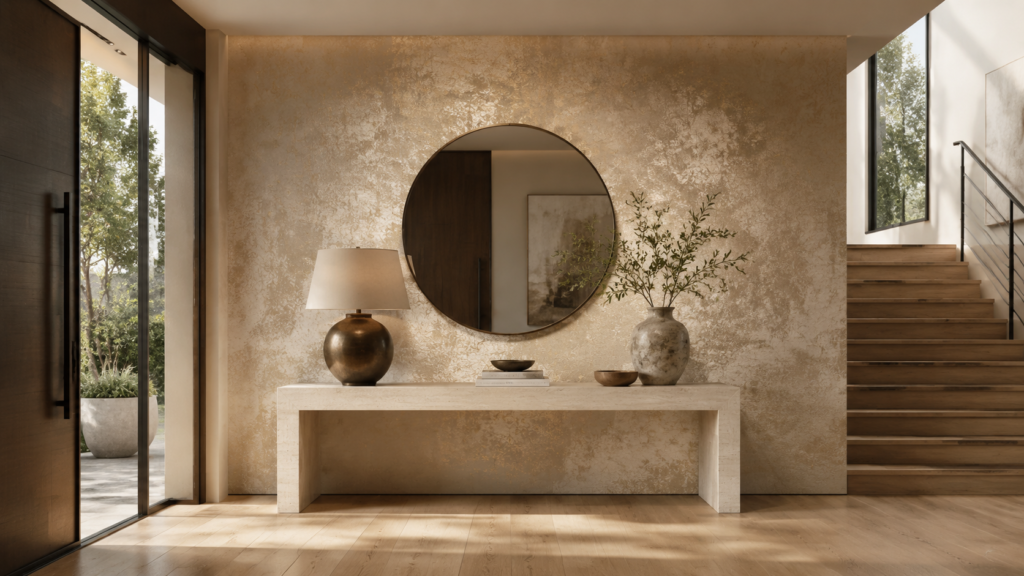
The entryway sets the tone for the rest of your home, making it the perfect place for wallpaper with a refined metallic finish. Instead of shiny gold prints, choose champagne, brushed bronze, or pearl accents that softly reflect natural light. These understated finishes add depth throughout the day without feeling flashy. Pair the wall with a slim console table, oversized artwork, and a sculptural table lamp to create an inviting first impression.
11. Turn Built-In Shelves Into a Design Feature
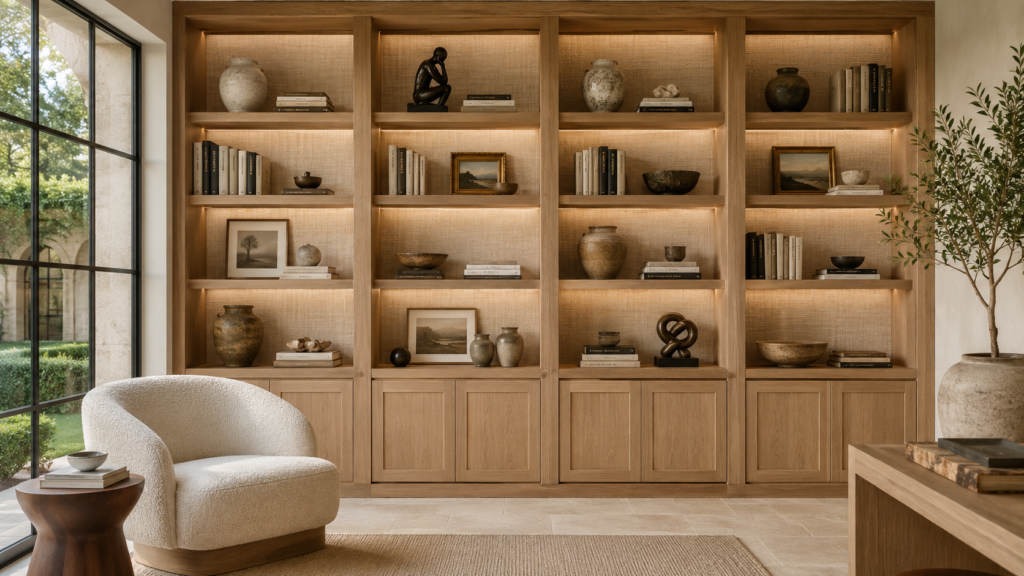
Wallpaper isn’t limited to flat walls. Applying it to the back panels of built-in bookcases instantly adds contrast and makes decorative objects stand out. Linen textures, subtle geometric patterns, or watercolor-inspired prints create depth without distracting from the styling. Leave generous negative space between books, ceramics, and artwork so each shelf feels thoughtfully curated rather than crowded. This simple upgrade gives existing built-ins a custom designer appearance.
12. Design a Botanical Stair Landing
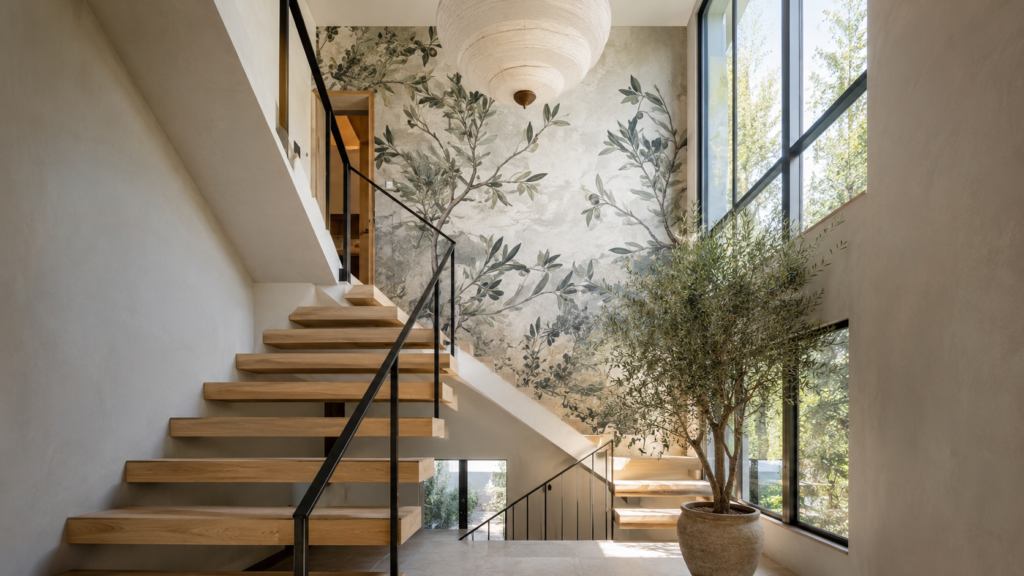
The often-overlooked stair landing is an ideal place for an oversized botanical wallpaper mural. Large olive branches, hand-painted foliage, or soft tropical silhouettes add movement to a transitional space without overwhelming adjacent rooms. Because stair landings are viewed from multiple angles, oversized artwork feels more impactful than small repeating prints. Finish the area with warm wood flooring, minimalist wall sconces, and a sculptural planter to create a welcoming transition between levels.
13. Elevate a Floating Bathroom Vanity
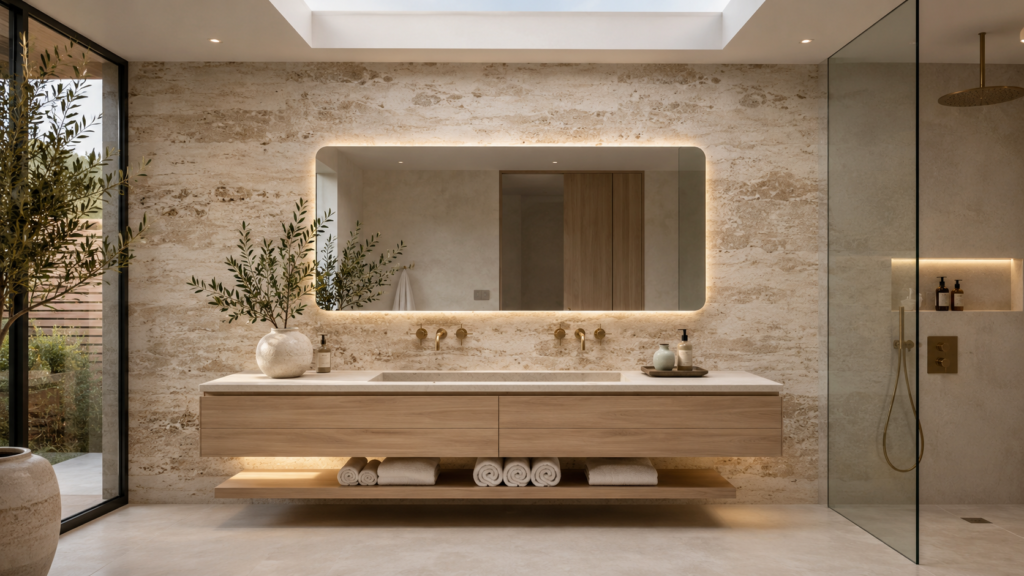
A wallpaper accent wall behind a floating vanity instantly transforms an ordinary bathroom into a boutique hotel-inspired retreat. Moisture-resistant vinyl wallpaper with soft stone textures, delicate marble veining, or watercolor-inspired designs adds depth while remaining practical. Extending the wallpaper from the countertop to the ceiling creates a taller visual profile, especially in compact bathrooms. Pair it with a frameless mirror, wall-mounted faucets, and warm brass hardware for a timeless, spa-like atmosphere.
14. Define a Breakfast Nook With Stone-Look Wallpaper
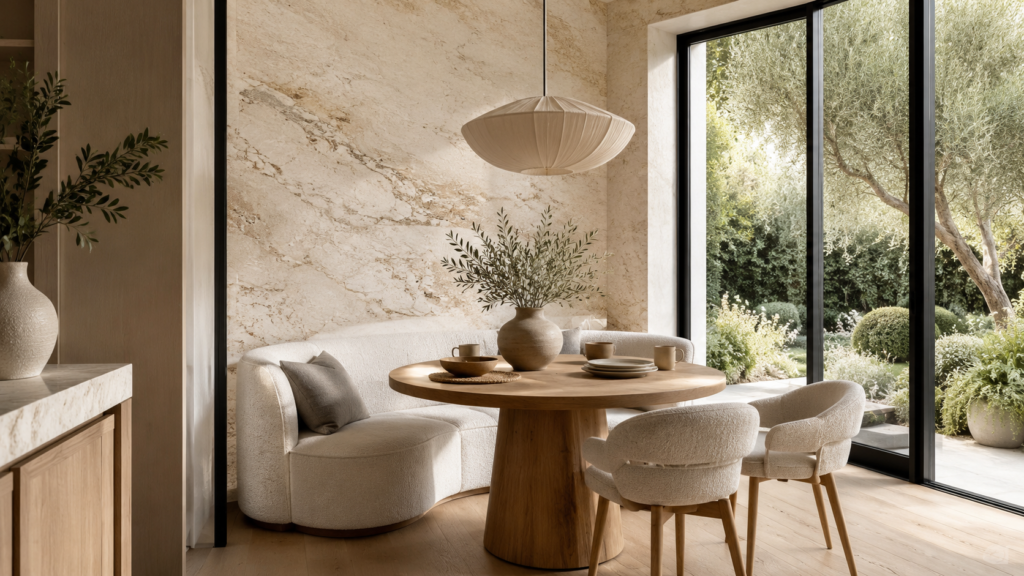
A breakfast nook feels far more intentional when it’s anchored by a realistic stone-effect wallpaper. Modern designs mimic limestone, travertine, or softly veined marble without the weight or cost of natural stone. The subtle texture adds visual interest while maintaining a clean, sophisticated palette. Complete the space with a round pedestal table, upholstered dining chairs, and a sculptural pendant light to create an inviting corner for everyday meals.
15. Layer Wallpaper Behind Wood Slat Panels
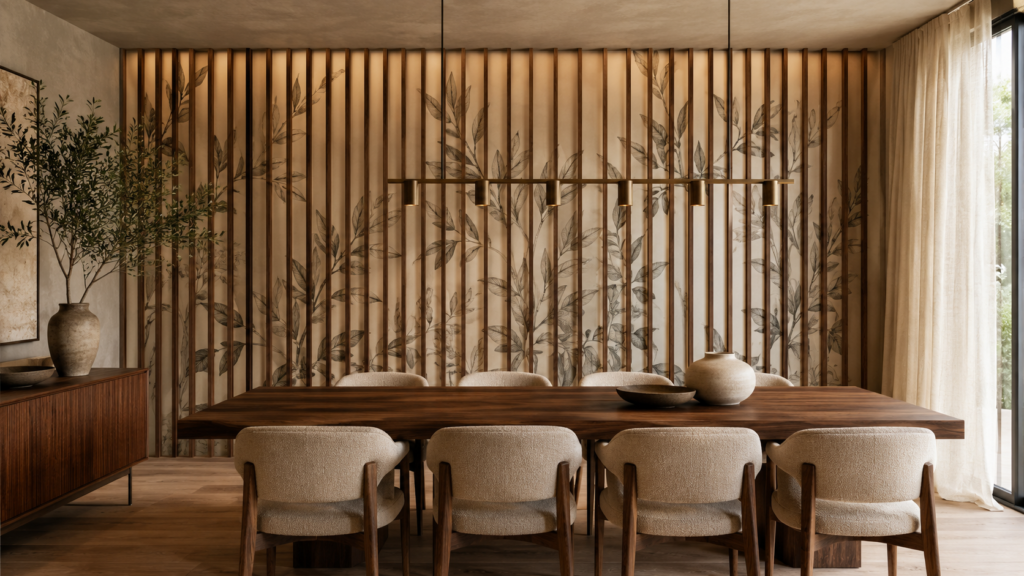
Instead of choosing between wallpaper and wood paneling, combine both for a rich, architectural look. Install evenly spaced oak or walnut slats over a softly patterned wallpaper so glimpses of the design appear between each panel. This layered treatment creates rhythm, depth, and warmth while keeping the wall from feeling overly busy. It works beautifully behind beds, media units, or dining buffets where texture becomes the room’s defining feature.
16. Frame an Interior Arch With Wallpaper
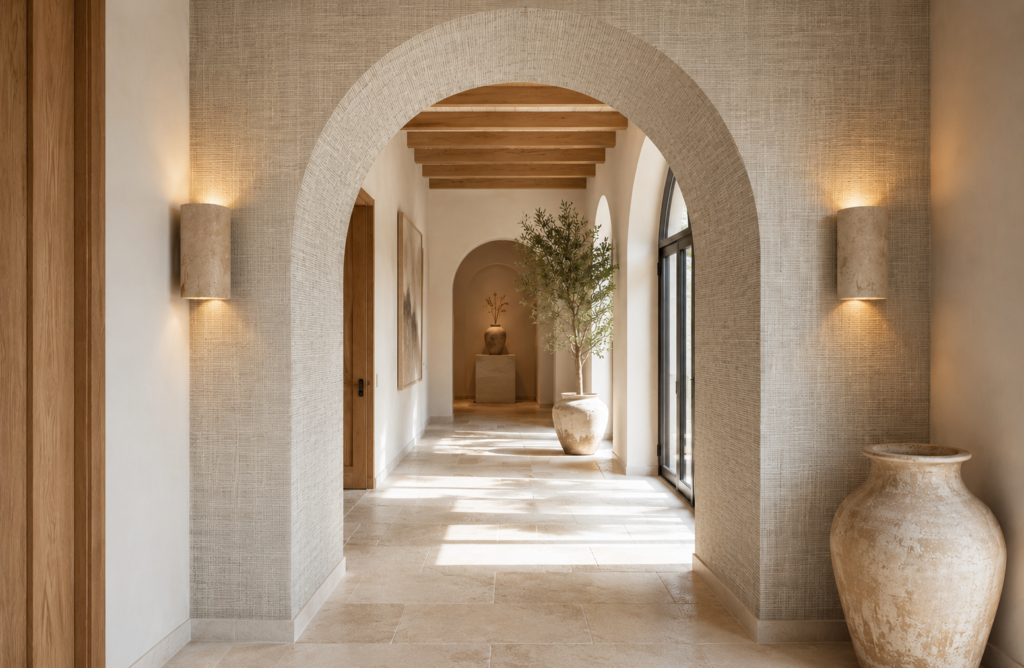
If your home includes an arched doorway or built-in niche, wallpaper can highlight the beautiful curves while adding subtle contrast. Instead of covering the surrounding walls, apply wallpaper only inside the arch to create a framed architectural moment. Soft plaster finishes, delicate botanical prints, or textured linen designs work especially well because they enhance the shape rather than compete with it. This simple detail gives even modern homes a custom-crafted appearance.
17. Design a Double Accent Wall
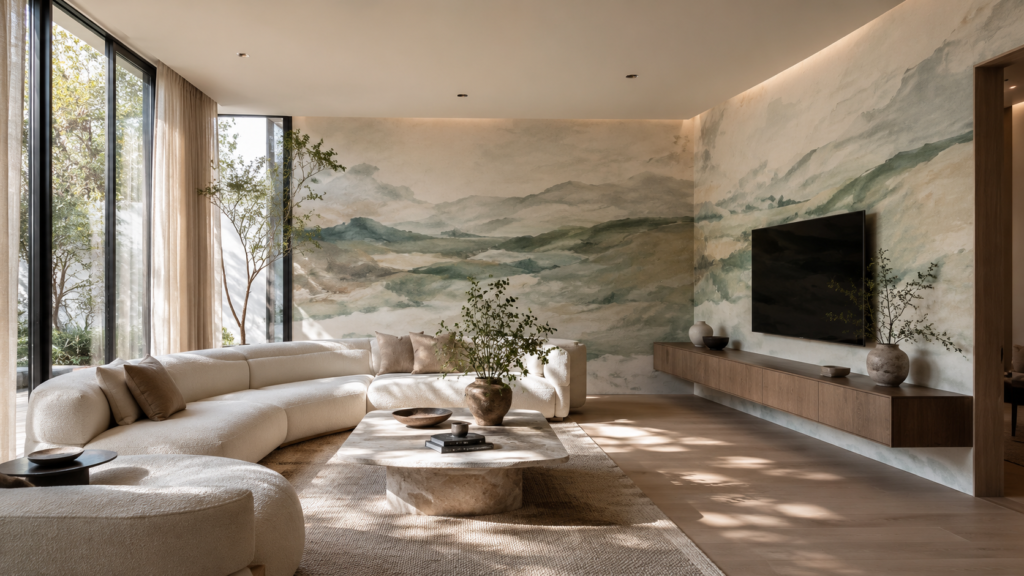
Instead of relying on a single feature wall, continue the same wallpaper onto an adjoining wall to create an L-shaped focal point. This approach works particularly well in open-concept living rooms, large bedrooms, and dining areas where one wall alone can feel disconnected. Keeping furniture simple allows the wallpaper to define the space without overwhelming it. Choose understated textures or oversized murals that flow naturally across both surfaces for a cohesive, designer-inspired finish.