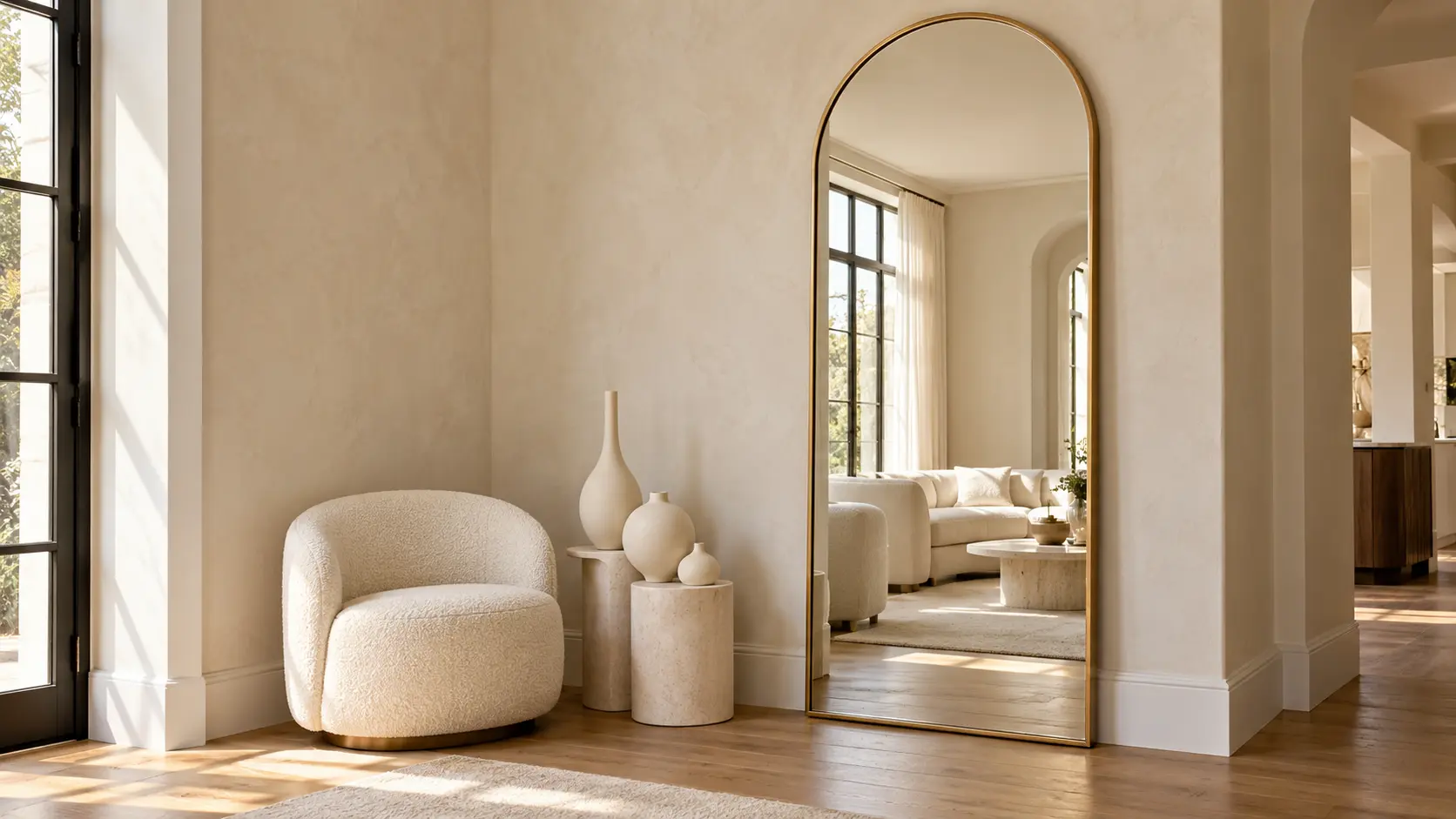
A mirror can completely change how a wall feels. It can brighten a quiet corner, reflect a beautiful part of the room, or give an entrance a focal point that catches your attention as soon as you walk in. With the right shape and placement, even a simple mirror becomes an important part of the decor.
There is also plenty of room to move beyond a basic rectangular frame. Arched mirrors bring softness, round collections add movement, and illuminated designs introduce a warm evening glow. Wood, metallic finishes, and textured walls give each style a different personality.
These 15 mirror wall decor ideas show how to bring those elements together. Whether you prefer a calm neutral corner or a dramatic statement wall, each design offers details you can adapt to your own space.
1. Go Tall with an Arch
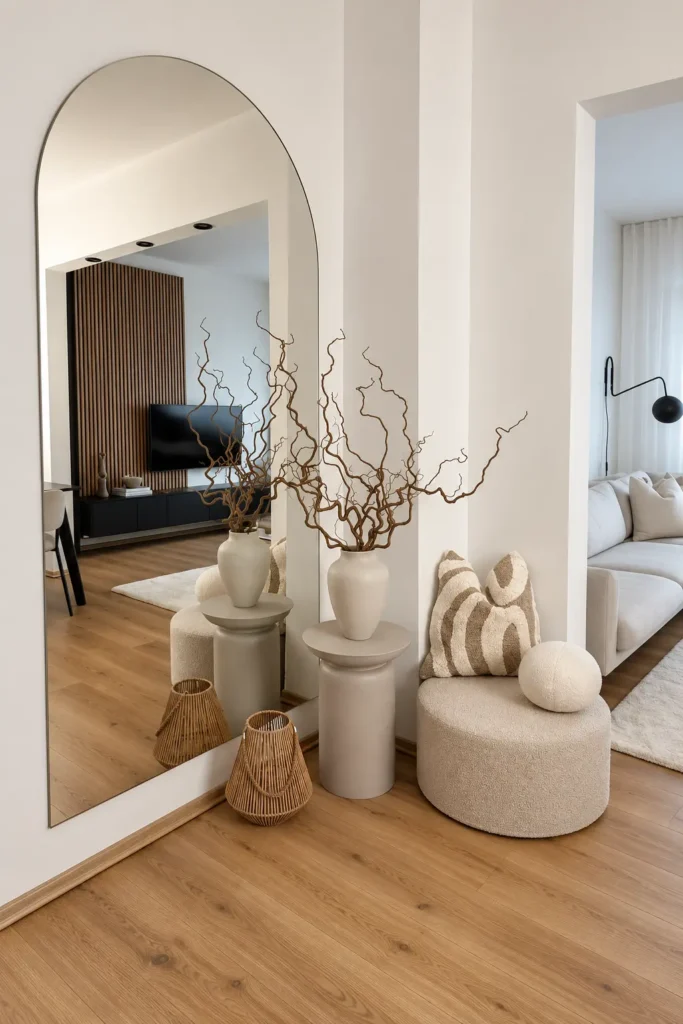
A tall arched mirror is a beautiful way to give a neutral corner more presence. The rounded top softens the straight lines of the surrounding walls, while the narrow frame allows the reflective surface to remain the main feature. Its generous height also captures a larger view of the room, making the corner feel more connected to the space around it.
The styling beside the mirror is just as important as the mirror itself. Cream seating, pale sculptural vases, and a small round table create a gentle mix of shapes. Bare branches add height and an airy outline without introducing too many colours. Warm wooden flooring keeps the pale arrangement from feeling cold.
To recreate this look, choose accessories with different heights but a similar colour palette. Place taller pieces beside the mirror rather than directly in front of it, leaving most of the glass visible. A soft upholstered seat nearby turns the arrangement into a comfortable little corner instead of a wall display alone.
2. Bring in a Warm Glow
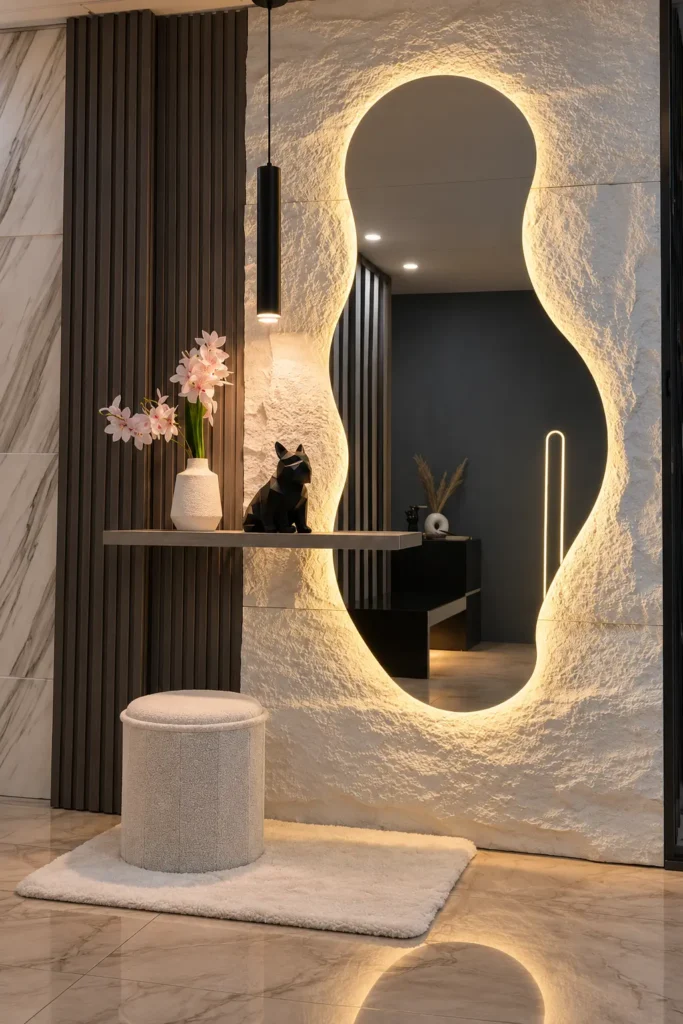
An organic mirror with backlighting gives an entryway a welcoming atmosphere. Its uneven outline feels fluid, and the warm light behind it makes that shape easy to appreciate. Against a textured wall, the glow also reveals subtle changes in the surface, adding interest beyond the mirror itself.
Dark vertical wooden slats bring contrast to the lighter wall. They provide a structured backdrop beside the flowing mirror, helping the arrangement feel balanced. A slim floating console crosses the lower part of the display and offers enough space for a vase and a few carefully chosen objects.
Keep the furniture beneath this mirror compact. A small upholstered stool can tuck close to the console, while a light rug helps define the corner. For a similar effect at home, use warm lighting and avoid filling the console with too many accessories. The combination of texture, reflection, and light already gives the wall plenty of detail.
3. Gather Golden Circles
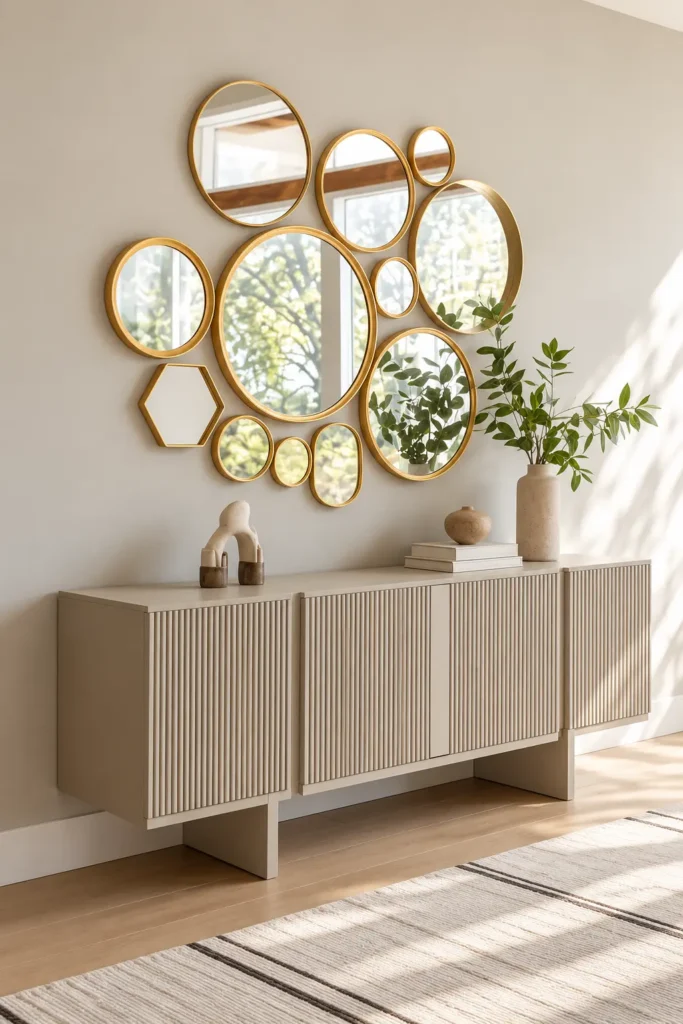
A collection of circular mirrors adds movement to the wall above a sideboard. Using several sizes gives the arrangement a natural rhythm: larger mirrors hold your attention, while smaller ones fill the spaces between them. The shared gold finish keeps the collection connected, even with a small geometric piece mixed into the display.
Each mirror reflects a slightly different view, which makes the wall feel lively as you move through the room. In this setting, daylight and greenery appear in the glass, bringing colour into an otherwise gentle neutral palette. The fluted sideboard below adds texture without competing with the rounded frames.
Begin a similar arrangement with the largest mirror, then work outward. Lay the pieces on the floor first to check the spacing before hanging them. Keep the overall group centred above the sideboard, and leave some open wall between the frames. A few ceramics and one taller vase below are enough to finish the look.
4. Play with Vertical Shapes
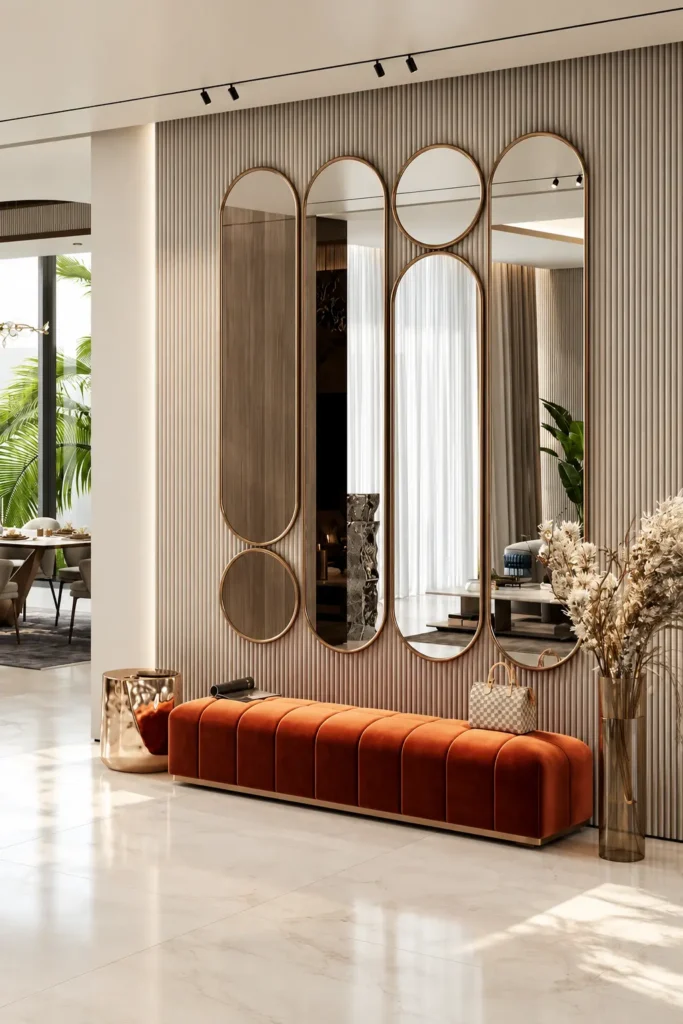
Tall rounded mirrors combined with circular accents create an entryway wall with a strong architectural feel. The elongated pieces draw the eye upward, while the smaller circles interrupt the repeated vertical lines. This mix makes the arrangement more interesting than a row of identical mirrors.
The ribbed wall behind the glass adds depth and gives the frames a clear setting. Slim metallic outlines define each shape without making the display feel heavy. Below, a rust-coloured upholstered bench introduces a richer tone and provides a useful place to sit when putting on shoes.
This idea works best when the mirror arrangement and bench feel connected in scale. Centre the display over the seating and allow a comfortable amount of wall space around the edges. If the backdrop already has plenty of texture, keep nearby accessories restrained. The varied shapes and warm bench colour can carry the whole entrance.
5. Layer Golden Rings
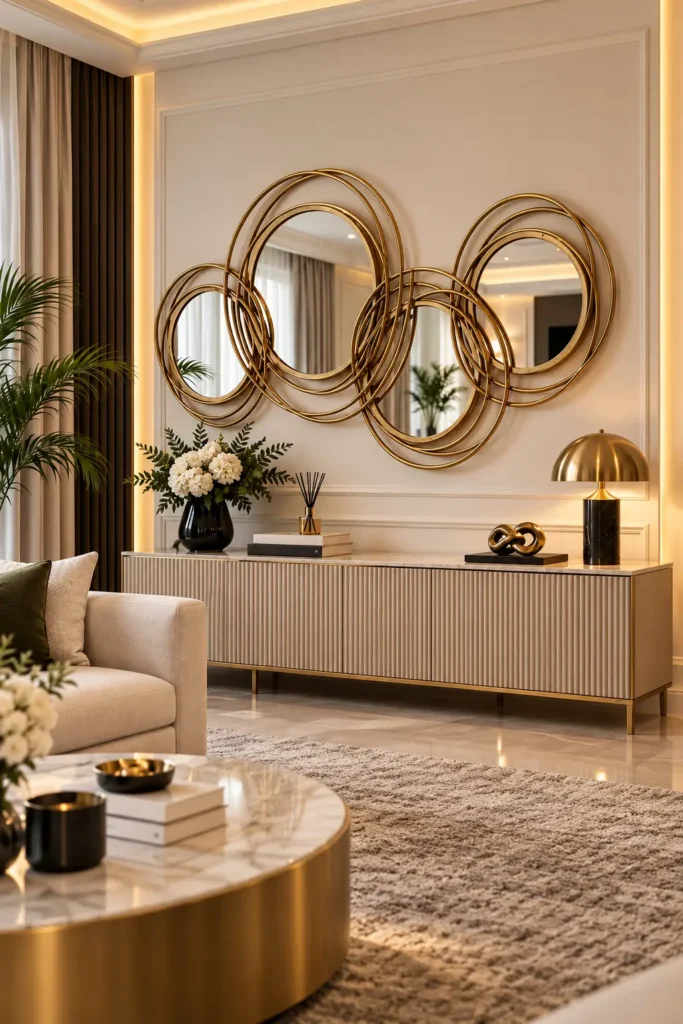
Mirrors framed by overlapping gold rings bring a decorative, sculptural quality to a living room wall. The extra rings extend beyond the reflective surfaces, making the arrangement feel larger and more expressive. Different circle sizes add variety, while the repeated finish gives the display a consistent identity.
A long fluted console beneath the mirrors provides a calm base for the flowing shapes above it. Small decorative pieces, a lamp, and flowers make the wall feel part of the living space. Gold details elsewhere in the room, including the coffee table, help connect the mirror display with the surrounding furniture.
To use this idea at home, let the frames have some breathing room. Avoid placing tall accessories directly in front of the most detailed sections. Choose just a few other metallic accents around the room so the finish feels intentional. Soft upholstery and a textured rug balance the shine with a more comfortable, relaxed feel.
6. Light Up a Classic Frame
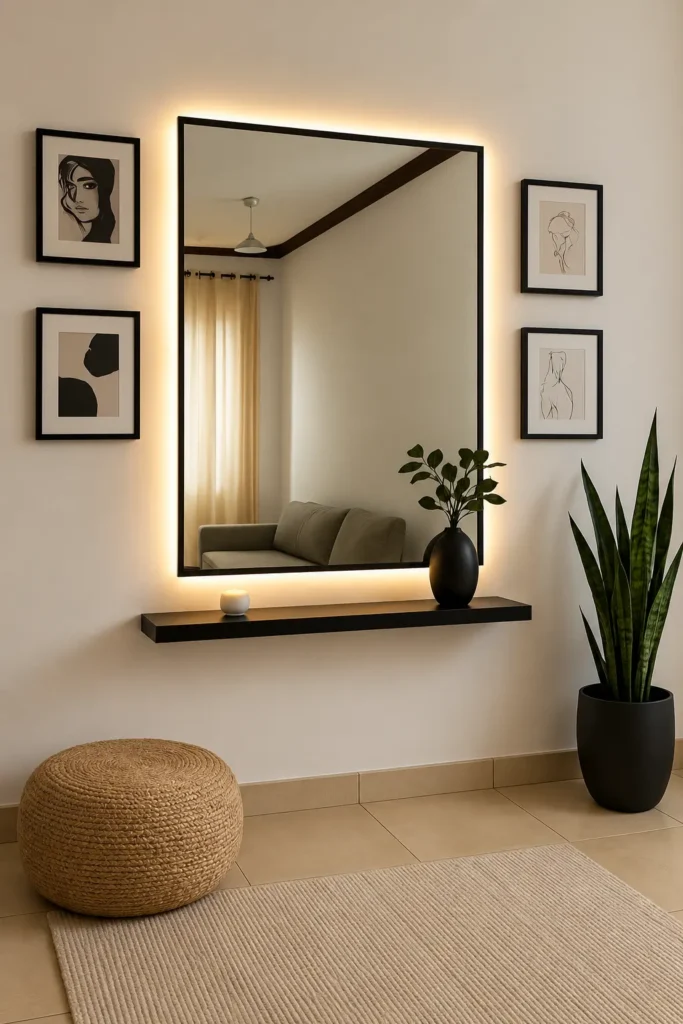
A rectangular mirror can make a strong statement with a few thoughtful details. Here, a slim dark frame creates a clear outline against the pale wall, while warm lighting around the edges softens the contrast. The result feels clean and defined, with enough warmth for an everyday entrance or living room corner.
The narrow shelf below the mirror gives the display a practical foundation. It offers room for a small vase and a few essentials without taking up much floor space. Framed artwork on both sides extends the arrangement across the wall and connects with the dark mirror frame.
A woven pouffe adds texture beneath the shelf, making the setting feel less formal. To recreate the balance, keep the artwork smaller than the mirror and give each piece enough space. Choose a few simple objects for the shelf, then leave the rest clear. The mirror should remain the centre of the composition.
7. Warm It Up with Wood
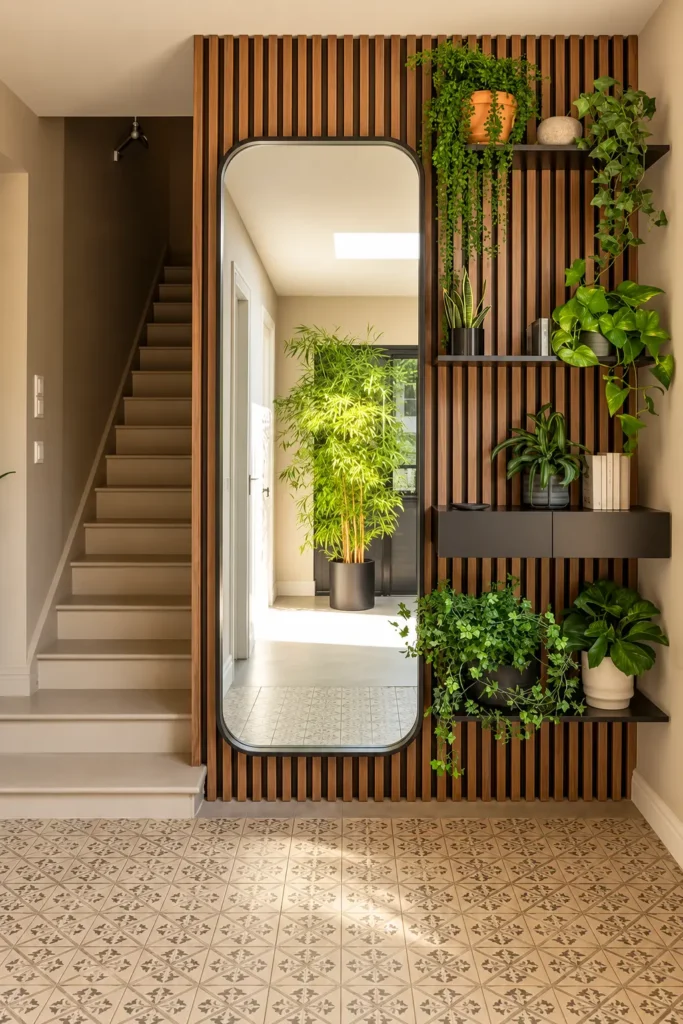
A wooden slat wall gives a tall mirror a warm, textured backdrop. The repeated vertical lines emphasise height, while the mirror’s rounded corners soften the overall appearance. Placed beside a staircase, this arrangement gives a transition area a clear purpose and a more considered finish.
Shelves alongside the mirror introduce another layer of detail. Plants sit at different heights, with trailing stems breaking up the straight wooden lines. The contrast between the glass, wood, and greenery makes the wall feel varied without requiring lots of decorative objects.
Keep most of the shelving to one side so the mirror remains easy to use. If you recreate this idea, check that the plants suit the available light and can be watered without splashing the wood. A narrow console or shelf can hold daily essentials, turning the wall into a useful entrance feature as well as an attractive display.
8. Make a Mirrored Statement
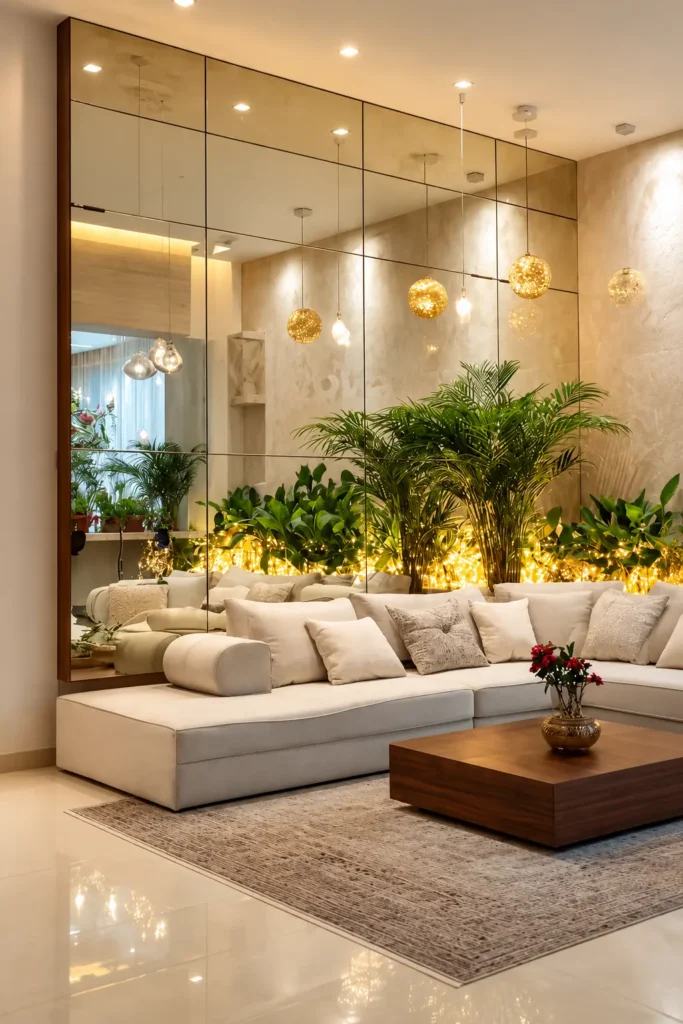
A wall of large mirrored panels creates a dramatic backdrop for a living room. Instead of reflecting one small area, it captures the seating, hanging lights, and surrounding greenery. This adds visual depth and makes the furniture arrangement feel more expansive.
The panel divisions give the glass structure, preventing the wall from becoming one uninterrupted reflective surface. In this room, warm lighting and plants soften the effect, while the pale sofa provides a calm foreground. A low wooden coffee table adds warmth and keeps the seating area grounded.
Before choosing this approach, consider the view the wall will reflect from different positions. A well-arranged seating area, attractive lighting, or a bright window can make the reflection feel intentional. Keep cables and everyday clutter out of that view where possible. Large mirrored walls work best when the reflected scene feels as carefully styled as the wall itself.
9. Layer Soft Arches
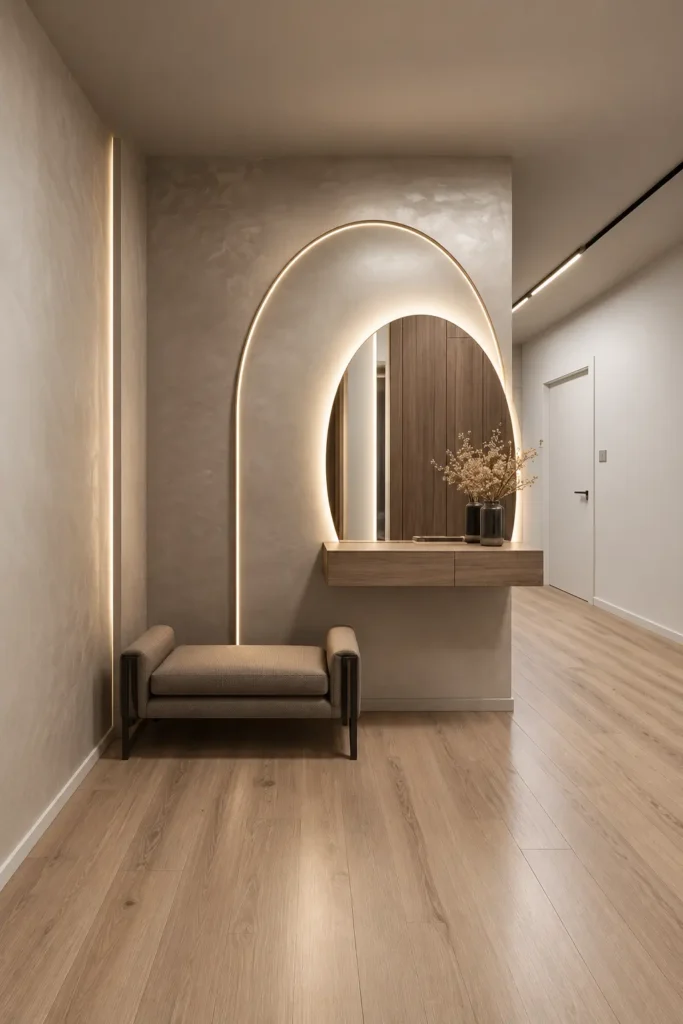
Layered arches give this hallway a quiet but distinctive focal point. A smaller arched mirror sits within a larger illuminated arch, creating a sense of depth through repeated curves. The design feels cohesive because the wall, console, and surrounding finishes stay within a muted palette.
The light around the larger arch highlights its outline and adds warmth to the passage. A slim console beneath the mirror gives the arrangement a practical base, while a vase adds a delicate finishing detail. A compact chair nearby makes the space feel welcoming without filling the walkway.
To adapt this idea, focus on proportions. The inner mirror needs enough visible space around it for the larger arch to remain clear. Keep the furniture narrow and avoid adding several competing wall decorations. The strength of this design comes from its layered shapes and restrained styling.
10. Let Wood Flow
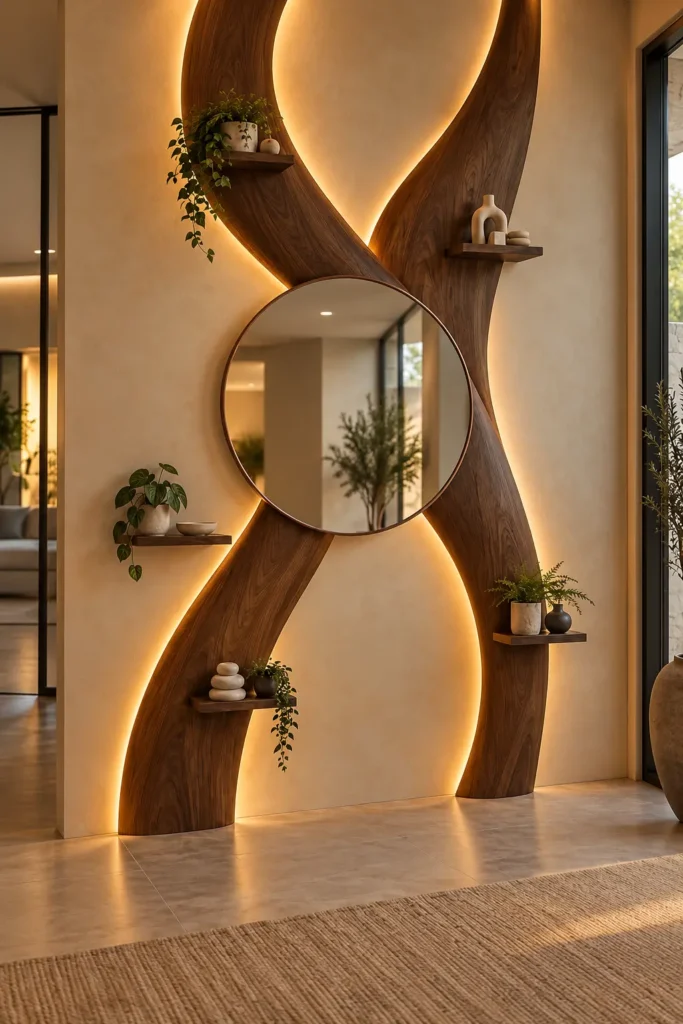
Sweeping wooden ribbons turn a wall into a sculptural feature. Their curves move around a central round mirror, giving the arrangement a strong sense of flow. Warm lighting along the edges highlights the contours and reveals the contrast between the wooden panels and the pale background.
The mirror offers a simple circular pause within the more expressive design. Small shelves sit along the curved sections, holding plants and decorative objects. These details make the wall feel usable, but they remain secondary to the larger shapes.
This is an idea to plan around the whole wall rather than treat as a small accessory update. Keep nearby furniture simple and allow clear space in front of the feature. If adapting the design on a smaller scale, use fewer curves and fewer shelves. Preserving the flowing outline will have more impact than filling every available surface.
11. Choose a Glowing Curve
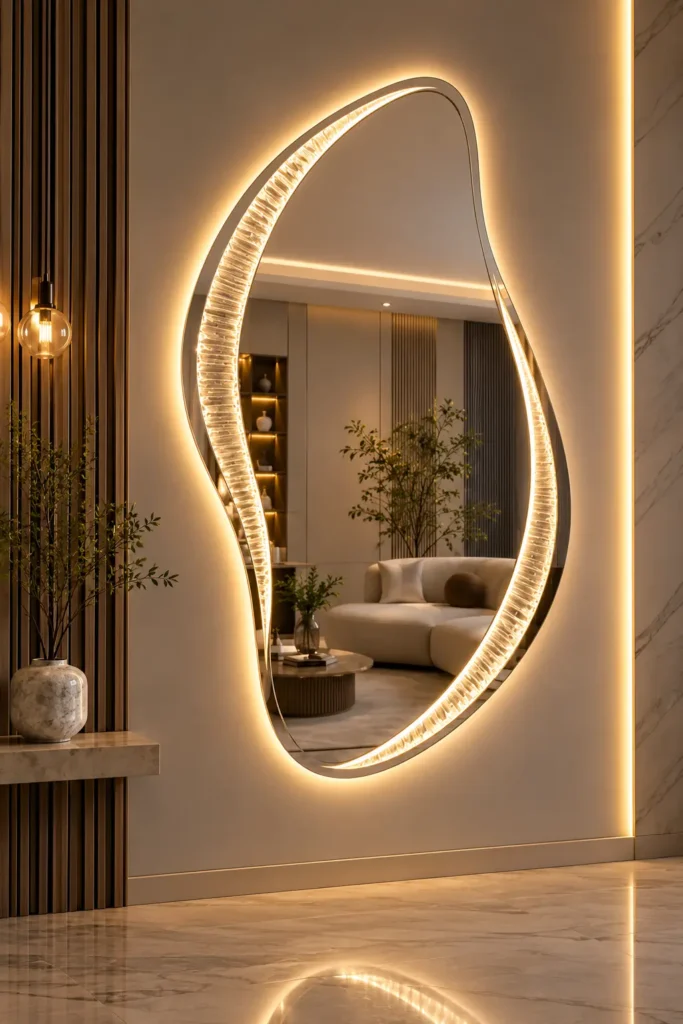
An oversized irregular mirror gives a neutral wall a bold focal point. Its flowing outline feels soft, while the illuminated textured border adds detail around the glass. The warm glow makes the shape stand out clearly and brings a comfortable atmosphere to the surrounding room.
The reflective surface captures part of the living space, adding another layer to the wall. Dark wooden detailing nearby creates contrast with the pale background and draws attention toward the mirror. A console at the side adds a useful surface without covering much of the design.
Because the mirror is already visually strong, a few accessories are enough. Choose simple vessels or small sculptural objects that complement its curves. Leave open space around the edges so the outline can be appreciated. This approach suits a room where you want one memorable feature to carry the wall.
12. Arrange Organic Gems
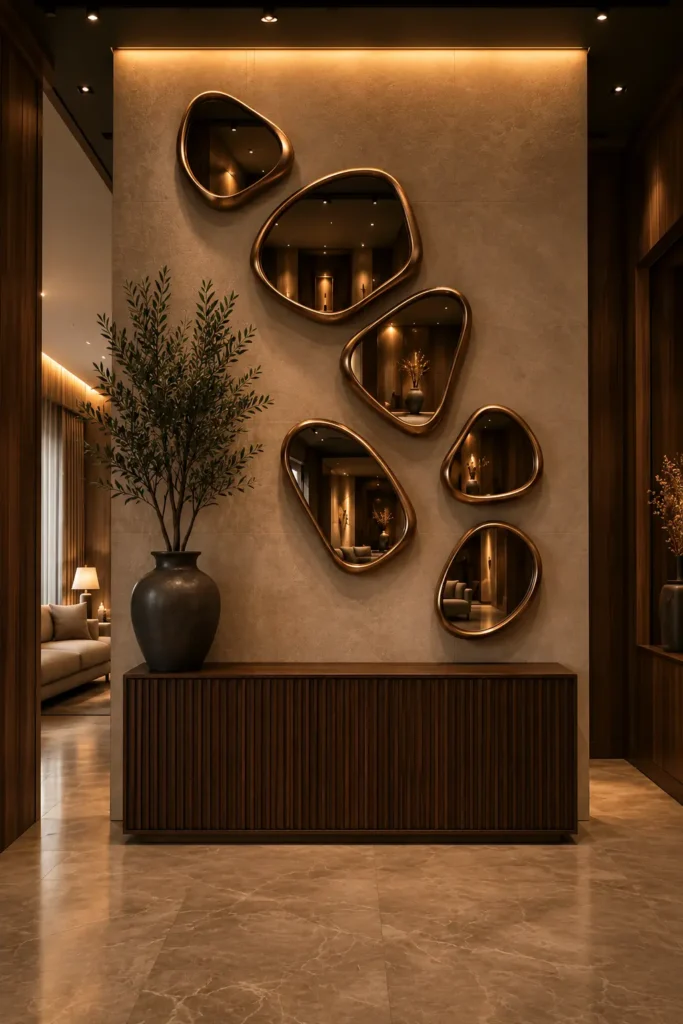
A grouping of irregular mirrors creates an artistic display above a cabinet. Each piece has its own rounded, uneven outline, giving the arrangement a softer character than a traditional grid. Warm metallic frames connect the different shapes and complement the rich neutral wall behind them.
The staggered placement helps the collection feel relaxed while still considered. Larger pieces anchor the group, and smaller mirrors fill the remaining spaces. Their reflections change from one piece to the next, adding small glimpses of the room throughout the display.
Try laying out the collection before hanging it so you can judge the balance. Keep the overall arrangement centred above the cabinet, even if individual pieces sit at different heights. A tall vase at one end adds another shape without crowding the glass. Leave the rest of the cabinet fairly clear to let the mirrors read as one composition.
13. Try Bronze Ripples
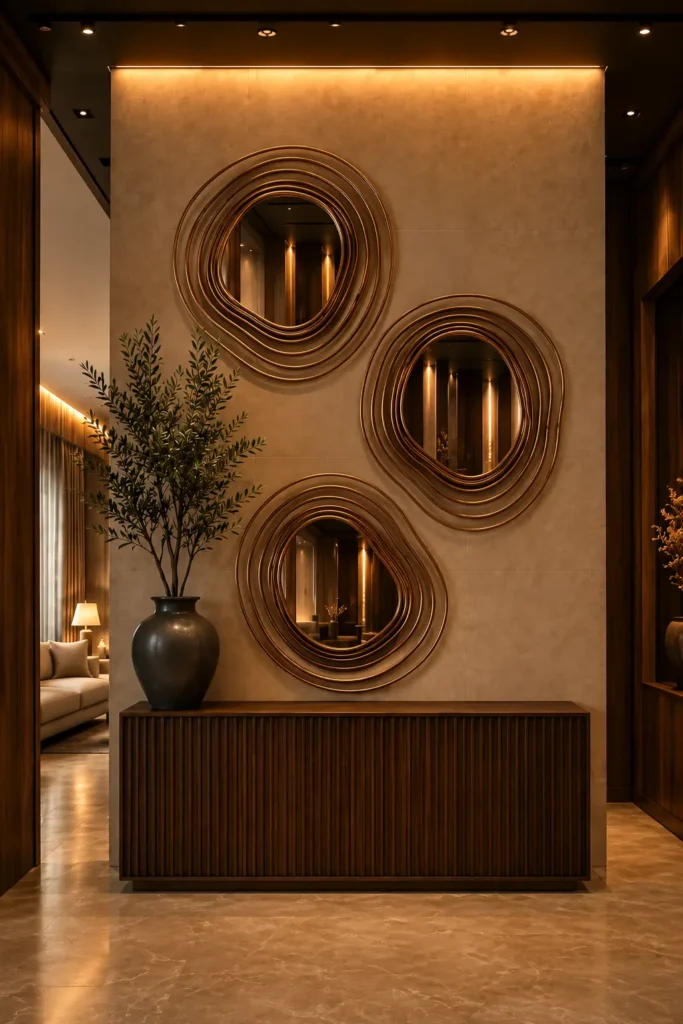
Three round mirrors with layered bronze frames bring rich texture to a warm-toned wall. The repeated rings around each mirror create depth, giving the frames almost as much presence as the glass. Their staggered arrangement makes the collection feel more dynamic than a straight horizontal row.
A dark wooden console below reinforces the warm palette and provides a substantial base. A tall vase adds height on one side, balancing the different mirror positions. Soft lighting above the wall brings out the bronze tones and the details in the surrounding surfaces.
This idea suits a space where you want decorative detail without introducing many colours. Pair the frames with simple ceramics, wood, and understated accessories. Give each mirror enough separation for its layered border to remain visible. Too many objects nearby would make it harder to appreciate the textured finish.
14. Soften the Dining Wall
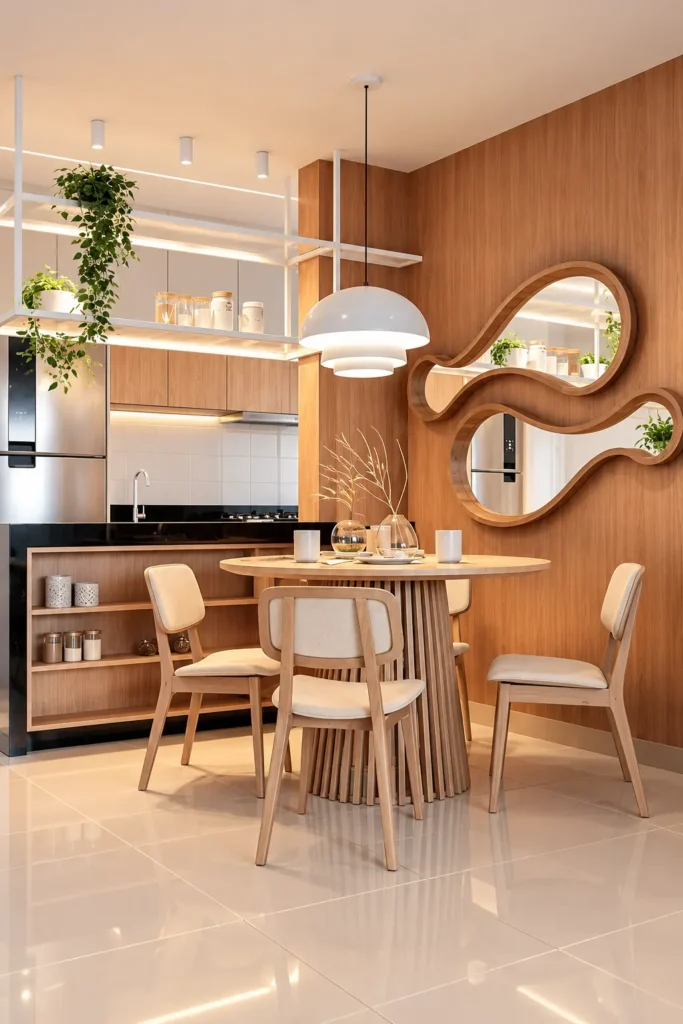
Two flowing mirrors bring a playful detail to a warm wooden dining wall. Their irregular outlines break up the straight lines of the panelling, table, and kitchen cabinetry. The shared frame finish keeps them connected to the wood around them, so the shapes stand out without feeling disconnected.
The upper and lower mirrors create movement across the wall rather than sitting as a rigid pair. Their reflections add small glimpses of the surrounding space, giving the dining nook more depth. Light wooden chairs and a white pendant keep the rest of the setting airy and comfortable.
For a similar look, choose mirror sizes that suit the table and the available wall area. Keep them clear of shelves or lighting that might obscure their outlines. Simple table styling works well here—a small vase or bowl allows the wall to remain the main decorative feature.
15. Build a Vintage Gallery
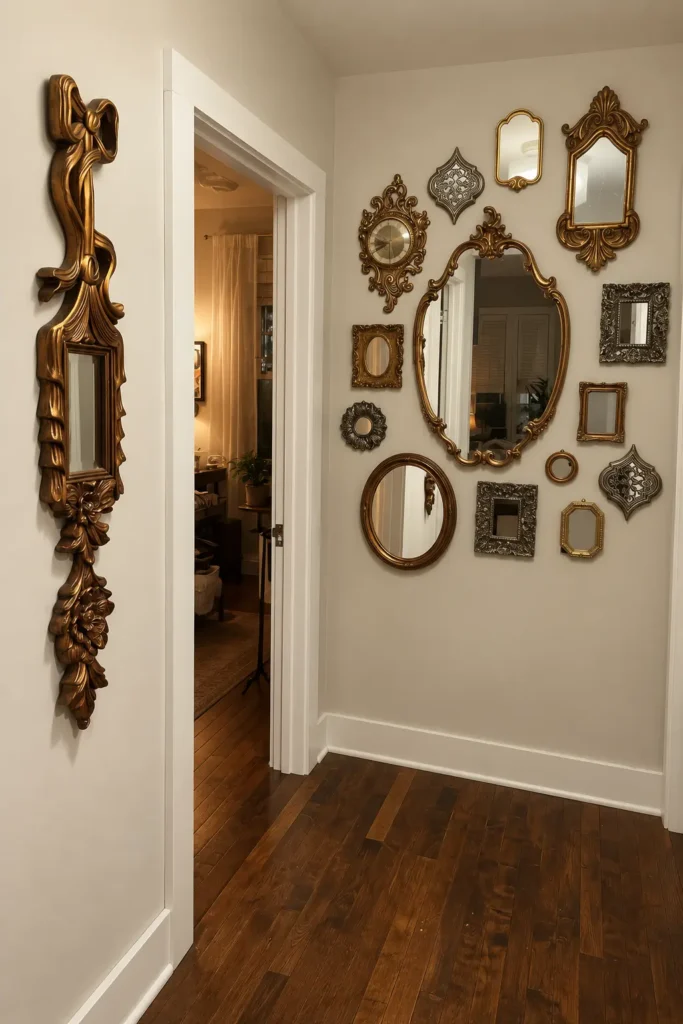
A gallery of ornate mirrors turns a hallway into a space with character. Oval, rectangular, and decorative shapes create variety, while the detailed frames give each piece its own identity. The collection feels gathered over time, with enough repetition in the finishes to bring it together.
A larger mirror anchors the display, and smaller pieces fill the surrounding wall. The pale background helps the frame details remain visible, while warm flooring complements the aged metallic tones. Another ornate mirror on the adjacent wall extends the decorative feel through the hallway.
To build this arrangement, begin with one main piece and add smaller mirrors gradually. Keep some open wall between the frames so the collection does not become visually crowded. Check the group from the entrance as well as close up; the overall balance matters just as much as the individual designs.