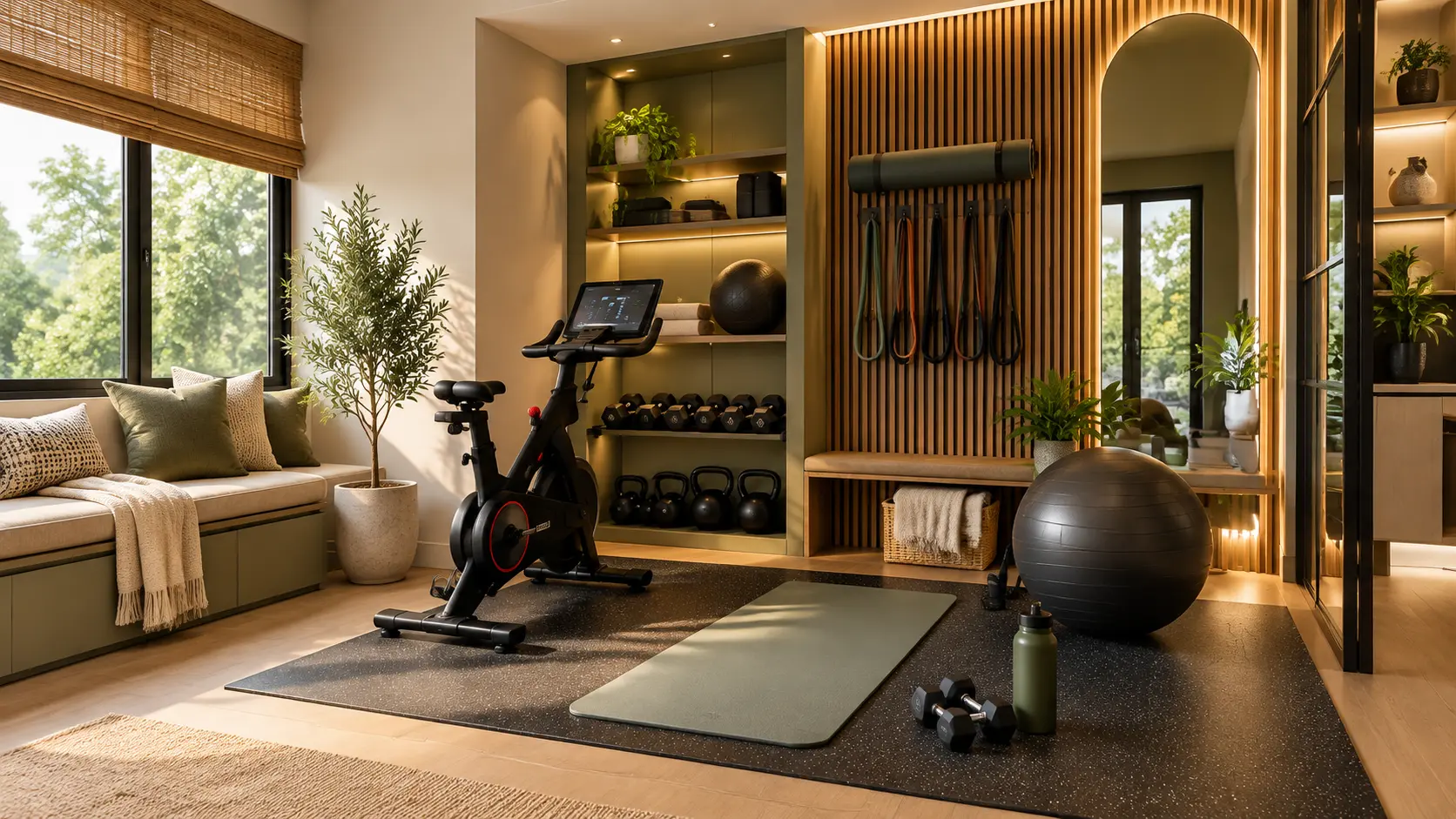
Creating a workout area at home can feel challenging when every square foot matters. The good news is that small rooms, spare corners, and unused areas can become practical fitness zones without making your home look like a commercial gym. These home gym ideas for small spaces focus on smart layouts, compact equipment, stylish storage, and finishes that blend with your existing interior.
From minimalist workout corners to dedicated strength-training rooms, these ideas show how to create a home gym that feels intentional, organized, and comfortable for everyday use.
1. Create a Warm Minimal Home Gym Corner
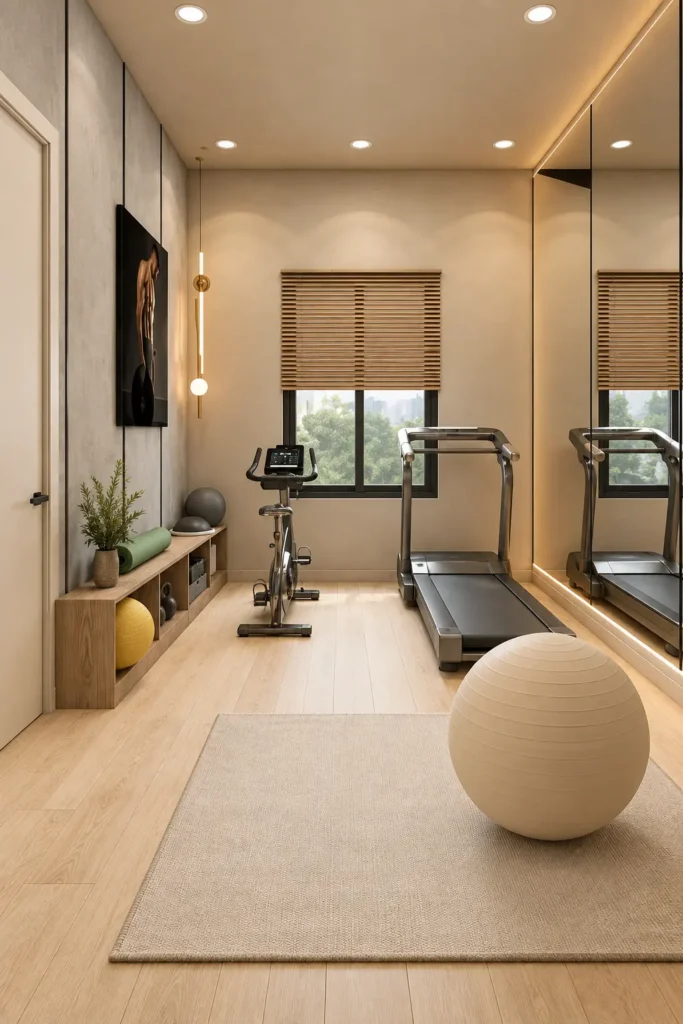
A small workout corner can look polished when you treat it like any other room in your home. Use a neutral palette with light wood flooring, soft beige walls, and simple equipment that does not visually overwhelm the space.
A slim exercise bike, yoga mat, stability ball, and a small wooden storage unit are enough for daily workouts. Open shelving keeps accessories visible while preventing clutter. Keeping at least 30–36 inches of clear movement space around equipment helps the area feel comfortable instead of cramped.
This style works well in bedrooms, home offices, or unused corners because the design feels like part of the home rather than a separate fitness zone.
2. Add a Bold Accent Wall Behind Equipment
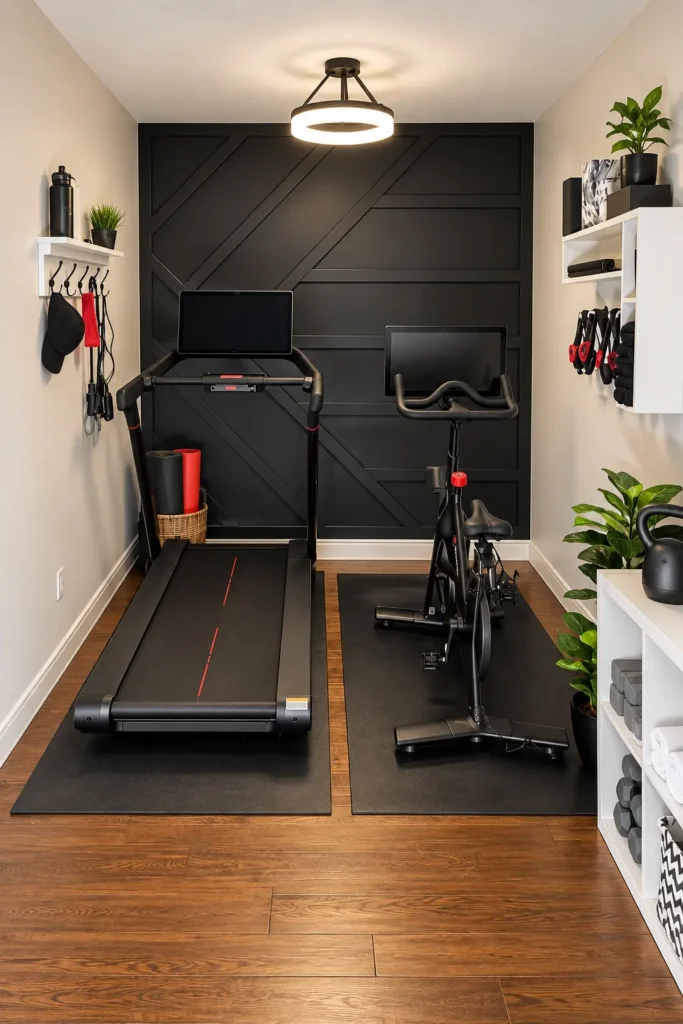
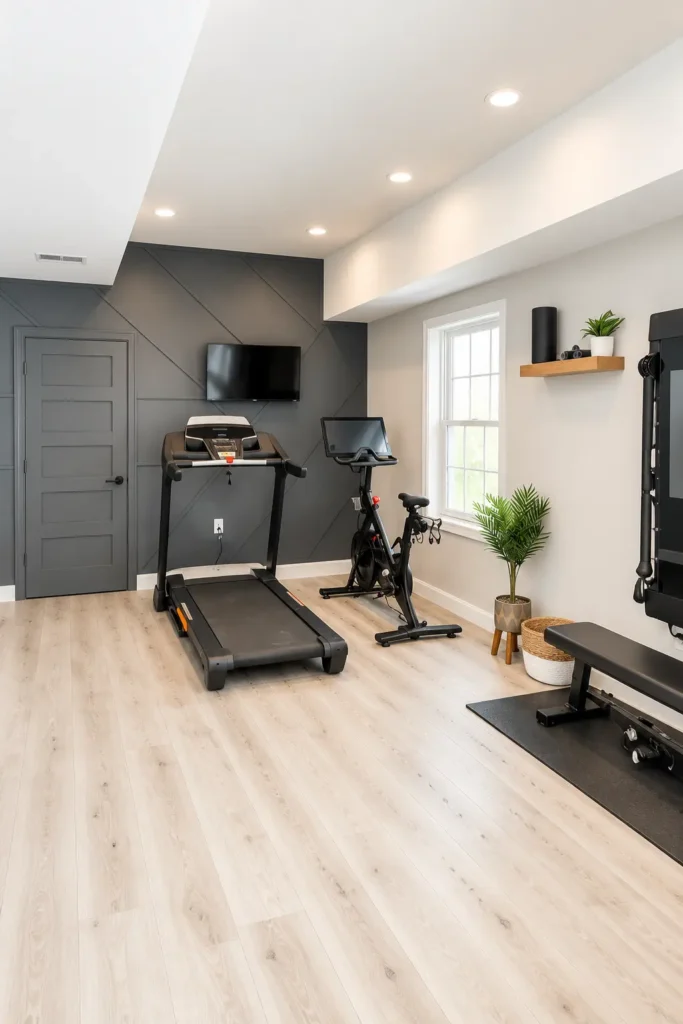
A strong wall treatment can make a compact gym feel designed instead of temporary. A dark feature wall, geometric paneling, or textured paint behind your treadmill or bike creates a visual anchor.
Keep the rest of the room lighter so the space does not feel smaller. Matte charcoal, deep green, or warm gray walls work especially well with black fitness equipment because they create contrast without looking harsh.
If painting is not an option, removable wallpaper or renter-friendly wall panels can create a similar effect without permanent changes.
3. Turn a Spare Room Into a Functional Studio
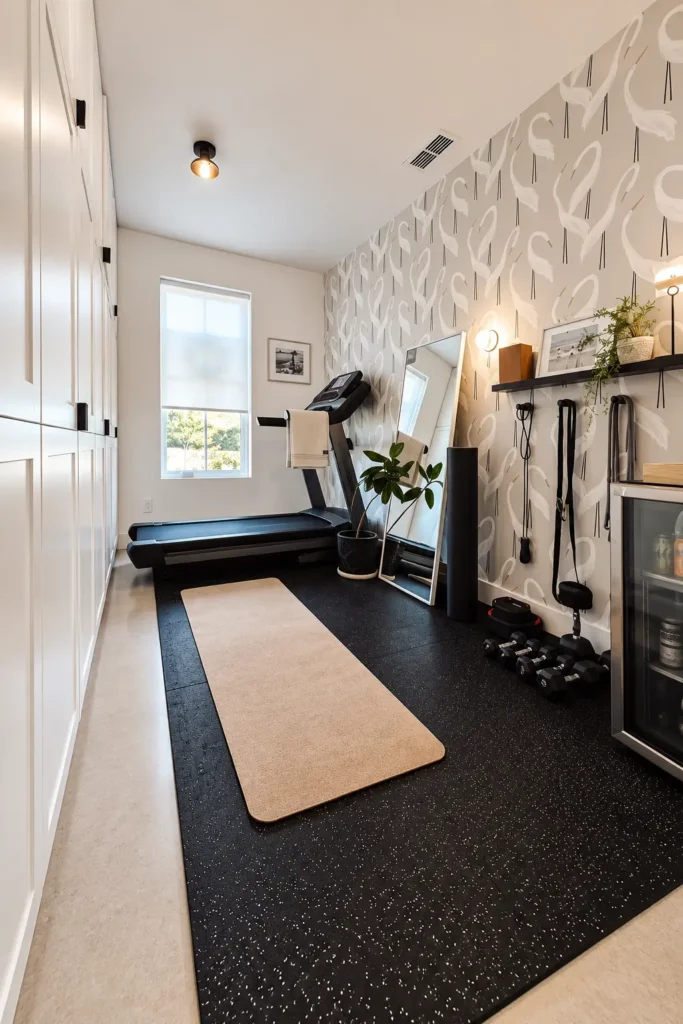
A small spare room can become a complete workout studio with careful planning. Instead of filling the room with equipment, choose pieces that match your routine.
A treadmill along one wall, a yoga area in the center, and vertical storage for resistance bands and weights can create a balanced layout. Mirrors placed on one wall improve lighting reflection and make movement easier to monitor.
Avoid pushing every item against the walls. Leaving open floor space in the center improves flexibility workouts, stretching, and mobility exercises.
4. Use a Garage-Style Gym Look Indoors
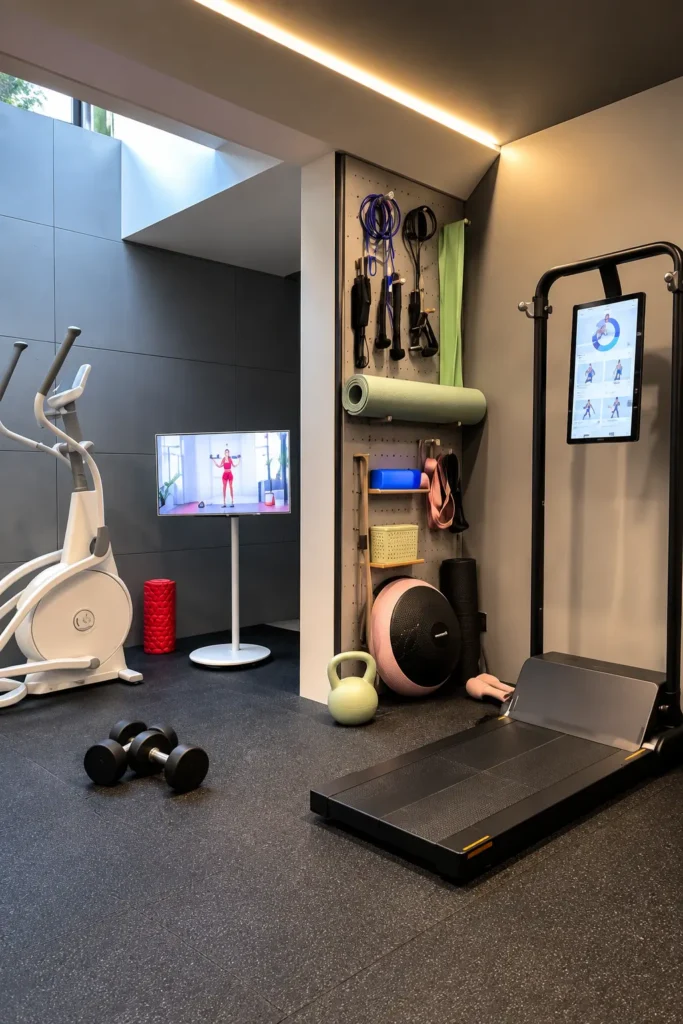
A garage-inspired gym brings a practical, athletic feel to a small room. Rubber flooring, black equipment, metal storage racks, and industrial lighting create a durable setup.
Interlocking rubber tiles are useful because they protect floors from dropped weights and reduce noise. Choose thicker flooring for strength training areas where heavier equipment is used.
To prevent the room from feeling cold, add natural elements such as wood shelving, plants, or warm lighting. The result is a functional gym that still feels connected to your home style.
5. Design an Attic Workout Space
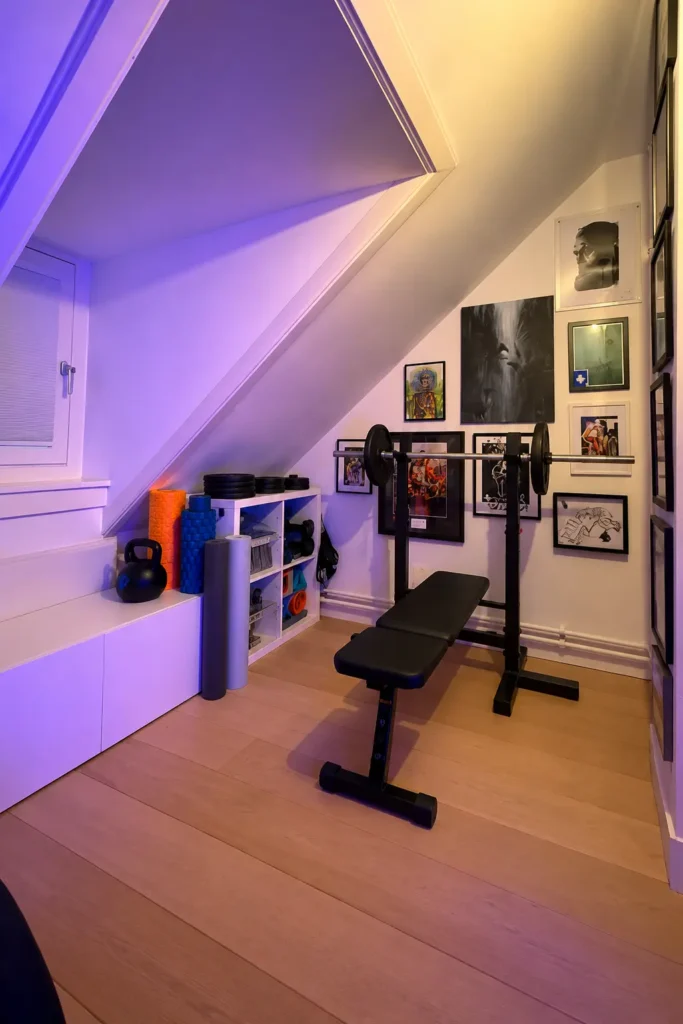
Sloped ceilings and awkward attic layouts can actually create unique workout rooms. Use lower areas for storage benches, shelves, and yoga equipment while placing taller equipment in areas with more head clearance.
LED strip lighting along ceiling edges can highlight architectural details and make the room feel larger. Light-colored flooring and mirrors also help reflect available daylight.
Before adding heavy equipment, check the floor strength and measure ceiling height carefully, especially for treadmills or weight machines.
6. Combine Fitness With Relaxed Living
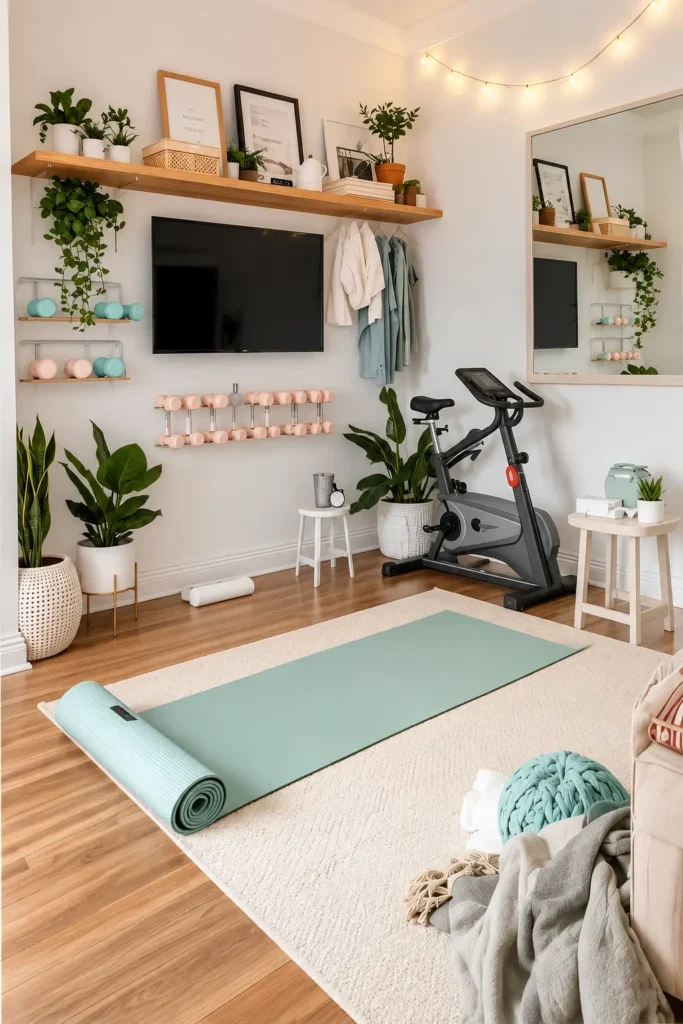
A home gym does not always need to look serious or industrial. Combining exercise equipment with comfortable furniture creates a flexible multipurpose room.
A stationary bike beside a reading chair, yoga mat near a sofa, or small weights stored on decorative shelves can make fitness part of daily life.
This approach works particularly well in apartments where one room needs to serve multiple purposes. The key is choosing equipment with clean designs and storing accessories neatly when not in use.
7. Create a Bright Wellness-Inspired Gym
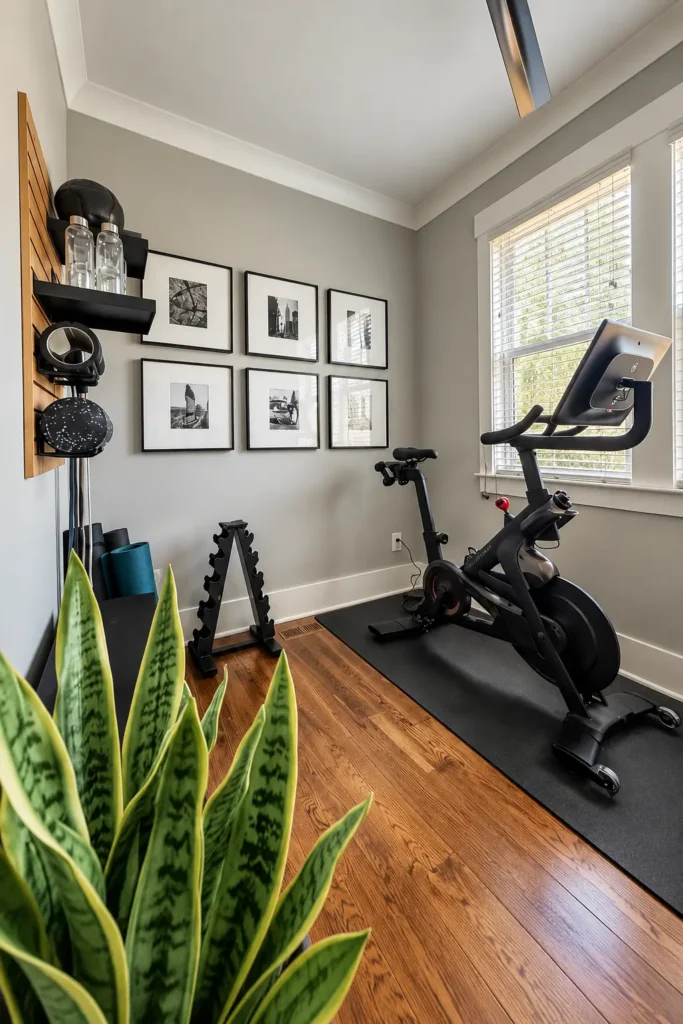
Natural light can completely change the feeling of a small workout room. Position equipment near windows whenever possible and use mirrors to spread daylight throughout the space.
Soft colors such as white, sage green, and pale wood tones create a calm environment suitable for yoga, Pilates, and light training.
Add practical storage with floating shelves, baskets, or wall hooks for towels and resistance bands. Keep decorations limited so the room remains easy to clean and functional.
8. Make a Small Cycling Studio
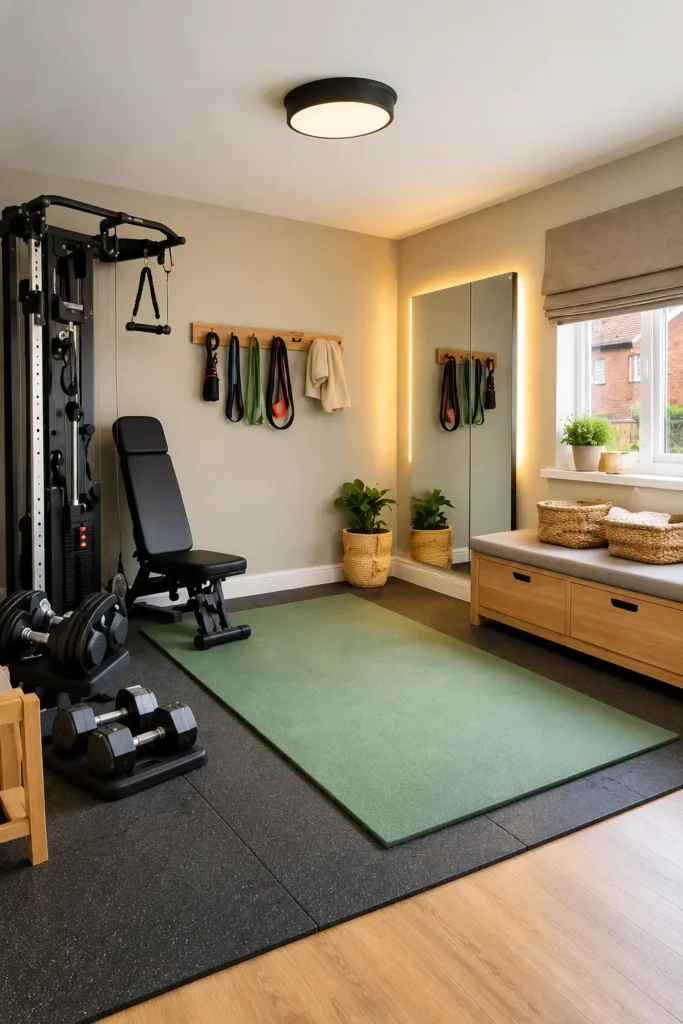
A dedicated cycling corner can fit into surprisingly small spaces. A single bike, floor mat, wall-mounted screen, and small storage area can create an effective indoor cycling setup.
Place the bike where you have enough clearance to safely mount and dismount. A mirror nearby can help check posture during workouts.
For a more premium feel, use layered lighting. A combination of ceiling lights and indirect LED lighting creates the atmosphere of a boutique cycling studio without requiring a large room.
9. Add a Strength Training Zone
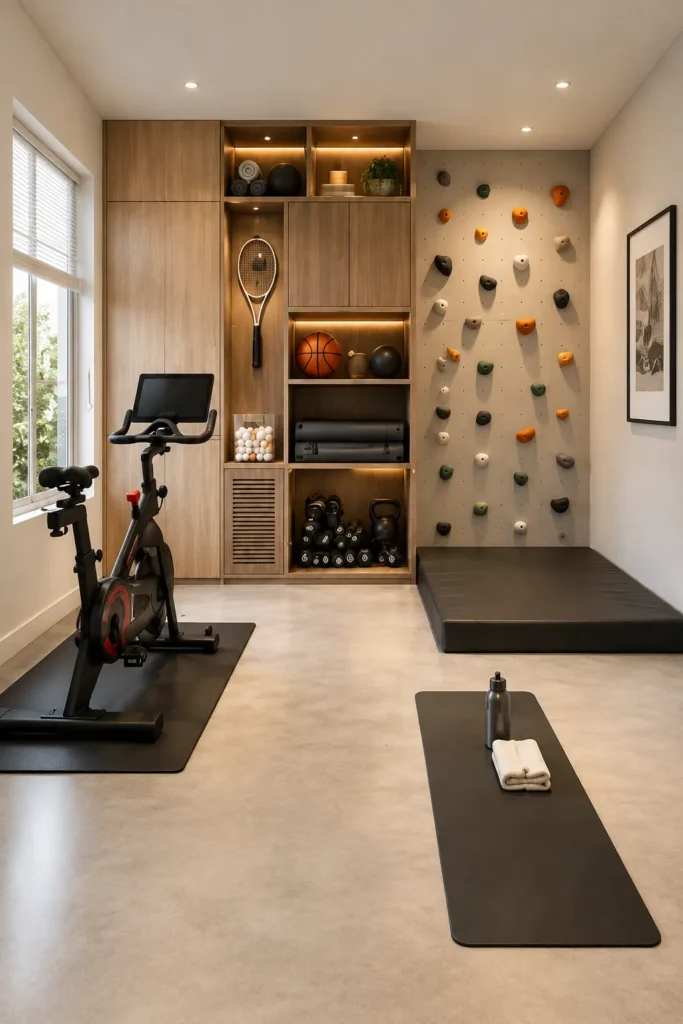
Strength training requires thoughtful organization because weights quickly create visual clutter. Use vertical racks, wall hooks, or built-in shelving to keep dumbbells and accessories organized.
A compact adjustable bench can replace several pieces of bulky equipment. Choose equipment with a smaller footprint while keeping enough space around it for safe movement.
Rubber flooring is especially practical in strength areas because it handles impact better and is easier to maintain than delicate flooring materials.
10. Build a Multipurpose Family Gym
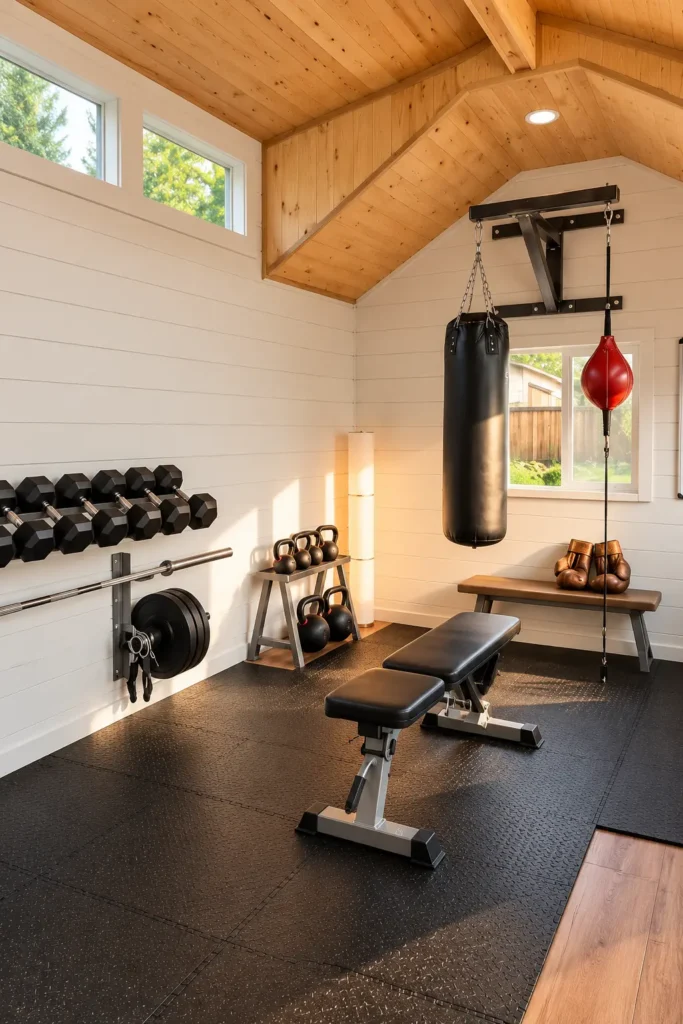
A family-friendly gym should support different activities without feeling crowded. Combine cardio equipment, yoga space, and storage for various fitness accessories.
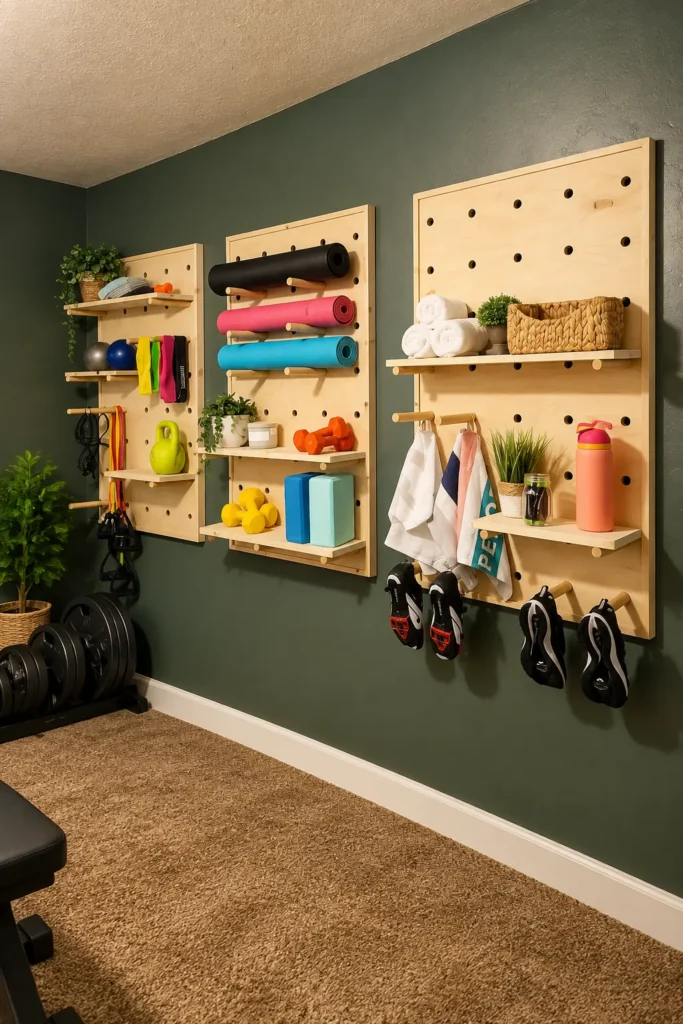
Wall-mounted pegboards are useful because they keep jump ropes, bands, mats, and small equipment accessible while saving floor space.
Use durable finishes that can handle frequent use. Easy-clean flooring, washable mats, and closed storage baskets make the room more practical for everyday family routines.
11. Add a Compact Climbing and Training Wall
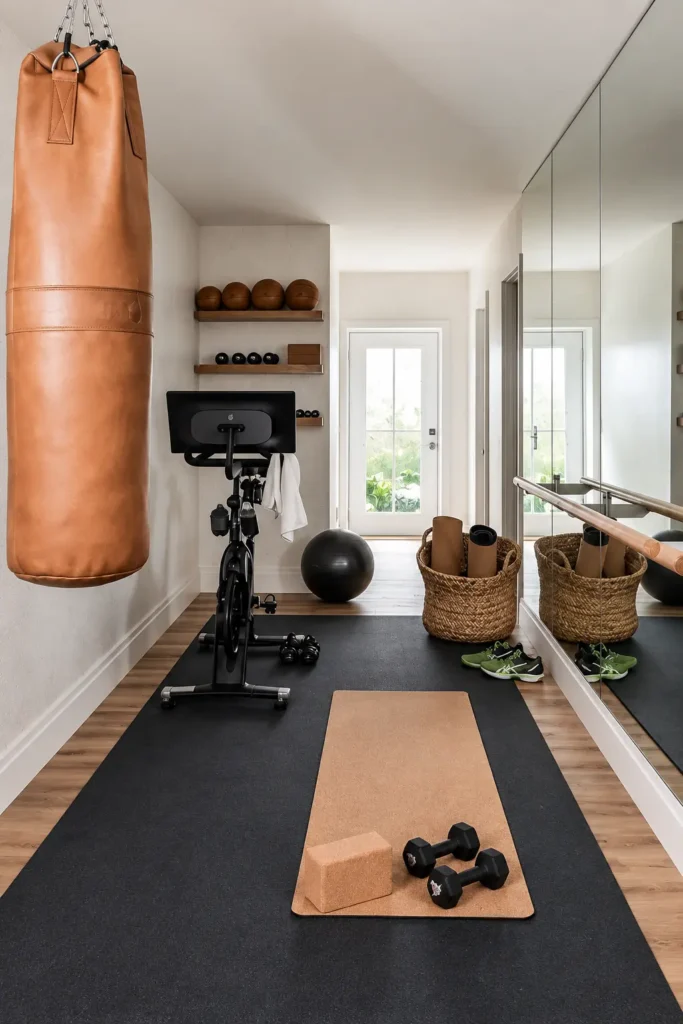
A climbing wall can become a unique feature in a small home gym. A simple climbing panel uses vertical space instead of taking valuable floor area.
Pair it with open shelving for equipment and a soft training mat underneath for safety. Neutral wall colors allow the climbing holds to become the main visual element.
This idea works best in rooms with enough ceiling height and proper installation support. Secure mounting is essential before adding climbing equipment.
12. Create a Modern Boutique Fitness Room
A boutique-style gym focuses on clean lines, premium finishes, and organized layouts. Use wood details, large mirrors, concealed storage, and warm lighting to create a refined environment.
A combination of black equipment and natural materials creates contrast while keeping the room sophisticated. Avoid overcrowding the space with too many machines.
The most successful small gyms usually prioritize quality over quantity, choosing fewer pieces that support multiple exercises.
13. Design a Boxing-Inspired Workout Space
A boxing corner can add energy and personality to a compact gym. A hanging bag, small weights, exercise bike, and open floor area can create a complete training zone.
Use protective flooring and ensure the punching bag has enough clearance to move safely. Wall storage keeps gloves, wraps, and accessories organized.
Warm wood tones and simple lighting can soften the athletic look and help the room blend with the rest of your home.
14. Create a Minimal Home Gym With Mirrors
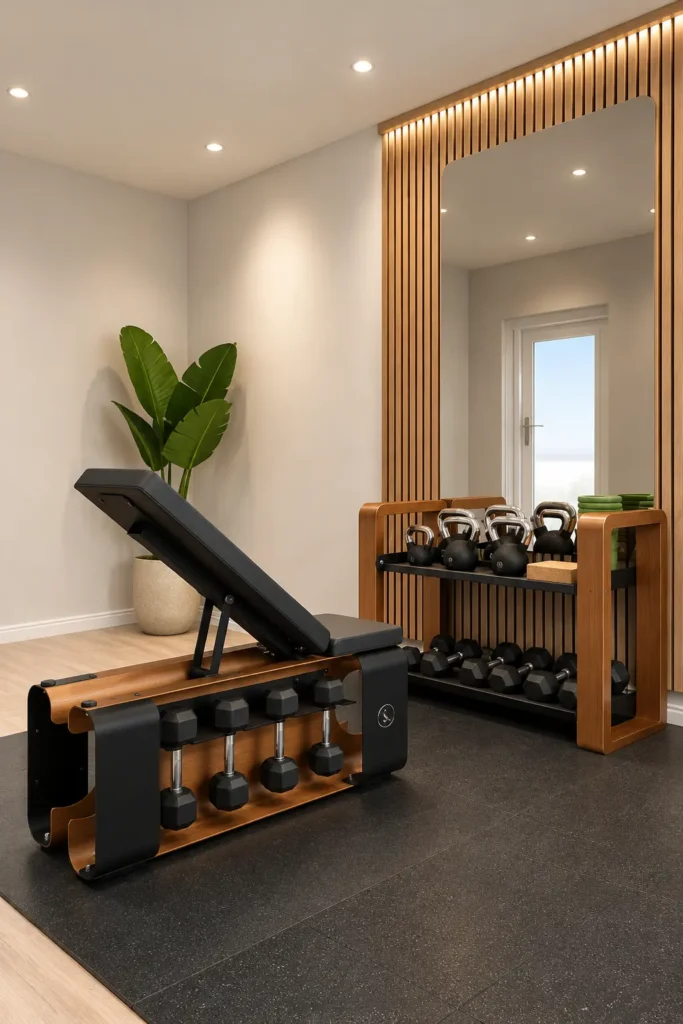
Mirrors are one of the most effective tools for making a small gym appear larger. A full-height mirror wall reflects light, improves visibility during workouts, and creates a more open feeling.
Pair mirrors with simple equipment, neutral colors, and hidden storage for a clean appearance. Avoid covering every wall with mirrors; one strategically placed section is usually enough.
This approach works especially well in small bedrooms, basements, and converted office spaces where maximizing visual space matters.
What to Consider Before You Start
Before buying equipment, measure your room carefully and plan movement zones. A treadmill, for example, needs enough clearance behind it for safe use, while strength areas need open space around benches and weights.
Think about noise, flooring protection, lighting, and storage before decorating. A beautiful gym that becomes difficult to use will quickly turn into wasted space.
Small-Space Storage Tips
Vertical storage is one of the easiest ways to keep a compact gym organized. Wall hooks, floating shelves, pegboards, and narrow cabinets help keep equipment off the floor.
Choose storage based on your routine. Frequently used items should remain accessible, while seasonal or rarely used equipment can be stored higher or inside cabinets.