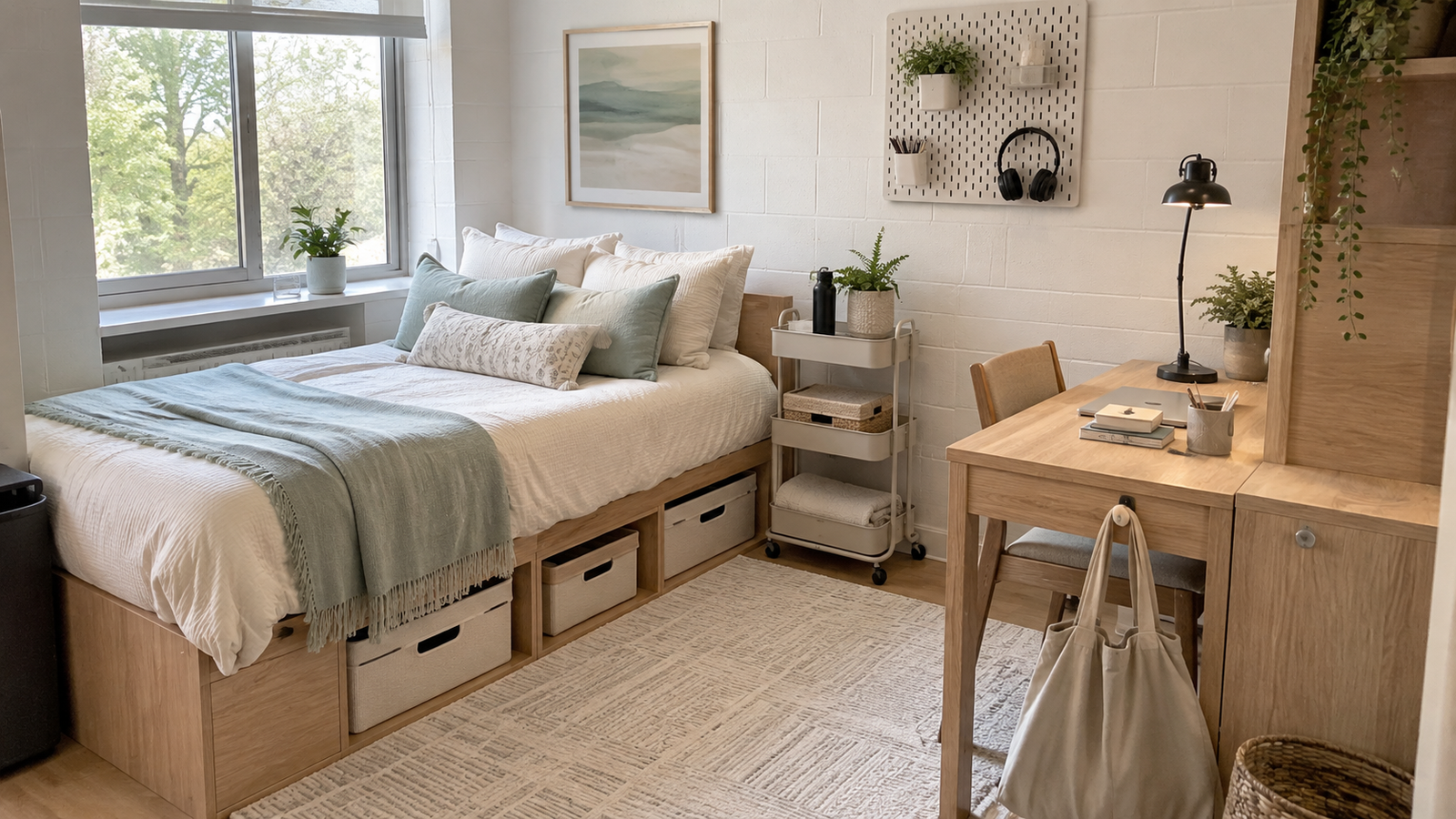
A small dorm room has to do a lot with very little space. It often works as a bedroom, study zone, dressing area, storage space, and place to relax, which means every corner needs to be used thoughtfully. The best small dorm room ideas are not about adding more furniture or filling every wall with organizers. They are about making existing space work harder while keeping the room calm, stylish, and comfortable.
1. Build a Bedside Utility Wall
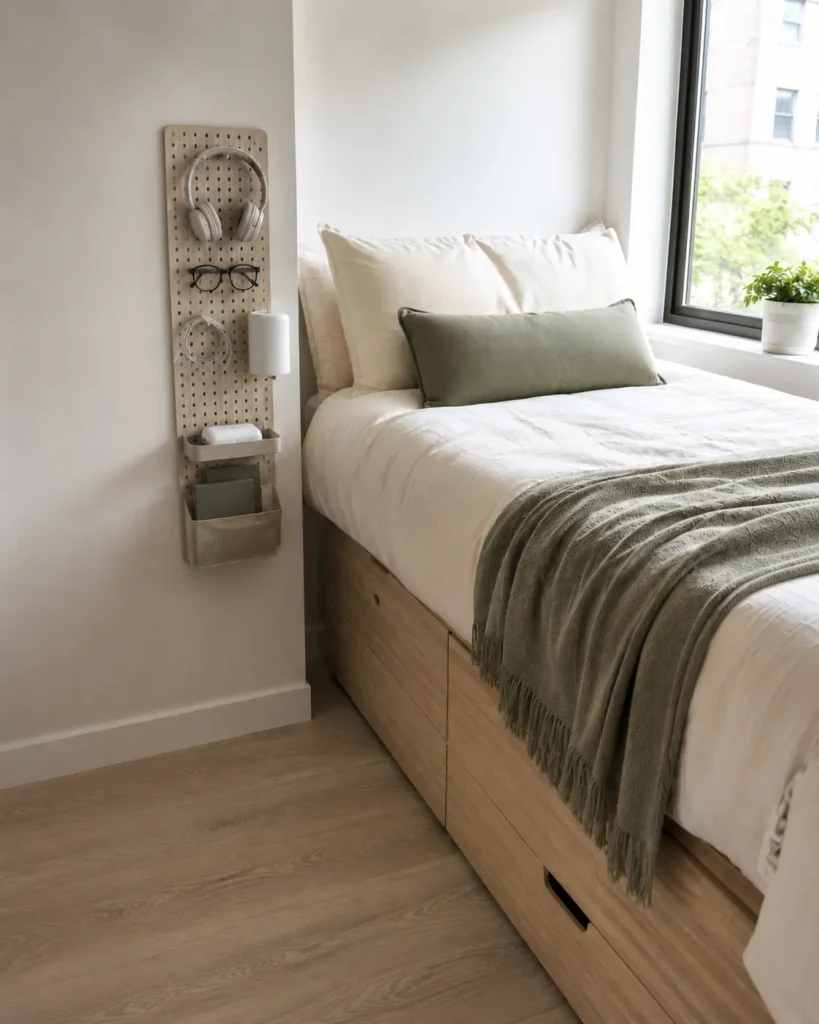
Instead of squeezing a bulky nightstand beside the bed, turn the nearby wall into a compact utility zone. A renter-friendly pegboard or slim wall grid can hold your headphones, glasses, charging cables, reading light, small pouch, and other items you usually reach for at night. Keeping these essentials off the floor immediately makes the sleeping area feel less crowded. Choose organizers in one finish or color so the setup looks intentional rather than like exposed storage.
2. Turn the Bed Into a Daybed
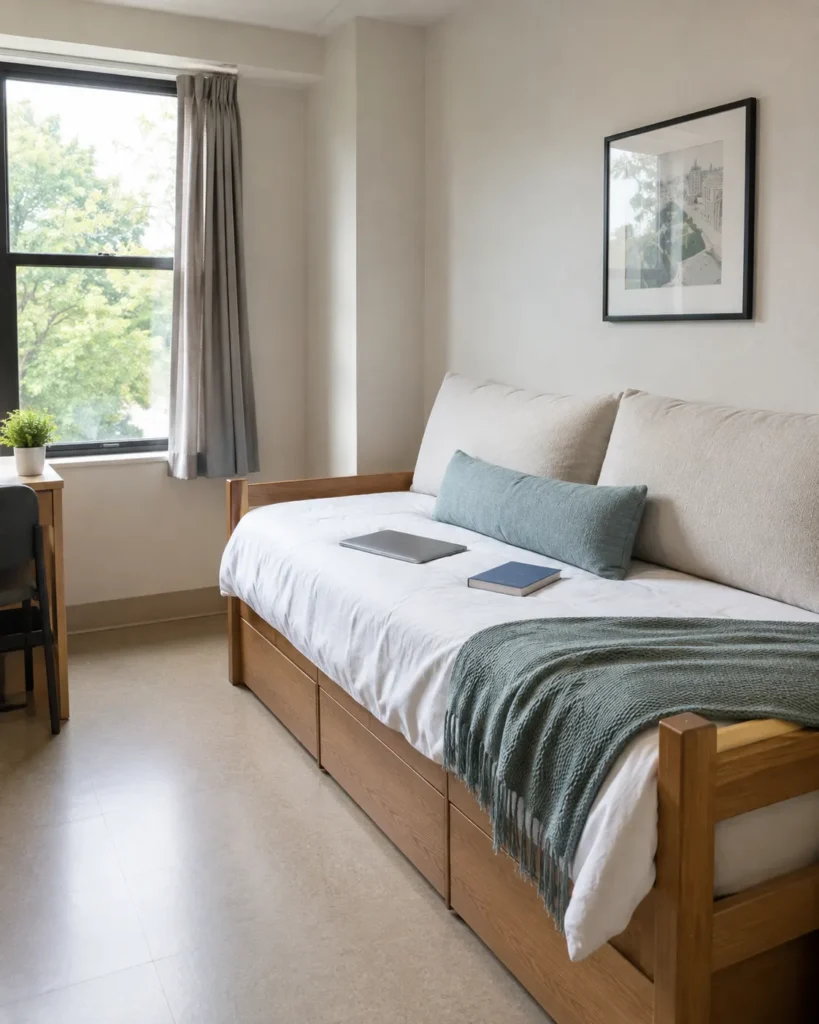
Your dorm bed already takes up a large part of the room, so make it work during the day too. Push the bed against a wall and add two or three supportive back cushions, a long lumbar pillow, and a neatly folded throw to give it the look of a compact daybed. It can then serve as a sofa for reading, relaxing, or sitting with friends without requiring an extra chair. Keeping the bedding coordinated in a simple color palette will make the arrangement feel polished instead of looking like an unmade bed.
3. Add a Slim Headboard Ledge
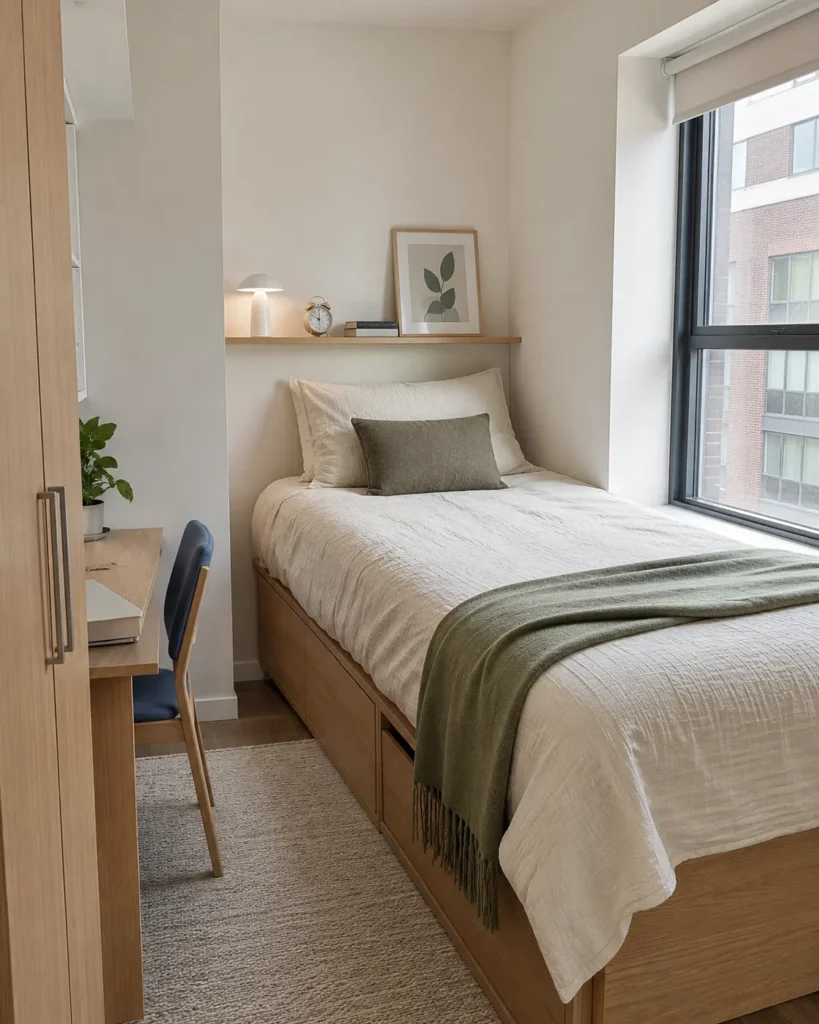
A narrow ledge above the bed can replace both a decorative headboard and part of the function of a bedside table. Use it for a small rechargeable lamp, alarm clock, one or two books, and a lightweight framed print. Because the ledge uses wall space rather than floor space, it adds storage without making the room harder to move around in. Keep the shelf shallow and avoid overcrowding it so it remains visually light.
4. Create a Fold-Down Study Surface
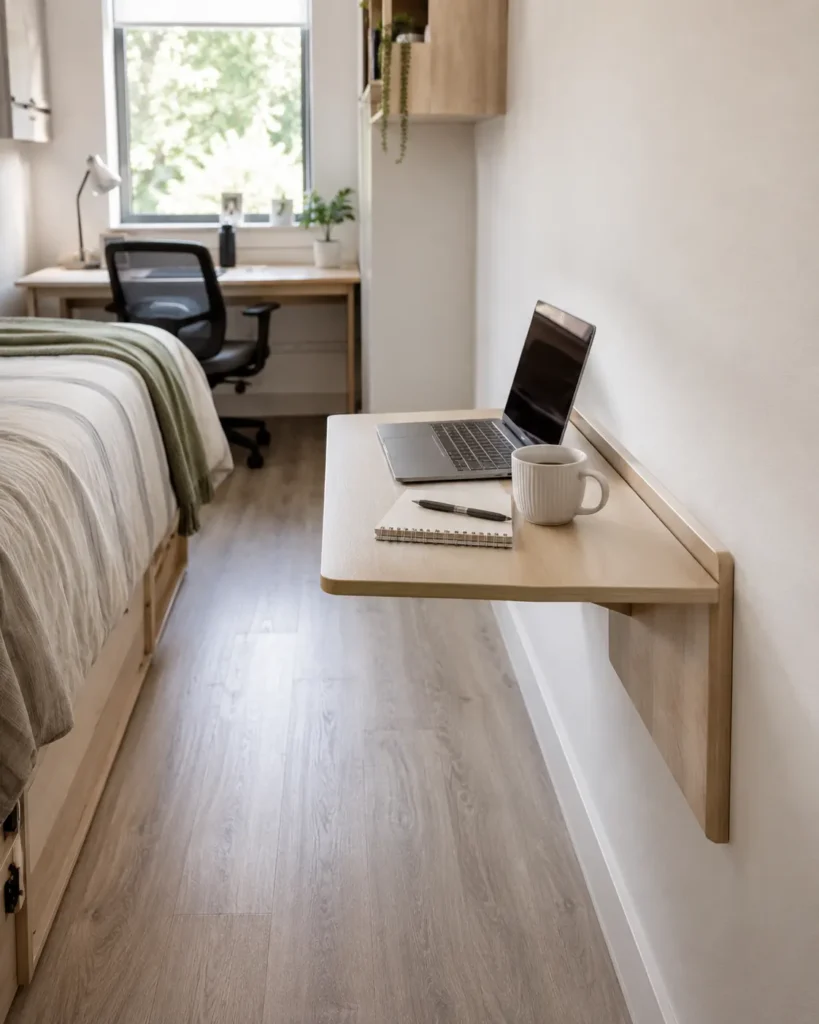
A fold-down wall surface is especially useful when your existing dorm desk is small or constantly covered with books. Open it when you need extra space for a laptop, notebook, coffee, crafting supplies, or even getting ready in the morning, then fold it flat when the task is finished. This gives you a second work surface without permanently sacrificing walking space. Choose a simple design that visually blends with the wall so it almost disappears when closed.
5. Use a Rolling Everything Cart
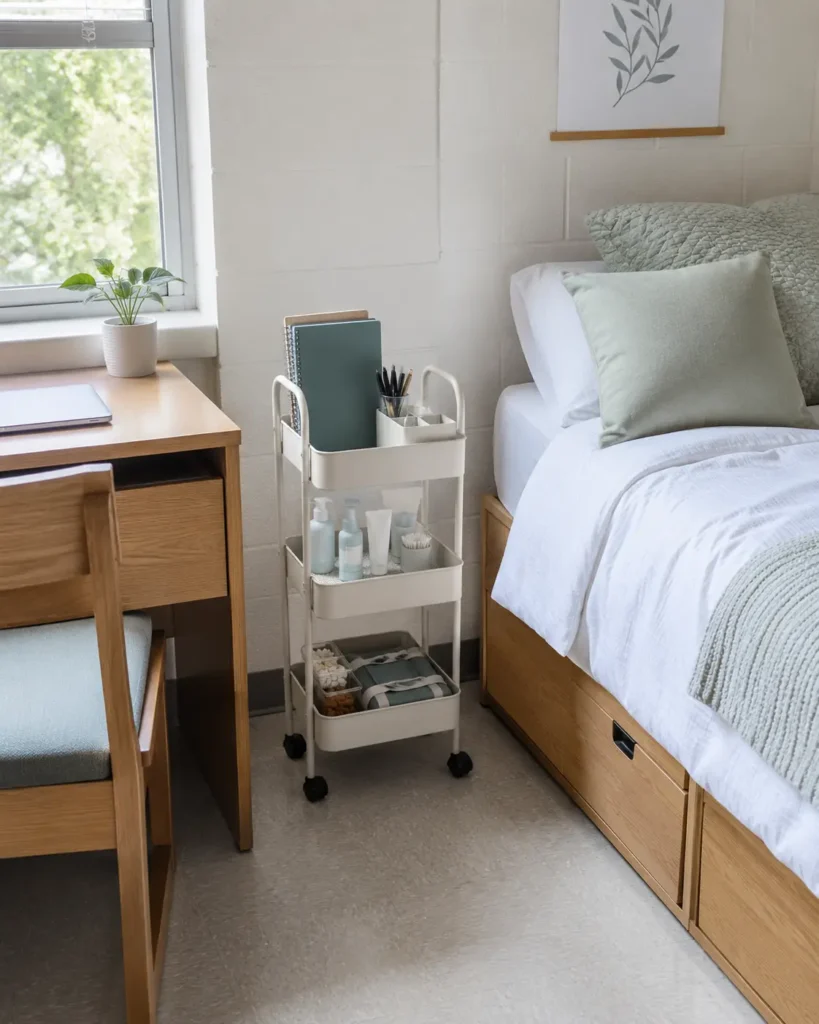
A slim rolling cart can replace several separate organizers and move wherever you need it throughout the day. Keep books and stationery on it during study time, move it beside the bed for chargers and snacks at night, or use it as a temporary beauty station in the morning. Small containers on each tier prevent the cart from becoming a pile of miscellaneous items. When one piece can serve several purposes, the room stays more flexible and you need less furniture overall.
6. Make a Micro Entryway
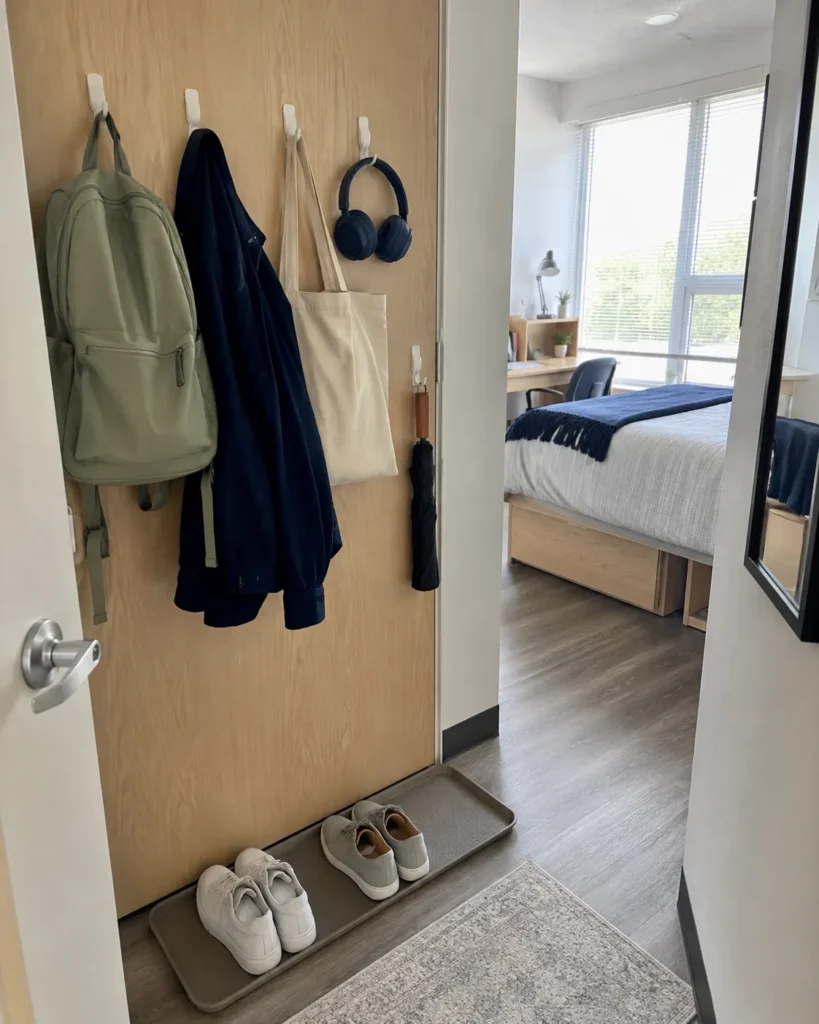
Dorm rooms rarely have a real entryway, but creating a small landing zone can prevent clutter from spreading across the entire room. Use the back of the door or a narrow section of wall for hooks that hold your backpack, jacket, tote bag, umbrella, and headphones. A slim shoe tray underneath keeps everyday footwear contained instead of scattered near the bed or desk. This simple setup makes coming and going easier while keeping frequently used items within reach.
7. Hide Under-Bed Storage
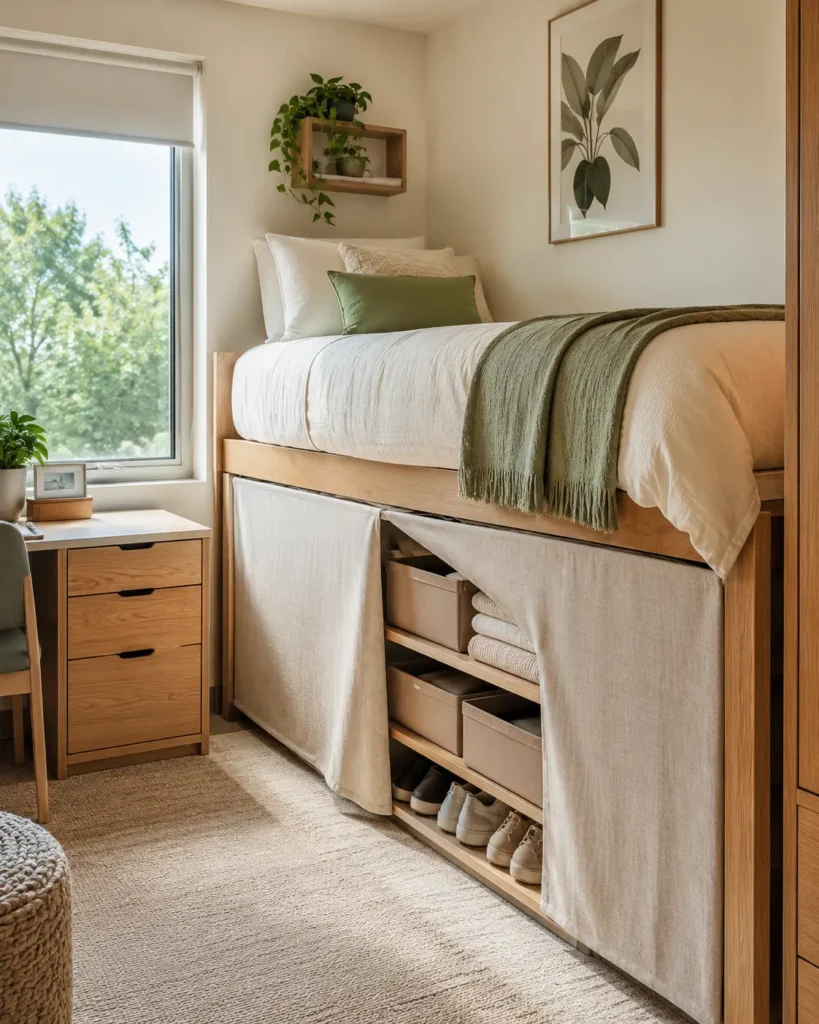
The space under a dorm bed is too valuable to waste, but visible plastic containers can quickly make the room feel like a storage area. Use matching low-profile boxes for extra bedding, seasonal clothing, shoes, laundry supplies, or less frequently used items. Then hide the containers behind a simple neutral bed skirt or tailored fabric panel so the storage disappears from view. The result is the same amount of function with a much cleaner and more styled appearance.
8. Build a Vertical Vanity
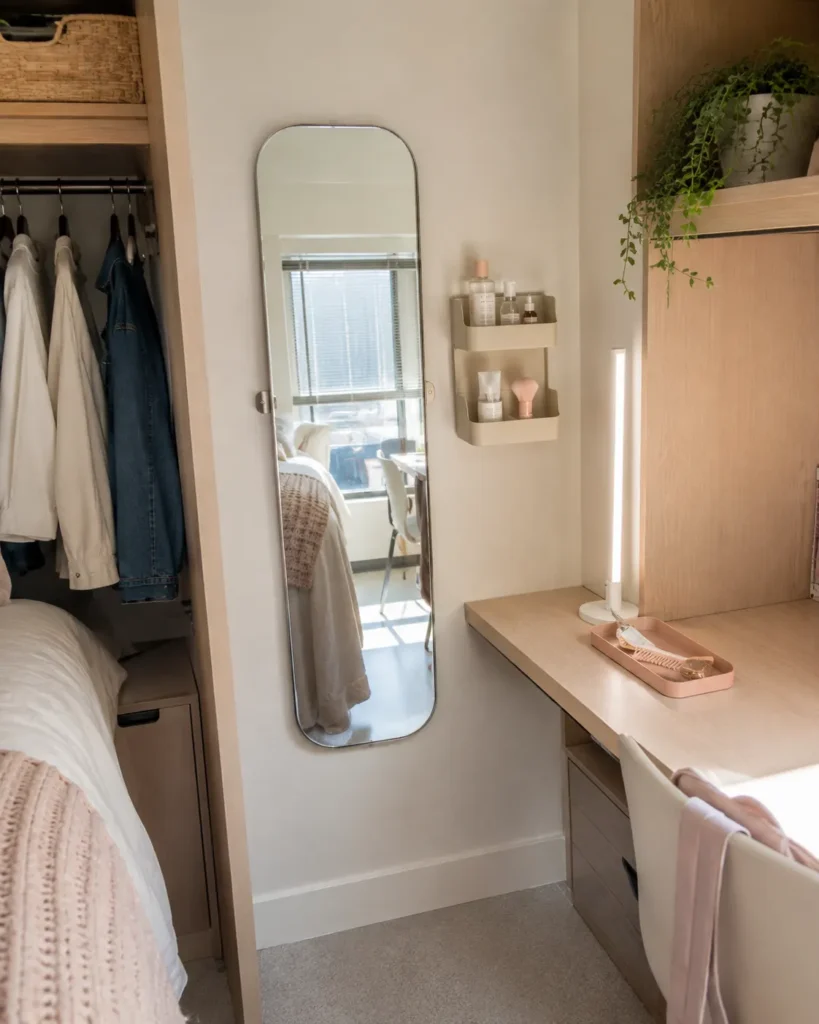
You do not need a full vanity table to create a comfortable getting-ready area. Place a narrow mirror beside the desk or closet, then add a small wall-mounted organizer, rechargeable light, and one compact tray for daily skincare, makeup, or grooming products. Keeping everything vertical prevents another piece of furniture from taking over the room. Limiting the visible products to what you actually use each day will also keep the setup neat and easy to maintain.
9. Create a Room Within the Room
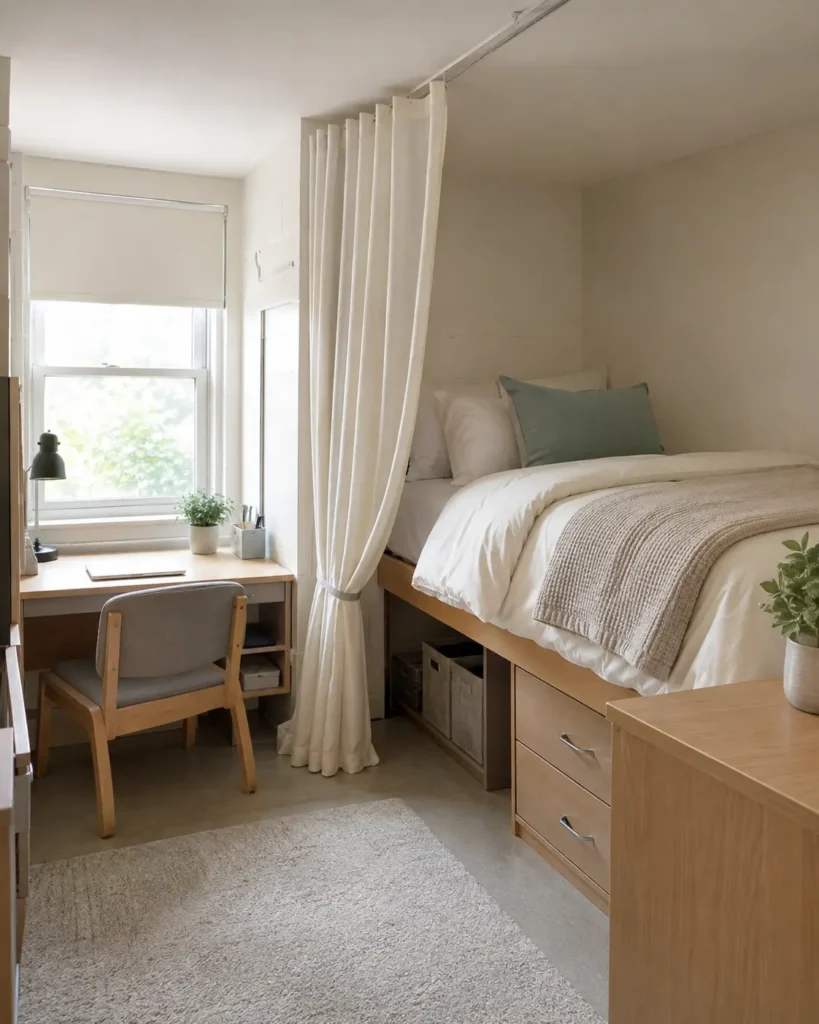
Even a tiny dorm can feel more organized when different activities have clearly defined zones. A renter-friendly tension rod, removable curtain, or lightweight fabric panel can visually separate the bed from the study area without constructing a permanent divider. The curtain does not need to stay closed; even gathering it to one side can create the feeling of a small private sleeping nook. Choose a lightweight fabric close to the wall color so the room remains bright and open.
10. Build a Vertical Library
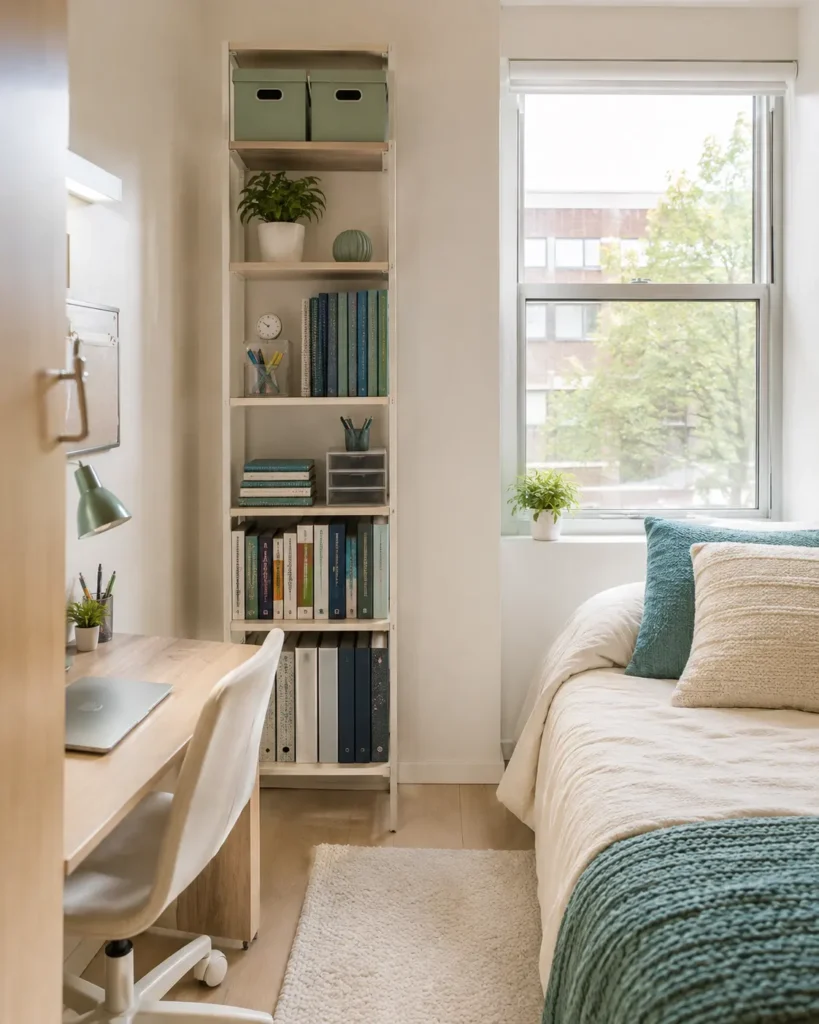
Instead of spreading several small bookcases and storage units around the room, concentrate storage into one narrow vertical column. Keep textbooks, files, and heavier items on lower shelves, place frequently used supplies at eye level, and use lightweight baskets or decorative objects toward the top. This takes advantage of wall height while leaving more of the floor open. Using matching bins on a few shelves also helps prevent books and supplies from creating visual clutter.
11. Add a Clip-On Bedside Shelf
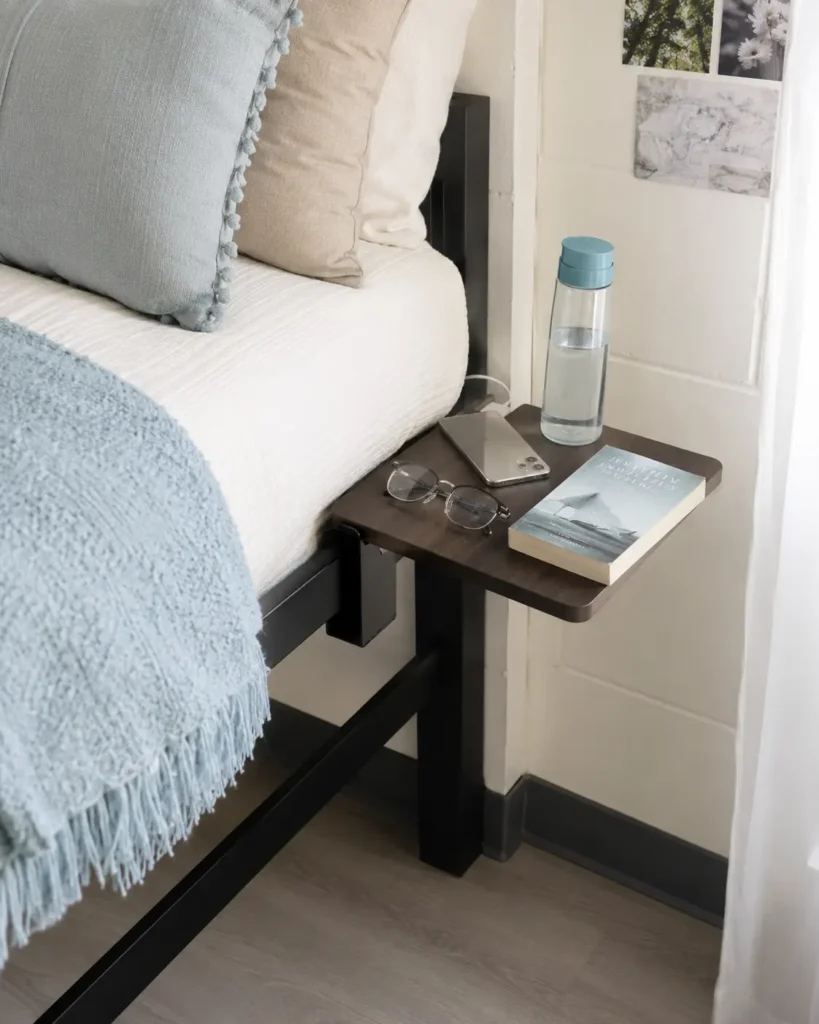
When the space beside your bed is extremely narrow, a clip-on bedside shelf can be much more practical than a traditional nightstand. Attach it directly to a sturdy bed frame and use it for a phone, glasses, water bottle, charger, or small book. It provides the small surface you actually need while taking up almost no floor area. Choose a slim style that matches the bed frame or room palette so it feels built into the setup.
12. Make the Desk Visually Disappear
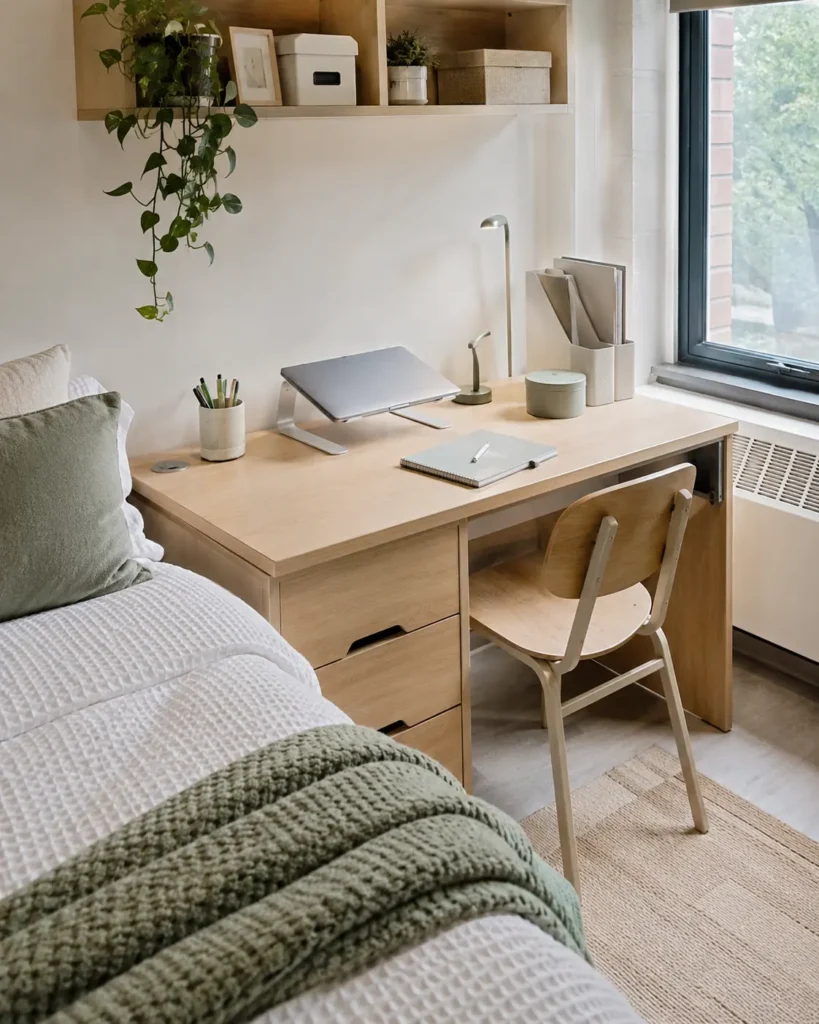
A cluttered desk can make an entire dorm room feel smaller because it becomes a large block of visual noise. Keep only the items you use every day on the desktop and store everything else in drawers, file boxes, or one vertical organizer. Using accessories in the same color family makes the workspace look calmer and more connected to the rest of the room. When study time is over, clearing the main surface helps the room feel like a bedroom again rather than a permanent workspace.
Choose Furniture That Works Twice
In a small dorm, the best furniture usually performs more than one job. A stool can provide extra seating and work as a bedside table, a rolling cart can become several different stations, and the bed can double as a daytime sofa. Before adding something new, think about whether another item already in the room can perform the same function. This approach reduces furniture while making the space more adaptable to everyday student life.
Keep the Color Palette Simple
Too many colors, patterns, and finishes can make a small dorm feel busier than it actually is. Start with a simple base such as cream, soft white, light gray, or pale wood and introduce only one or two accent shades. Sage green, muted blue, soft terracotta, chocolate brown, or black can add personality without overwhelming the room. Repeating the same few colors across bedding, storage, and accessories makes everything feel more intentional and visually spacious.
Use Empty Space Before Adding Furniture
Before buying another organizer, look at the areas of the room that are currently doing nothing. The wall beside the bed, the back of the door, the space above the desk, and the area under the bed can all become valuable storage or functional zones. Using these overlooked spaces keeps the middle of the room open and improves movement through a tight layout. In a very small dorm, preserving open floor area is often more useful than adding another cabinet.