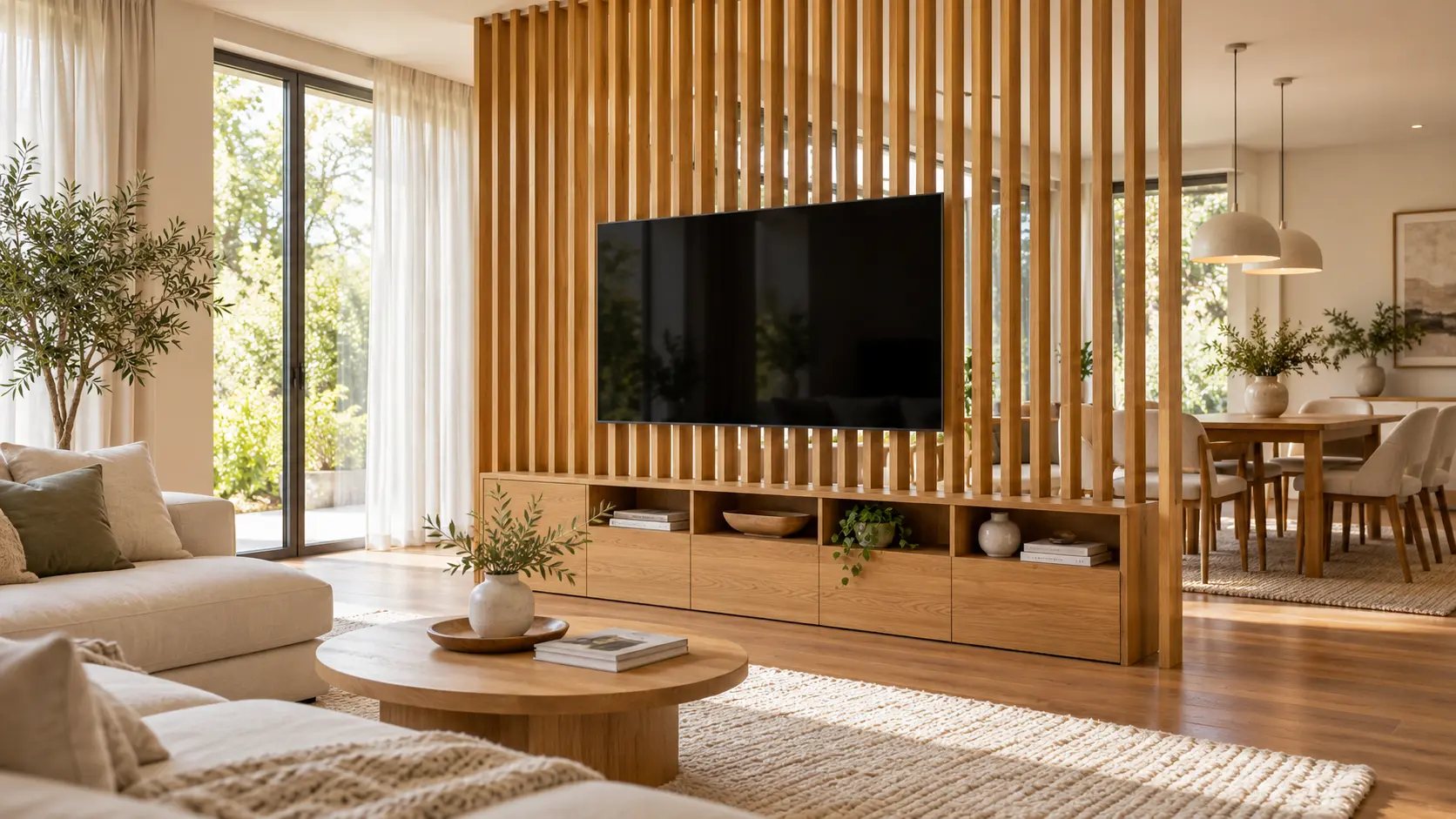
An open living space can feel wonderfully bright—until you start wondering where the TV should go. Put it against the wrong wall, and the seating arrangement feels awkward. Place a bulky cabinet in the middle of the room, and that lovely sense of openness starts to disappear.
A TV stand room divider gives the screen a purposeful home while helping different areas feel more settled. It can mark the edge of a living room, create a gentle boundary beside a bed, or separate the sofa from the dining table without building a full wall.
The secret is choosing a design that suits both sides of the space. Warm wood, open shelves, sculptural frames, and carefully placed lighting can make a practical media unit feel like part of the decor.
These 10 TV stand room divider ideas show how to bring that balance home.
1. Bring Warmth to a Studio With a Wood Slat TV Divider
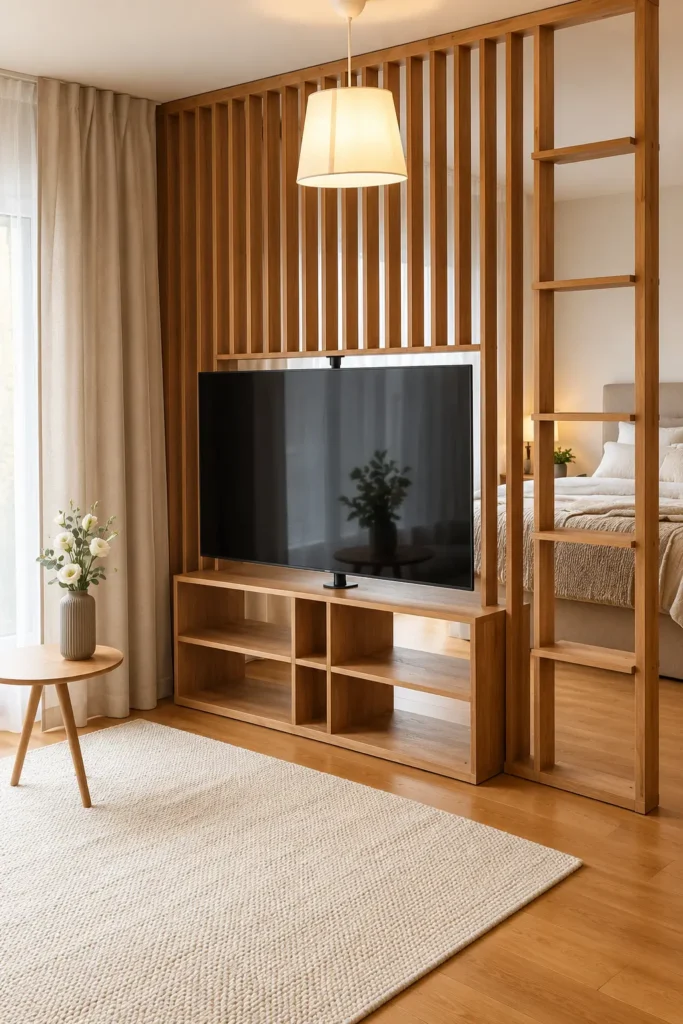
There is something instantly calming about honey-toned wood paired with soft cream textiles. In this design, floor-to-ceiling slats frame the television and create a gentle boundary between the living area and the bed behind it. The gaps preserve glimpses of the adjoining space, so the divider feels lighter than a solid partition.
The low cubby console gives the screen a visual base and adds useful storage. To recreate the look, choose a few woven baskets for everyday clutter and leave some compartments open. Filling every opening would make the whole arrangement feel heavier.
Keep the surrounding decor relaxed: linen curtains, an ivory rug, a simple timber side table, and a ribbed vase with loose stems. Repeating a similar wood tone helps the partition belong to the room.
Styling tip: Use this as a visual boundary in a studio apartment, while remembering that open slats offer limited privacy around a sleeping area.
2. Combine Open Shelving With a Central TV Mount
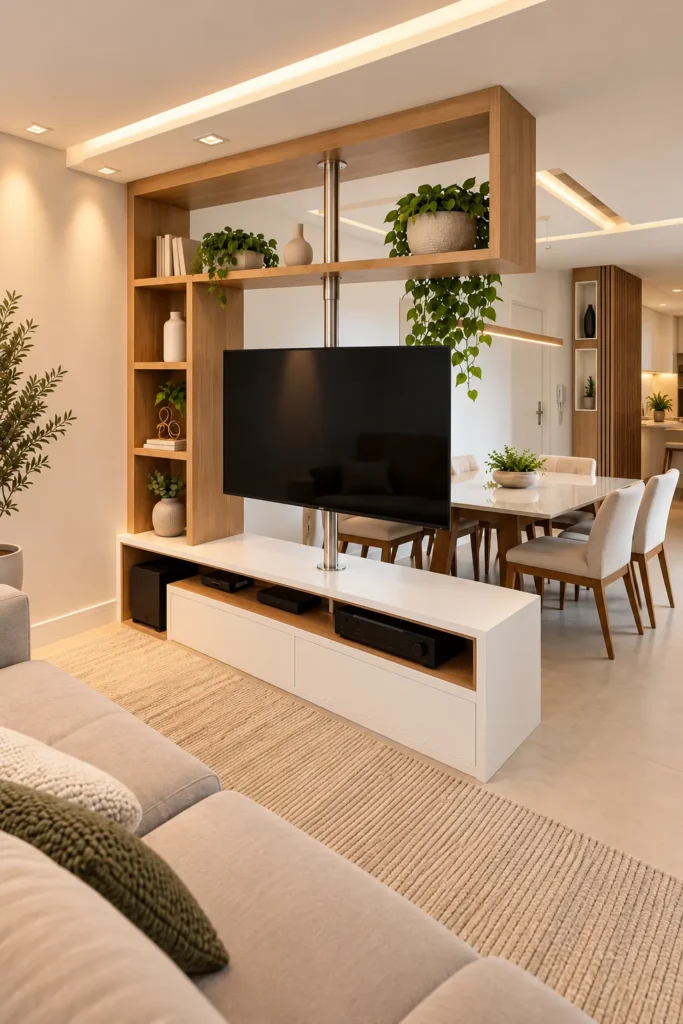
When the living room and dining area share one space, an open shelving divider can make the transition feel natural. This design combines a white media cabinet, a warm wood frame, and a central metal TV support. The dining area remains visible through the generous openings.
The contrast between closed storage below and display space above is especially useful. Remotes, cables, and spare accessories can disappear behind cabinet doors, while books, pottery, and greenery give the upper frame personality.
Try a trailing plant near one outer corner, a small stack of books on the opposite side, and a simple ceramic vase between them. Leave room for the eye to travel through the shelves.
Styling tip: If you want to watch from both the sofa and dining table, ask about a compatible swivel system. A central pole alone does not confirm that a TV can rotate.
3. Define a Lounge With a Slim Metal Rod TV Partition
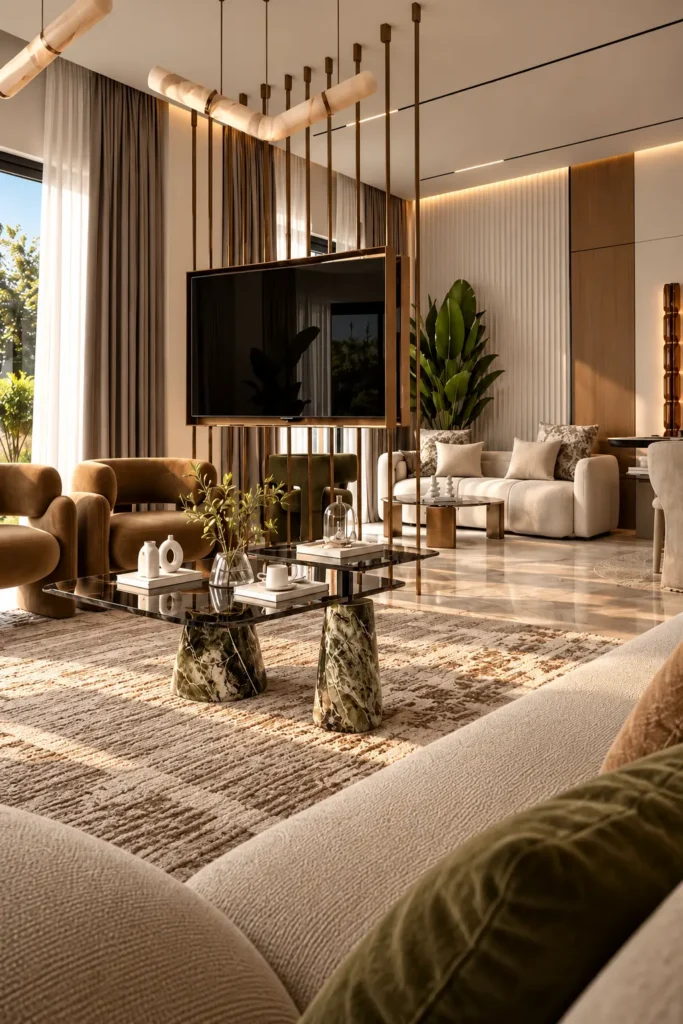
A divider does not need broad panels to make an impression. Here, slender metal rods rise toward the ceiling around a neatly framed television, separating two seating areas while keeping much of the view open.
The warm metallic finish introduces a little polish, especially beside curved armchairs, pale upholstery, and richly patterned stone. Because the rods occupy so little visual space, the room still feels connected from one lounge area to the next.
Let the nearby furniture soften the straight lines. A rounded chair, a textured rug, and an organic vase arrangement will keep the setting comfortable. Repeat the metal finish in one or two smaller details, such as a lamp base or side table.
Styling tip: Keep accessories away from the base of the rods. Their clean outline is a large part of the appeal. Recreating this look also requires a properly designed support system for the screen.
4. Keep a Compact Layout Light With a White TV Panel
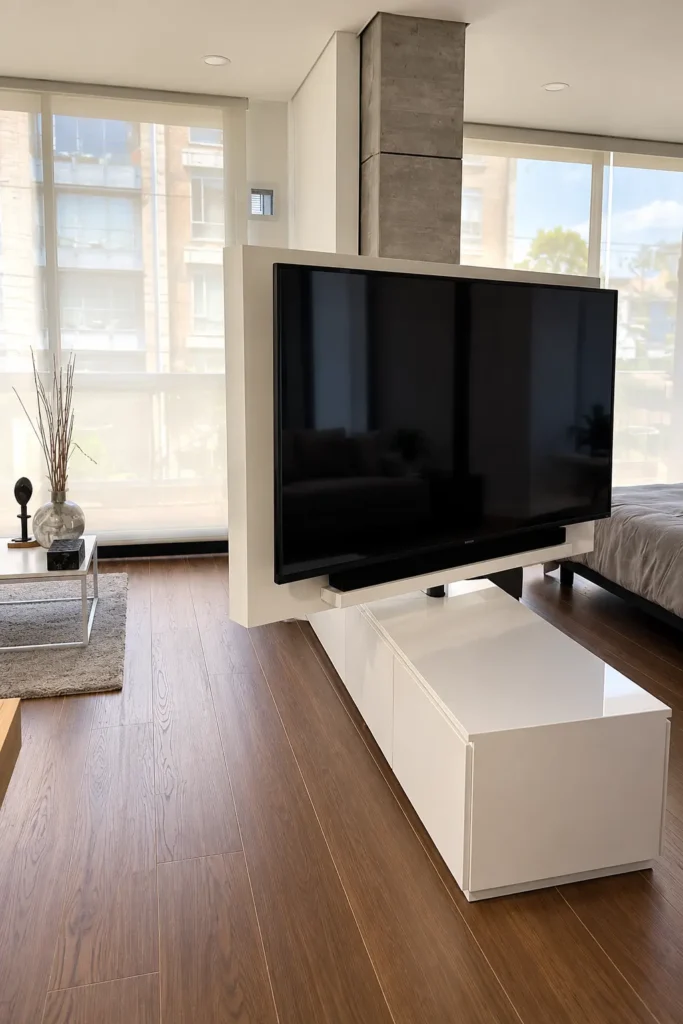
Sometimes the most useful divider is also the quietest. A plain white panel above a low media cabinet gives this television a defined backdrop without filling the space with shelves or decorative framing.
This is a useful direction for a compact apartment with strong existing features, such as dark wood flooring or a concrete column. The pale finish brings contrast, while the long, low cabinet creates a calm horizontal line beneath the screen.
Choose simple cabinet fronts and keep the top mostly clear. If the television shares the surface with a soundbar, there may be little need for additional styling. Add warmth nearby through a textured rug, soft bedding, or a small arrangement of branches.
Styling tip: Finish the rear of the panel with the same care as the front. In an open layout, the back of a TV divider becomes part of another room’s view.
5. Build a Swivel TV Into a Slatted Feature Wall
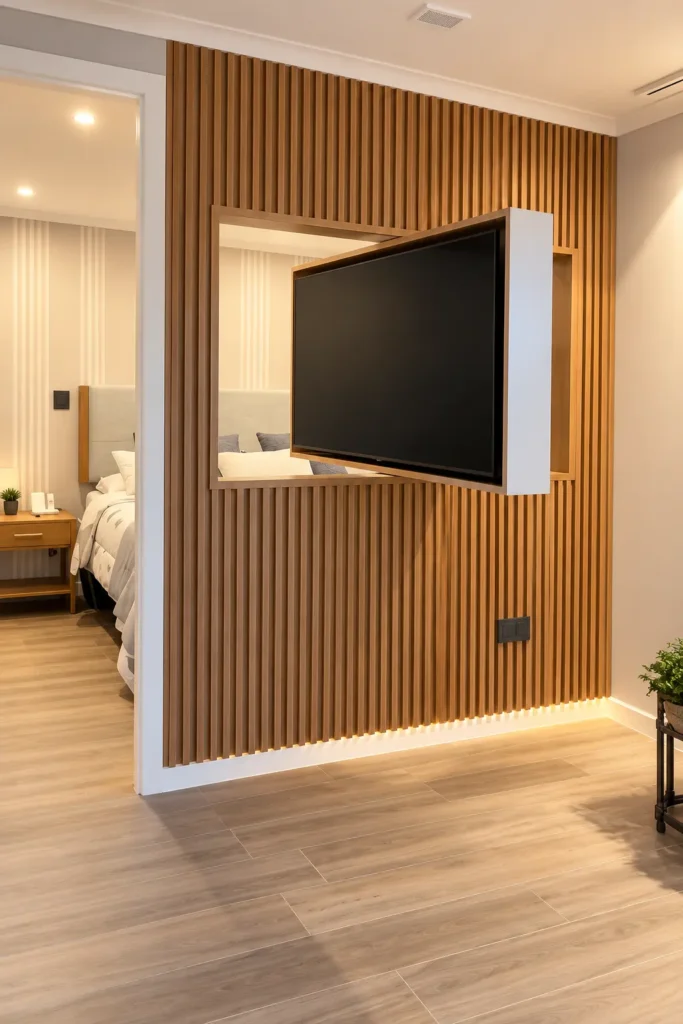
A slatted feature wall with a central opening offers a more built-in interpretation of the TV room divider. Here, the framed screen projects from an opening in the timber partition, creating a design that could be developed around a suitable swivel mechanism.
For a living-and-sleeping layout, that flexibility can be appealing: one screen can serve different viewing positions at different times. The surrounding wood gives the installation a finished architectural presence, even when the television changes direction.
Keep the frame proportionate to the screen and repeat its pale trim elsewhere in the room. A discreet strip of light near the floor can highlight the timber texture without adding another decorative object.
Styling tip: Plan the full movement of the screen before building the opening. A working swivel design needs appropriate hardware, clearance, and cable routing—not just a hinged decorative frame.
6. Make a Statement With a Charcoal TV Divider
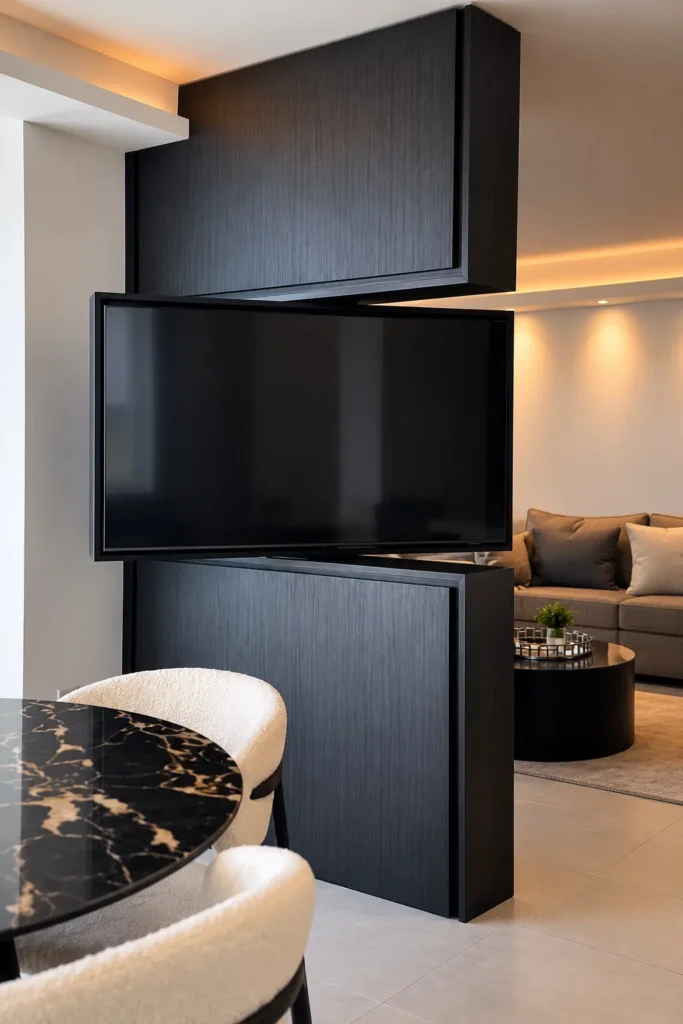
If pale wood feels too gentle for your room, consider a deep charcoal finish. This design places the television between substantial dark panels, giving the divider a strong presence between the dining and living areas.
The television blends visually with the surrounding dark surfaces, which can make the overall composition feel more cohesive. Subtle wood grain adds texture without competing with the screen.
Balance the depth of the cabinetry with softer pieces nearby. Cream dining chairs, a warm gray sofa, and pale flooring stop the space from becoming visually dense. A dark coffee table or black-framed artwork can repeat the finish elsewhere.
Styling tip: Choose the scale carefully. A substantial dark divider can be beautiful, but it needs enough surrounding space and light to avoid dominating a compact room.
7. Add Evening Atmosphere With Illuminated Wood Fins
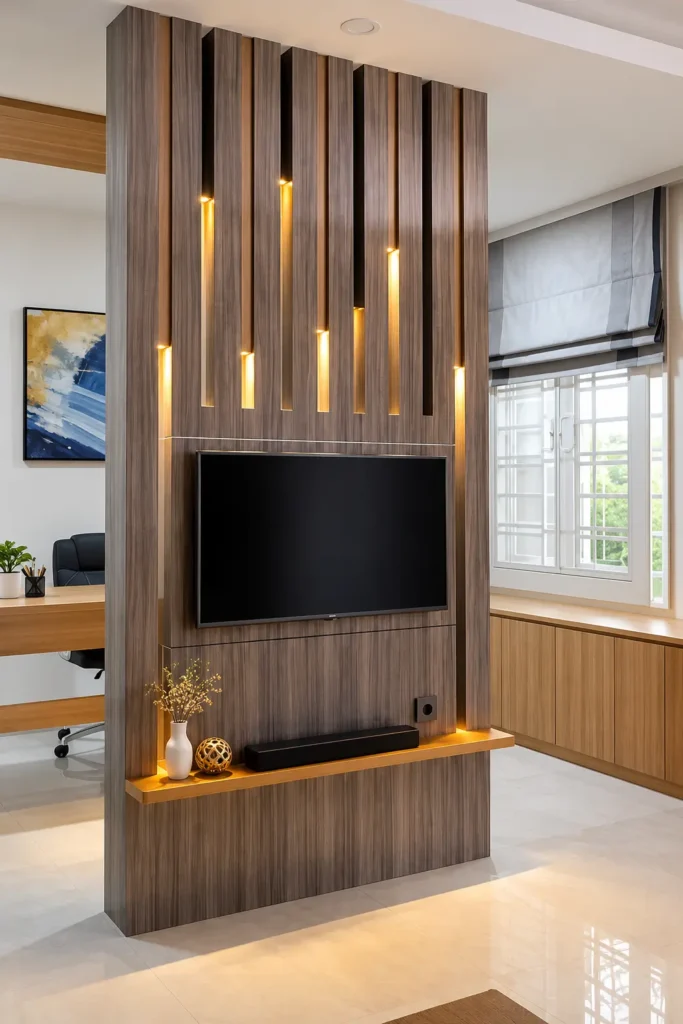
This wood TV partition brings together a solid media panel and tall vertical fins, with warm lighting tucked into selected recesses. The staggered light positions turn the upper section into a decorative feature.
It is an appealing way to give the living area its own identity when a desk or home office sits nearby. The solid section behind the television creates a clearer visual boundary, while openings above keep a connection between the spaces.
Let the lighting do most of the decorating. A slender soundbar, a small vase, and one sculptural object are enough for the narrow ledge beneath the screen. Additional ornaments would compete with the vertical pattern.
Styling tip: Put decorative lighting on a separate control from the main room lights. You can enjoy a softer evening setting and reduce the brightness when watching television.
8. Create a Hotel-Inspired Look With a Backlit Stone-Look Panel
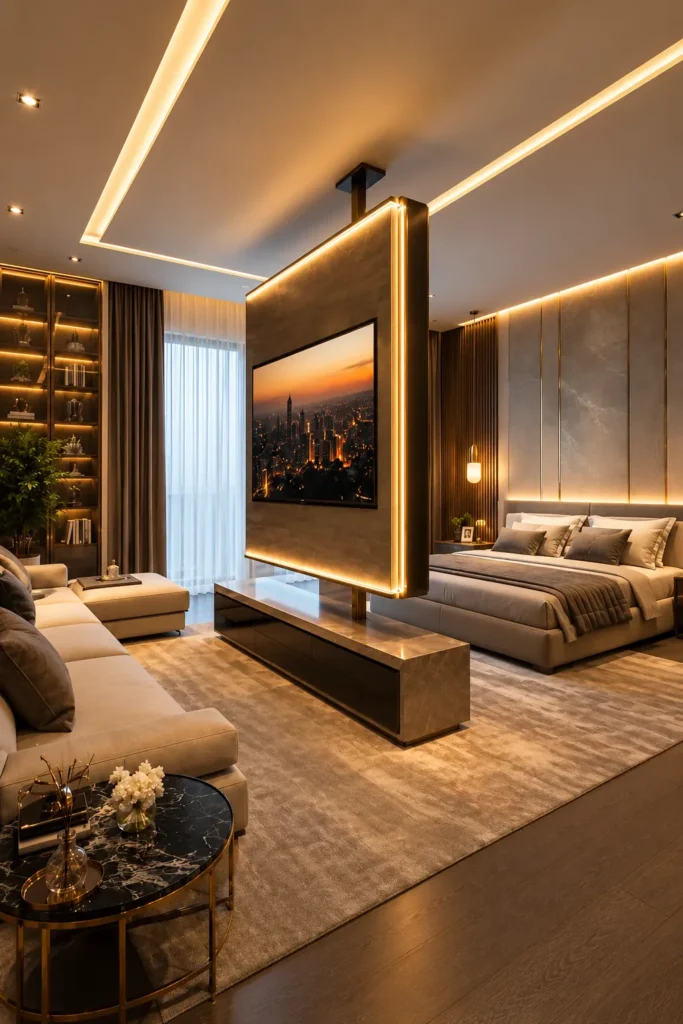
A broad stone-look panel with a glowing border can give an open bedroom-and-lounge layout a polished, suite-like atmosphere. In this design, the television sits within a large rectangular surface above a low cabinet, with open space visible around the partition.
The combination of a mineral pattern, dark storage, and warm lighting gives the divider a substantial presence. To recreate the mood, pair it with layered neutral bedding, full-length curtains, and a generously textured rug.
Keep the material palette focused. One expressive stone pattern is usually enough; quieter upholstery and simple cabinet fronts allow it to stand out.
Styling tip: A stone-look finish describes the appearance, not the weight or construction. Ask your installer to select a suitable material and support system, particularly for a design that appears suspended.
9. Soften the Layout With an Arched TV Room Divider
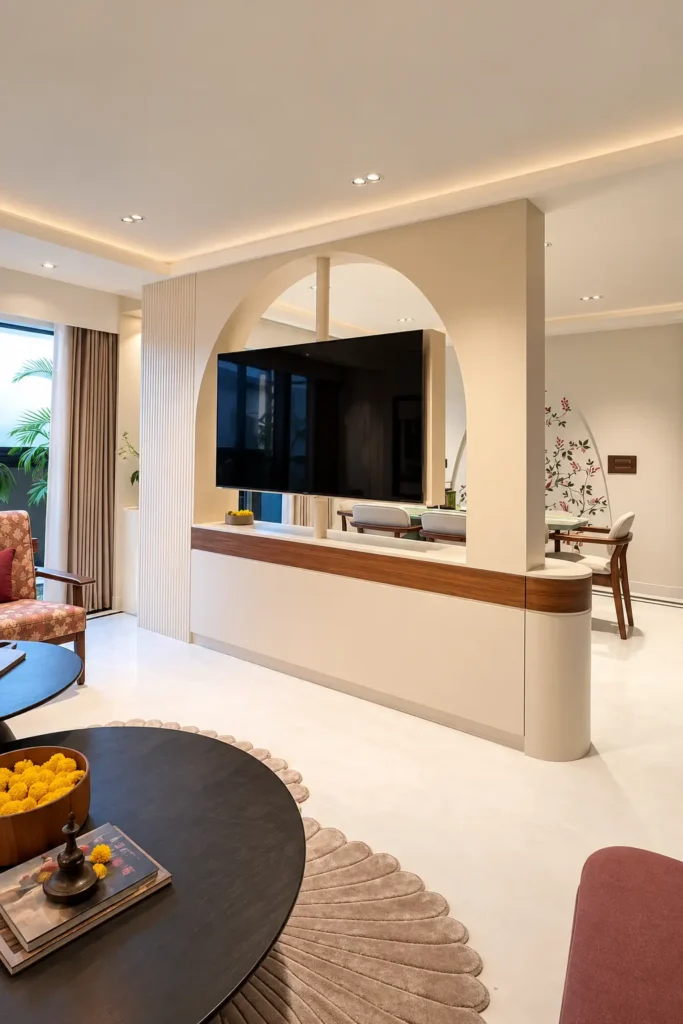
An arched opening offers a softer alternative to a rectangular frame. Here, a cream partition curves around the television, while a band of warm wood and closed cabinetry anchors the lower section.
The opening preserves a view of the dining area, making the divider feel more like an interior feature than a complete barrier. It is a lovely direction for a room that already includes rounded tables, curved chair backs, or gentle decorative patterns.
Use warm white or ivory for a relaxed backdrop, then bring in personality through upholstery, flowers, or artwork. A muted floral chair can sit comfortably beside the simple partition without making the space feel busy.
Styling tip: Allow some clear space around the arch. Tall ornaments and crowded ledges can interrupt the curve and weaken the shape that makes this design special.
10. Turn the TV Divider Into a Circular Wood Feature
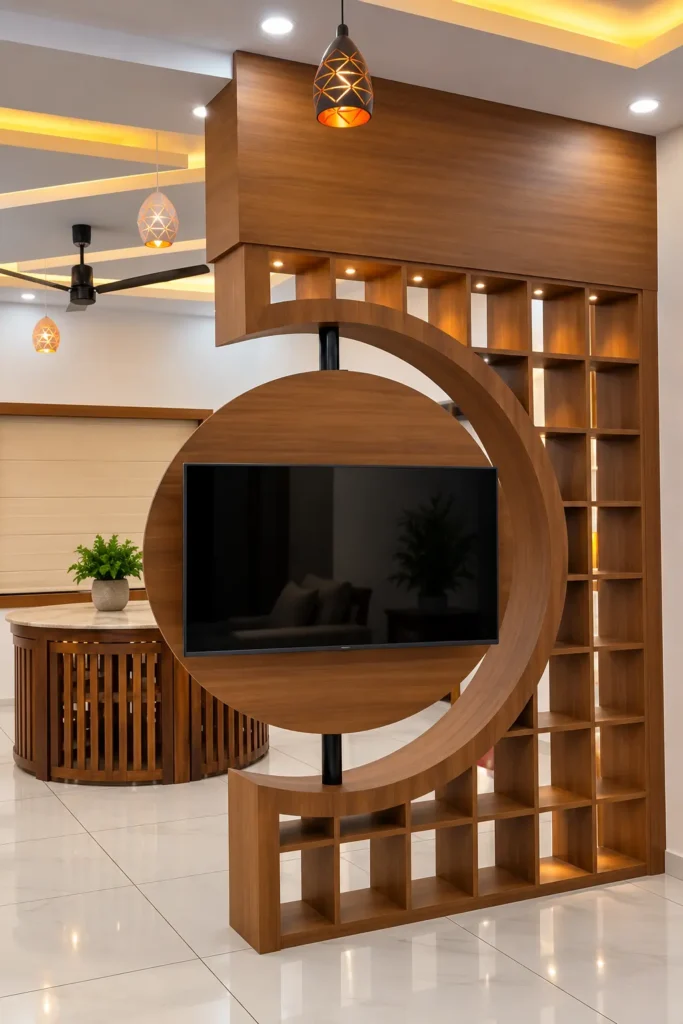
For a bolder approach, a circular TV backing panel can become the centerpiece of the room. This design pairs the round panel with a sweeping outer wood curve and a grid of open cubbies along one side.
The contrast is what makes it interesting: a rectangular screen sits against a circle, surrounded by the orderly rhythm of shelves. The openings also preserve views into the adjoining area.
Keep the shelf styling restrained so the geometry remains easy to read. A few ceramic vessels, short book stacks, and one small plant will add warmth without overwhelming the design. Repeat the timber tone in a nearby table or console to connect the feature to the room.
Styling tip: If you want the circular panel to rotate, have that function designed into the structure from the start. The shape itself does not establish that it is a swivel unit.
How to Choose a TV Stand Room Divider for Your Space
Before choosing a finish, work out what the divider needs to do. Separating a sofa from a dining table calls for a different level of screening than placing a boundary beside a bed.
Decide How Much Separation You Want
Open shelves, narrow rods, and spaced wood slats preserve more of the view between areas. A solid panel creates a stronger visual break. Neither approach should be treated as a substitute for an enclosed wall when sound isolation or full privacy matters.
Check the View From Your Seat
Mark the proposed screen position before committing to cabinetry. Sit where you normally watch television and consider both height and reflections. Sony’s placement guidance recommends keeping direct light off the screen and aligning its center with seated eye level.
Leave Comfortable Routes Around the Furniture
Check how you will walk between the sofa, dining chairs, bed, and nearby doors. Include open drawers and pulled-out chairs in that assessment. For a rotating screen, consider its movement as well as its resting position.
Plan Storage and Cables Together
List the equipment you actually use: a streaming device, gaming console, soundbar, or router may each need a place. Follow the relevant equipment manuals for ventilation and access, and plan power and cable routes before the divider is built.
Design Both Sides
A divider is seen from more than one direction. The reverse might have matching paneling, shallow shelves, or a clean decorative finish. Thinking about that second view early helps the unit feel integrated with the whole home.