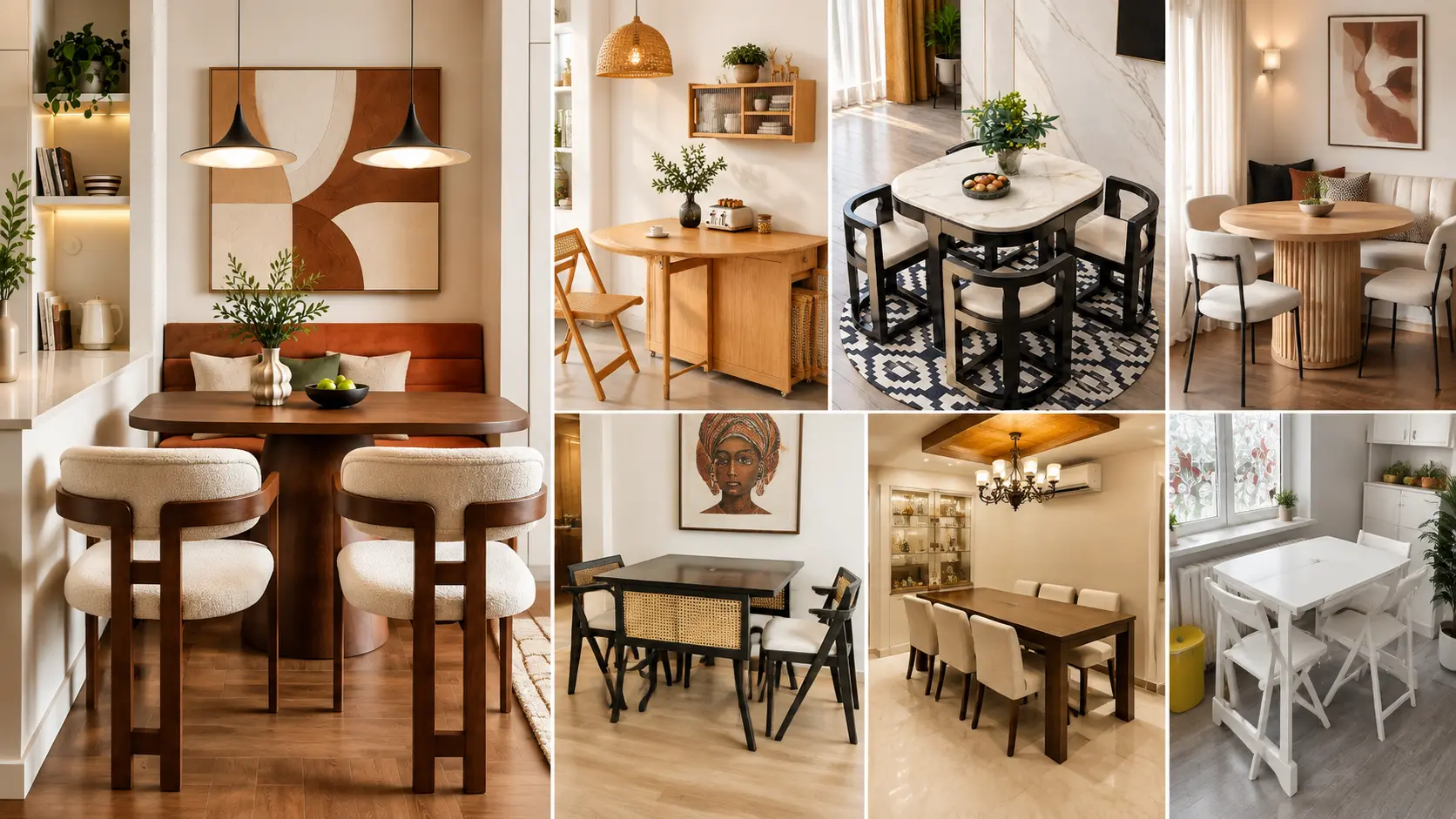
A small dining area can quickly feel crowded when the table blocks walkways or overwhelms the room. The right piece, however, can make even a compact corner feel intentional, comfortable, and easy to use. These 10 Small Dining Room Table Ideas for Tight Spaces focus on smart proportions, flexible layouts, and designs that look beautiful without sacrificing everyday function.
From round tables that improve traffic flow to folding designs that disappear when not needed, these ideas show how thoughtful furniture choices can help you create a dining spot that feels open and practical.
1. Choose a Round Table for Better Flow
A round dining table is one of the easiest solutions for a small dining room because it removes sharp corners that interrupt movement. A compact pedestal table with a 36–42 inch diameter can comfortably seat two to four people while leaving more walking space around it.
Look for materials that suit your room size, such as a light oak top for a Scandinavian feel or a marble-look surface for a more refined appearance. A single central base also allows chairs to tuck closer underneath, reducing visual clutter.
This layout works especially well in apartments, breakfast nooks, and open-plan kitchens where every inch matters. Pair it with curved chairs or slim upholstered seats to maintain the soft, spacious feeling.
2. Add a Wall-Mounted Drop-Leaf Table
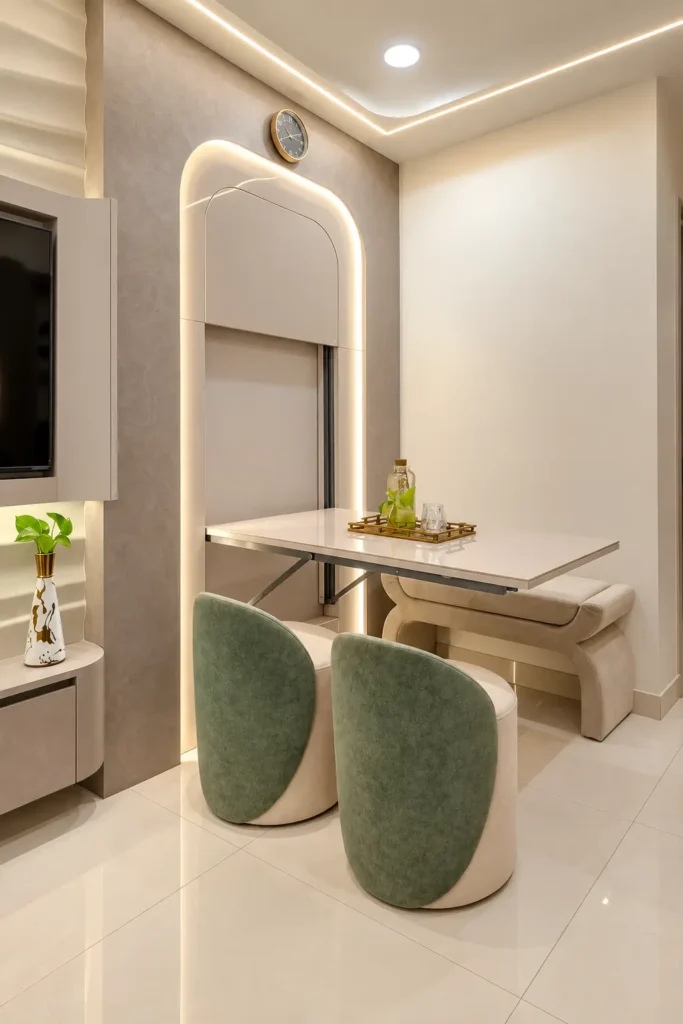
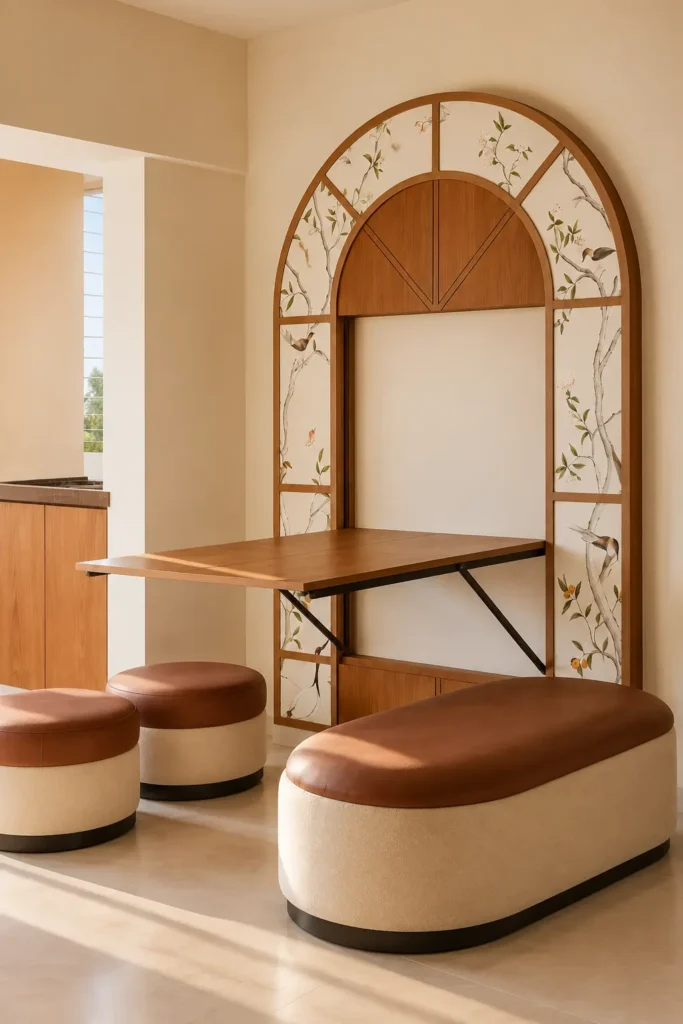
A drop-leaf table is ideal when your dining area needs to serve multiple purposes. During meals, the leaves expand to create a proper dining surface; afterward, they can fold down to free up valuable floor space.
Modern versions often feature clean wood finishes, hidden hinges, and simple brackets that blend with contemporary interiors. Some designs attach directly to the wall, making them useful in narrow kitchens, studio apartments, and small breakfast corners.
For a practical setup, keep at least 24 inches of clearance behind seating areas when the table is open. Choose durable finishes like matte lacquer or sealed wood because compact dining tables usually receive frequent daily use.
3. Use a Built-In Banquette Table
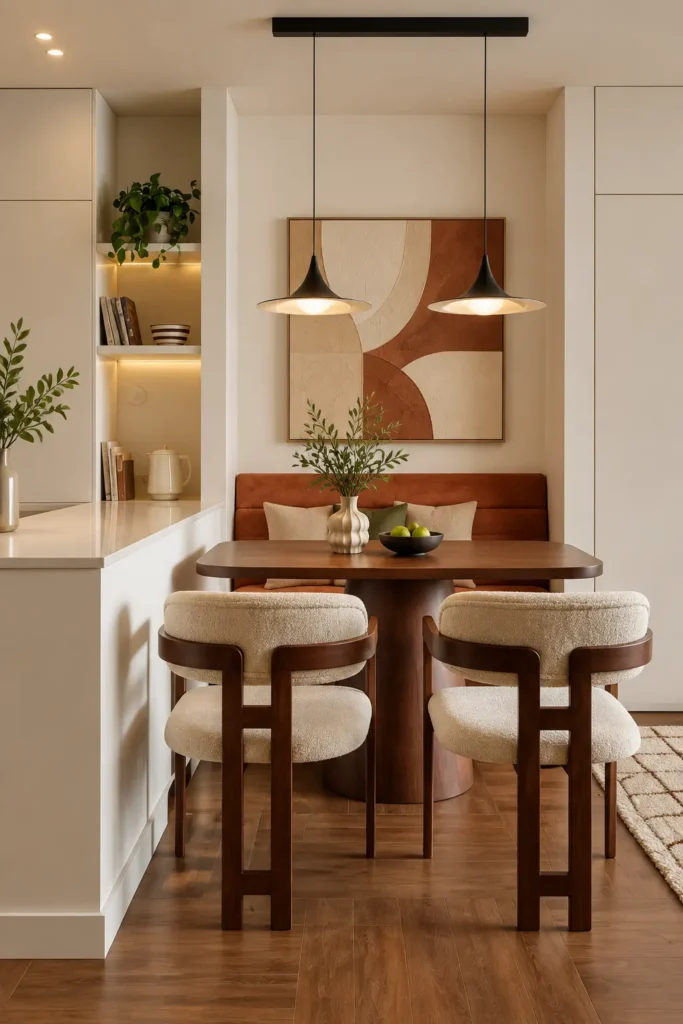
A built-in banquette paired with a small dining table can turn an unused wall into a functional dining zone. Instead of needing space behind every chair, a bench allows seating to sit directly against the wall.
A compact rectangular table works well here, especially when paired with a cushioned bench in performance fabric or washable upholstery. Neutral shades like cream, beige, or soft gray keep the area visually open.
The hidden benefit is storage. Many banquettes can include lift-up seats or drawers for table linens, children’s items, or seasonal kitchen accessories. This approach works particularly well in narrow dining rooms where traditional chair placement feels cramped.
4. Try a Slim Rectangular Table
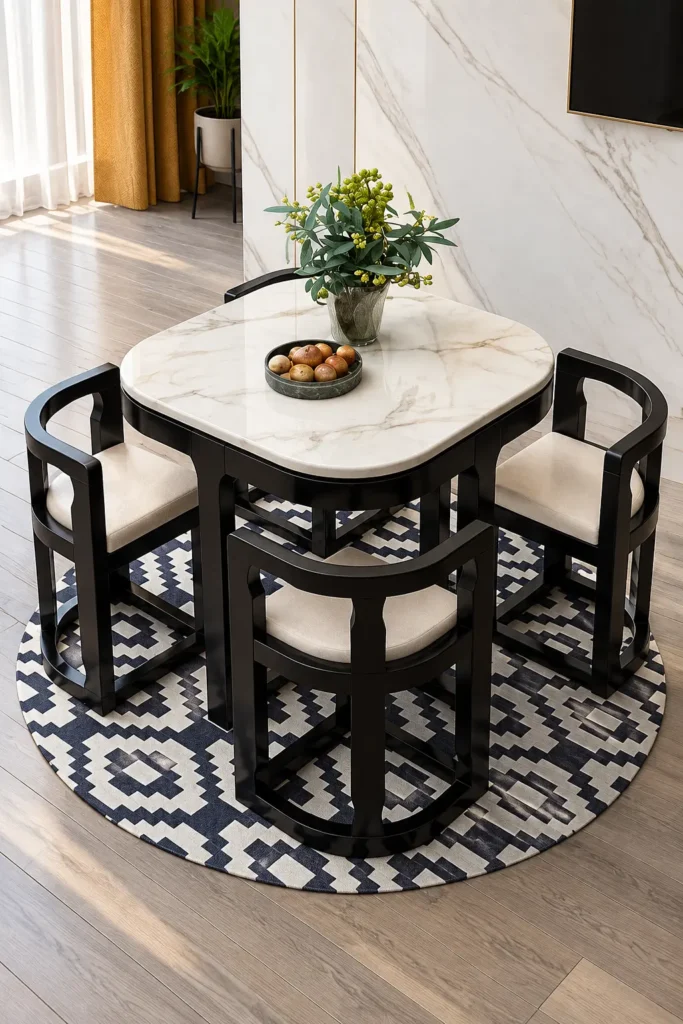
A narrow rectangular table can fit beautifully in long, tight dining rooms where a wider table would make the space feel blocked. Look for designs around 28–32 inches wide rather than standard oversized dining tables.
A slim wood table with tapered legs keeps the room feeling lighter. Glass tops can also reduce visual weight, but they require more cleaning because fingerprints and smudges show easily.
Place the longer side against a wall when needed, then pull it out for guests. Keep the table finish connected with nearby furniture, such as matching wood tones with flooring or shelving, to create a more continuous look.
5. Pick a Glass Table to Open the Room
Glass dining tables are useful in small rooms because the transparent surface allows light to pass through, making the area appear less crowded. A small glass-top table paired with simple chairs can create a clean, modern dining corner.
Choose tempered glass for everyday safety and durability. Pair it with wood, fabric, or metal bases depending on your style. A warm wooden base prevents the room from feeling too cold, while black metal creates a sharper contemporary look.
Glass requires regular wiping, especially in homes with children or pets, so consider whether the maintenance fits your lifestyle before choosing this option.
6. Create a Breakfast Nook Setup
A breakfast nook can transform an awkward corner into a dedicated dining space. A small pedestal table placed beside a window or kitchen wall creates a casual area for morning coffee, quick meals, and everyday conversations.
Use a compact table with lightweight chairs that can move easily when cleaning or entertaining. Adding a pendant light approximately 30–36 inches above the tabletop helps define the zone without taking up floor space.
Soft textiles, such as seat cushions or linen curtains, add comfort without making the area visually heavy. This setup works especially well in homes where a full dining room is not practical.
7. Choose a Folding Dining Set
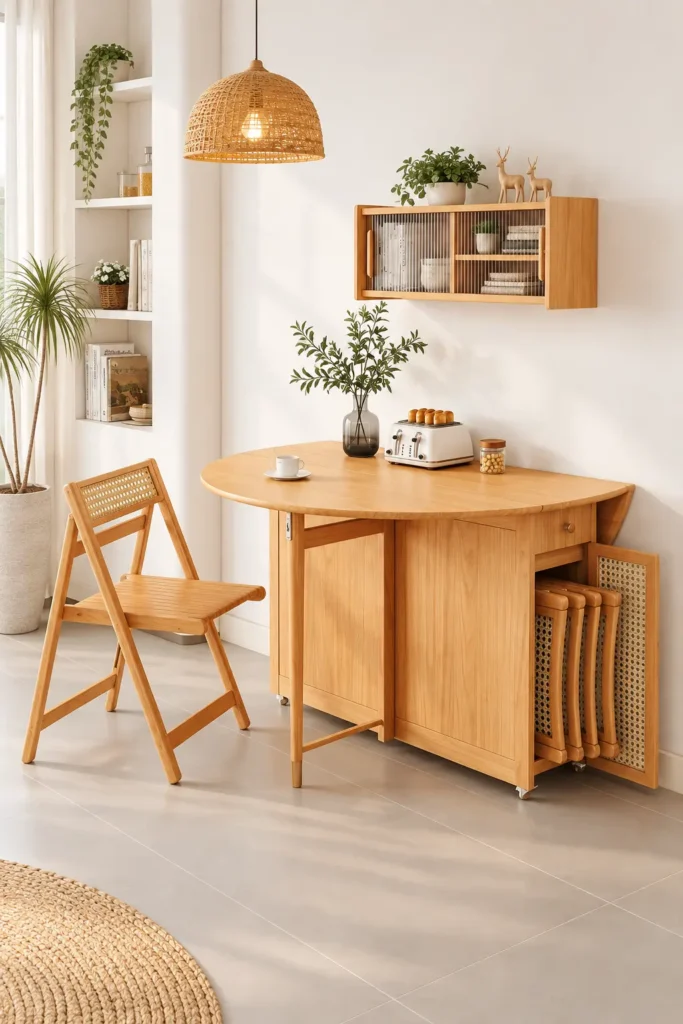
A folding dining table and chair set is a smart option for multipurpose rooms. These designs allow you to create a dining area when needed and reclaim the space afterward for work, hobbies, or exercise.
Look for better-quality versions made from solid wood or durable engineered materials rather than lightweight pieces that feel temporary. Wall-mounted storage racks or slim cabinets can keep folding chairs organized when not in use.
This idea is especially useful for renters and small apartment owners because it requires no permanent installation and adapts easily as your needs change.
8. Use a Compact Oval Table
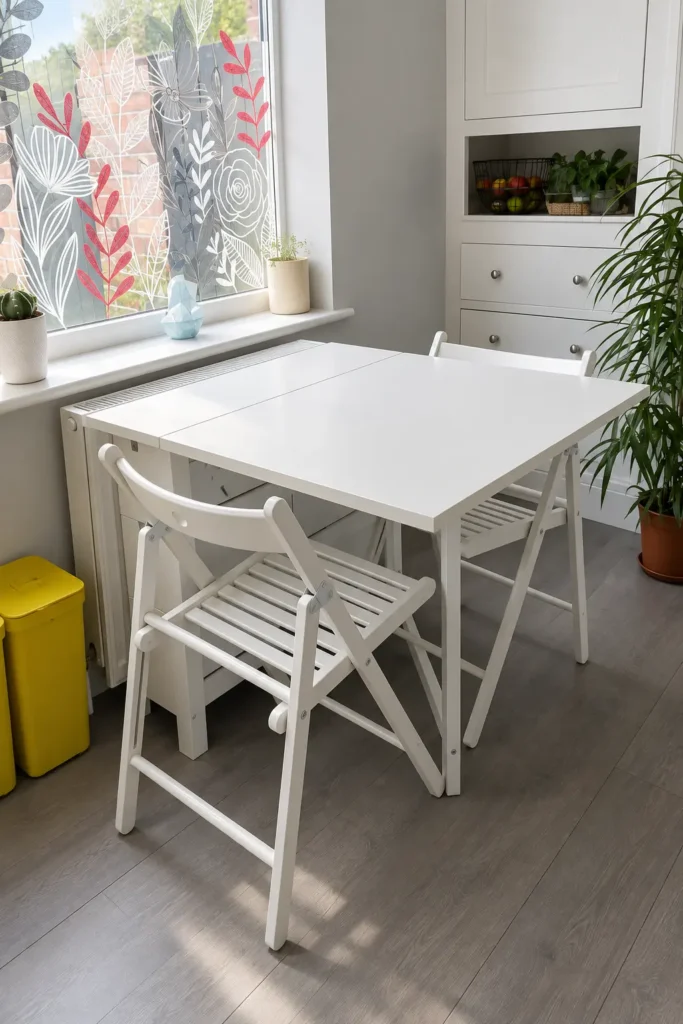
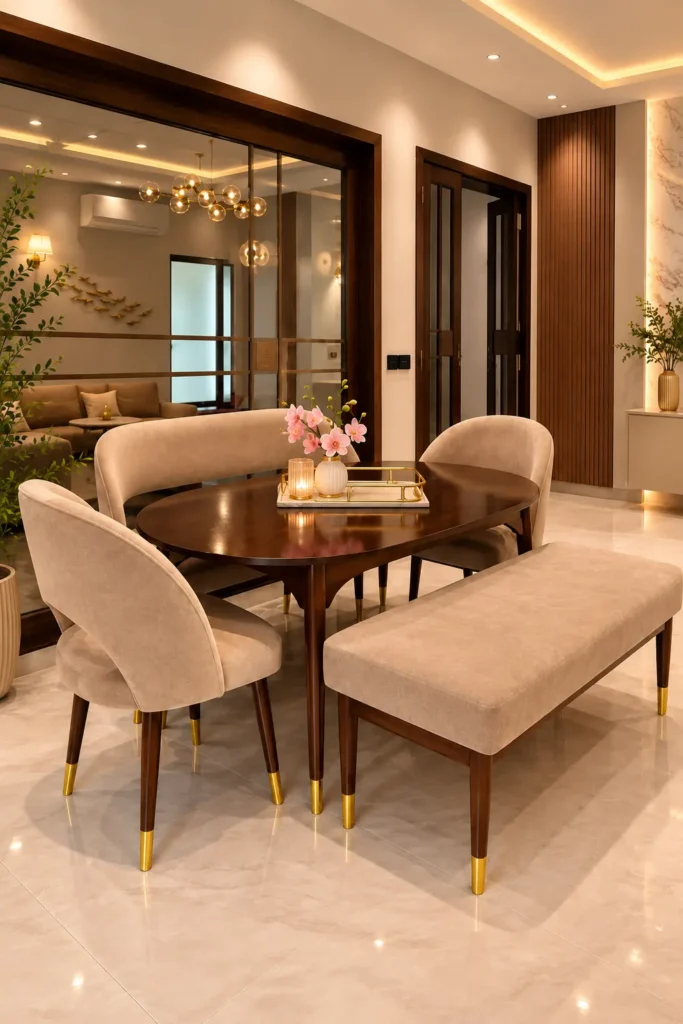
An oval dining table combines the seating efficiency of a rectangle with the softer edges of a round design. The curved ends improve movement around the table while still providing enough surface area for meals and entertaining.
A small oval table between 48–60 inches long can work well for four people without dominating the room. Wood finishes create a warmer traditional look, while stone or laminate surfaces suit modern interiors.
Avoid overly thick tabletops in small rooms because heavy proportions can make the furniture appear larger than it is. Slim legs and lighter finishes help maintain balance.
9. Add a Counter-Height Dining Table
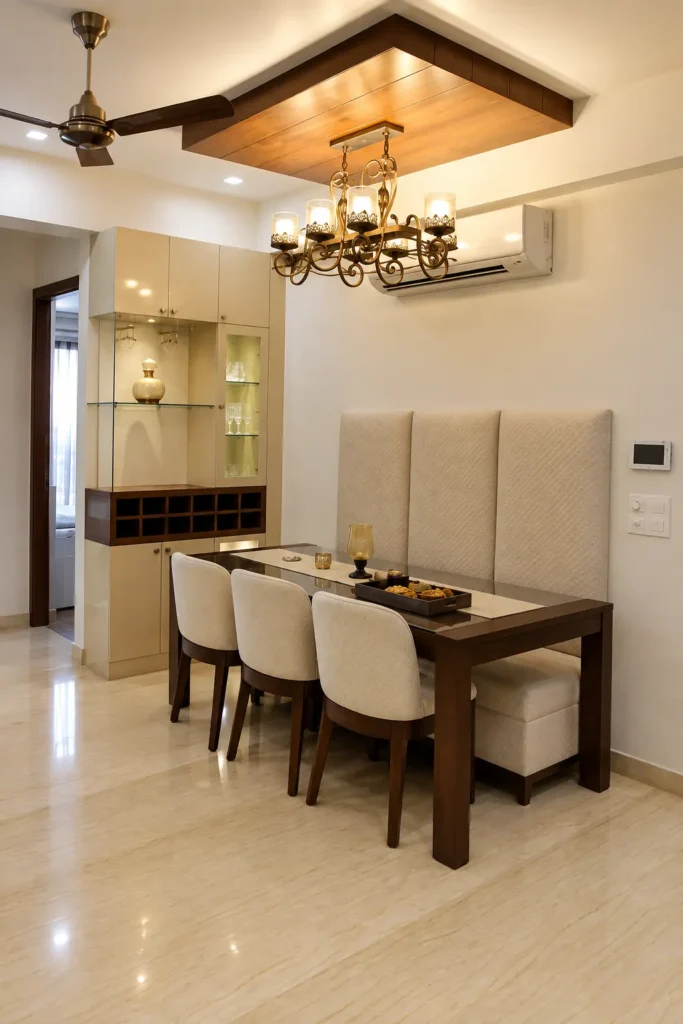
A counter-height table can create a casual dining zone while adding vertical interest to a compact room. The taller design works particularly well in open kitchens where the dining area needs to connect visually with the countertop.
Choose stools with supportive backs for everyday comfort. A seat height around 24–26 inches usually pairs well with standard counter-height tables.
This option can also create extra storage opportunities underneath. Shelving, baskets, or slim cabinets nearby can help keep small dining areas organized without adding bulky furniture.
10. Go for a Minimal Black or Neutral Table
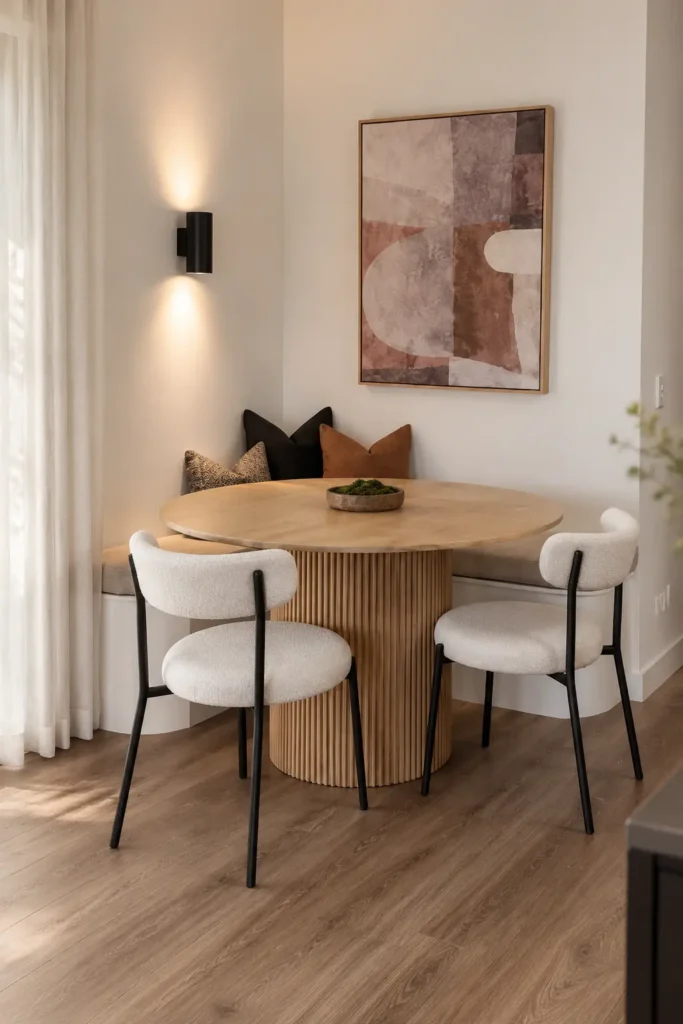
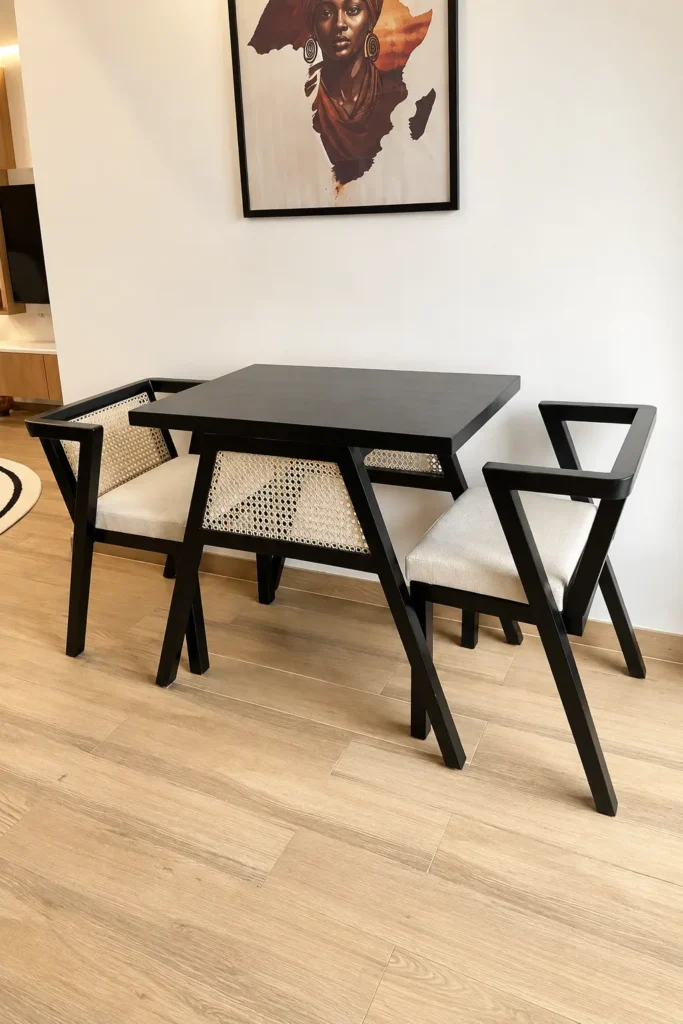
A simple dining table with a clean silhouette can make a small room feel more intentional. Designs with thin legs, smooth surfaces, and neutral colors reduce visual noise and allow other elements, such as artwork or lighting, to stand out.
Black tables create contrast and can look sophisticated when balanced with lighter chairs, rugs, or walls. However, dark finishes may show dust and fingerprints more easily than lighter surfaces.
For a softer approach, choose warm beige, natural oak, or off-white finishes that reflect more light and create a calm dining environment.
Small Dining Table Shopping Tips
Before buying a table, measure both the room and the walking paths around it. Aim for about 36 inches of clearance around the table when possible so chairs can move comfortably and people can pass behind seated guests.
Consider how many people actually use the table daily. A smaller table that works perfectly for your household is often more practical than a larger design that makes the room difficult to navigate.
Materials also matter. Solid wood offers durability and can be refinished, while laminate and engineered surfaces provide affordable options with easier maintenance.
Common Mistakes to Avoid
A frequent mistake in small dining rooms is choosing a table based only on appearance. A beautiful oversized table can make a room feel restricted if it leaves little space for movement.
Avoid pairing a heavy table with bulky chairs. Instead, balance solid materials with lighter seating, open backs, or slimmer frames.
Another issue is poor lighting. A small dining area benefits from focused lighting, such as a pendant centered above the table, because it creates definition without requiring extra furniture or decoration.