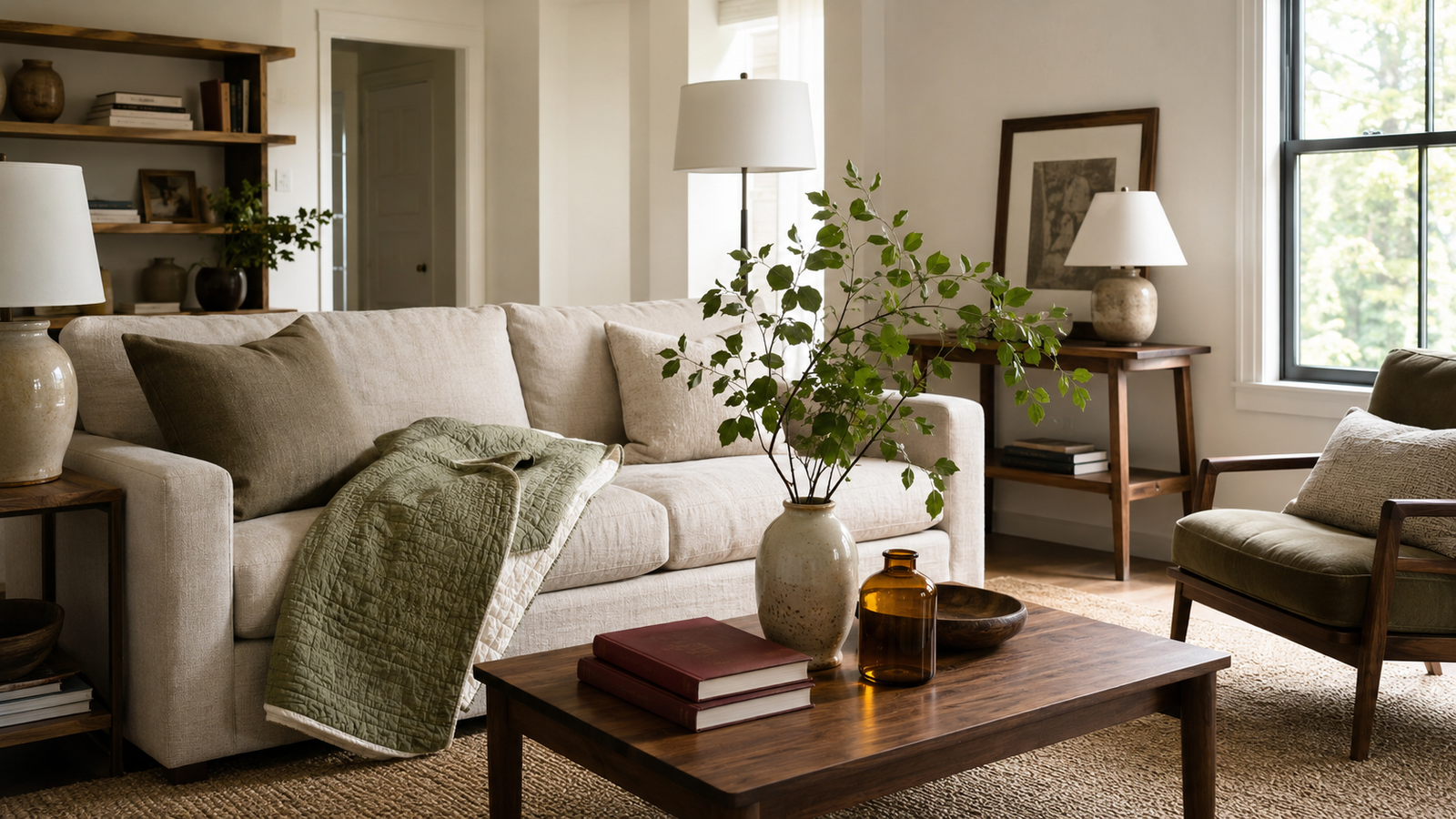
A home can start feeling out of step with the season before the weather actually turns cool. Bright summer colors, wide-open furniture arrangements, and clear glass accessories may suddenly feel too light, yet bringing out pumpkins and heavy blankets feels premature.
A thoughtful summer-to-fall decor transition starts with what you already own. By moving darker objects between rooms, exposing wood and clothbound books, adjusting evening light, and using seasonal necessities as part of the styling, you can create an early-fall mood without buying another decorative object.
Create a Dark Object Migration Between Rooms
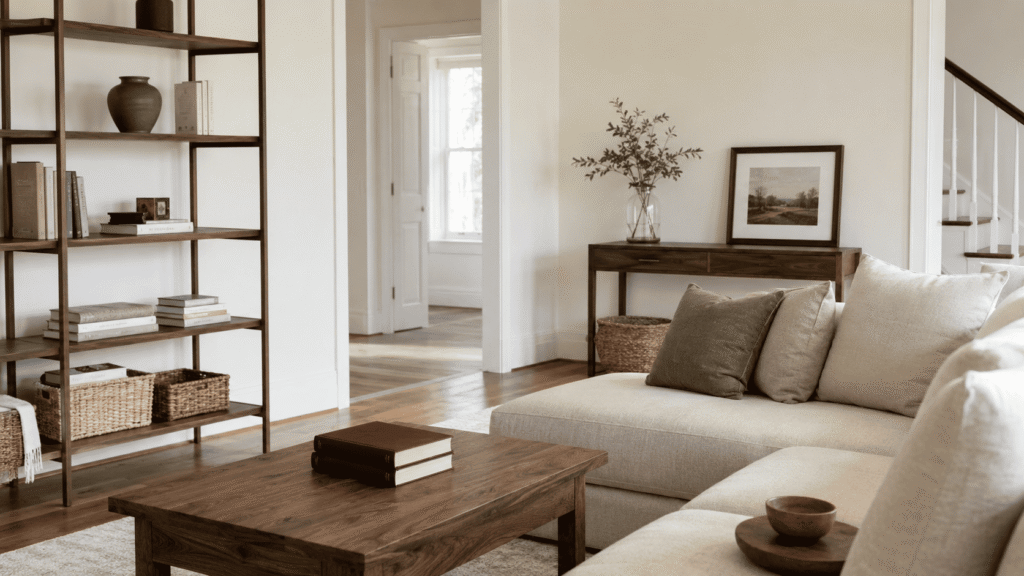
Walk through your home and collect objects in olive, burgundy, tobacco brown, charcoal, muted rust, and dark wood. Look beyond the living room: an olive vase may be in the bedroom, while a walnut frame or brown bowl may be stored in a hallway or kitchen cabinet.
Select only three or four pieces and redistribute them across the living room. Repeat one color on a bookshelf, coffee table, and console rather than clustering everything together. This creates a connected early-fall palette while allowing lighter summer furniture to remain in place.
Build an Evening Lamp Triangle Across the Living Room
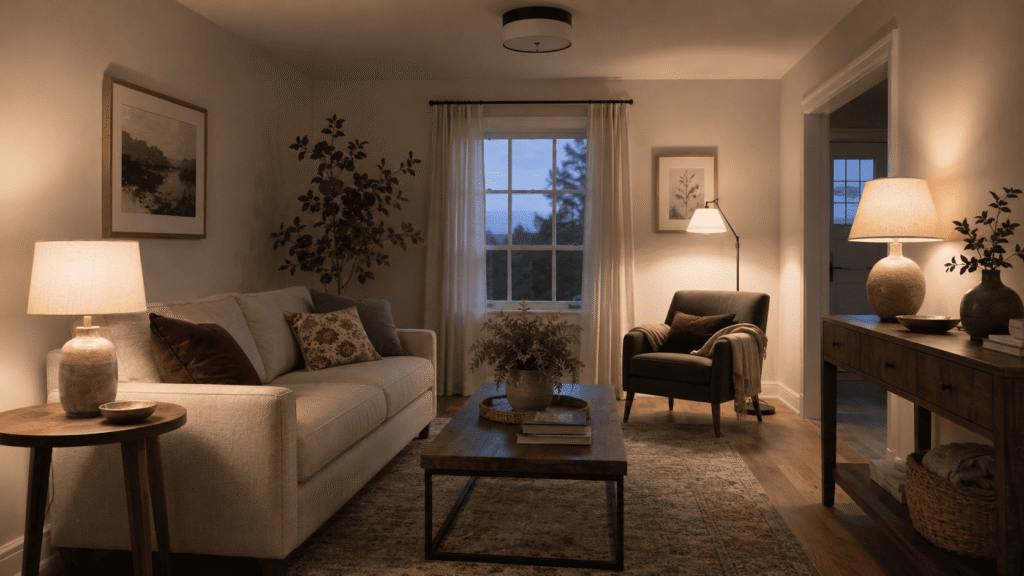
Instead of relying on one ceiling fixture, arrange three lamps in a loose triangle: one beside the sofa, one on an opposite console, and one near a reading chair. Use lamps you already own, even if that means borrowing one from a guest room that rarely needs evening lighting.
Different heights create more depth than three matching table lamps. Warm or neutral bulbs flatter wood, cream upholstery, olive ceramics, and muted red accents, while cool LEDs can make those colors appear gray. Keep electrical cords away from walkways and under furniture whenever possible.
Reveal the Darker Side of a Reversible Quilt
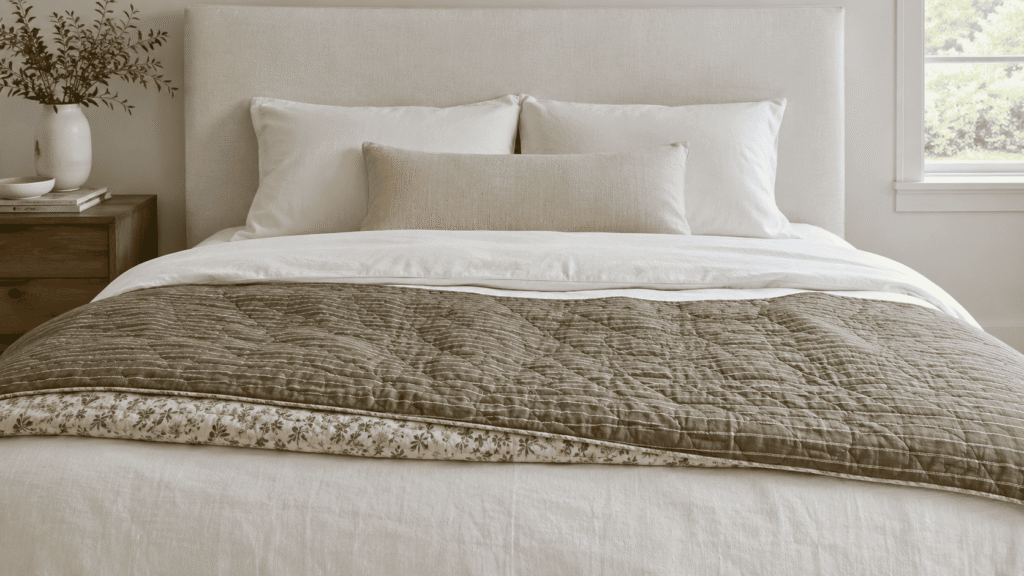
Check both sides of your quilts, coverlets, duvet covers, and removable pillow covers. A pale floral quilt may have a quieter stripe, check, or solid reverse that looks more appropriate for early fall. Fold it across the lower third of the bed instead of covering the entire mattress.
A broad fold gives the bed more visual weight without creating the heavy, layered appearance of a winter bedroom. Cotton and lightweight woven fabrics remain comfortable during warm afternoons and are easier to clean than velvet, which shows pressure marks, lint, and pet hair quickly.
Pull the Conversation Area Six Inches Inward
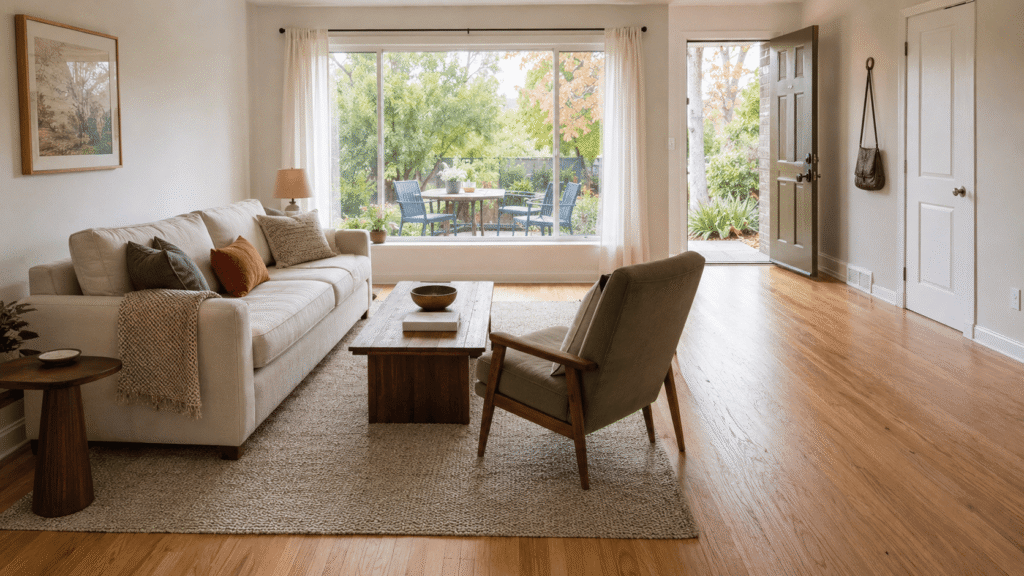
Summer layouts often emphasize windows, patios, and open doors. For fall, angle one lounge chair toward the sofa, move the side table within easy reach, or pull the main seating pieces approximately four to six inches closer together.
Maintain 30 to 36 inches along primary walkways so the adjustment doesn’t restrict movement. A coffee table usually functions best about 16 to 18 inches from the sofa. The finished arrangement should feel more connected for evening conversations while preserving daylight, outdoor views, and enough openness for lingering warm weather.
Move Amber Glass Into the Path of the Earlier Sunset
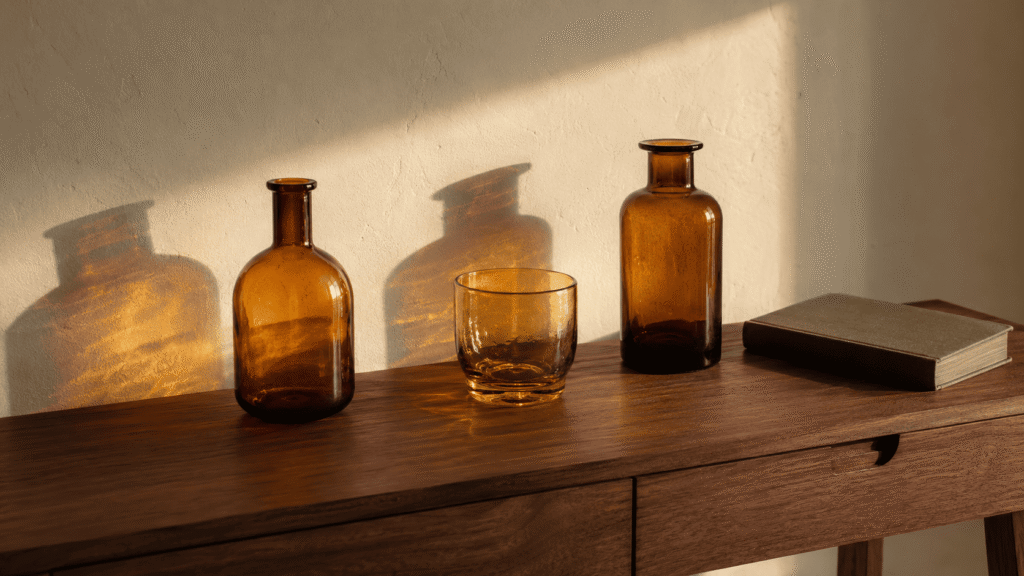
Bring amber bottles, brown glass vases, or honey-colored drinking glasses out of storage. Arrange two or three pieces on a console near a west-facing window, where lower afternoon light can pass through them and cast warm shadows across the wall or tabletop.
Leave space between the vessels so their shapes remain visible. Avoid balancing glass on a narrow sill, especially around children or pets. This technique uses changing seasonal light as part of the room and produces a richer visual effect than scattering small fall-colored accessories across every surface.
Turn an Empty Frame Into a Pressed Late-Summer Botanical Display
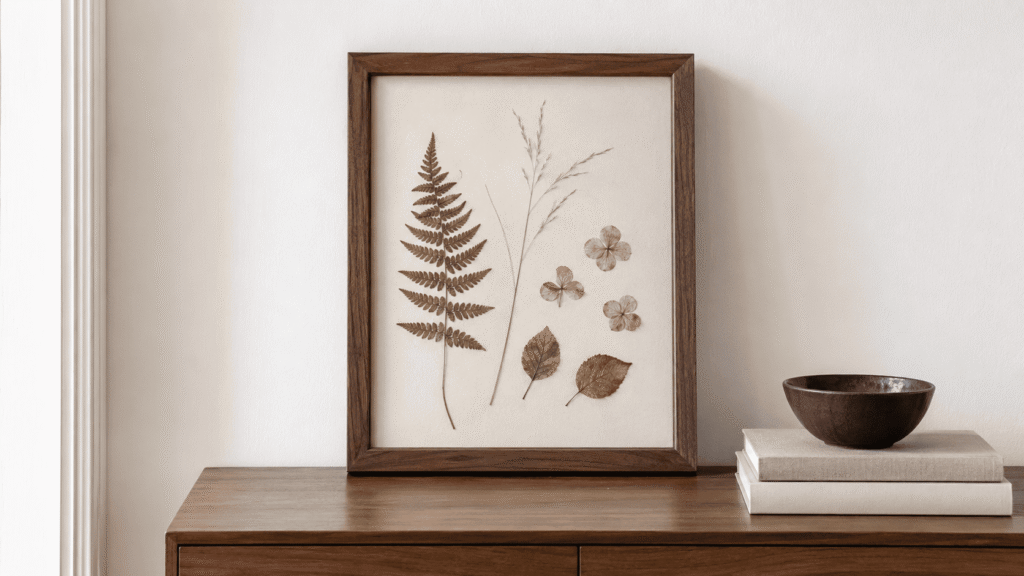
Use an empty frame or temporarily remove a print that no longer feels seasonal. Press fern fronds, faded hydrangea petals, thin grass stems, or early-changing leaves beneath heavy books until they lie flat. Arrange them loosely rather than filling every inch of the frame.
An asymmetrical composition with plenty of visible background looks collected instead of crafty. Hang the finished piece from an existing hook or lean it on an entry console. Don’t collect plants from private property, protected land, or public gardens where removing vegetation isn’t permitted.
Remove Bright Book Jackets to Reveal the Cloth Covers Beneath
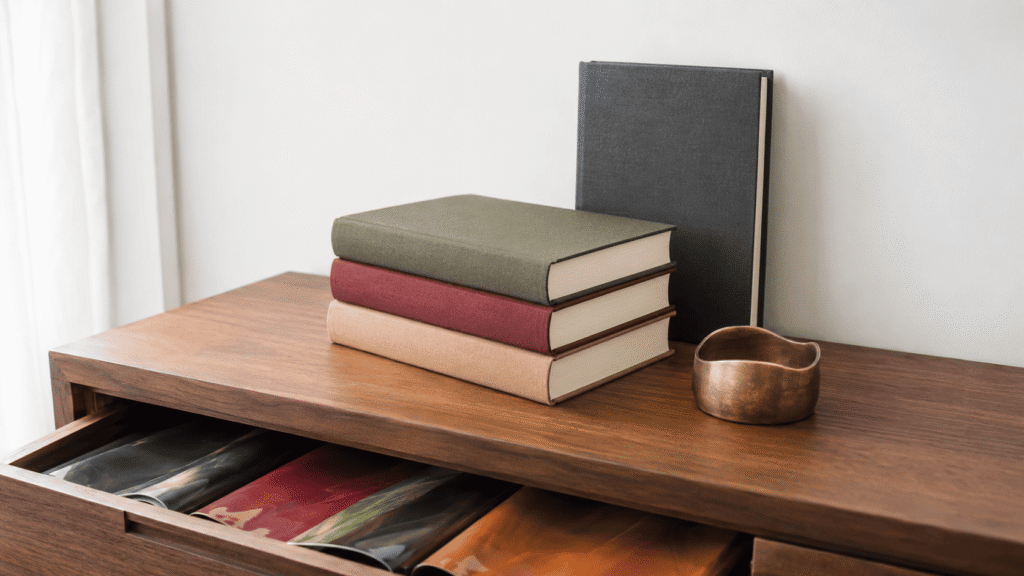
Inspect hardcover books with glossy or brightly colored dust jackets. Many have olive, tan, navy, burgundy, or charcoal cloth covers underneath. Temporarily remove the jackets from three to five compatible books and store them flat in a clean, dry place.
Arrange the uncovered books in one horizontal stack on a console or side table. Their matte surfaces absorb light and create a quieter, more substantial impression than glossy covers. This small change is completely reversible and works especially well in rentals where paint, flooring, and permanent finishes can’t be altered.
Create an Edible Orchard Still Life on the Kitchen Island
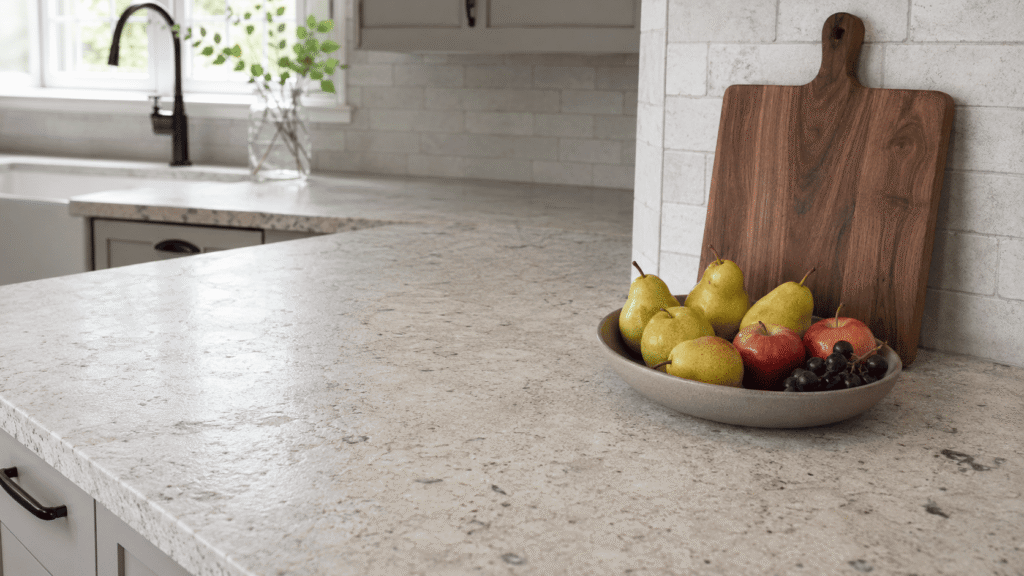
Arrange groceries you’ll actually eat in an existing shallow stoneware bowl, wood platter, or ceramic serving dish. Five pears, two red apples, or a small cluster of dark grapes provides enough seasonal color without becoming an oversized decorative display.
Keep the composition low so it doesn’t obstruct conversation or sight lines across the kitchen. Check the produce daily and move anything that requires refrigeration. A restrained edible arrangement feels more natural than artificial fruit and prevents seasonal styling from consuming useful counter space or creating unnecessary food waste.
Expose the Dining Table’s Wood Grain and Style It Off-Center
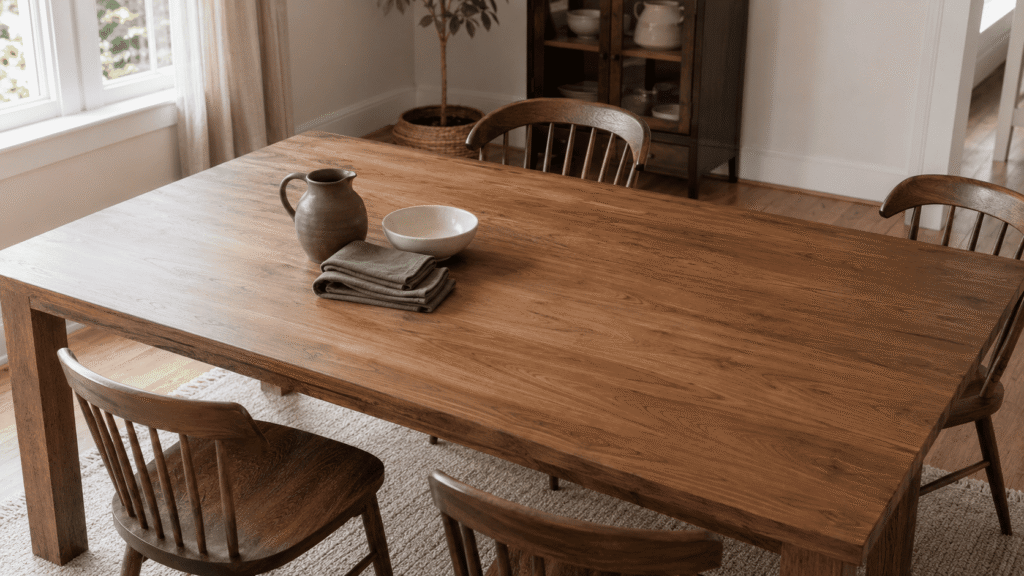
Remove the bright runner or patterned tablecloth used during summer and let the oak, walnut, or stained wood surface become part of the fall palette. If the tabletop is damaged, expose only the best section and fold an existing neutral cloth across the opposite end.
Place a stoneware pitcher, low bowl, and folded napkins near the table’s one-third point rather than directly in the center. Keep at least two-thirds of the surface available for meals, homework, or work. The asymmetry feels relaxed while the visible grain gives the room greater material depth.
Convert the Entry Bench Into a Changing-Weather Station
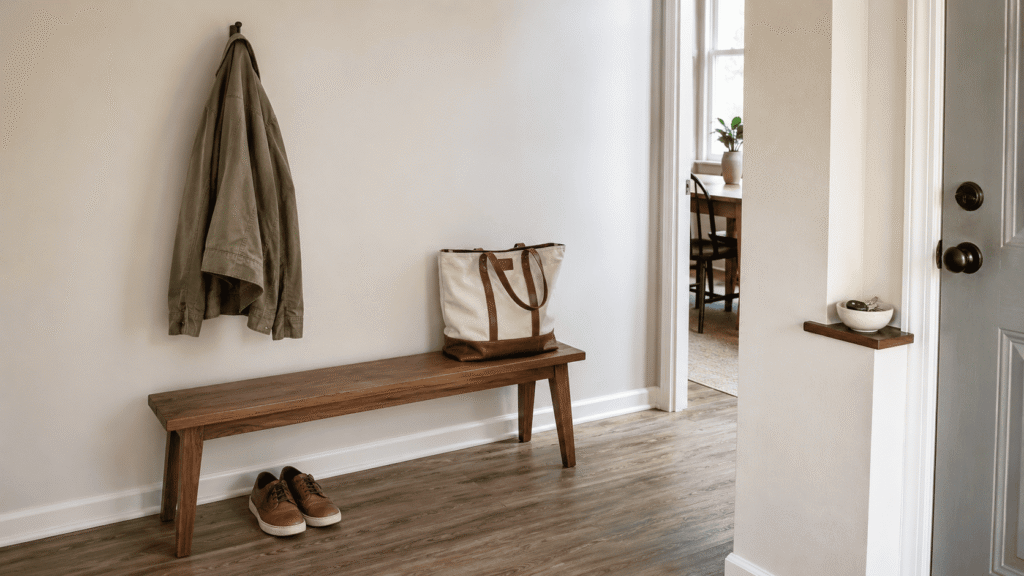
Use an existing bench, stool, console, or sturdy chair to hold the items that start appearing as temperatures fluctuate. Display only daily necessities: one lightweight jacket, closed-toe shoes, an umbrella, and a leather or canvas tote.
This area should look intentional without becoming a pile of outdoor gear. Place keys inside a bowl you already own and use an existing hook for the jacket if the entry is narrow. Keep 30 to 36 inches of walking space where possible, and avoid placing wet shoes directly on unfinished wood or delicate rugs.
Turn an Unused Serving Tray Into a Fall Material Study
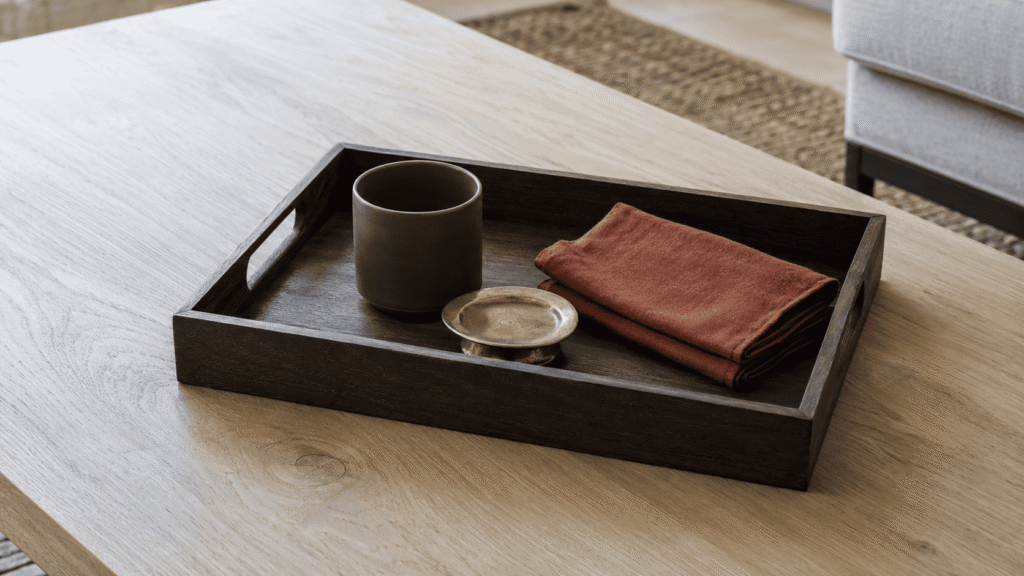
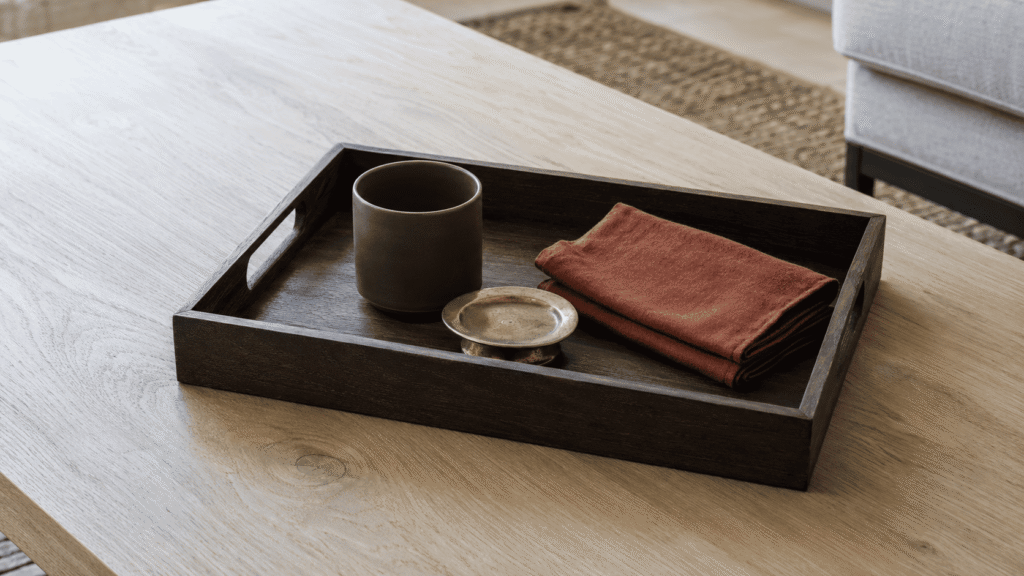
Bring out a wood, metal, or dark lacquered serving tray that normally stays inside a cabinet. Build a restrained arrangement using three contrasting materials already in the home: for example, a matte ceramic cup, a small brass object, and one folded linen napkin in olive, cream, or muted rust.
Keep every object inside the tray’s boundary and vary the heights slightly. The tray makes unrelated belongings read as one composition, while its raised edge prevents the arrangement from spreading across the table. It can also be moved quickly when the surface is needed.
Build a Collected Early-Fall Mantel Without Seasonal Decorations
Finish the transition with one strong composition on a mantel or long console. Lean an existing landscape, abstract print, or framed photograph against the wall, then place two stacked books and one dark ceramic vessel slightly off-center. Balance the opposite side with a low wood object or small frame.
Don’t mirror both sides or fill every gap. The empty space gives each object more visual weight and keeps the arrangement from resembling a store display. Cream, walnut, olive, and muted rust will suggest fall without pumpkins, artificial leaves, signs, or themed accessories.
What to Remove Before Restyling
Put away objects that communicate a distinctly summery theme rather than removing everything light or colorful. Beach signs, tropical prints, seashell collections, pastel accessories, and large groups of clear glass can compete with subtler fall changes.
Aim to alter no more than about 30 percent of what’s visible. Neutral upholstery, pale walls, plain ceramics, and natural-fiber rugs can remain year-round. The purpose is to change the room’s seasonal emphasis, not rebuild its entire identity every few months.