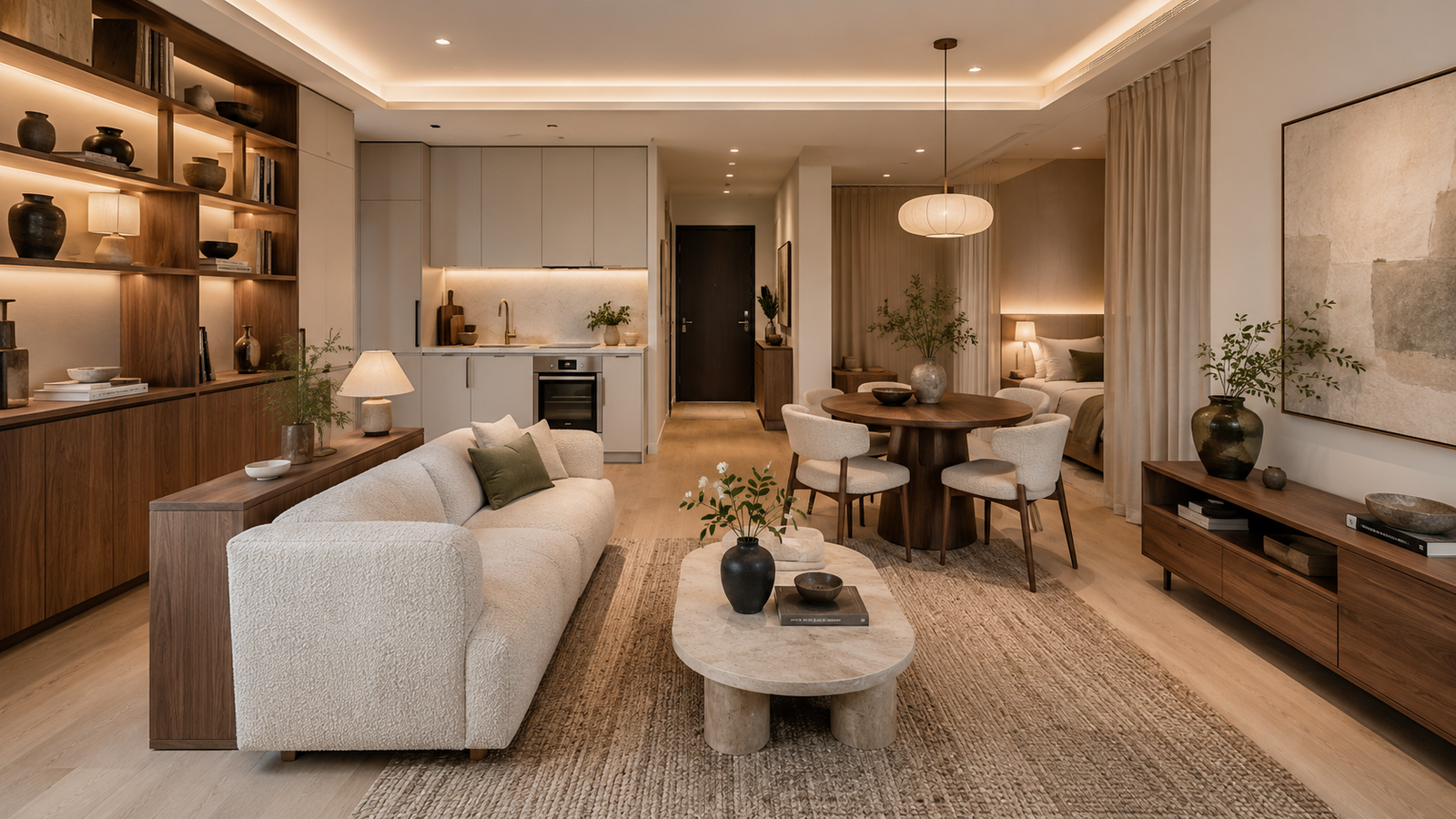
A 400-square-foot apartment can either feel calm and beautifully organized or like you’re constantly living around your furniture. The difference usually isn’t the square footage—it’s how the space is planned. A bulky coffee table, mismatched storage, or furniture placed without considering sight lines can make even a clean apartment feel crowded.
The best 400 sq ft apartment decorating ideas don’t rely on decorating tricks. They focus on visual weight, layout, lighting, and furniture that earns its place. The ideas below are the same kinds of styling moves professionals use to make compact homes feel intentional rather than temporary.
1. Build One “Architecture Wall” Instead of Filling Every Wall
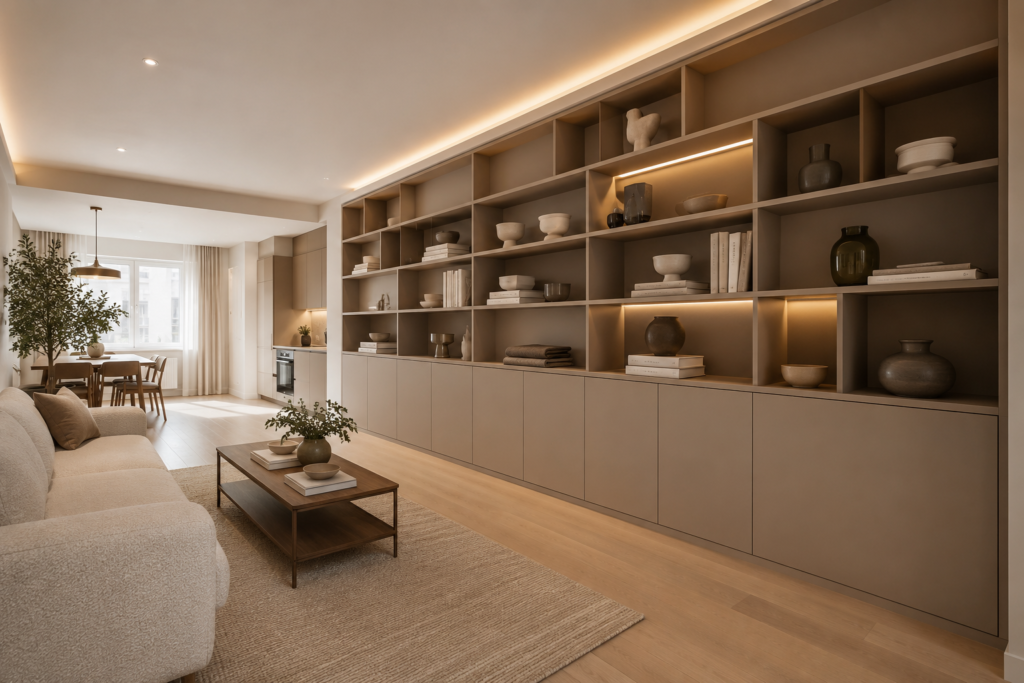
Rather than spreading cabinets, shelves, and storage across the apartment, combine everything onto one full-height wall. Mix closed cabinets on the bottom with open display sections above, then leave roughly one-third of the upper shelves intentionally empty. Your eye reads one organized feature instead of multiple storage zones, making the rest of the apartment feel noticeably lighter.
If you’re renting, combine freestanding bookcases with matching cabinet doors or fabric panels so the entire wall feels built-in without permanent construction.
2. Let Furniture Create Invisible Rooms Instead of Using Dividers
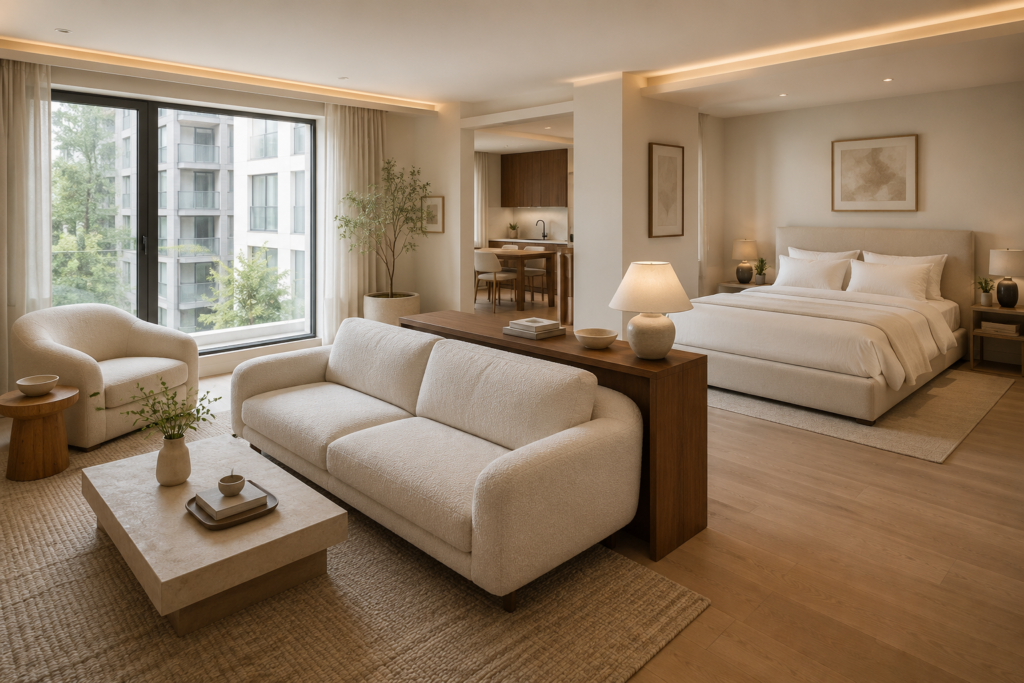
A studio doesn’t need walls to feel organized. Use the back of your sofa to separate living and sleeping areas, leaving about 30–36 inches for comfortable walking space behind it. Add a narrow console only if you genuinely need a drop zone; otherwise, keep the gap open.
The room immediately feels like it has purpose-built zones while natural light continues flowing through the apartment.
3. Create a Stair-Step Furniture Skyline
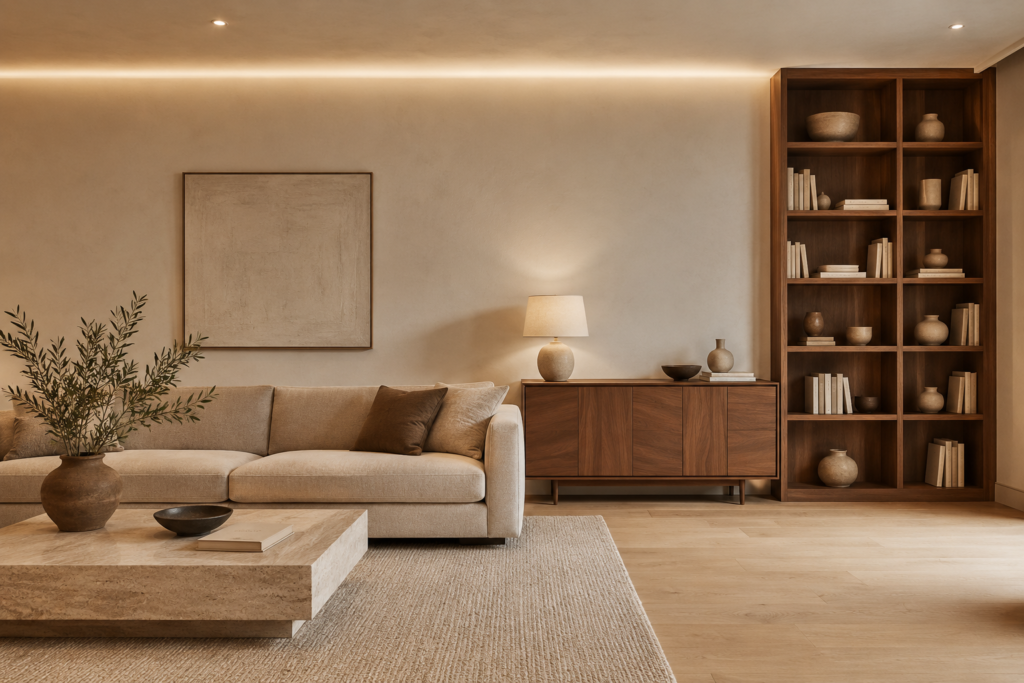
Most people accidentally buy furniture that’s all the same height. The result feels flat and boxy. Instead, arrange furniture so heights gradually rise across the room—a low coffee table, medium sofa, taller bookcase, then floor-length curtains.
That gentle change in height guides your eye naturally through the apartment instead of stopping it at one bulky piece.
4. Wrap One Material Through Multiple Rooms
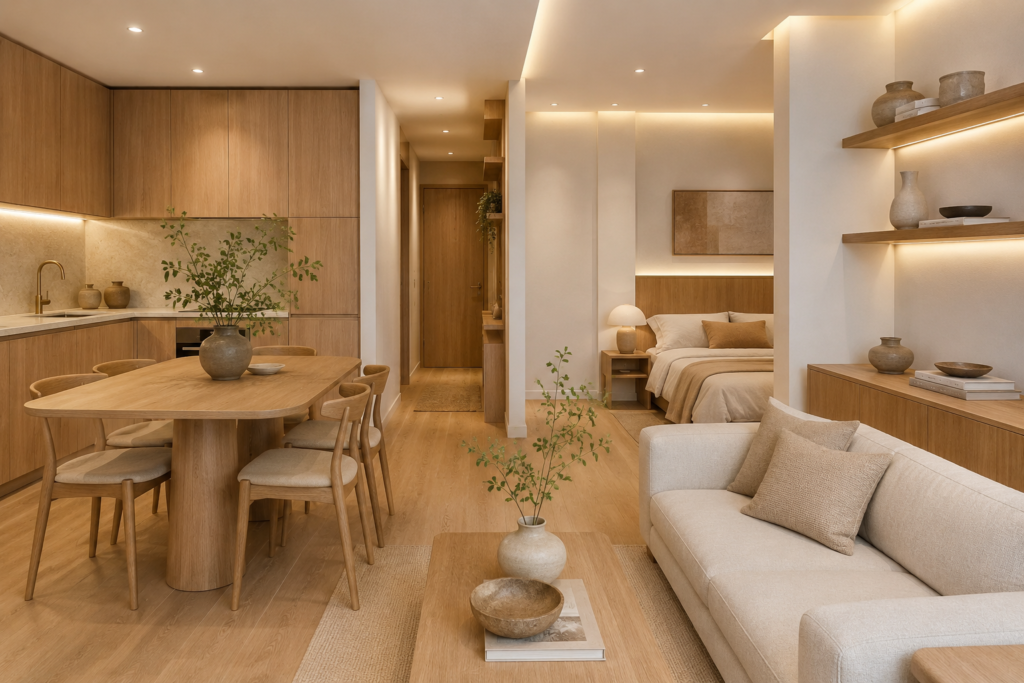
Choose one material that quietly repeats throughout your apartment. White oak, warm walnut, brushed brass, or blackened steel all work beautifully when used consistently on furniture, lighting, and smaller accents.
Repeating materials creates rhythm without relying on matching furniture sets. The apartment feels thoughtfully collected instead of pieced together over time.
5. Replace Matching Furniture Sets With “Visual Cousins”
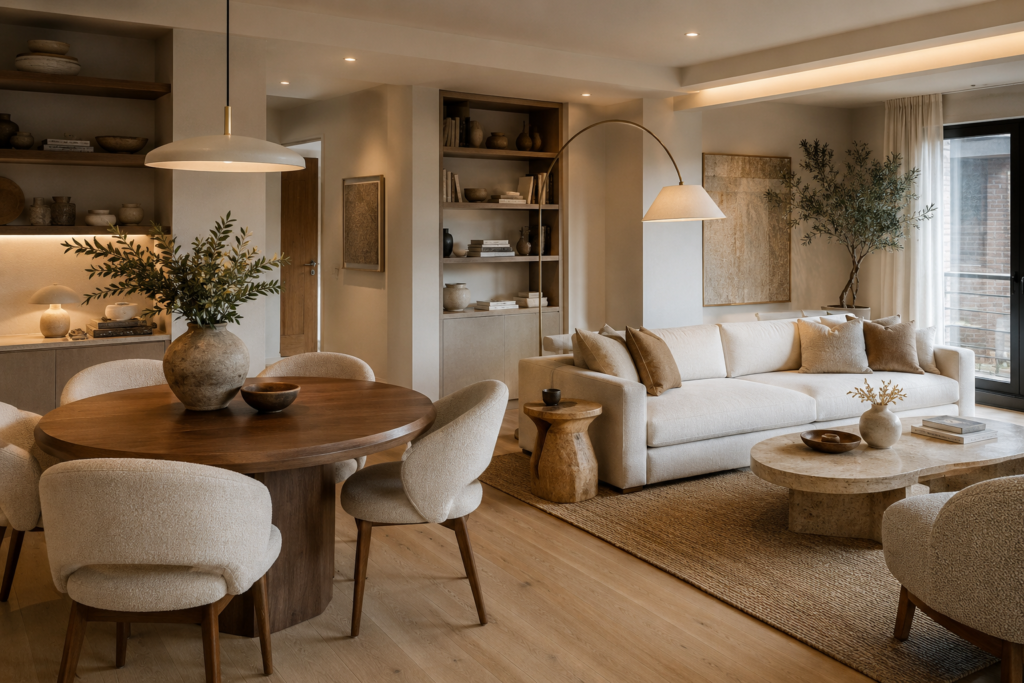
Buying everything from one collection often makes a small apartment feel like a showroom. Choose pieces that share similar proportions or finishes instead of identical designs. A curved dining chair can sit beside a simple rectangular table if both repeat the same wood tone.
The subtle differences create character while consistency keeps the apartment feeling cohesive.
6. Turn the Wall Behind Your Sofa Into Hidden Function
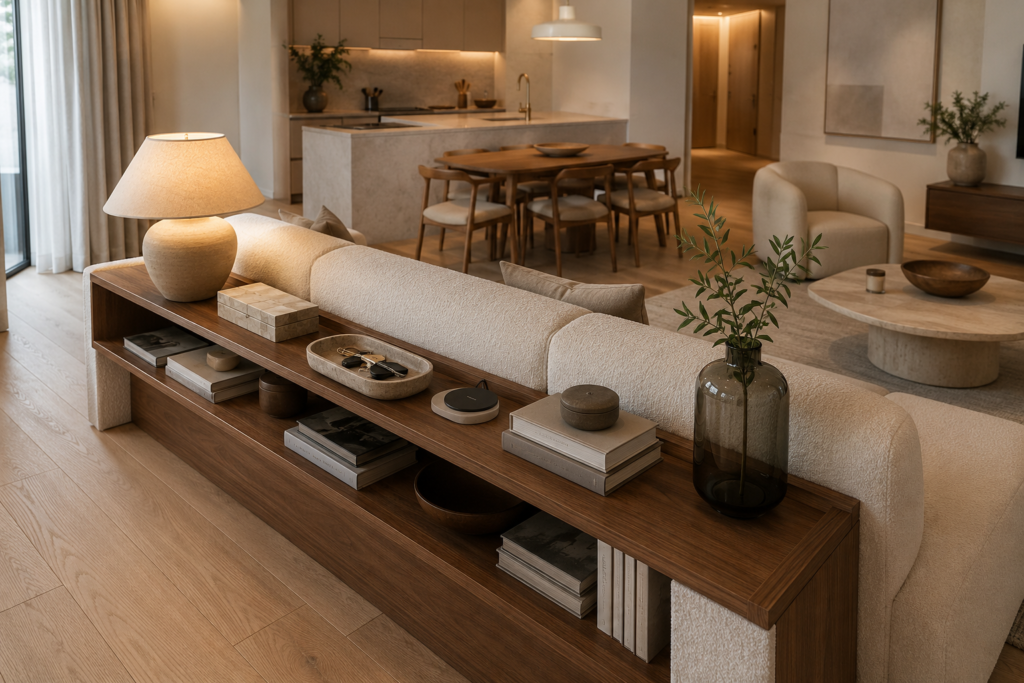
The space behind a sofa is often wasted. Instead of another side table, place a slim console no deeper than 8–10 inches behind the sofa. It can quietly hold lamps, books, chargers, and drinks without taking additional floor space.
Keeping everyday items behind the seating area also leaves coffee tables cleaner, making the room feel more spacious at first glance.
7. Pull Large Furniture Away From Corners
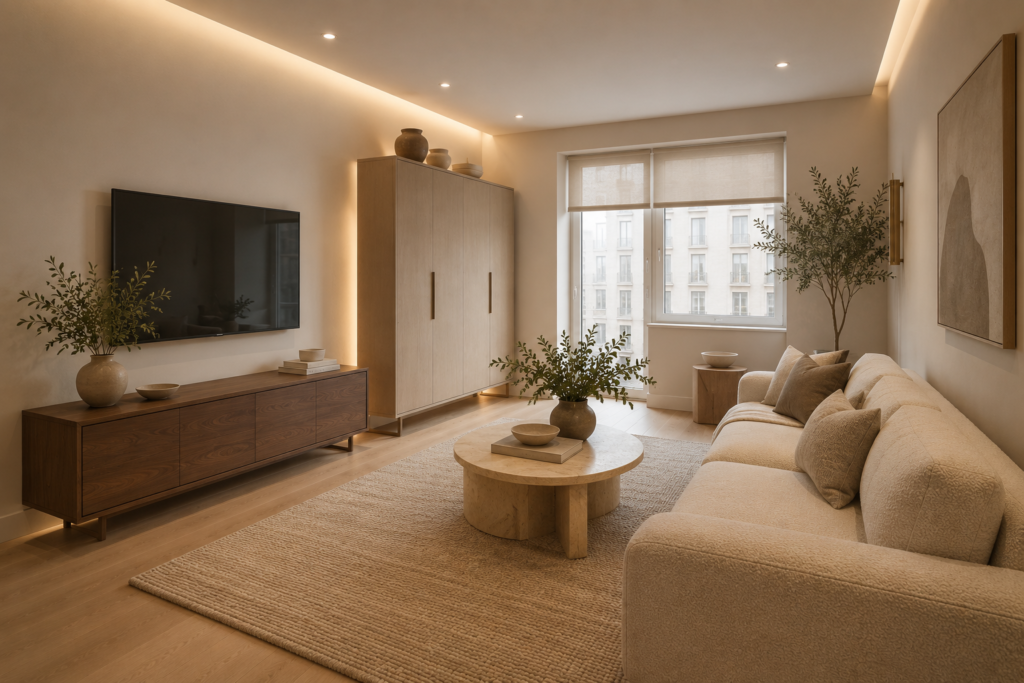
It feels logical to tuck everything tightly into corners, but that often makes the room appear boxed in. Leave small breathing spaces beside larger furniture whenever possible. Even a 4-inch gap beside a cabinet allows shadows to form naturally, making heavy furniture appear lighter.
This trick works especially well with wardrobes, media units, and tall storage cabinets.
8. Treat the Ceiling as Part of the Design
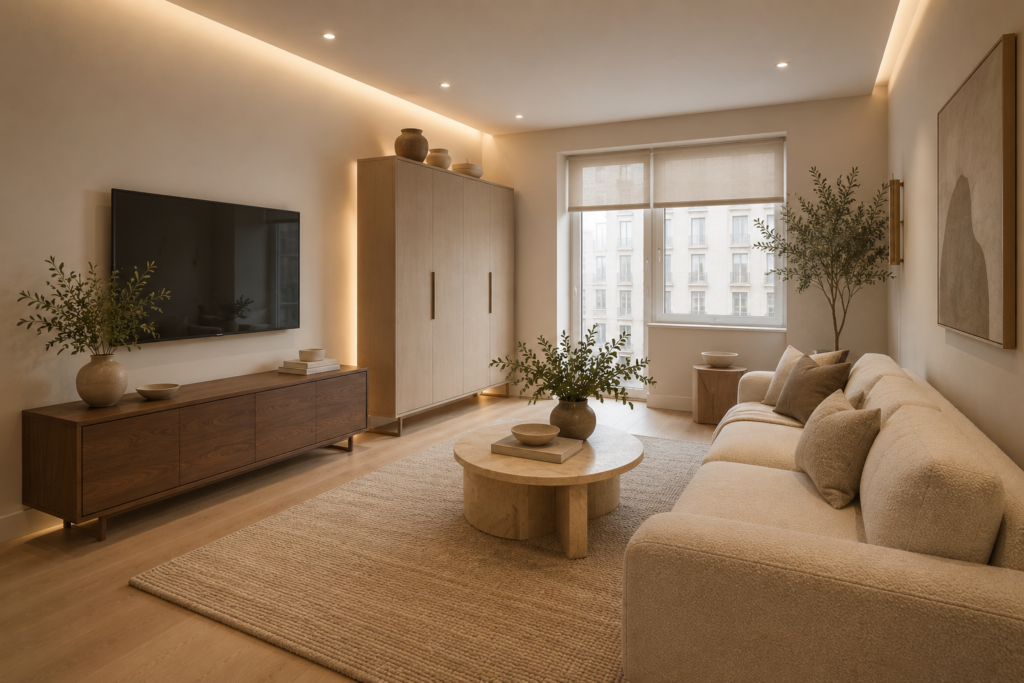
Most apartments stop decorating at eye level. Draw attention upward by installing curtain rods close to the ceiling and choosing taller bookcases that stop several inches below it rather than touching it completely.
Those small gaps prevent the room from feeling compressed while naturally emphasizing ceiling height.
9. Style One Surface Like a Boutique Display
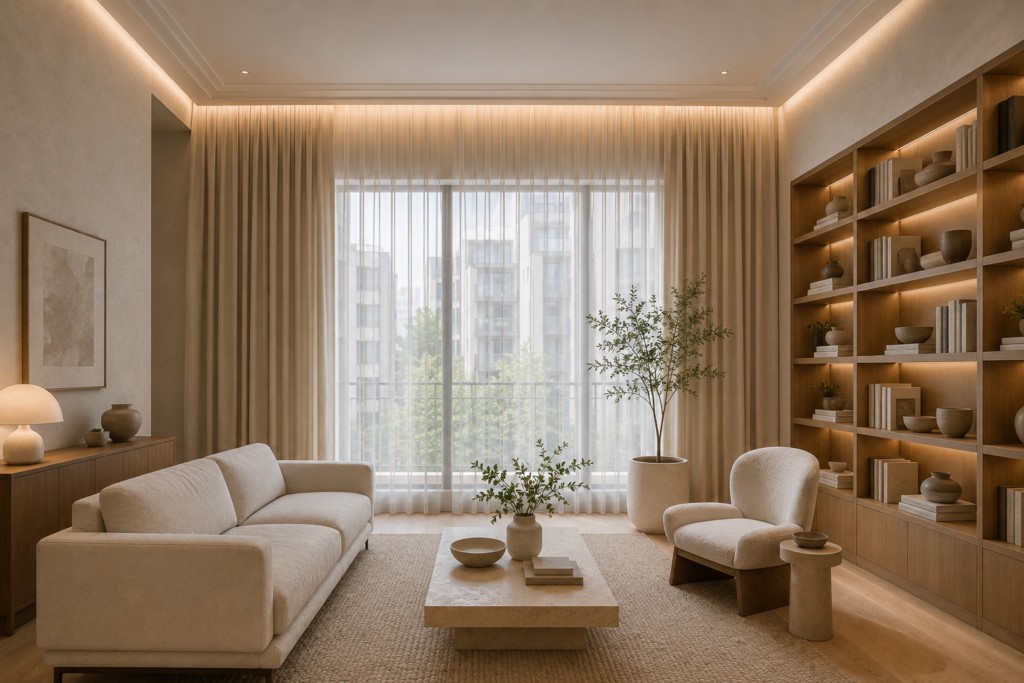
Instead of decorating every tabletop, choose one surface to style beautifully and keep the others intentionally quiet. A console might hold stacked books, a ceramic lamp, and one sculptural bowl while your dining table stays almost empty.
This creates a clear focal point and prevents your apartment from feeling visually busy.
10. Use Full-Height Curtains to Hide More Than Just Windows
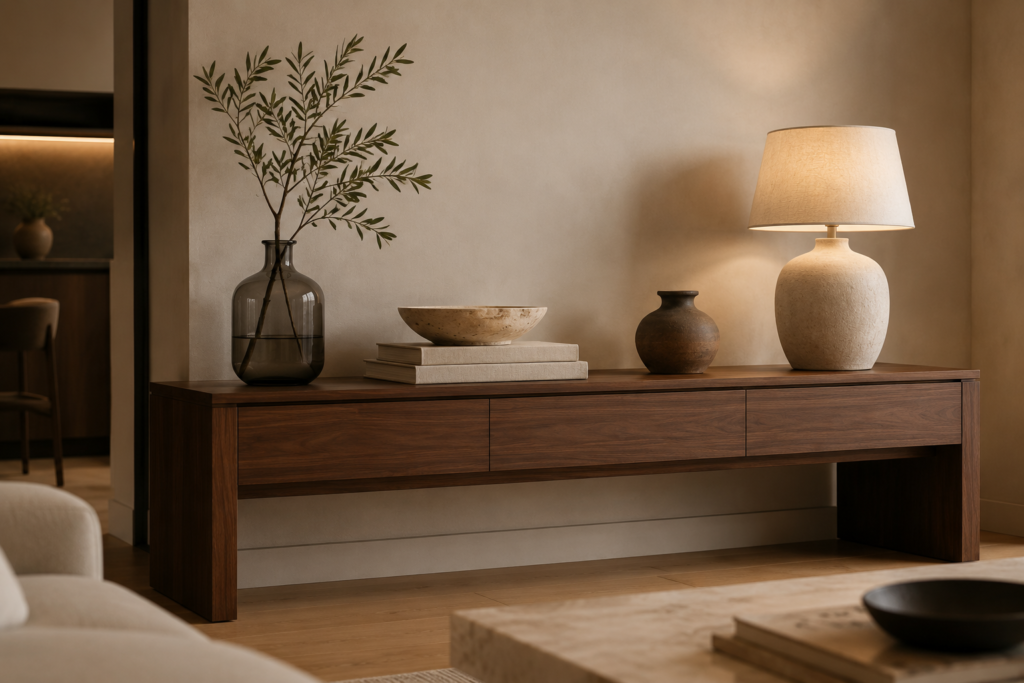
Curtains don’t have to cover only glass. Extend them across an entire wall to conceal a closet, open shelving, or an awkward storage nook. Install the track as close to the ceiling as possible and let the fabric fall just above the floor.
This creates one clean visual plane instead of several competing elements. Lightweight linen-look fabric keeps the apartment airy, while heavier woven panels soften echo in rooms with hard flooring.
11. Let One Oversized Piece Replace Three Smaller Ones
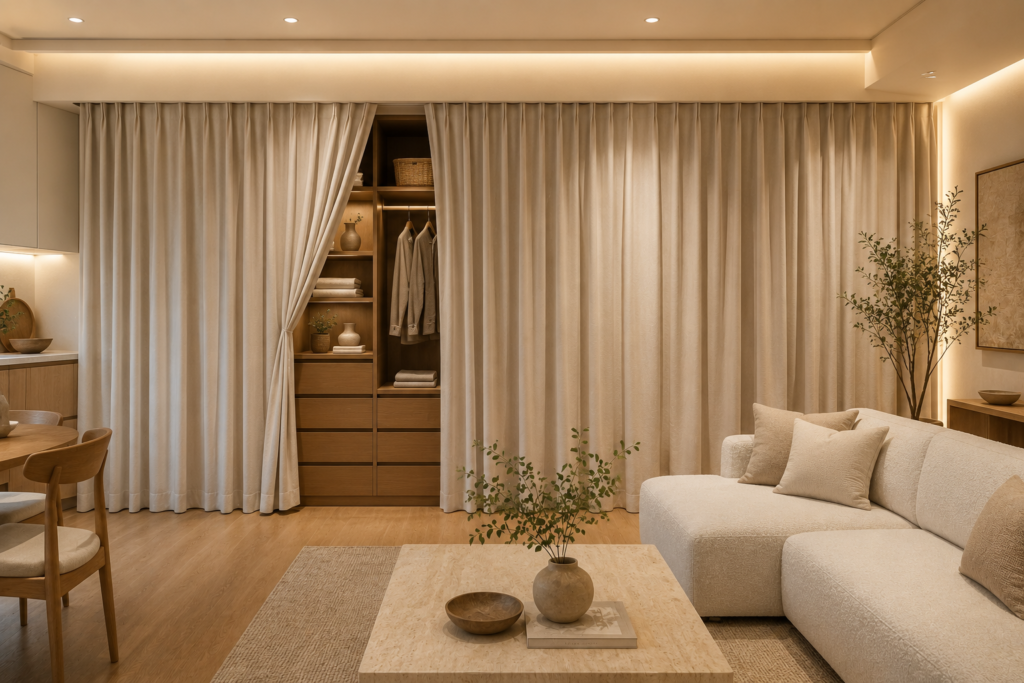
A common mistake in small apartments is buying several tiny pieces because they seem space-friendly. Choose one larger item with clean proportions instead. A long media cabinet or generous artwork often looks calmer than several small cabinets or frames competing for attention.
When hanging artwork, keep its center about 57–60 inches from the floor, which feels natural from both standing and seated positions.
12. Create a “Furniture Pause” Every Few Feet
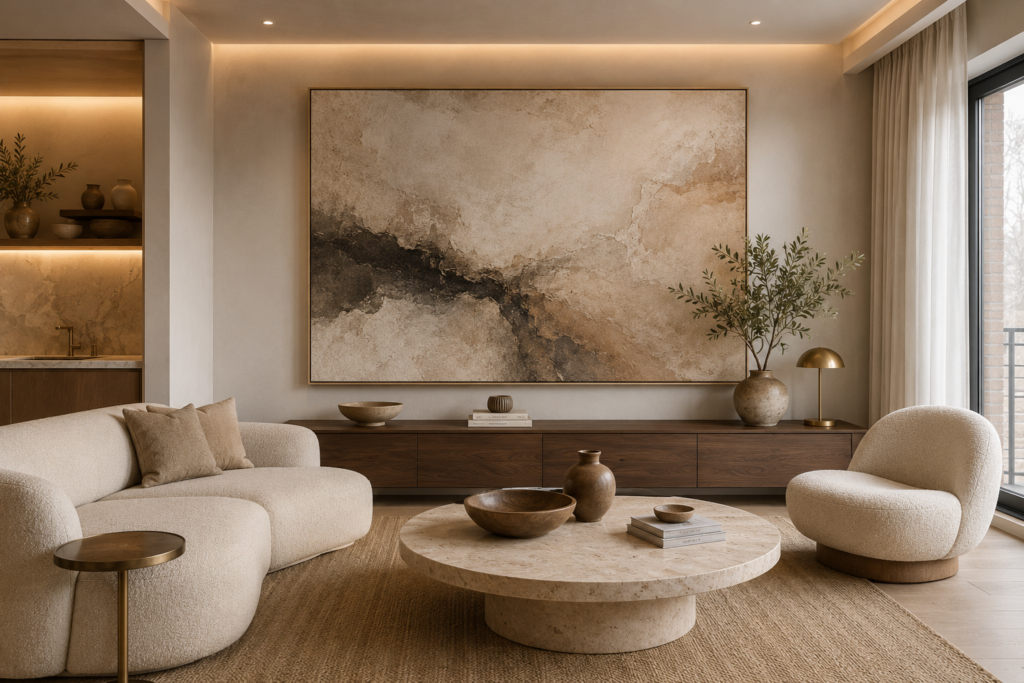
Walk through your apartment and notice where your eye lands. Instead of placing furniture continuously around the room, intentionally leave small stretches of empty wall or open floor between larger pieces.
These pauses give your eye somewhere to rest, making the apartment feel organized rather than packed. In compact homes, negative space is just as valuable as storage.
13. Hide Your Everyday Technology in Plain Sight
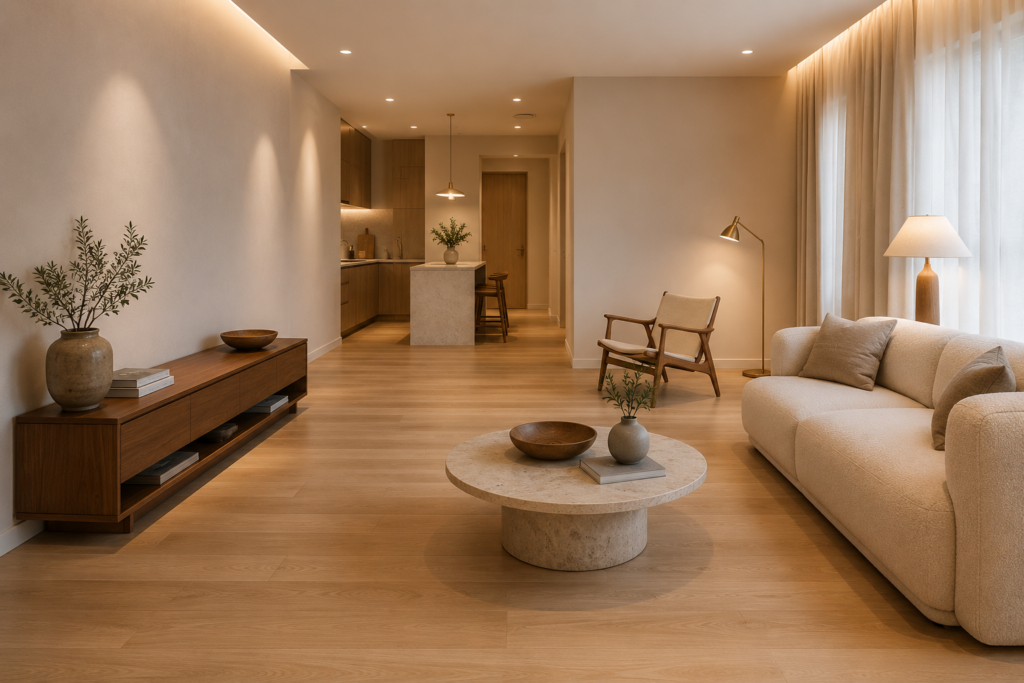
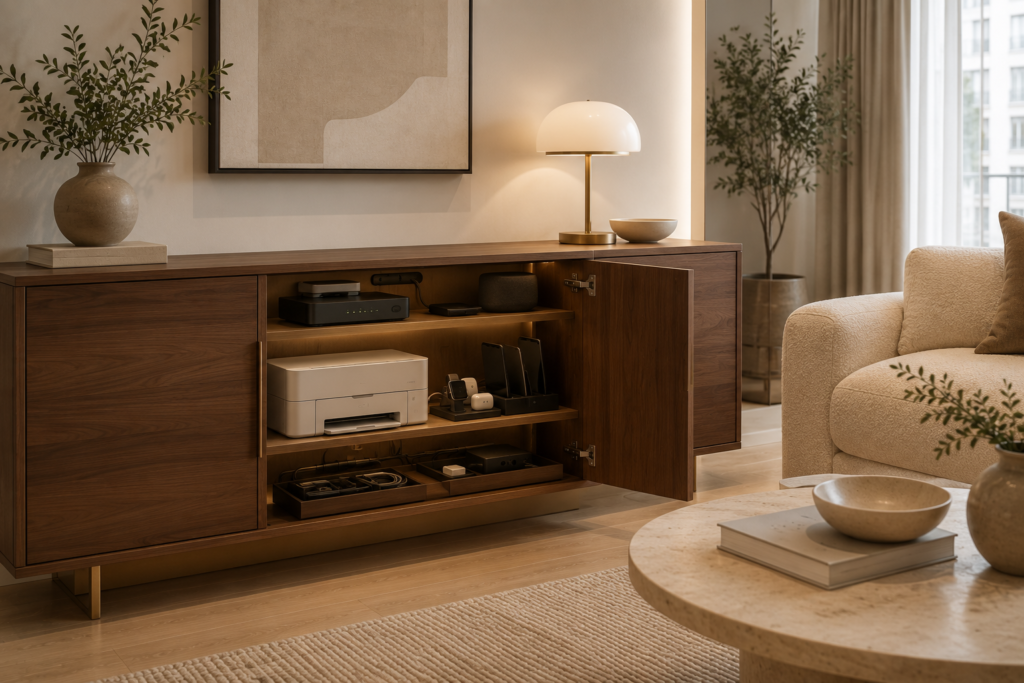
Charging cables, routers, printers, and smart speakers quickly make a small apartment feel cluttered. Dedicate one cabinet or drawer to everyday technology, using cable grommets or discreet openings to keep everything functional but out of view.
The room instantly feels calmer because the visual noise disappears, even though nothing has actually left the apartment.
14. Mix Soft and Structured Shapes in Every Zone
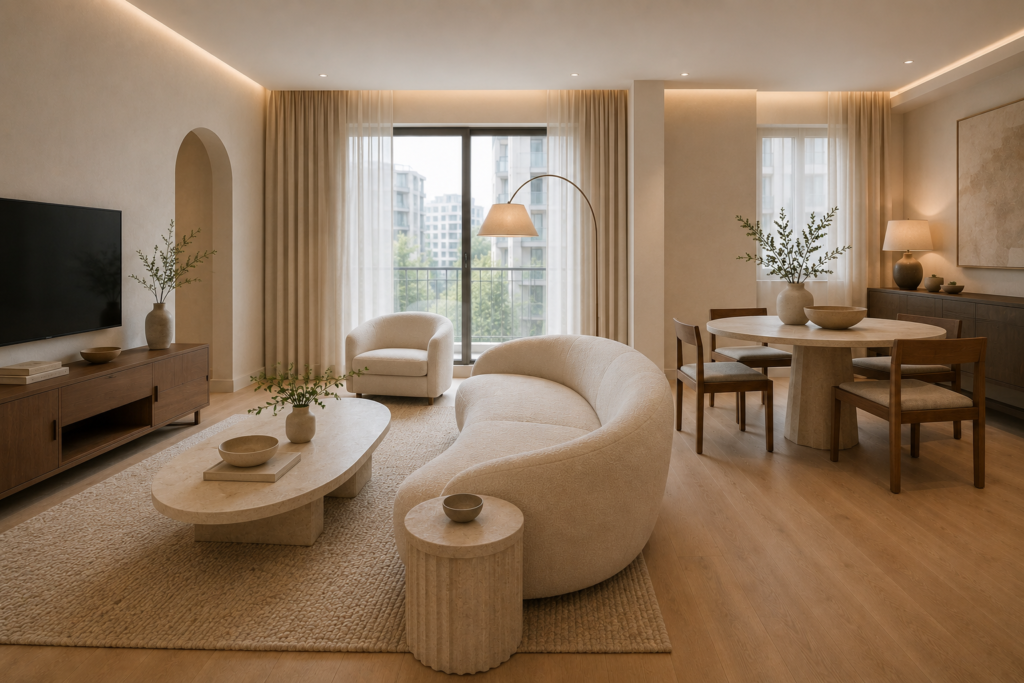
If every piece has sharp edges, the apartment feels rigid. If everything is curved, it can look undefined. Pair a rounded dining table with straight-backed chairs, or a square sofa with a curved floor lamp.
That contrast creates balance and keeps the room visually interesting without relying on bold colors or busy patterns.
15. Keep the Center of the Apartment Open
Many people fill the middle of a room with oversized coffee tables or storage ottomans. Let the center breathe whenever possible. Choose a slimmer table or one with an open base, leaving comfortable circulation around it.
Aim for 16–18 inches between the sofa and coffee table so movement feels easy without making the seating area feel disconnected.
16. Repeat One Accent Color in Small, Unexpected Places
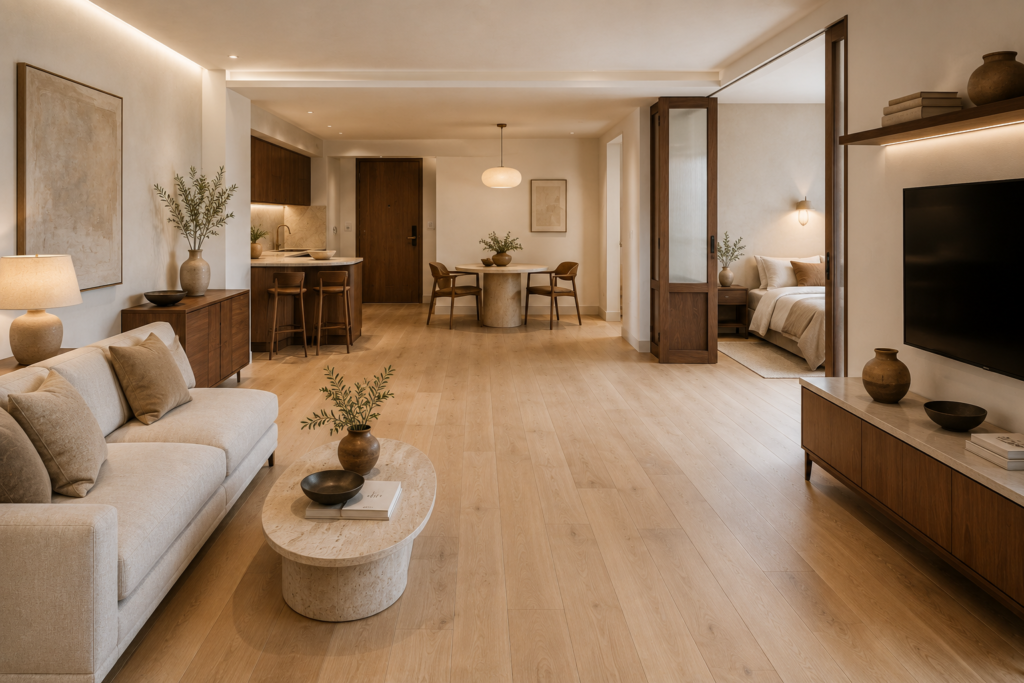
Instead of introducing five different accent colors, repeat one tone throughout the apartment in subtle ways. A muted olive, rust, or deep navy can appear in a vase, a book spine, a cushion, and artwork.
Repeating color creates rhythm without overwhelming the room, making the entire apartment feel intentionally designed instead of randomly decorated.
17. Make Everyday Storage Look Like Furniture
Don’t let storage scream “storage.” Choose pieces that could pass as beautiful furniture first and organizers second. A sideboard can hide office supplies, a bench can store bedding, and a narrow cabinet can hold pantry items while looking like part of the living room.
This approach keeps practical items close without making your apartment resemble a utility closet.
18. Style the Apartment From Your Favorite Seat, Not the Doorway
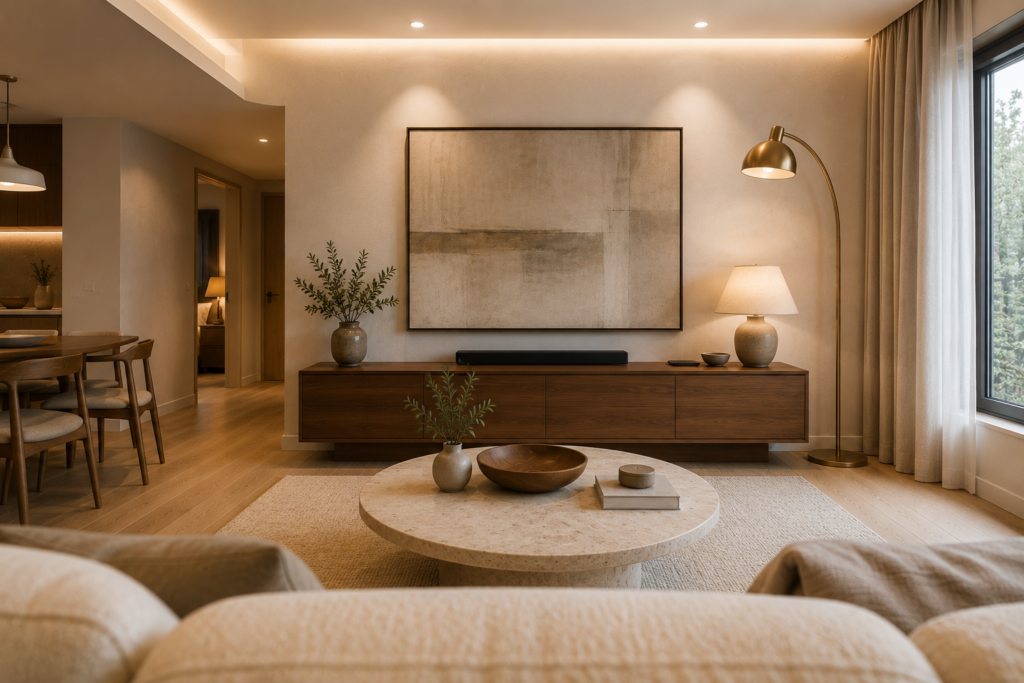
The view you enjoy most isn’t the one from the entrance—it’s where you actually spend time. Sit on the sofa, your bed, or your reading chair and study everything within your line of sight.
Arrange the room so every visible object earns its place. Hide cords, simplify open surfaces, and keep the tallest furniture toward the edges. Designers often refine a room from this seated perspective because that’s how people truly experience a home.
Before You Buy Anything New
A small apartment rarely needs more furniture—it usually needs better proportions. Before purchasing something, mark its footprint on the floor with painter’s tape and live with it for a day. If the taped outline interrupts your daily movement or blocks natural sight lines, the piece is probably too large, even if the measurements technically fit.
Choosing fewer, better-scaled pieces almost always makes a 400-square-foot apartment feel larger than adding more storage to solve every problem.