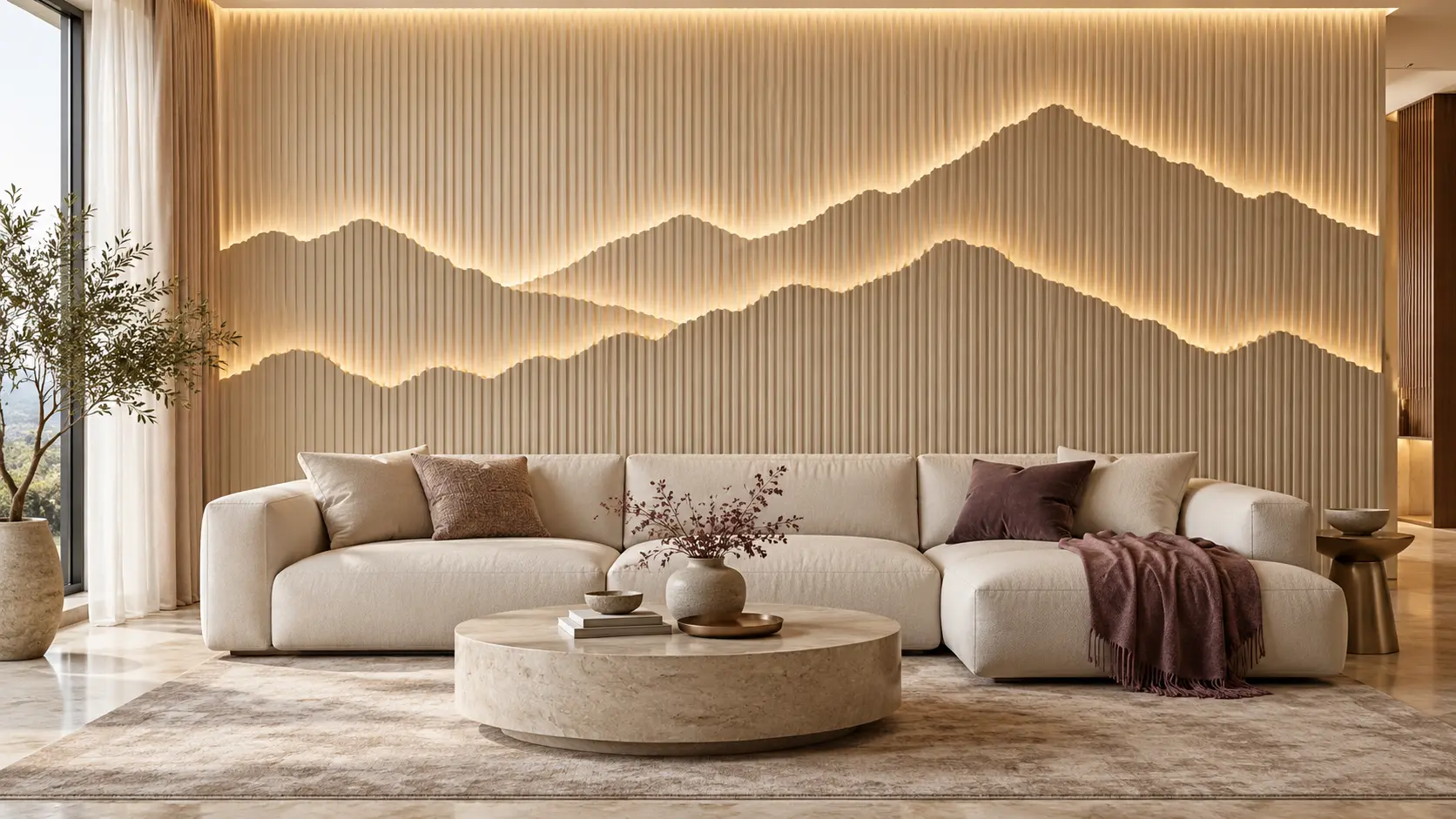
A large wall behind the couch can shape the entire feel of a living room. Left empty, it may make the seating area look unfinished. With the right textures, lighting, and decorative details, it becomes a focal point that brings the room together.
These 14 large wall behind couch decor ideas explore sculptural designs, warm lighting, and elegant finishes. From subtle vertical panels to dramatic flowing reliefs, each idea offers a different way to give that open space character.
1. Create a Glowing Landscape with Fluted Panels
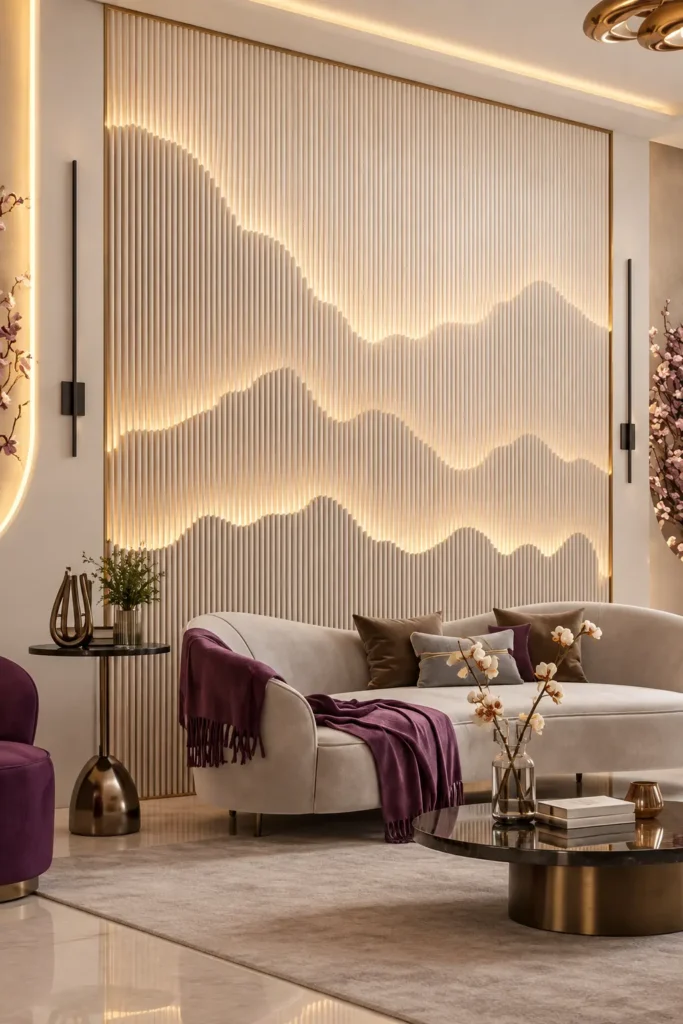
Turn the wall behind your couch into an abstract landscape with fine vertical fluting and layered, mountain-like outlines. In this design, warm lighting traces the uneven edges, creating the impression of softly glowing hills.
The narrow grooves provide texture, while the sweeping layers break up the wall’s height. A cream sofa keeps the room calm, and a plum throw introduces a richer accent without competing with the feature wall. Keep nearby accessories simple so the illuminated design remains the main attraction.
2. Combine Circular Mirrors with Curved Wall Panels
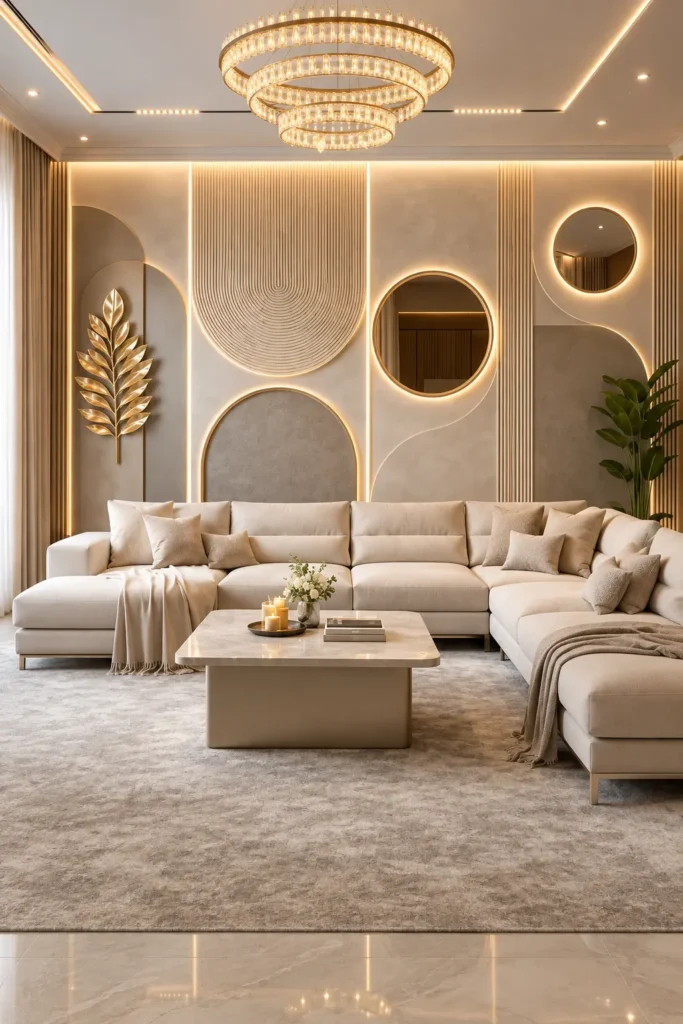
Circular mirrors and rounded panels bring variety to a wide wall behind a sectional. Here, different-sized circles sit alongside elongated curved shapes, with warm illuminated borders connecting the arrangement visually.
The mirrors introduce reflections, while the solid panels add depth and texture. A gold botanical accent gives the composition an extra decorative detail. Repeat cream, beige, and gold throughout the furniture and accessories to make this busy wall feel cohesive. Varying the circle sizes helps the arrangement look balanced without feeling rigid.
3. Make a Sculptural Relief the Centerpiece
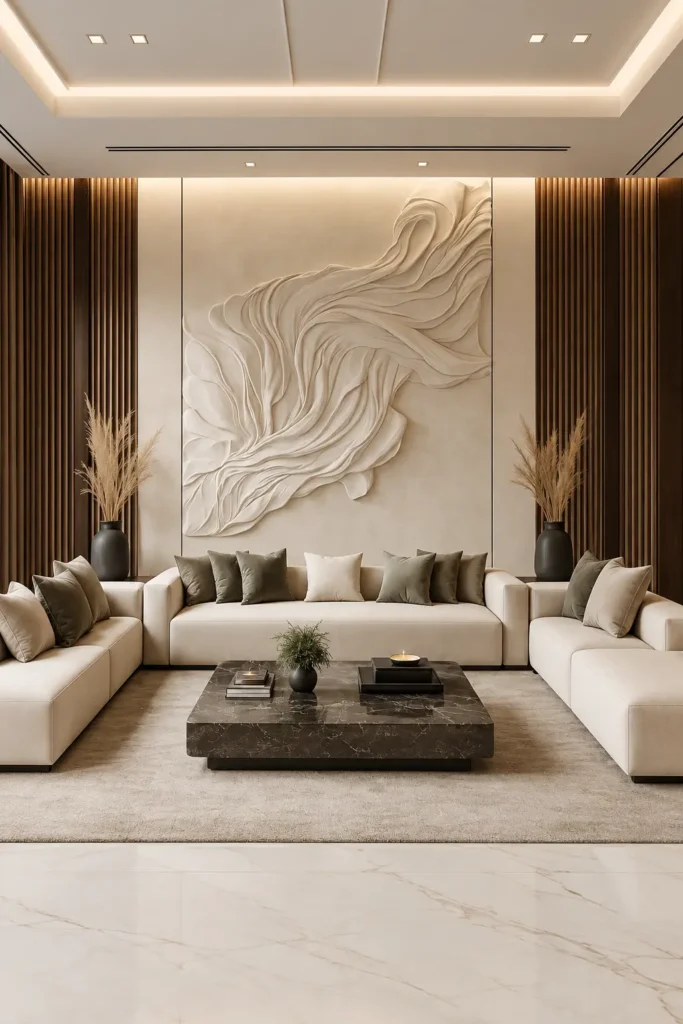
A large abstract relief can give the wall behind your couch the presence of a custom artwork. This design features sweeping folds and ridges across a pale central panel, framed by dark vertical slats.
The contrast makes the sculpture stand out while keeping the palette restrained. Low, neutral seating allows the wall’s movement to take center stage. Tall vases on either side echo its height and help frame the composition. This approach suits a room where one substantial feature can carry the decor.
4. Add Overlapping Circular Wall Art
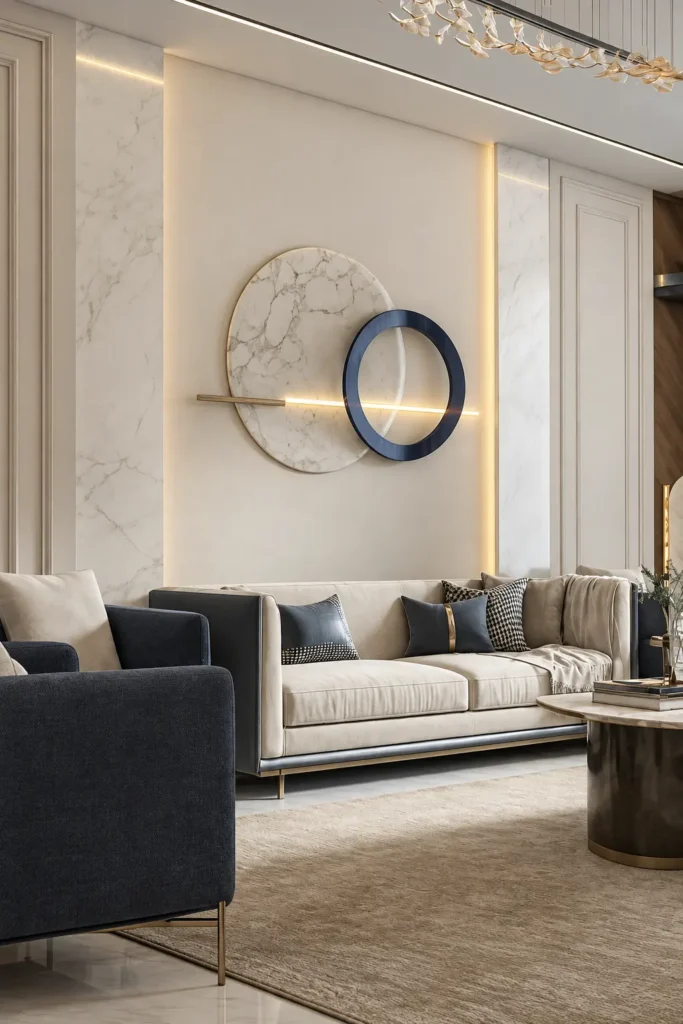
For a more restrained arrangement, use a pair of overlapping circular forms above the couch. A pale, marble-look disc and a dark blue ring create a clear focal point against the light wall.
A slim horizontal metallic element adds another line to the composition without overcrowding it. Blue cushions and nearby seating repeat the ring’s color, tying the wall art to the room. The surrounding wall panels provide structure, leaving enough open space for the circular piece to feel deliberate and well positioned.
5. Frame Textured Panels with Rounded Lighting
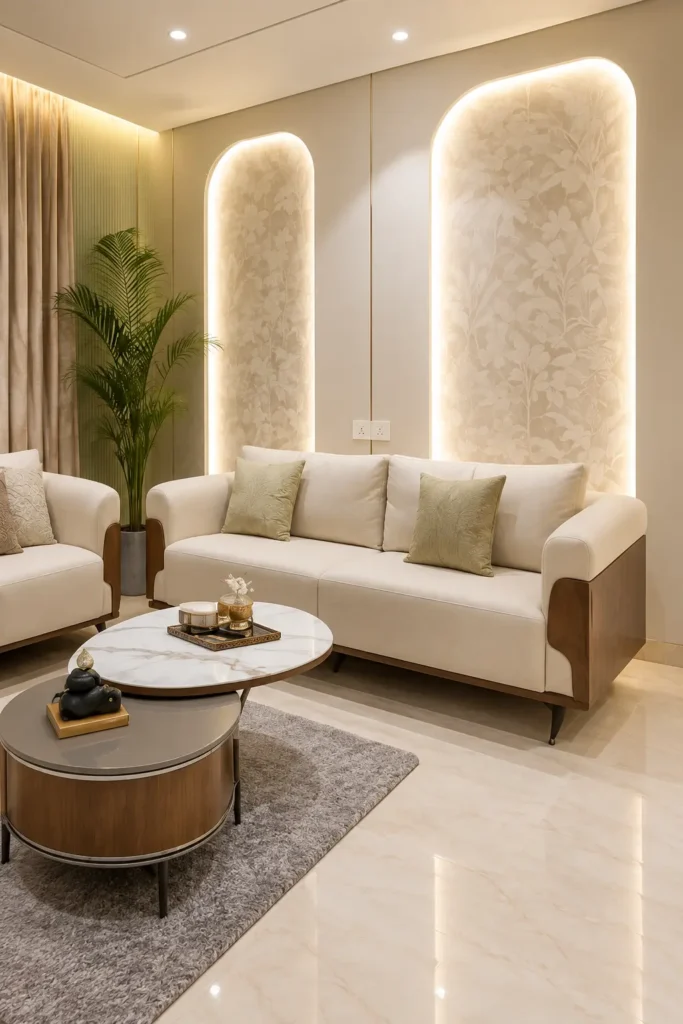
Tall panels with rounded tops offer an elegant way to fill the wall above a sofa. In this image, pale textured surfaces are outlined with warm light, giving each panel a soft halo.
Their vertical shape draws attention upward, while the curved corners soften the room’s straight architectural lines. Cream upholstery, light flooring, and a leafy plant complement the gentle palette. To capture the same effect, let the panels supply the decoration and keep additional artwork to a minimum.
6. Bring Depth with Oversized Floral Reliefs
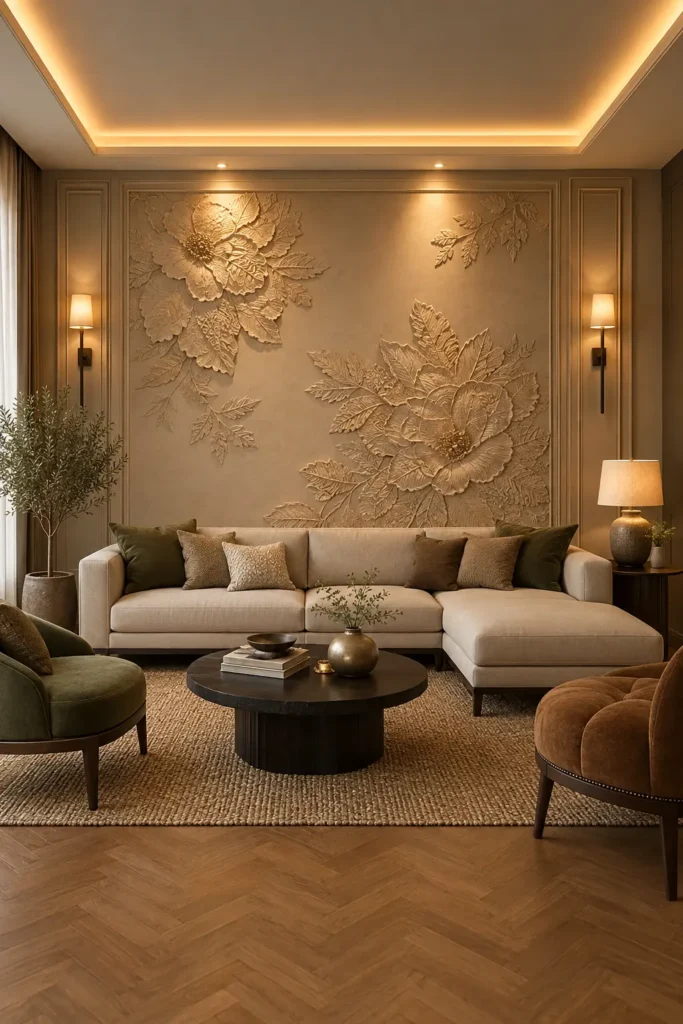
Oversized floral reliefs introduce a decorative, romantic feel to the wall behind the couch. Here, raised blossoms spread across a warm taupe background, with smaller details filling the space between them.
Because the flowers stay close to the wall color, their shadows and contours create the interest. Wall sconces and overhead lighting help reveal the layered petals. A neutral sofa and a few deeper green accents complete the setting. This design fills a broad wall beautifully while preserving a soft, coordinated appearance.
7. Mix an Illuminated Curve with Display Niches
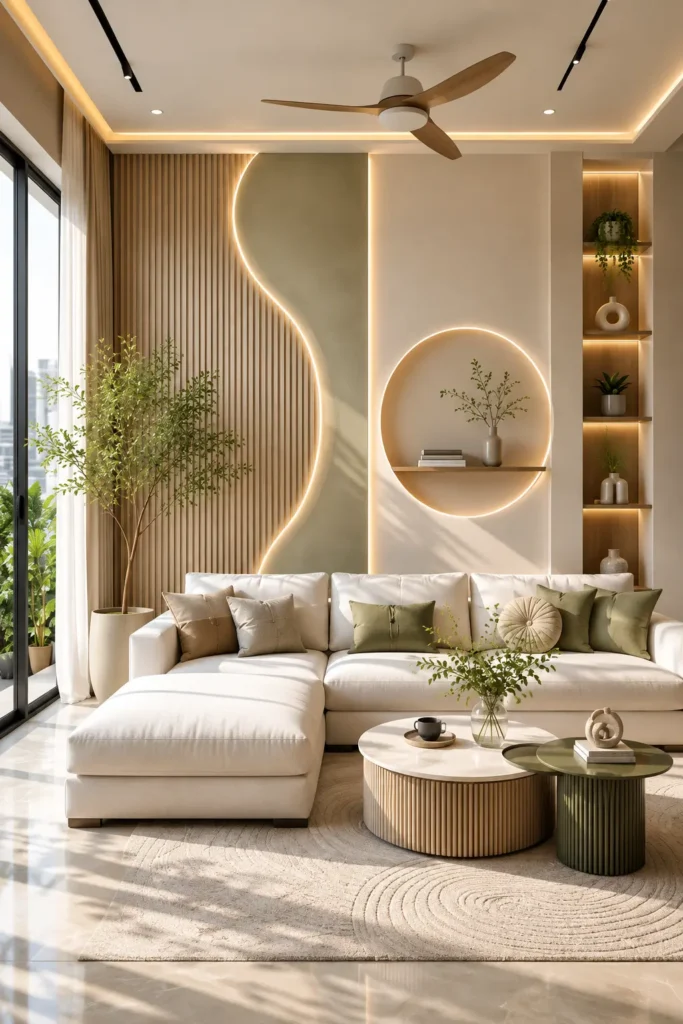
Combine a flowing light feature with recessed display areas to make the wall both decorative and useful. This design pairs vertical fluting with an illuminated curved line, a circular niche, and a narrow column of shelves.
The circular recess provides a place for a small vase or a few carefully arranged objects. The side shelves introduce more display space without taking over the central composition. Pale upholstery and muted green cushions reinforce the relaxed mood. Leave some shelf space empty so each object has room to stand out.
8. Layer Wood, Stone-Look Texture, and Curved Panels
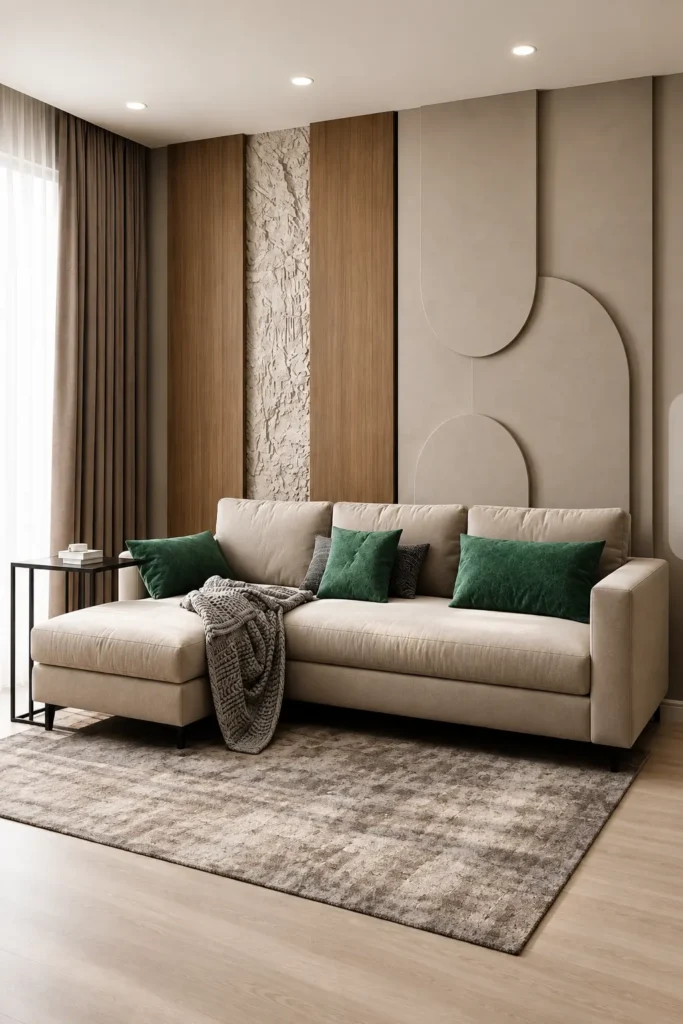
A combination of contrasting finishes can fill a large wall without relying on framed artwork. Here, warm wood panels sit beside a narrow stone-look strip and a pale section with broad curved outlines.
Each surface contributes something different: wood adds warmth, the textured strip creates contrast, and the curves soften the geometry. Dark green cushions give the neutral sofa a stronger accent. Keep the palette limited when combining several materials so the wall feels coordinated rather than crowded.
9. Introduce Dramatic Flowing Wall Sculptures
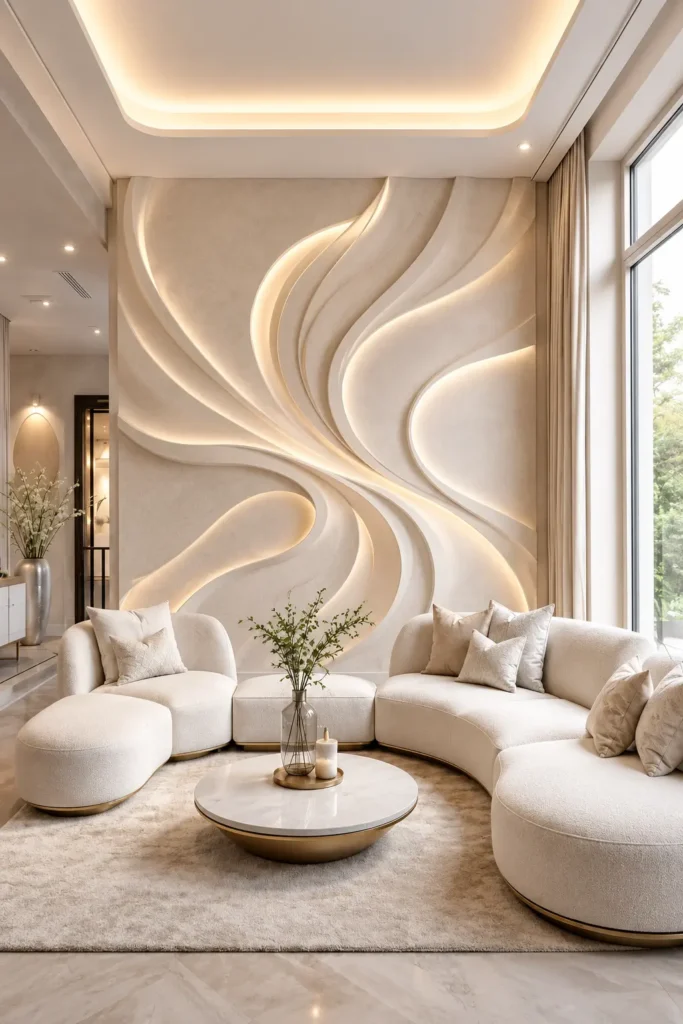
Sweeping, ribbon-like reliefs create a striking backdrop for a curved sofa. In this design, broad sculpted forms fan across the wall, with warm lighting following selected edges.
The combination of curves and shadows gives the surface a sense of movement. Rounded seating and a circular coffee table echo that movement throughout the room. Soft ivory tones keep the dramatic shapes from becoming visually overwhelming. With a wall this expressive, a small floral arrangement may be all the extra decoration the seating area needs.
10. Extend a Single Flowing Shape onto the Ceiling
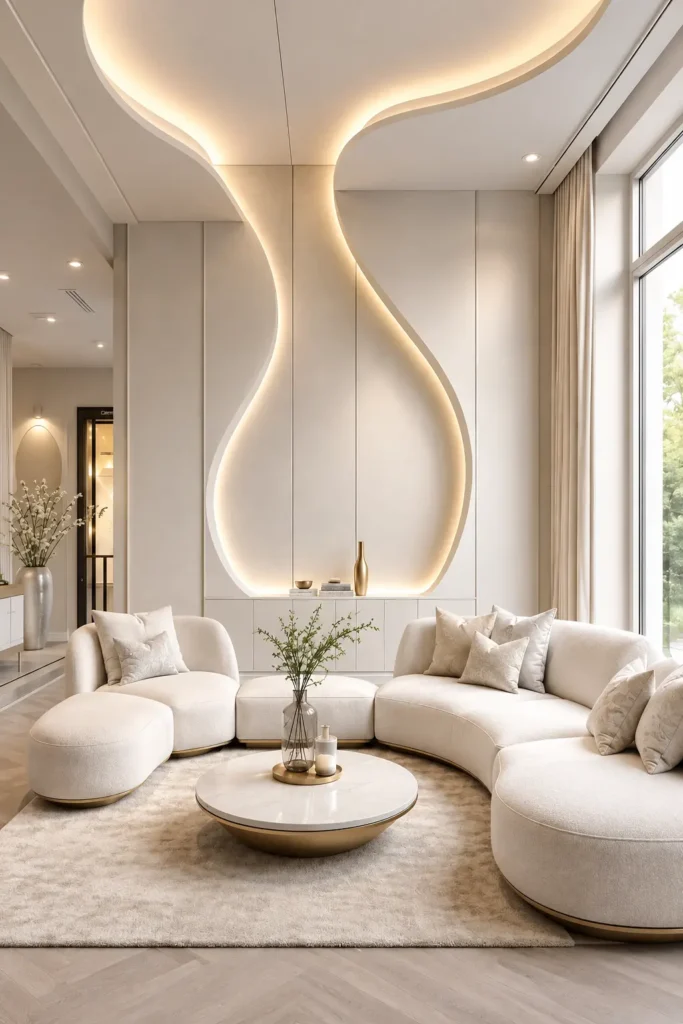
A continuous sculptural feature can connect the wall behind the couch to the ceiling above it. This design uses an elongated, illuminated curve that narrows through the wall and widens overhead.
The result gives the seating area a strong architectural identity. Fine panel lines provide a quiet backdrop, while rounded white furniture repeats the feature’s fluid shape. For a similar concept, plan the ceiling and wall together so the transition feels intentional. A simple central table keeps attention on the full-height design.
11. Use a Rippled Texture Between Dark Side Panels
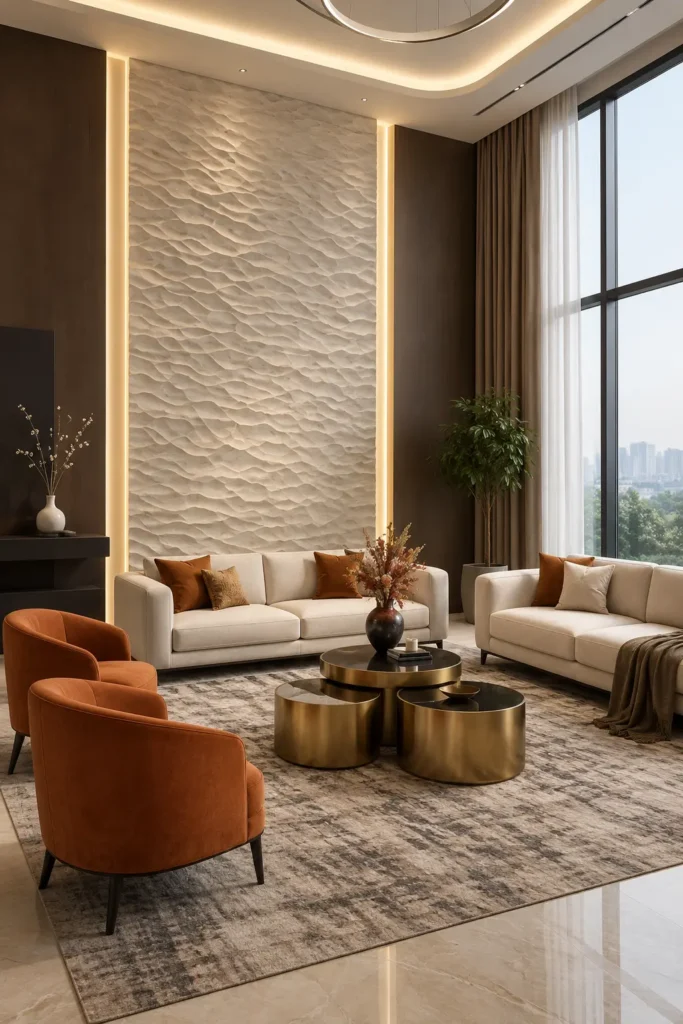
A tall rippled panel brings dimension to the wall without adding multiple decorative objects. Here, the pale central surface resembles gentle waves and is framed by darker panels with warm vertical lighting.
The textured center brightens the composition, while the dark sides give it a clear boundary. Cream sofas maintain continuity with the relief, and rust-colored chairs add warmth to the room. This is a strong option for making a tall wall feel complete while keeping the decor visually organized.
12. Choose a Botanical Relief for a Soft Statement
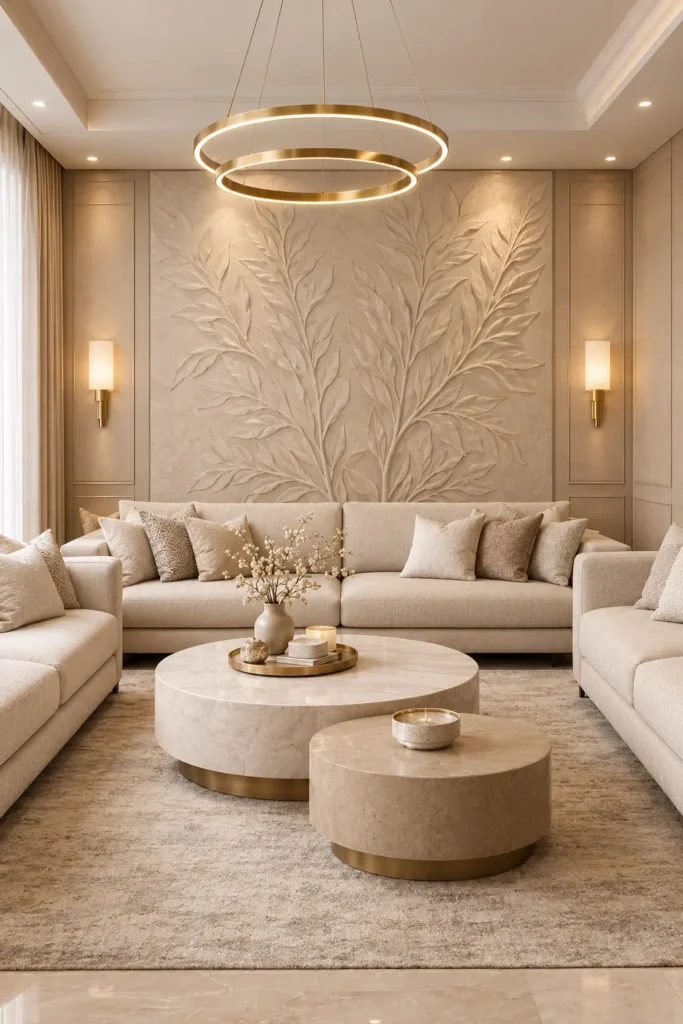
A large botanical relief offers a gentler alternative to bold abstract shapes. Branches and leaves spread across the central wall panel, creating detail through raised texture rather than contrasting colors.
Matching sconces frame the design, while cream seating and rounded tables support its calm appearance. A small arrangement of branches on the coffee table repeats the wall’s theme without becoming too literal. Keeping the relief close to the background color lets the leaf shapes remain the focus.
13. Balance Sweeping Curves with Vertical Slats
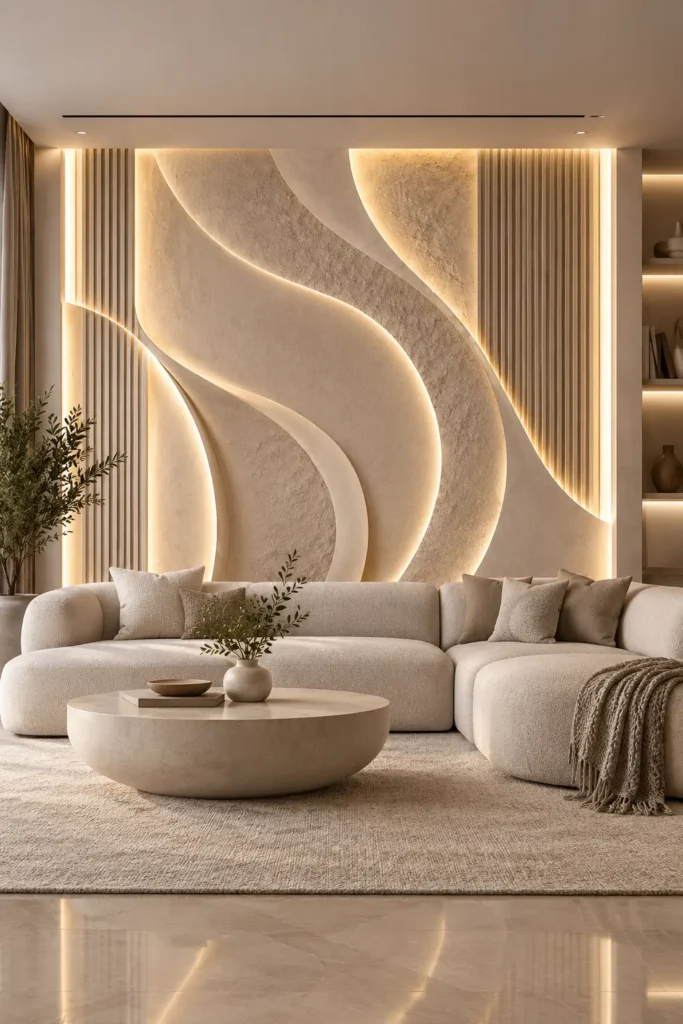
Combine broad, flowing bands with narrow vertical slats to give the wall both movement and structure. In this design, illuminated curves sweep through the pale central surface, with fluted sections adding contrast at the sides.
The repeated vertical lines balance the softer shapes. An ivory sectional, a low round table, and a textured rug keep the seating area consistent with the wall’s warm neutral palette. Allow the feature to span a substantial portion of the sofa’s width so the two elements feel connected.
14. Finish with a Concentric Ripple Wall and Round Mirror
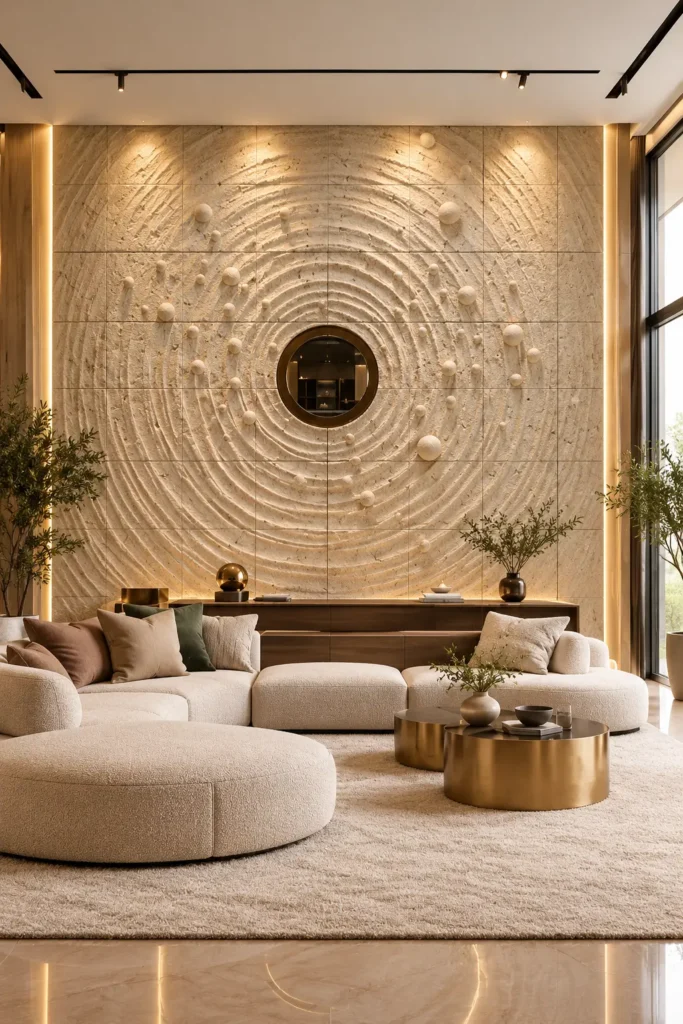
A concentric ripple design creates a bold focal point behind the couch. Raised rings spread outward across the wall, with a small round mirror positioned at their center.
The mirror anchors the composition, while the surrounding relief adds depth across a much larger surface. Warm side lighting reveals the circular ridges, and rounded seating echoes their shape. Keep console accessories sparse so they do not interrupt the pattern. This idea gives the room a distinctive centerpiece through texture, symmetry, and repetition.
Bring the Wall and Seating Area Together
The most successful wall designs relate to the furniture beneath them. Curved seating can echo flowing reliefs, dark cushions can repeat a wall accent, and simple upholstery can balance a highly textured backdrop.
Whether you prefer illuminated panels, botanical details, or sculptural curves, use the wall’s scale and the room’s existing palette to guide the design. A coordinated feature can fill the space beautifully and give the whole living room a more finished feel.