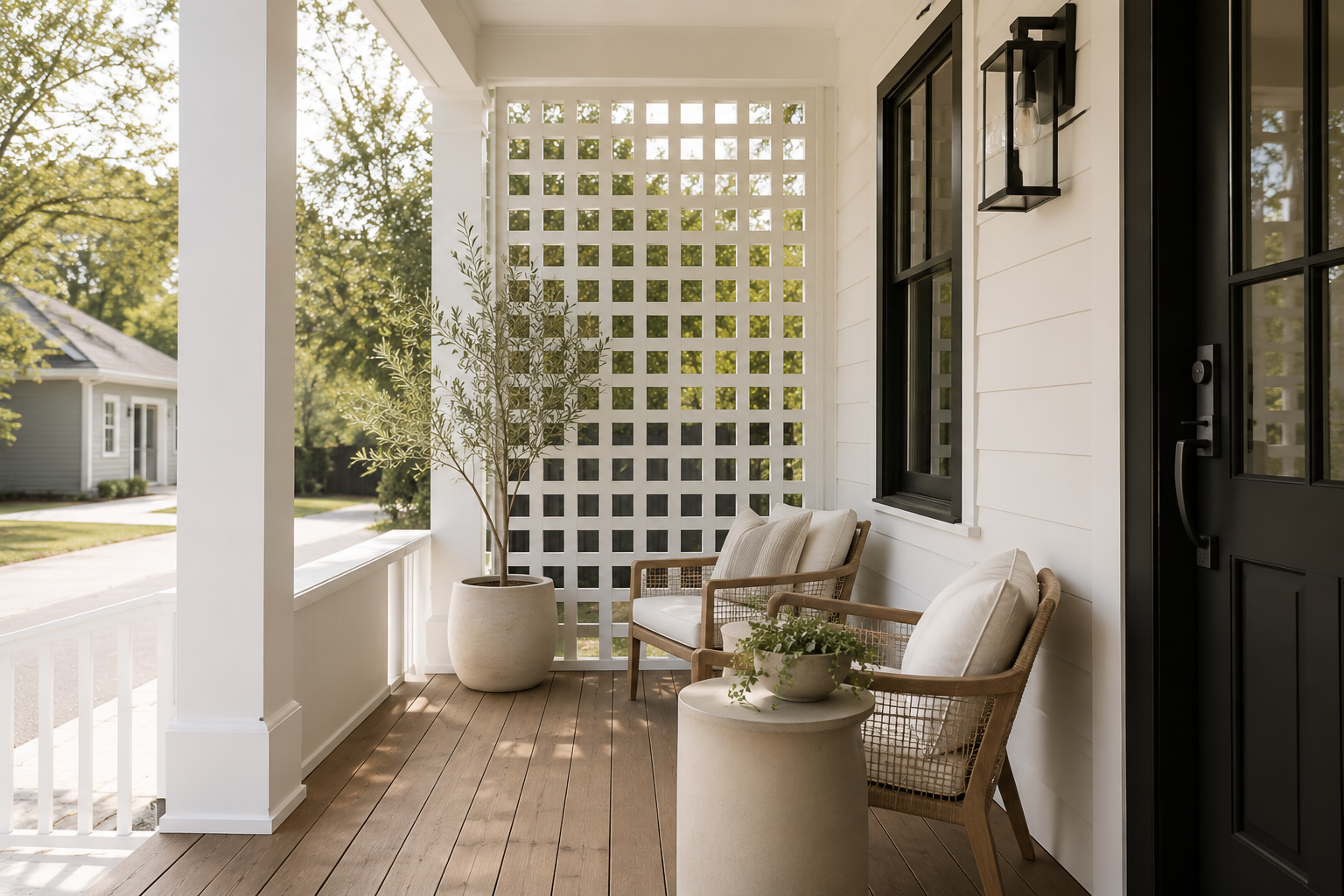
A front porch can hold plenty of flowers, furniture, and seasonal decor yet still look unfinished. The issue is usually scale. Too many small pieces break the porch into visual fragments, while mismatched finishes make even expensive purchases feel random.
These easy summer front porch ideas that look expensive use paint, proportion, repetition, and a few well-chosen materials to create a more polished entrance. Each idea produces a different visual result, so your porch won’t end up looking like every other flowerpot-and-doormat setup online.
Easy Summer Front Porch Ideas That Look Expensive Start With Scale
Before buying anything, stand on the sidewalk and look at the porch from the street. Decorations that seem large up close often disappear once they’re viewed against the full height of the house.
Choose one main feature for each zone: the floor, doorway, seating area, wall, and ceiling. You don’t need to decorate every zone. Leaving some negative space gives the stronger pieces room to register and keeps the entrance from looking crowded.
1. Paint a Checkerboard Pattern Directly Onto the Porch Floor
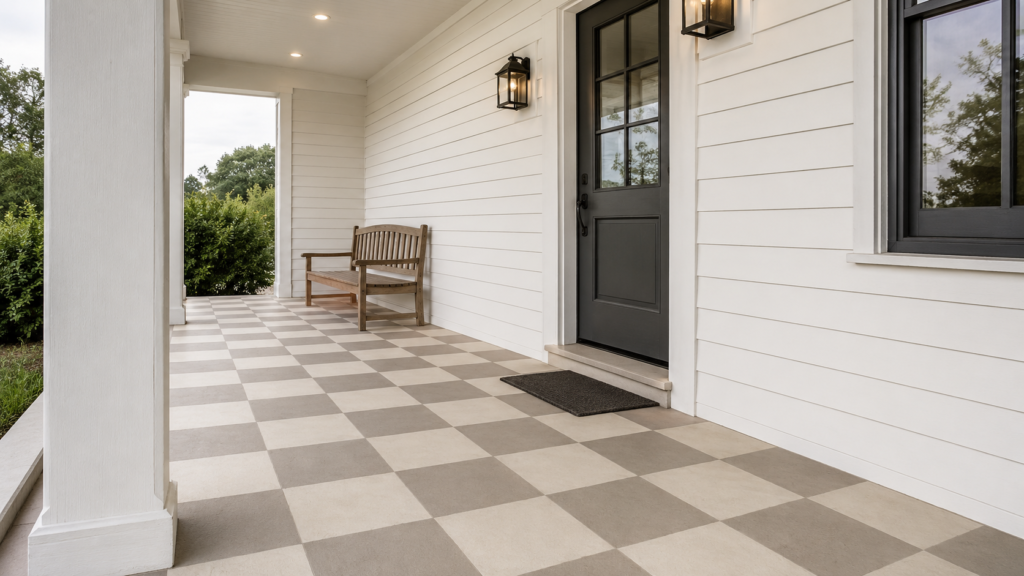
A painted checkerboard floor creates the kind of architectural detail people often mistake for original tile. Use two close colors, such as warm white and mushroom, pale gray and charcoal, or muted green and cream, instead of a harsh black-and-white combination.
Squares between 12 and 18 inches usually feel proportional on a residential porch. Use exterior floor paint and finish with a clear, slip-resistant sealer. This project takes more than an afternoon, but it costs far less than installing tile and won’t trap water like an outdoor rug can.
2. Frame the Door With Two Oversized Stone-Look Urns
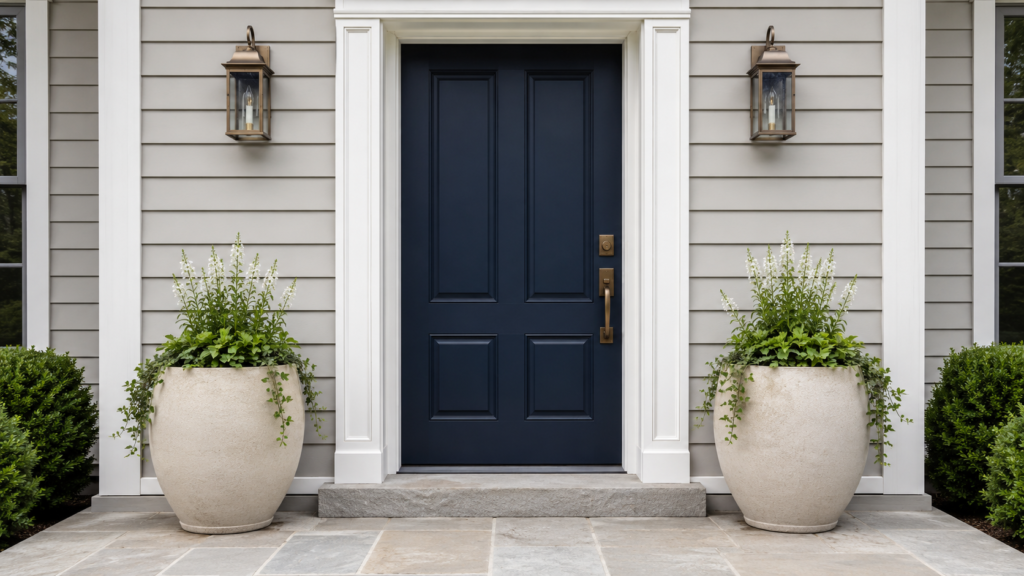
Choose two planters that reach roughly one-third of the door’s height, then position them 6 to 10 inches outside the door trim. Large containers give the entrance visual weight and look more intentional than a scattered collection of small nursery pots.
Matte resin urns can resemble cast stone without the cost or weight. Fill each one with a simple three-part arrangement: one upright plant, one mounding plant, and one trailing variety. Keep the plants symmetrical so the doorway, rather than the flowers, remains the focal point.
3. Paint the Porch Ceiling a Soft Blue-Gray
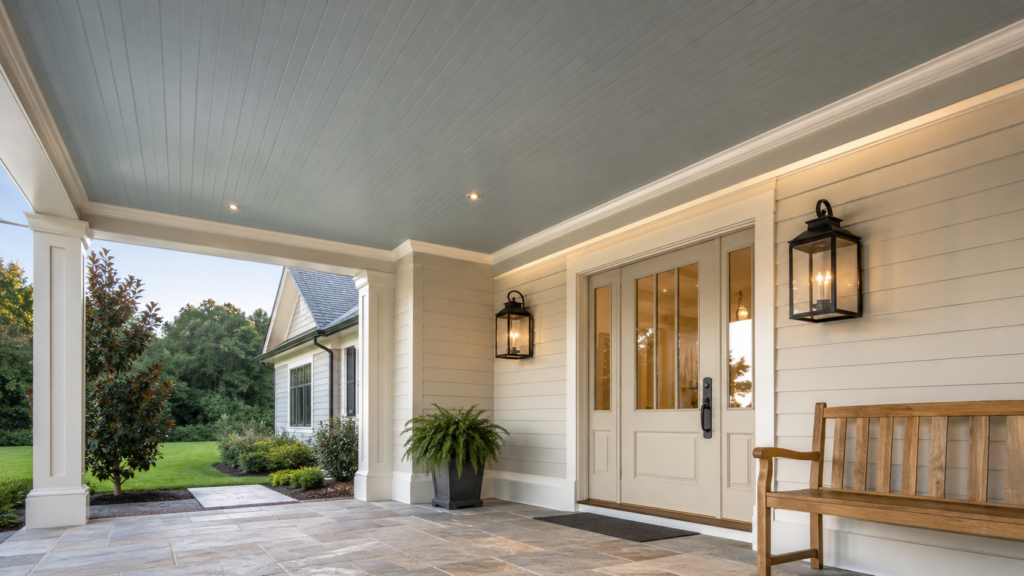
A pale blue-gray porch ceiling reflects daylight and makes a covered entrance feel taller without turning it bright white. Look for a shade with a warm or slightly green undertone; icy blues can become sharp in deep shade or under cool exterior lighting.
Use an exterior satin finish because it handles moisture and cleans more easily than flat paint. Keep the walls and trim quiet so the ceiling reads as an architectural surprise. This works especially well on porches with beadboard, exposed rafters, or a defined ceiling panel.
4. Give the Front Door a Deep Glossy Finish
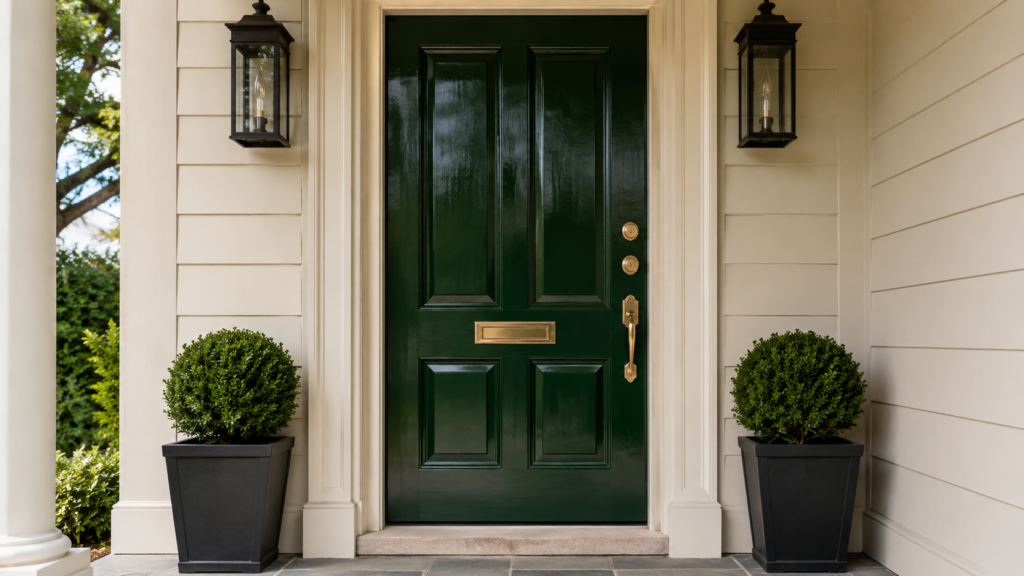
Paint the door a grounded color such as bottle green, oxblood, ink navy, aubergine, or warm black. A satin or soft-gloss finish catches light around the panels and gives an ordinary door more depth than flat paint.
Gloss also exposes dents and rough brushwork, so sand the surface and use a small foam roller for the final coat. Match the door knocker, handle, and nearby hardware rather than mixing several metal finishes. Against pale siding or brick, the darker door becomes a clean, expensive-looking focal point.
5. Layer a Wide Outdoor Rug Beneath a Plain Doormat
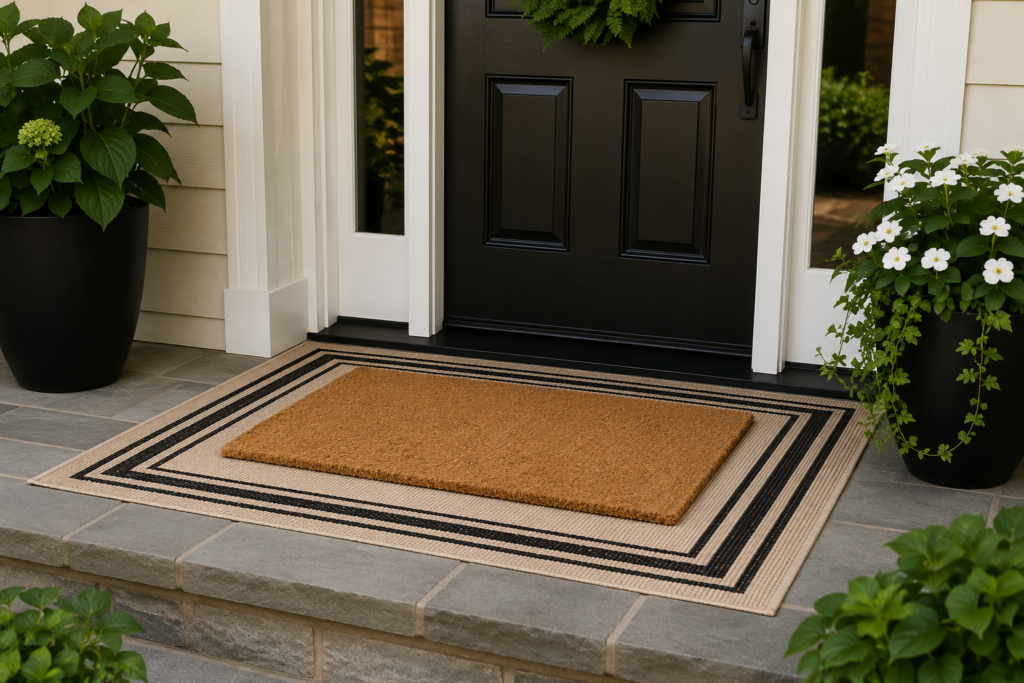
Use a flat-weave outdoor rug as the foundation, then center a simple coir mat over it. The bottom layer should extend at least 6 inches beyond the top mat on every visible side; a one-inch border looks accidental and undersized.
Choose a restrained stripe, check, or narrow border instead of a busy seasonal print. The larger footprint visually widens the doorway and makes the entrance feel properly furnished. On an uncovered porch, select polypropylene or another quick-drying material and lift it occasionally to prevent trapped moisture.
6. Install One Long Window Box Filled With a Single Flower
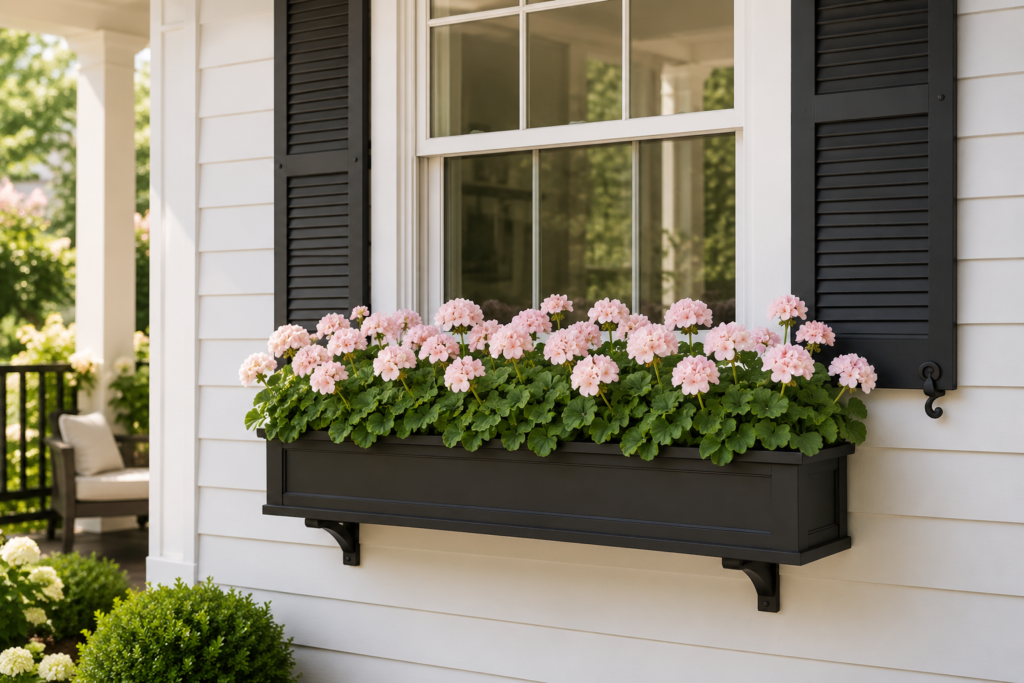
Mount a window box measuring about two-thirds the width of the window, leaving enough space for shutters or trim to remain visible. Fill it with one repeated flower variety rather than mixing many colors, leaf shapes, and trailing plants.
White begonias, pale pink geraniums, compact grasses, or trailing green foliage create a clean block of color. Repetition looks calmer from the street and gives the window more architectural presence. Use a self-watering liner if the porch receives strong afternoon heat, since shallow window boxes dry out faster than floor planters.
7. Add One Tailored Cushion to a Simple Porch Bench
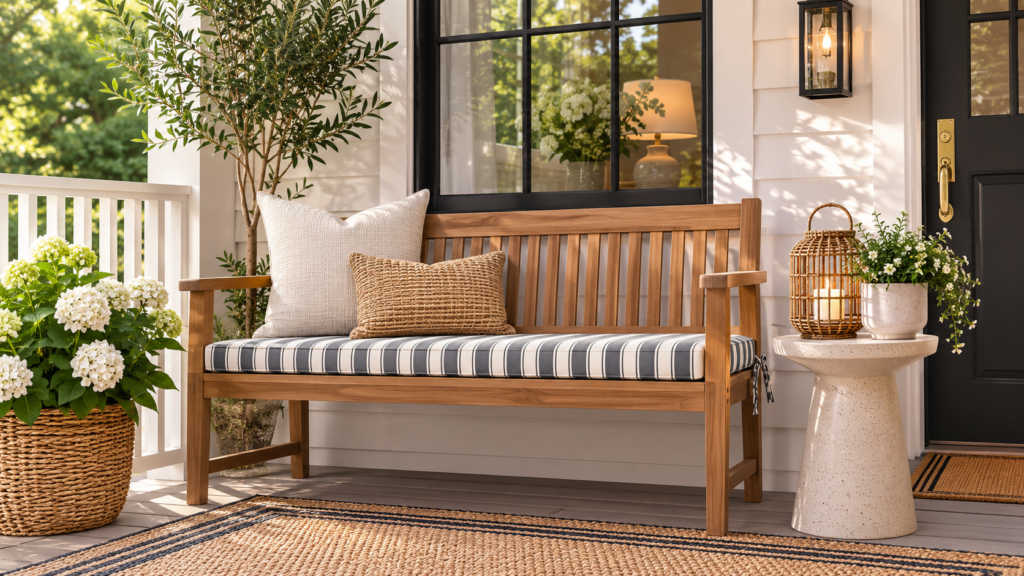
A fitted bench cushion makes basic outdoor furniture look custom without covering it in decorative pillows. Measure the seat precisely and choose a cushion about 2 to 3 inches thick so it feels substantial but doesn’t hide the bench frame.
A narrow cabana stripe, muted ticking pattern, or textured solid works better than a loud tropical print. Tie-downs keep the cushion from sliding during daily use. Solution-dyed outdoor fabric costs more than indoor cotton, but it resists fading, dries faster, and won’t need replacing after one humid season.
8. Create a Balanced Seating Area With Two Rocking Chairs
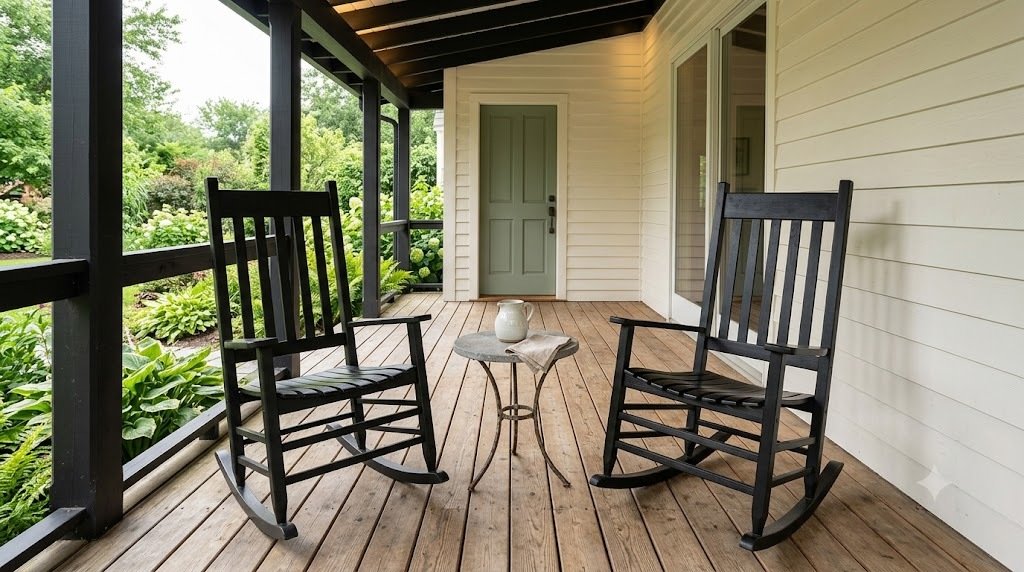
Place two matching rocking chairs at a slight angle toward each other with a compact table between them. Allow about 24 inches per chair for the rocking motion and keep at least 30 to 36 inches of clear space behind the main walking path.
Matching chairs provide enough repetition to make the setup feel composed, while the angled placement feels more welcoming than lining everything against the wall. Paint inexpensive wood chairs the same deep color as the front door or porch floor to connect the seating area to the rest of the exterior.
9. Use a Stone-Look Bistro Table on a Small Porch
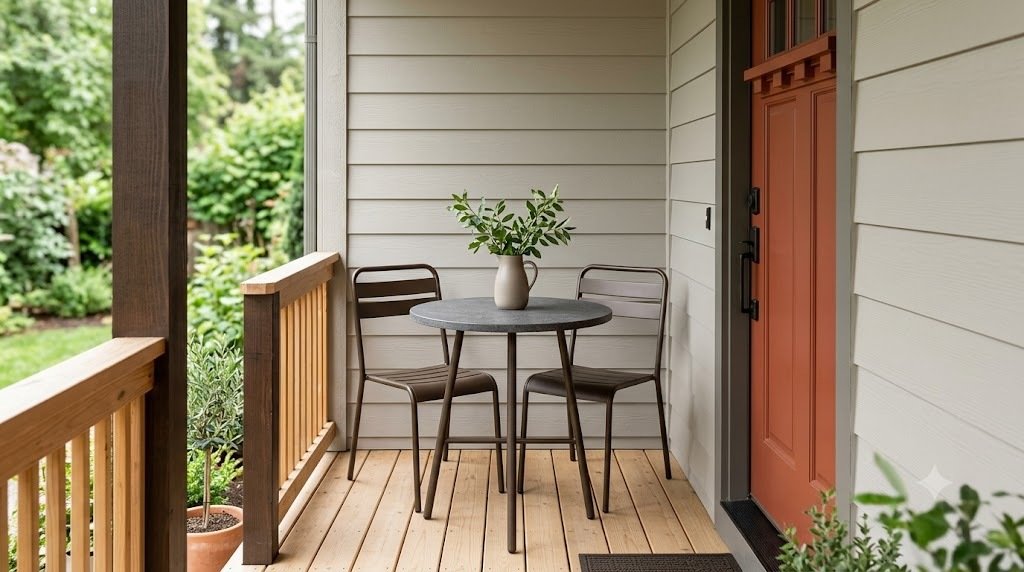
A compact round bistro table gives a narrow porch a useful surface without the visual bulk of a full dining set. Look for a top between 24 and 30 inches wide and pair it with two slim chairs that can tuck underneath.
Stone-look composite, powder-coated metal, or painted concrete finishes feel more substantial than thin plastic. Keep the tabletop almost empty—a ceramic pitcher or small shaded lamp is enough. Round furniture also softens a porch filled with square columns, straight railings, and rectangular doors.
10. Hang One Outdoor Curtain Panel at the Sunniest End
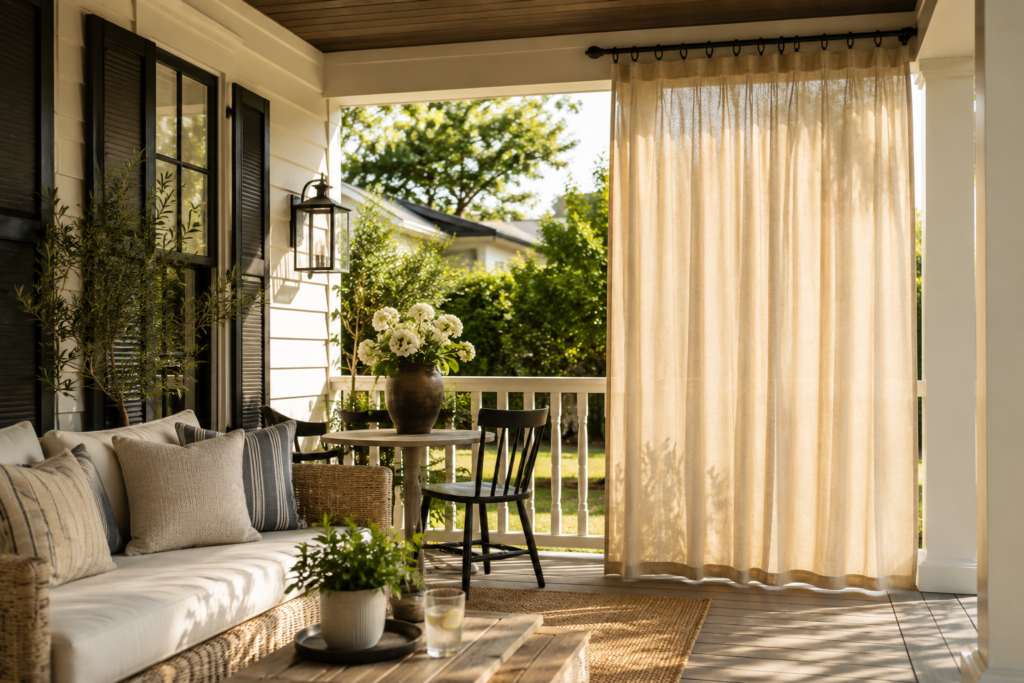
Instead of surrounding the porch with fabric, hang one or two outdoor curtain panels at the side that receives the harshest afternoon light. Mount the rod close to the ceiling beam and let the panel stop about half an inch above the floor.
The long vertical line makes the porch feel taller and frames the seating zone without blocking airflow. Choose a warm white, flax, or muted stripe that works with the siding. Indoor linen may photograph beautifully, but it absorbs moisture and can mildew quickly in a real outdoor setting.
11. Replace Small House Numbers With One Oversized Plaque
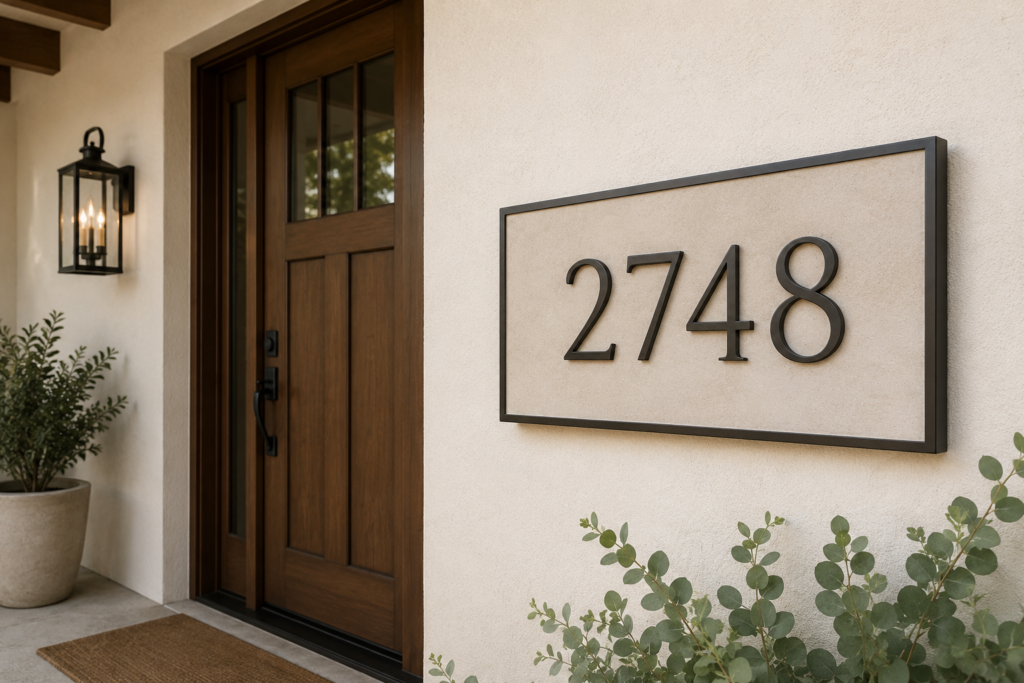
Mount large house numbers on a simple wood, stone-look, or painted metal backplate. The complete plaque should feel proportional to the open wall area, with numerals at least 4 to 6 inches tall for comfortable viewing from the street.
Leave generous space around the numbers instead of filling the plaque with decorative borders or family names. This negative space gives the design a cleaner, more architectural appearance. Match the number finish to the door hardware or porch sconces so the plaque feels connected rather than added as an afterthought.
12. Install Larger Lantern Sconces With Warm Bulbs
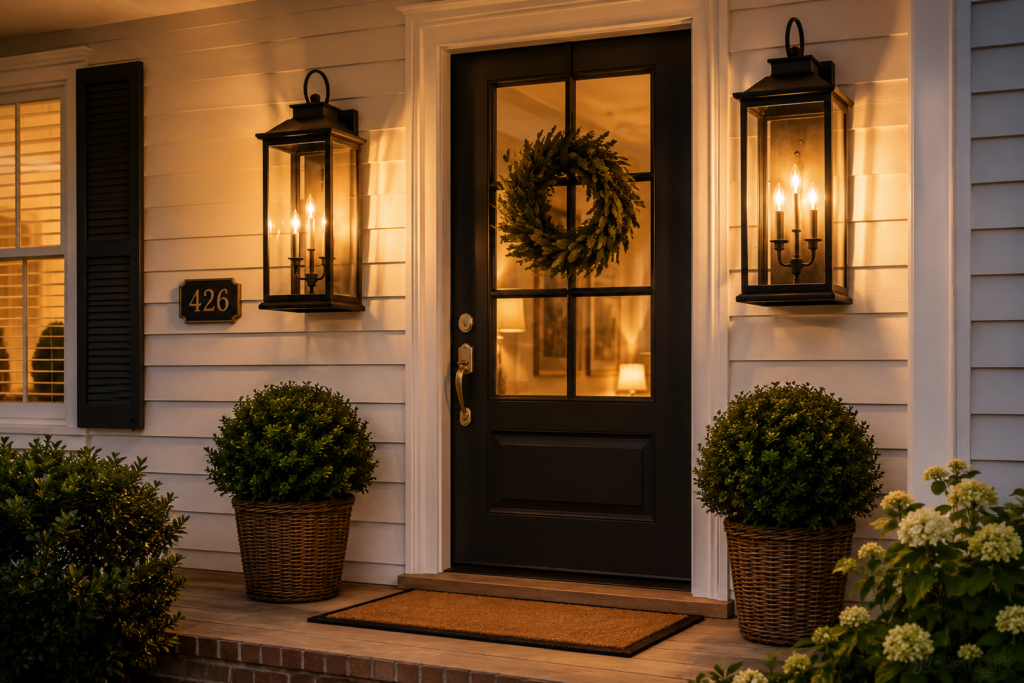
Exterior sconces often look cheap because they’re too small for the door. A useful rule is to choose a fixture roughly one-quarter to one-third the height of the door, especially when placing one lantern on each side.
Use warm white bulbs between 2700K and 3000K. Cooler light can turn cream siding gray and make brick look flat, while warm light brings out the brown, red, and gold tones in natural materials. Frosted bulbs reduce glare inside clear glass lanterns and create a softer pool of evening light.
13. Center an Oversized Pendant Above the Seating Zone
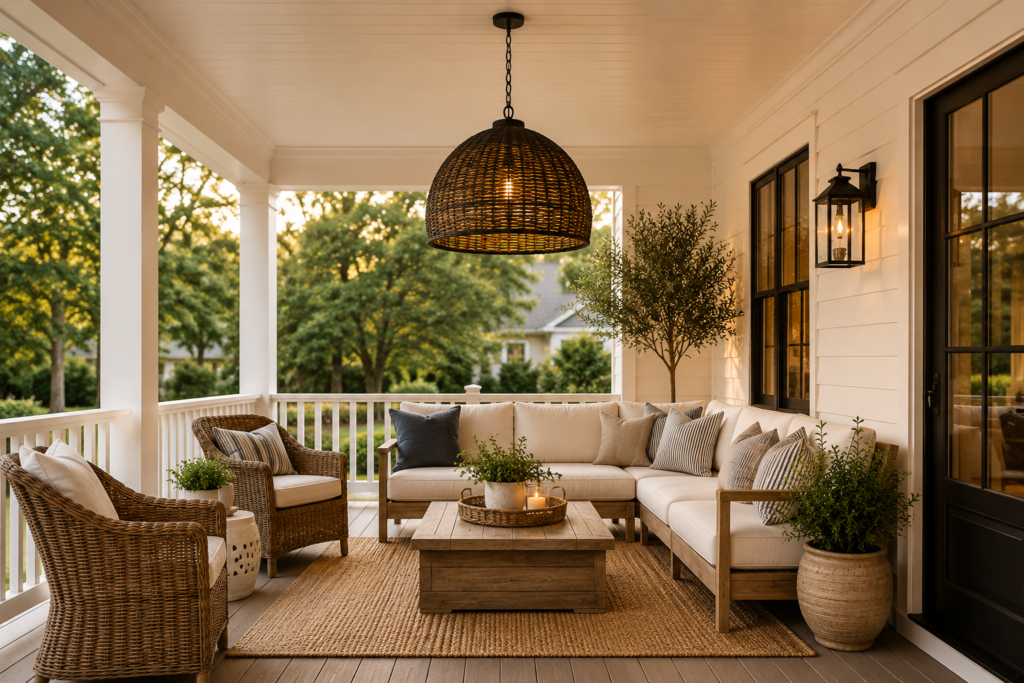
A covered porch with enough ceiling height can handle one substantial outdoor-rated pendant. Center it over the seating arrangement rather than automatically centering it on the entire porch, especially when the furniture occupies only one end.
Leave at least 7 feet of clearance beneath the fixture in a walking area. A woven-look outdoor shade, aged metal lantern, or simple milk-glass globe adds scale without introducing another small accessory. Always use an exterior-rated fitting; indoor fixtures can rust, collect moisture, and create electrical risks.
14. Paint a Porch Swing in One Deep Grounding Color
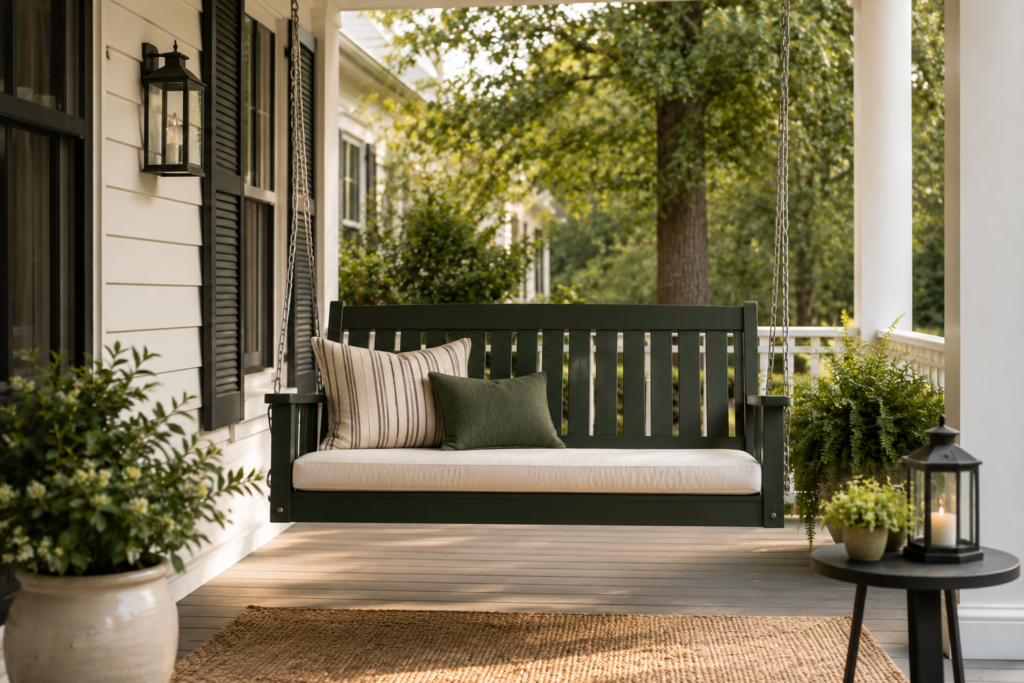
Place a porch swing at the quieter end of a long porch and paint it in a rich color that relates to the house. Forest green, charcoal, muted navy, and warm black make basic wood construction appear more substantial.
A 4- to 5-foot swing generally seats two adults comfortably without overpowering the porch. Add one fitted seat cushion and a single lumbar pillow rather than filling the swing with loose textiles. Confirm that the ceiling structure can support the load; decorative ceiling boards alone aren’t suitable anchor points.
15. Fill an Empty Wall With a Slim Outdoor Console
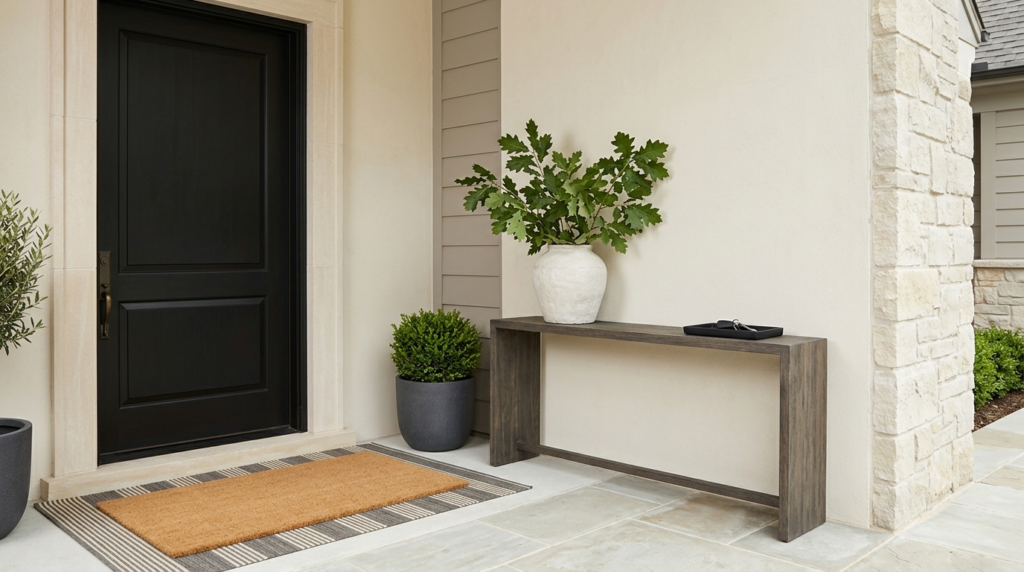
A narrow console turns a blank porch wall into a purposeful styling zone without using another bench. Choose a table 12 to 16 inches deep so it doesn’t interrupt the walkway, then leave at least 36 inches of clear passage in front.
Style it with one large ceramic vessel, a stack of garden books kept under cover, or a shallow tray for keys and sunglasses. Avoid arranging many tiny objects across the surface. One tall piece and one low piece create a cleaner change in height and stronger visual balance.
16. Replace a Visible Downspout With a Sculptural Rain Chain
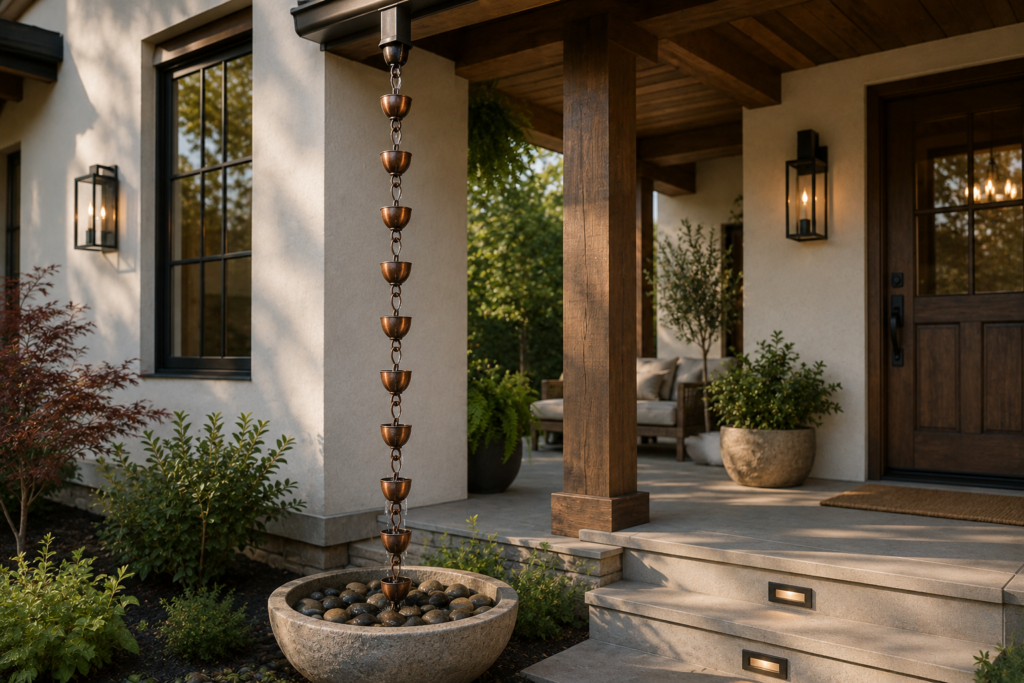
A rain chain turns an awkward porch corner into a polished architectural detail. Hang a simple cup-style or linked metal chain from the gutter outlet, then guide it into a wide stone basin filled with smooth river rocks. Aged copper adds warmth beside cream siding, while matte black works with modern homes. Keep the basin at least 6 inches wider than the chain’s drip line, and confirm that water drains away from the foundation. This idea works best on covered porches with a clearly visible front gutter.
17. Add a Simple Lattice Screen to One End of the Porch
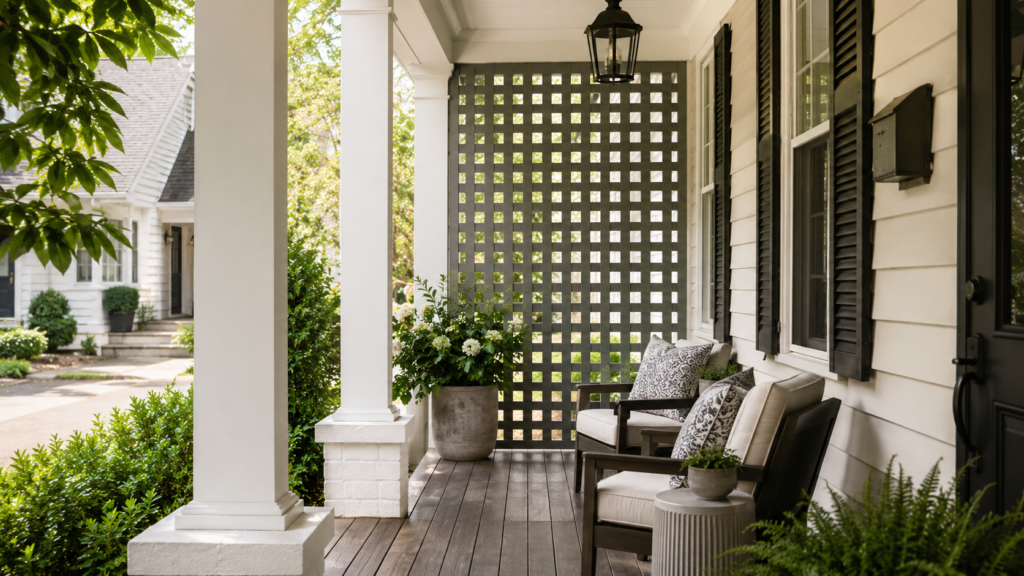
Use a square-grid or narrow-slat screen to give an exposed porch more enclosure. A panel between 4 and 6 feet wide can soften the view toward a driveway, neighboring house, or utility area while still allowing light and air through.
Paint the screen the same color as the porch trim for a built-in effect. Avoid heavily decorative vinyl lattice, which can make the addition look temporary. A freestanding screen mounted inside weighted planters offers a less permanent option for renters or homes where drilling into the exterior isn’t possible.
18. Paint the Railing and Floor in a Deliberate Two-Tone Palette
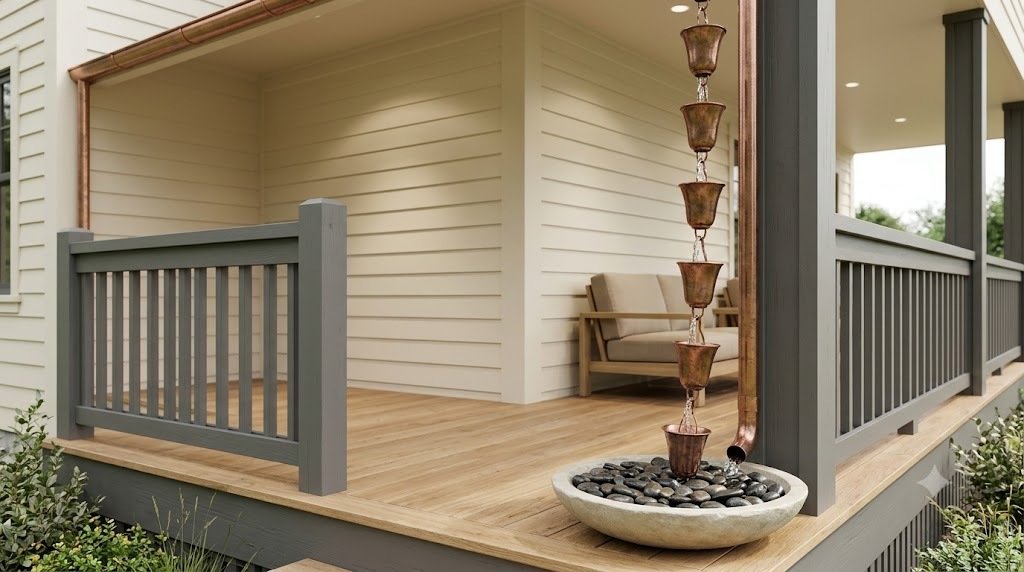
Finish the porch with a clear color relationship between the floor and railing. Pair a charcoal floor with warm white railings, muted green decking with cream trim, or weathered brown flooring with black balusters.
The contrast defines the porch architecture from the street and makes each line feel sharper. Keep the railing color connected to the window trim or columns so it doesn’t appear isolated. This is one of the strongest easy summer front porch ideas that look expensive because it changes the entire structure without adding a single decorative object.