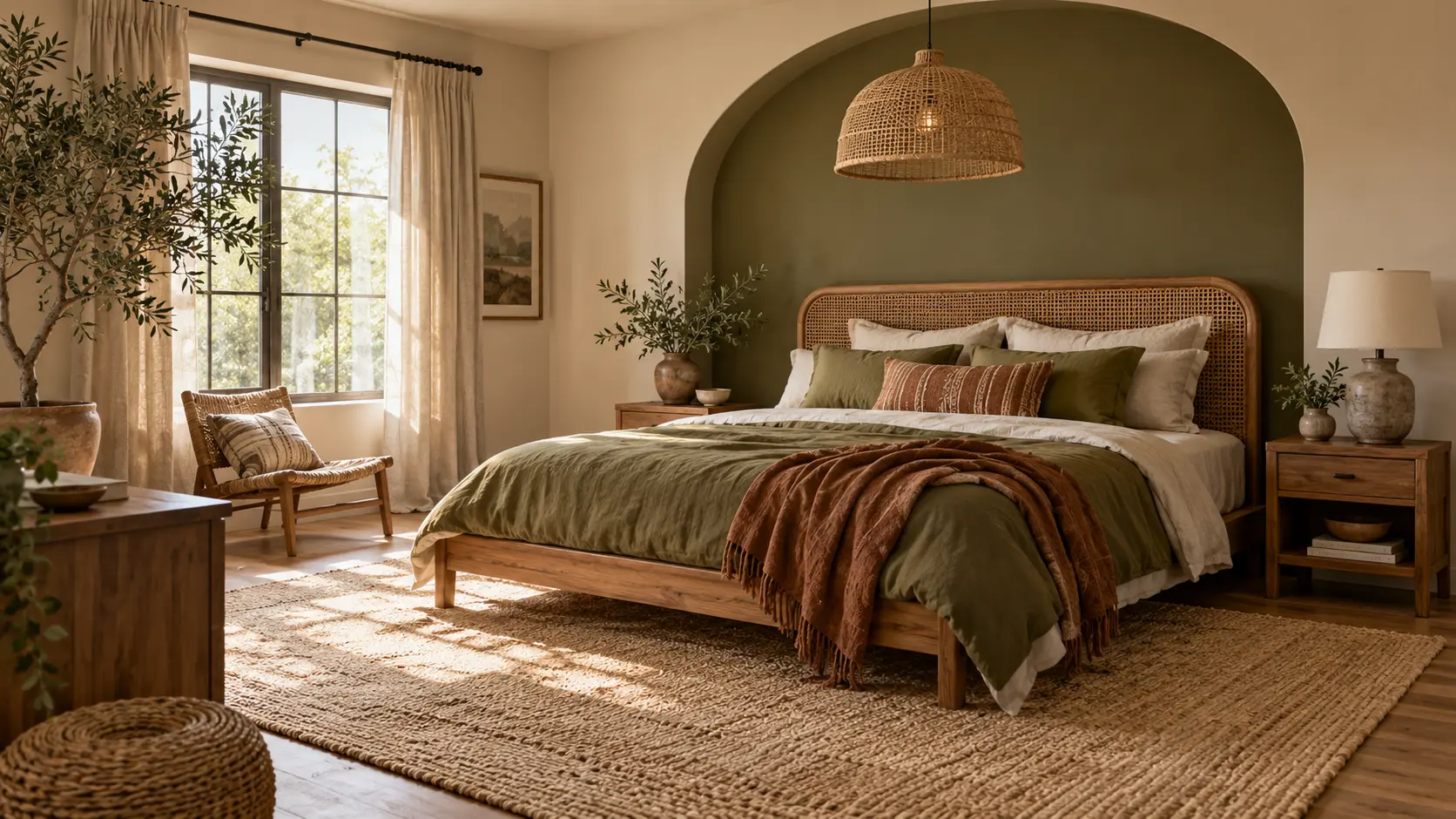
A boho bedroom can feel crowded before it feels collected. Add a woven light, patterned bedding, wall baskets, and several plants, and suddenly every corner is competing for attention. The rooms that feel relaxed usually have something quieter holding them together: a limited palette, balanced furniture, or enough bare wall to let the textures stand out.
These 15 boho bedroom ideas show different ways to find that balance, from olive walls and botanical prints to sculptural plaster and simple wood furniture. Use each room as a starting point, then choose the details that suit your space, your budget, and how you actually live.
1. Start With Sandy Neutrals
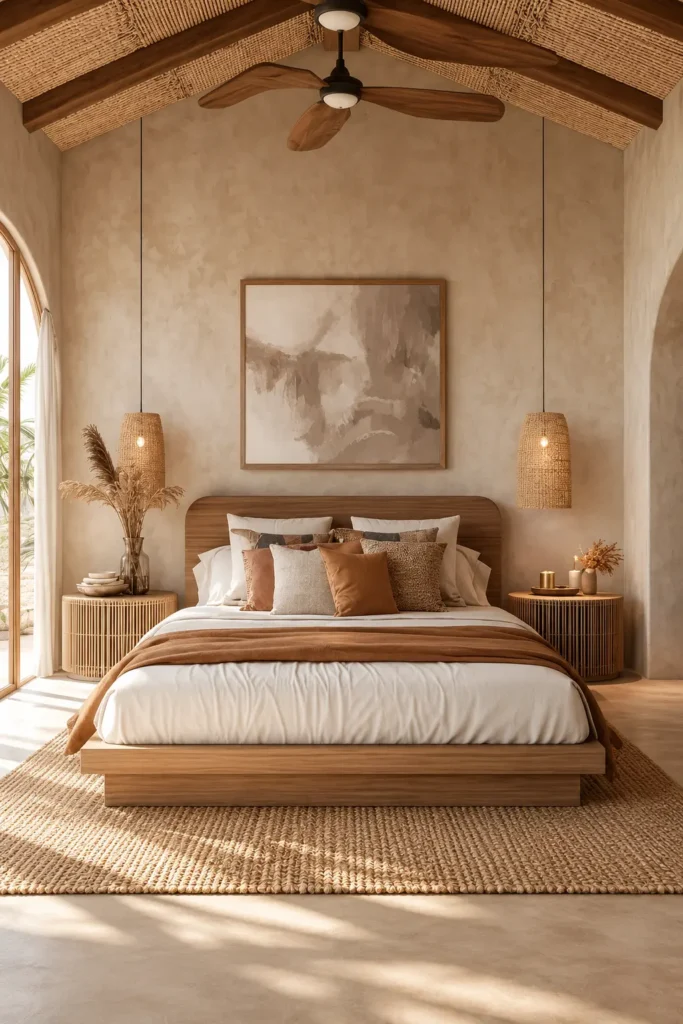
Build a quiet foundation with cream bedding, sandy walls, and a low wood bed. In this room, exposed ceiling beams provide much of the character, so the furniture and artwork can stay simple. A caramel throw adds just enough contrast to keep the pale palette from looking washed out.
You don’t need vaulted ceilings to borrow the look. Choose one substantial wood element, such as a bed frame, and repeat its tone in smaller bedside pieces. Keep the rug flatter than the bedding so the room has texture without feeling fluffy everywhere.
2. Frame the Bed in Olive
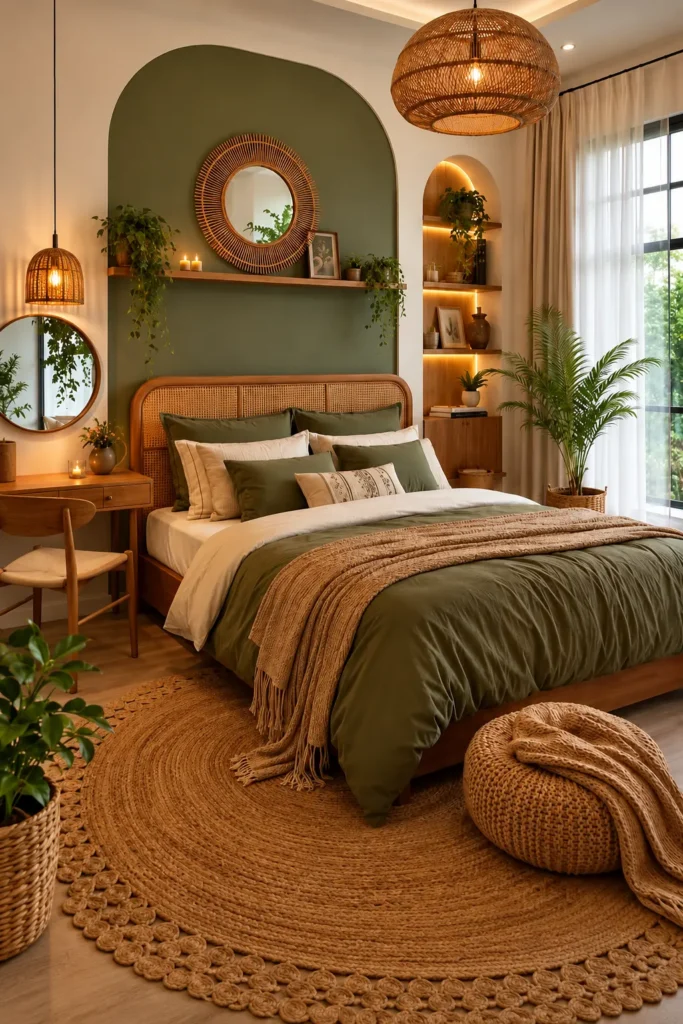
An olive arch gives the bed a clear place in the room without covering every wall in dark paint. Pair it with cinnamon bedding, warm wood, and a round mirror that repeats the curved shape. The green backdrop makes those earthy colors feel connected.
A painted arch offers a simpler alternative to building a recessed feature. Measure its width around your headboard before marking the curve, and test the paint beside your bedding. Olive can look browner under warm lamps and greener in daylight, so check both before committing.
3. Gather Botanical Prints
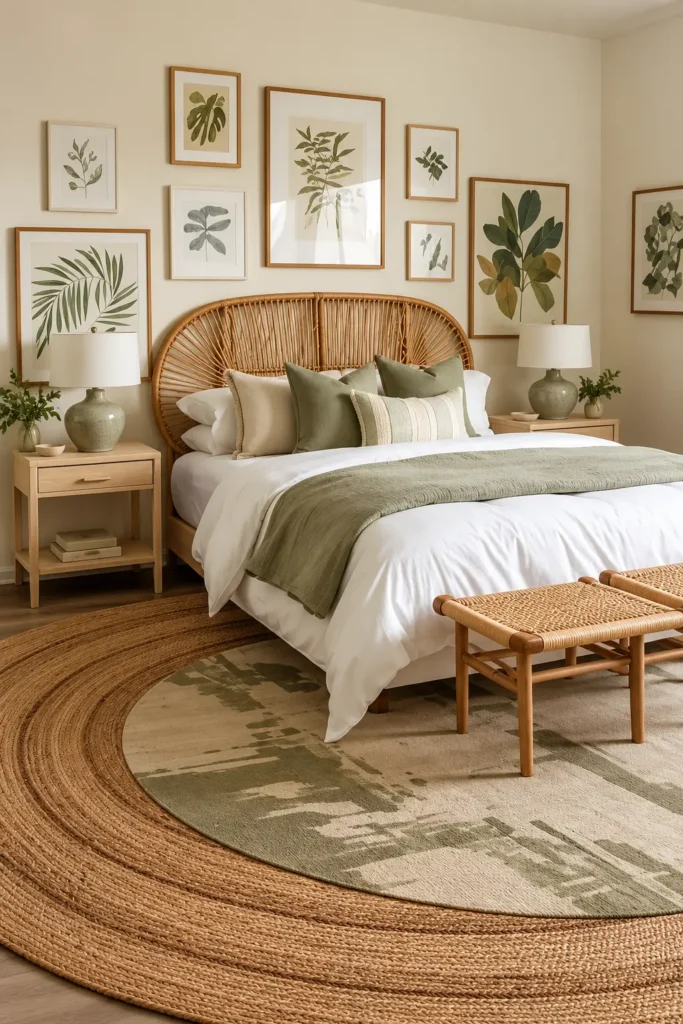
A botanical gallery brings detail above a woven headboard while sage bedding keeps the lower half of the room calm. Mix a few frame sizes, but repeat light wood finishes and pale backgrounds so the arrangement reads as one collection.
Lay the frames on the floor first, leaving roughly 2–3 inches between them. Above the bed, position the lowest frames about 6–8 inches above the headboard, adjusting for its shape. Use secure hanging hardware rather than balancing frames on a narrow ledge where they could fall onto the bed.
4. Let Greenery Lead
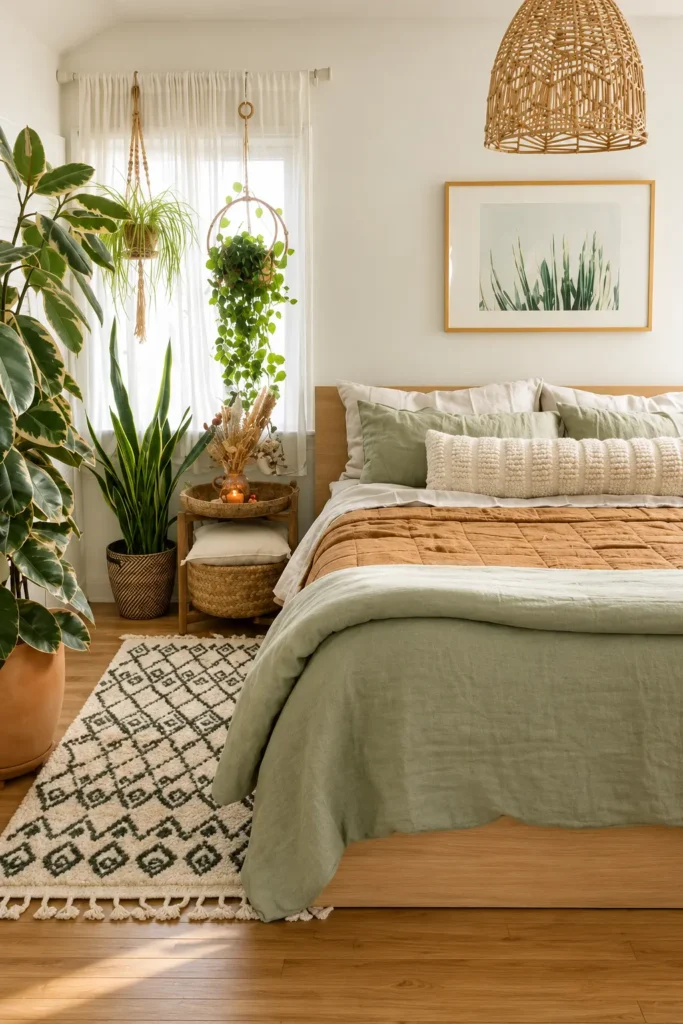
Give plants a defined zone beside the window instead of spreading small pots across every surface. Here, tall foliage, hanging greenery, and a woven planter create a leafy frame around simple sage and cream bedding. The contrast between upright stems and trailing growth makes the grouping interesting.
Choose plants for the light your window actually receives. Keep pots with drainage inside waterproof saucers or liners, especially near wood floors and woven baskets. Leave the bedside table available for a lamp, water glass, and book so the bedroom still works comfortably.
5. Mix Colorful Textiles
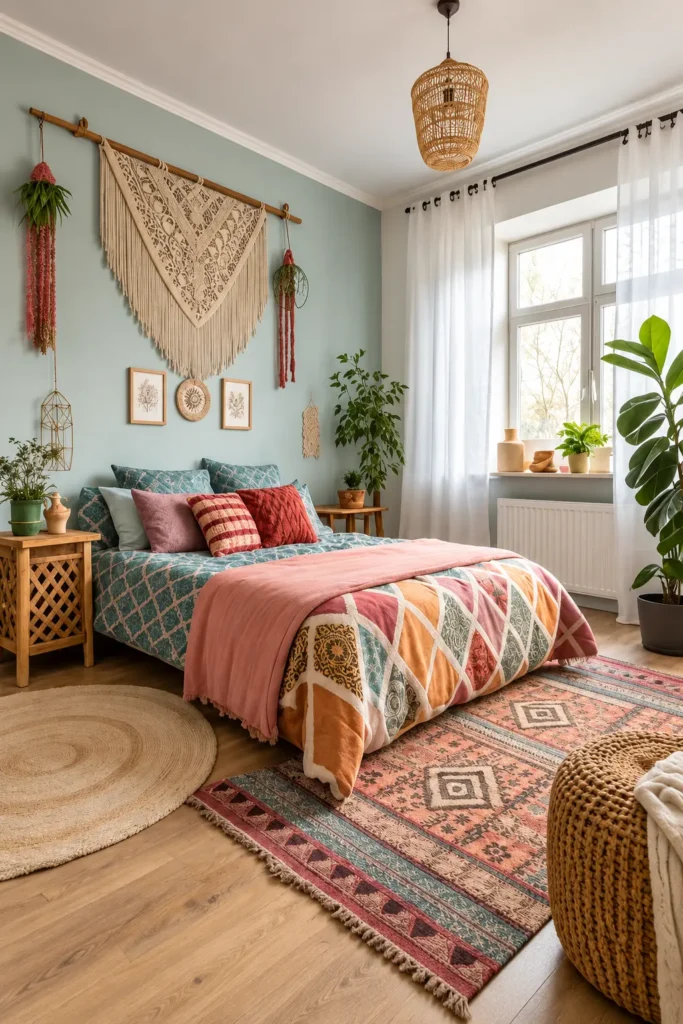
A teal wall provides a steady backdrop for coral bedding, patterned pillows, and a colorful rug. The mix feels connected because the same colors appear in more than one fabric. A large macramé hanging adds texture without introducing another competing print.
Choose one textile as your color guide, then pull two or three shades from it. Vary the pattern sizes: a broad geometric bedcover can sit beside smaller cushion motifs. Keep some pillowcases solid, and stop before every fabric has fringe, tassels, or embroidery to manage.
6. Warm It With Rust
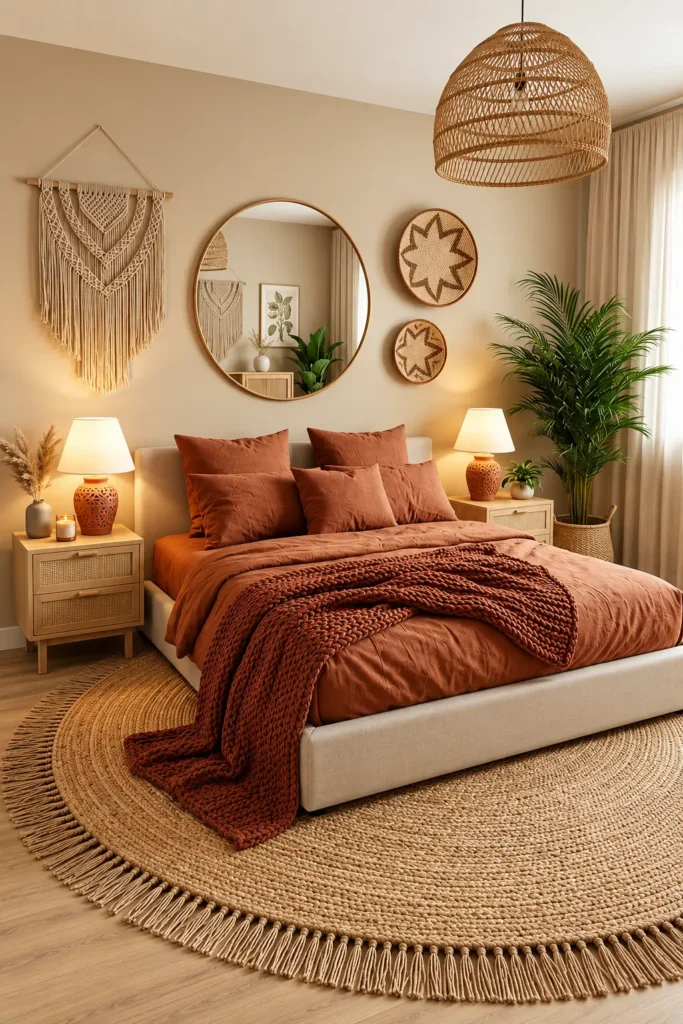
Rust bedding gives this pale bedroom its center of gravity. A round woven rug, simple cane furniture, and small wall accents support the color without competing with it. Cream pillows provide a break between the rich bedding and the wall.
If your existing duvet is neutral, try a rust quilt or coverlet rather than replacing everything. Cotton offers an easier everyday option than delicate decorative fabric. Leave enough room around the bed to walk comfortably; a round rug should fit the floor plan rather than force furniture into awkward positions.
7. Layer Soft Cream Textures
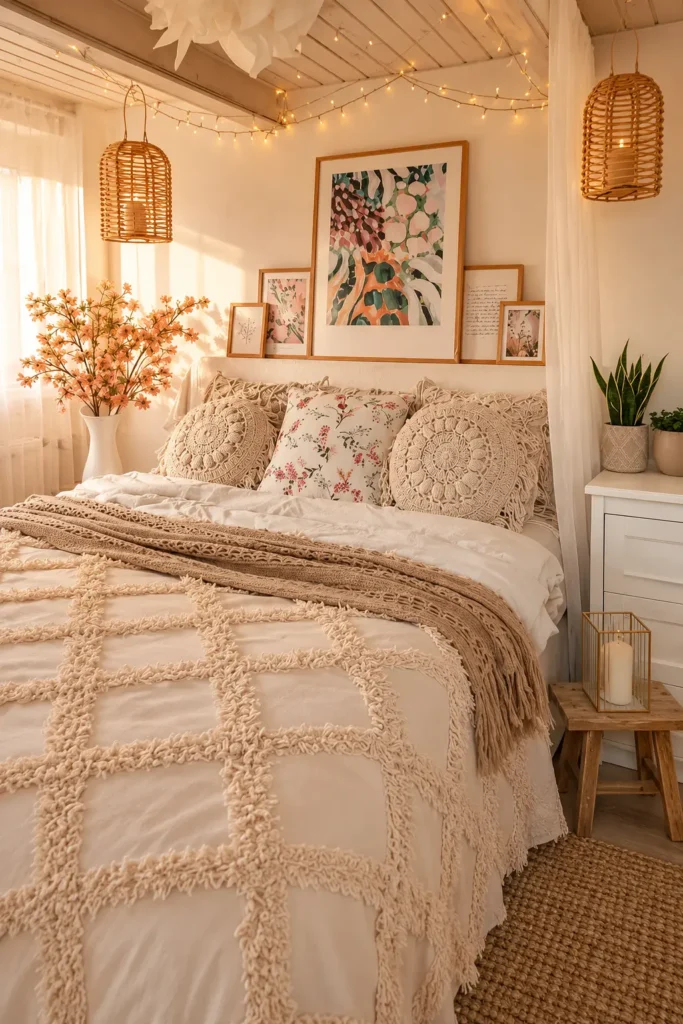
A mostly cream bedroom needs changes in texture to keep it from looking flat. Combine smooth sheets with a tufted coverlet, crochet-style cushions, and light wood or woven details. A floral print introduces a little color while preserving the soft overall effect.
Choose slightly different shades of ivory, oatmeal, and warm white rather than trying to match every piece. Keep heavily textured layers above the sheets, where they won’t affect sleeping comfort. If loose fringe catches easily in your home, use a washable quilt with stitched texture instead.
8. Try a Painted Circle
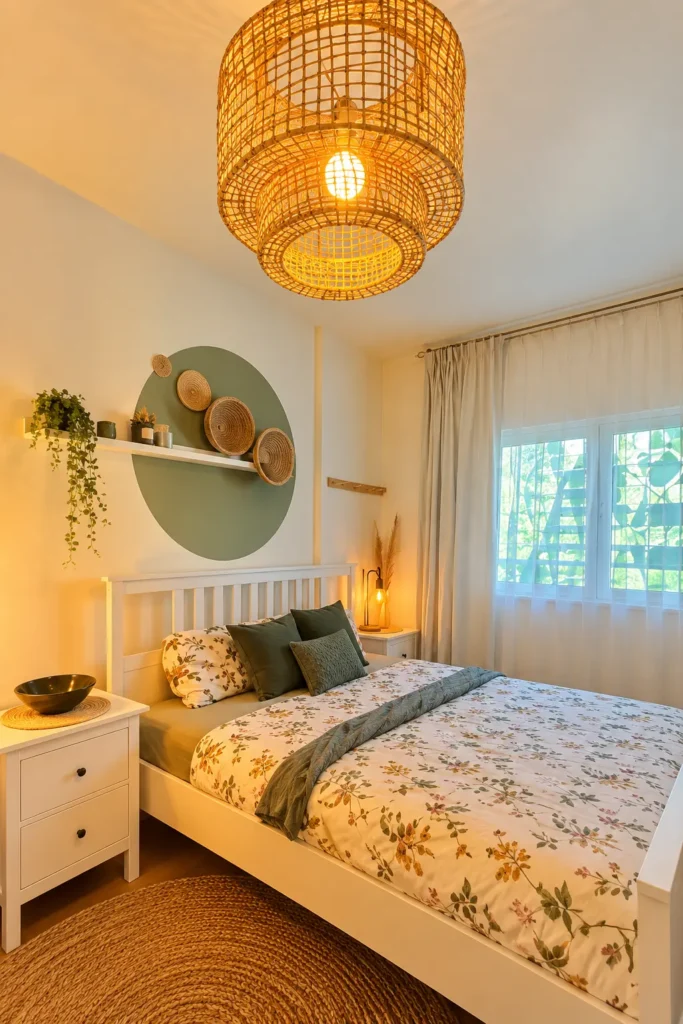
A sage circle behind a small display shelf creates a focal point with relatively little material. Paired with floral bedding, white furniture, and a large woven pendant, it gives a compact bedroom several distinct shapes without relying on a bulky headboard.
Keep the shelf shallow and mount it securely. Lightweight decorative objects are more suitable here than heavy pottery above a sleeping area. Before painting, outline the circle with removable tape or a paper template so you can judge its scale from the doorway and from the bed.
9. Deepen the Mood With Teal
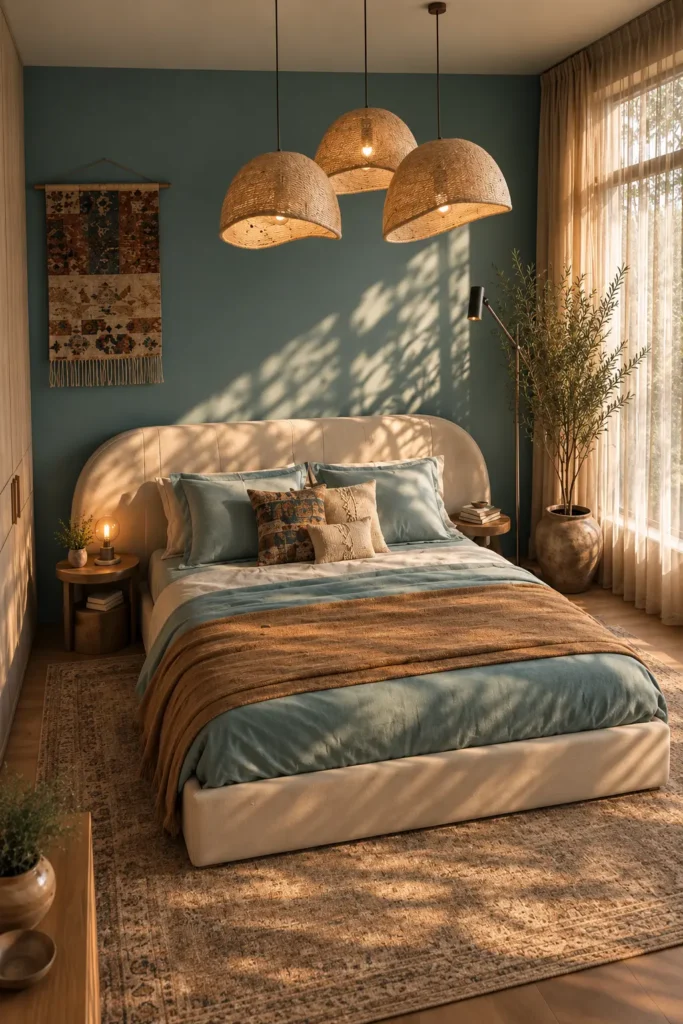
Deep teal walls make warm wood and woven lighting stand out. In this room, muted blue bedding and a brown throw continue the palette, while a curved headboard prevents the darker background from feeling too rigid. The result depends on contrast rather than lots of accessories.
Test a generous paint sample on more than one wall. A deep color can lose its detail in a dim corner, so plan bedside lighting as well as overhead light. Pale sheets and a lighter rug help keep the bed visible against the darker surroundings.
10. Ground It in Terracotta
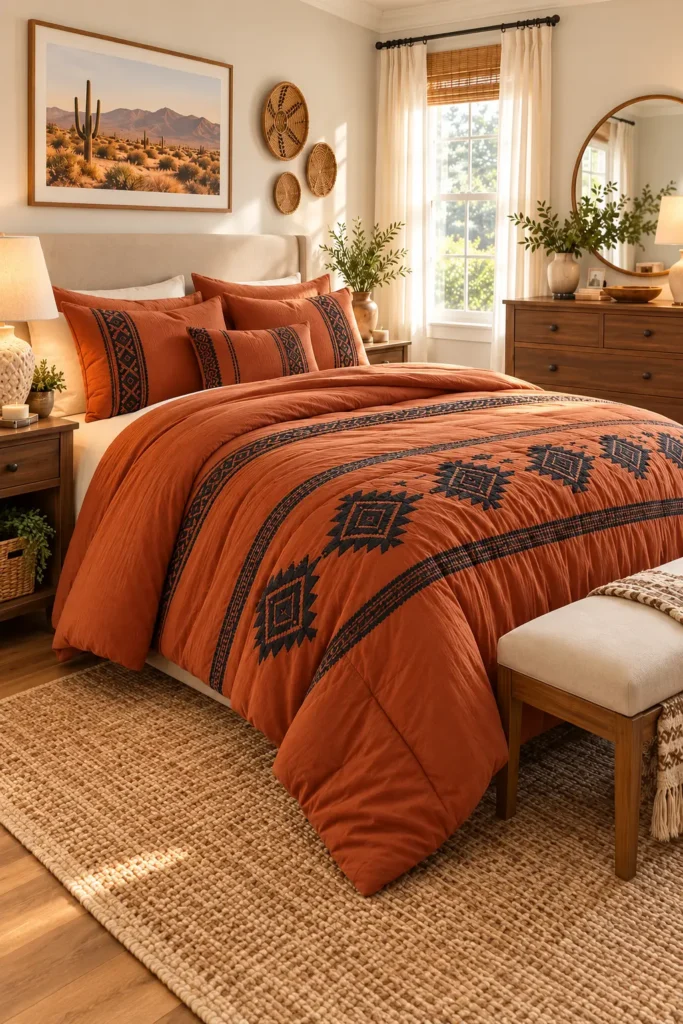
Terracotta bedding and a bold geometric blanket give this room a stronger, earthier character. Pale walls and a simple upholstered headboard keep the patterned layer from overwhelming the bed. A large landscape print adds a second focal point without repeating the blanket’s geometry.
Use the patterned blanket across the lower portion of the bed rather than adding several unrelated prints. A secondhand wood dresser can suit this palette well if its finish is sound. Check drawers, joints, and dimensions before buying; attractive wood grain won’t make up for furniture that doesn’t function.
11. Balance a Dark Accent Wall
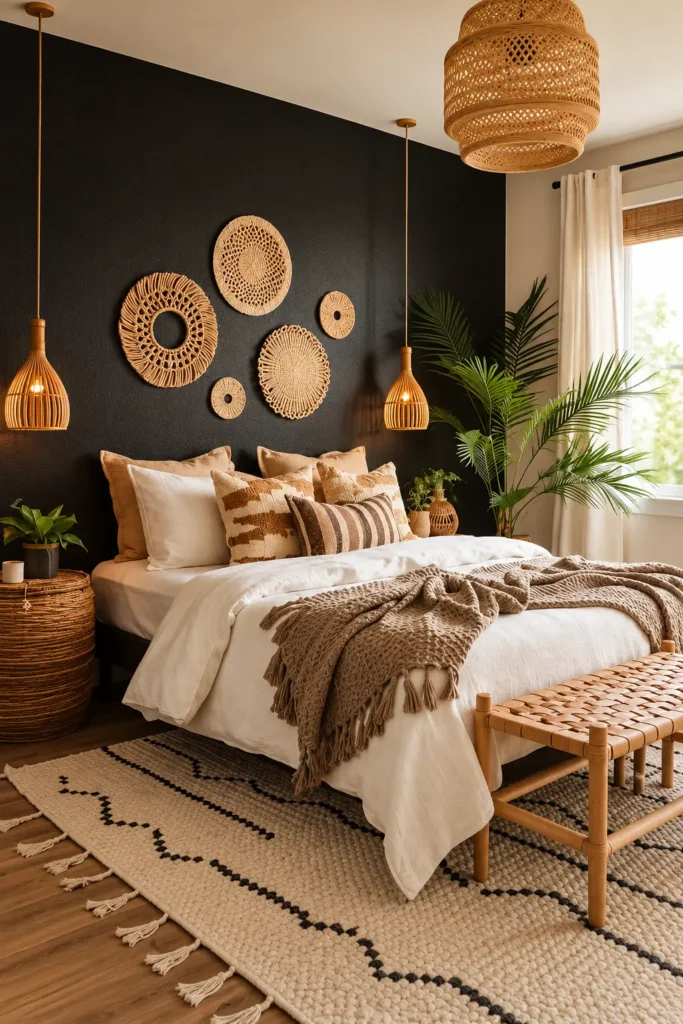
A charcoal wall can support boho materials when the room also has plenty of pale fabric and natural wood. Here, woven wall pieces stand out clearly against the dark backdrop, while cream bedding and a light patterned rug keep the lower half brighter.
Arrange the wall pieces as a group rather than scattering them across the entire wall. Vary their diameters, but keep their tones related. If you’re renting, build the contrast through a dark upholstered headboard and removable artwork instead, using mounting methods permitted by your lease.
12. Make an Arch the Focal Point
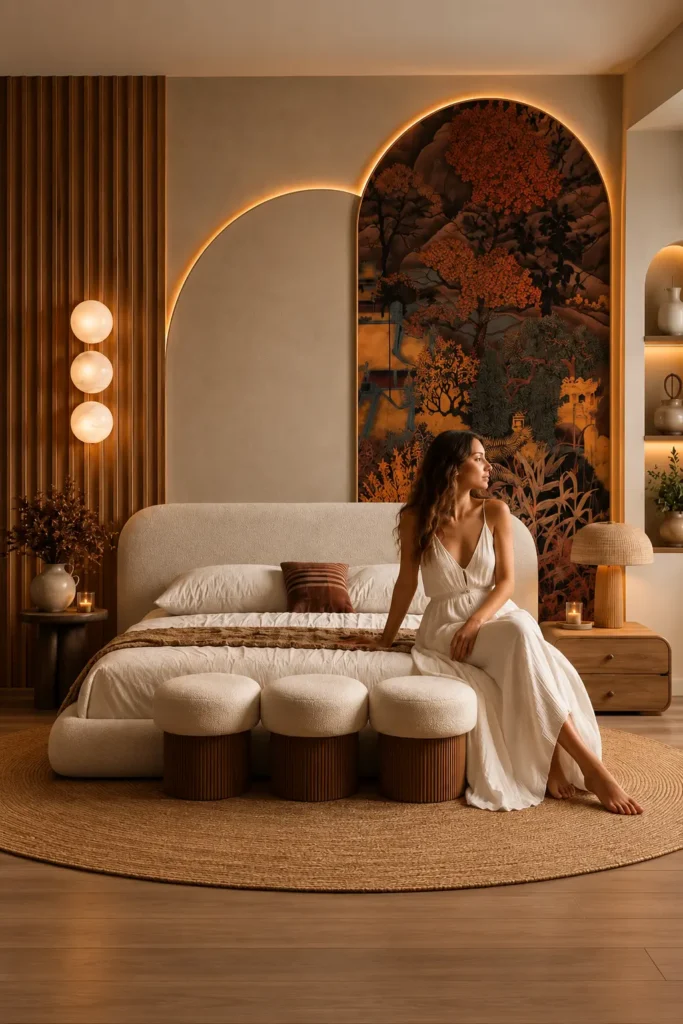
A large illuminated arch gives this bedroom a more architectural version of boho style. The patterned inset, vertical wood detailing, and rounded furniture work together because the bedding stays quiet. Most of the visual interest sits behind the bed.
This is a more involved update than paint or textiles. Built-in lighting and wall construction may need professional installation, and the total cost should reflect that. For a smaller project, use an arched wall panel or large curved artwork, then keep nearby furniture simple enough to let its shape register.
13. Add Sculptural Wall Texture
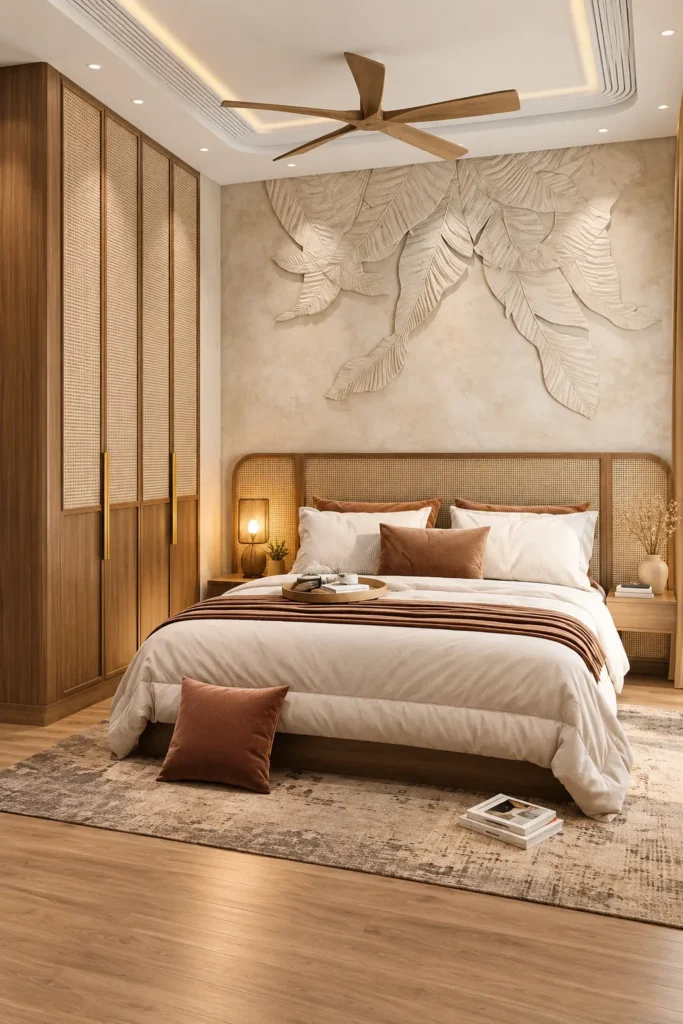
A pale botanical relief introduces pattern through shadow rather than strong color. Paired with cream upholstery, restrained bedding, and wood paneling, it creates a quieter boho room where the materials carry the design. The raised surface becomes more noticeable as daylight changes.
Treat a dimensional wall feature as the main decorative element and avoid covering it with extra artwork. Genuine plaster work requires skilled preparation and finishing. A smaller textured panel can offer a more manageable alternative, but check its weight and installation requirements before placing it above the headboard.
14. Blend Stone and Woven Details
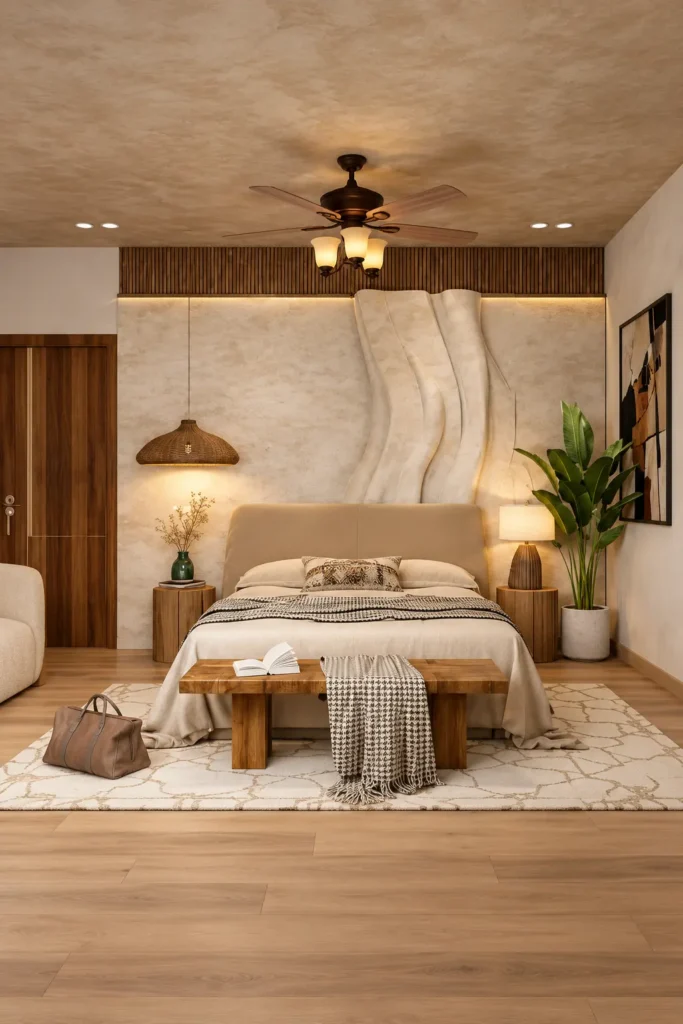
A flowing stone-look wall gives this bedroom movement, while a woven pendant, wood bench, and soft throw make the harder surfaces feel less severe. The palette stays close to cream and sand, allowing the wall’s pattern to remain visible.
Choose a sample with broad, gentle variation rather than a busy pattern that overwhelms the bed. If you’re considering wallpaper, check whether its surface suits your wall and whether removal is realistic. Keep a bench only when you can leave about 30 inches of clear walking space beyond it.
15. Keep Boho Bedroom Ideas Simple
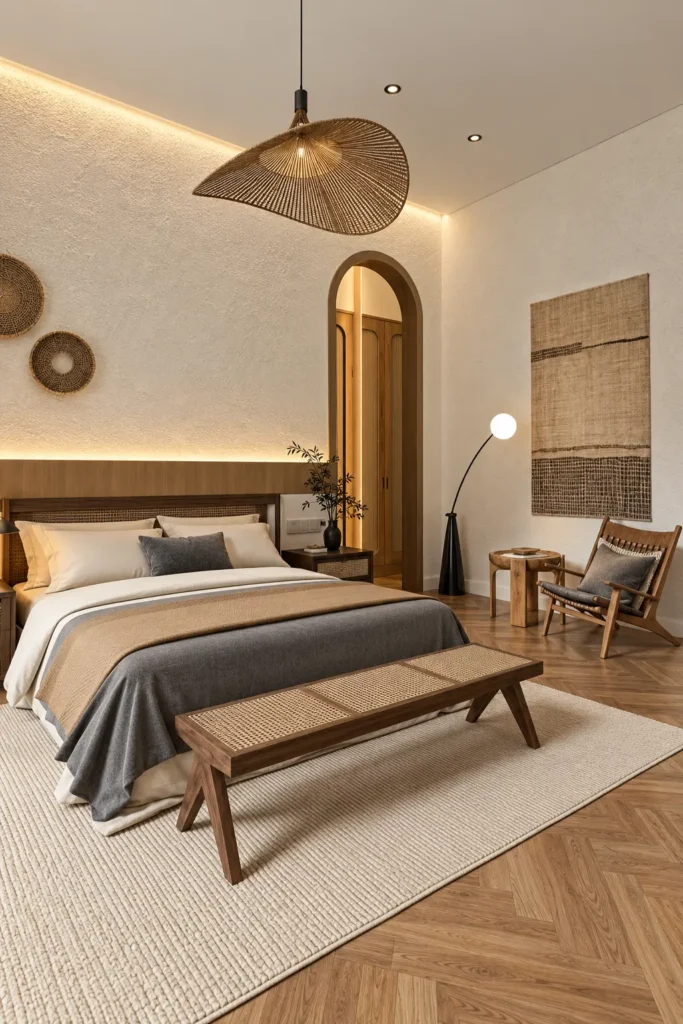
A woven pendant, arched mirror, wood bench, and one textured wall panel can be enough to establish the style. In this room, gray bedding gives the warmer materials a cooler counterpoint. Clear surfaces and a limited number of objects make each shape easier to notice.
Choose a few pieces with different functions instead of several purely decorative accents. A full-length mirror helps with dressing, a bench holds tomorrow’s clothes, and a comfortable chair creates a usable corner. Leave some wall and floor space open so the room feels finished without feeling filled.