Your couch can still be comfortable even when its fabric no longer suits your room. A faded seat, a color you’ve outgrown, or a few visible marks don’t always mean you need to replace the whole sofa.
These sofa cover ideas show how much you can change with fabric alone, from olive green texture to embroidered flowers and clean geometric patterns. Each look takes its cue from a different cover design, with practical advice on color, fit, and styling. You’ll find options that make the couch stand out, plus quieter choices that work with furniture you already own.
1. Olive Green Texture
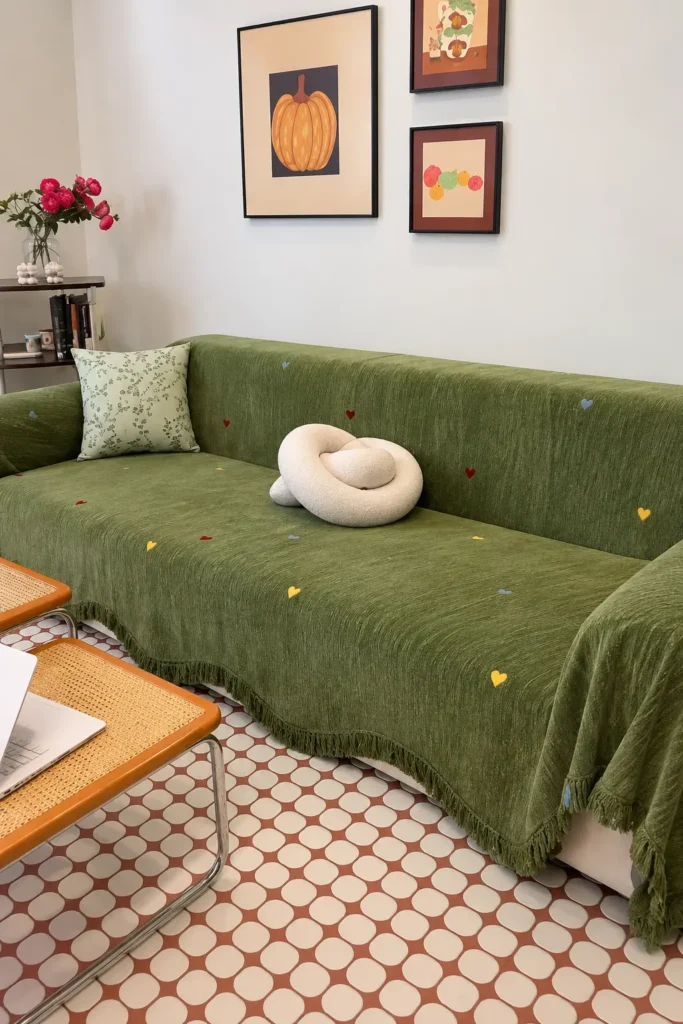
An olive green cover gives a plain couch a deeper color without the sharp contrast of black or navy. Choose a textured weave with small, scattered embroidered details to keep the large fabric surface from looking flat. Let the cover fall evenly across the front, then smooth the seat so the texture remains visible.
Cream pillows and warm wood balance the green without competing with it. If your room gets little daylight, compare a fabric sample beside the couch first; a dark olive can look much heavier there than it does near a sunny window.
2. Soft Green Stripes
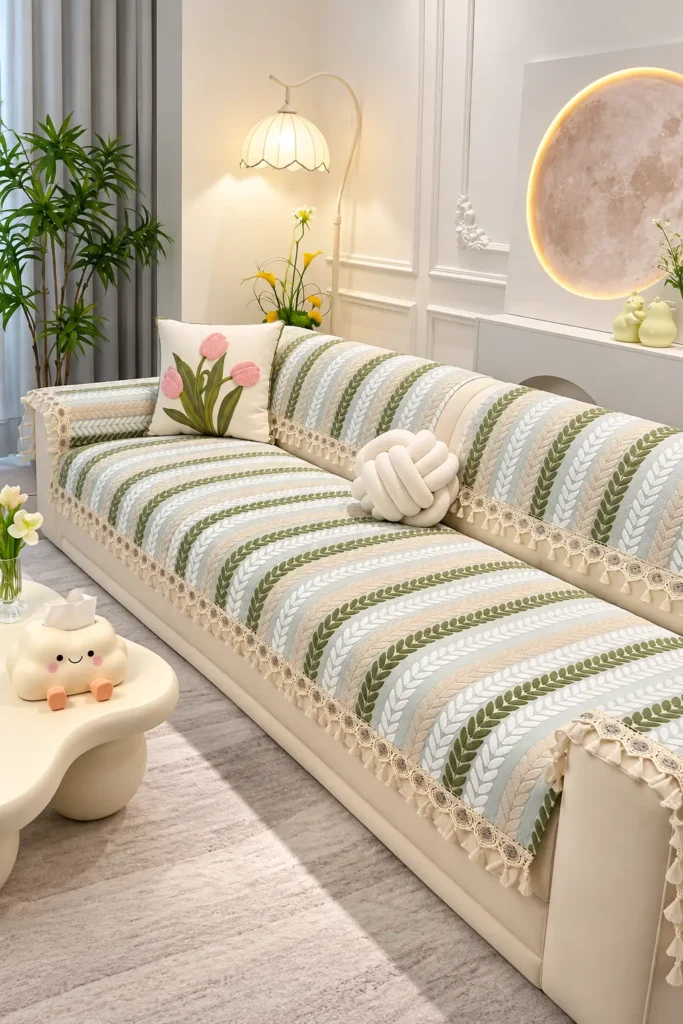
Narrow green and cream stripes bring order to a relaxed, draped sofa cover. Run the stripes from the backrest toward the front edge, as shown in this design, and straighten them across the seat. Crooked stripes make bunching more noticeable, even when the fabric itself is attractive.
A cream fringe softens the edges, while one floral pillow gives the repeated lines a gentle break. Keep nearby patterned accessories limited. When buying a striped throw-style cover, check that it’s wide enough to reach both arms without pulling the center section sideways.
3. Mint Pom-Pom Trim
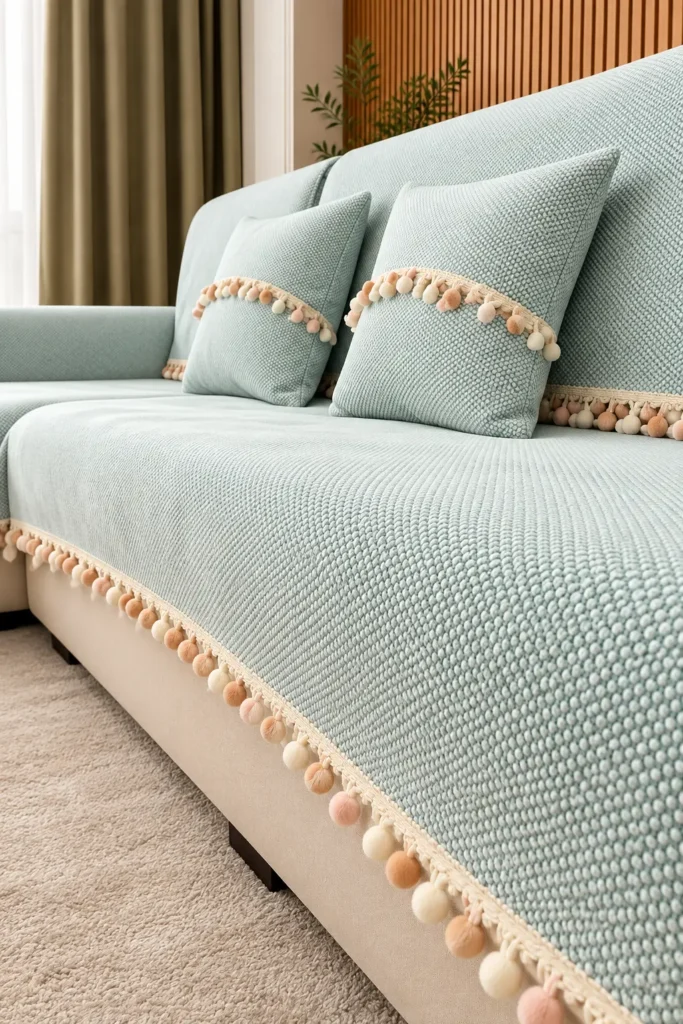
A pale mint cover with cream pom-pom edging makes the couch feel lighter and more playful. The small raised texture adds detail without a busy print, so this look works well beside a wood accent wall or simple curtains. Matching pillow covers keep the color consistent across the backrest.
Place the trim where it can hang freely along the front edge instead of getting trapped beneath the cushions. Those little pom-poms need care: check the washing instructions, and avoid this finish if pets tend to chew or tug loose decorations.
4. Colorful Floral Panels
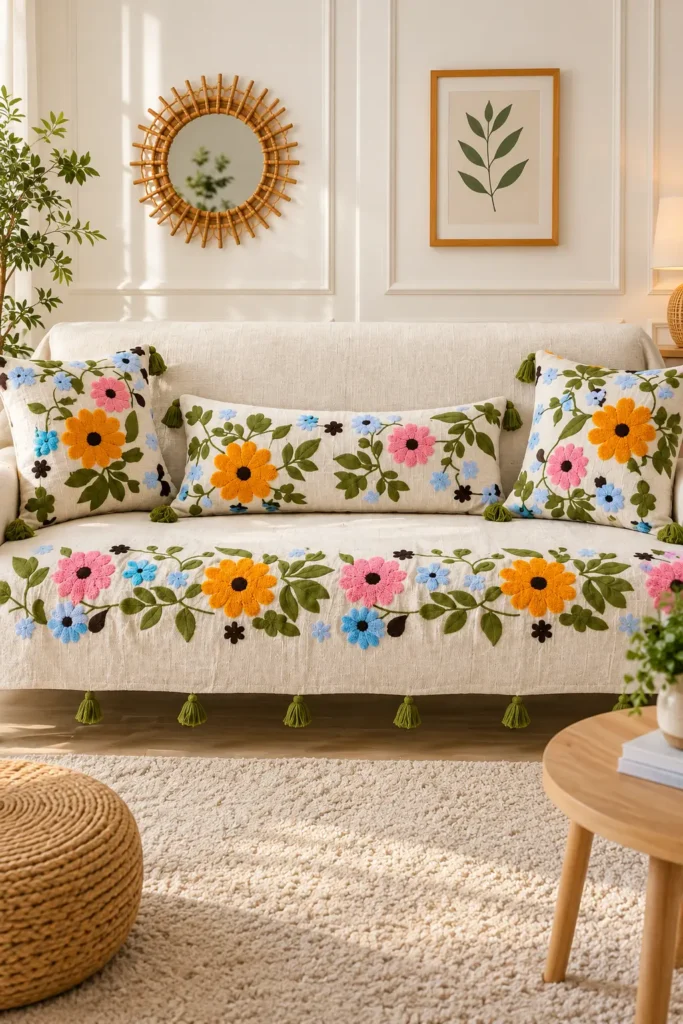
Bright flowers against a cream background turn the sofa into the room’s main pattern. Choose a cover with clearly spaced blooms in yellow, coral, pink, and blue, rather than a dense print that loses its shape from across the room. Coordinated floral pillows extend the design across the back.
Give the flowers room to stand out with a plain rug and a light wood coffee table. Before arranging a panel-style cover, center the main floral band across the seat and front. Uneven placement can make an otherwise balanced couch look off-center.
5. Brown With Long Fringe
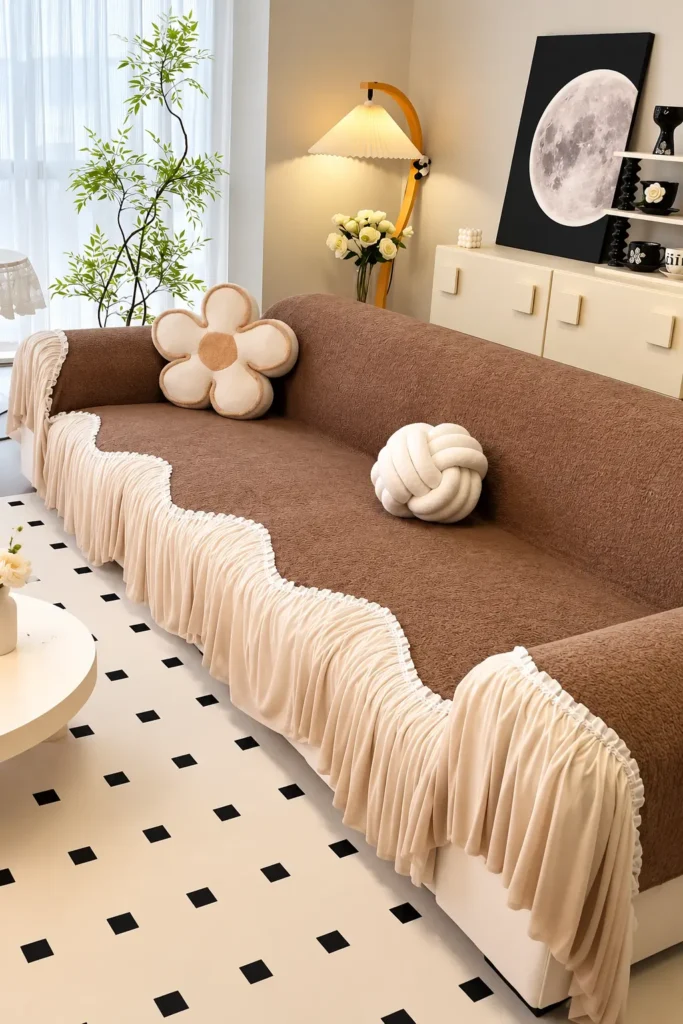
A brown textured cover with long cream fringe creates a strong outline around the couch. The contrast works especially well when the room already has pale walls and a light floor. Keep the seat surface smooth so the fringe reads as a deliberate border instead of loose fabric spilling over the edge.
Cream cushions repeat the trim color and prevent the brown from dominating. Measure the drop carefully: fringe should clear the floor so it doesn’t collect dust or catch under shoes. This decorative finish takes more upkeep than a simple hem.
6. Oversized Botanical Shapes
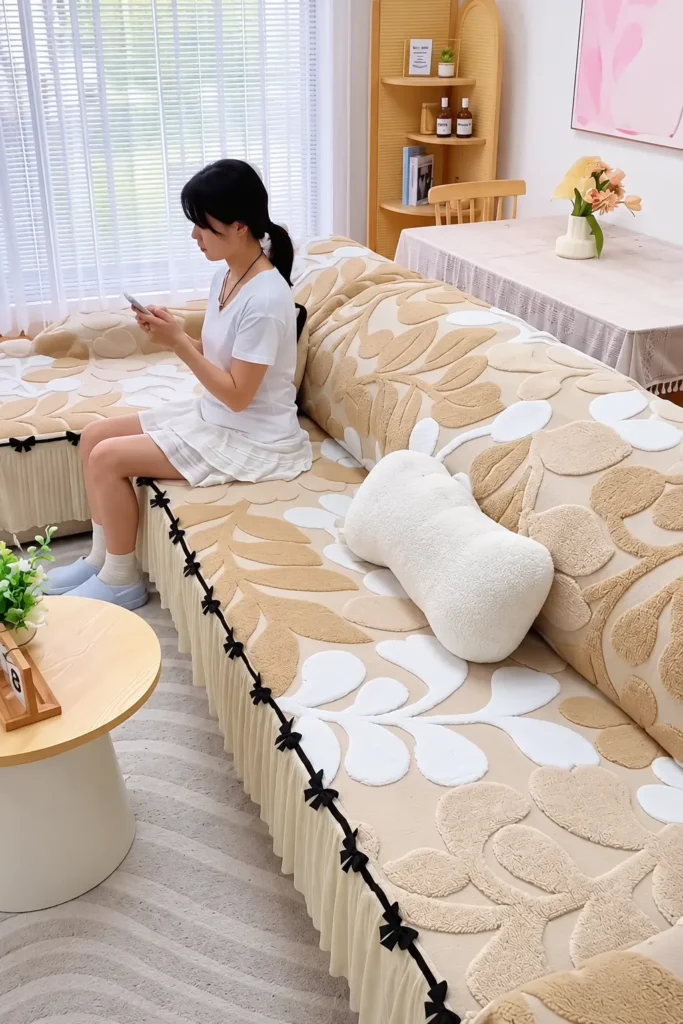
Large cream botanical shapes on a beige cover offer a softer alternative to colorful florals. The broad pattern remains easy to read across a long couch, while the close color pairing keeps it calm. Small black ties or tassels along the edge add a sharper detail without taking over.
Use solid pillows to leave the oversized shapes visible. When fitting the cover, spread the pattern across both the seat and backrest rather than hiding most of it in deep folds. If you’re buying separate pieces, check how their motifs align before ordering.
7. Cream Circle Motifs
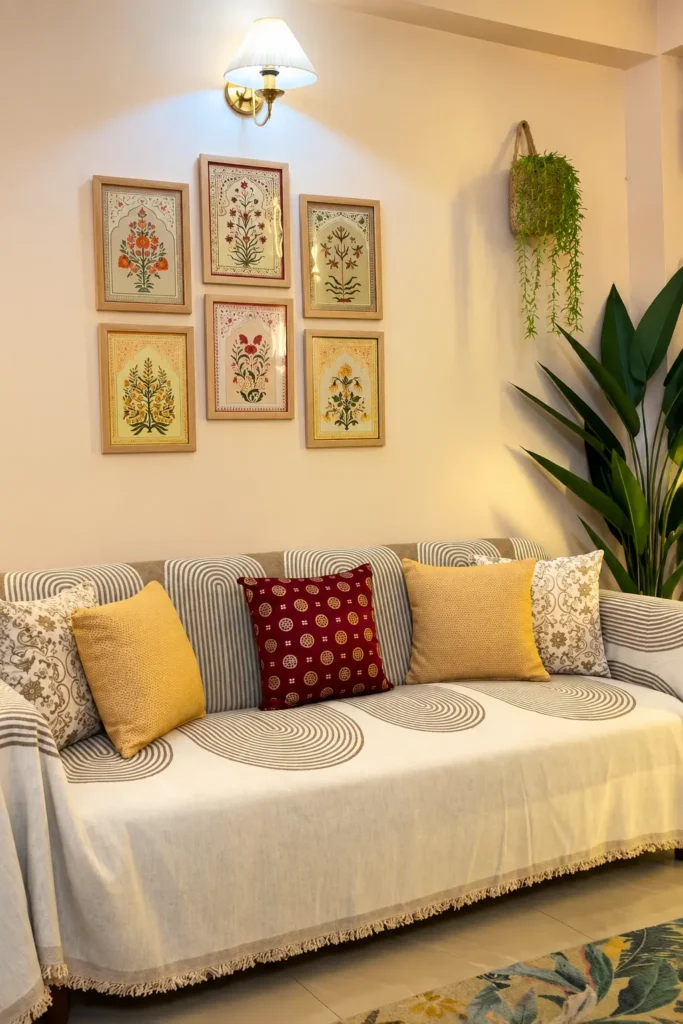
A cream cover with large circular motifs gives a simple sofa a clear visual rhythm. Look for circles in muted taupe or gray so the design stays gentle beside patterned pillows. A short fringe along the bottom adds movement without the fuller look of a gathered skirt.
Yellow cushions can introduce a warmer accent, with one deeper red pillow providing contrast. Keep the circular pattern centered along the seat. If the sofa has separate cushions, a single draped cover can connect them visually, though you may need to straighten it after use.
8. Mustard Arch Pattern
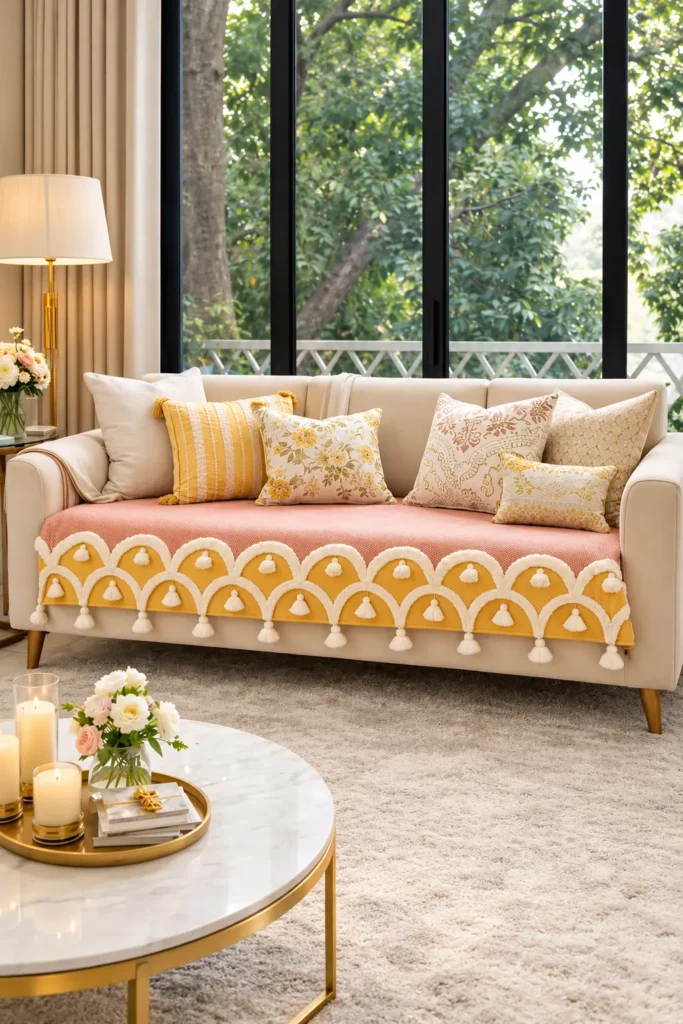
Mustard arches on a cream base give the lower half of a couch a bold, repeating pattern. In the pictured look, a muted rose seat balances that graphic front panel. You can recreate the effect with a patterned seat cover or throw that leaves the original arms and back visible.
Repeat the mustard in one striped pillow, then choose quieter cushions for the rest. Check how far the cover extends when someone sits down; a loosely positioned front panel can slide backward and interrupt the row of arches.
9. Tulip Embroidery
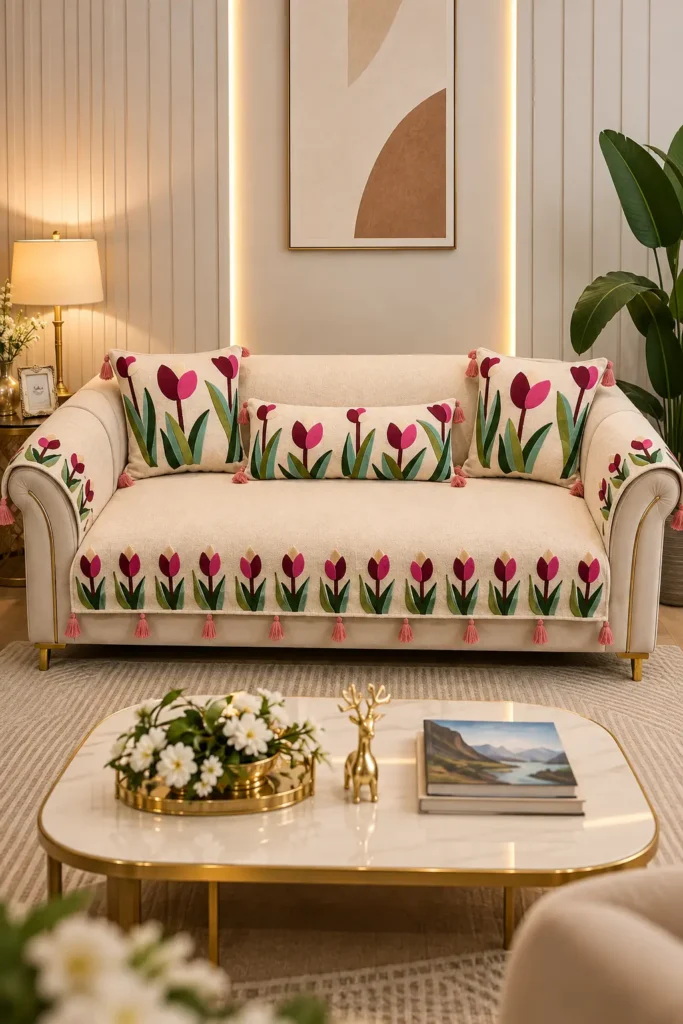
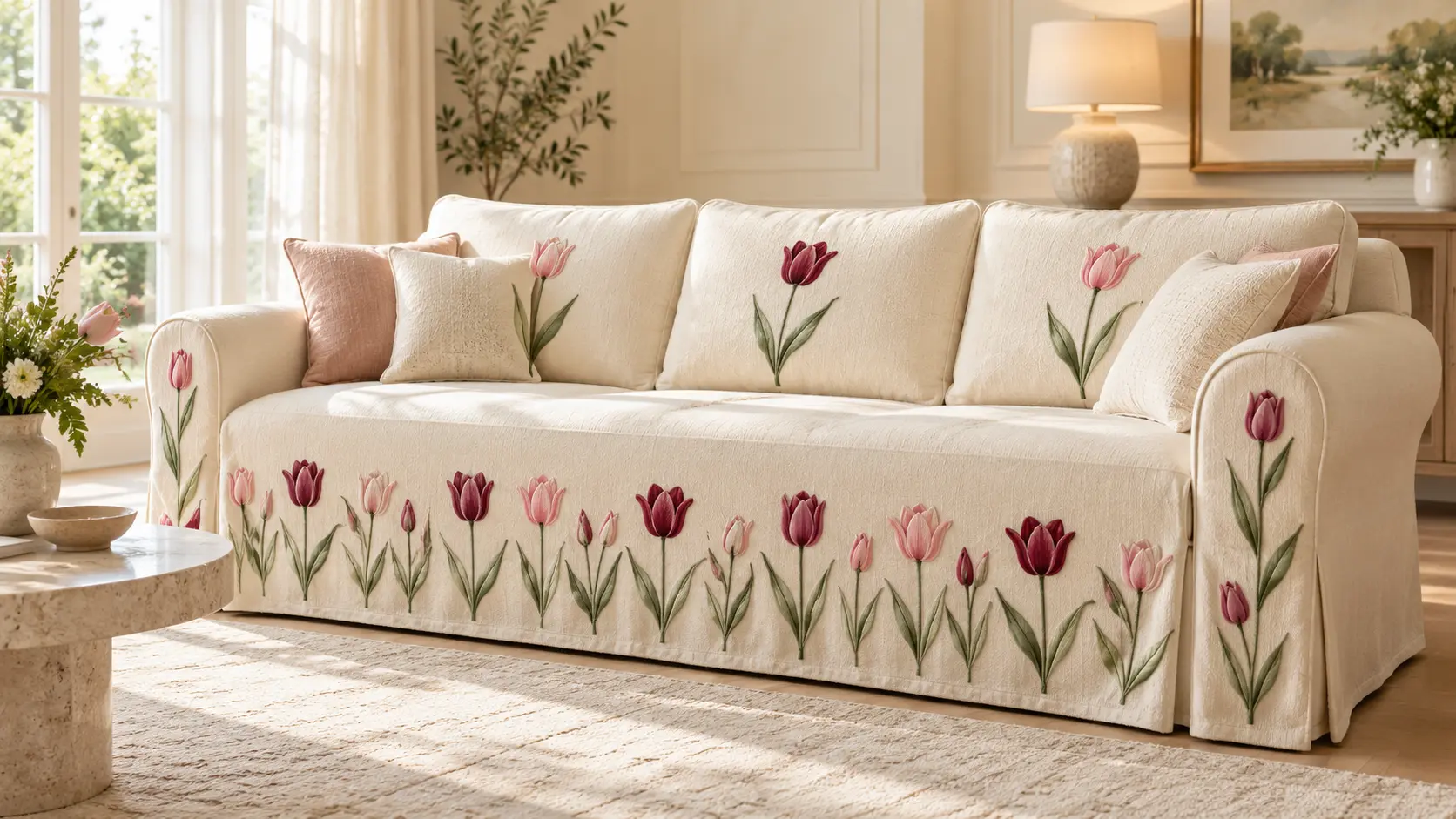
Rows of pink and red tulips make a cream sofa cover feel fresh without covering every inch in pattern. The upright stems give the design structure, especially when the floral rows line up across the front and back pillows. Keep the original sofa arms visible if their shape suits the look.
A pale rug and a simple coffee table help the embroidered flowers remain the focus. Examine the stitching before buying: long, loose threads can snag. If you want easier upkeep, a printed tulip design offers a similar visual effect with less raised detail.
10. Pink Floral Lace
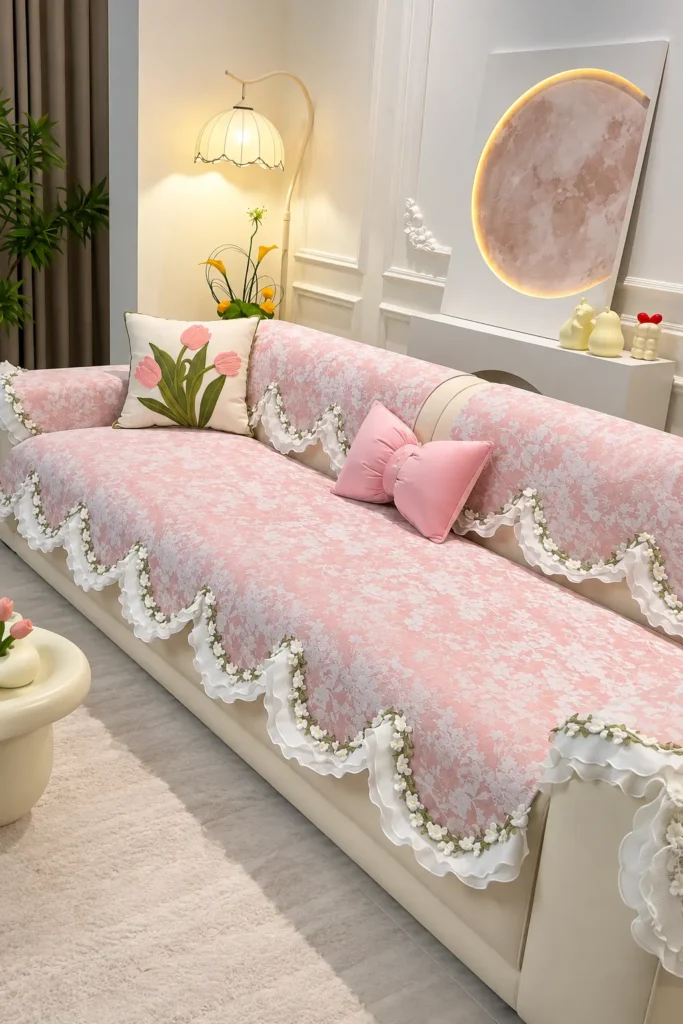
A pink floral cover with scalloped white lace creates a softer, more decorative couch. Choose a faded pink background and small-scale flowers so the lace border remains easy to distinguish. Arrange the scallops evenly along the front, allowing each curve to hang without folding under itself.
Plain blush and cream pillows give the patterned fabric a little breathing room. This design suits a sofa that doesn’t need constant washing, since lace can require gentle handling. Check the care label before choosing it for a busy family seating area.
11. Gray Print, White Ruffles
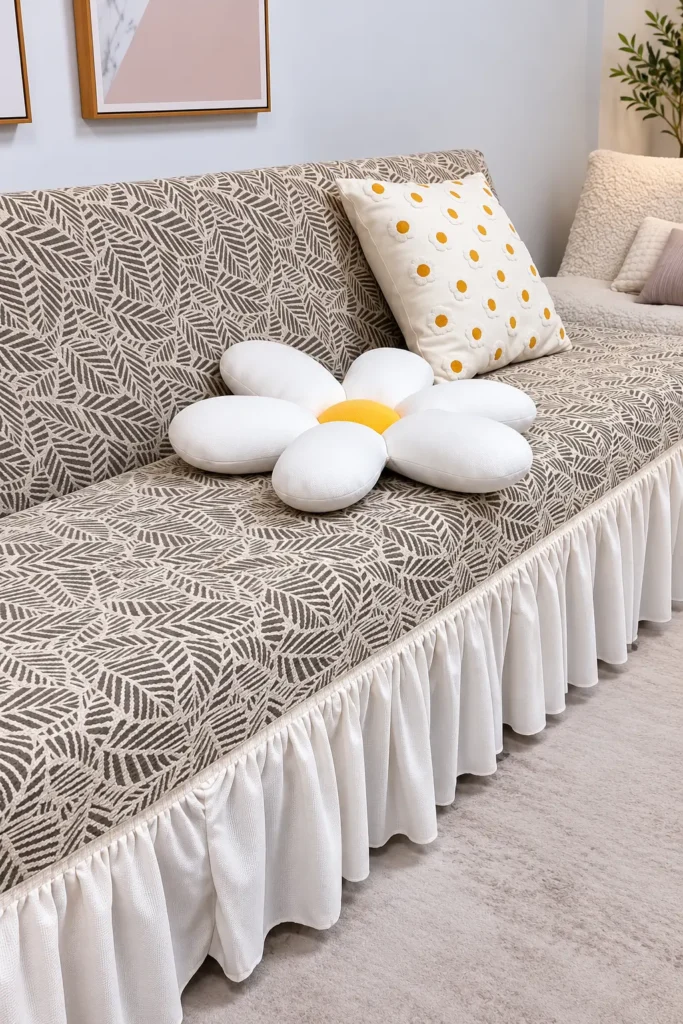
A gray and white leafy print feels more defined when it finishes with a plain white ruffled skirt. The patterned upper section adds detail, while the skirt conceals the sofa’s lower frame and legs. Keep the ruffles evenly distributed so one end doesn’t look fuller than the other.
A white cushion with a small yellow accent breaks up the gray without adding another large pattern. Leave a little clearance above the floor, and check the skirt after washing. A shrinking hem can expose the frame or pull the cover out of position.
12. Cream Botanical Stitching
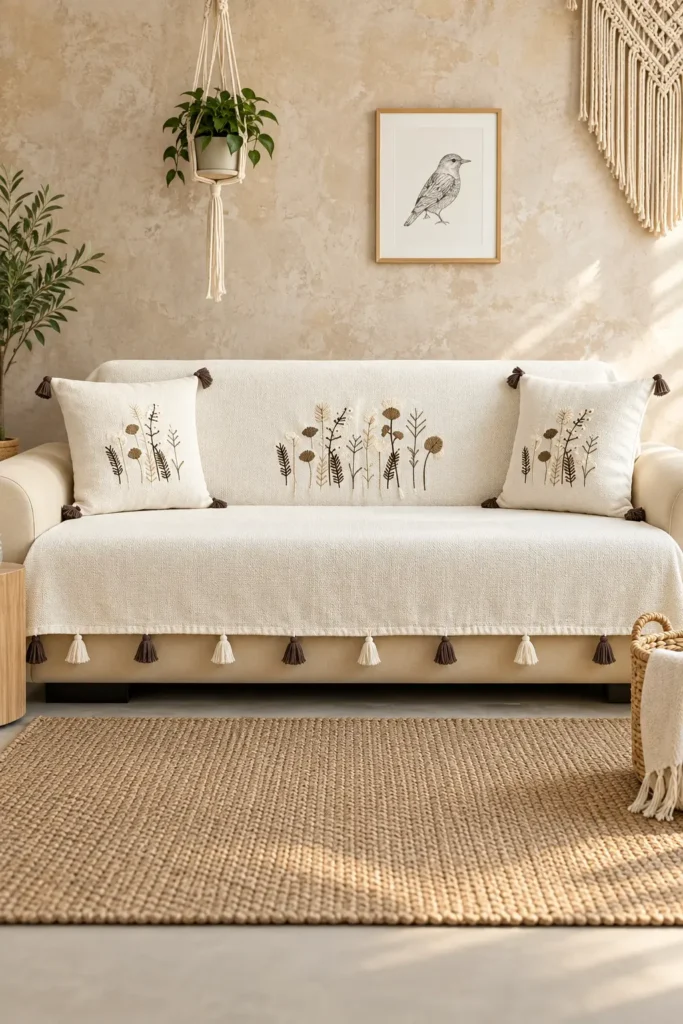
For a quieter floral look, use cream fabric with small botanical embroidery on the back cushions. Muted brown and olive stitching keeps the design close to the room’s neutral palette. Alternating light and dark tassels along the front edge add detail at a different height.
A woven rug and a pale wood table support the fabric’s natural colors. Don’t assume a cream embroidered cover is machine washable; the base fabric and decorative threads may need different care. Choose a washable version if this is your everyday couch rather than occasional seating.
13. Caramel Scalloped Layers
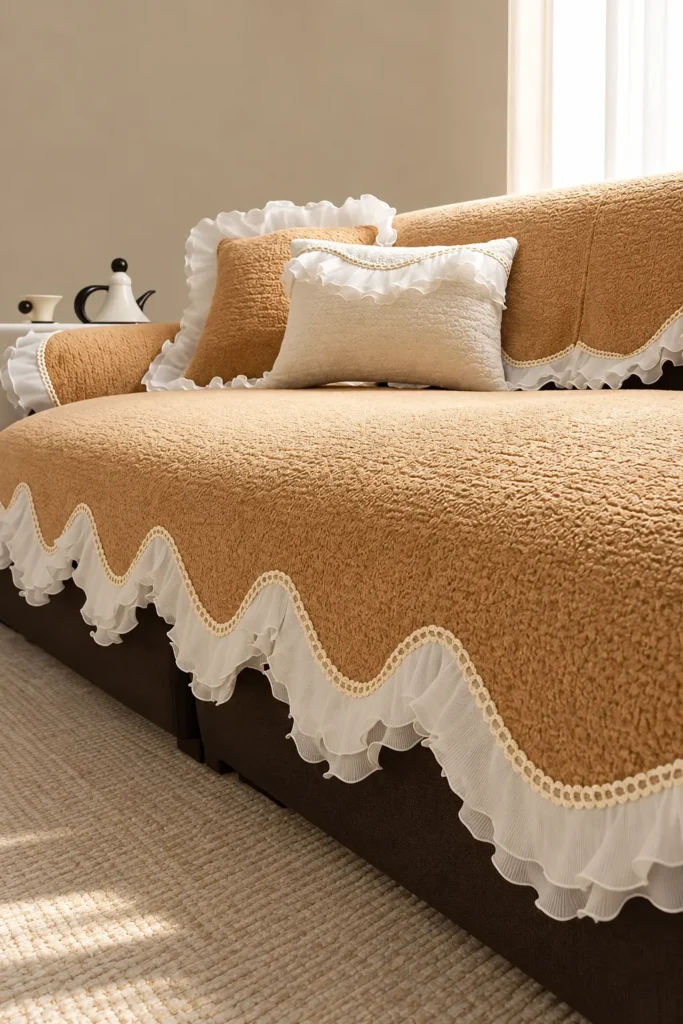
A caramel-colored textured cover looks especially inviting with a cream scalloped border. The warm fabric creates a broad, solid surface, while the curved edging makes the front of the couch feel less rigid. Layer a few cream pillows in different textures without hiding the cover beneath them.
Let the scallops form an even line across the front and sides. A deep border can visually shorten exposed sofa legs, so check the proportions before buying. On a low couch, a shallower scallop may look more balanced and stay farther from the floor.
14. Brown Geometric Arches
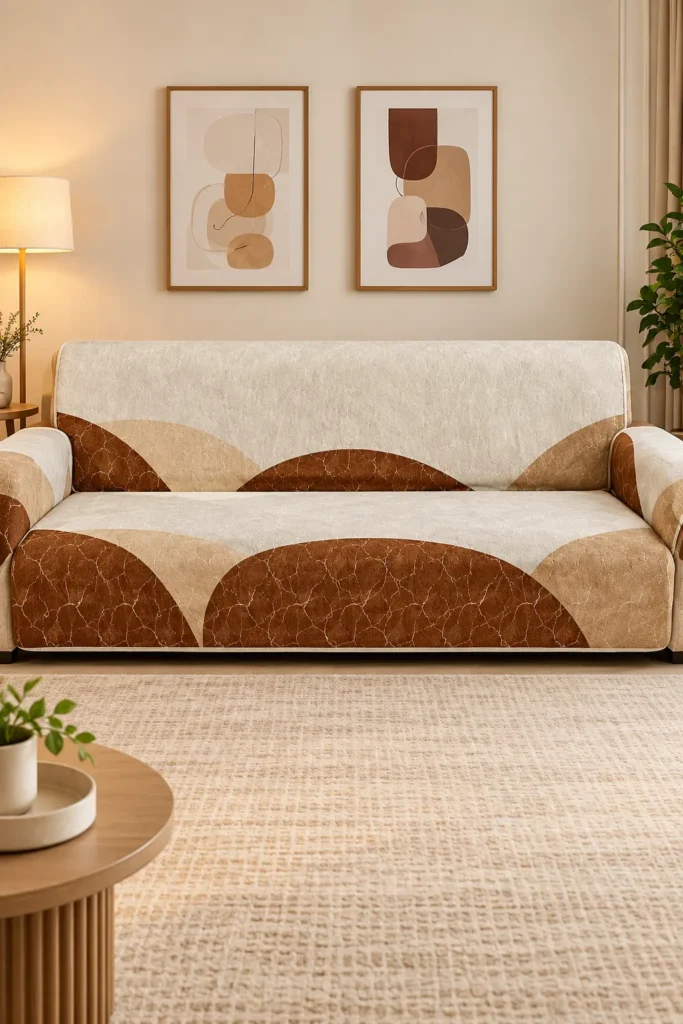
Large brown semicircles on a cream cover give the sofa a clear graphic shape. Unlike a small all-over print, this design depends on placement: the arches should sit where you can see their curves across the front and back. Smooth the cover before adding accessories.
Abstract wall art in similar earth tones can connect the couch to the rest of the room without copying the pattern exactly. Keep pillows mostly solid. For a curved or heavily cushioned sofa, check product photos carefully; deep folds may break up the large shapes.
15. Gray With Black Piping
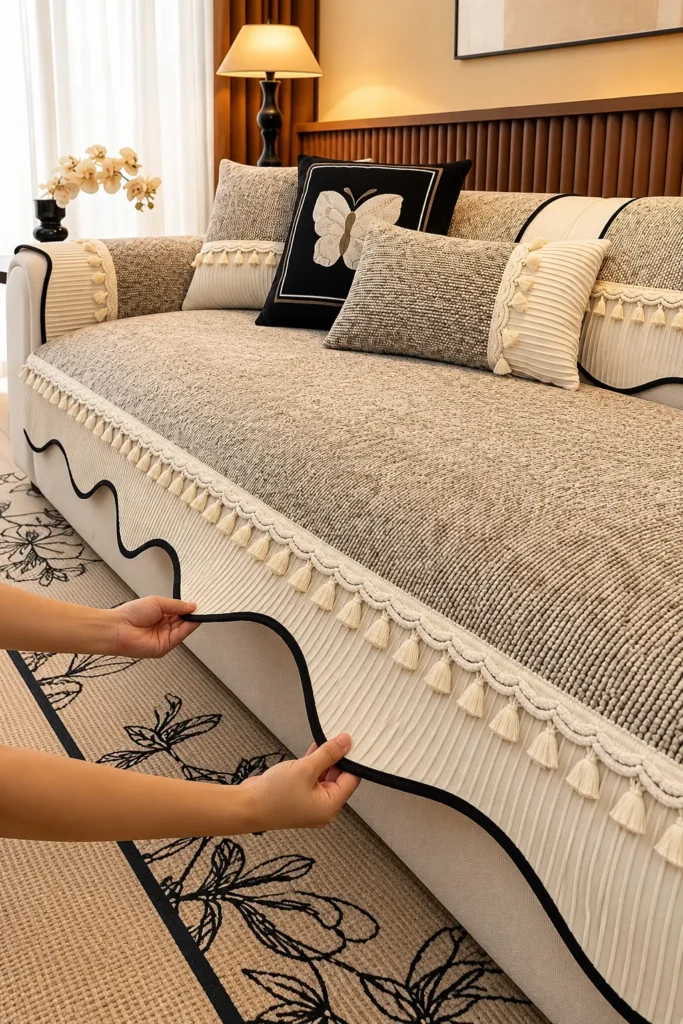
A gray textured cover with cream trim and black piping adds definition to a neutral couch. The dark line traces the lower edge, giving the loose fabric a more finished appearance. Spread the cover evenly so that border stays continuous rather than dipping at one corner.
A black accent pillow repeats the piping, while cream cushions soften the contrast. If you’re adding a border yourself, use fabric trim suited to upholstery and test your sewing method on a scrap first. A neat edge matters more here than extra decorative layers.
16. Pink Textured Ruffles
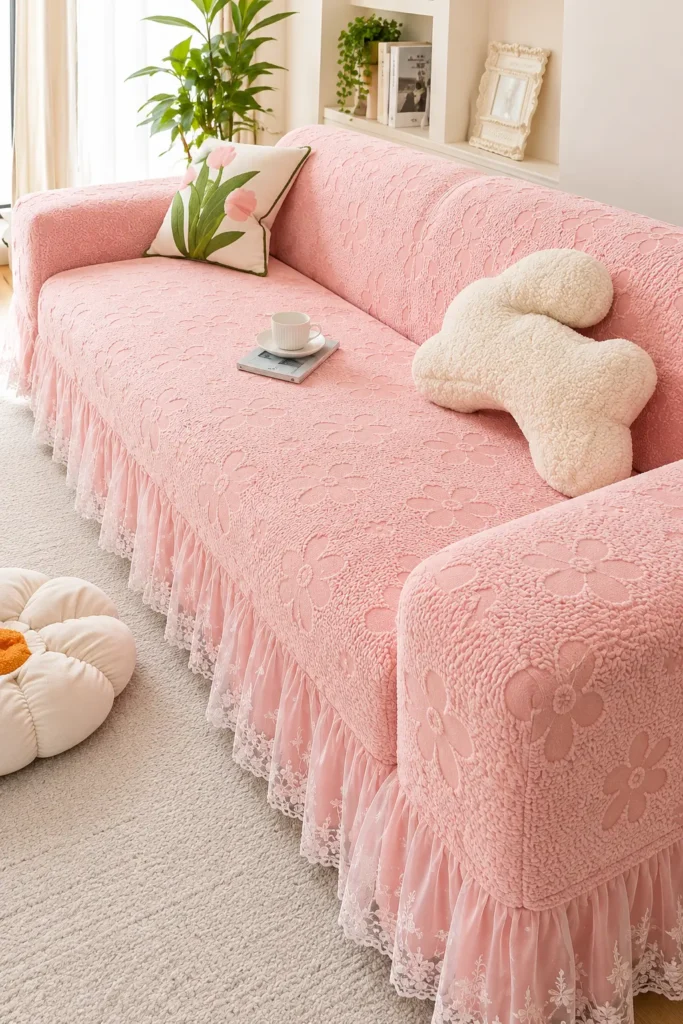
A pale pink cover with a subtle raised pattern and matching ruffled hem creates a softer silhouette from top to bottom. Keeping the ruffle in the same color makes the design feel more continuous than a contrasting border. Smooth the arms so their shape remains visible beneath the fabric.
One embroidered pillow and a cream shaped cushion are enough to finish the look. Check that the cover allows access to any reclining controls or moving parts. A long decorative skirt needs extra care around mechanisms and shouldn’t hang into their path.
Choosing a Cover That Fits
Measure your sofa’s overall width, depth, and back height, then compare those measurements with the seller’s diagram. Check arm shape, cushion layout, and whether the cover is meant for a standard couch, sectional, or recliner. “Three-seater” alone doesn’t tell you enough about fit.
Decide how much of the original sofa you want to hide. A full slipcover can conceal the arms and frame, while a draped cover may leave them visible. For everyday seating, prioritize secure placement and clear care instructions before decorative trim. A beautiful cover loses its appeal if you’re constantly pulling it back into place.