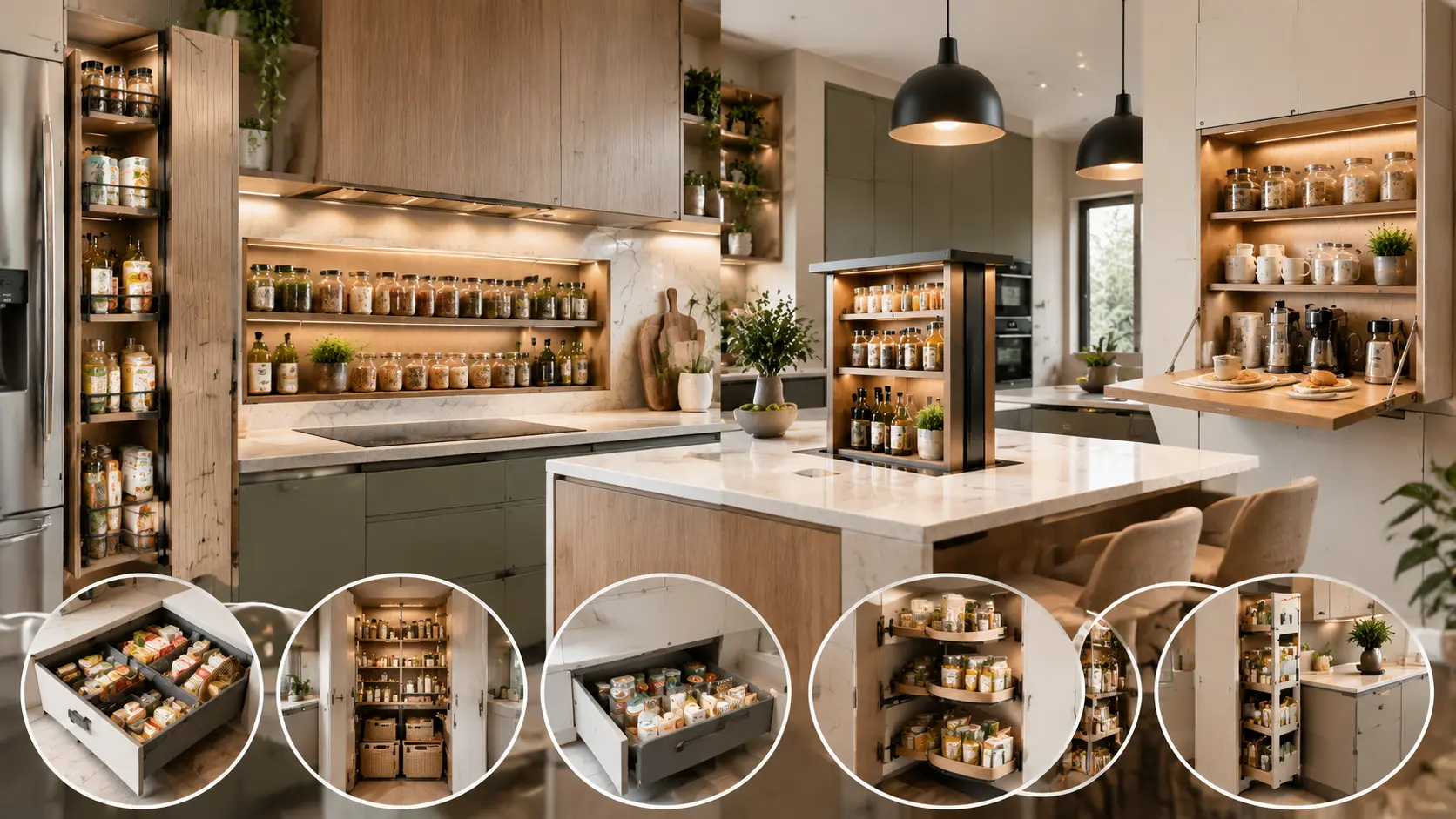
A small kitchen does not need a separate walk-in pantry to provide useful food storage. With the right layout, an overlooked gap beside the refrigerator, an empty cabinet end, a difficult corner, or even the space beneath the cabinets can become an efficient pantry.
The best small kitchen pantry ideas for small spaces increase storage without sacrificing essential counter space or making the room feel crowded. They also keep ingredients visible and accessible, so groceries do not disappear behind deep shelves or become forgotten at the back of a cabinet.
These 18 modern pantry ideas are designed for apartments, compact houses, galley kitchens, and homes without a traditional pantry. Each solution addresses a different storage problem while remaining attractive, practical, and achievable in a real kitchen.
1. Add a Refrigerator-Gap Pantry
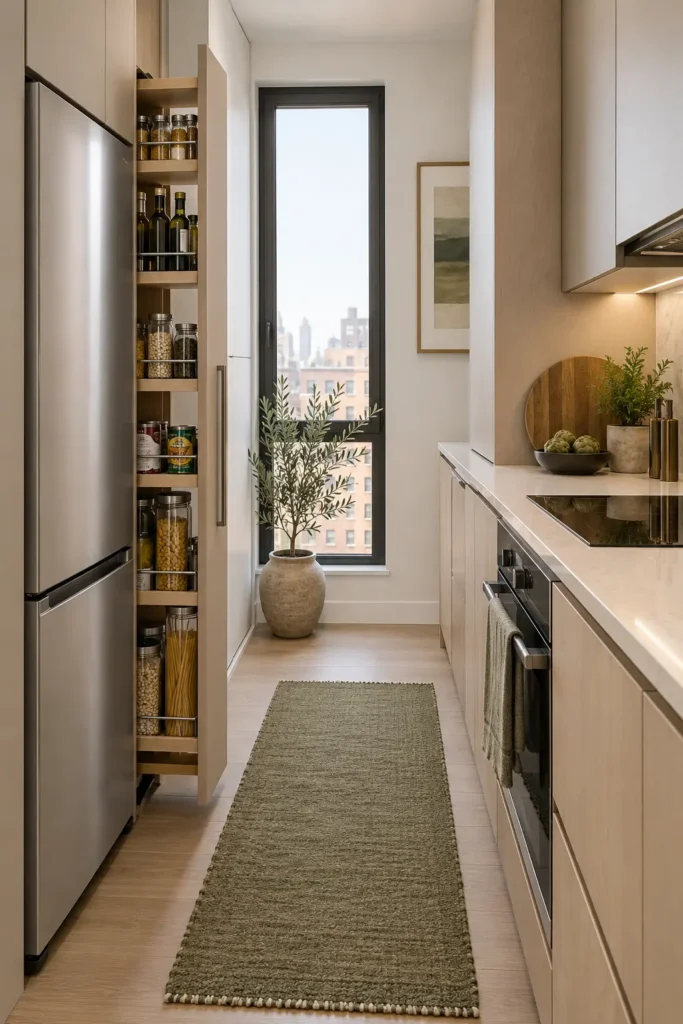
The narrow space between a refrigerator and the adjoining wall or cabinet is often too small for standard storage but wide enough for a rolling pantry.
A pull-out unit measuring approximately 6 to 10 inches wide can accommodate canned food, sauces, cooking oils, spices, and narrow packages. Raised shelf edges keep bottles secure as the pantry moves, while smooth casters make the contents easy to access.
Choose a unit with a full-height fluted-wood front that coordinates with the kitchen cabinets. When pushed back into the gap, it will resemble a decorative cabinet panel rather than a utility cart. A discreet leather or metal pull completes the modern appearance.
Measure the depth of the refrigerator and check that the cart will not interfere with ventilation, electrical connections, or the appliance door.
2. Install a Pull-Out Larder
A slim pull-out larder provides impressive capacity within a very narrow cabinet. Unlike a deep stationary cupboard, the entire storage unit slides forward, allowing ingredients to be seen and reached from both sides.
Use adjustable baskets to create different storage zones. Heavy bottles and bulk ingredients should remain near the bottom, canned goods and jars can occupy the middle, and lightweight packets can be stored higher up.
A pull-out larder can be as narrow as the width of a small base cabinet, making it particularly useful beside a refrigerator, oven housing, or tall cabinet. Soft-close runners, raised shelf rails, and internal lighting will make it safer and easier to use.
For a contemporary finish, combine a muted olive, warm white, or charcoal cabinet front with pale-oak shelves and thin metal rails.
3. Convert a Closet Pantry
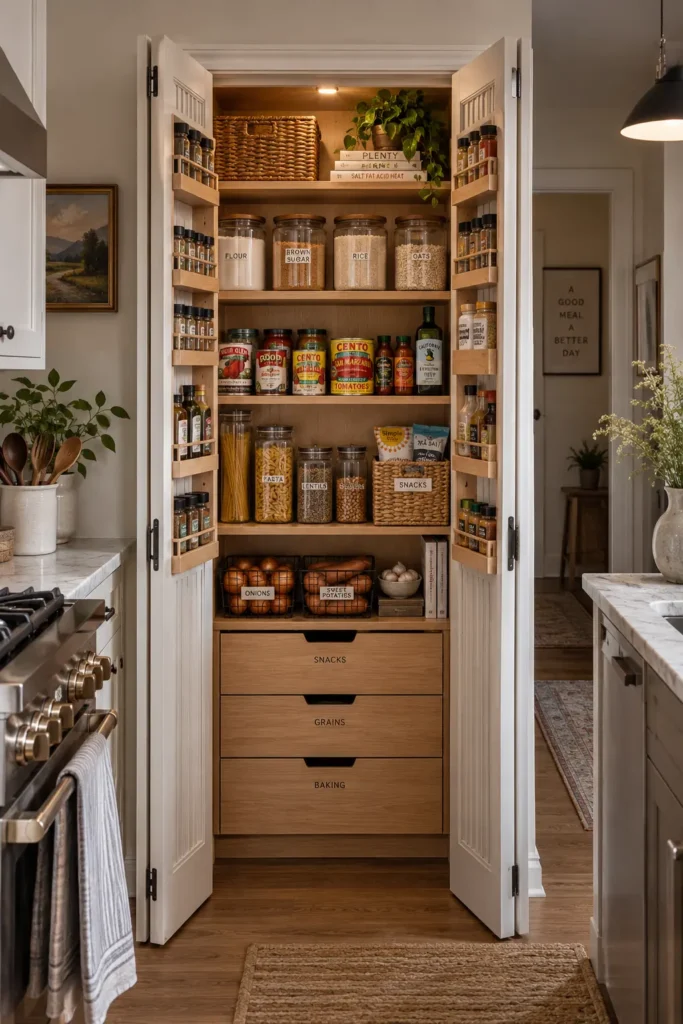
An underused broom closet or utility cupboard can become a surprisingly capable kitchen pantry. Because the basic enclosure already exists, the transformation may require only adjustable shelves, drawers, lighting, and a more practical door.
Replace a wide swing door with modern bi-fold doors if the original door obstructs the kitchen walkway. Inside, install shallow shelves so ingredients remain visible instead of becoming lost behind one another.
Use lower drawers for large snack bags, root vegetables, and bulk packages. Reserve eye-level shelves for everyday ingredients, and install narrower shelves on the inside of the doors for spices and small containers.
Fluted bi-fold doors, natural-oak shelving, and warm motion-activated lighting can make the converted closet feel like an intentional part of the kitchen.
4. Create a Hidden Pantry Behind the Backsplash
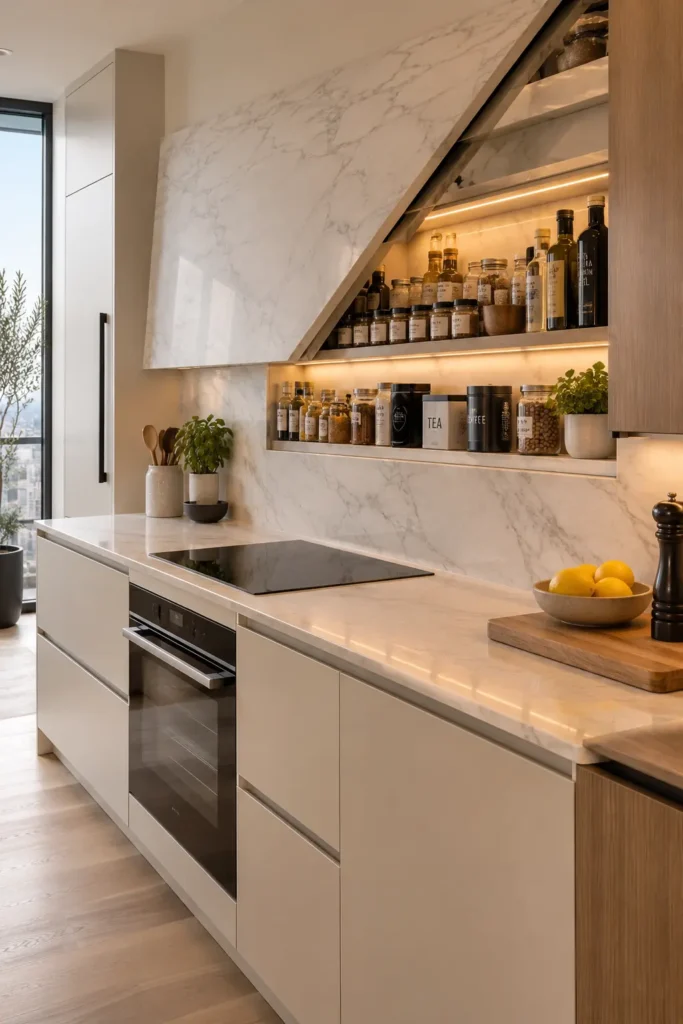
A backsplash does not have to be only a decorative surface. In a modern small kitchen, a section of the backsplash can become a slim hidden pantry that keeps everyday ingredients within reach while maintaining a clean countertop.
A retractable or lift-up backsplash panel can reveal shallow shelves designed for spices, cooking oils, sauces, tea containers, and frequently used ingredients. Because the storage is only a few inches deep, it does not reduce valuable kitchen space.
Use finishes that blend with the kitchen design, such as marble-look panels, fluted wood, smoked glass, or matching stone surfaces. Integrated lighting inside the hidden shelves adds a premium custom-kitchen feel.
This solution works especially well in compact apartments where every inch matters and homeowners want a minimalist, clutter-free cooking area.
5. Build a Shallow Pantry Wall
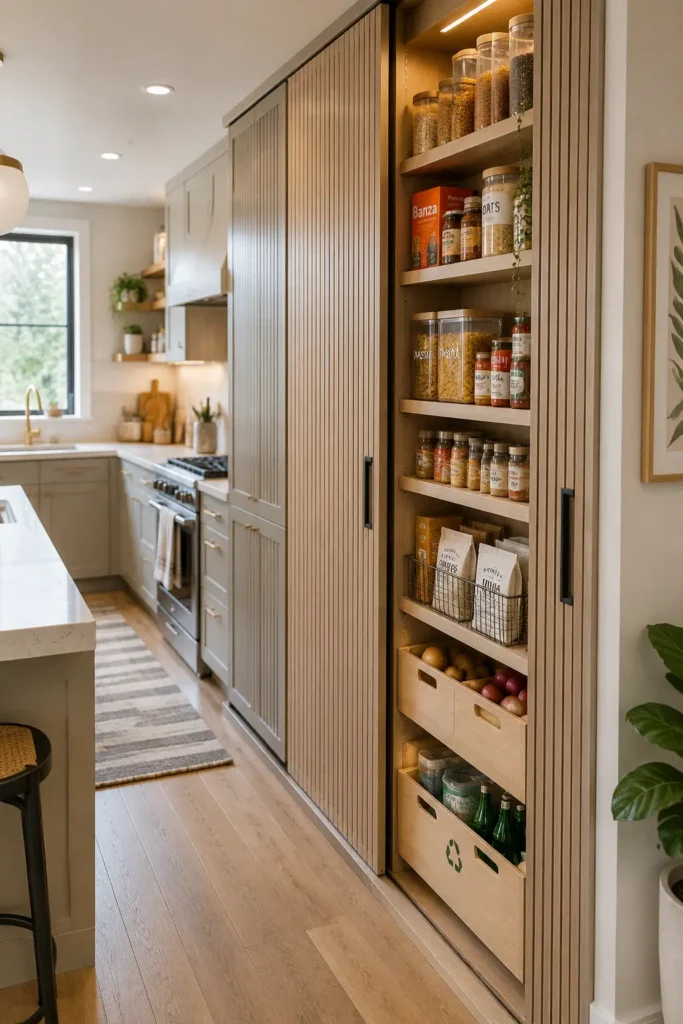
A pantry does not need standard cabinet depth. A floor-to-ceiling storage wall approximately 10 to 12 inches deep can hold a considerable amount of food while projecting only slightly into the room.
Shallow shelves are especially practical for cans, jars, boxes, and packets because every item remains visible. Include a few pull-out bins near the bottom for larger packages or recycling supplies.
Conceal the pantry behind lightweight sliding or pocket-style panels. Because these doors move sideways, they do not require the clearance of conventional cabinet doors.
Fluted wood, ribbed glass, or smooth color-matched panels can turn the shallow pantry wall into a modern architectural feature. Show or leave one section partially open to make the storage easy to access during cooking.
6. Use a Counter-to-Ceiling Pantry
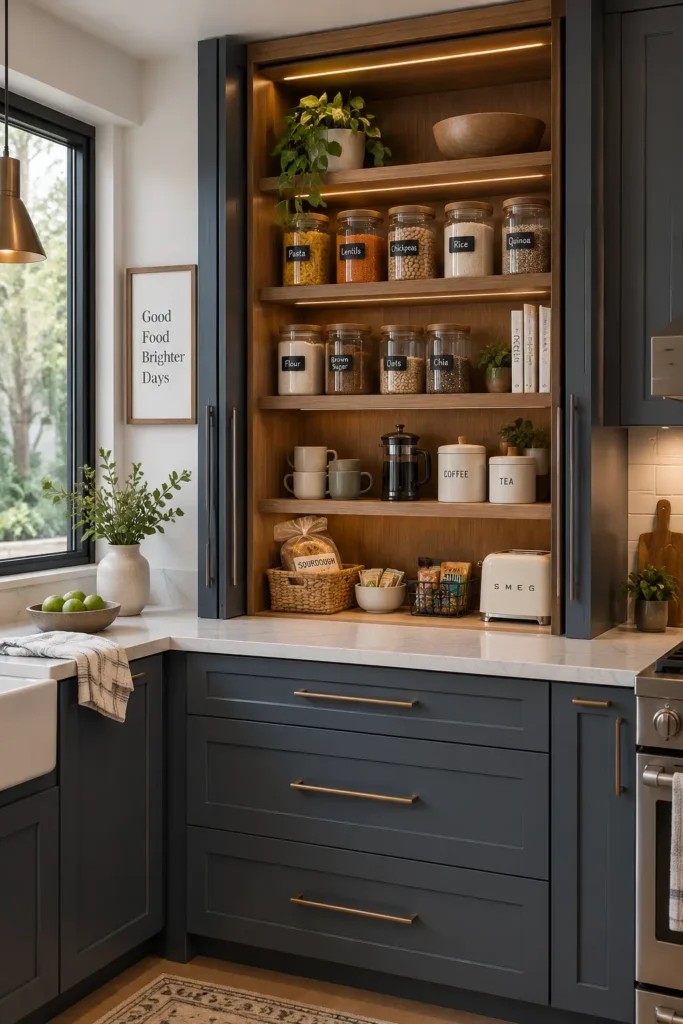
Transform one short section of countertop into a vertical pocket pantry that extends from the work surface to the ceiling.
Retractable doors can slide into the cabinet sides, leaving the complete interior accessible when open. Use the lower area for bread, tea, coffee, and frequently used breakfast supplies. Upper shelves can store jars, dry goods, and backup ingredients.
The original countertop should continue through the cabinet so it remains useful for preparing drinks or assembling breakfast. Include an electrical outlet only if small appliances will be stored and operated inside the pantry.
A deep blue or warm-gray exterior paired with a walnut interior and soft integrated lighting creates a strong focal point without making the pantry look oversized.
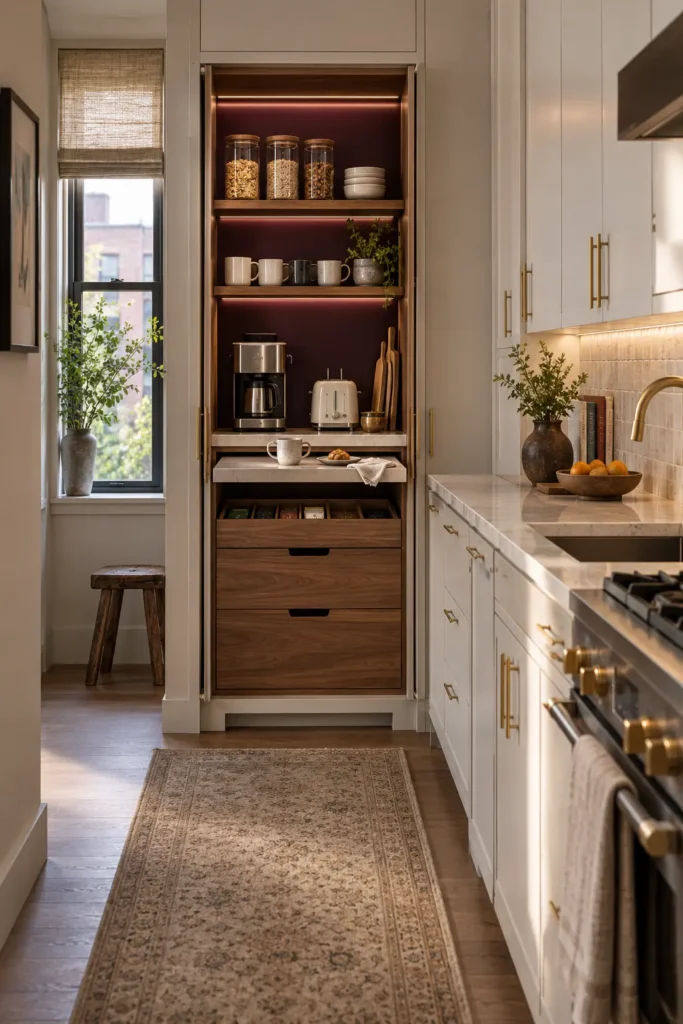
7. Create a Breakfast Pantry
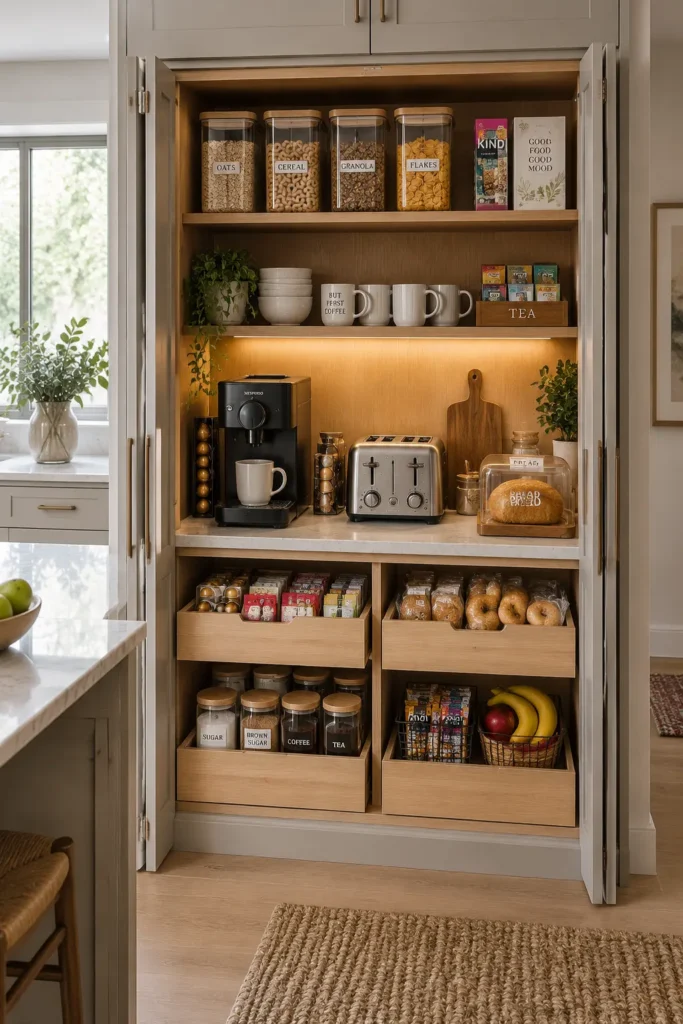
A breakfast pantry keeps the ingredients, appliances, and serving pieces used every morning in one organized cabinet.
Install a heat-resistant work shelf for a compact toaster and coffee maker. Store mugs and jars above, then use pull-out drawers below for cereal, bread, coffee pods, tea, and reusable food containers.
Pocket or bi-fold doors are ideal because they remain out of the way while the station is being used. When breakfast is finished, the doors can close to conceal the appliances and clear the main countertop.
Before using appliances inside an enclosed cabinet, include suitable electrical outlets, ventilation, heat clearance, and a durable work surface. Appliances should not operate behind closed doors.
8. Use the Peninsula Back
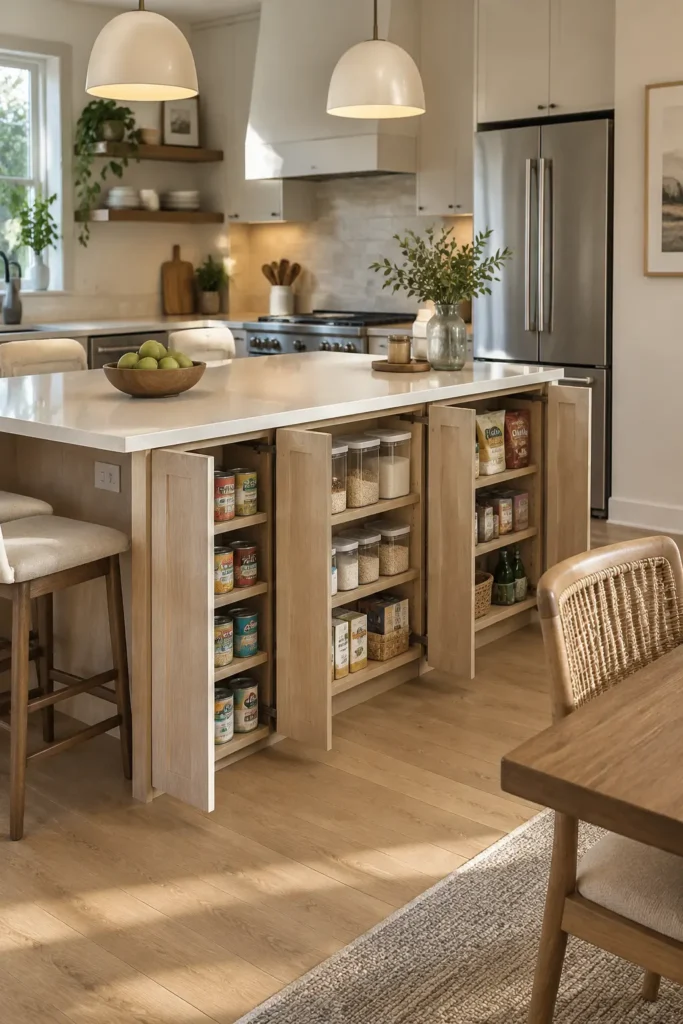
The back of a kitchen peninsula can provide hidden pantry storage without increasing its footprint. Install shallow cabinets on the side that faces the dining area or stools.
Cabinets approximately 8 to 10 inches deep work well for canned food, baking supplies, snacks, serving pieces, and unopened groceries. Push-open fronts maintain a clean appearance and prevent projecting handles from catching on clothing.
If the peninsula includes seating, preserve adequate knee room instead of covering its entire back with cabinets. Storage can occupy one end while the remaining area accommodates one or two stools.
Color-matched or lightly fluted fronts will allow the pantry to blend into the peninsula while still adding subtle texture.
9. Add a Pop-Up Pantry Inside the Kitchen Island
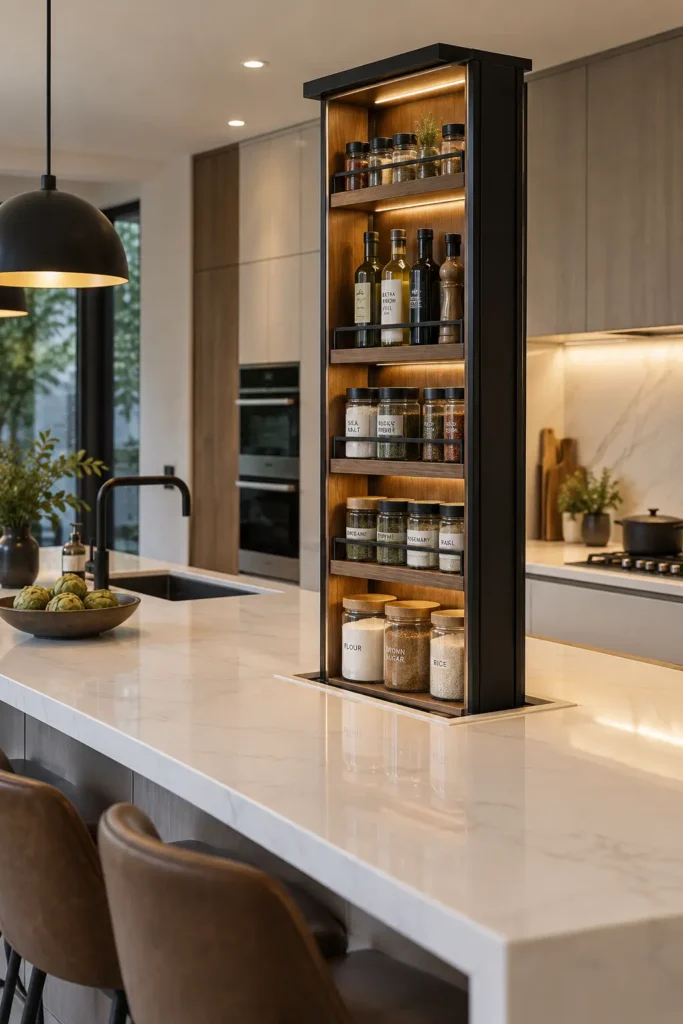
A kitchen island can provide more than a preparation surface. A hidden pop-up pantry system transforms unused island space into vertical storage without increasing the kitchen footprint.
With a push-button lift mechanism, a slim storage tower rises from inside the island countertop to reveal shelves for spices, oils, herbs, jars, and frequently used cooking essentials. When closed, the system disappears completely and the island returns to a clean uninterrupted surface.
This idea is ideal for modern kitchens where homeowners prefer fewer items displayed on countertops. Pair it with warm wood interiors, integrated LED lighting, and a stone or quartz island top for a high-end custom appearance.
10. Divide a Deep Drawer
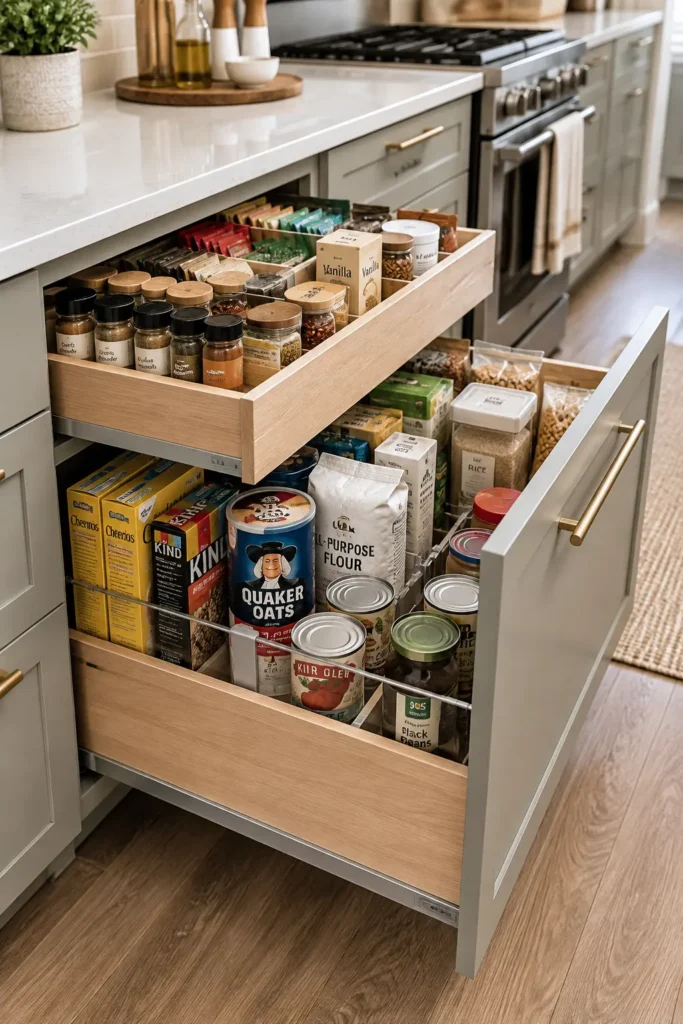
One deep base drawer can become a highly efficient pantry when it includes a second internal drawer.
The shallow upper level can hold spice packets, small jars, snacks, and baking supplies. The deeper lower drawer can accommodate cereal boxes, flour, rice, canned goods, and other bulky ingredients.
Full-extension runners make the contents at the back easy to reach. Adjustable dividers prevent packets and boxes from falling over when the drawer opens.
This solution is particularly valuable in a small kitchen because it increases organization without adding any new cabinetry. Store heavier products in the lower drawer and avoid overloading the internal sliding mechanism.
11. Add Toe-Kick Drawers
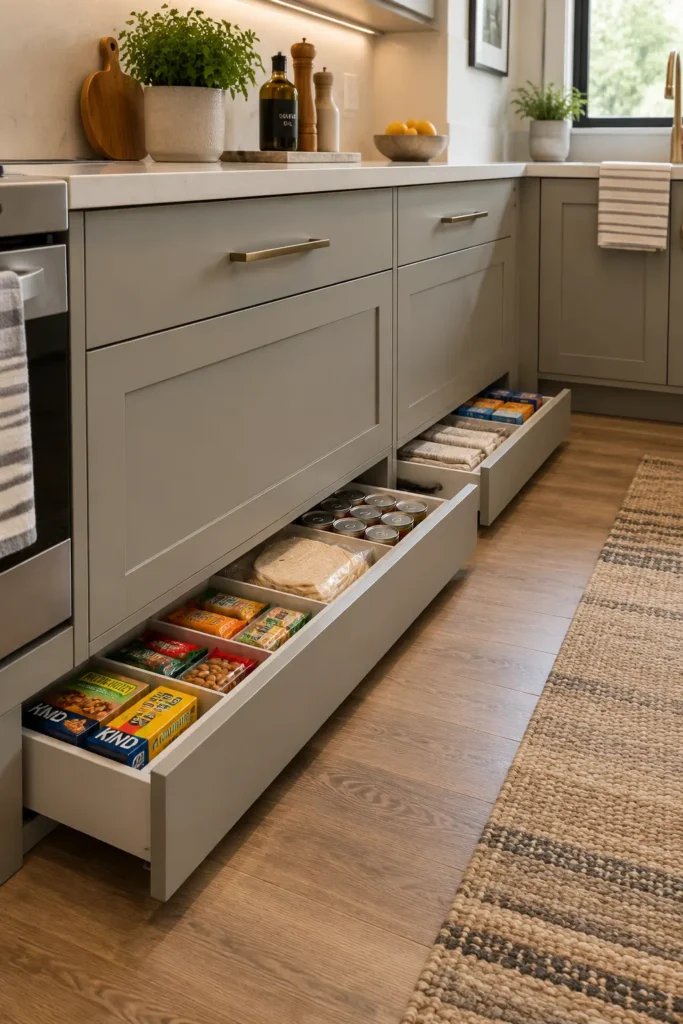
The recessed space beneath base cabinets is normally left empty, but it can accommodate shallow toe-kick drawers.
These low drawers are suitable for flat or infrequently used items such as sealed snack packets, extra wraps, unopened canned goods, kitchen linens, and lightweight backup supplies. Use a divided, wipe-clean interior so products remain organized.
Push-to-open hardware allows the drawer fronts to remain almost invisible when closed. Matching the fronts to the cabinetry creates the appearance of a continuous base.
Toe-kick pantry drawers work best in dry areas away from plumbing leaks, excessive heat, and moisture. Avoid using them for fragile containers or food that needs frequent inspection.
12. Use the Cabinet End
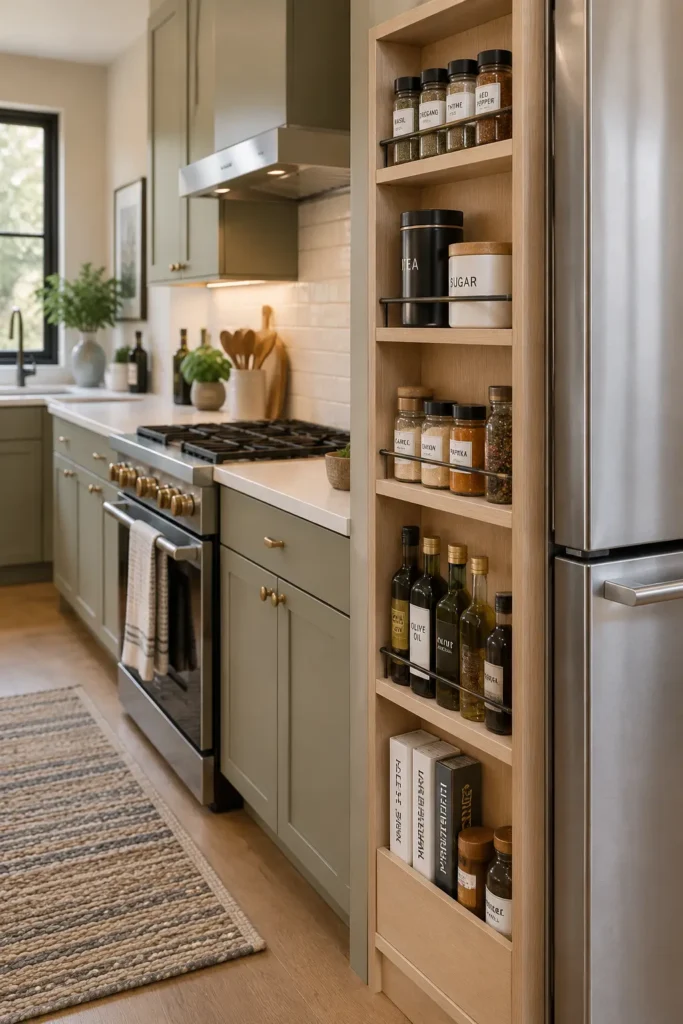
The exposed side of a cabinet, refrigerator surround, or tall cupboard can become a convenient shallow pantry.
Install shelves approximately 3 to 5 inches deep with raised rails to secure spices, cooking oils, sauces, tea tins, and small jars. Place the most frequently used ingredients near the cooking area, where they can be reached without opening a cabinet.
Varying the shelf heights will accommodate both short spice containers and taller bottles. A small lower bin can hold packets or kitchen wraps.
To create a modern integrated appearance, match the shelves to the countertop or use natural oak with slender black or brass rails. Keep the arrangement selective so the end panel does not become visually cluttered.
13. Install a Fold-Down Pantry Workstation
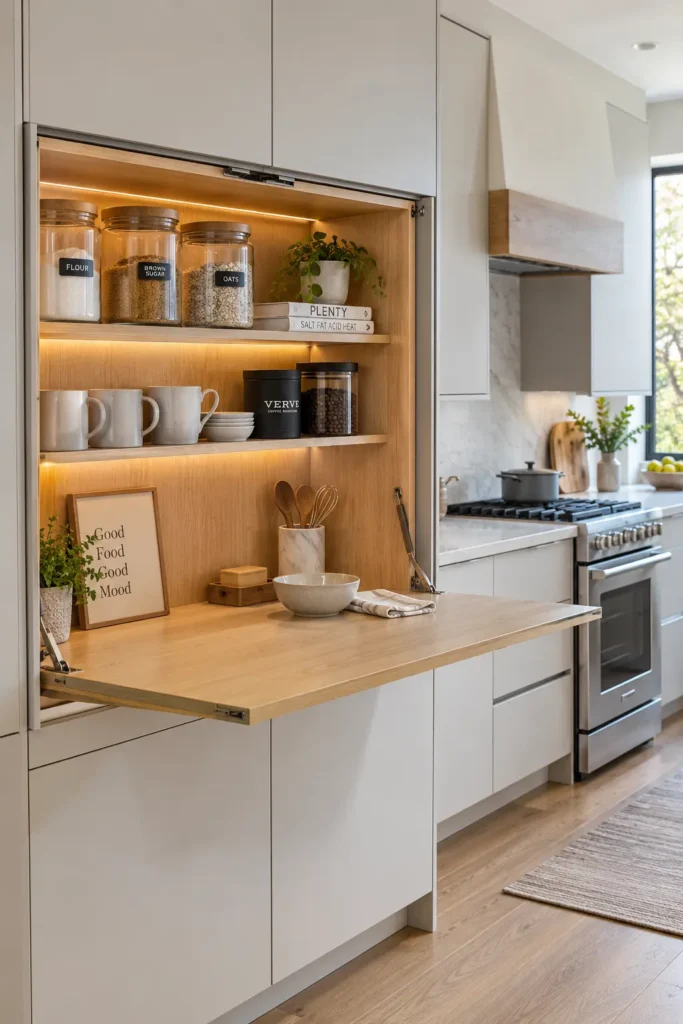
A fold-down pantry workstation combines hidden storage with additional preparation space, making it perfect for small kitchens where a separate pantry or extra counter area is not possible.
The wall-mounted cabinet opens downward to reveal organized pantry shelves, jars, containers, and a compact preparation surface. When not in use, it folds away and appears like a sleek modern cabinet.
Use it for coffee preparation, baking supplies, breakfast items, or everyday pantry essentials. Add soft-close hinges, warm interior lighting, and matching cabinetry finishes to make it feel like part of the original kitchen design rather than an added storage unit.
This multifunctional solution is especially useful in apartments, studio kitchens, and compact homes where flexibility is essential.
14. Create a Corner Tambour Pantry
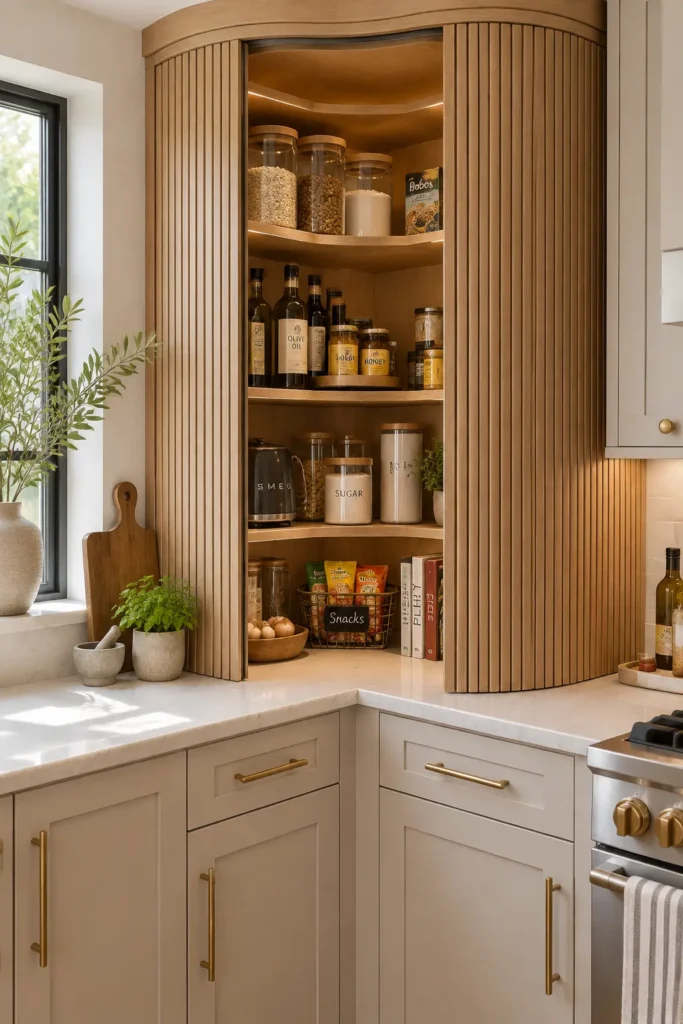
A countertop corner can be difficult to access, particularly when two cabinet runs meet. A curved tambour pantry turns that awkward space into concealed storage.
The flexible door rolls sideways, eliminating the clearance required by a hinged door. Inside, adjustable shelves or a compact rotating organizer can hold oils, jars, breakfast food, baking ingredients, or a small appliance.
Continue the countertop into the pantry so the lower level remains useful as a work surface. An internal outlet may be added for an appliance, provided ventilation and manufacturer clearances are respected.
A fluted-oak tambour front introduces warmth and texture while keeping the corner streamlined when closed.
15. Add a Mobile Pantry
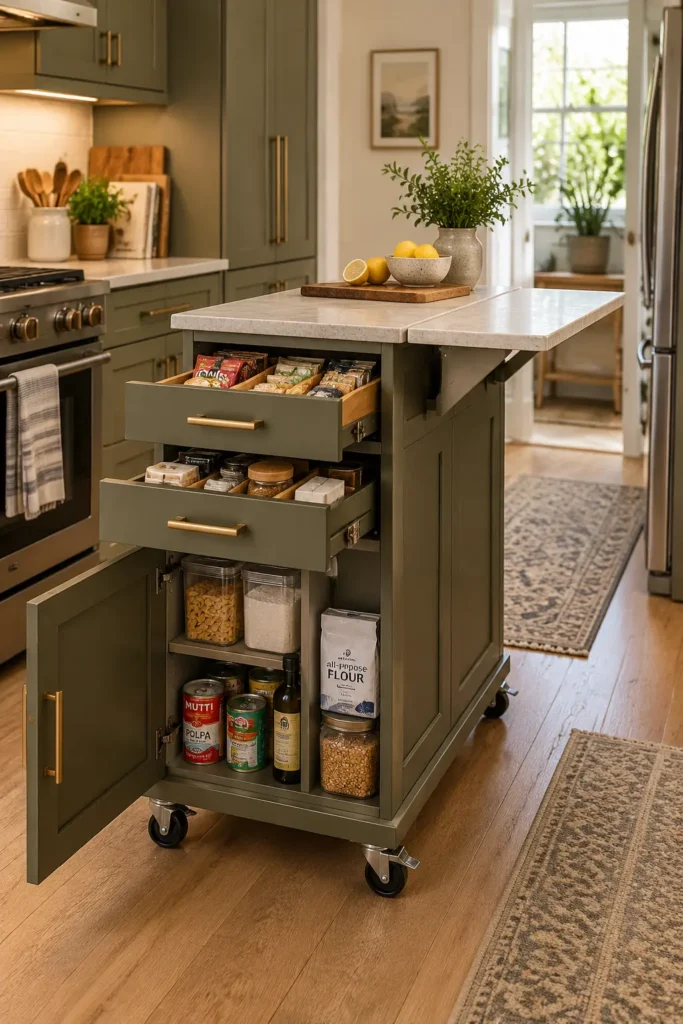
A narrow mobile pantry workstation provides food storage and additional preparation space without becoming a permanent fixture.
Choose a cart approximately 18 to 24 inches wide with closed drawers or cabinets rather than several exposed shelves. Use the lower section for heavy pantry staples and the upper drawers for snacks, utensils, or baking supplies.
A drop-leaf top can expand the work surface when needed and fold away afterward. Lockable recessed casters keep the unit stable during food preparation while allowing it to be moved or parked at the end of a cabinet run.
A matte olive, clay, or burgundy base paired with a light stone-look top will make the cart feel like modern kitchen furniture rather than a basic utility trolley.
16. Organize the Pantry Door
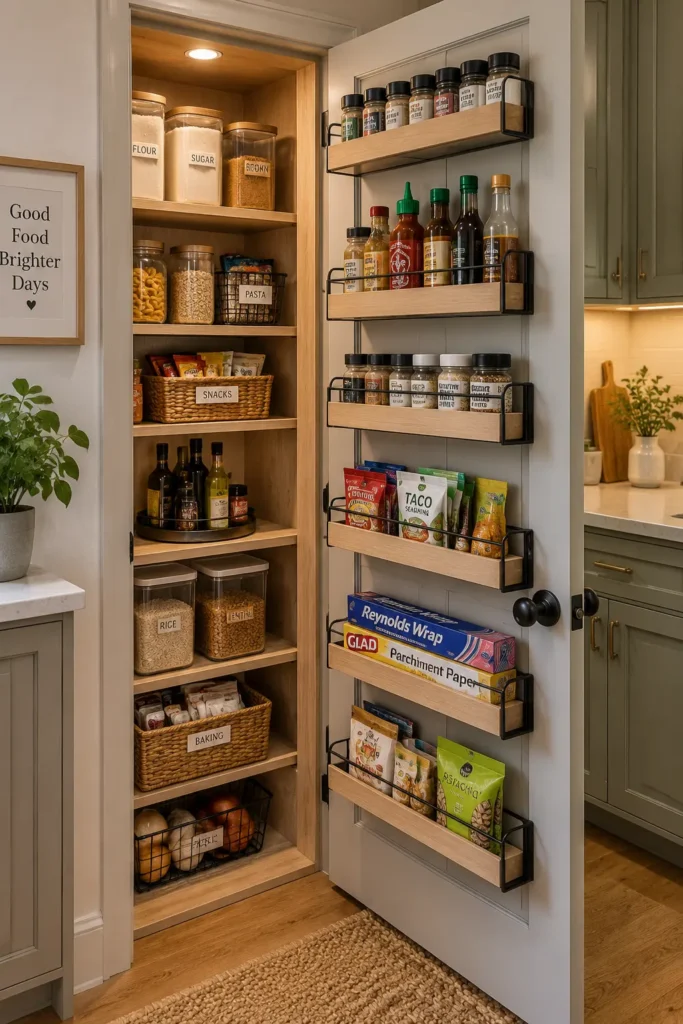
The inside of a pantry or utility-closet door can hold small ingredients that would otherwise overcrowd the shelves.
Install a secure rail system with adjustable shallow baskets. Use the baskets for spices, condiment bottles, snack packets, food wraps, and other lightweight supplies.
Choose metal baskets with slim wooden fronts for a more polished appearance. Vary the spacing to accommodate different container heights, but confirm that the loaded baskets will not strike the pantry shelves when the door closes.
Door-mounted storage is most successful when shallow items are placed on the door and larger products remain inside the closet. Check the door hinges and organizer weight limit before installation.
17. Use the Wall Behind a Door
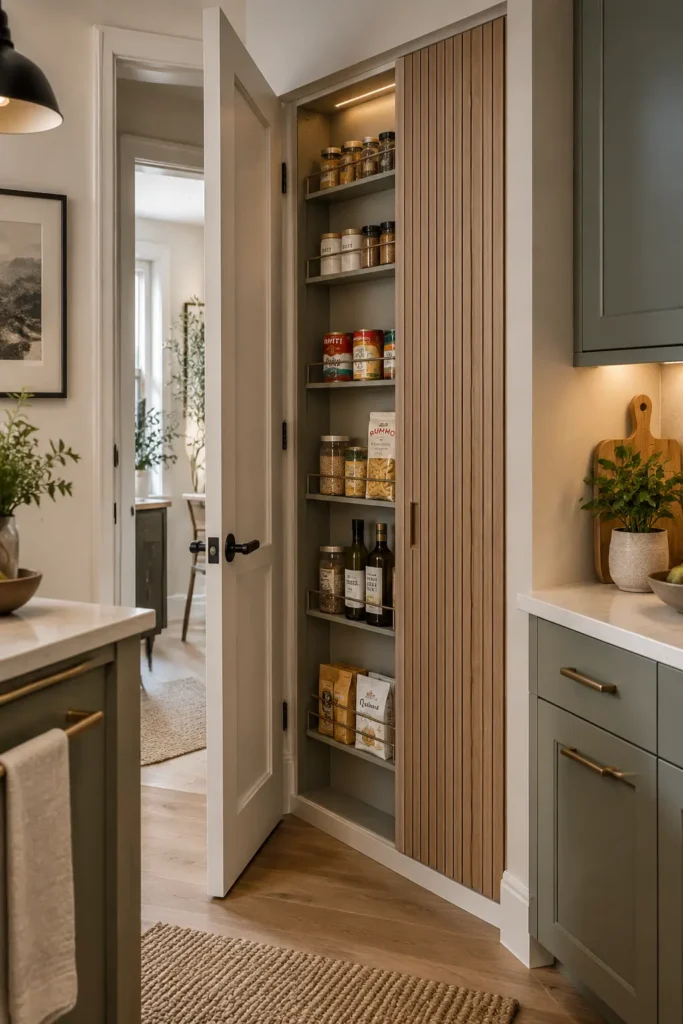
The wall concealed when a kitchen door is open is easy to overlook. If adequate clearance exists, it can accommodate a pantry only 5 to 7 inches deep.
Install shallow shelves for canned food, spices, jars, and packets. Conceal them behind a lightweight sliding panel made from fluted wood, perforated metal, or smooth color-matched material.
The sliding front keeps the pantry visually quiet without requiring additional door-swing space. When open, the shallow arrangement makes every ingredient immediately visible.
Carefully measure the kitchen door, handle, baseboards, and walking path. The pantry must not interfere with the door’s movement or reduce the required clearance around the entrance.
18. Fix a Blind Corner
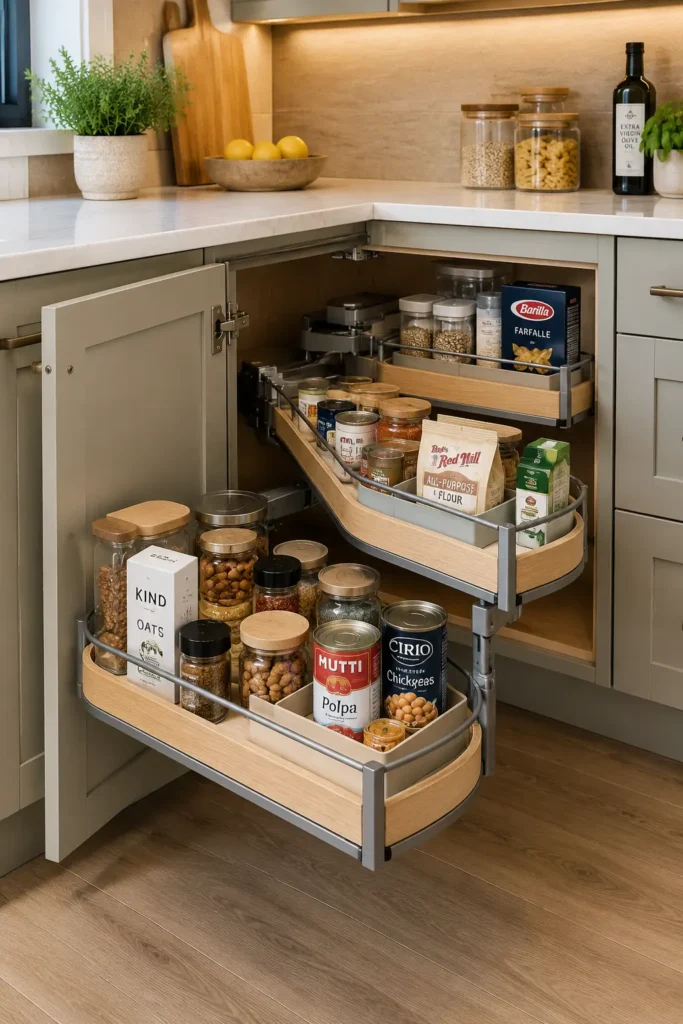
A blind corner cabinet can offer substantial space, but much of it becomes unusable when products disappear into the back. Articulated pull-out trays solve this problem by bringing the entire contents outside the cabinet.
When the door opens, the front tray swings outward and the rear tray follows into the accessible area. Use raised-sided shelves to keep cans, jars, and packages secure during movement.
Store heavier pantry staples on the lower trays and lighter ingredients above. Group similar products in removable bins so the shelves remain easy to clean.
Choose pale-oak trays with slim graphite or stainless-steel rails for a clean modern finish. High-quality full-extension hardware is important because the system will carry considerable weight.
Choosing a Small Pantry
Before selecting a pantry solution, identify which unused area of the kitchen offers the best opportunity. This may be a narrow refrigerator gap, an exposed cabinet end, a difficult corner, an existing closet, or space within the current cabinetry.
Measure the available width, depth, and height, then account for appliance ventilation, door swings, electrical outlets, baseboards, and walking clearance. A pantry that technically fits but obstructs movement will make a small kitchen more difficult to use.
Consider what you actually need to store:
- Use narrow pull-outs for bottles, cans, and spices.
- Choose drawers for packets, baking supplies, and bulk ingredients.
- Reserve upper shelves for lightweight backup groceries.
- Store heavy containers close to the floor.
- Keep everyday products between waist and eye level.
- Use concealed storage if the kitchen opens directly into a living area.
Avoid buying large sets of matching containers before measuring the shelves. Containers should improve visibility and fit the pantry—not reduce its usable capacity.
Pantry Design Tips
A small pantry should feel connected to the kitchen rather than added as an afterthought. Repeat one or two materials already present in the room, such as the cabinet color, countertop finish, hardware, or natural wood tone.
Internal lighting is particularly helpful in deep cabinets and enclosed pantry closets. Motion-activated LED strips can illuminate shelves without requiring a visible fixture.
Keep shelves reasonably shallow whenever possible. Deep shelves may provide more volume, but they often cause smaller packages to disappear behind larger ones. Pull-out trays or bins are a better choice when deep storage cannot be avoided.
Leave a little empty space in each zone. A pantry packed to maximum capacity is harder to maintain and leaves no room for new groceries.