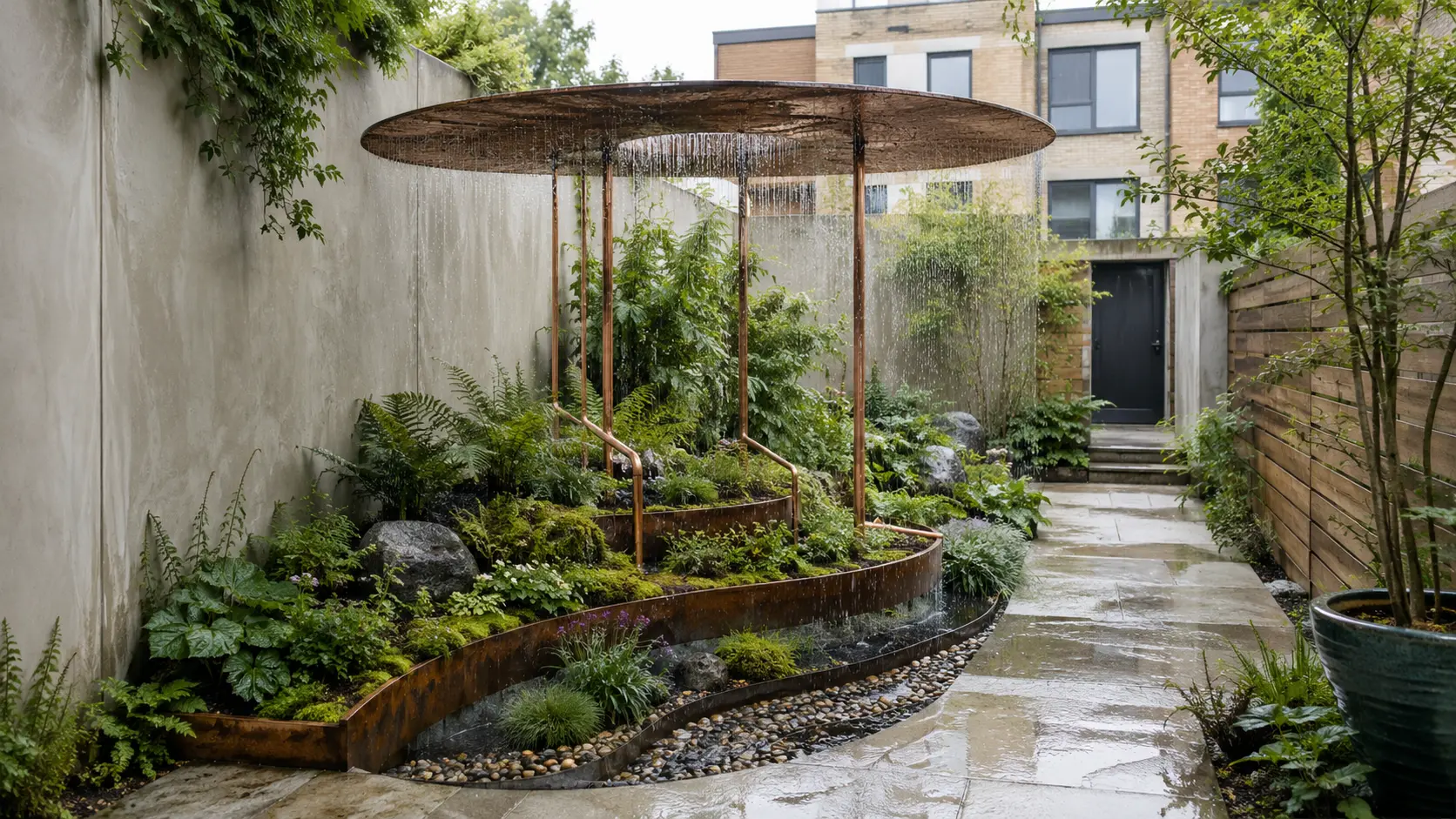
Rain gardens are no longer limited to simple planted depressions filled with rocks and native flowers. With thoughtful planning, they can become some of the most visually striking features in a modern outdoor space. Sculptural water channels, illuminated basins, curved seating, and architectural materials can turn practical stormwater management into a beautiful part of the landscape.
The following ideas combine rainwater collection with creative, contemporary design. Each concept offers a distinctive way to slow runoff, support drainage, and create an outdoor space that feels intentional rather than purely functional.
1. Create a Rainwater Art Wall With a Mirror Basin
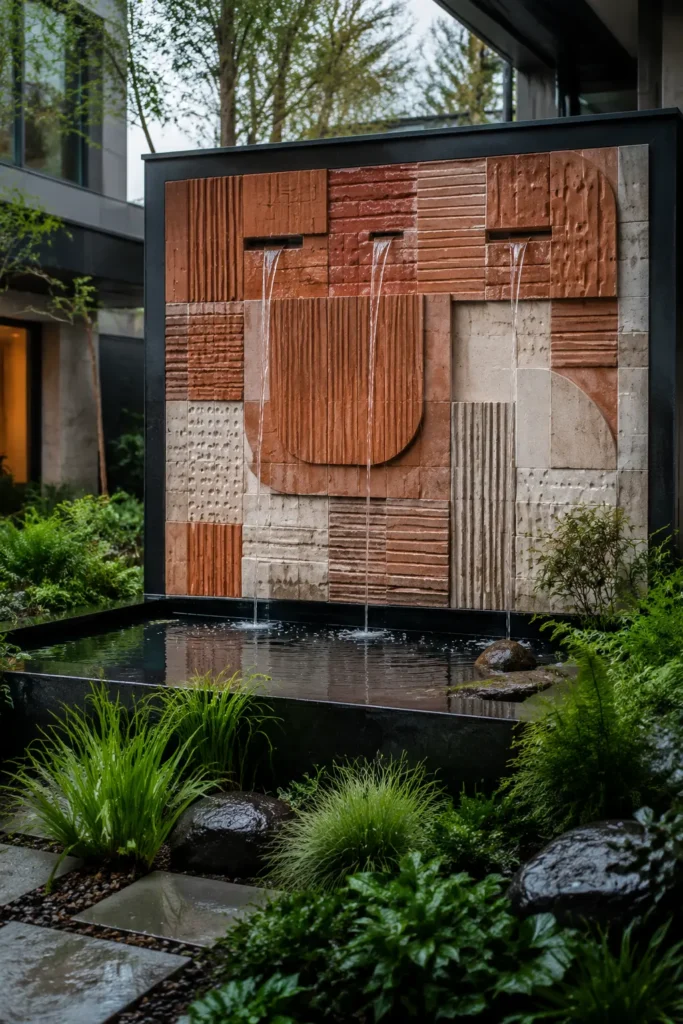
Turn an exterior wall into a living water installation by covering it with textured ceramic tiles and adding narrow openings for rainwater to flow through. Allow the water to fall in delicate streams into a shallow black basin surrounded by ferns, ornamental grasses, and glossy foliage. The dark surface will reflect the wall and surrounding greenery, giving a compact courtyard a dramatic sense of depth.
Connect the feature to a roof downspout so it receives water naturally during rainfall. An overflow channel can direct excess water from the reflective basin into a deeper planted area, keeping the design both decorative and functional.
2. Build a Sunken Circular Rain Garden Lounge
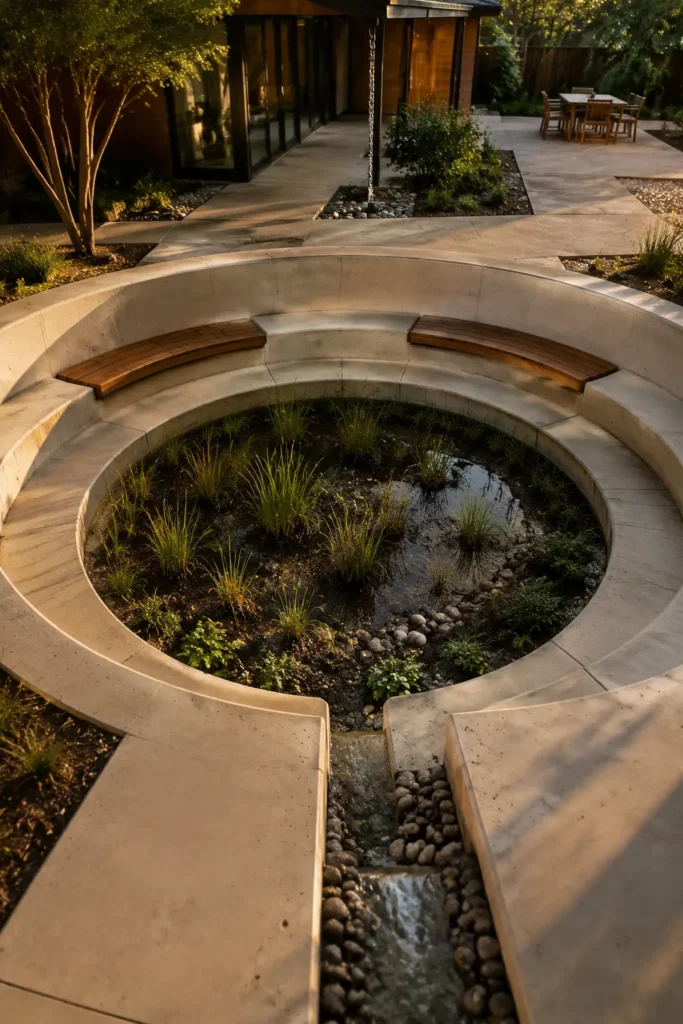
Place a circular rain garden at the centre of a sunken outdoor lounge and surround it with curved built-in seating. The planted basin becomes a lush focal point, while the seating creates an intimate place for conversation, reading, or relaxing outside. Pale concrete and warm timber accents can keep the space feeling soft, modern, and inviting.
A narrow pebble-lined channel can carry runoff from the patio into the central garden. Use plants that tolerate temporary wet conditions but can also handle dry periods between storms.
3. Illuminate a Neon-Edge Night Rain Garden
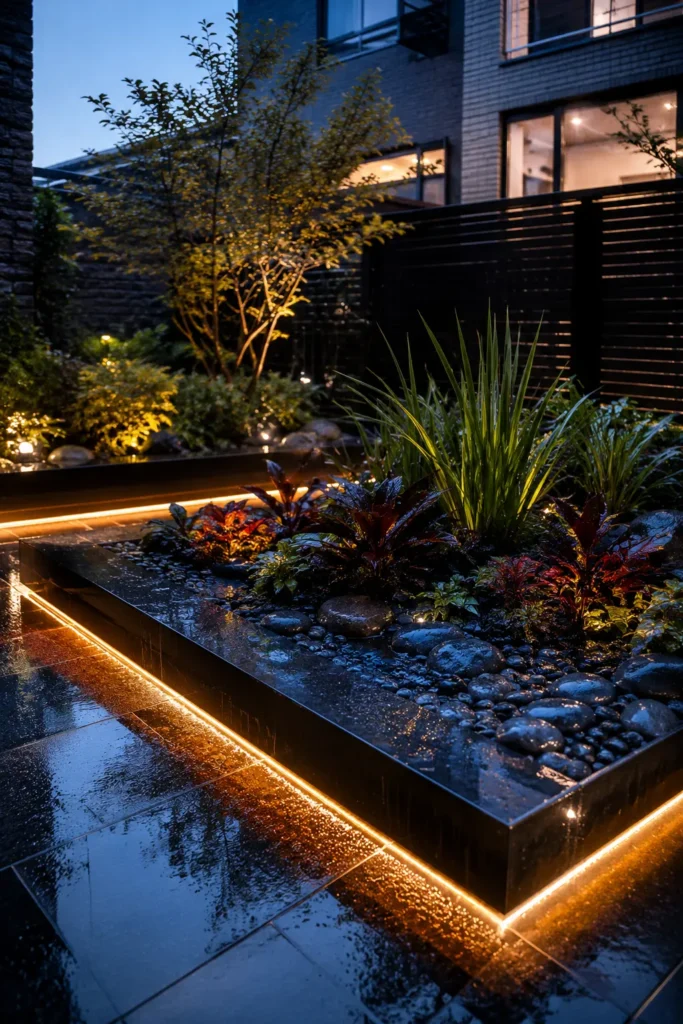
Give a rain garden an unexpected evening identity by outlining its raised edge with concealed waterproof lighting. A warm amber glow against black stone, wet paving, and burgundy foliage will create a sophisticated effect without making the garden look overly bright. After rainfall, reflective surfaces will make the illuminated border appear even more dramatic.
Keep the lighting hidden beneath the edge so only the glow is visible. Dark basalt, charcoal gravel, red-toned leaves, and upright green grasses will complete the futuristic yet natural palette.
4. Design a Waterfall Stair Rain Garden
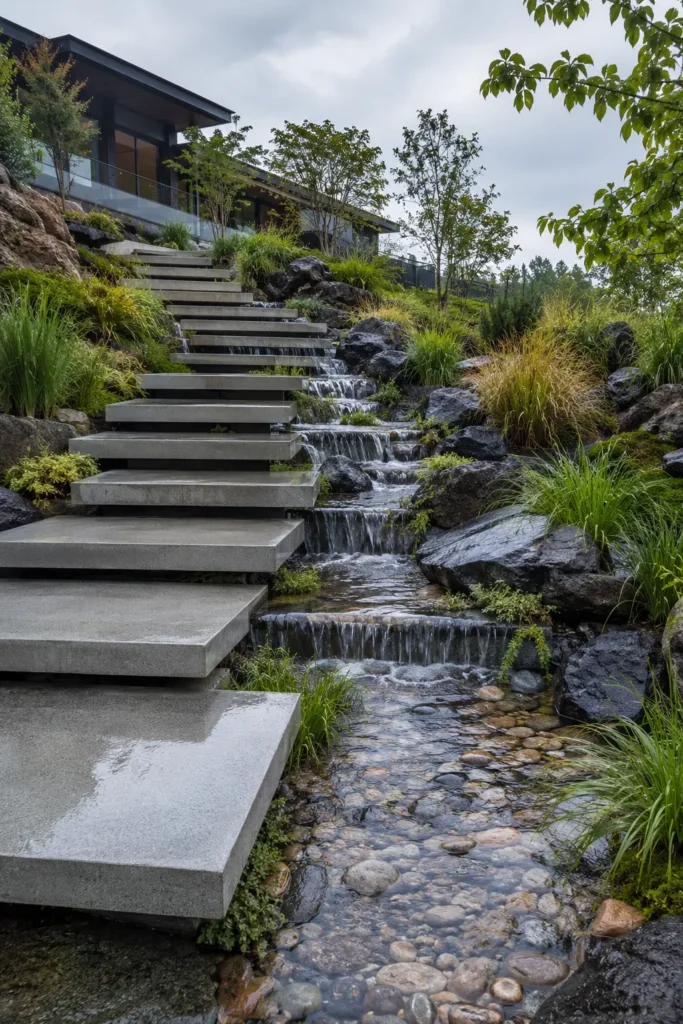
On a sloped property, transform the space beside an outdoor staircase into a series of small rainwater cascades. Broad floating concrete steps can sit alongside shallow planted channels that guide runoff gradually down the slope. Instead of rushing toward the bottom, water moves through several levels where stones, moss, and grasses help slow and filter it.
The final level should lead into a larger infiltration bed capable of holding excess runoff. This design makes difficult sloping ground useful while creating the look of a natural stream woven through modern architecture.
5. Shape a Rain Garden Amphitheatre
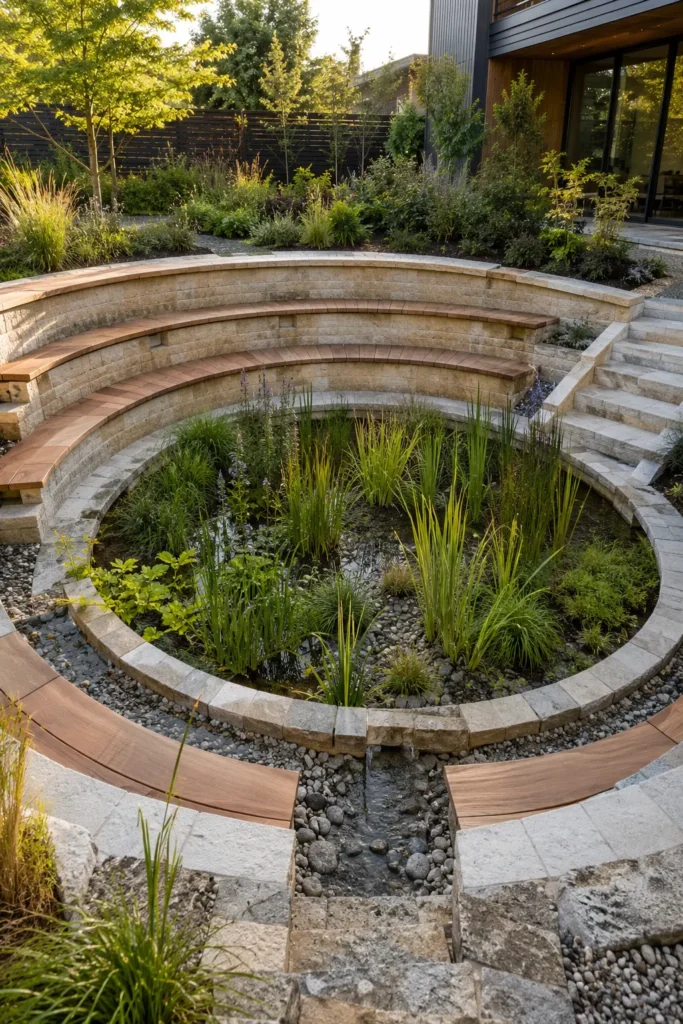
Design a semi-circular rain garden with curved seating terraces rising around a central planted basin. The result feels like a miniature outdoor amphitheatre where the landscape, rather than a stage, becomes the main attraction. It can provide a peaceful gathering area while also managing runoff from the surrounding patio.
Small gravel channels between the terraces can direct water toward the centre. Timber seat tops, pale stone walls, and tall wetland plants will balance architectural structure with soft natural movement.
6. Add Suspended Rainwater Channels
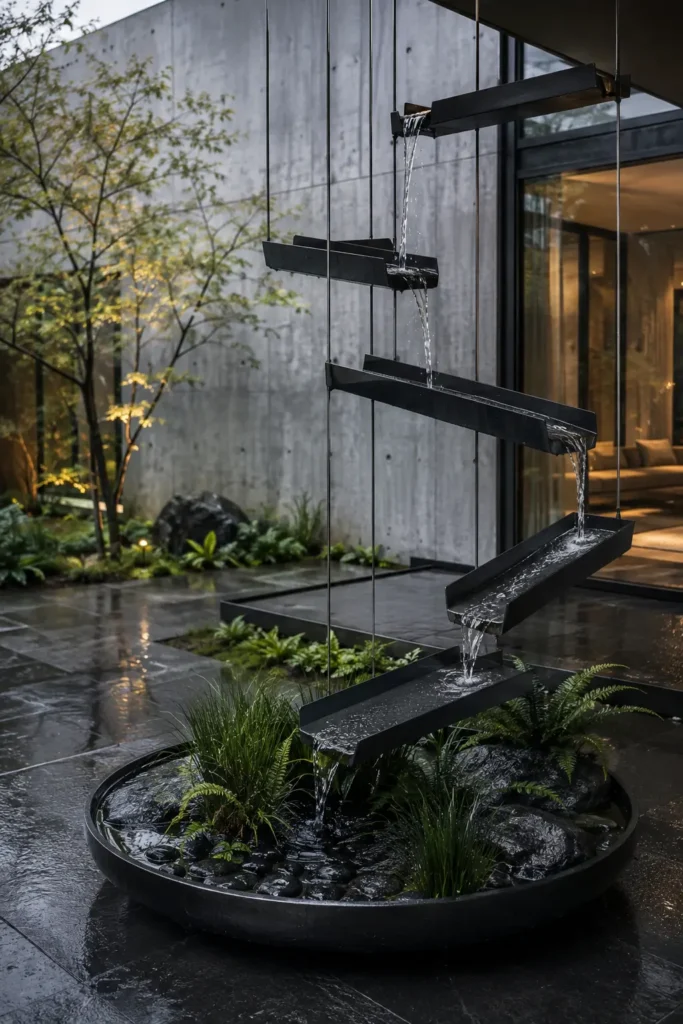
Replace an ordinary downspout with a series of slim metal channels suspended at staggered heights. During rainfall, water travels through one channel before falling into the next, creating a sculptural cascade above the rain garden. A circular basin filled with black stones, ferns, and fine grasses can collect and absorb the water below.
The channels should be securely supported and angled to keep water moving in the correct direction. Matte-black metal will make the installation feel especially striking against concrete walls and lush green planting.
7. Create a Corten Portal Rain Garden
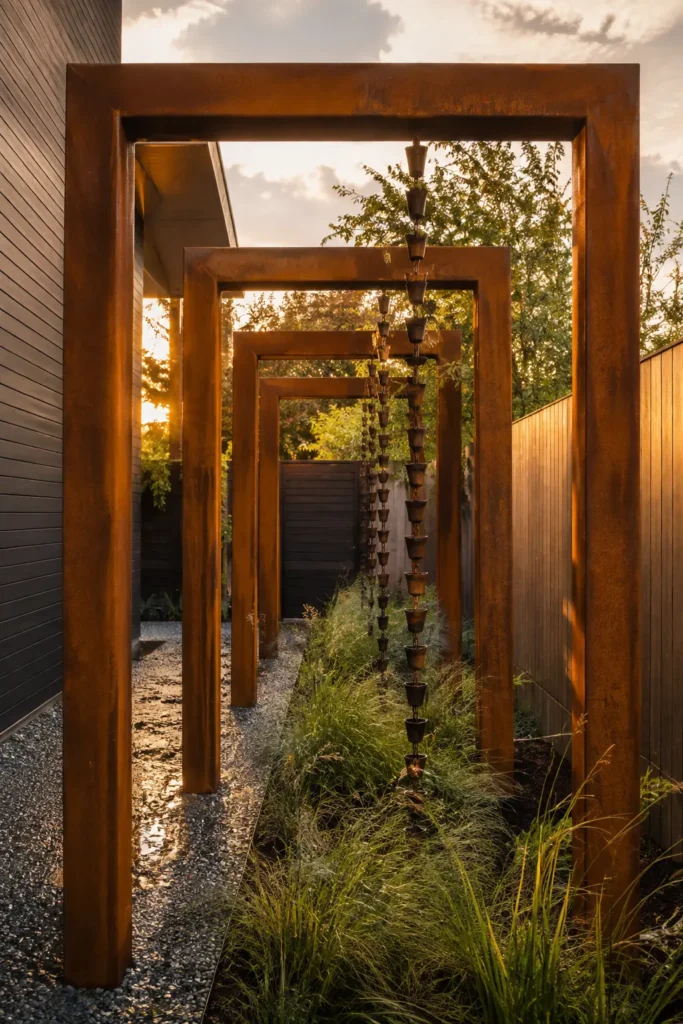
Turn a narrow side yard into an architectural walkway using a sequence of rectangular Corten-steel frames. Suspend rain chains from selected portals so roof runoff travels through the structures into a long planted bed below. The repeating frames create depth, while the rust-coloured metal forms a beautiful contrast with green ornamental grasses.
Use permeable gravel for the walkway and keep the rain garden running parallel to it. Over time, the weathered steel will develop an even richer patina, allowing the feature to become more beautiful as it ages.
8. Install a Rainwater Light Column Garden
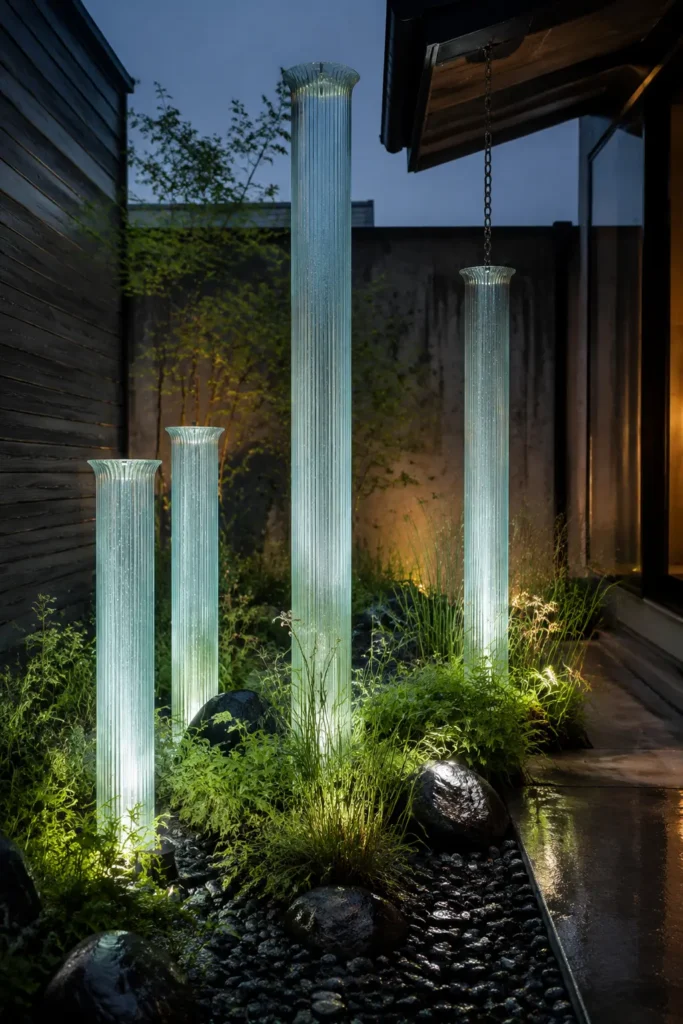
Create an artistic rain garden using translucent, ribbed columns that receive and display collected rainwater. Lighting hidden at their bases will illuminate droplets and changing water levels, turning the columns into glowing sculptures after dark. Different column heights can produce a more dynamic installation without overcrowding the garden.
Place the columns among black pebbles, low ferns, and delicate grasses to soften their vertical form. Each column should connect to a safe overflow route that releases water gradually into the surrounding planted basin.
9. Lay Out a Pixel Wetland Courtyard
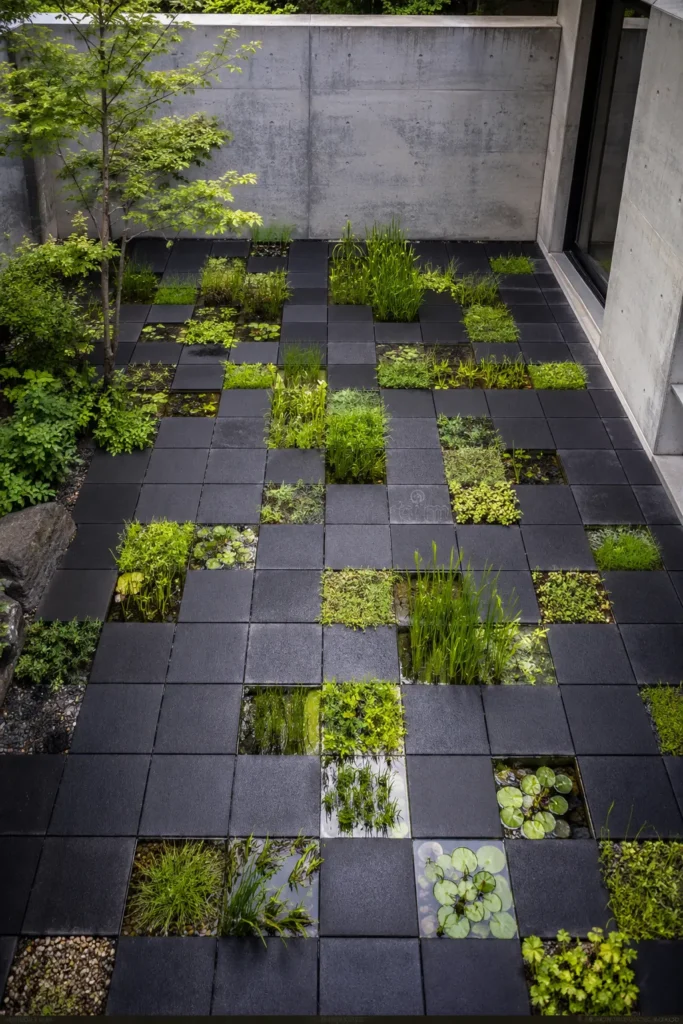
Give a small courtyard a digital-inspired identity by arranging square pavers and planted water cells in a pixel-style grid. Some squares can contain moss, sedges, miniature grasses, or shallow water, while others provide a stable walking surface. The contrast between strict geometry and organic planting makes the design feel modern and experimental.
Use permeable joints and connect the planted cells beneath the surface so water can travel between them. Charcoal pavers will make the different shades and textures of greenery stand out more clearly.
10. Design a Black Mirror Rain Garden
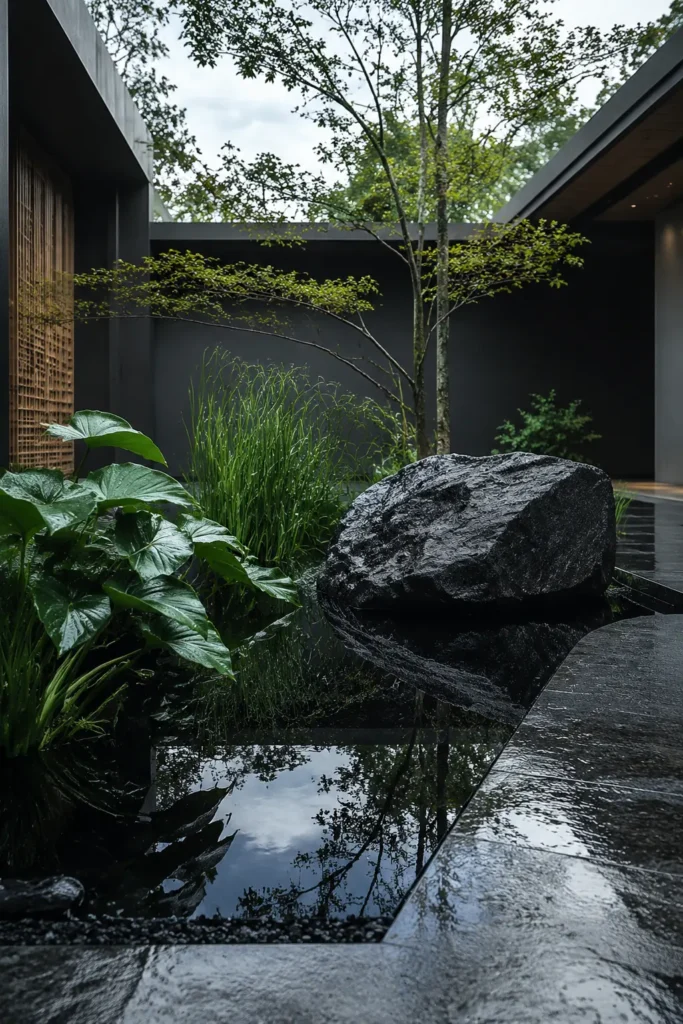
Create a peaceful, minimal rain garden using shallow reflective water, deep charcoal stone, and a single oversized boulder. Architectural plants with large glossy leaves can emerge from the dark surface, producing a bold contrast without requiring a complicated colour scheme. Reflections of the sky, trees, and surrounding architecture will allow the garden to change throughout the day.
The water should remain shallow and move gradually into a planted infiltration area rather than functioning as a permanent pond. This design works especially well in Japanese-modern courtyards and other calm, uncluttered landscapes.
11. Build an Immersive Rain Garden Tunnel
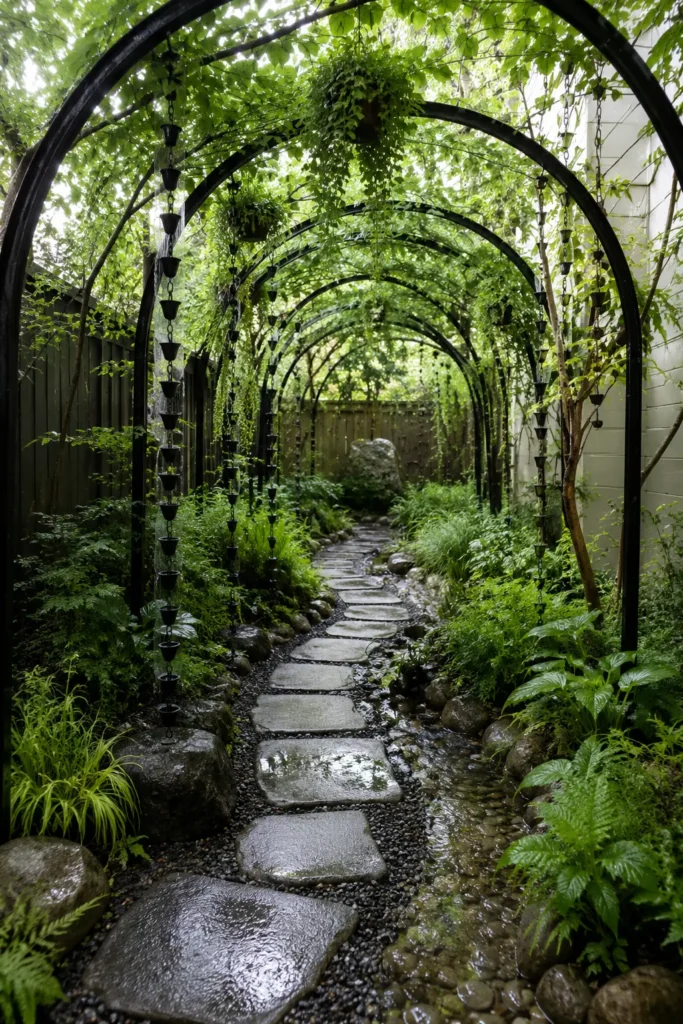
Create a walk-through rain garden by placing a series of curved metal arches over a narrow permeable pathway. Train climbing plants over the hoops and add rain chains between them so water falls gently into planted channels on either side. Ferns, sedges, hanging greenery, and wet stepping stones will make the walkway feel like a hidden garden tunnel.
The pathway should sit slightly above the drainage areas so it remains usable during rainfall. With time, the foliage will wrap around the structure and make the space feel increasingly private and immersive.
12. Form a Topographic Ribbon Rain Garden
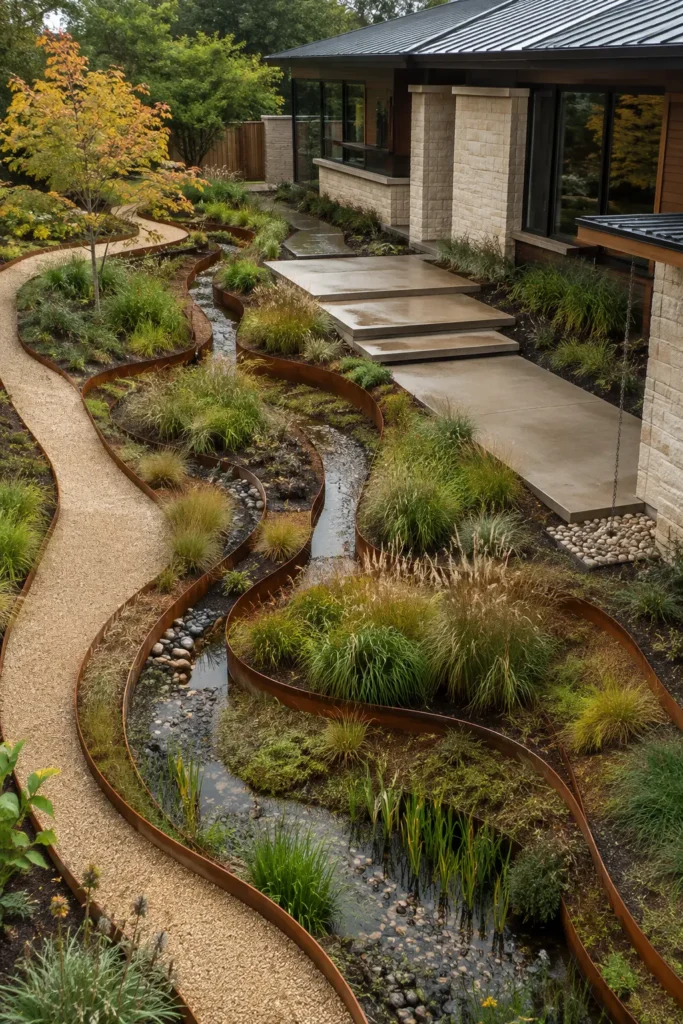
Shape the landscape into flowing planted ribbons that resemble contour lines on a topographic map. Curved Corten-steel edging can create alternating raised beds and shallow depressions, guiding rainwater naturally from one zone into the next. Different grass heights and ground-cover textures will emphasize the movement of each ribbon.
This design works particularly well in a large front yard where the complete pattern can be viewed from the house or street. A gravel path following one of the curves will allow people to move through the landscape without interrupting the water-management system.
Make Rainwater Part of the Design
A beautiful rain garden should do more than hide a drainage problem. It can turn the movement, reflection, and sound of rainwater into an intentional part of the outdoor experience. Whether the landscape includes glowing columns, sculptural channels, curved seating, or planted topographic ribbons, the most successful design will connect visual creativity with responsible water management.
Before construction, consider the property’s soil drainage, runoff volume, underground utilities, and distance from the home’s foundation. Once those practical requirements are addressed, a rain garden can become one of the most distinctive and sustainable features in the entire landscape.