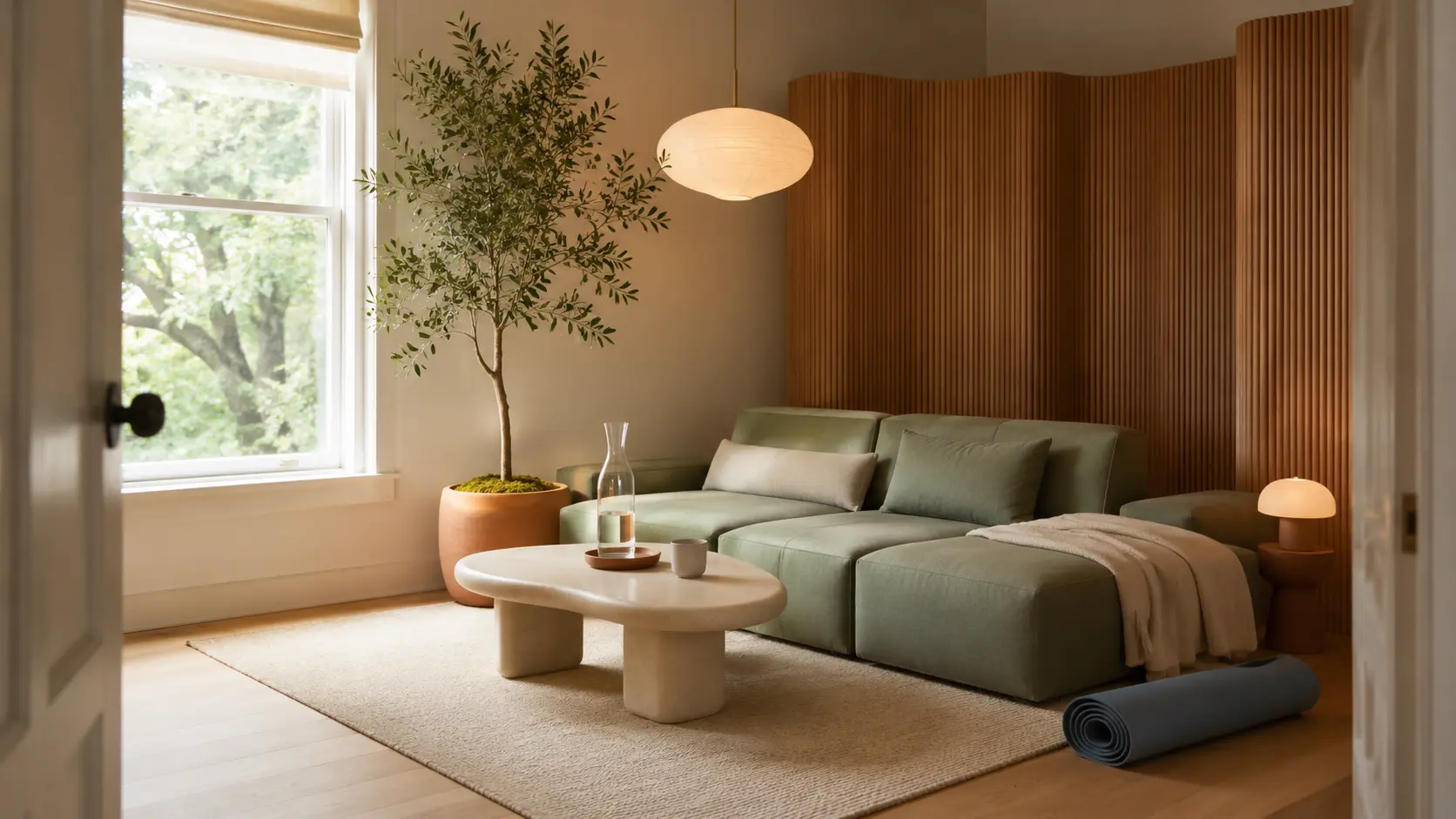
A wellness room should make it easier to slow down, stretch, read, journal, or simply sit without household distractions competing for your attention. The best wellness room ideas use thoughtful furniture placement, calming materials, controlled lighting, and enough open floor to support real daily routines.
You don’t need a large home or a private spa budget. A spare bedroom, finished basement corner, enclosed porch, or underused office can become a calming retreat with one strong focal point and a few carefully chosen materials.
1. Sculptural Conversation Pit
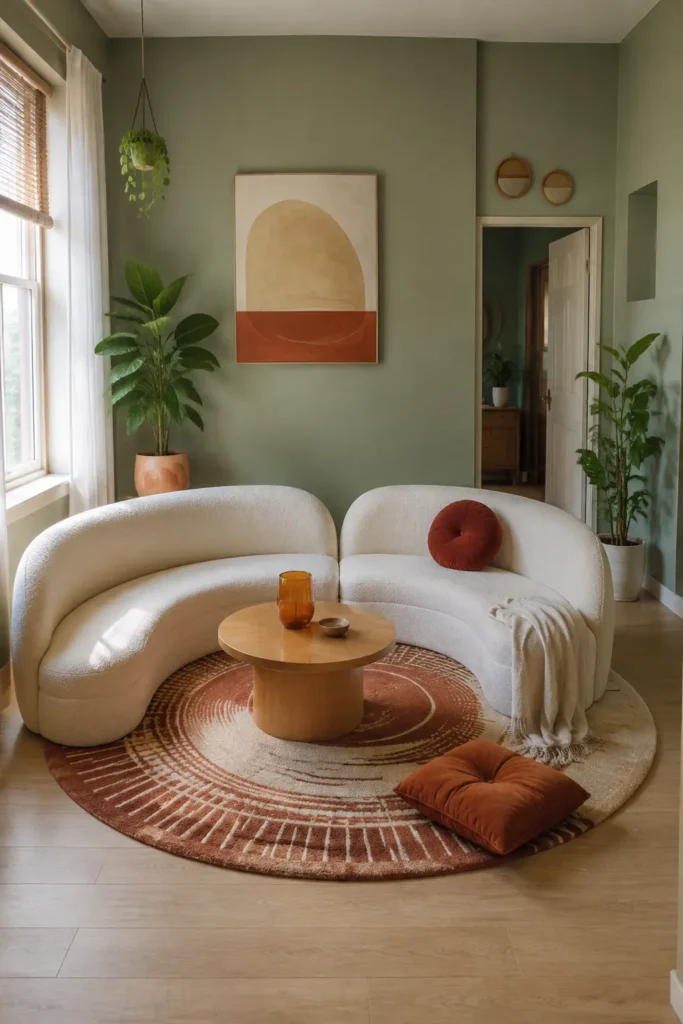
A conversation pit can become a quiet, low-level retreat when it is designed for reflection rather than entertaining. Use a shallow recessed platform, or mimic the look with a 6-by-8-foot low rug, curved modular seating, and a round wood table placed at the center. Choose clay, olive, or warm taupe upholstery and leave a clear walking path around the outside.
The lowered visual profile keeps the room open and encourages slower movement. If construction isn’t realistic, use modular floor sofas with firm seat cushions; they’re easier to rearrange and safer in homes with children.
2. Indoor Garden Bench
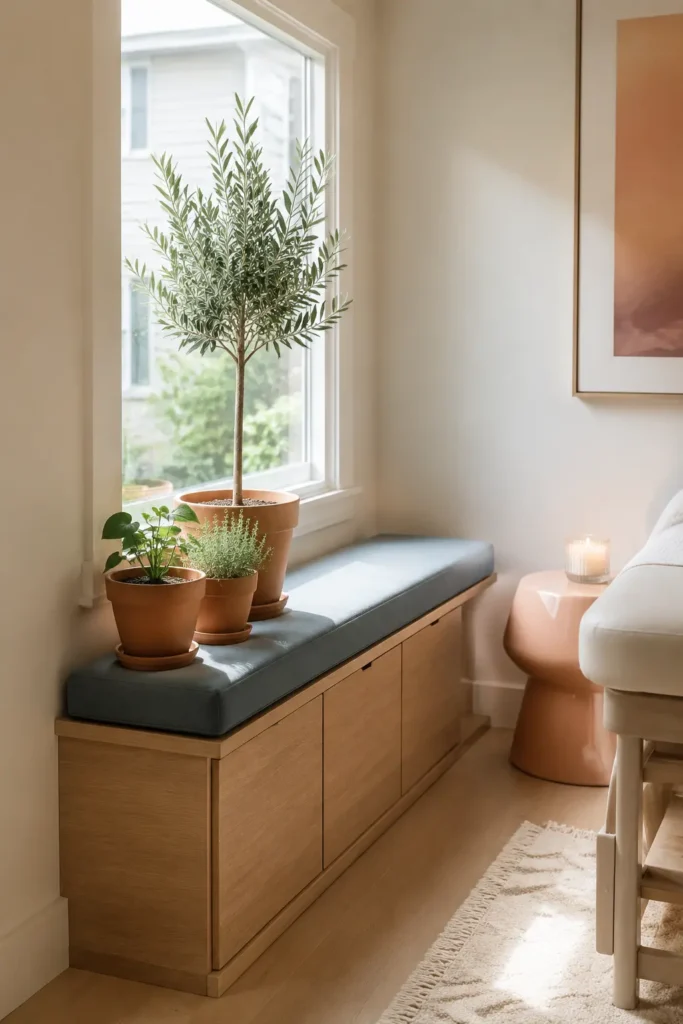
Place a 20-to-24-inch-deep bench beneath the brightest window and use it as a reading, breathing, or morning tea station. A fitted oatmeal linen cushion, hidden storage drawers, and one narrow oak shelf create a built-in appearance without filling the room with furniture. Add two or three plants in matching clay pots rather than scattering small containers everywhere.
The bench should sit low enough to preserve the view, usually around 17 to 19 inches high. Choose washable fabric if pets use the room, since natural linen can show soil and plant-water marks.
3. Japanese Tea Ceremony Nook
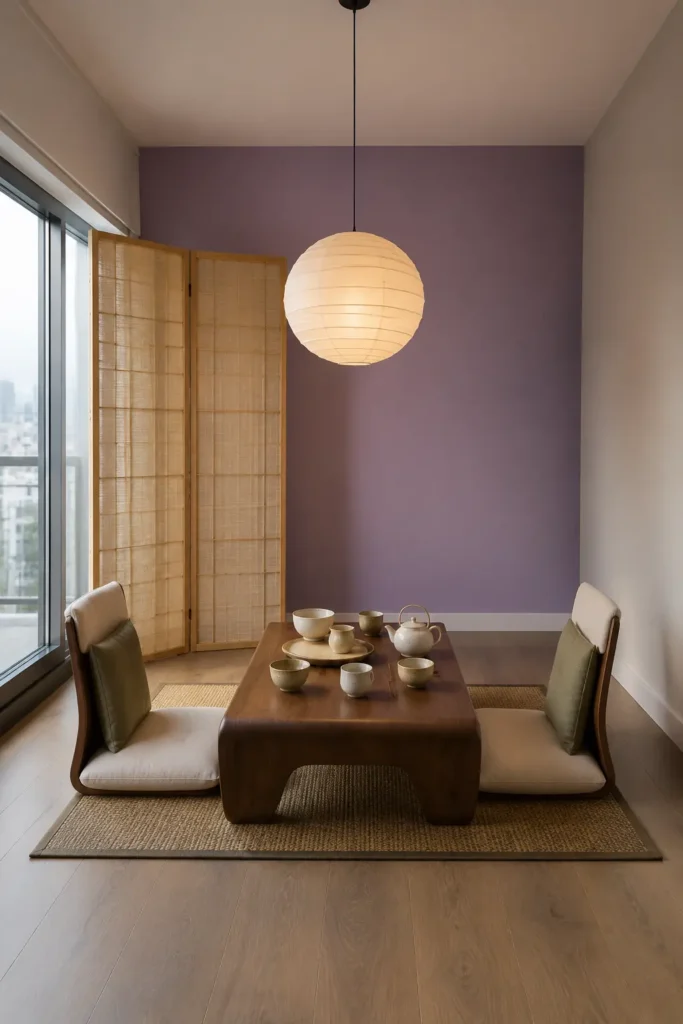
Create a mindful tea area with a low rectangular table, a woven tatami-style mat, and two supportive floor chairs. Dark walnut or smoked oak gives the arrangement visual weight, while handmade stoneware in cream, gray, and muted green keeps it quiet. Store tea, trays, and linens in one closed cabinet so the tabletop remains mostly clear.
A table about 12 to 15 inches high feels intentional without becoming uncomfortable. Keep at least 30 inches of open space around the mat so people can sit down and stand up without bumping nearby furniture.
4. Draped Canopy Relaxation Bed
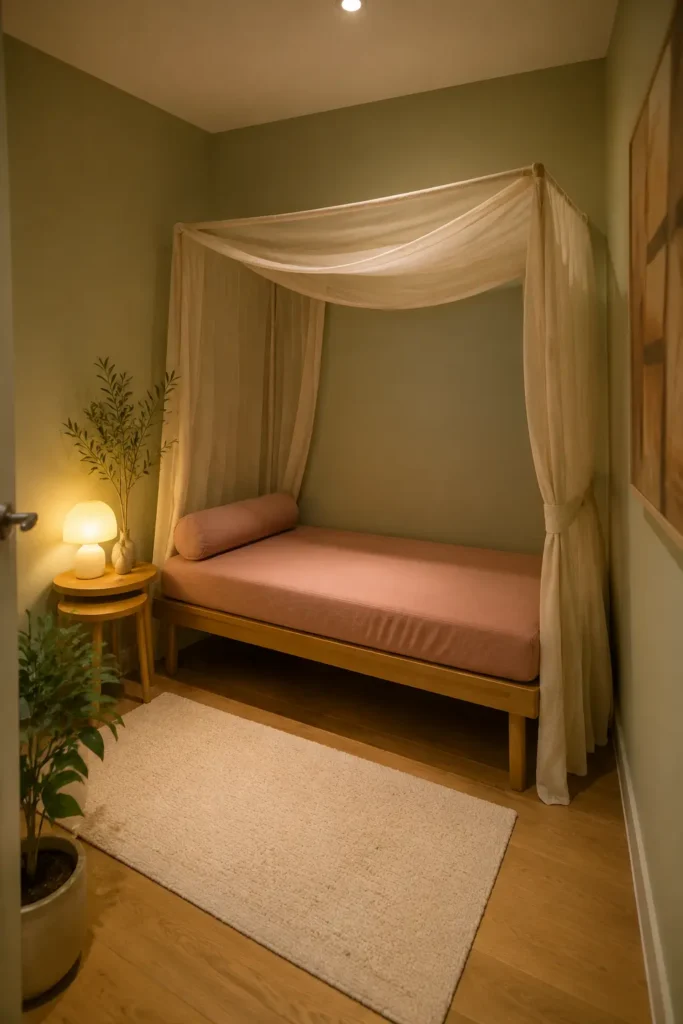
Use a low daybed rather than a regular bed, then suspend washed-linen panels from a ceiling track or a freestanding four-poster frame. Soft mushroom, sand, or dusty blue fabric filters light and makes the retreat feel separate from the rest of the house. Add one firm bolster and a slim side table for water, books, or a journal.
Avoid heavy bedding that makes the area look like a bedroom. A 3-inch latex or high-density foam topper under a washable cover provides comfort for stretching and lounging while keeping the platform neat.
5. Curved Plaster Reading Alcove
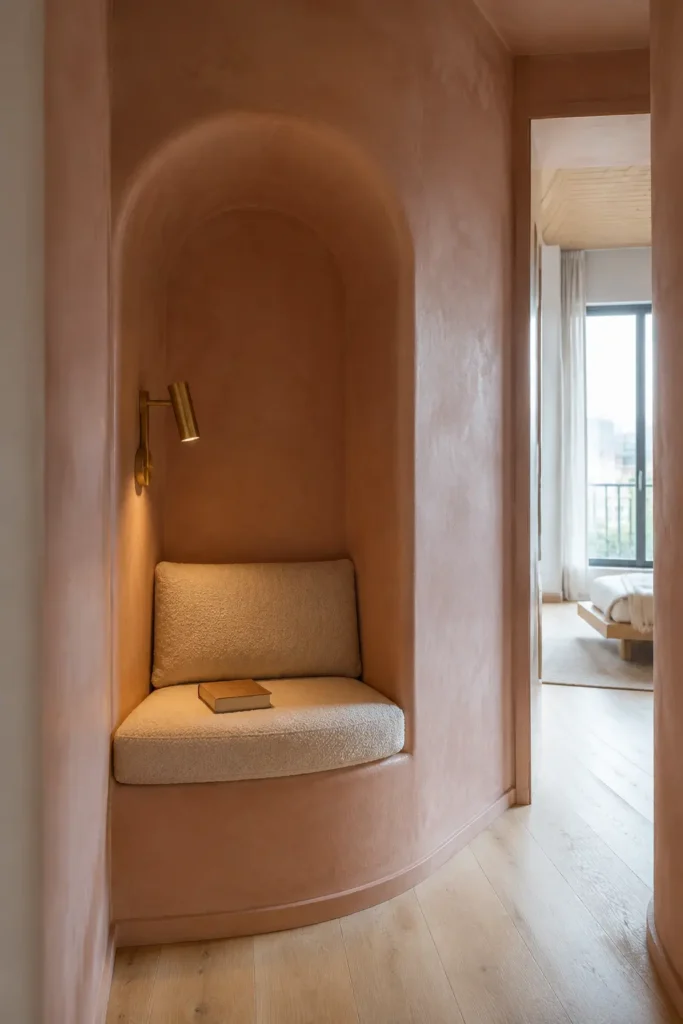
If the room has a deep wall niche or unused corner, shape it into a curved reading alcove with a plaster-effect finish and a built-in seat. Limewash, mineral paint, or textured clay tones can create the soft, hand-finished surface without the cost of full plasterwork. Add a small wall-mounted reading light rather than a floor lamp that narrows the walkway.
A curved opening changes the sight line as you enter, making the retreat feel more private. In a rental, create the effect with a freestanding curved bookcase and removable textured wallpaper behind the chair.
6. Wellness Library and Journaling Wall
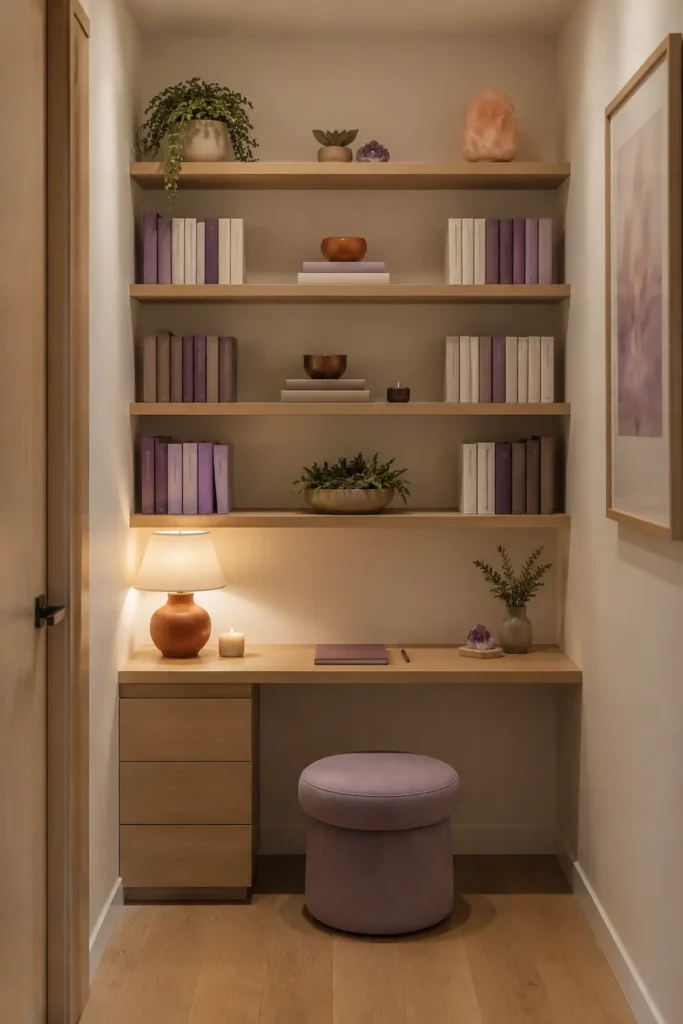
Use one wall for a restrained collection of books, journals, meditation tools, and writing supplies. A shallow oak shelving system with a 16-inch-wide writing ledge is more useful than a full-depth bookcase, especially in a small room. Keep books grouped by color or height and use closed drawers below for chargers, stationery, and less attractive supplies.
The wall should feel like a resource station, not a crowded display. Leave roughly one-third of the shelves empty so the arrangement has visual breathing room and remains easy to maintain.
7. Indoor Hammock Reading Zone
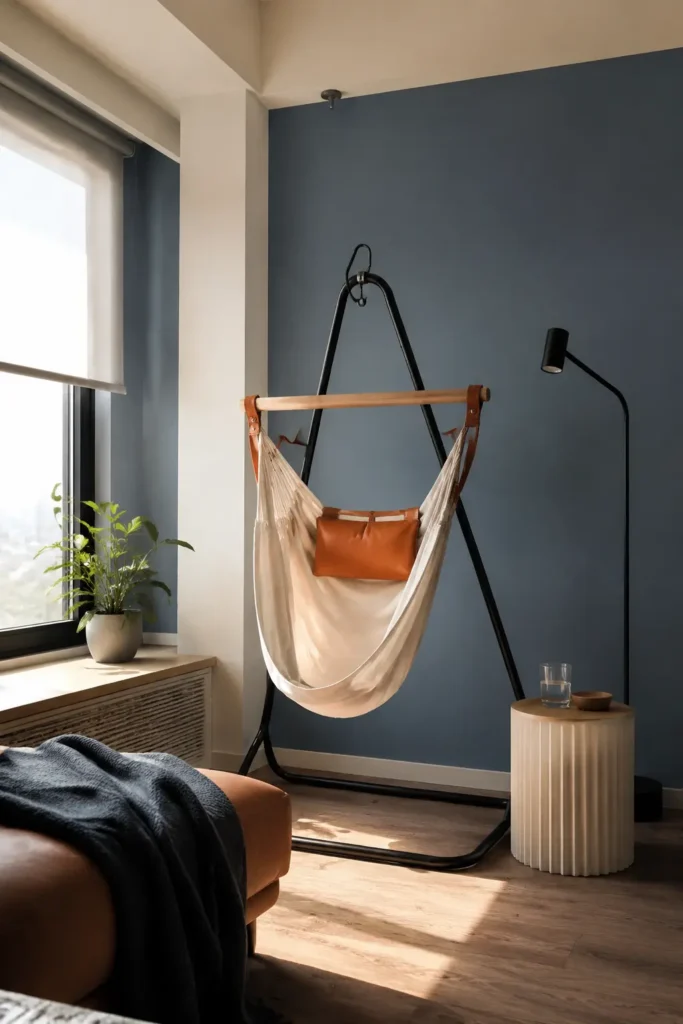
A hammock chair can provide gentle movement without the footprint of a lounge chair. Choose a cotton canvas or woven sling in an undyed neutral, place it near a window, and keep at least 30 inches of clearance in front and behind the swing path. Pair it with a floor lamp and a small movable stool for books.
Ceiling installation must be attached to a structural joist or properly rated anchor. If that isn’t possible, use a freestanding hammock frame; it is less visually open but avoids unsafe mounting.
8. Low-Maintenance Biophilic Plant Wall
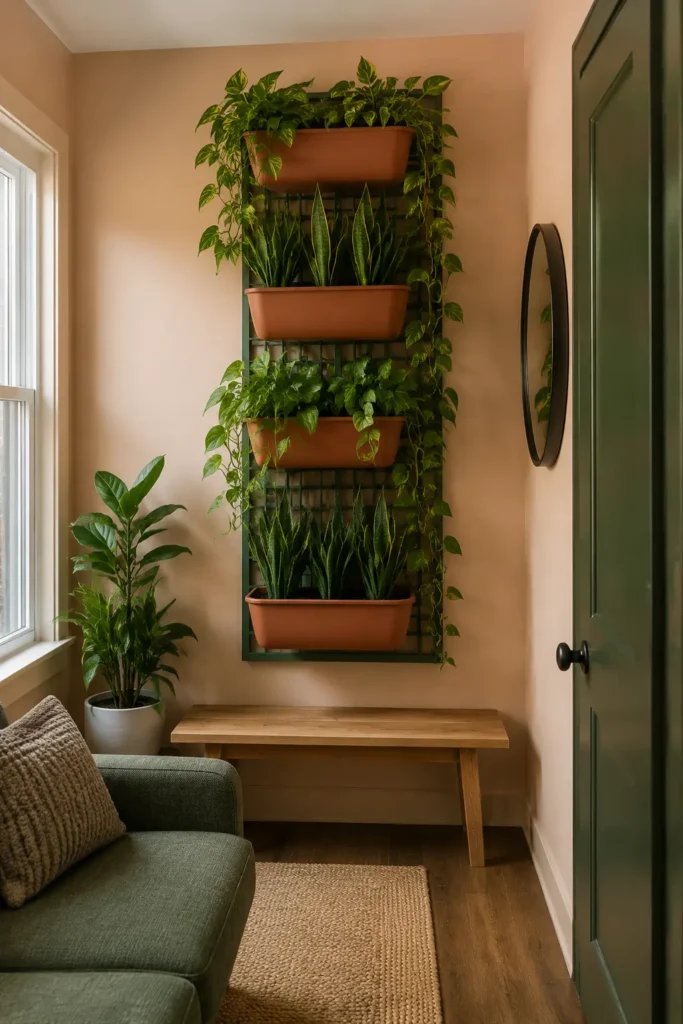
Instead of building a complicated living wall, install a modular grid of planters on one wall and fill it with hardy plants such as pothos, snake plants, peperomia, or preserved moss panels. Keep the planters in one finish—matte white, terracotta, or dark green—to prevent the arrangement from looking busy.
Place a waterproof tray or washable flooring beneath the lowest row to protect the wall and floor from drips. In low-light rooms, use a discreet full-spectrum grow light on a timer rather than relying on decorative lighting alone.
9. Tactile Clay Feature Wall
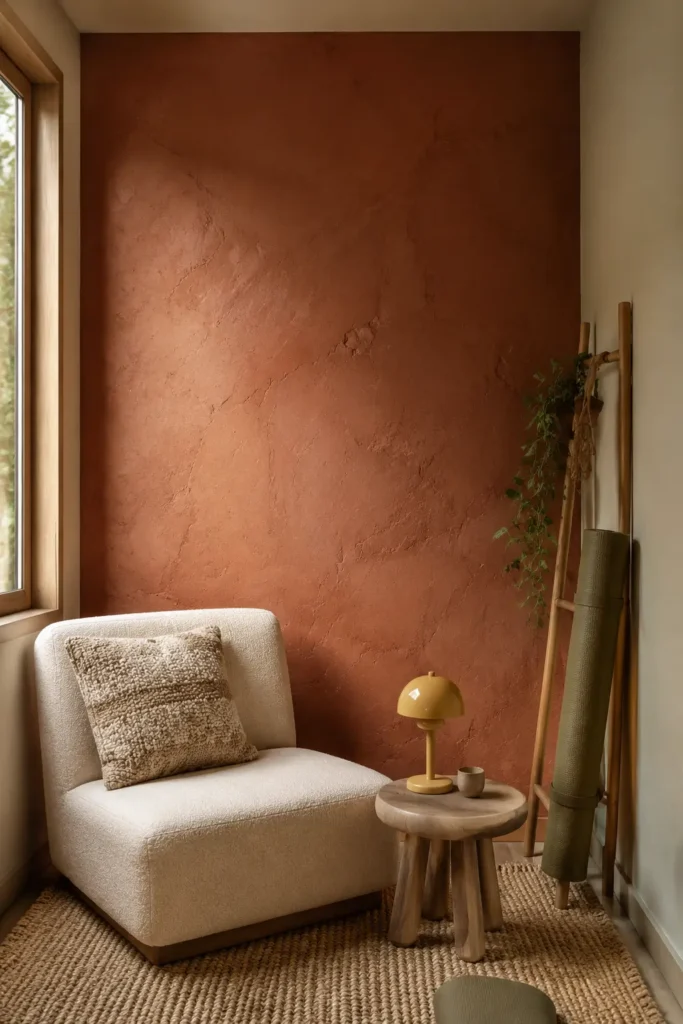
Give the room one softly textured wall using clay plaster, limewash, or a mineral-finish paint in a muted terracotta, sand, or pink-beige shade. Keep the adjacent walls plain warm white so the surface becomes the focal point without making the room feel enclosed. A simple wood bench or meditation cushion is enough in front of it.
Matte finishes disguise small wall imperfections and reduce glare from lamps. Test a sample in both daylight and evening light, since clay colors can appear much more orange beneath warm bulbs.
10. Personal Wellness Vanity Bar
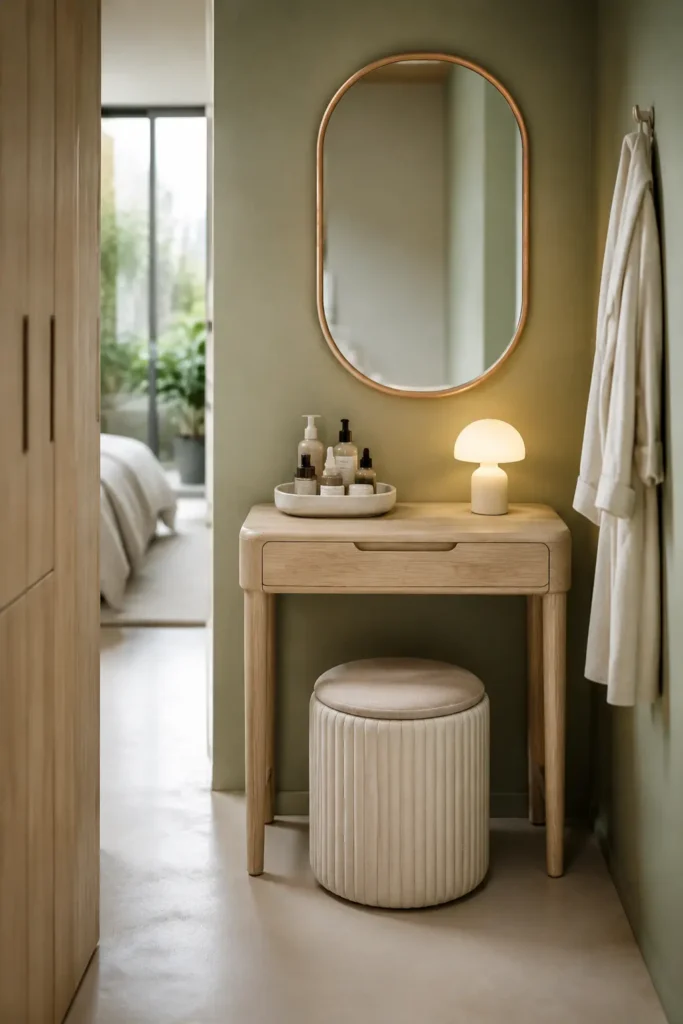
A compact vanity bar can support skincare, hydration, journaling, and other daily rituals in one organized location. Use a 30-to-36-inch-wide console with a stone-look top, rounded mirror, shallow drawer, and one ceramic tray for only the products you use regularly. Add a small filtered-water pitcher or glass carafe instead of disposable bottles.
Keep electrical items away from water and use a rechargeable lamp if outlets are limited. For renters, a narrow console and leaning mirror provide the same function without wall plumbing or permanent cabinetry.
11. Sensory Reset Lounge
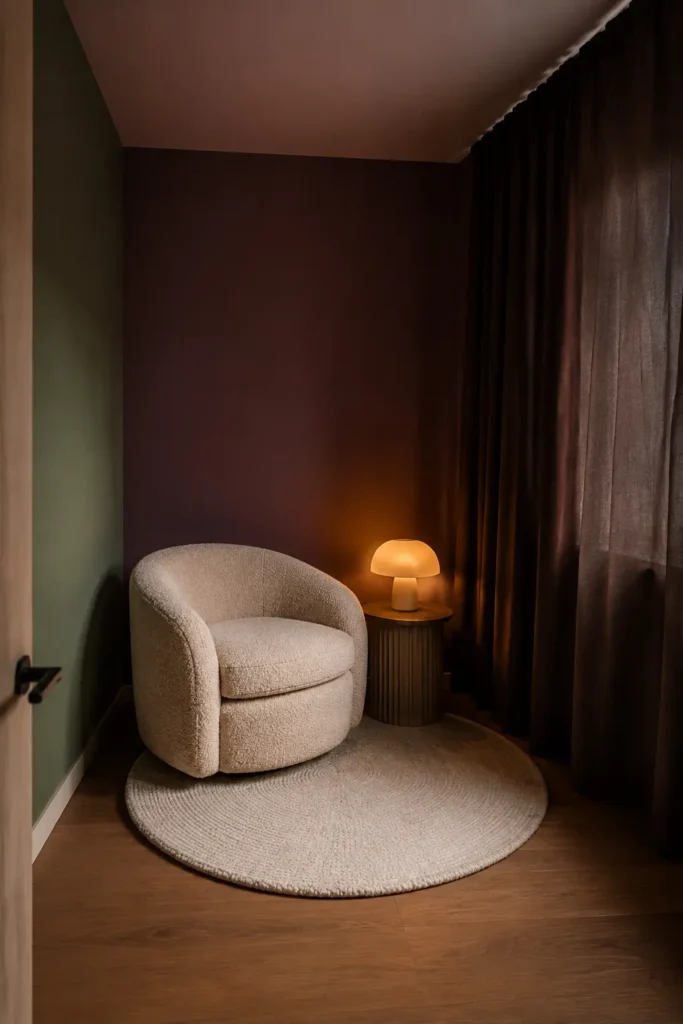
Design this area for moments when you need less visual and auditory input. Place one supportive curved chair on a thick wool rug, add a blackout linen curtain or room divider, and use a dimmable amber lamp with a low brightness setting. A small sound machine or personal speaker can provide consistent background noise.
The room should contain very few objects: a chair, a table, lighting, and one soft surface. That restraint is what makes the area useful after a busy workday or a screen-heavy evening.
12. Sunrise Wellness Window Seat
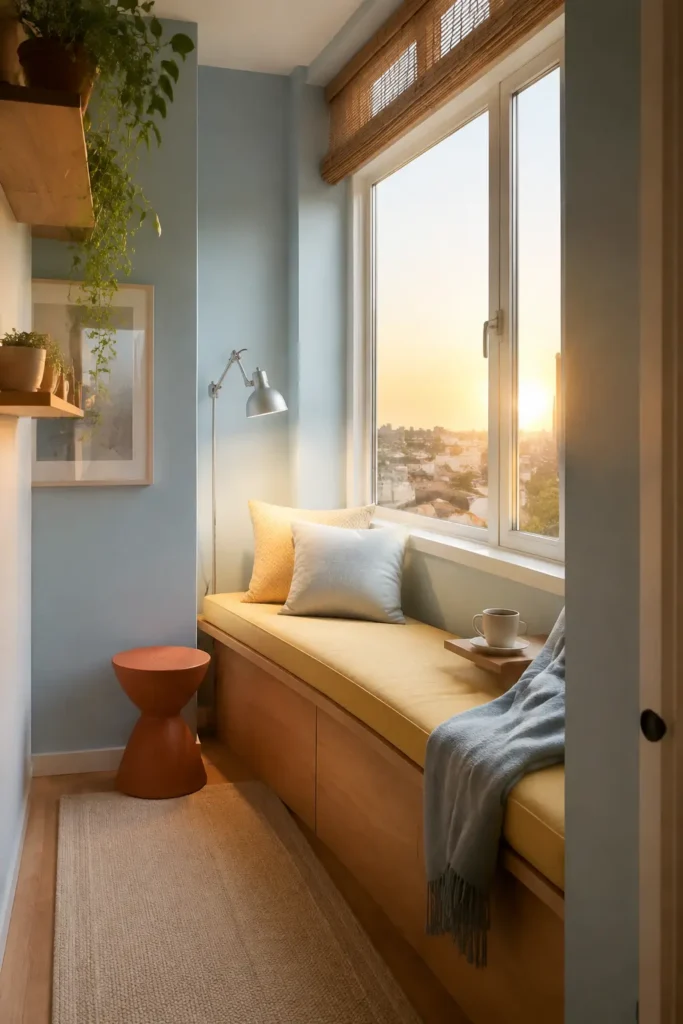
Create a morning-focused station with a deep window bench, a washable cushion, a small ledge for tea, and an adjustable reading light. Face the seat toward the brightest part of the room so it can support breathing exercises, gentle stretches, journaling, or quiet coffee. Soft white, pale wood, and muted yellow accents work well in early daylight.
Avoid placing a tall cabinet beside the window, since it will block the view and reduce the benefit of natural light. A 20-inch-deep bench is usually enough for sitting without taking over the room.
13. Restorative Warm-Water Ritual Station
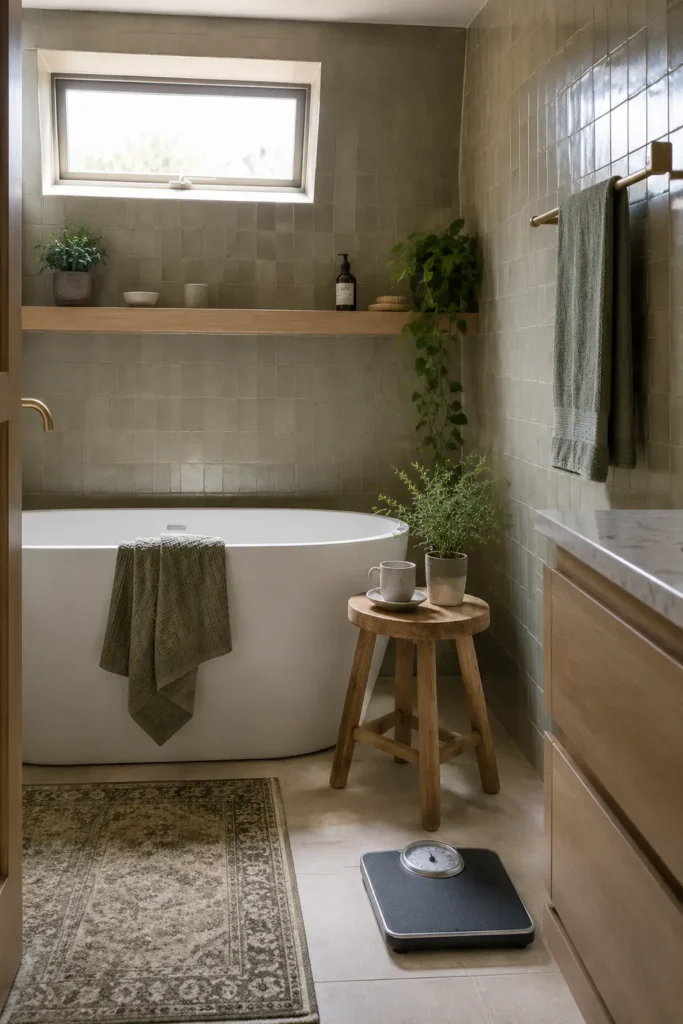
For a bathroom, enclosed porch, or properly waterproofed wellness area, create a small warm-water station with a compact soaking tub or foot-soak basin, teak stool, stone-look surface, and heated towel rail. Keep the palette simple: warm gray tile, pale oak, brushed brass, and white cotton towels.
This idea requires more planning than a decorative corner. Confirm drainage, waterproofing, ventilation, electrical placement, and slip-resistant flooring before installation. In a regular room, recreate the ritual with a freestanding basin, towel ladder, and spa-style stool without adding plumbing.