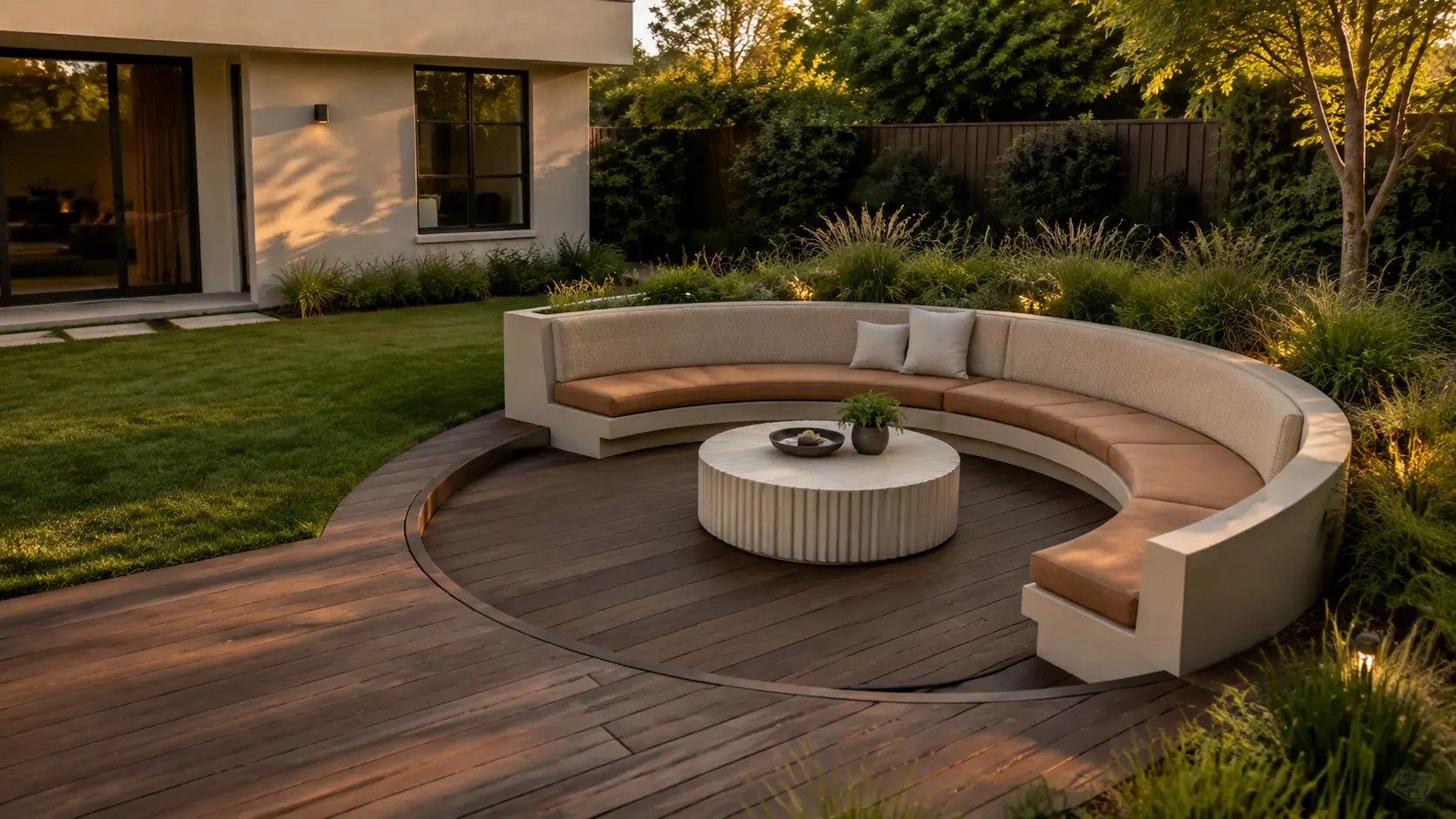
A sofa and coffee table don’t automatically make a patio feel like a finished room. The best outdoor living room ideas establish clear boundaries, comfortable circulation, shade, privacy, and a focal point—many of the same elements that make an indoor living room work.
The difference lies in choosing materials that tolerate sun and moisture without making the backyard look commercial. These 12 ideas use architectural details, multifunctional furniture, and memorable layouts to create outdoor rooms that look polished but still suit everyday American homes.
1. Float a Ceiling Above the Sofa
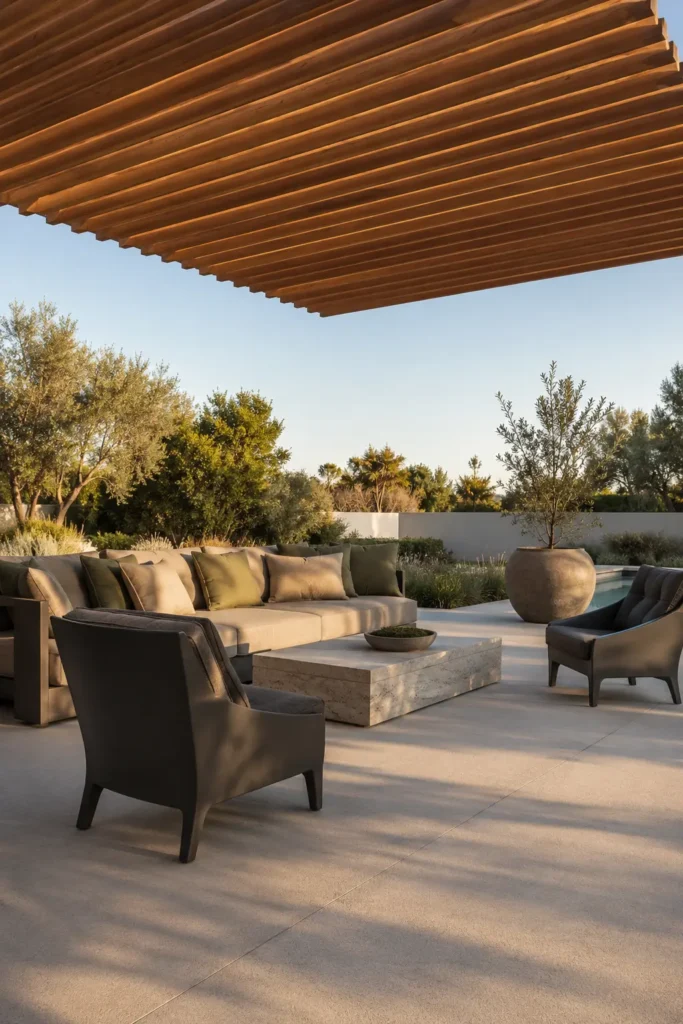
A partial cedar-slat ceiling can define an outdoor living room without covering the entire patio. Position it directly over the main sofa and stop the structure 18–24 inches before the seating platform ends. The exposed border of sky makes the roof appear to float.
Pair warm cedar with charcoal metal furniture, pale concrete, and sand-colored performance fabric. The slats provide filtered shade and cast changing linear shadows throughout the day. A freestanding pergola kit offers a similar effect for renters or homeowners who don’t want to attach anything to the house.
2. Lay a Gravel Rug
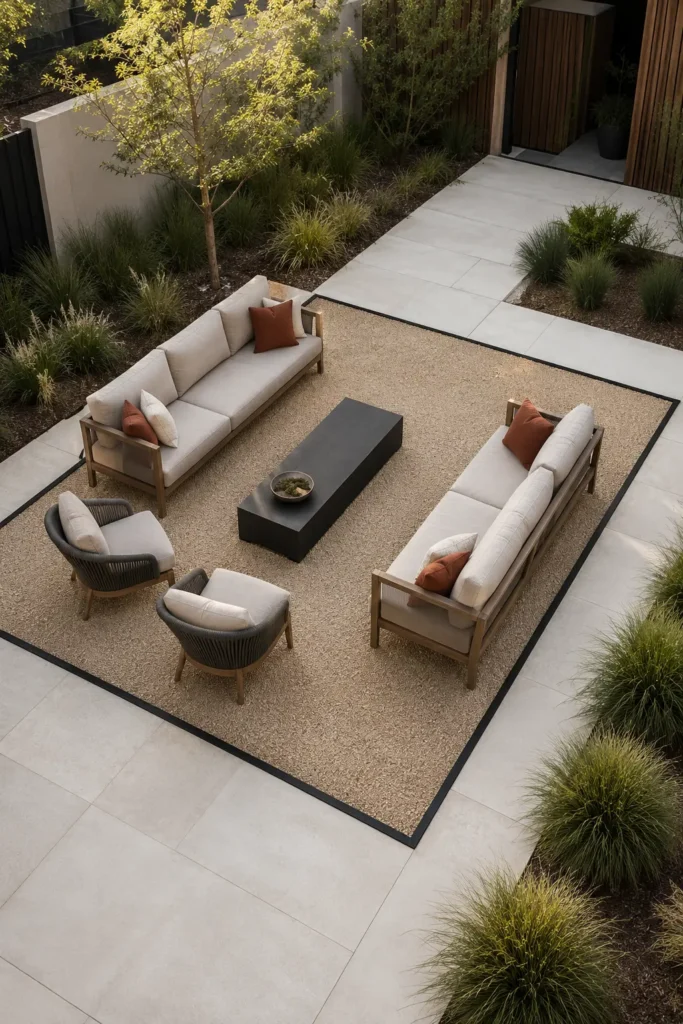
Replace a predictable outdoor rug with a rectangle of cream gravel or decomposed granite framed by slim, matte-black steel edging. Set two sofas or a sofa and two curved chairs around its perimeter, just as you would arrange furniture around an indoor rug.
The precise outline brings order to an open backyard while the loose material improves drainage after rain. Keep approximately 30–36 inches clear along the main traffic route. If installation isn’t possible, interlocking stone-look patio tiles can create the same graphic boundary without changing the ground permanently.
3. Back the Sofa With Stone
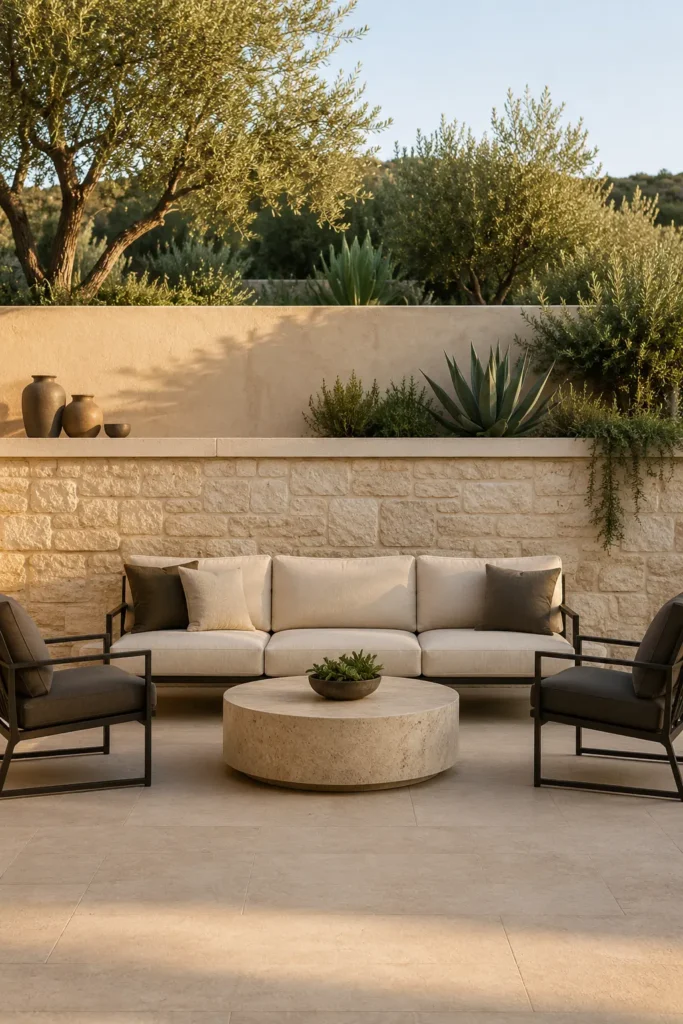
Instead of treating a retaining wall as landscaping, use it as the architectural back of your outdoor sofa. Position the sofa a few inches in front of the wall, then finish the top with a stone cap wide enough to hold drinks, books, or a small lamp.
Limestone, warm stucco, or softly weathered brick creates a convincing indoor-outdoor connection. Keep most of the ledge empty so it reads as architecture rather than a display shelf. On a rental patio, place a narrow teak console behind the sofa to achieve the same useful layered effect.
4. Color-Block the Fireplace
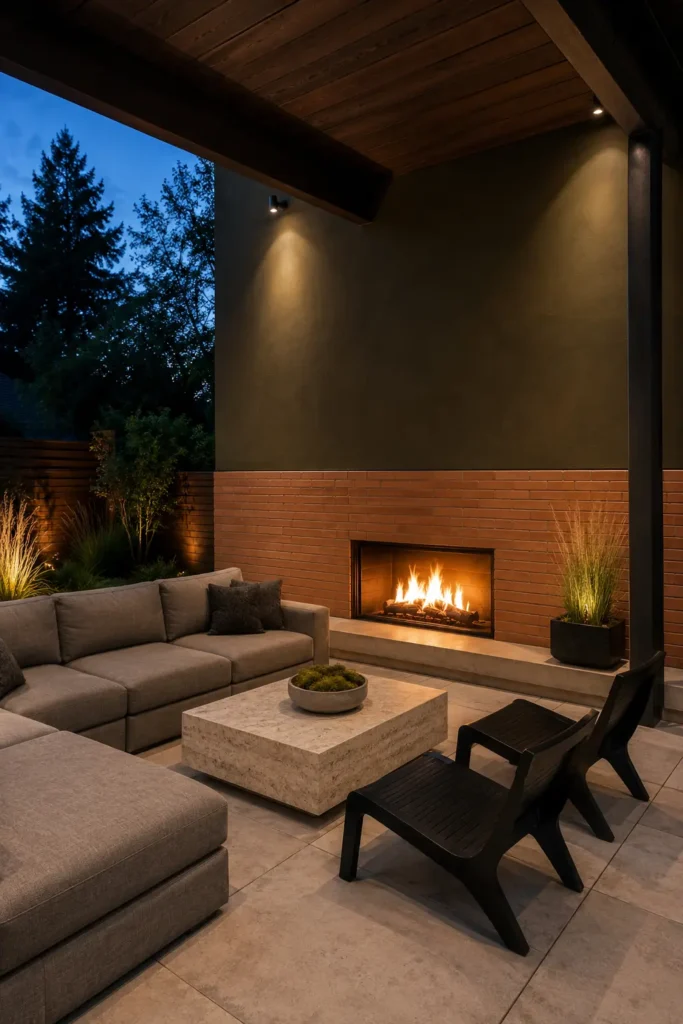
Give an outdoor fireplace a contemporary identity by dividing its surround into two finishes. Terracotta brick below deep olive microcement feels rich without looking formal, while pale plaster paired with black porcelain creates a sharper, more graphic result.
Center the firebox on the main seating axis and maintain the manufacturer’s required clearances from cushions, overhead structures, and combustible materials. Large uninterrupted areas of color will look more confident than a surface broken up with small decorations. A portable propane fire column placed against a weather-resistant painted panel offers a lower-cost alternative without permanent masonry.
5. Style a Side-Yard Lounge
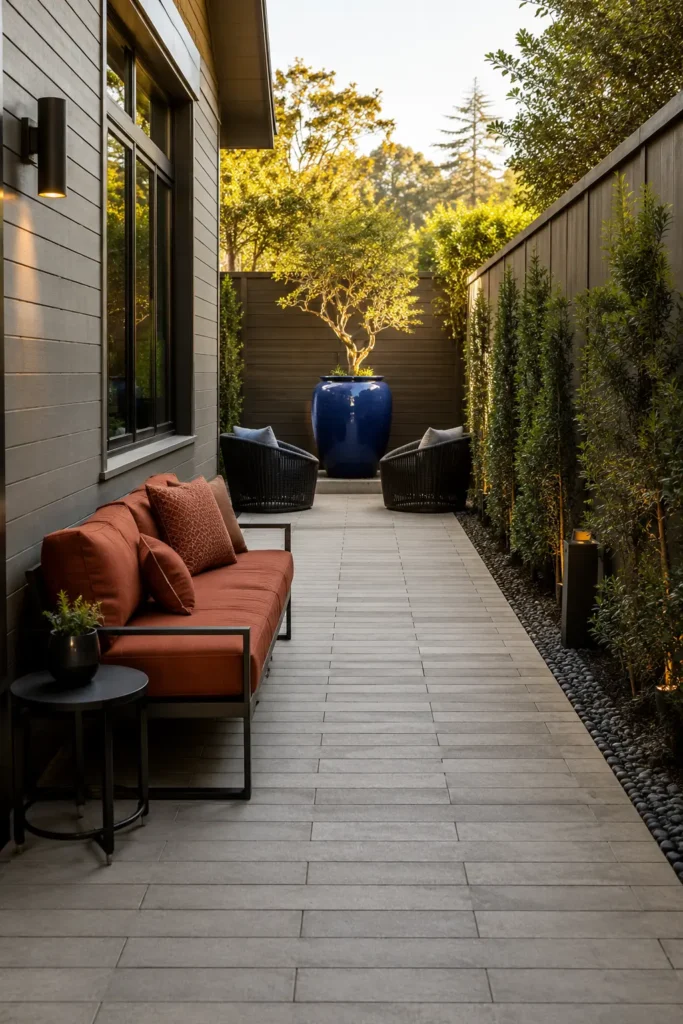
A narrow side yard can function as an outdoor living room when the furniture follows its long sight line. Place a slim loveseat, ideally no deeper than 22–26 inches, against one wall. Position two rounded chairs at the far end beside one oversized cobalt, rust, or olive planter.
Long rectangular pavers laid lengthwise will make the space feel deeper. Preserve at least 30 inches for the main walkway and avoid lining both walls with furniture. The final planter, chair, or small tree should act as the visual destination when you look down the passage.
6. Add a Trough Table
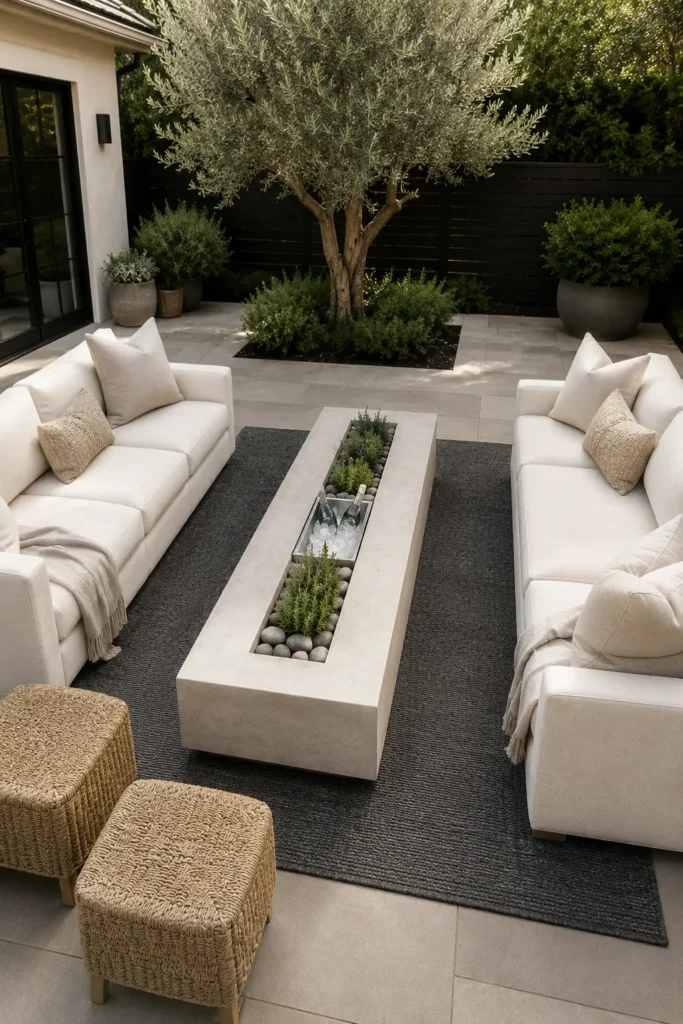
Use a long trough-style coffee table between facing sofas instead of a standard solid table. A concrete, powder-coated metal, or galvanized design can include a narrow center channel for herbs, chilled drinks, or polished stones.
Keep the table approximately 16–18 inches from the sofa edges so guests can reach it without restricting movement. Its low horizontal shape reinforces the conversation layout while combining several functions in one footprint. A rectangular outdoor planter can be adapted with a removable wooden top, but seal every surface carefully so trapped water doesn’t damage the wood or attract insects.
7. Screen One Side Only
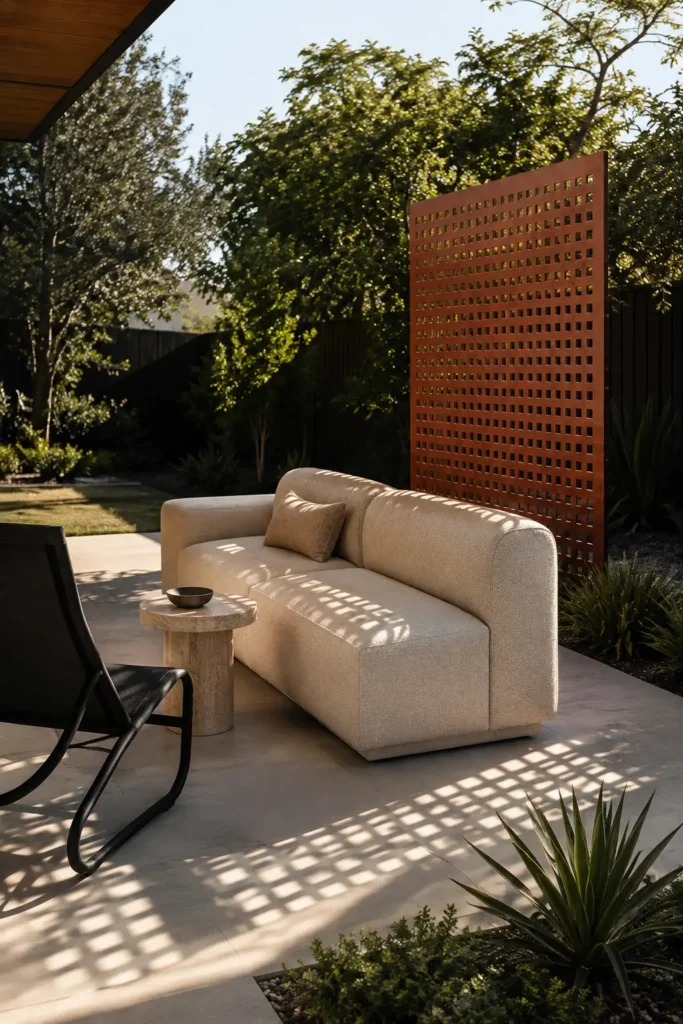
Privacy doesn’t require enclosing the entire patio. Place a perforated metal panel, vertical cedar battens, or a woven outdoor screen behind the most exposed end of the seating area. Let it stop before the full width of the sofa so the yard still feels connected to its surroundings.
A partial screen blocks a direct neighbor sight line while allowing air and sunlight through. Perforated metal becomes especially striking in late-afternoon light, when it casts patterned shadows across the paving. Renters can use a weighted folding screen or a trellis planter that doesn’t need wall anchors.
8. Build an Outdoor Drop Zone
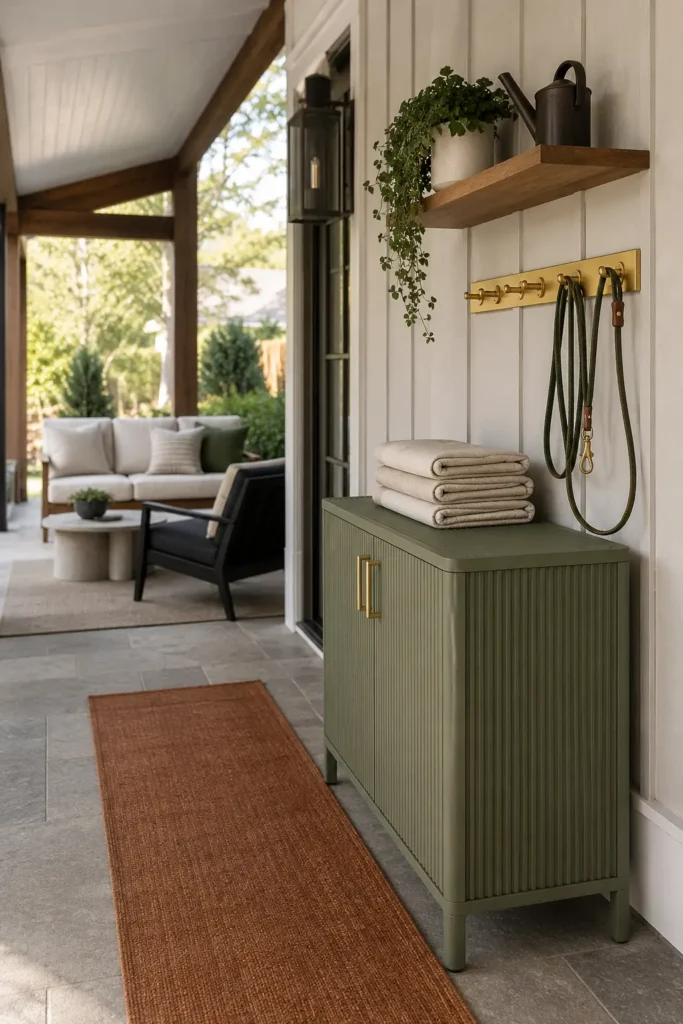
Create a small storage station at the edge of the seating area, much like an indoor mudroom. Combine a shallow weatherproof cabinet with hooks for a pet leash, garden hat, or lightweight tools. Use closed storage for sunscreen, games, cushion covers, and serving supplies.
Choose powder-coated aluminum, marine-grade polymer, or properly sealed teak rather than indoor MDF, which quickly swells outdoors. A cabinet only 12–16 inches deep can provide useful storage without narrowing the walkway. Keeping these practical items in one place allows the main seating zone to remain clear and ready to use.
9. Go Big With One Planter
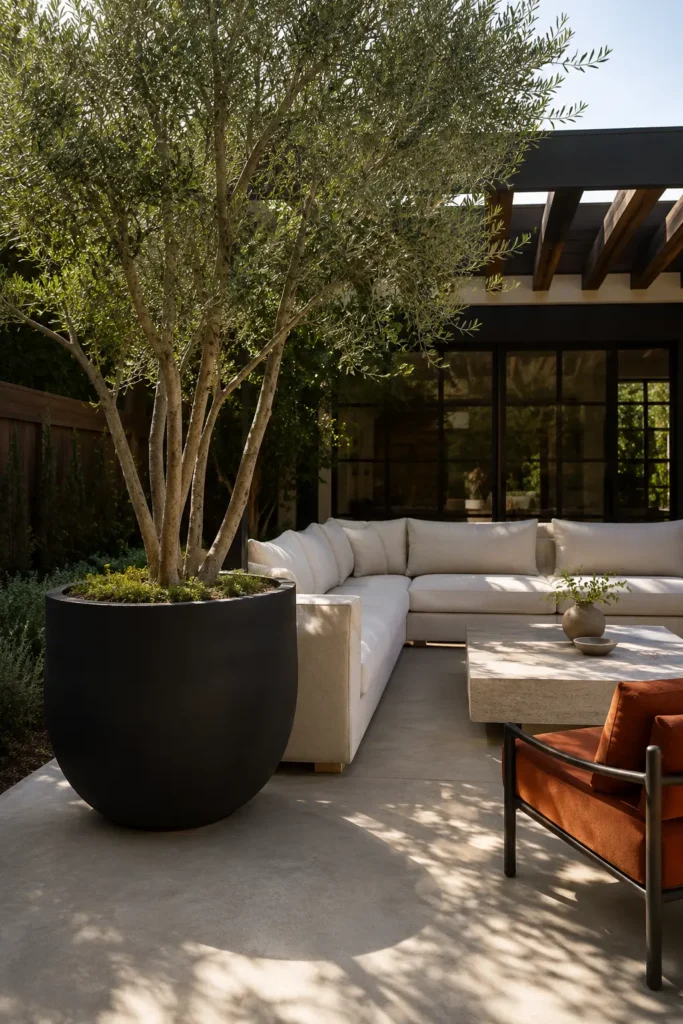
One oversized planter often looks more intentional than a collection of small pots. Set a 24–36-inch-wide vessel at the outer corner of the sectional and plant it with a multi-stem olive, citrus, Japanese maple, or another tree suited to your USDA growing zone.
The planter should have enough visual weight to balance the sofa without interrupting the primary view. A matte-black vessel makes pale upholstery feel sharper, while terracotta works well beside warm wood. Fiberglass and fiberstone provide the appearance of heavy masonry but remain easier to move and less demanding on raised decks.
10. Mix Dining and Lounging
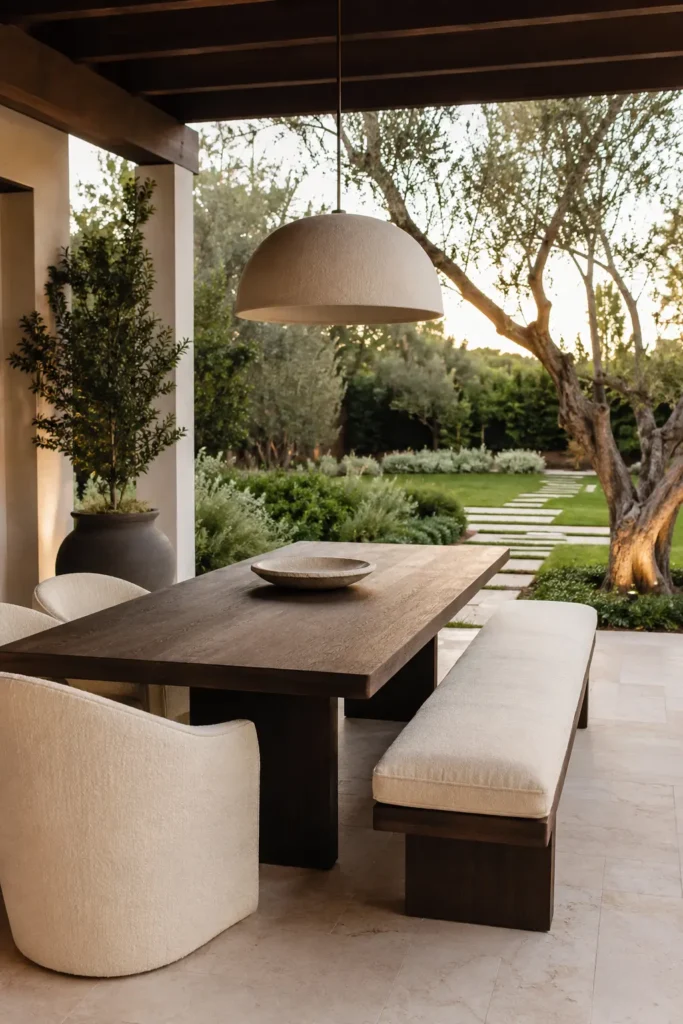
In a compact backyard, replace separate dining and lounge areas with one hybrid arrangement. Place a comfortable backless outdoor bench along one side of a rectangular table, then use two relaxed armchairs on the opposite side.
The bench preserves the garden view and can become a daybed-like seat after meals. Allow approximately 36 inches behind chairs that need to pull out and at least 30 inches along other circulation routes. Select quick-drying foam and solution-dyed acrylic upholstery; regular indoor foam holds moisture and can develop mildew even when covered with outdoor fabric.
11. Hang a Fabric Wall
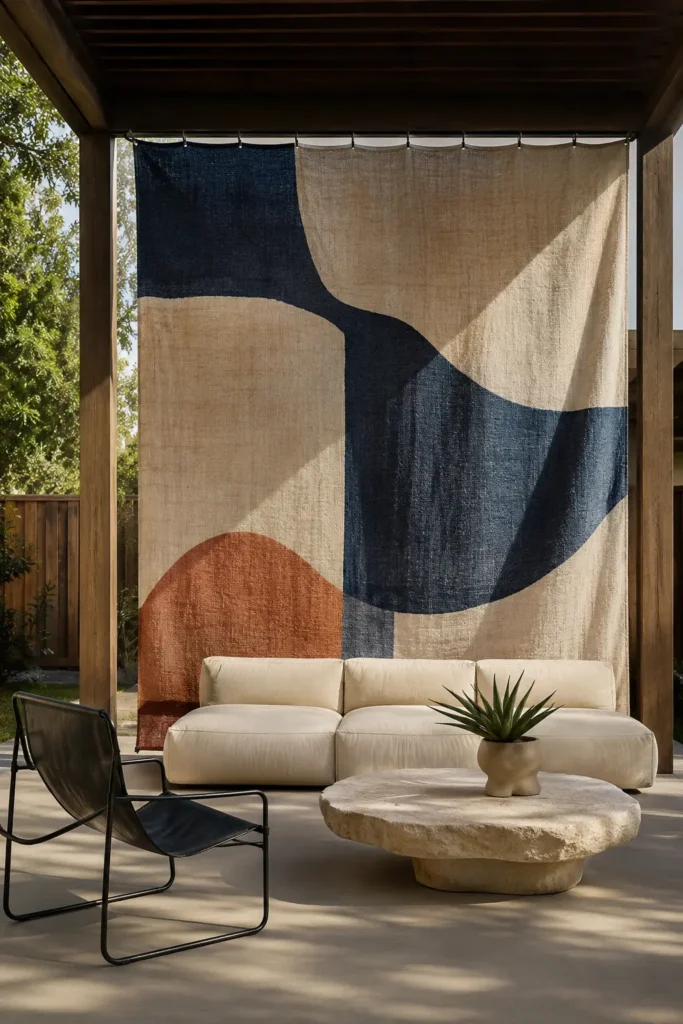
An oversized weather-resistant textile can give a covered patio the visual impact of wallpaper without permanent construction. Hang one large panel behind the sofa in broad ink-blue stripes, oversized checks, or an abstract rust-and-cream pattern.
Use outdoor acrylic fabric and secure both the top and bottom so wind doesn’t turn it into a sail. The soft surface reduces the hard appearance of concrete and metal while creating partial privacy. Under a covered porch, renters can install the panel on a tension rod or removable freestanding frame. Avoid untreated drop cloth outdoors because damp cotton can stain and mildew.
12. Frame a Destination Seat
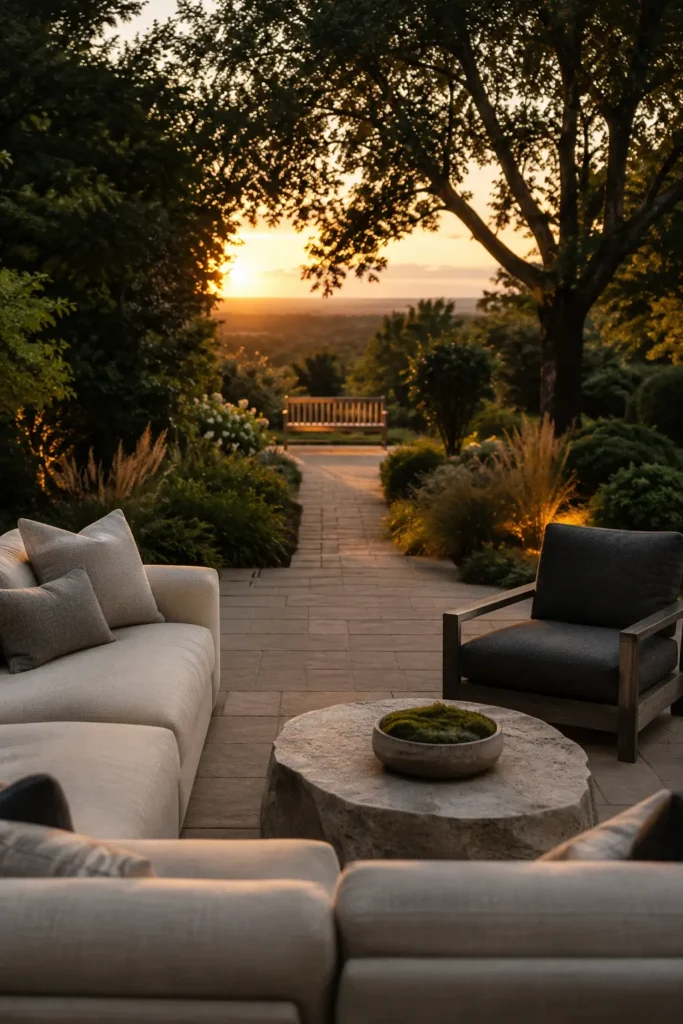
Place one bench or sculptural chair at the far end of the backyard, aligned with the primary sofa. Aim it toward a mature tree, garden gate, pool, or sunset view rather than back toward the main conversation area.
The distant seat becomes a visual destination and makes the yard appear deeper. Keep the path between the two areas clear so the composition can be understood from the house. A slim teak bench works in larger gardens, while a folding chair or compact stool can create the same “viewfinder” effect on a small patio or balcony.
What to Consider Before You Start
Begin by identifying the space’s most difficult condition: intense afternoon sun, exposure to neighbors, poor drainage, limited floor area, or a missing focal point. Solving that problem first will influence which furniture and decorative details make sense later.
Measure the entire area before purchasing anything. Preserve a 30–36-inch main traffic route, leave roughly 16–18 inches between a sofa and coffee table, and confirm that doors can open completely. Look for powder-coated aluminum, sealed hardwood, exterior-rated porcelain, solution-dyed acrylic, and quick-drying foam. Cheap painted steel and untreated indoor wood often reveal their price after one wet season.