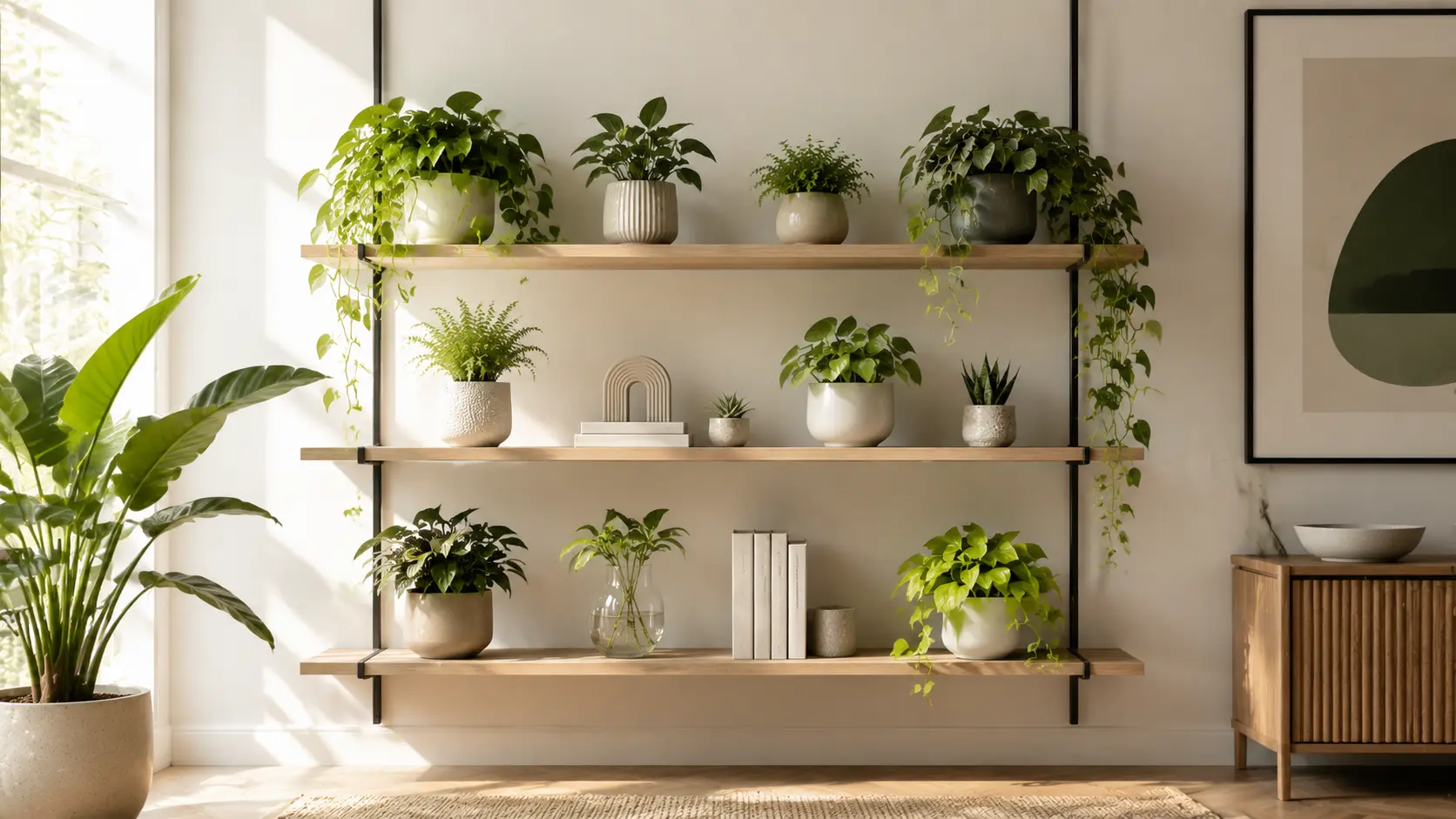
A well-styled plant shelf can make a room feel fresher, warmer, and more personal—but the best displays are not created by filling every shelf with greenery. The secret is to combine different plant heights, pot shapes, textures, and useful decorative objects while leaving enough negative space for the arrangement to breathe.
These plant shelf styling ideas work for living rooms, entryways, bedrooms, kitchens, home offices, and small apartments. Each one uses a different composition, so you can choose a look that fits your home, lighting, and personal style.
1. Create a Three-Level Plant Canopy
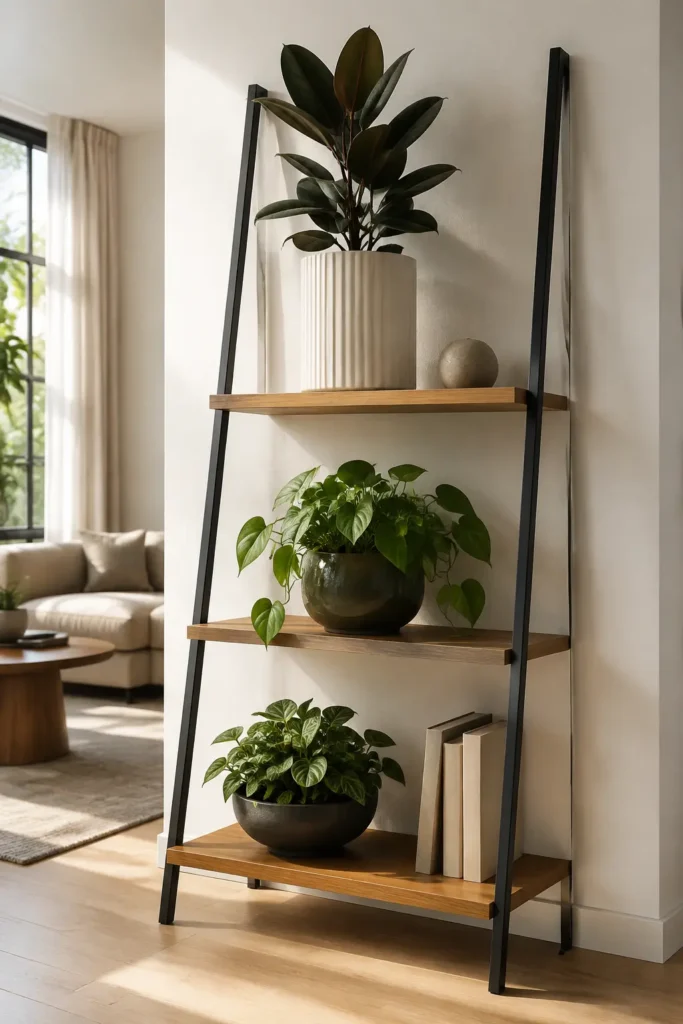
Build the arrangement around three distinct heights. Place a tall rubber plant or snake plant on the highest level, a medium philodendron or pothos in the middle, and a low peperomia or pilea on the bottom shelf.
Use different but related containers, such as a tall fluted planter, a rounded ceramic pot, and a low oval bowl. Keep the pots in a soft palette of cream, olive, charcoal, or warm clay.
This creates a canopy, mid-level, and groundcover effect. Because each plant occupies a different visual zone, the shelf feels layered without looking crowded.
Styling tip: Leave a few inches of open space around each plant and avoid placing every pot in the center of its shelf.
2. Balance One Large Plant With Small Objects
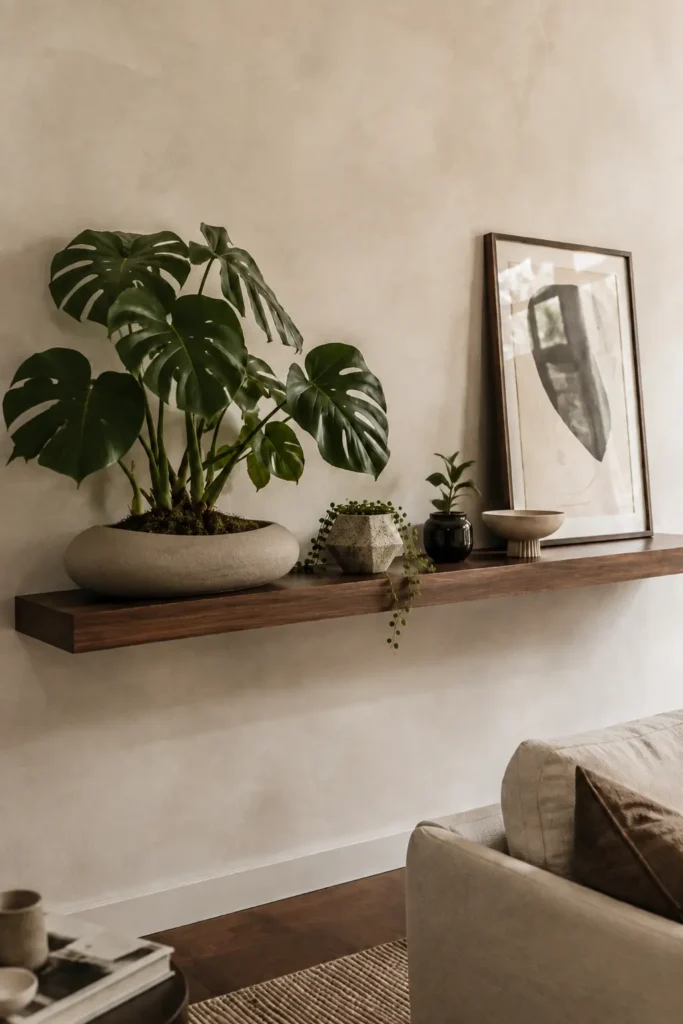
For a more editorial look, use one large plant as the visual anchor. Place a monstera, bird’s-nest fern, or rubber plant on one end of a long walnut shelf.
Balance its visual weight with two smaller plants, a shallow ceramic bowl, and a small framed print on the opposite side. The smaller objects do not need to match the main planter, but they should repeat one material or color.
This asymmetrical arrangement feels more collected and modern than a perfectly centered display. The shelf looks balanced because the smaller group visually counterweights the larger plant.
Styling tip: Keep the tallest leaves slightly inside the shelf’s outer edge so the display does not feel unstable.
3. Raise a Compact Plant on a Travertine Plinth
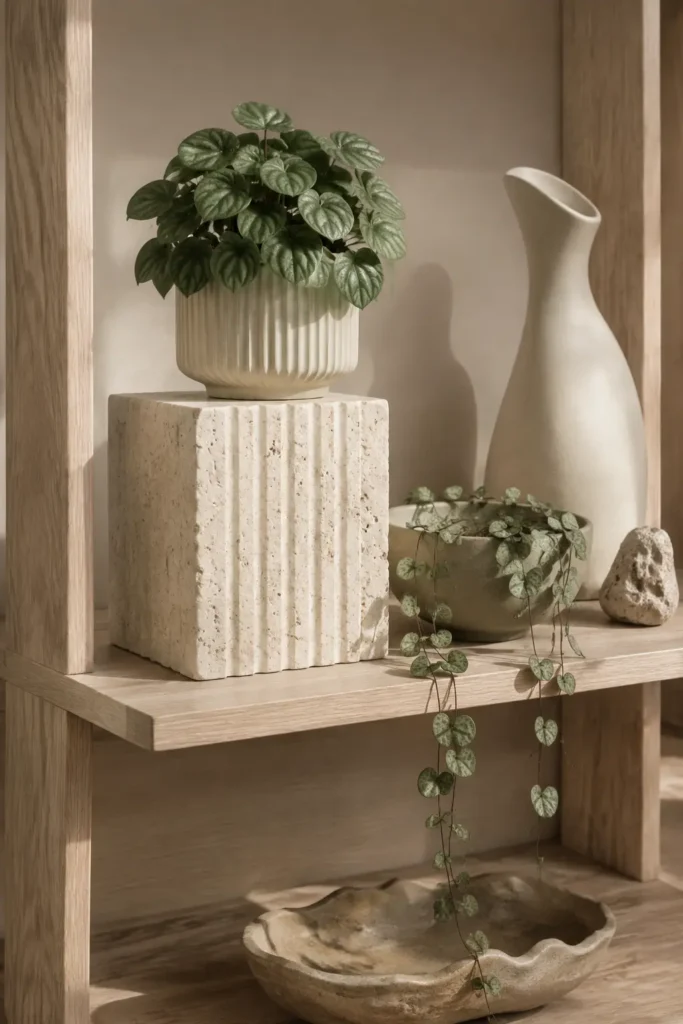
A small plant does not need to remain visually small. Place a peperomia, hoya, or compact fern in a ribbed stoneware pot and raise it on a travertine or limestone block.
Add a low trailing plant beside it and finish with one curved ceramic vase or sculptural object. Keep the palette calm with pale oak, cream, sand, stone, and soft green.
The plinth acts like a small architectural pedestal, adding height and importance without requiring a large plant or oversized shelving unit. It is especially effective on a narrow shelf or in a small apartment.
Styling tip: Choose a plinth that is wider than the pot base so the plant feels secure and visually grounded.
4. Style a Chrome Shelf With Color-Pop Planters
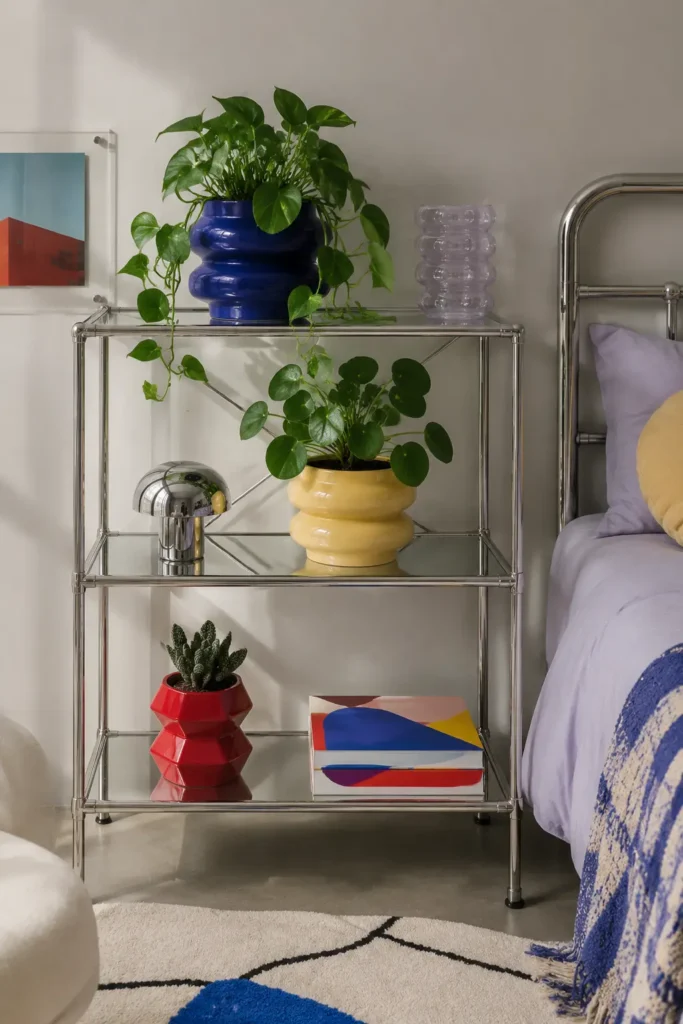
Bring a playful Gen-Z touch to a simple chrome or brushed-steel shelf with colorful planters. Use a cobalt-blue pot for a trailing plant, a butter-yellow planter for a compact upright plant, and a cherry-red or terracotta vessel for a small accent plant.
Keep the surrounding accessories minimal. One chrome object, a colorful book spine, or a translucent glass piece is enough to connect the arrangement.
The reflective metal and controlled bright colors create a contemporary, slightly retro look without making the shelf feel childish. This idea works particularly well in studio apartments, bedrooms, or creative workspaces.
Styling tip: Use only two or three accent colors so the shelf remains lively but visually organized.
5. Create a Light Glass Propagation Station
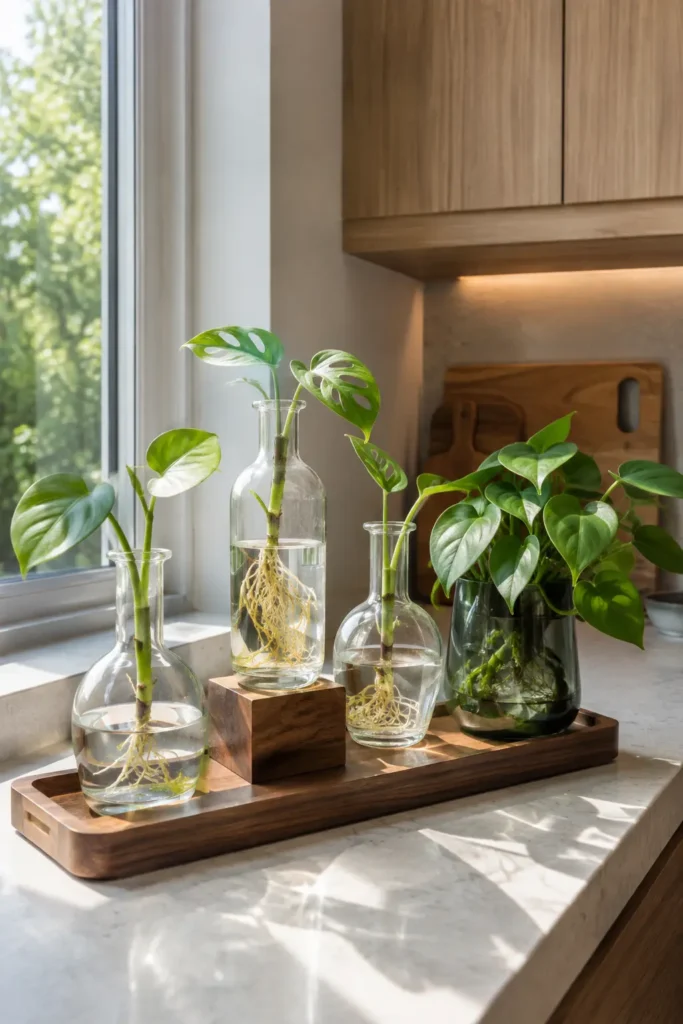
Turn plant cuttings into part of the decor by arranging them in clear propagation bottles, narrow glass tubes, or small recycled jars. Place the vessels together on a slim waterproof tray near bright, indirect light.
Balance the transparent grouping with one potted philodendron, pothos, or pilea and a small wooden block or book stack. The visible roots add an organic detail that makes the display feel alive and personal.
Glass vessels create height and shine without adding visual heaviness. They are also an affordable way to style a shelf while growing new plants from cuttings.
Styling tip: Change the water regularly and keep the glass containers on a tray to protect wooden shelves from moisture.
6. Entryway Shelf Into a Plant Landing Zone
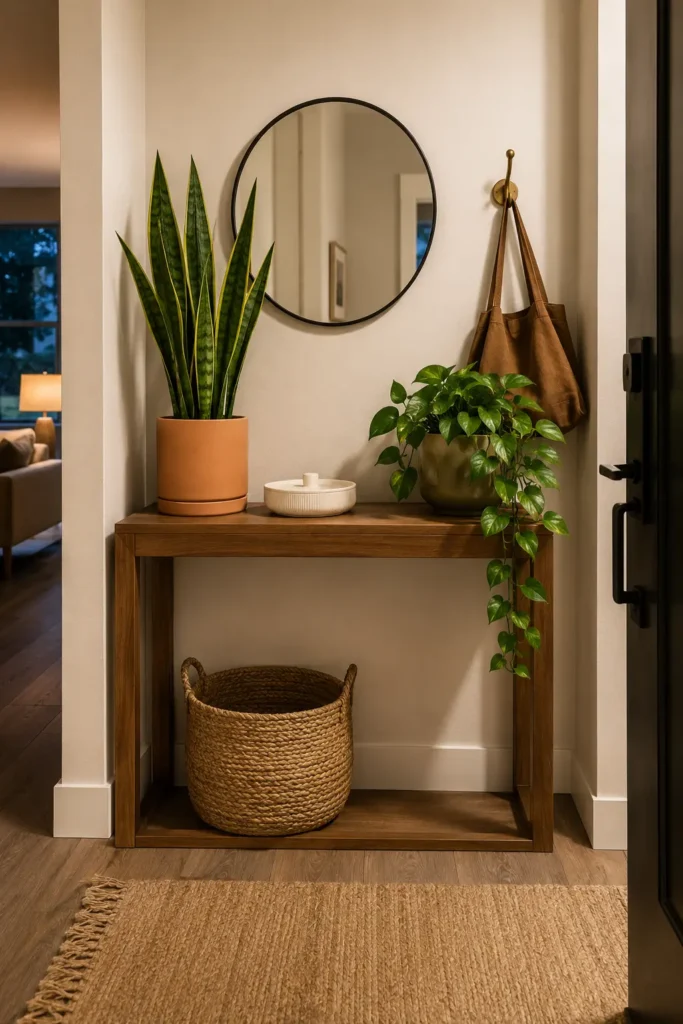
Make a narrow entry console both attractive and useful. Place a snake plant or ZZ plant at one end and a trailing pothos at the other, leaving the center open for a lidded ceramic catchall tray.
Use the tray for keys, sunglasses, dog-walk essentials, or small everyday items. Choose washable or water-resistant planters because entryways often collect dust and outdoor moisture.
The plants frame the functional storage area and give the entryway a welcoming, lived-in feeling. This is a practical option for renters who cannot install large decorative features.
Styling tip: Keep the front edge of the shelf clear so bags, coats, and daily movement do not knock into the plants.
7. Curved Wall Shelves With a Hanging Plant
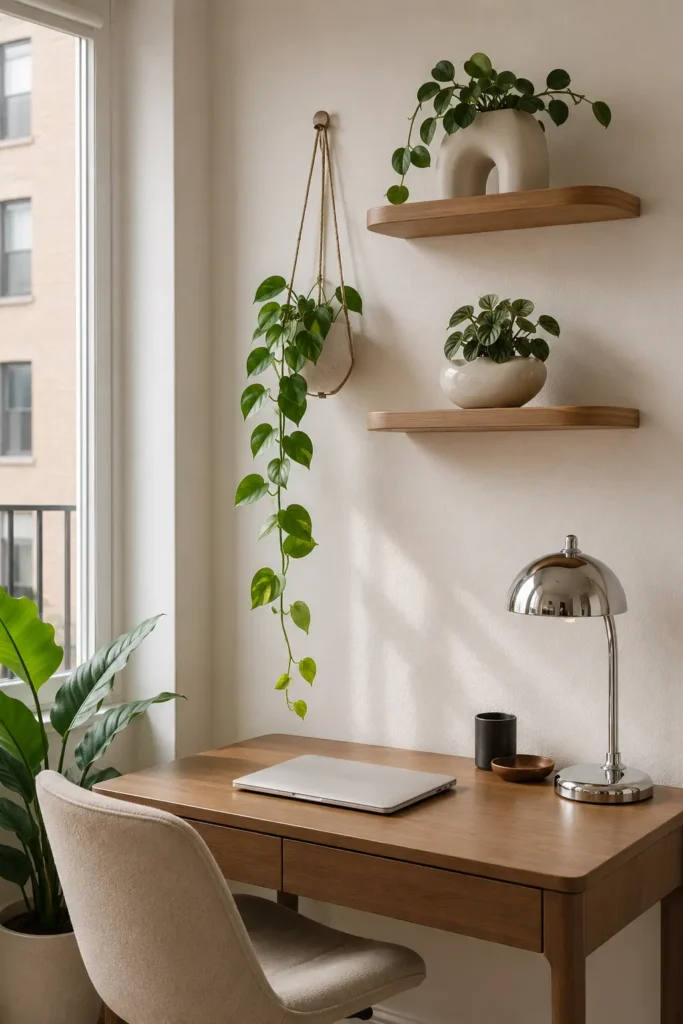
Install two small curved or rounded wall shelves in a corner or above a desk. Place compact plants in rounded ceramic pots on the shelves, then add one hanging planter that drops between the two levels.
Choose renter-friendly removable mounting hardware and keep the shelves light enough for the wall type. A trailing pothos, string of hearts, or philodendron can create a soft vertical line between the shelves.
The curved forms make the display feel more contemporary than a standard straight shelf. The hanging plant also uses wall height without taking up valuable floor or desk space.
Styling tip: Let the trailing stems fall naturally, but trim them before they reach a walkway, chair, or electrical outlet.
8. Treat the Shelf Like a Mini Art Display
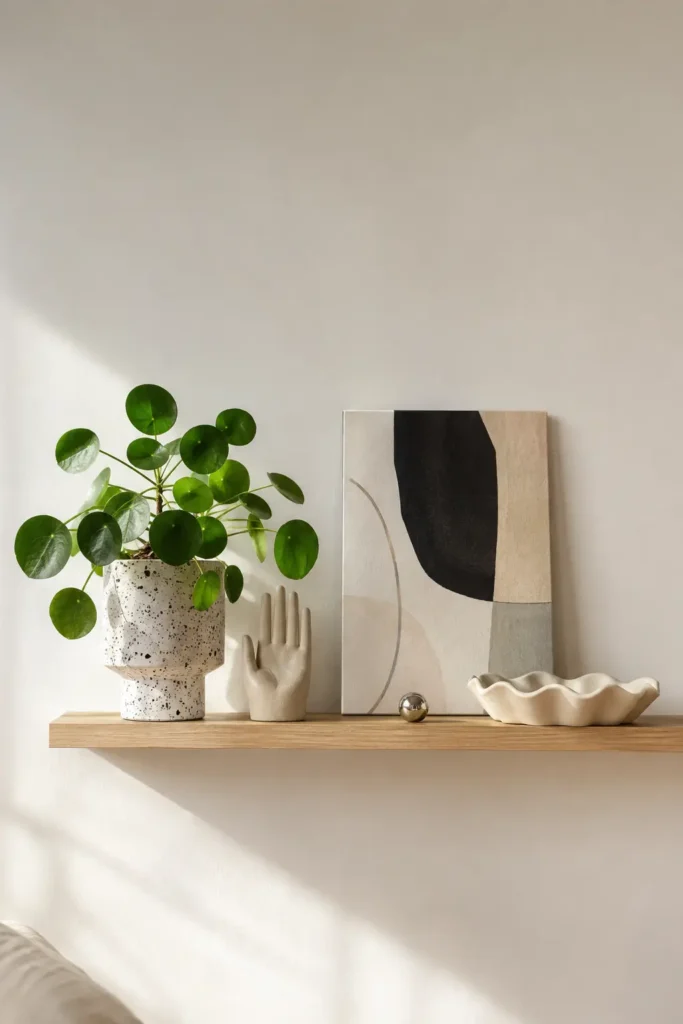
Instead of filling the shelf with plants, style it like a small gallery composition. Use one unusual plant, one sculptural ceramic object, one small abstract print, and one distinctive planter.
A plant with round leaves, architectural stems, or unusual foliage works best. Pair it with a terrazzo, speckled, geometric, or hand-shaped vessel rather than a basic matching pot.
This approach creates a sophisticated shelf where plants and objects share equal importance. The generous empty space keeps the display calm and allows every piece to be noticed.
Styling tip: Use odd numbers—three or five total elements—and vary the height of each object.
9. Vintage Record-Console Plant Shelf
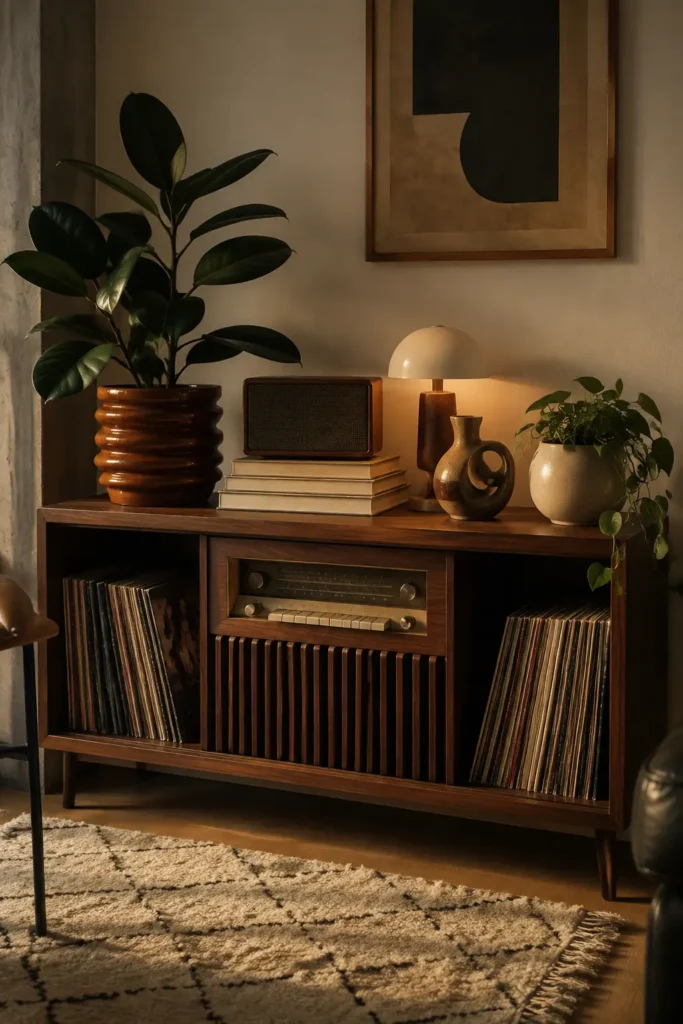
Use a low mid-century cabinet or vintage record console as a wide plant shelf. Place one large plant in a sculptural planter at one side, a small trailing plant at the other, and stack a few art or music books between them.
Add a compact speaker, small lamp, or ceramic object to create a relaxed lifestyle scene. Keep the plants at different depths instead of lining them up along the front edge.
This arrangement feels warm, personal, and distinctly Gen-Z because it mixes vintage furniture with living greenery and everyday interests. It also works well in living rooms where a low display is more practical than a tall bookcase.
Styling tip: Protect the cabinet surface with discreet saucers or waterproof mats beneath every planter.
10. Transparent Window-Sill Plant Shelf
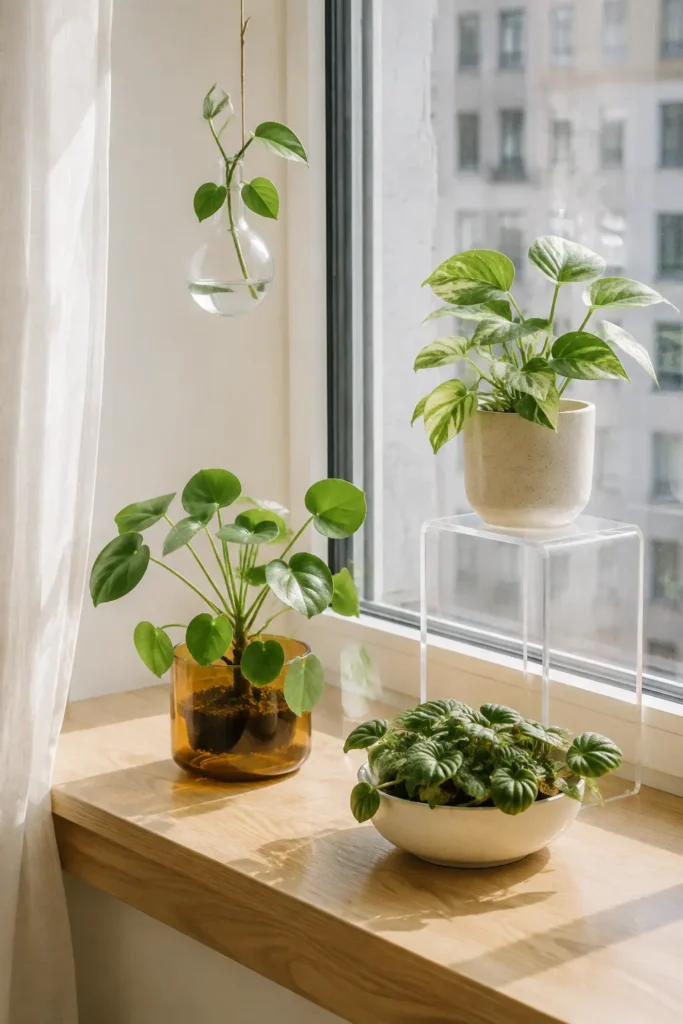
Use a bright window ledge or shallow shelf to create a light, layered display. Add a clear acrylic riser, a low ceramic planter, a hanging glass vessel, and one compact plant in a translucent or lightly colored pot.
Choose plants that tolerate the available light, such as peperomia, pilea, spider plant, or small herbs. Leave some of the window surface open so sunlight can pass through the arrangement.
Transparent materials keep the display airy and prevent a small window area from feeling blocked. The result is fresh, modern, and especially suitable for apartments with limited shelf space.
Styling tip: Keep leaves and containers away from cold glass, strong drafts, and direct afternoon heat.
How to Keep a Plant Shelf Balanced
Before adding another plant, check the arrangement from across the room. Look for a mix of tall, medium, and low shapes, and make sure one side is not visually heavier than the other.
Repeat one or two materials—such as walnut, chrome, stone, or ceramic—but vary the shapes. Most importantly, leave negative space between plants so the shelf feels edited rather than overloaded.
A beautiful plant shelf should look intentional, but it should still be easy to water, dust, rearrange, and live with every day.