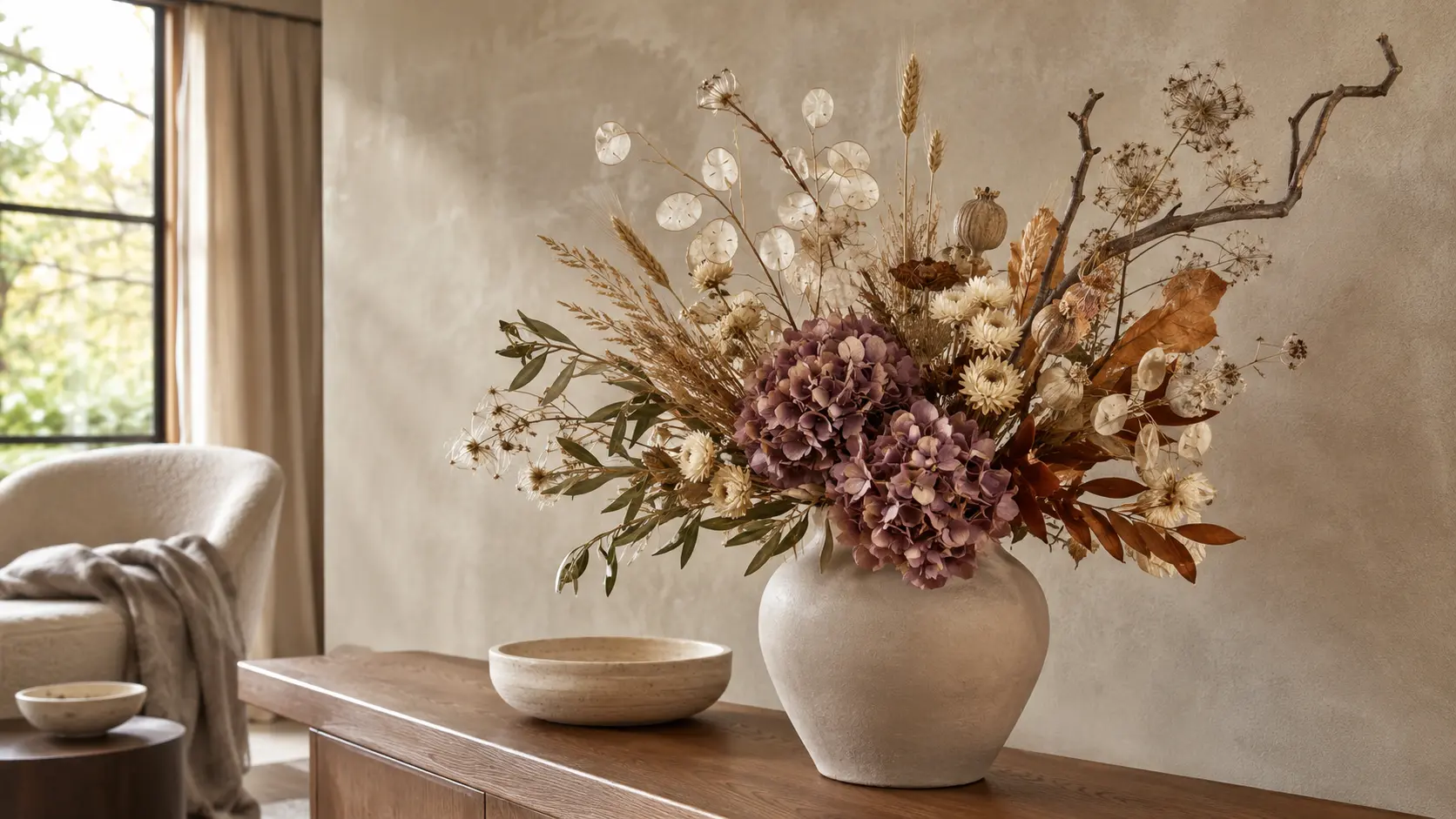
Dried flower arrangements can make a home feel ready for fall without filling every surface with orange leaves and novelty pumpkins. The freshest designs use sculptural branches, airy seed heads, muted flowers, and vessels with enough weight and texture to become part of the composition.
These 19 arrangements range from compact bookshelf displays to larger entryway designs. Each one has a distinct silhouette, seasonal palette, and practical placement, so you can find an idea that suits your room instead of trying to squeeze an oversized bouquet into it.
1. The Oatfield Crescent
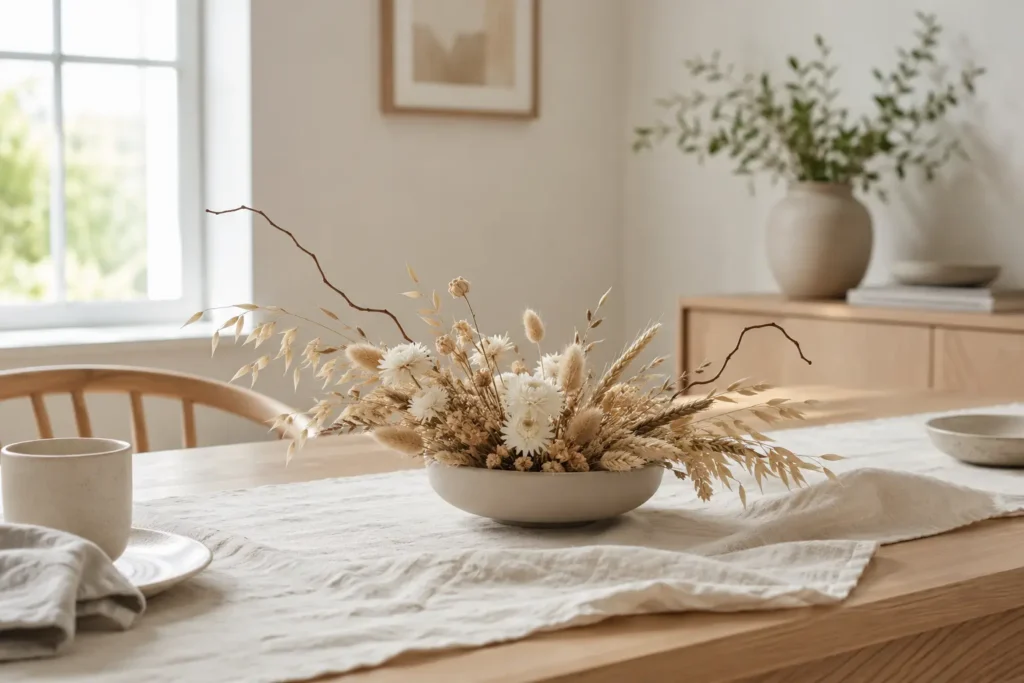
Build this Scandinavian-inspired centerpiece in a low, matte mushroom ceramic bowl using dried oats, ivory strawflowers, bleached flax pods, bunny tails, pale wheat, and two curled hazel twigs. Direct the stems outward in a shallow crescent, keeping the center full but not tightly packed.
The horizontal profile suits a dining table because it won’t interrupt conversation. Keep it below about 12 inches tall and let one side extend slightly farther than the other. Natural oats are inexpensive, but avoid very yellow bundles; softer, sun-faded stems look more convincing beside warm wood and cream linens.
2. Smoked Plum Hydrangea Study
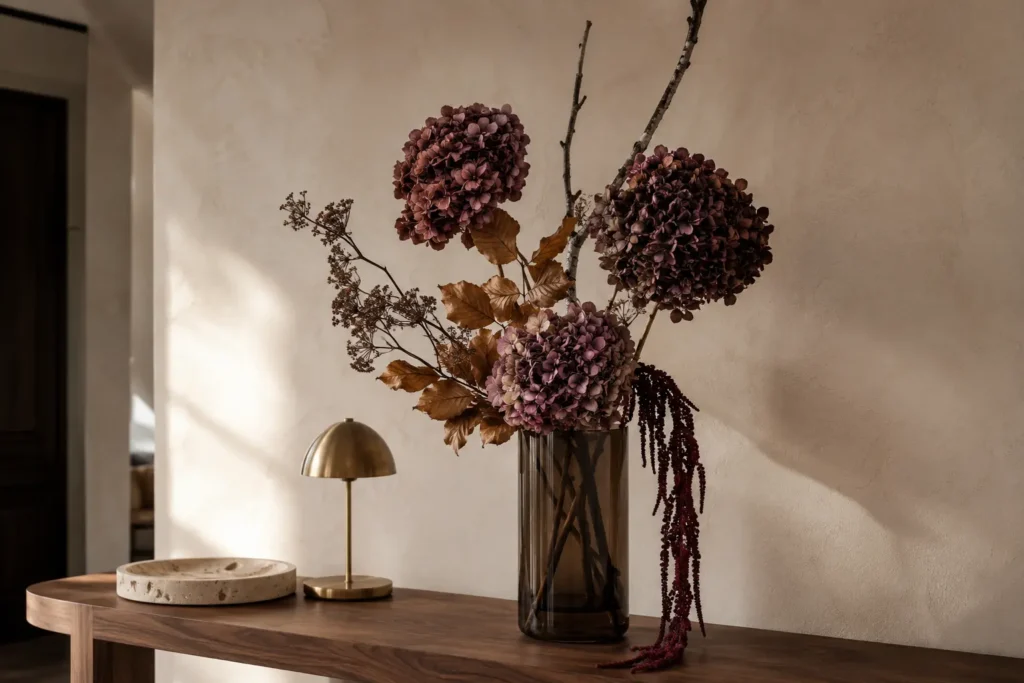
Place three preserved hydrangea heads in antique mauve and faded plum inside a narrow smoked-glass vase. Add chocolate lace flower, burgundy amaranthus, brown beech leaves, and two dark birch twigs to break up the rounded blooms and create a taller, asymmetrical outline.
This arrangement looks especially rich on a walnut entry console or bedroom dresser. Turn each hydrangea in a different direction so the heads don’t resemble one solid ball. Preserved hydrangeas can fade in strong sun, so place them away from a bright south-facing window and dust them gently with a cool hair dryer.
3. Quiet Persimmon Ikebana
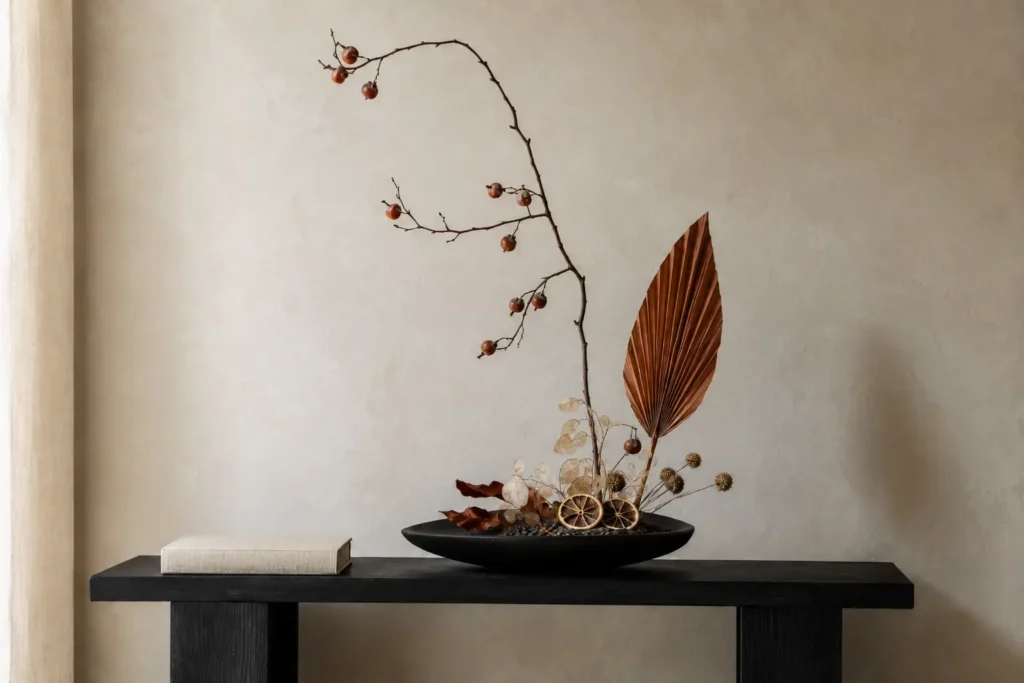
For a spare Japandi display, use one bent persimmon branch as the main line, then add a rust-toned palm spear, honesty pods, brown scabiosa pods, copper beech leaves, and two naturally dried orange slices. Position the materials in a shallow black stoneware dish with a hidden pin holder.
Leave more empty space than filled space. The open shape gives every stem a purpose and keeps the arrangement suitable for a narrow console or uncluttered bookshelf. If the branch is long, turn it toward the wall rather than into a walkway where sleeves and bags could catch it.
4. Linen Meadow Cloud
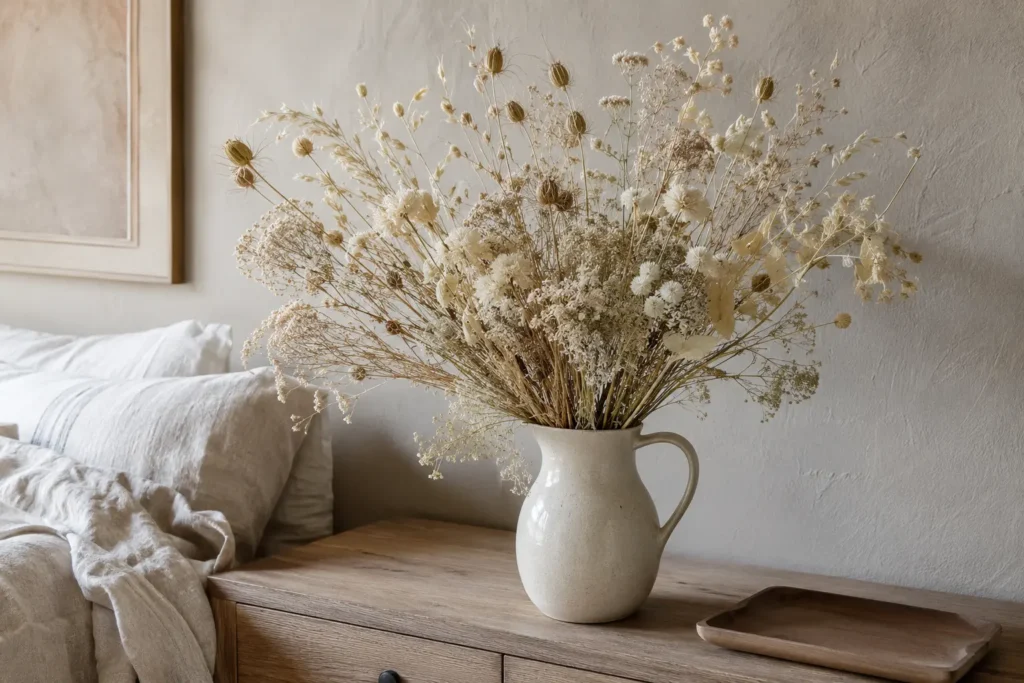
Combine dried nigella, cream gomphrena, natural phalaris, bleached ruscus, meadow foxtail, white yarrow, and Queen Anne’s lace in an off-white hand-thrown pitcher. Keep the cream flowers concentrated near the center and allow the finer grasses to form a loose, translucent edge.
The washed-linen palette softens a bedroom dresser, breakfast nook, or pale-wood kitchen without appearing bridal. Reveal several inches of the pitcher’s neck rather than covering it with foliage. For a more affordable version, use a thrifted stoneware pitcher, but skip glossy white ceramic; reflected glare can make muted stems look flat in photographs.
5. Olive Smoke Branch Arrangement
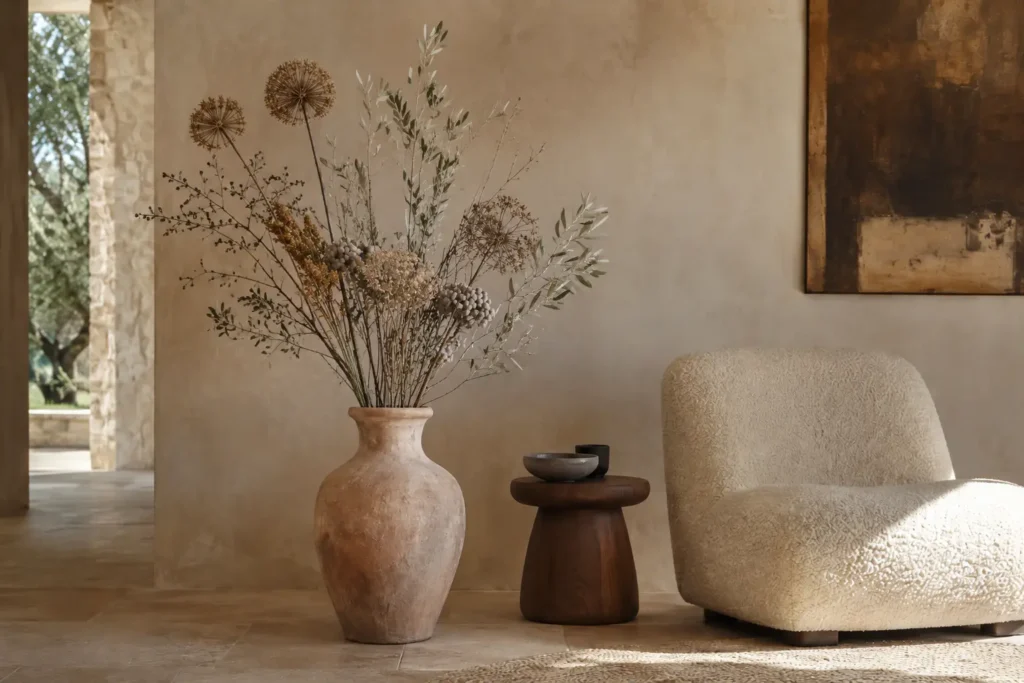
Preserved olive branches bring movement and soft gray-green color to this Mediterranean-inspired floor or console arrangement. Mix them with dried allium heads, silver brunia, tan statice, natural sorghum, and thin smoke-bush twigs in a tall chalky terracotta vessel.
Cut the olive branches at visibly different heights and strip the lowest leaves to expose the stems. That open lower third keeps the design from becoming a dense shrub. A heavy vessel matters because long branches become top-heavy. If you’re using a lightweight pot, conceal a smaller weighted jar inside instead of filling the container with loose stones.
6. Amber Window Light
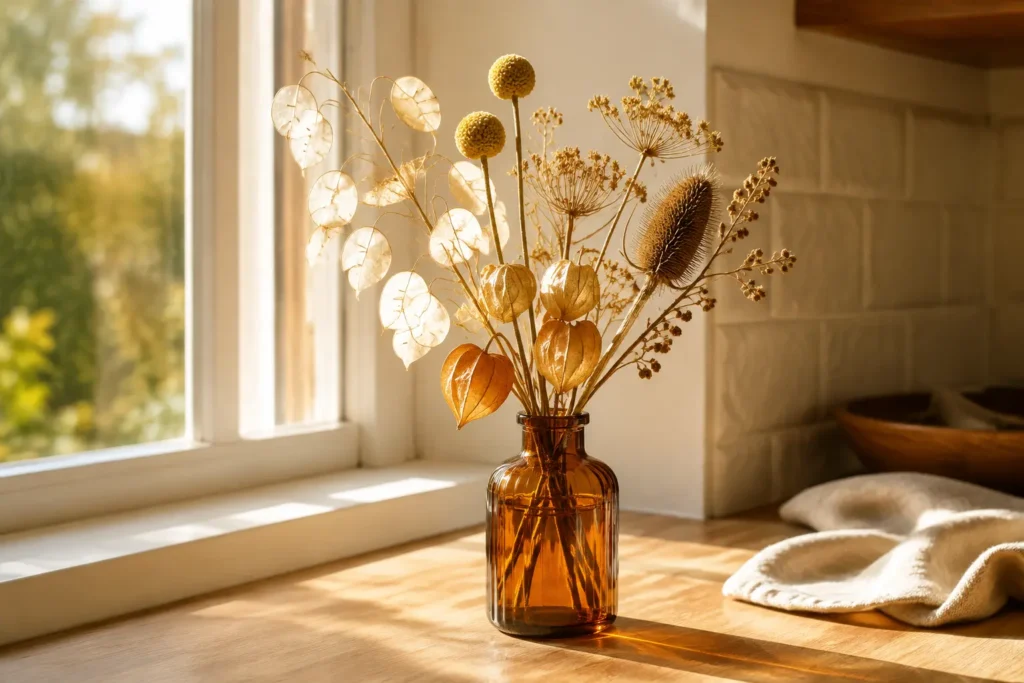
Use an amber ribbed-glass bottle to hold honesty pods, golden craspedia, dried fennel umbels, physalis husks, flax stems, and one pale teasel. Limit the composition to seven or nine visible stems so sunlight can pass between them rather than hitting a solid mass.
This small fall arrangement works on a kitchen windowsill or bathroom ledge where a broad bouquet would take up too much space. Place the translucent pods toward the window and the stronger seed heads in front. Amber glass glows in late-afternoon light, but direct sun can weaken dried stems, so rotate or relocate it periodically.
7. Chocolate Cosmos Mantel Line
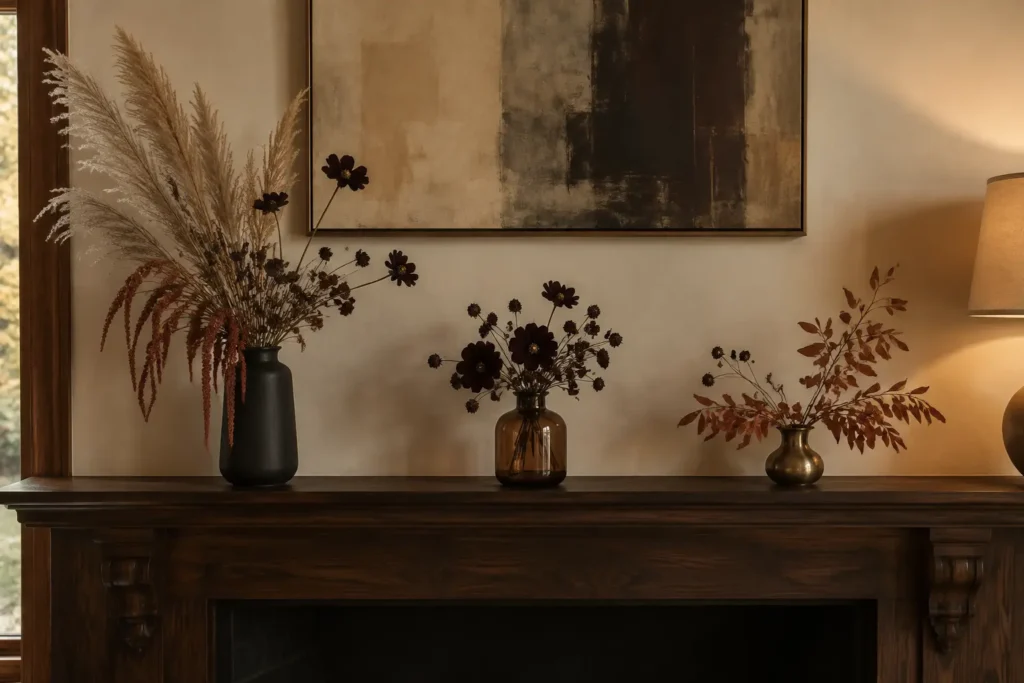
Instead of centering one large bouquet on the fireplace, arrange three small vessels across the mantel. Use black ceramic, brown glass, and aged brass bud vases filled with dried chocolate cosmos, burgundy scabiosa, black nigella pods, brown miscanthus, copper amaranthus, and mahogany maple seeds.
Treat the pieces as one flowing composition. Put the tallest grasses at one end, the darkest flowers near the middle, and leave at least 6 inches between vessels. This spacing creates rhythm without crowding family photos or artwork. Keep all materials well away from an active flame or a mantel surface that becomes warm.
8. Stone and Saffron Table Nest
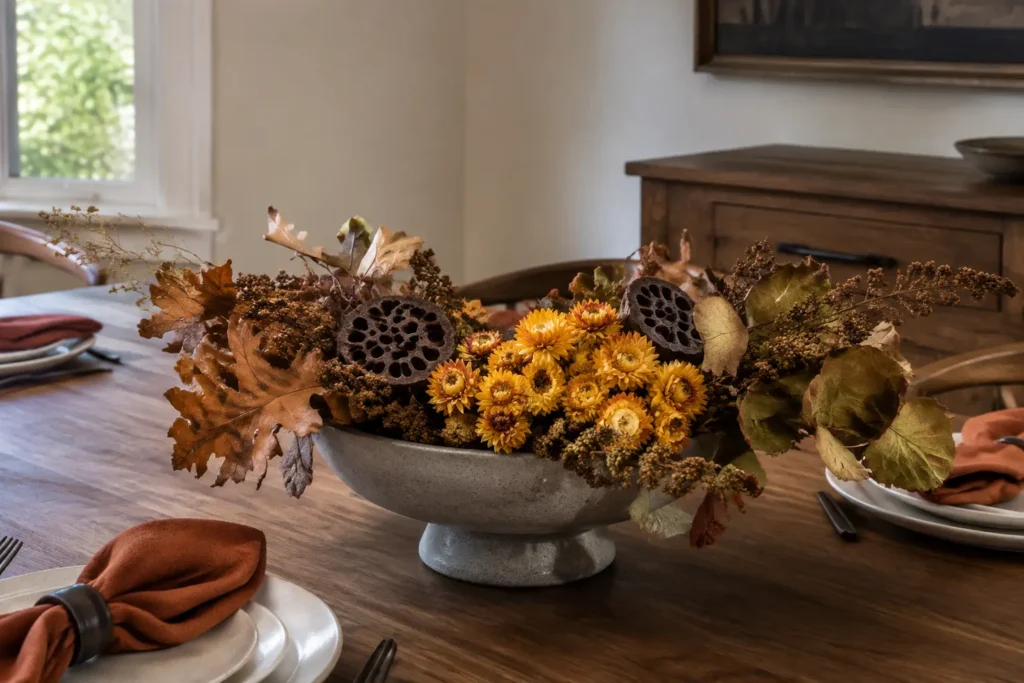
Arrange saffron-colored strawflowers, dried oak leaves, lotus pods, brown millet, natural broom bloom, and dried quince leaves in a low footed stone bowl. Gather the saffron flowers into one dense area and let the tawny leaves travel outward in two unequal directions.
The result suggests an autumn harvest without using literal seasonal props. Keep the finished centerpiece under 12 inches high and no wider than roughly one-third of the tabletop if it will remain in place during meals. A cast-stone or concrete-look bowl offers the same visual weight as carved stone at a more realistic price and is easier to move.
9. Eucalyptus Rain Cascade
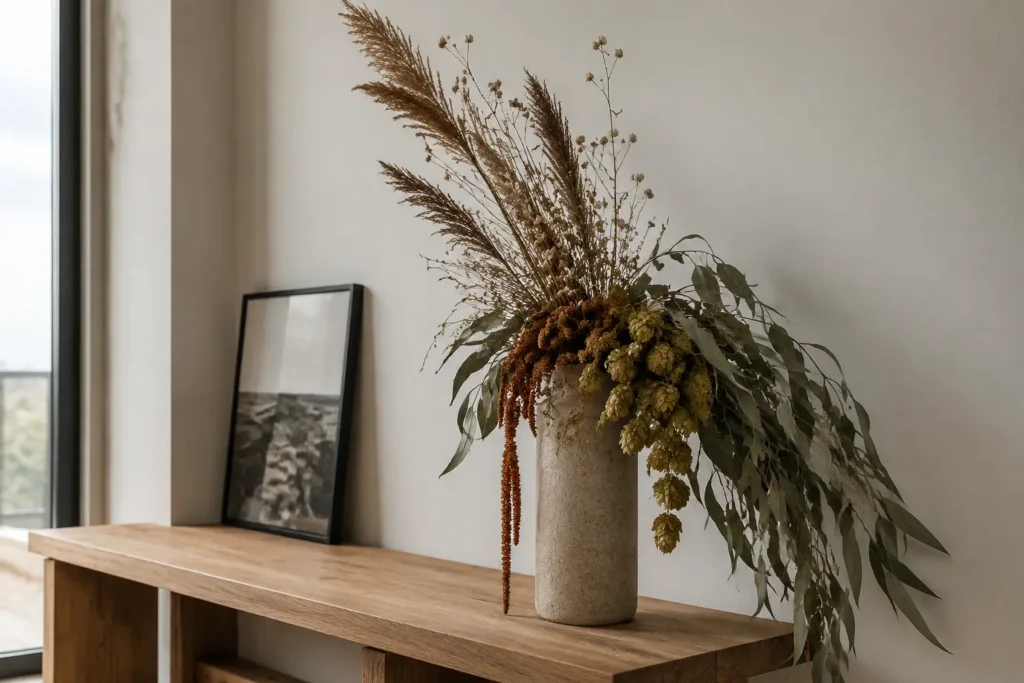
Fill a tall sand-colored concrete vase with preserved willow eucalyptus, dried hops, cream linum, bronze hanging amaranthus, and narrow reed plumes. Direct most upright stems toward one side, then let the eucalyptus and amaranthus fall from the other in a controlled diagonal.
Place the arrangement at the end of a console or on a dresser where the cascade has clear space beneath it. The uneven silhouette feels more natural than a symmetrical fountain shape. Preserved eucalyptus can transfer dye or oil, so don’t let it rest directly against a pale wall, fabric lampshade, or unsealed wood surface.
10. Reed and Rosehip Hallway Sculpture
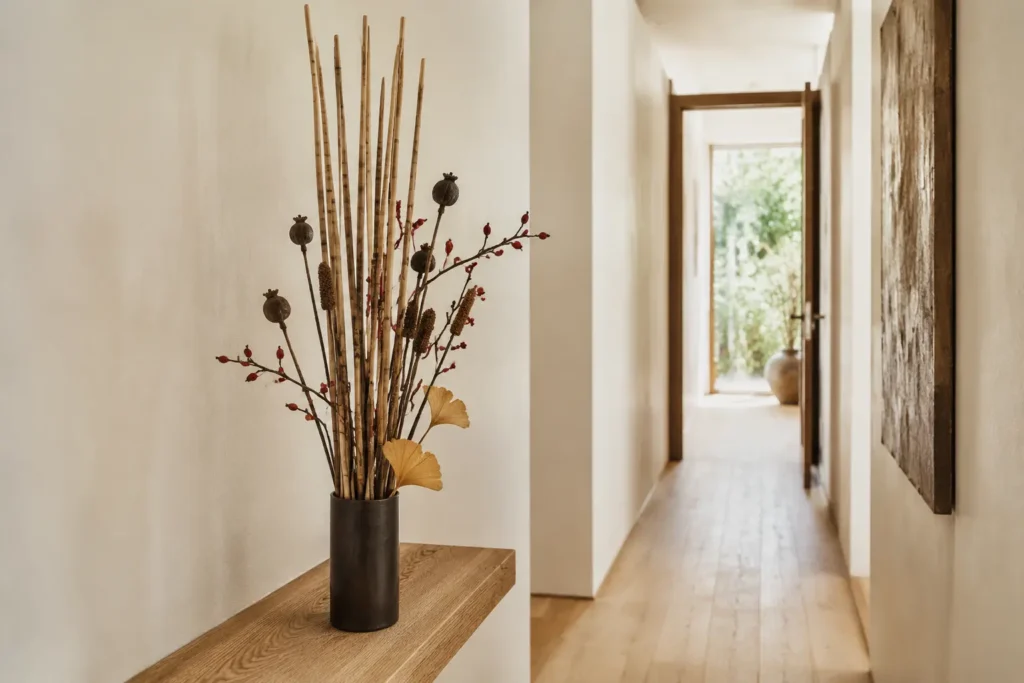
Pair tall lake reeds with one curved rosehip branch, blackened poppy pods, dried horsetail stems, and two fan-shaped ginkgo leaves. A slim black metal vessel gives the vertical materials enough visual weight while occupying very little room on a shallow hallway console.
Keep the reeds mostly parallel but vary their heights by several inches. Rotate the rosehip branch until it crosses the vertical lines without reaching into the walking path. In a narrow hall, the arrangement’s total depth should stay within the depth of the console. A weighted insert will also prevent the vase from tipping when doors open and create a draft.
11. Faded Orchard Pedestal Bowl
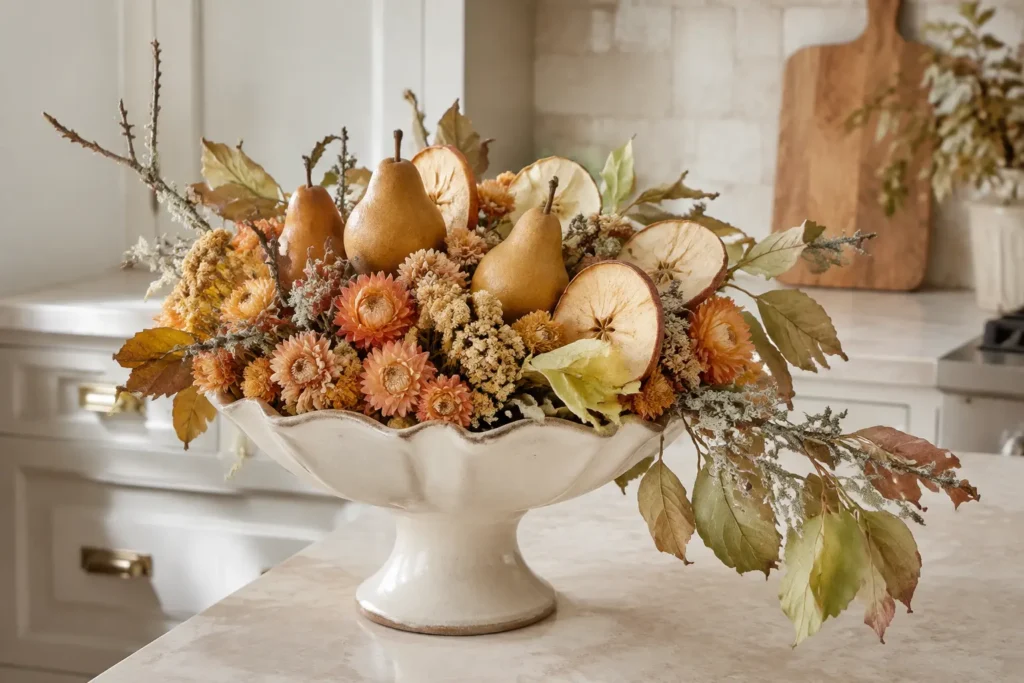
Create a refined orchard display with dried pear leaves, miniature preserved pears, apricot strawflowers, dried apple slices, cinnamon-colored helichrysum, and a few lichen-covered twigs. Arrange everything in a cream pedestal compote so the composition reads as a floral centerpiece rather than a bowl of potpourri.
Mount the preserved fruit on concealed picks and position most apple slices vertically. Leave part of the compote’s rim visible, with foliage falling over only one side. This design is suited to a kitchen island or breakfast table, though it should sit away from the stove, sink splashes, and strong cooking steam.
12. Copper Fern Reading-Nook Bouquet
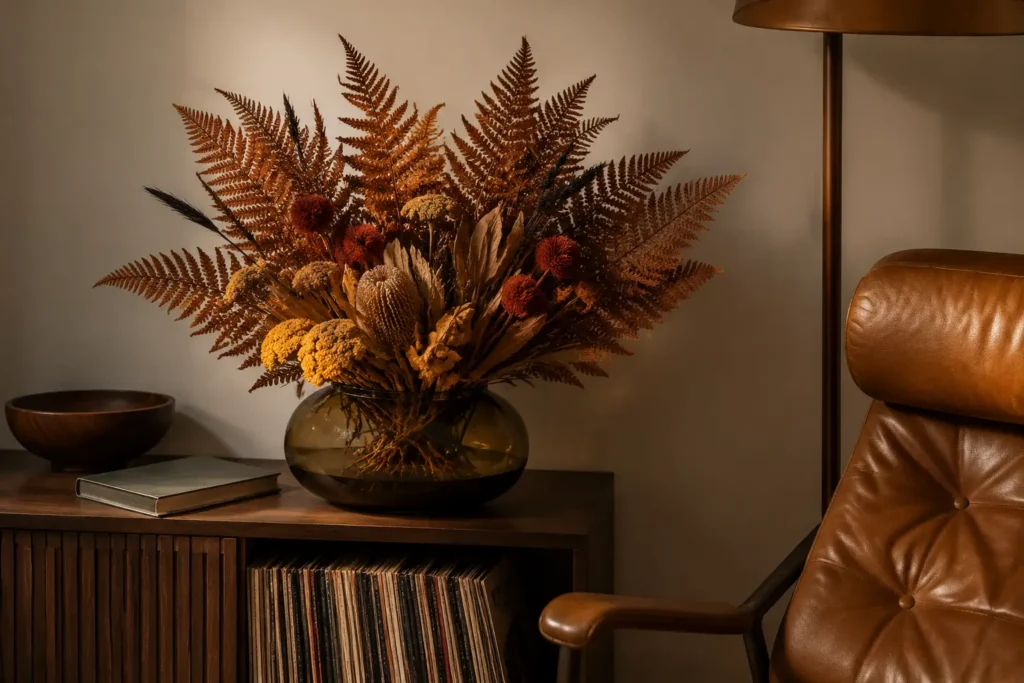
Use preserved copper fern to create a broad fan behind mustard achillea, burnt-orange globe amaranth, brown banksia leaves, dried kangaroo paw, and a few black grass stems. A low smoked-olive glass vase balances the angular foliage with a softer, rounded form.
Face the ferns forward so their graphic outlines remain visible against the wall. Position smaller flowers at different depths instead of forming a straight row across the front. The arrangement fits naturally on a record cabinet, reading-nook table, or office credenza. Choose matte preserved fern over metallic-painted foliage, which tends to show scratches and dust quickly.
13. Moonlit Seed-Pod Centerpiece
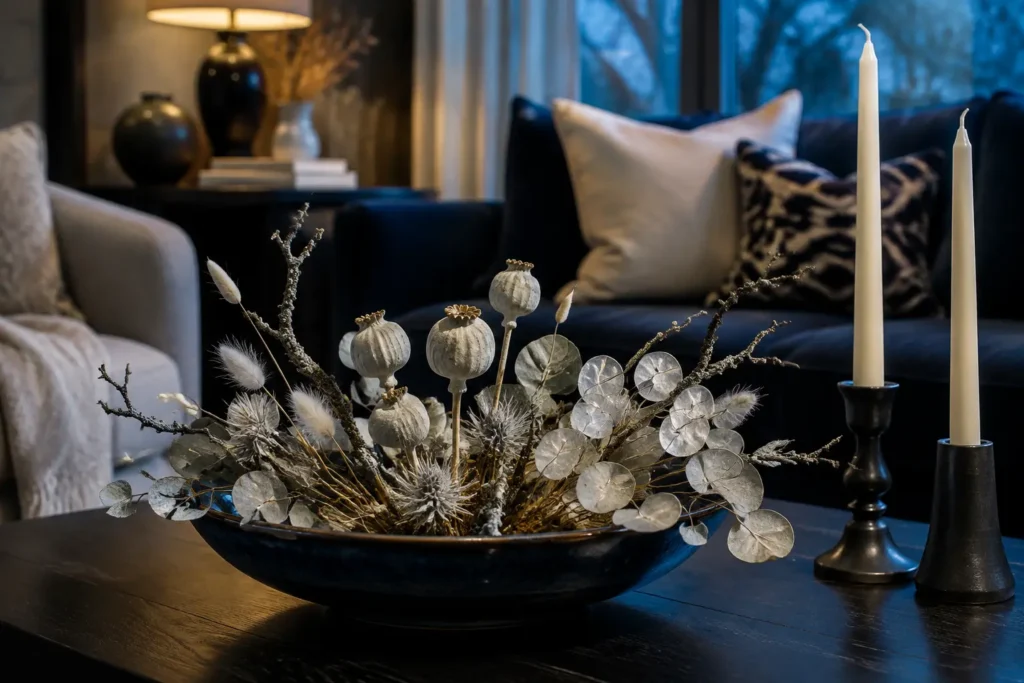
Fill a shallow midnight-blue glazed bowl with bleached poppy pods, silver dollar eucalyptus, white lunaria, pale thistle, cotton-grass heads, and charcoal lichen twigs. Group the pale materials in small clusters so the design resembles a moonlit landscape rather than an evenly mixed bouquet.
The dark bowl reflects candlelight and makes the white pods appear brighter, giving cooler interiors a distinct fall moment without relying on orange. Keep the arrangement low on a coffee or dining table and pair it with no more than two unscented tapers. Avoid glitter or metallic spray paint; natural variation looks richer up close.
14. Clay Ribbon Kitchen Arrangement
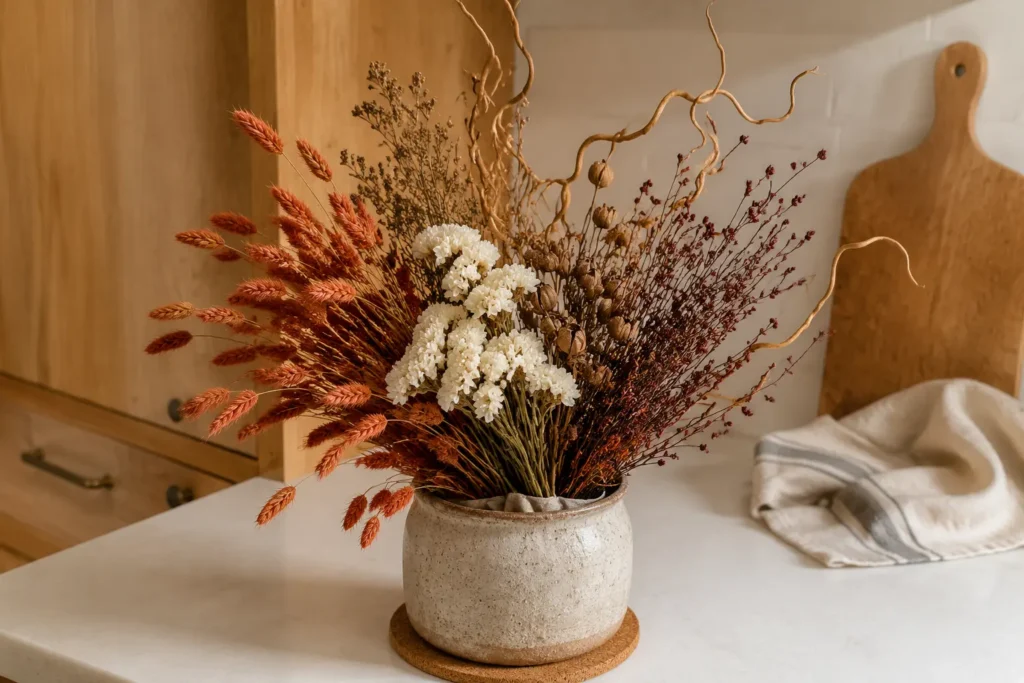
Combine terracotta-dyed phalaris, cream statice, dried oregano flowers, sesame pods, red sorrel seed stems, and curly willow tips in a short speckled clay crock. Direct the phalaris around the center in one loose spiral, then place the cream flowers slightly off-center.
Wrap the exposed stem bundle with a narrow washed-linen ribbon, keeping it below the vessel rim so it doesn’t resemble a gift bouquet. The clay and muted paprika tones look especially good beside oak cabinets and warm-white walls. Set the crock on a small cork or felt pad to protect stone counters from its rough underside.
15. Woodland Shelf Fragment
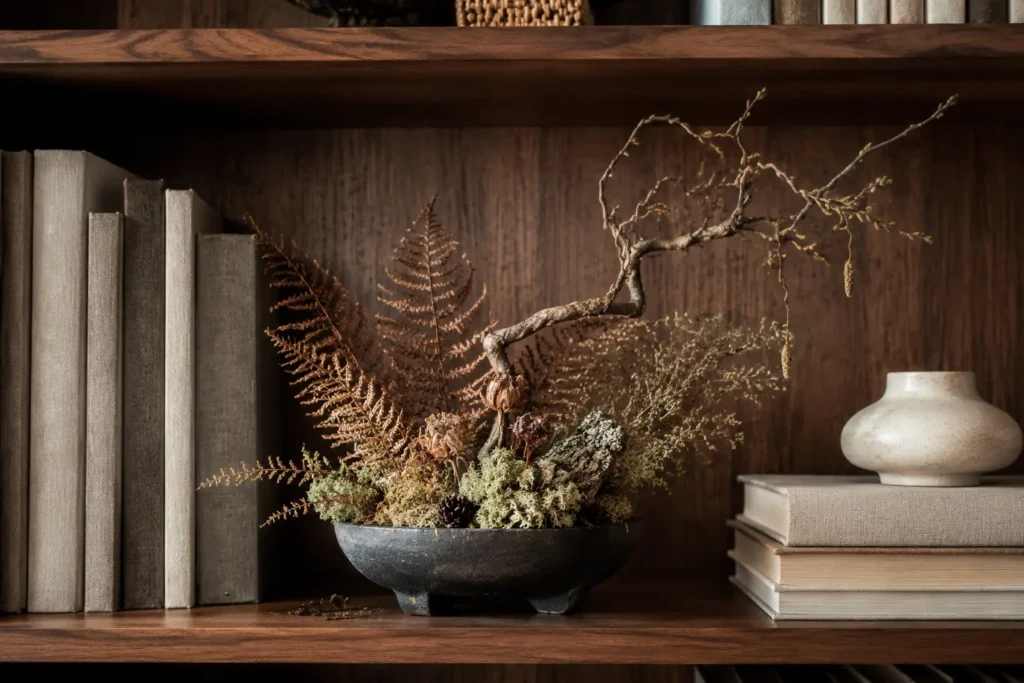
Build a miniature forest arrangement from dried bracken fern, preserved reindeer moss, lichen bark, alder cones, wood sorrel pods, maidenhair fern, and one contorted filbert branch. Use a small charcoal footed pot with a broad base so the branch can travel sideways without becoming unstable.
Keep the tallest point below the shelf above and aim the branch toward an open section rather than across book spines. Pair the display with a short stack of books and one ceramic object; extra woodland accessories make it feel staged. Preserved moss may shed, so line the vessel and lift it rather than dragging it during cleaning.
16. Blush Wheat Bedroom Fan
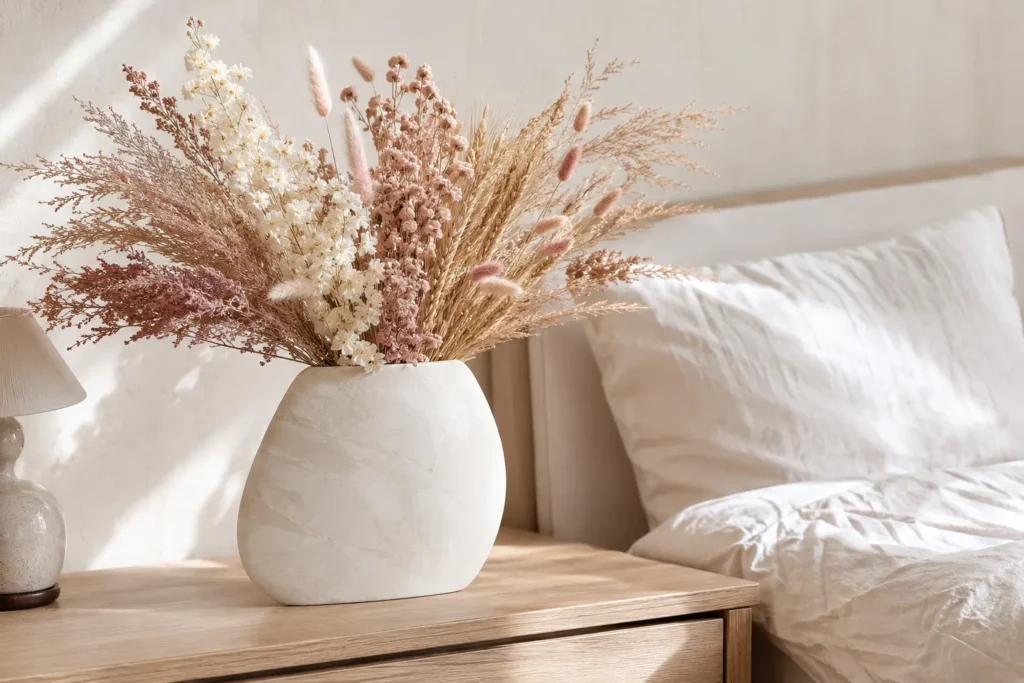
Arrange blush-dyed wheat, pale pink bunny tails, ivory larkspur, natural flax, dusty-rose broom bloom, and beige panic grass in a flattened alabaster-look vase. Trim the stems into several height levels and spread them into a forward-facing fan rather than a round bouquet.
This shape sits neatly against a bedroom wall and won’t consume the full depth of a dresser. Concentrate the larkspur on one side and use the finer panic grass to soften the opposite edge. Look for muted blush wheat instead of bubblegum pink; oversaturated dye can appear harsh under cool bedside LEDs.
17. Black Fig and Flax Arrangement
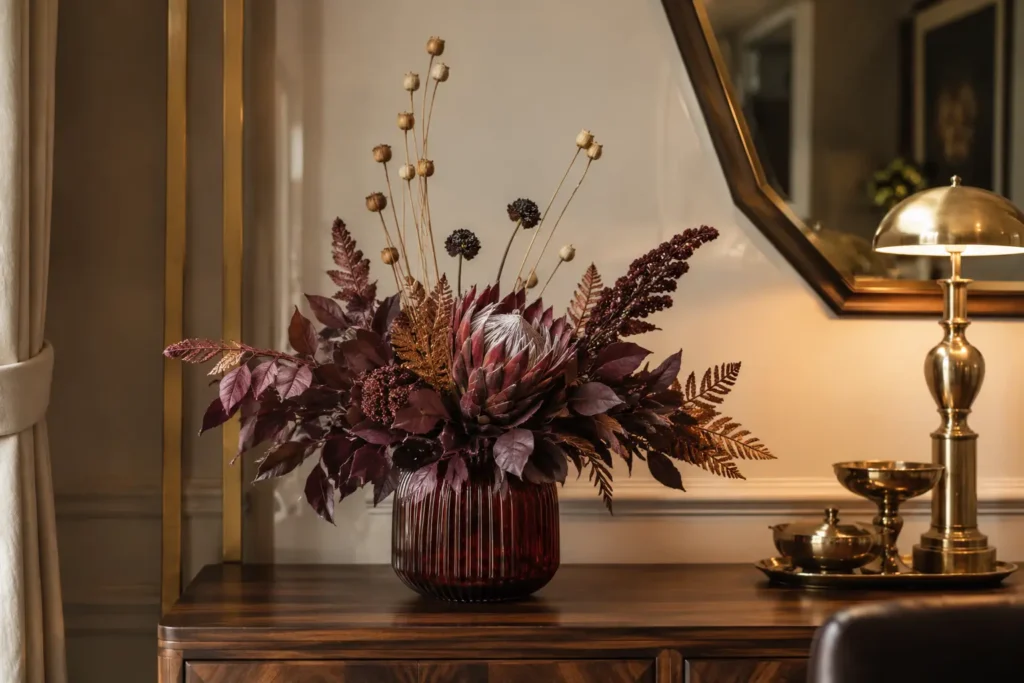
For a richer fall palette, place preserved burgundy salal leaves, one dried king protea, flax pods, black scabiosa pods, bronze ming fern, and dark red sorghum in a fluted dark-cherry glass vase. Keep the fig-colored foliage low while the flax creates a narrow upward arc.
Leaving clear space around the protea allows its form to remain readable. The controlled silhouette suits a dining sideboard, bar cabinet, or formal entry without overwhelming nearby art. Dark botanicals can disappear in a dim corner, so position the arrangement near a lamp with a warm 2700K bulb that reveals its burgundy and bronze undertones.
18. Tea-Stained Wildflower Trough
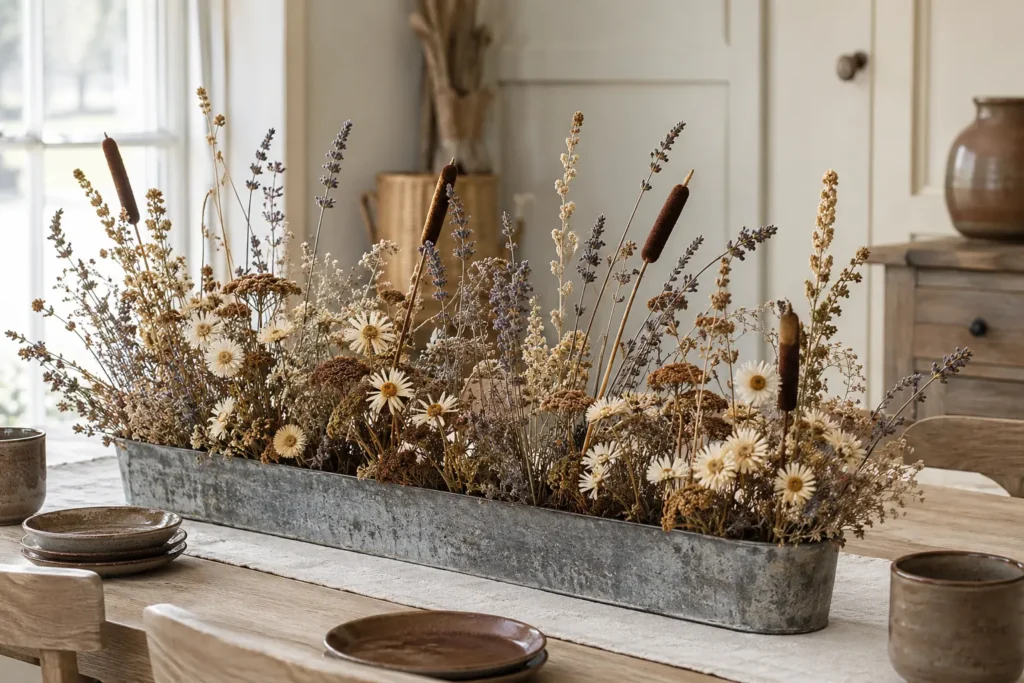
Fill a narrow aged-zinc trough with tea-toned daisies, dried feverfew, tan delphinium, brown yarrow, seed-bearing lavender, miniature cattails, and dried agrimony. Arrange the flowers in uneven pockets, allowing some areas to remain low and sparse rather than creating a continuous hedge.
The long meadow-like shape suits a dining table, mantel, or broad windowsill. Line the trough internally so rust or rough metal can’t mark the surface beneath it. Repeat two or three materials from one end to the other; that repetition connects the display while its changing heights preserve the loose English-cottage character.
19. Sculpted Walnut Branch Statement
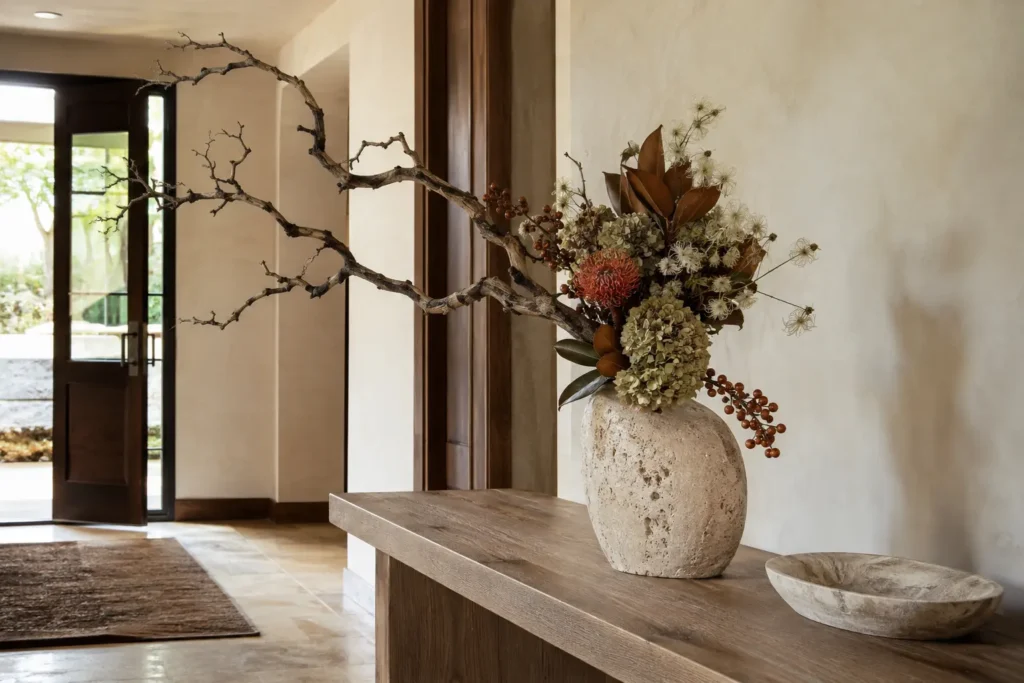
Anchor one dried walnut branch in a heavy asymmetrical travertine-look vessel. Follow its existing joints with restrained clusters of antique-green preserved hydrangea, brown magnolia leaves, rust pincushion protea, clematis seed heads, and copper pepperberry rather than covering the branch itself.
This larger organic-modern arrangement needs breathing room on an entry console, stair landing, or fireplace hearth. Check the branch’s balance before adding flowers and use a concealed weighted insert if needed. Keep at least one side visually open; the negative space is what makes the botanical form feel sculptural instead of simply oversized.
Common Dried Flower Styling Mistakes to Avoid
The most common problem is using a vessel with too little weight or the wrong opening. A wide neck allows stems to collapse against the rim, while a lightweight base can tip under tall branches. Insert a smaller jar, floral pin holder, or reusable wire structure when the container alone doesn’t provide enough control.
Too many similar dried textures can also make an arrangement look fuzzy and undefined. Pair soft grasses with firmer pods, broad leaves, or bare branches, and vary the spacing rather than filling every gap. Keep dried flowers away from steam, damp bathrooms, heating vents, and long periods of direct sunlight. Moisture encourages mildew, while heat and UV exposure cause fading and brittleness.