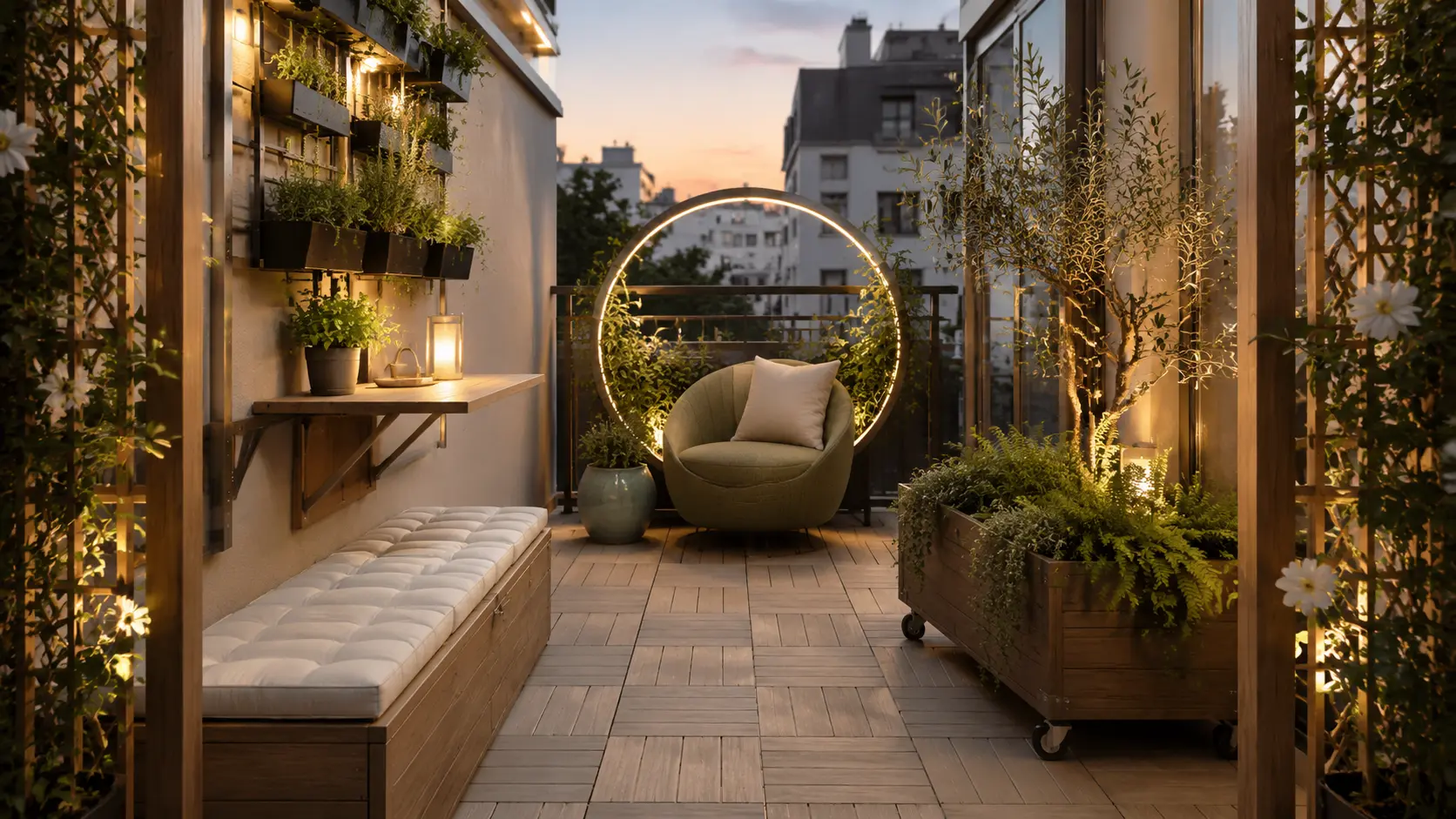
A compact patio can feel surprisingly private and garden-rich when every surface earns its place. These 20 small patio garden ideas for a cozy outdoor retreat use vertical planting, visual illusions, concealed storage, and furniture that changes function instead of filling the floor with pots and chairs.
The goal isn’t to squeeze a full backyard onto a few square feet. It’s to create one immersive outdoor room that supports how you actually want to spend time outside—reading, eating, growing herbs, or winding down after dark.
1. Create a Secret Garden Portal
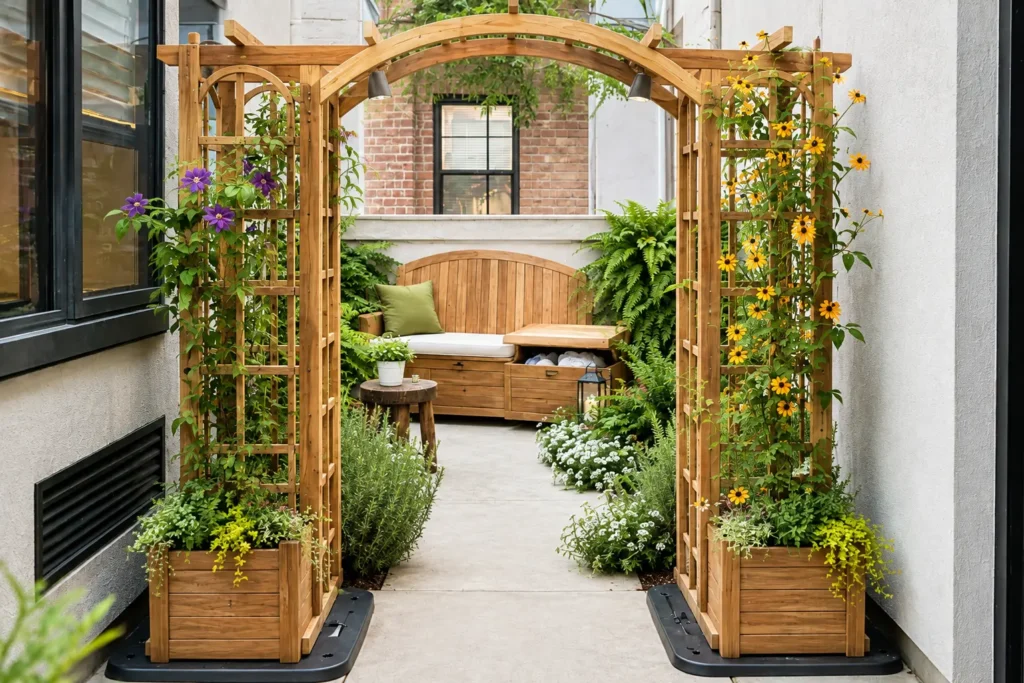
Give your patio a sense of arrival with two slim cedar trellises connected by a lightweight removable arch. Position the structure at the entrance or just before the main seating zone, then train clematis, black-eyed Susan vine, or another climate-appropriate climber up the sides. Keep the center open so it frames a narrow storage bench and preserves a clear path at least 30 inches wide. Rechargeable downlights beneath the arch will make the entrance feel especially secluded after sunset without requiring electrical work.
2. Arrange a Rolling Green Cocoon
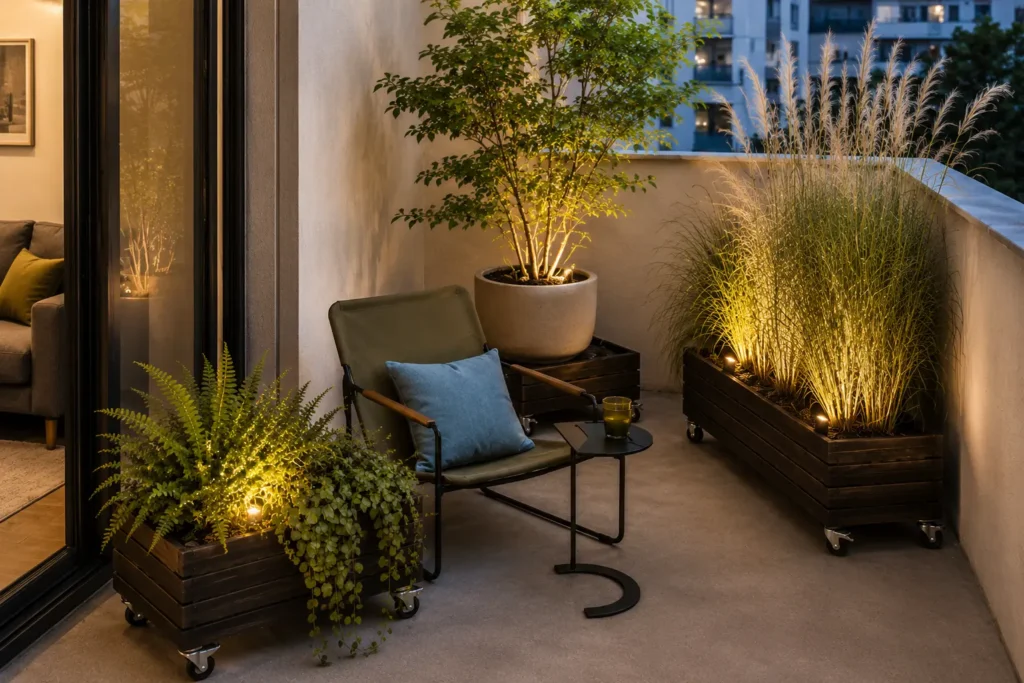
Build flexible privacy around a low lounge chair using three narrow plant platforms fitted with locking outdoor casters. Give each platform a different profile: one tall grass, one airy dwarf shrub, and one lower arrangement of ferns or cascading foliage. The varied heights provide enclosure without producing a solid wall that blocks air and daylight. Choose broad-based, weather-resistant containers so the composition isn’t top-heavy, and lock the wheels during use. You can roll the entire garden aside whenever you need space for guests, exercise, or maintenance.
3. Install a Fold-Out Botanical Bar
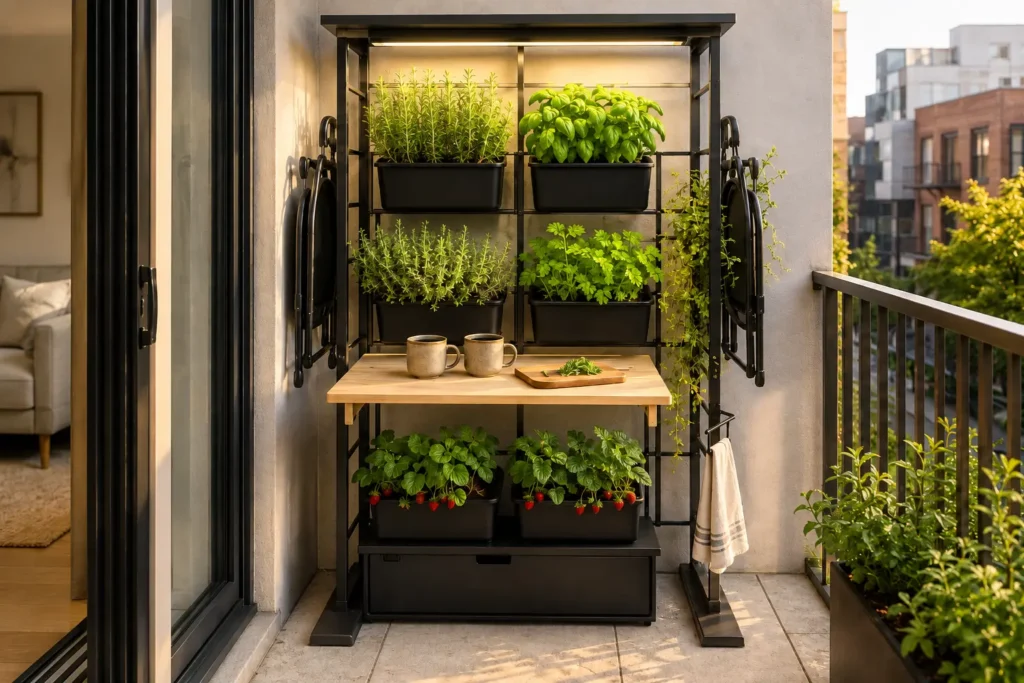
Combine a vertical herb garden with a fold-down shelf approximately 10 to 14 inches deep. Mounted inside a timber or powder-coated metal grid, the ledge can function as a coffee bar, potting counter, or laptop perch before folding flat against the wall. Arrange thyme, rosemary, compact basil, and trailing oregano around the work surface in secure lightweight containers. Two folding stools can hang from strong hooks when not in use. Add a rechargeable linear light beneath the upper shelf so the bar remains useful after dark without covering the patio in decorative bulbs.
4. Design a Patina-Blue Moon Patio
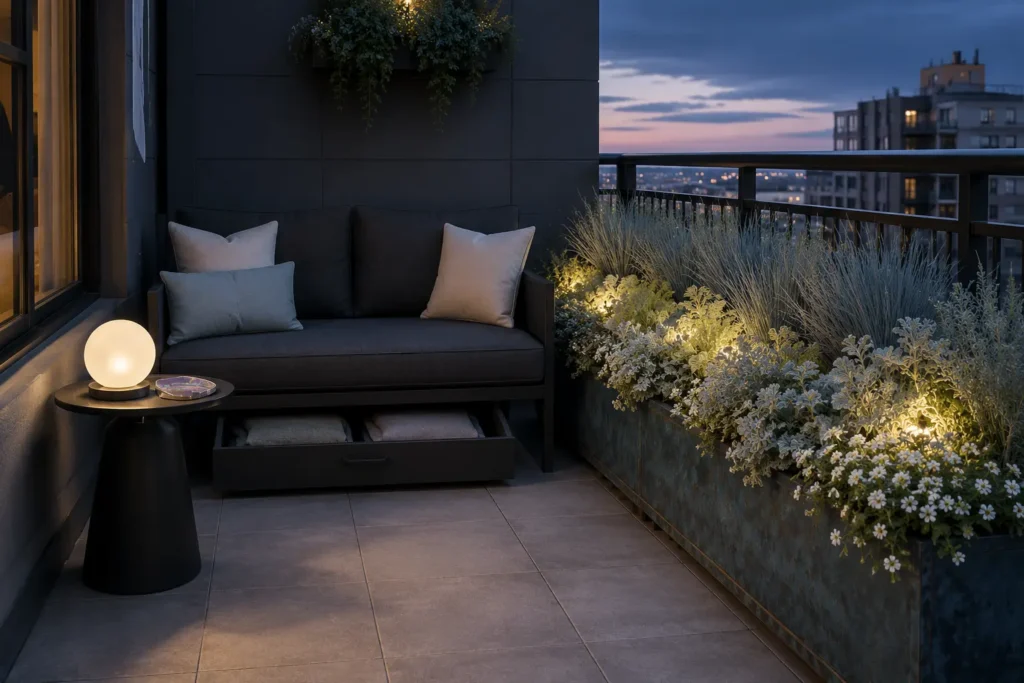
A limited palette can make a small patio feel calmer and more intentional than a mixture of unrelated containers. Pair patina-blue planters with silvery foliage, white flowers, charcoal furniture, and one restrained opalescent accent. Artemisia, white bacopa, blue fescue, and pale heuchera can produce the effect, depending on your region and light conditions. Place warm, low lights between the plants so the pale leaves glow at dusk. Avoid cool blue bulbs; they often make healthy foliage appear gray and artificial rather than moonlit.
5. Create the Illusion of a Sunken Lounge
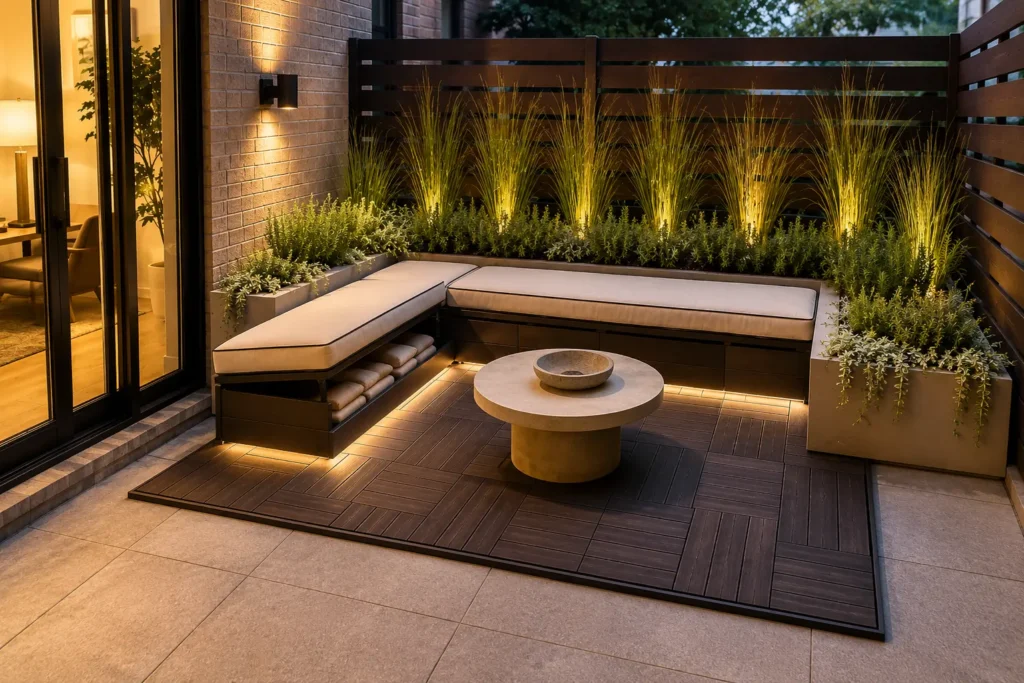
You don’t need structural excavation to capture the sheltered feeling of a conversation pit. Place two low, armless storage benches in an L-shaped arrangement on a defined platform of interlocking deck tiles. Wrap the outer edges with narrow trough planters containing upright grasses and compact foliage, leaving the open side facing the patio entrance. Keep a low pedestal table about 16 to 18 inches from the seating. Concealed lights beneath the bench edges will make the platform appear to float while keeping the central floor clear.
6. Build a Rotating Garden Theater
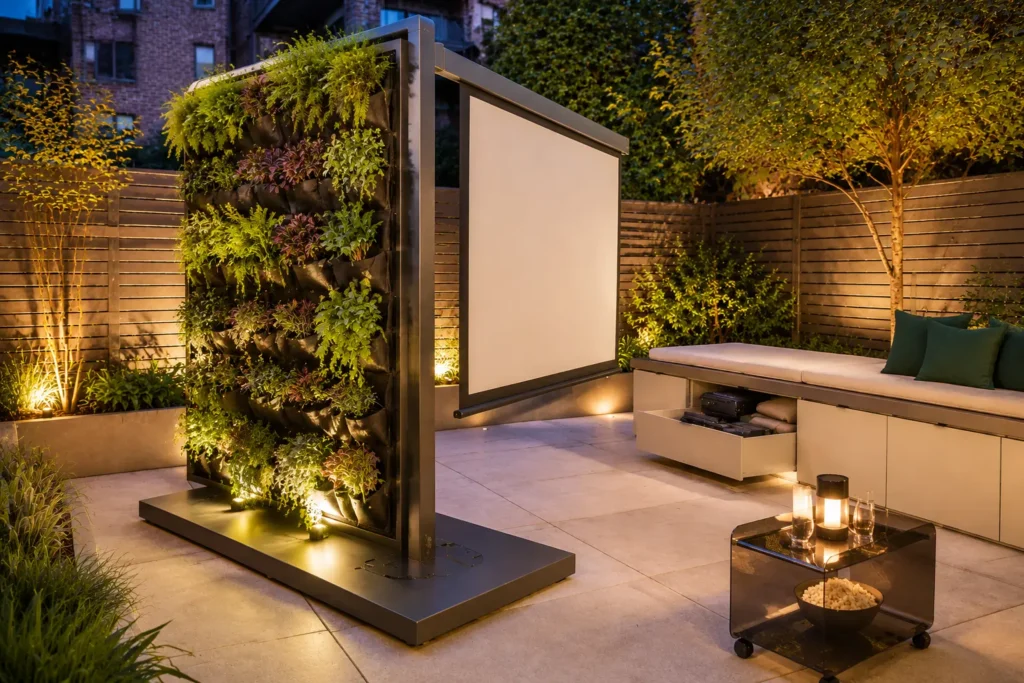
Construct a freestanding pivoting frame with modular planting on one side and a fold-down projection surface or outdoor artwork on the other. During the day, the planted face provides greenery and privacy; at night, the frame rotates to support outdoor entertainment. Keep the base wide and properly weighted, and reserve this project for someone comfortable with basic carpentry and secure hardware. Compact heuchera, ferns, herbs, and trailing dichondra provide texture without becoming excessively heavy. Pair the frame with a slim storage daybed that conceals projector accessories and floor cushions.
7. Add a Disappearing Picnic Deck
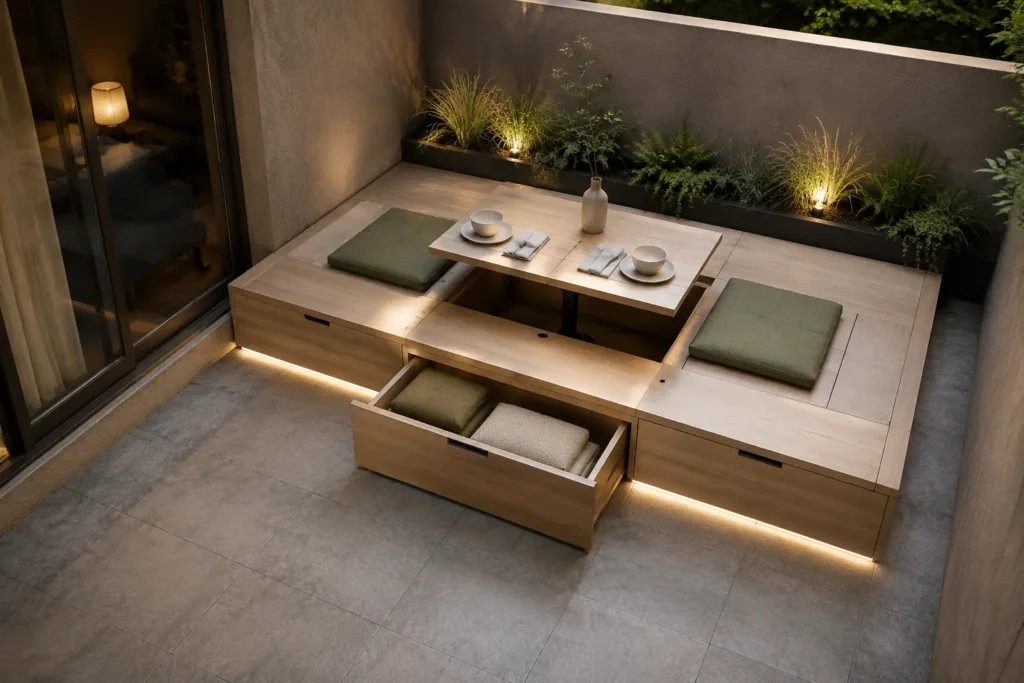
A shallow raised platform can conceal a complete low dining arrangement when every inch matters. Build or commission a modular timber deck with a pull-out table and drawers for weather-resistant floor cushions, then place a narrow planted trough along the rear edge. Soft grasses and ferns will visually enclose the dining area without leaning into plates or faces. This design requires more construction than it first appears, particularly if the floor slopes or receives heavy rain. Removable deck modules offer a more rental-conscious alternative to anything fixed into the patio surface.
8. Make a Japandi Rain-Chain Corner
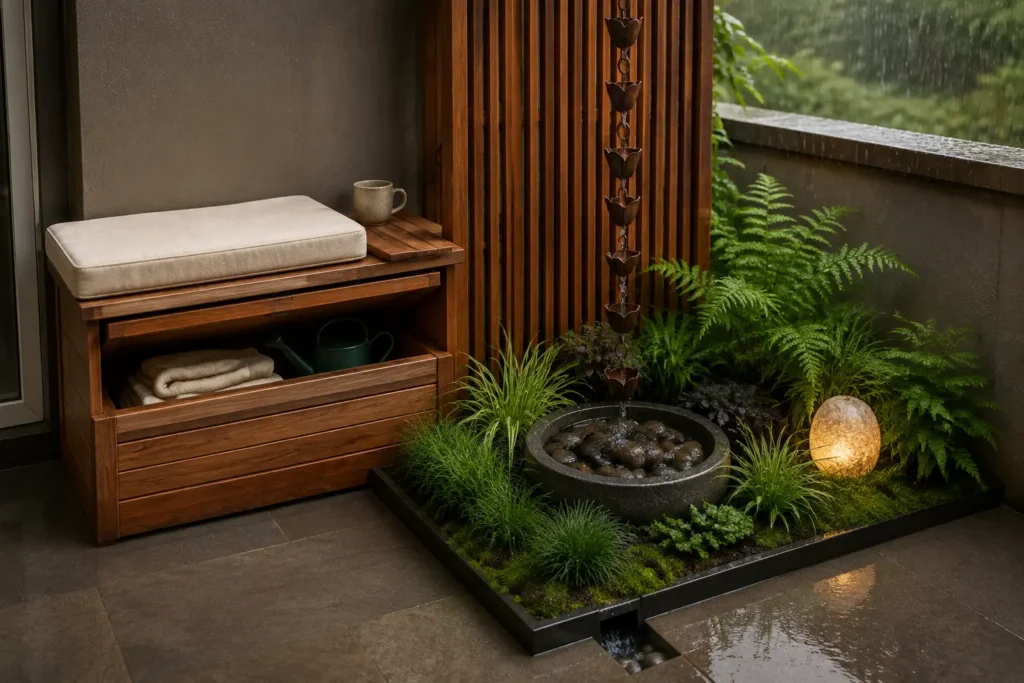
Turn rainfall into part of the garden experience by placing a decorative rain chain above a pebble-filled catch basin. A narrow timber screen behind it will highlight the moving water while concealing an unattractive wall or neighboring view. Use ferns, sedges, and dwarf mondo grass around the base if the corner remains shaded and moist. Confirm that runoff can drain safely and never direct water toward the building foundation or a downstairs neighbor. A cedar storage bench and stone-shaped rechargeable lamp complete the quiet, low-profile composition.
9. Form a Botanical Shadow Gallery
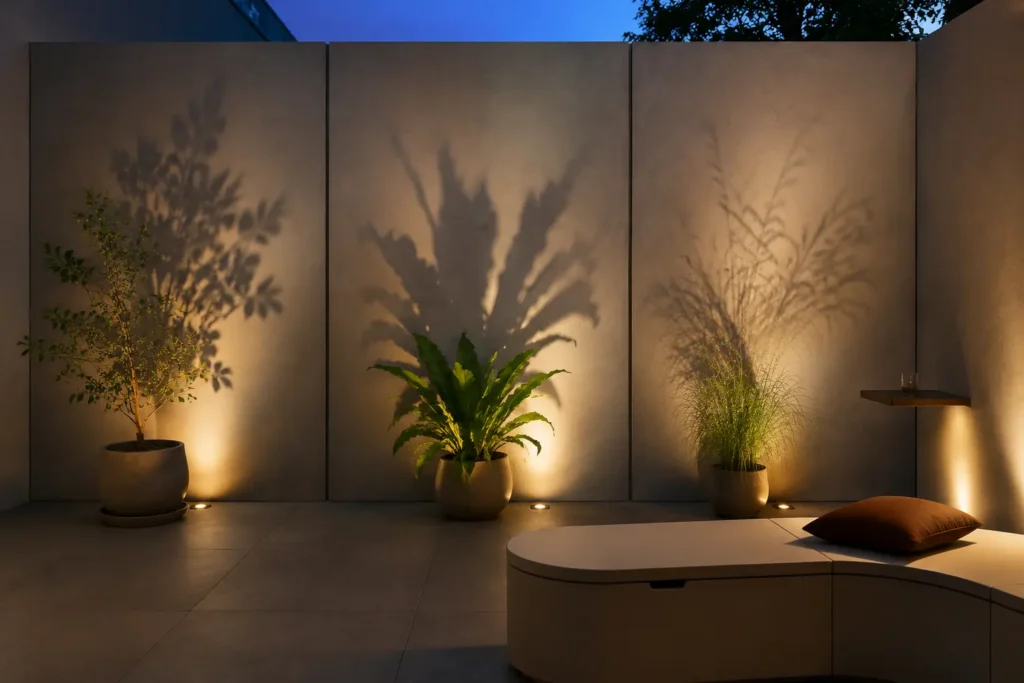
Instead of filling a blank wall with objects, use foliage and angled light to create artwork that changes with the breeze. Position three strongly shaped plants in front of textured removable panels, then aim warm rechargeable spotlights upward from floor level. Japanese aralia, bird’s-nest fern, dwarf palms, and ornamental grasses can cast clearly defined shadows when matched to the available light. Leave generous negative space between the projections; overlapping every leaf creates visual noise. The result feels restrained during the day and theatrical after sunset without taking over the patio floor.
10. Create a Poet’s Patio Library
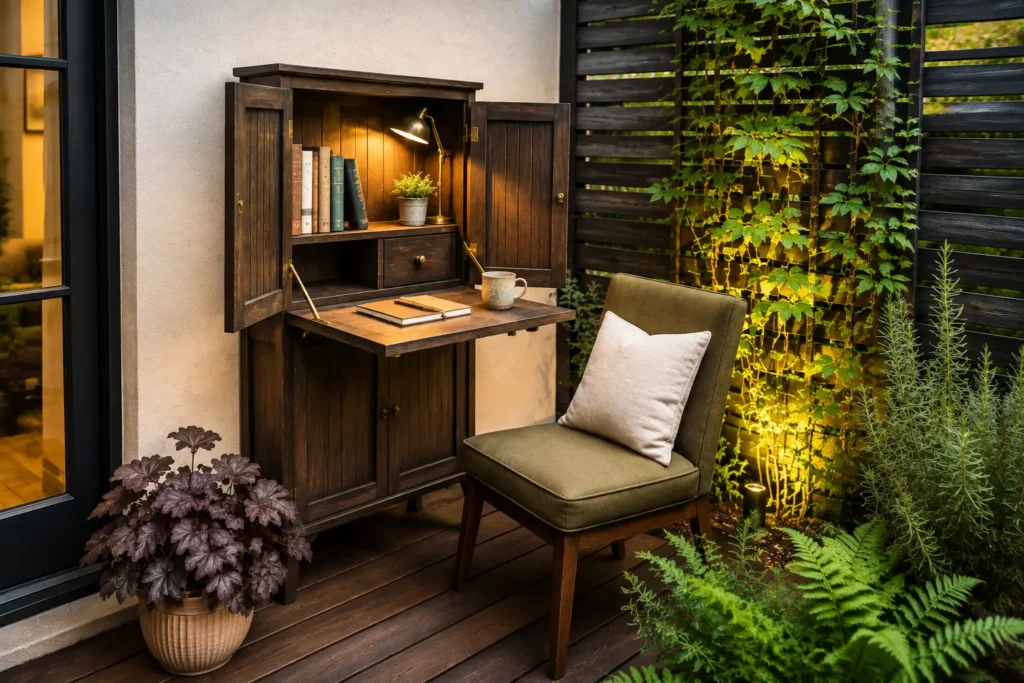
Center this retreat on a shallow, weather-resistant cabinet that protects books and writing supplies. Inside, include a fold-down writing surface, a rechargeable library-style lamp, and narrow shelves with raised edges. Position a compact chair upholstered in outdoor-performance fabric nearby, then surround the area with rosemary, ferns, dark heuchera, and one controlled climbing plant. Even covered patios experience dampness and temperature changes, so store valuable books indoors between uses. The cabinet gives the garden a clear purpose while preventing papers and accessories from becoming outdoor clutter.
11. Frame a Seat With a Hanging Garden Halo

Place a rounded freestanding frame behind a single swivel chair so its upper curve forms a halo around the seating. Plant only the supported lower sides with trailing rosemary, hoya, nasturtium, or another species suited to the climate; heavy containers should never hang directly over someone’s head. A diffused rechargeable light following the inner curve will outline the form after dark. Keep the center open to maintain sky views and prevent the small patio from feeling capped. This creates an architectural focal point without the bulk of a full pergola.
12. Create a Greenhouse Window Illusion
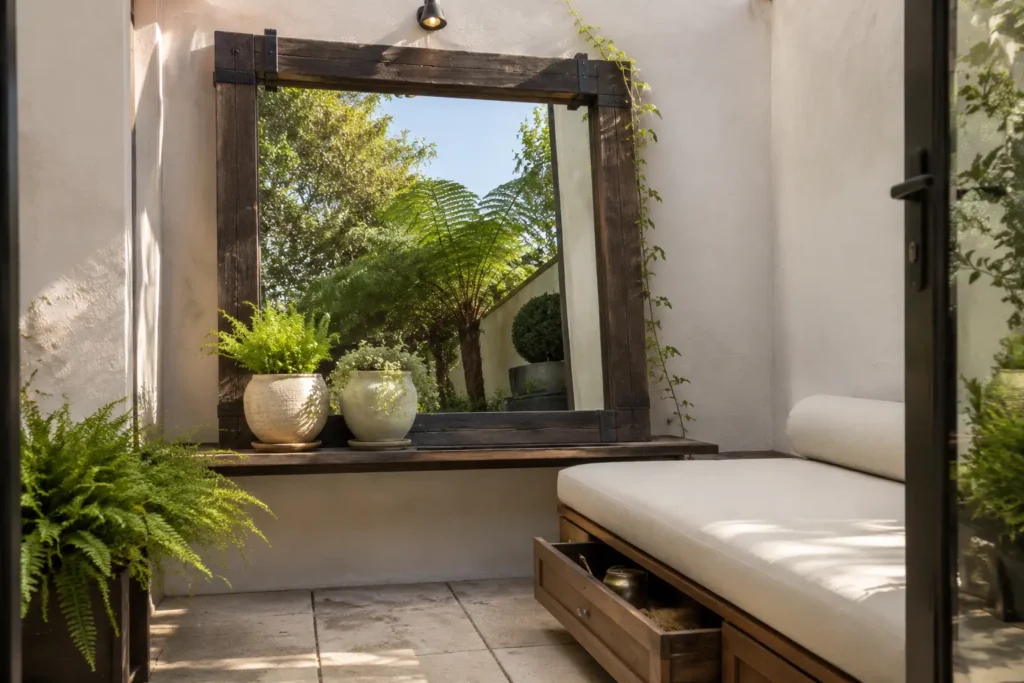
Lean a securely anchored salvaged window frame against a blank wall and allow planting to overlap only its outer edges. The exposed glass will reflect daylight and foliage, suggesting another garden room beyond the patio. A narrow shelf beneath the frame can hold two sculptural containers, while ferns and restrained vines soften the sides. Use safety-backed mirror acrylic if old glass presents a risk around children or pets. Position a storage daybed opposite the installation so the reflected view increases perceived depth from the main seat rather than merely reflecting a bare boundary.
13. Grow a Vertical Mini-Orchard
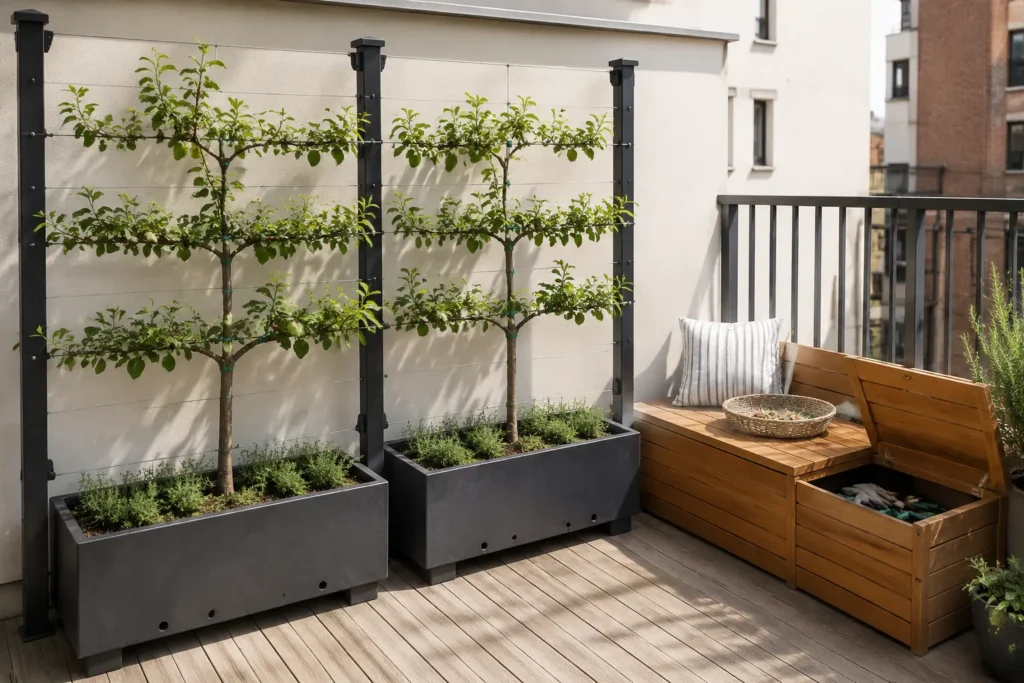
An espaliered fruit tree brings structure, seasonal change, and food production to a sunny patio without developing a broad canopy. Train a container-suitable dwarf cultivar along horizontal wires attached to a strong freestanding frame, keeping the mature size and required chill hours in mind. Apples, pears, citrus, and figs have very different climate requirements, so local suitability matters more than appearance. Place a narrow storage bench beneath or beside the frame, leaving access for pruning and watering. Expect regular training; an espalier isn’t a plant-it-and-forget-it solution.
14. Organize a Scent Library Wall
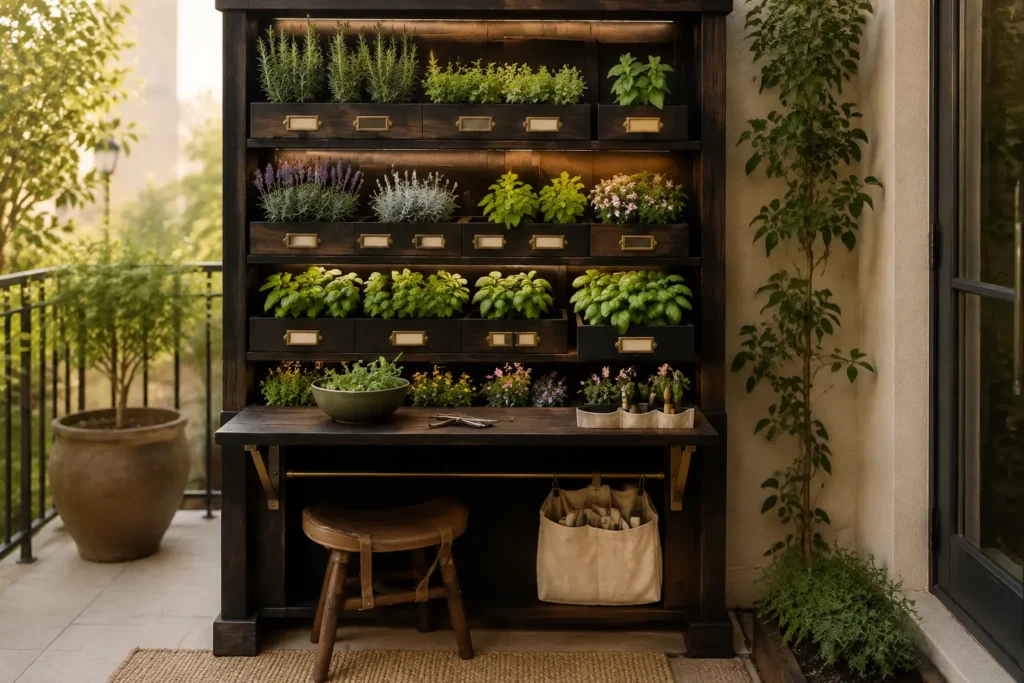
Turn aromatic plants into an interactive vertical collection by arranging removable planting modules in labeled rows. Divide them by use—cooking herbs, calming evening scents, pollinator plants, and bright morning fragrances—rather than arranging them randomly. Lemon thyme, rosemary, basil, lavender, scented geranium, and mint can work, though mint needs its own container to prevent spreading. Add a fold-down tasting ledge and one stool below. The organized repetition resembles an old apothecary cabinet while making each plant easy to remove, prune, rotate, or replace.
15. Style a Neo-Deco Garden Nook
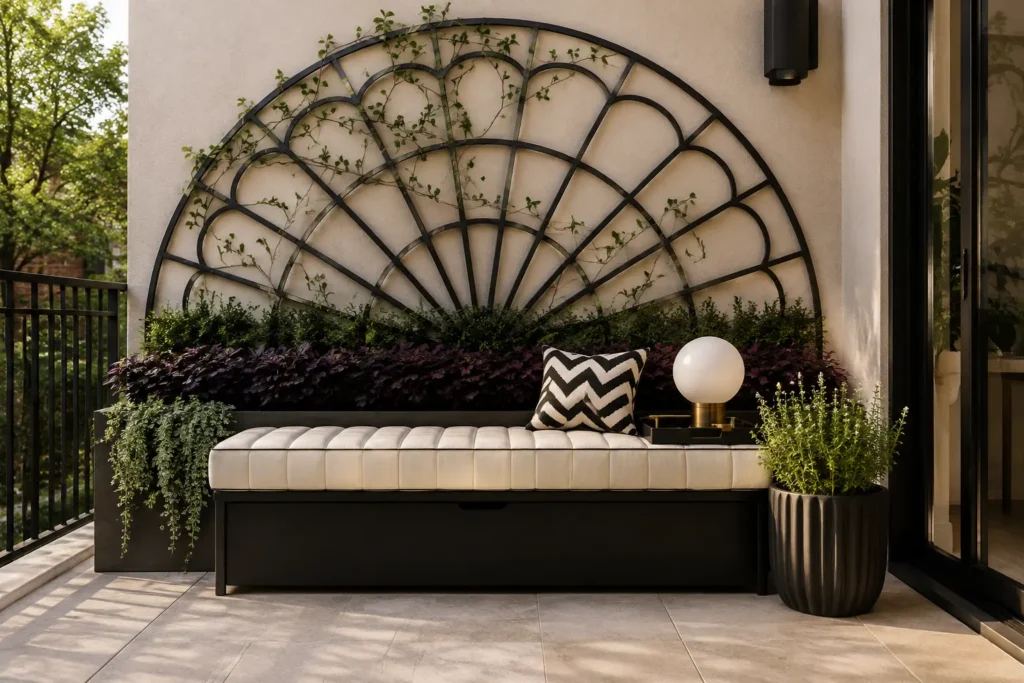
Introduce controlled glamour with a fan-shaped metal trellis, one geometric cushion, and a compact globe lamp. Black, cream, aged brass, and deep green create enough contrast to make the small patio memorable without turning it into a theatrical set. Train one vine across the trellis and use a continuous trough of clipped and cascading foliage below it. A plain storage bench can gain a channel-tufted appearance through removable vertically stitched cushions. Reserve polished metal for one or two details because too many reflective finishes look harsh in direct afternoon sun.
16. Construct a Mirror-Pond Illusion
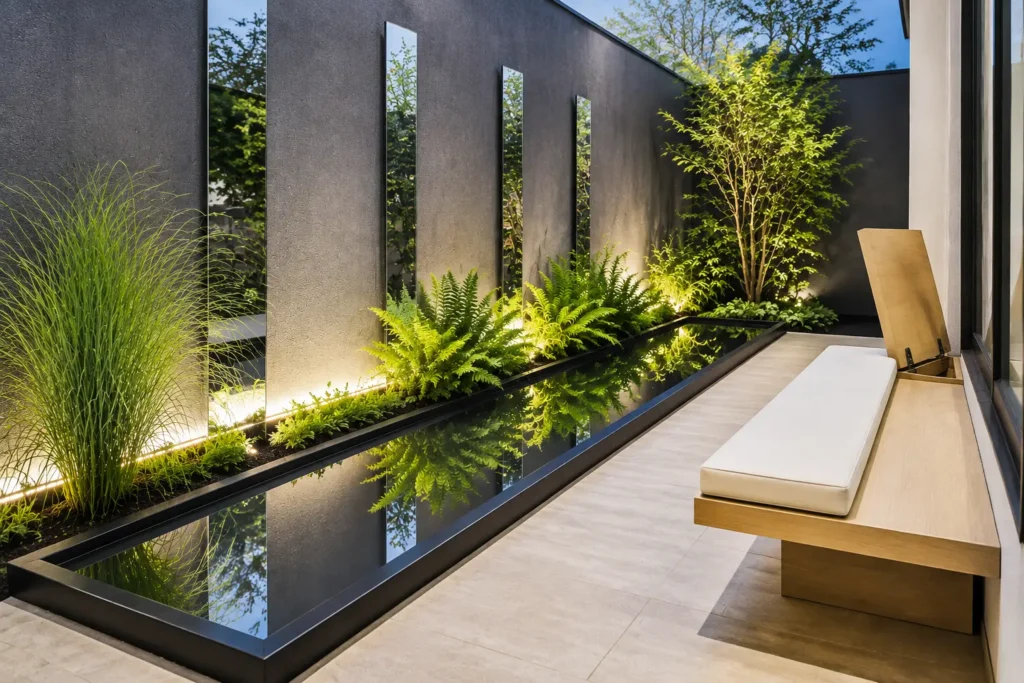
Reproduce the depth and stillness of a reflecting pool without standing water. Place a long, shallow panel of black safety-backed mirror acrylic at the base of a wall, then install narrow vertical mirror strips behind it to repeat the surrounding foliage. Grasses, ferns, and one airy multi-stem shrub will soften the reflections without hiding them. Concealed light can skim across the dark horizontal surface after sunset. Clean the panel regularly because dust and water spots reveal the illusion quickly, and avoid positioning it where concentrated reflected sunlight could create excessive heat.
17. Build a Garden Wardrobe
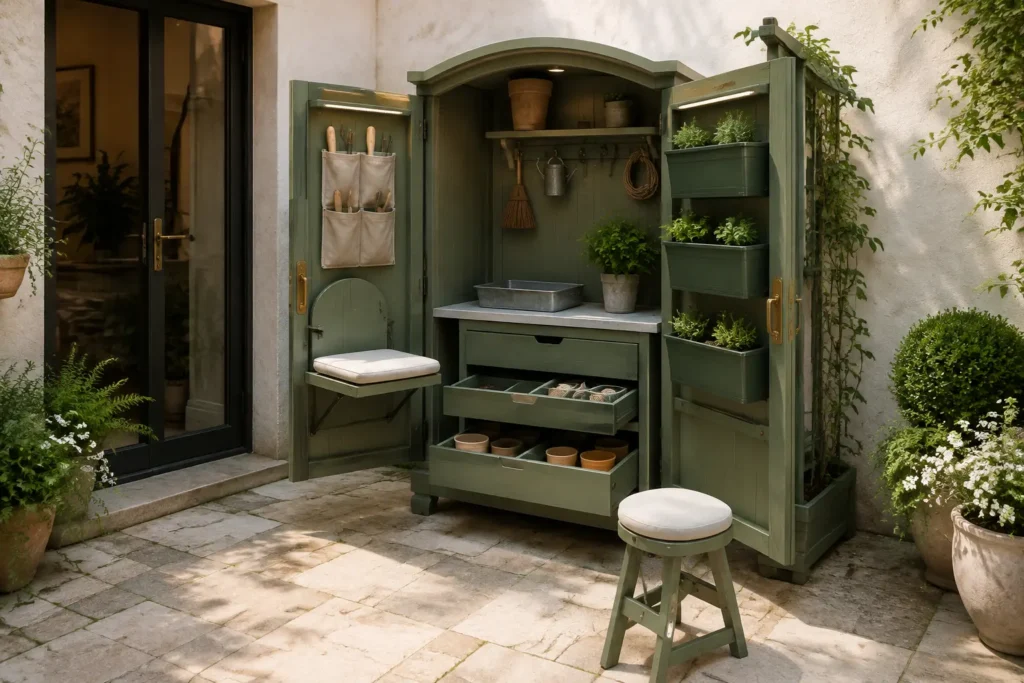
A shallow outdoor cabinet can contain nearly every function a compact patio needs. Use paneled doors that open to reveal a fold-out seat on one side, a potting counter in the center, and lightweight herb modules on the other. Lower drawers can hold soil, gloves, and small tools, while magnetic rechargeable lights illuminate the interior. Choose exterior-grade plywood, sealed timber, or a weather-resistant ready-made cabinet; indoor flat-pack furniture deteriorates quickly outdoors. When closed, the unit reads as one architectural feature instead of a collection of exposed garden supplies.
18. Install a Living Sundial Retreat

Make sunlight part of the composition with a large removable sundial-inspired panel mounted on the patio’s sunniest wall. Extend its radial pattern through the placement of compact herbs, terracotta containers, and a curved bench following the lower arc. Thyme, santolina, lavender, and blue fescue can create distinct markers where growing conditions suit them. The feature doesn’t need to provide scientifically precise timekeeping; its value lies in shadows that shift across the surface throughout the day. Use limewash-effect paint rather than fragile plaster for a convincing, weather-tolerant finish.
19. Conceal a Garden Cinema Cabinet
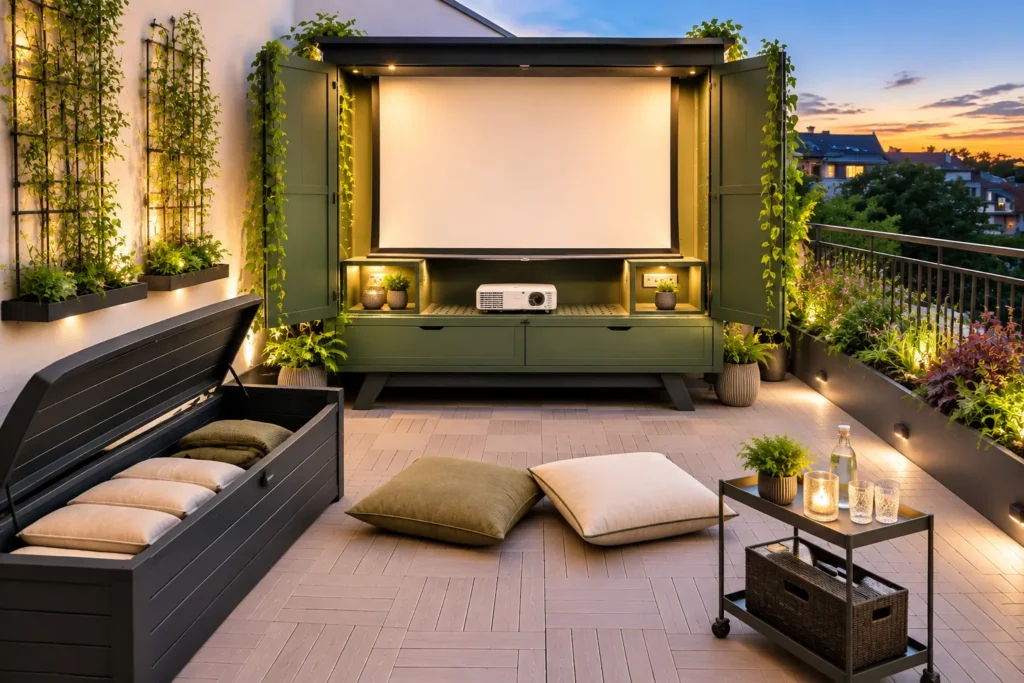
If a pivoting installation is too ambitious, hide a simpler outdoor cinema inside a shallow wall cabinet. Fit the interior with a roll-down screen, a narrow projector shelf, cable storage, and trailing plants framing—but never obstructing—the viewing surface or ventilation. A low storage bench can hold floor cushions and a compact rolling drinks table. Dark cushions reduce reflected light and feel less visually bulky at night. Keep electronics indoors between uses unless they are specifically rated for outdoor exposure; a cabinet alone won’t protect standard equipment from moisture or temperature swings.
20. Design a Living Plant Constellation
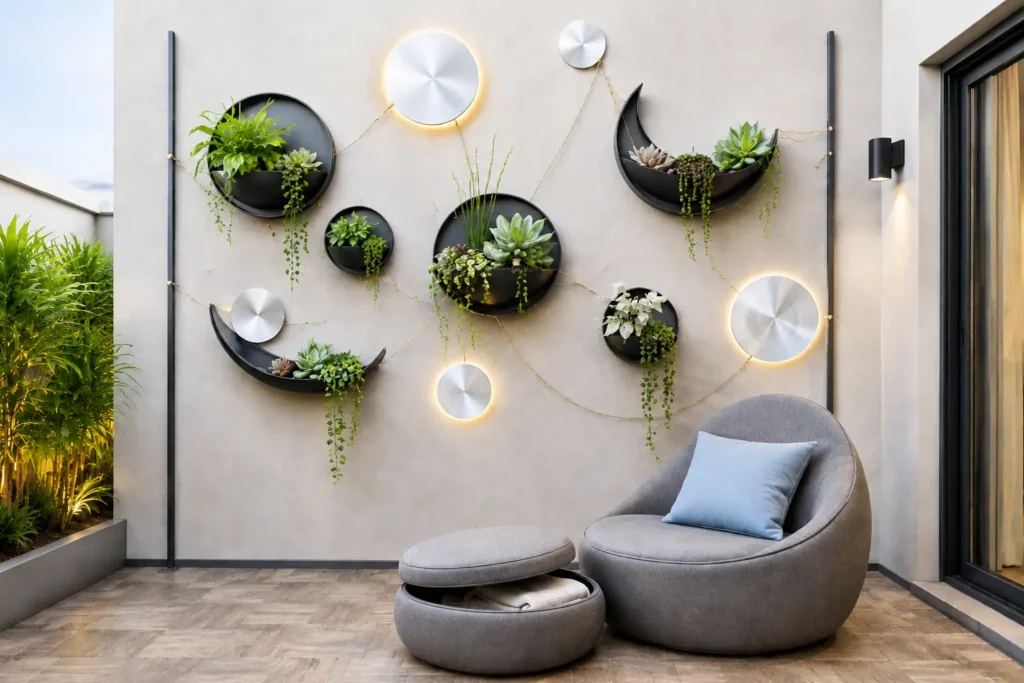
Finish the patio with a vertical garden that reads as artwork rather than a conventional plant rack. Arrange circular holders, shallow crescent shelves, reflective discs, and compact plants in an asymmetrical constellation, linking selected points with removable metallic cord. Rosette succulents, peperomia, trailing string plants, and silvery foliage create different shapes, but each container still needs enough root space and drainage. Tiny backlights can form halos behind several discs. Keeping the floor nearly empty allows this sculptural wall to carry the visual impact without making the patio harder to navigate.