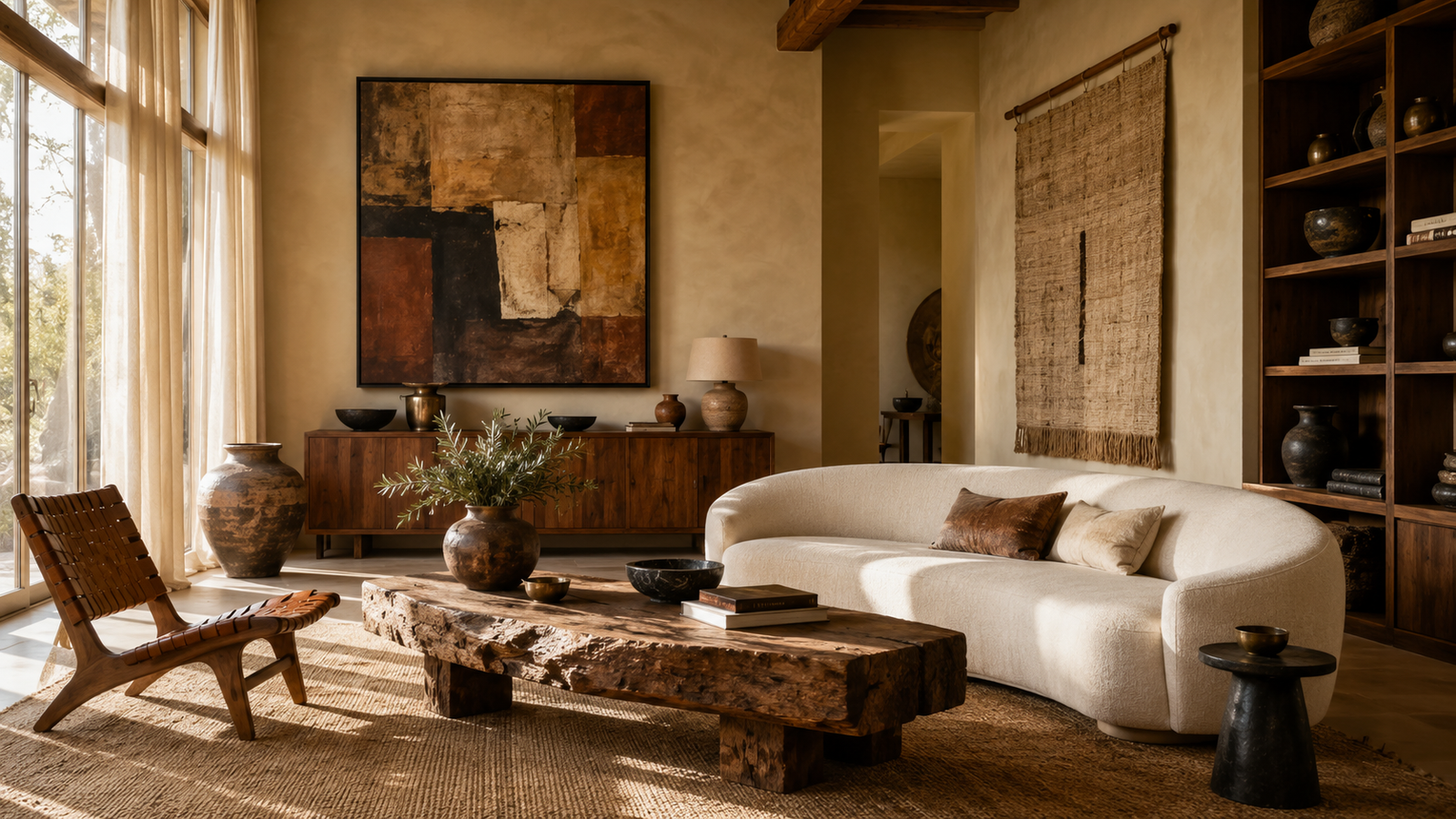
Afrohemian style is often misunderstood. Scroll through Pinterest or social media, and you’ll see rooms filled with mud cloth pillows, baskets, and tropical plants labeled as “Afrohemian.” While those elements can belong in the style, they don’t define it.
The best Afrohemian Home Decor Ideas come from understanding balance. This decorating style blends African craftsmanship with relaxed bohemian living, but it never feels like a themed room. Instead, it celebrates handmade materials, natural imperfections, meaningful objects, and spaces that have clearly evolved over time.
If your goal is to create a home that feels warm, collected, and deeply personal rather than perfectly coordinated, this guide will show you how experienced interior stylists approach Afrohemian decorating.
What Makes Afrohemian Different From Regular Boho?
Many people confuse Afrohemian with traditional bohemian interiors because both embrace natural materials and collected décor. The difference is where the room gets its character.
Classic boho often relies on layering many colors, patterns, and accessories. Afrohemian, on the other hand, puts craftsmanship first. Furniture, textiles, pottery, wood carving, weaving, and sculpture become the focus, while decorative accessories play a supporting role.
That’s why an Afrohemian room usually feels calmer even though it contains plenty of texture.
Instead of asking, “What should I decorate with?” ask yourself, “What deserves attention because someone actually made it by hand?”
That shift changes every decorating decision.
Build the Room Around One Extraordinary Handmade Piece
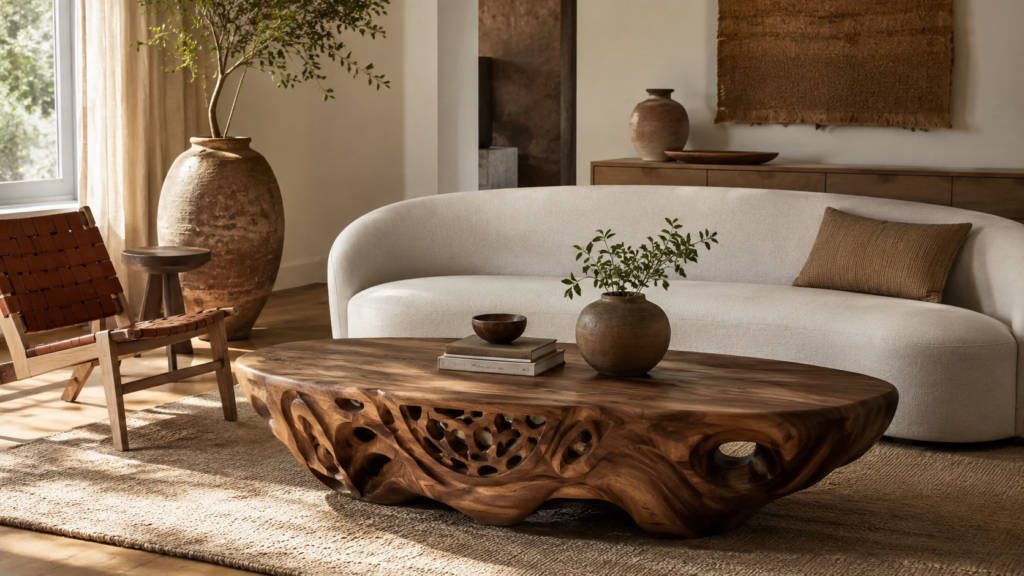
One mistake I see repeatedly is people buying twenty small “Afro-inspired” accessories instead of investing in one remarkable object.
Start with a single piece that immediately tells the room’s story.
It could be a hand-carved wooden cabinet with visible tool marks, an oversized woven pendant crafted from natural fibers, a sculptural chair with woven leather straps, or a substantial artisan-made coffee table showing natural grain movement.
Everything else should quietly support that hero piece.
This works because every room needs a clear focal point. Without one, your eye keeps jumping from object to object, making even beautiful décor feel cluttered.
If your budget is limited, spend more on the anchor piece and simplify everything around it.
Let Craftsmanship Be Visible Instead of Perfect
Modern furniture often hides how it’s made.
Afrohemian interiors do the opposite.
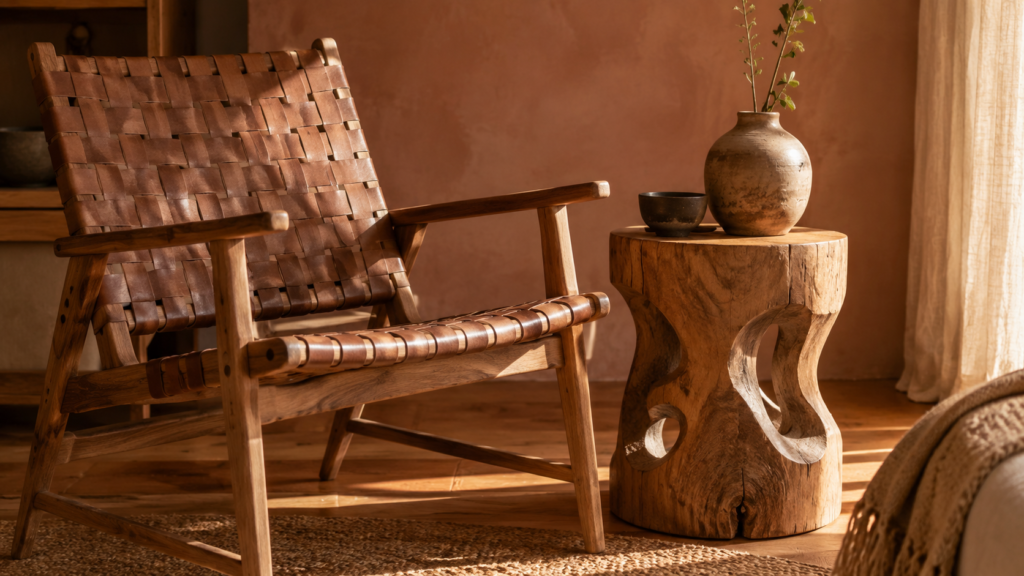
Choose furniture where you can actually see the construction—wooden pegs, exposed joinery, handwoven cane, stitched leather, carved edges, or subtle irregularities that reveal the maker’s hand.
These details create something factory-perfect furniture rarely achieves: authenticity.
Small imperfections catch natural light differently throughout the day, giving furniture far more character than flawless machine finishes.
When shopping secondhand, don’t automatically reject scratches or uneven patina. Those marks often make handcrafted furniture even more interesting.
Use Earth Colors That Change Beautifully Throughout the Day
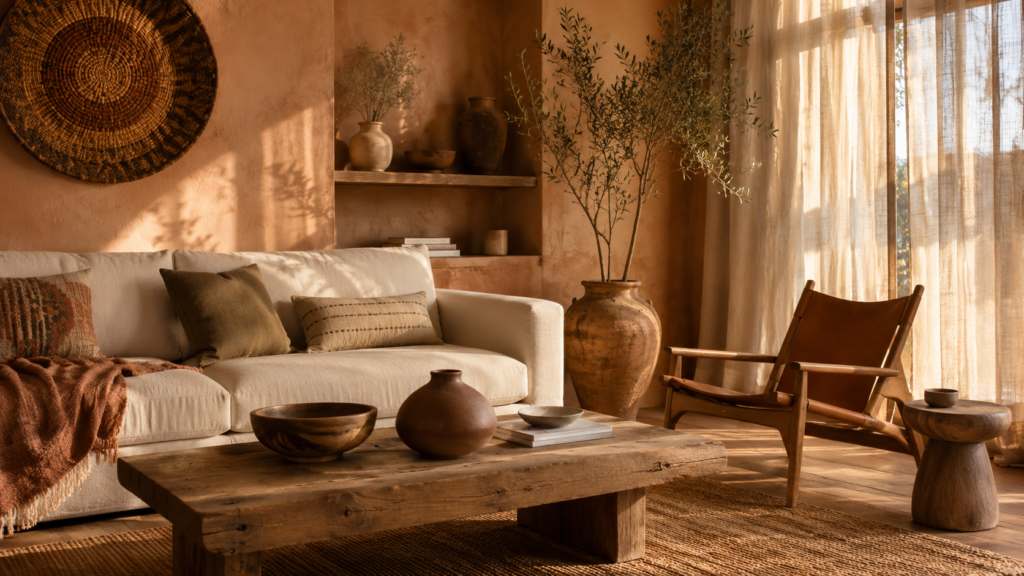
One reason Afrohemian rooms photograph so well is their relationship with natural light.
Instead of decorating with bright white walls, build your palette around colors that become richer as daylight changes.
Soft clay, warm sand, mushroom, sun-baked terracotta, muted ochre, weathered olive, cocoa brown, and warm charcoal all react beautifully to morning and evening light.
Warm neutrals also soften LED lighting after sunset, making the room feel relaxed instead of overly bright.
If you rent, removable limewash-style wallpaper creates similar depth because its subtle tonal variation mimics hand-finished plaster.
Avoid combining these earthy colors with cool blue-white bulbs. The warmth disappears almost immediately.
Treat Wood Like a Collection, Not a Matching Furniture Set
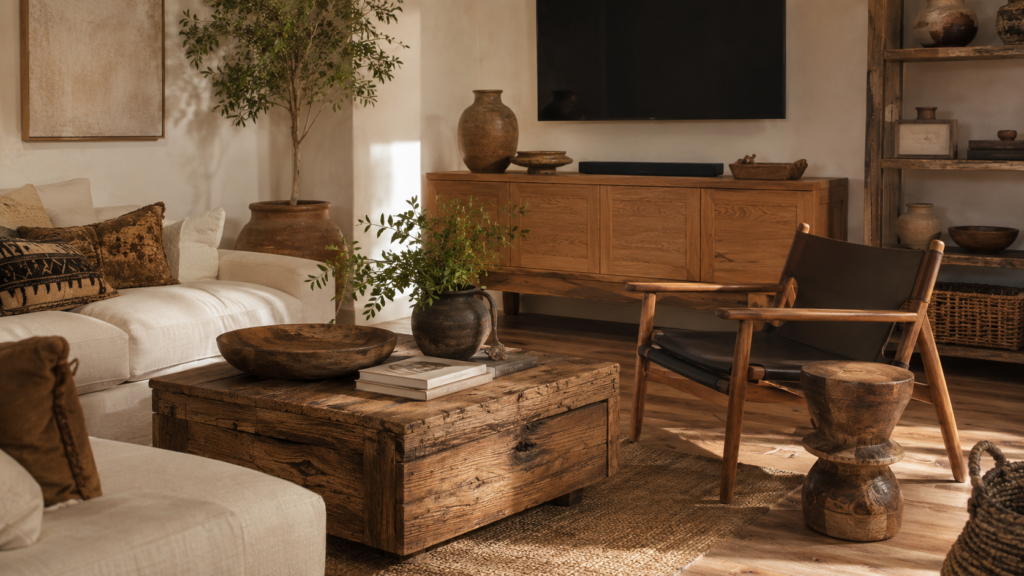
Walk into an artisan’s workshop, and you’ll never see every piece made from identical wood.
Your living room shouldn’t look that way either.
Instead of matching every finish, combine woods that feel naturally related.
A dark carved stool beside an oak linen sofa table, reclaimed elm shelving near walnut dining chairs, or weathered teak alongside lighter ash furniture creates the impression that your home has evolved over years.
The trick is repeating each wood tone somewhere else in the room.
If one dark wood appears only once, it looks accidental.
If it appears three times—in a chair leg, a picture frame, and a bowl—it suddenly feels intentional.
Replace Matching Décor Sets With Objects That Age Differently
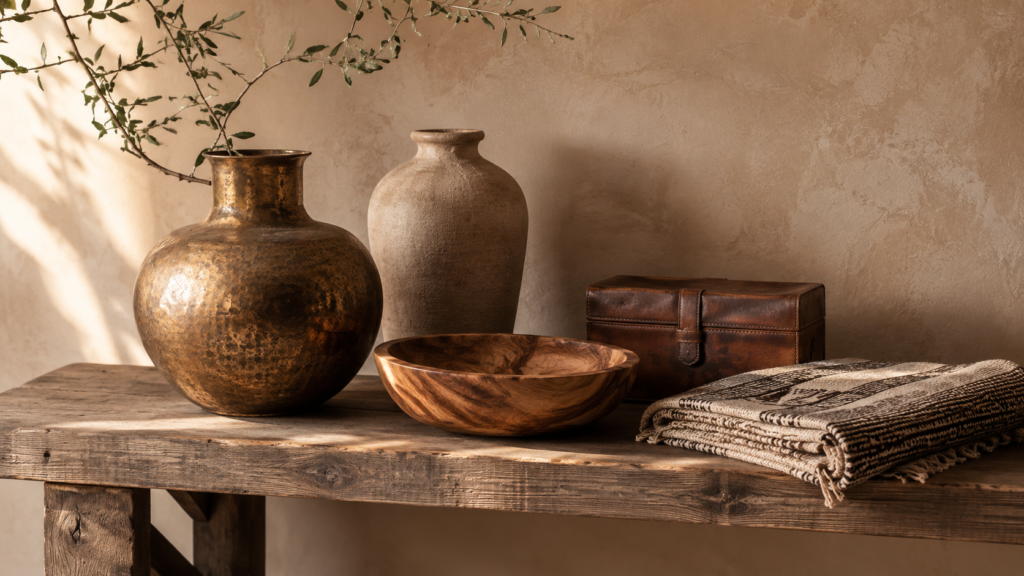
One overlooked characteristic of Afrohemian interiors is how materials mature over time.
Instead of buying decorative collections made from identical materials, combine objects that develop their own patina.
A bronze vessel slowly darkens.
Natural leather softens.
Unsealed clay becomes slightly chalkier.
Raw wood deepens in color.
Handwoven grass changes tone with sunlight.
Because every material ages differently, the room quietly becomes more beautiful every year instead of looking frozen in time.
That’s something mass-produced décor rarely achieves.
Display Textiles as Architectural Features
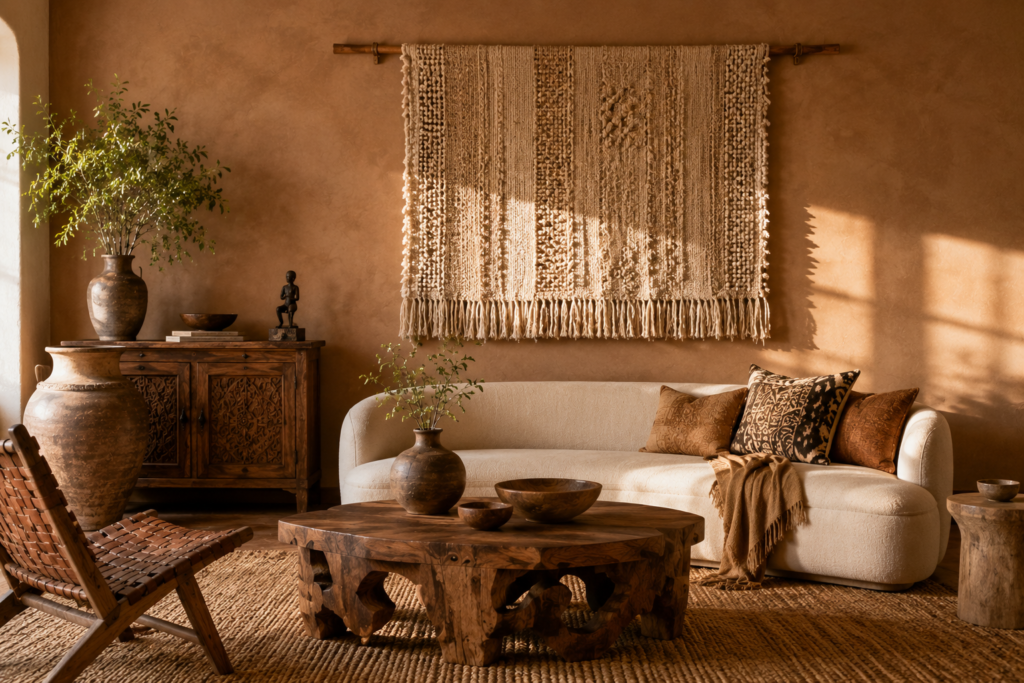
Many beautiful woven textiles spend their lives folded over furniture.
Instead, let them shape the architecture of the room.
Hang one oversized handwoven textile from a simple wooden rod mounted high enough that its center sits roughly 57–60 inches from the floor. Unlike traditional framed artwork, fabric introduces movement, absorbs sound, and softens large uninterrupted walls without feeling formal.
Choose textiles with visible weaving rather than busy printed patterns.
As daylight moves across the room, the raised fibers create gentle shadows that make flat walls feel surprisingly dimensional.
The effect is quieter than a gallery wall but far more memorable.
Let Negative Space Become Part of the Styling
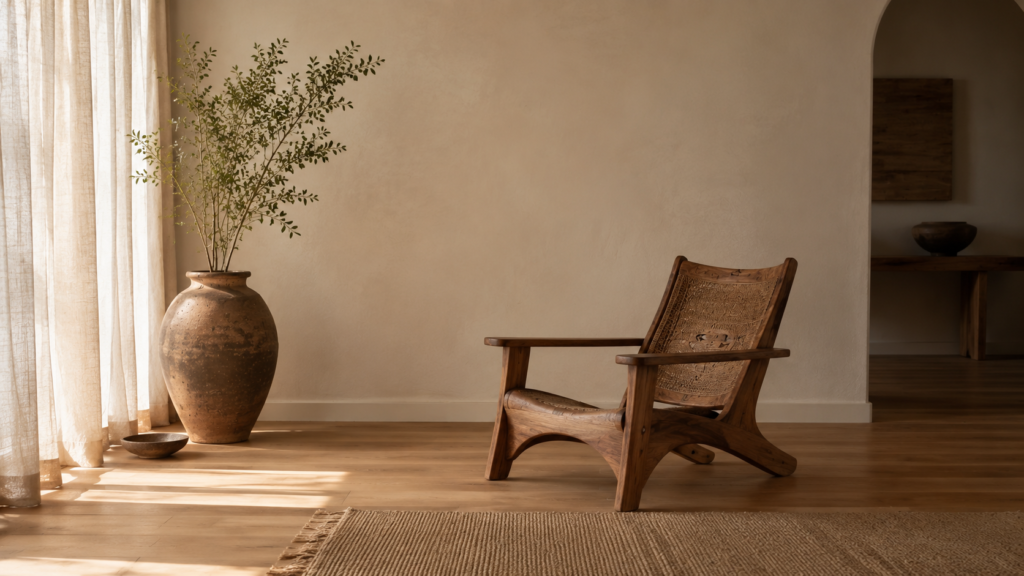
Afrohemian decorating isn’t about filling every shelf.
It’s about knowing when to stop.
When every surface holds objects, nothing feels important.
Instead, imagine every handcrafted piece surrounded by a little breathing room.
A sculptural wooden chair looks more valuable when there’s open floor beside it.
A large ceramic vessel becomes stronger when it’s the only object on a console.
An artisan-made bowl gains presence when half the coffee table remains empty.
Professional stylists constantly use negative space because emptiness directs your attention better than additional decoration ever can.
Many homeowners feel the urge to keep adding pieces.
The more effective approach is usually removing one object instead.
Use Sculptural Lighting That Looks Beautiful Even When It’s Off
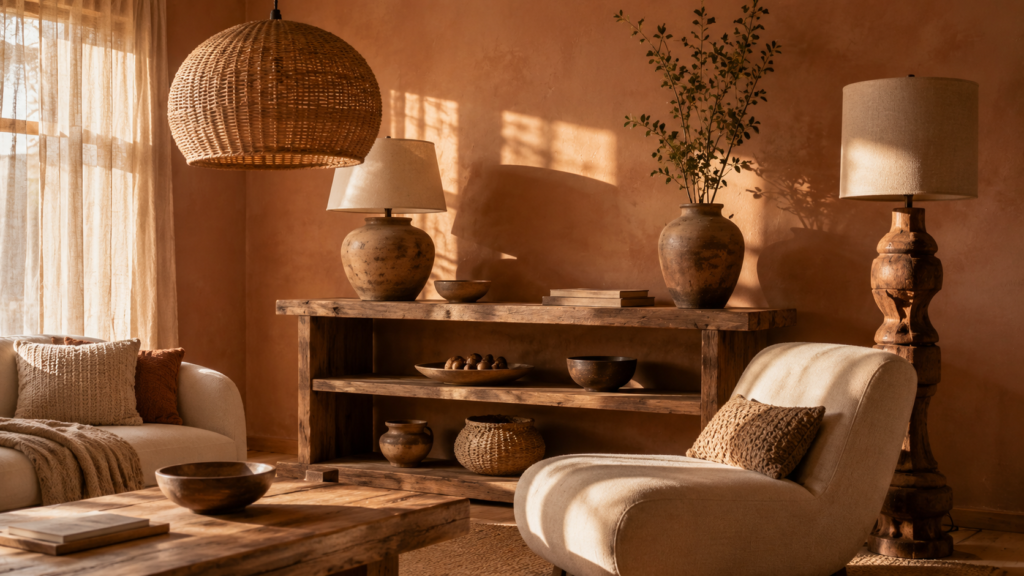
The best Afrohemian rooms don’t depend on lighting only after sunset. Their fixtures contribute to the design all day long.
Choose pendants, sconces, or table lamps made from woven rattan, carved wood, hammered metal, papier-mâché, or hand-thrown clay. These materials create texture even when the bulb isn’t on.
Then layer your lighting instead of relying on one ceiling fixture. A floor lamp beside a reading chair, a table lamp on a console, and a small accent light on open shelving create three different light levels that make handcrafted surfaces come alive.
Stick to warm bulbs around 2700K. Cooler bulbs flatten natural materials and can make earthy colors appear gray instead of rich.
Style Shelves Like a Curated Collection Instead of a Display Case
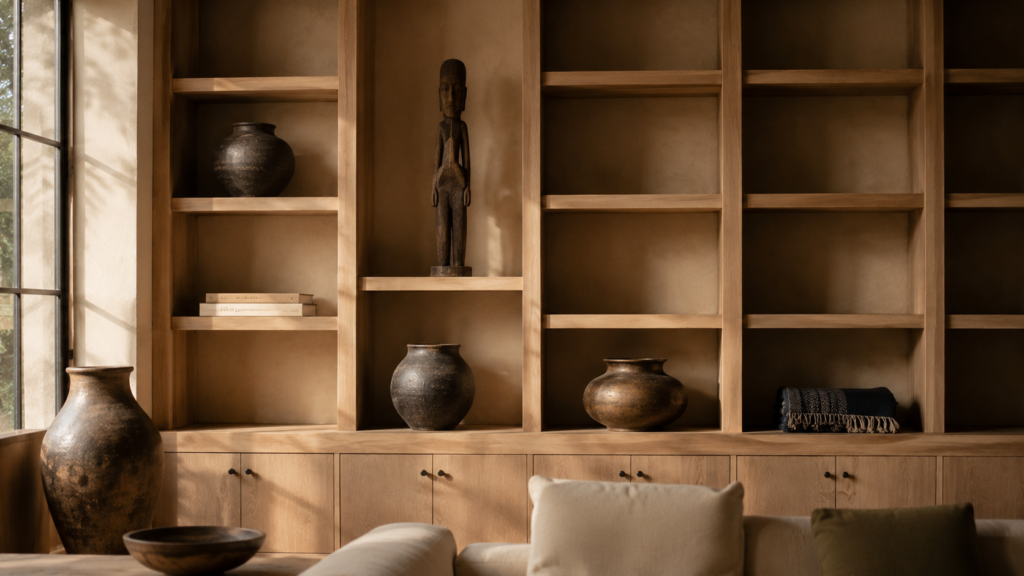
Many people instinctively fill every shelf from end to end.
Instead, imagine you’re arranging objects in a small gallery.
Mix different heights, leave open gaps, and vary materials instead of colors. A carved wooden sculpture beside stacked linen-bound books, followed by a single handmade clay vessel, creates more rhythm than five matching accessories lined up together.
Try the “one hero, two supporting pieces” approach.
Each shelf should have one object that immediately catches your eye and two quieter pieces that support it. This keeps shelving interesting without feeling crowded.
Step back every few minutes while styling. If your eyes don’t know where to rest, remove something.
Mix Smooth and Rough Materials in the Same View
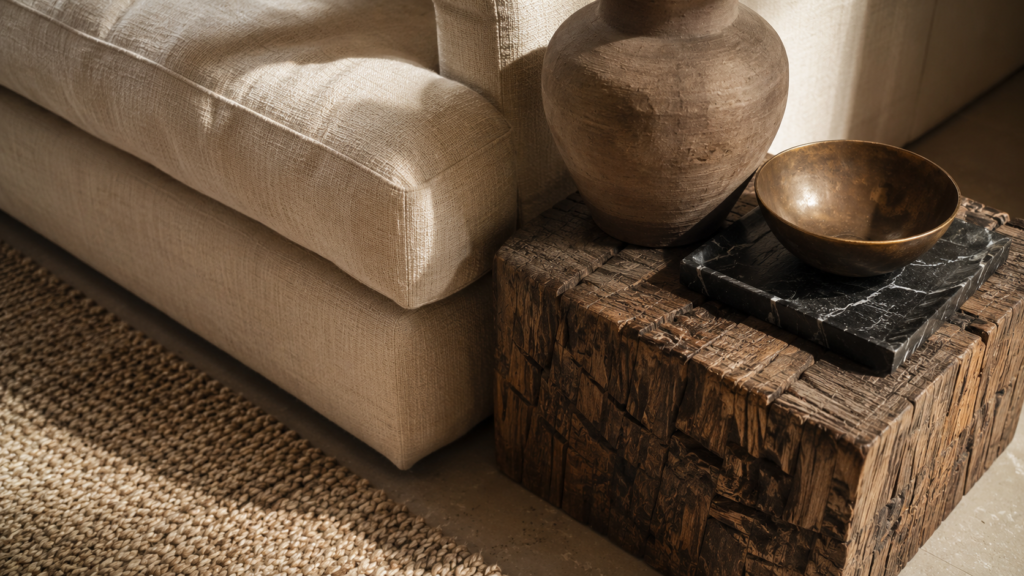
Afrohemian interiors become visually rich because they rarely rely on one texture.
Instead of placing similar finishes together, deliberately combine opposites.
A softly woven linen sofa looks stronger beside a heavily carved wooden side table. Matte pottery feels richer next to polished stone. Handwoven grass shades become more noticeable against smooth plaster walls.
Your brain naturally notices contrast, which is why these combinations feel layered without adding more decoration.
When every surface has the same texture, even expensive furniture starts blending together.
Aim for each corner of the room to contain at least three different material finishes.
Create Quiet Corners Instead of Decorating Every Zone Equally
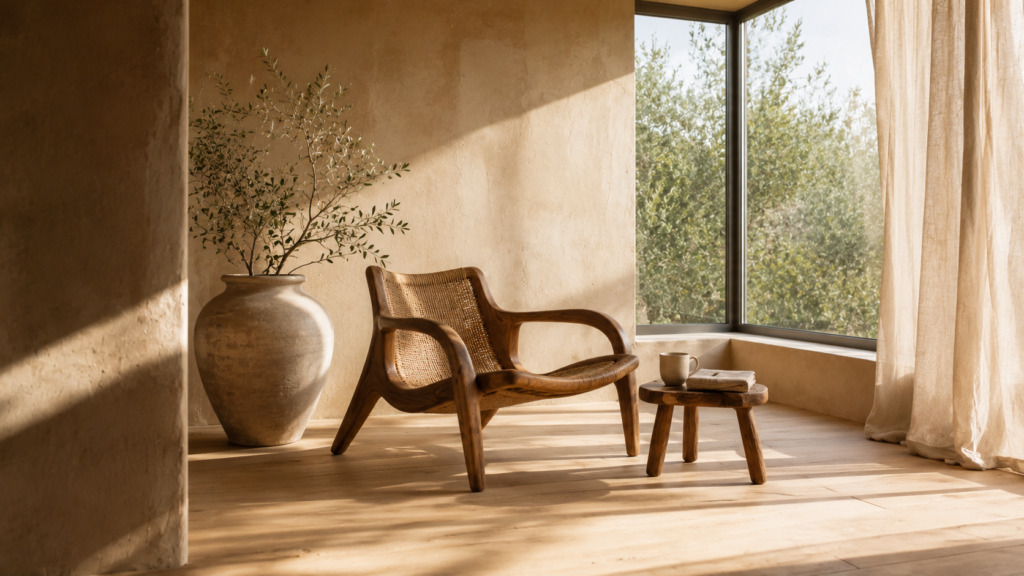
One characteristic I notice in beautifully designed Afrohemian homes is that not every part of the room competes for attention.
Allow one corner to stay intentionally calm.
A low wooden chair, one ceramic floor vessel, and filtered daylight from a nearby window can become a destination without needing shelves full of accessories.
Quiet spaces make dramatic areas feel even stronger because your eyes naturally move between moments of activity and moments of rest.
Think of the room like music. Every song needs pauses, not just louder notes.
Choose Art That Tells a Story Instead of Matching the Sofa
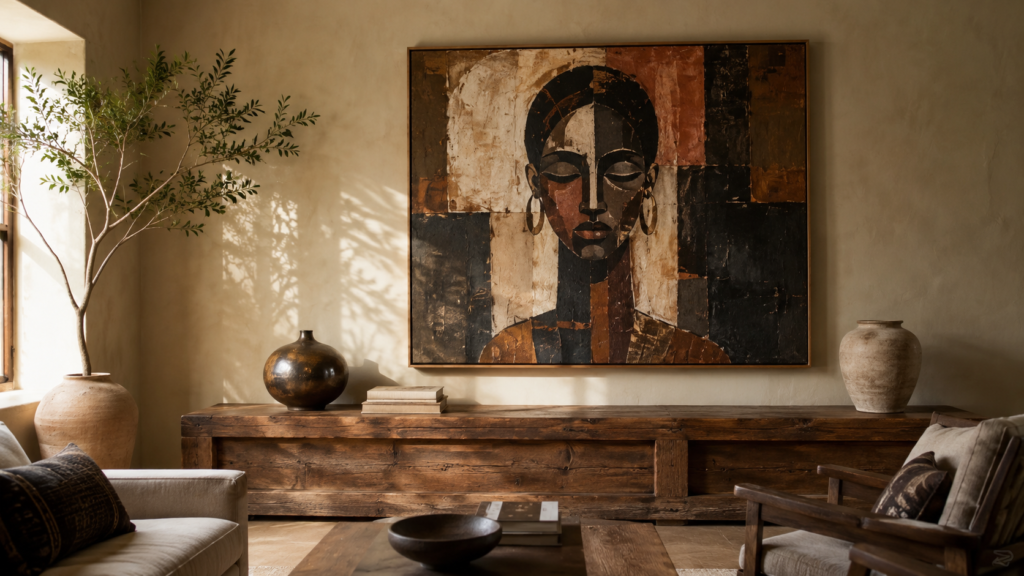
Art should introduce personality, not simply repeat your color palette.
Rather than shopping for prints that coordinate perfectly with your furniture, look for work that reflects handmade techniques, storytelling, portraiture, abstract forms, or traditional craftsmanship.
Large artwork usually has more impact than several smaller pieces. If you’re hanging a single piece above a console or sofa, its center should generally sit between 57 and 60 inches from the floor, or about 6–8 inches above the furniture below it.
Slight variations are fine depending on ceiling height, but keeping artwork visually connected to the furniture prevents it from feeling like it’s floats on the wall.
Let Everyday Objects Become Part of the Decor
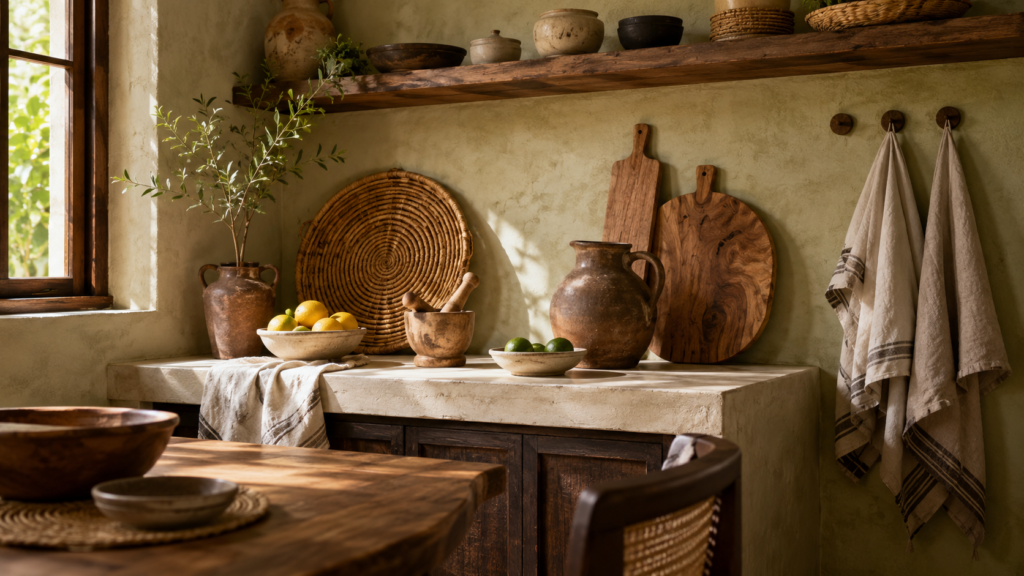
One of the easiest ways to make a home feel authentic is by displaying items you genuinely use.
A wooden mortar and pestle on the kitchen counter, a handmade stool that doubles as a bedside table, woven serving trays leaning against a backsplash, or beautiful ceramic bowls holding fresh fruit all contribute to the room naturally.
These aren’t decorations pretending to be useful.
They’re useful objects that happen to be beautiful.
Homes photographed for magazines often succeed because daily life hasn’t been hidden away completely.
Use One Unexpected Material to Break the Pattern
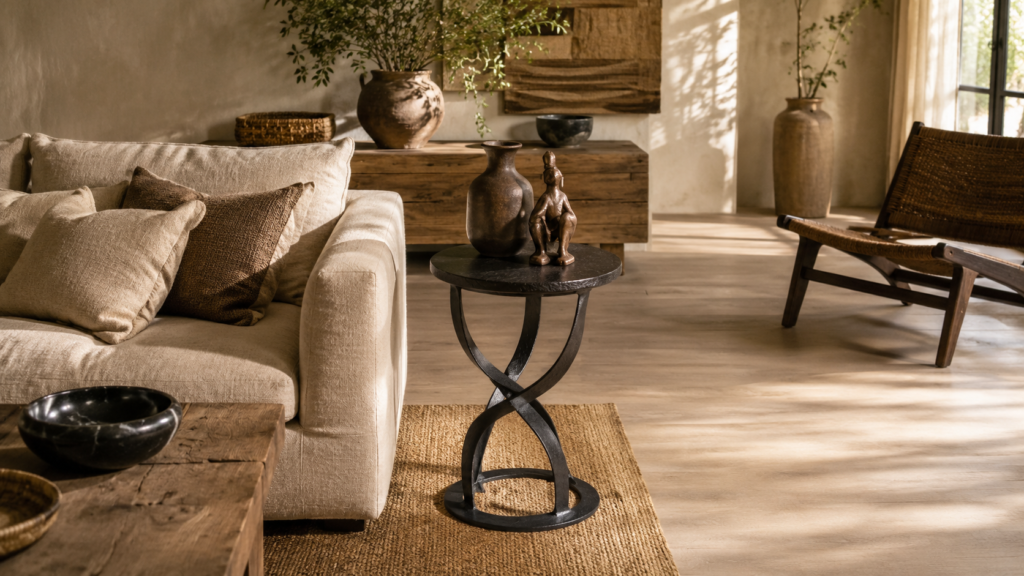
If everything in the room is wood, linen, and woven fibers, the space can start feeling predictable.
Introduce one material that changes the conversation.
A forged iron side table, cast bronze sculpture, polished black stone bowl, or oxidized metal planter creates subtle tension against softer natural textures.
This small contrast adds sophistication without making the room feel industrial.
Designers often include one “surprise material” because it prevents a palette from becoming too comfortable.
Keep it limited to a few carefully placed accents so it remains special.
Build Layers From the Floor Up
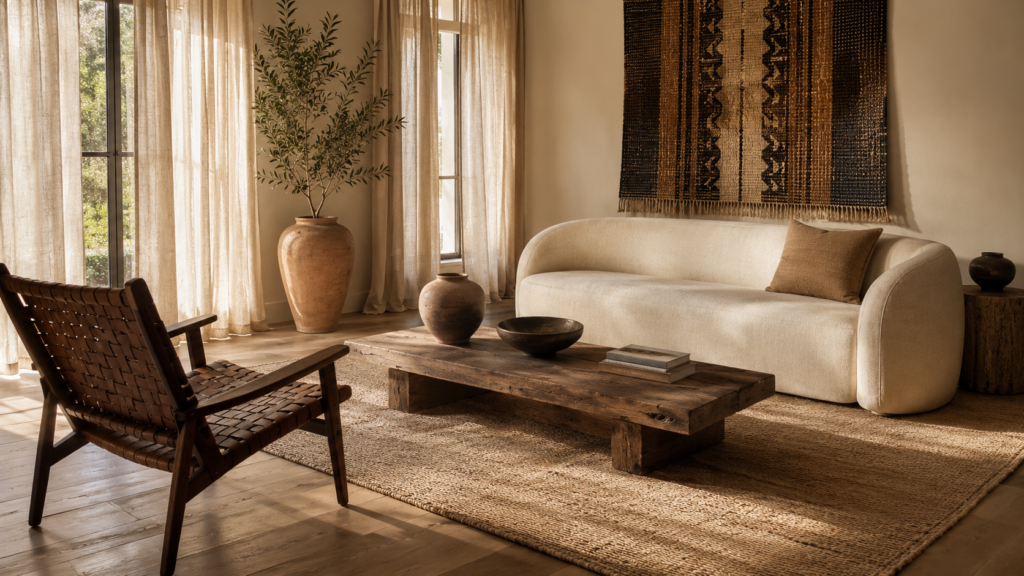
Instead of decorating shelves first, begin with the largest visual surfaces.
Choose flooring or a large rug that feels natural rather than highly patterned. Position your major furniture pieces before introducing smaller accessories.
Once the foundation feels balanced, add lighting, artwork, textiles, and finally decorative objects.
Working in this order prevents the common mistake of buying accessories before the room actually needs them.
It’s much easier to notice what’s missing once the furniture layout is complete than trying to force decorative items into an unfinished space.
Don’t Make Everything Perfectly Symmetrical
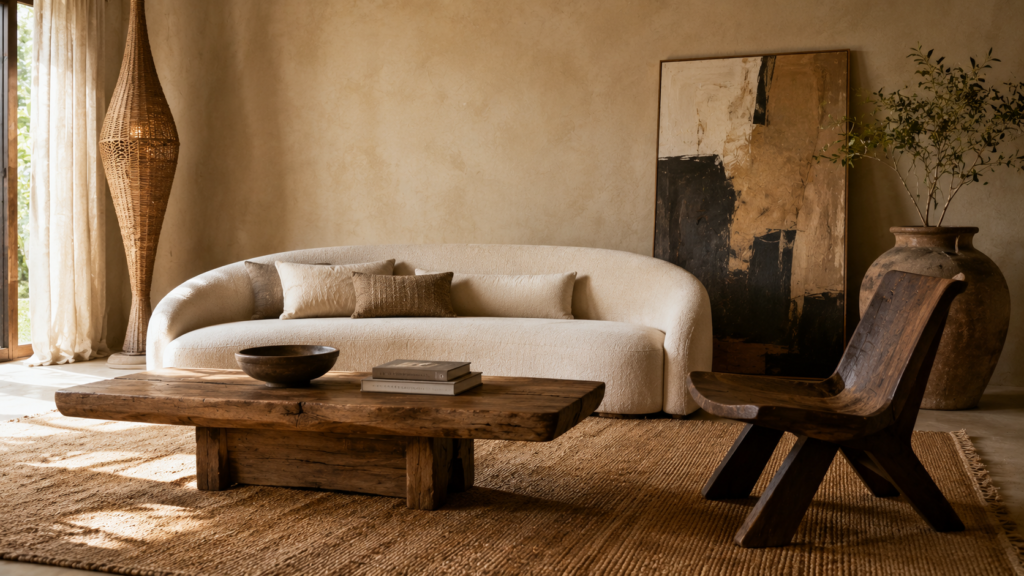
Perfect symmetry can make handcrafted interiors lose their relaxed character.
Instead of placing identical lamps on both sides of every cabinet or matching chairs in every corner, introduce gentle imbalance.
A tall floor lamp can balance a large piece of artwork.
One oversized ceramic vessel can visually balance an open bookshelf.
A bench paired with a sculptural stool often feels more interesting than two identical accent chairs.
The room still feels balanced because the visual weight is equal, even though the objects themselves are different.
That’s a subtle trick stylists use to make interiors feel collected instead of staged.
Let Time Finish the Room
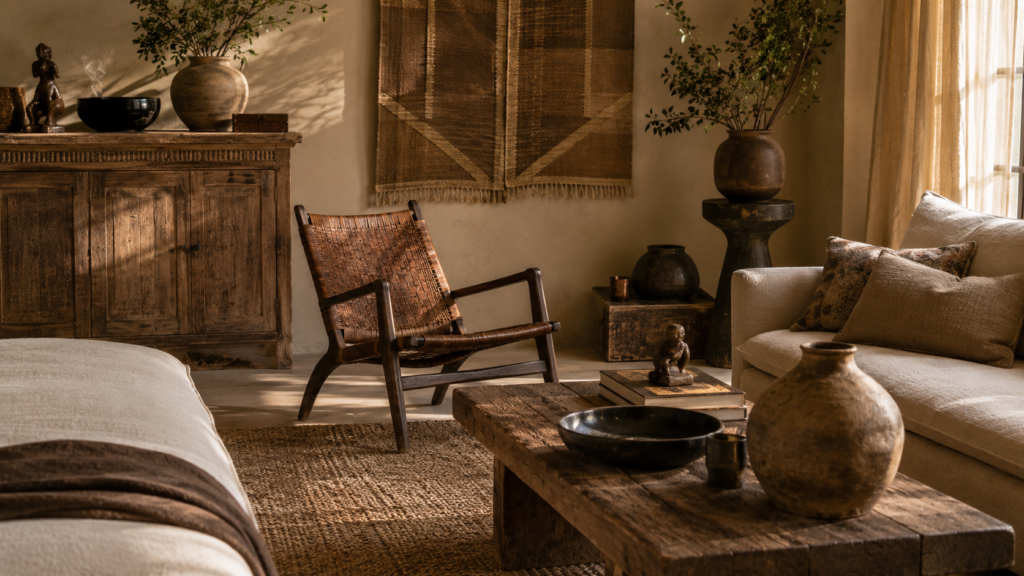
Perhaps the biggest lesson behind Afrohemian decorating is knowing when not to buy something.
Not every shelf needs filling this month.
Not every wall needs artwork immediately.
Leave space for future discoveries from artisan markets, travels, antique stores, estate sales, or local makers.
The rooms people remember most aren’t finished in a weekend.
They’re built slowly through thoughtful decisions, and that patience is often what gives Afrohemian interiors their unmistakable warmth.
Common Mistakes That Keep Afrohemian Interiors From Feeling Authentic
Buying Every “Ethnic” Decor Item You See
Afrohemian style isn’t created by collecting anything that looks handmade.
A room filled with random tribal prints, carved masks, woven baskets, and patterned textiles from completely different traditions often feels themed instead of thoughtful. The stronger approach is choosing fewer pieces and learning a little about where they came from.
When every object has a purpose instead of simply filling space, the room immediately feels more sophisticated.
Forgetting That Scale Matters More Than Quantity
One oversized handcrafted object usually creates more impact than ten small accessories.
For example, a 30-inch floor vase placed beside a console commands attention far better than several tiny decorative pieces scattered across the surface.
The same applies to artwork, lighting, and furniture. Large-scale pieces give a room confidence, while undersized décor often gets visually lost.
Mixing Too Many Patterns at the Same Visual Height
Patterns work best when your eye can pause between them.
If patterned cushions, bold upholstery, busy artwork, and printed curtains all sit within the same sight line, the room quickly feels overwhelming.
Instead, let one patterned textile become the star while surrounding it with quieter materials like linen, clay, wood, or leather.
The contrast makes the craftsmanship stand out instead of competing for attention.
Chasing Perfection
One of the quickest ways to lose the Afrohemian spirit is making everything look brand new.
Furniture with slight wear, hand-thrown pottery with uneven edges, naturally faded textiles, and wood that has developed character over time all contribute to a room that feels lived in rather than staged.
Don’t mistake imperfection for poor quality. In handcrafted interiors, those subtle irregularities are often what make a piece valuable.
How to Blend Afrohemian Style With Other Decorating Styles
One reason Afrohemian decorating has lasting appeal is that it doesn’t require starting from scratch. It layers naturally into many existing interiors.
With Organic Modern
Keep your soft curved furniture and neutral palette, then introduce handcrafted wood, woven lighting, and sculptural ceramics. The room keeps its clean look while gaining warmth and personality.
With Scandinavian Style
Preserve the simple layouts and light-filled spaces but replace factory-made accessories with artisan-made objects. A carved wooden stool or handwoven textile instantly softens minimalist rooms without adding clutter.
With Mid-Century Modern
Mid-century furniture already celebrates craftsmanship, making it an easy partner for Afrohemian decorating. Walnut furniture, leather seating, and clean silhouettes pair beautifully with handmade pottery and woven textures.
With Contemporary Homes
Even modern architecture benefits from handcrafted contrast.
Smooth walls, large windows, and streamlined furniture become much more inviting when balanced with natural materials that introduce texture and human touch.