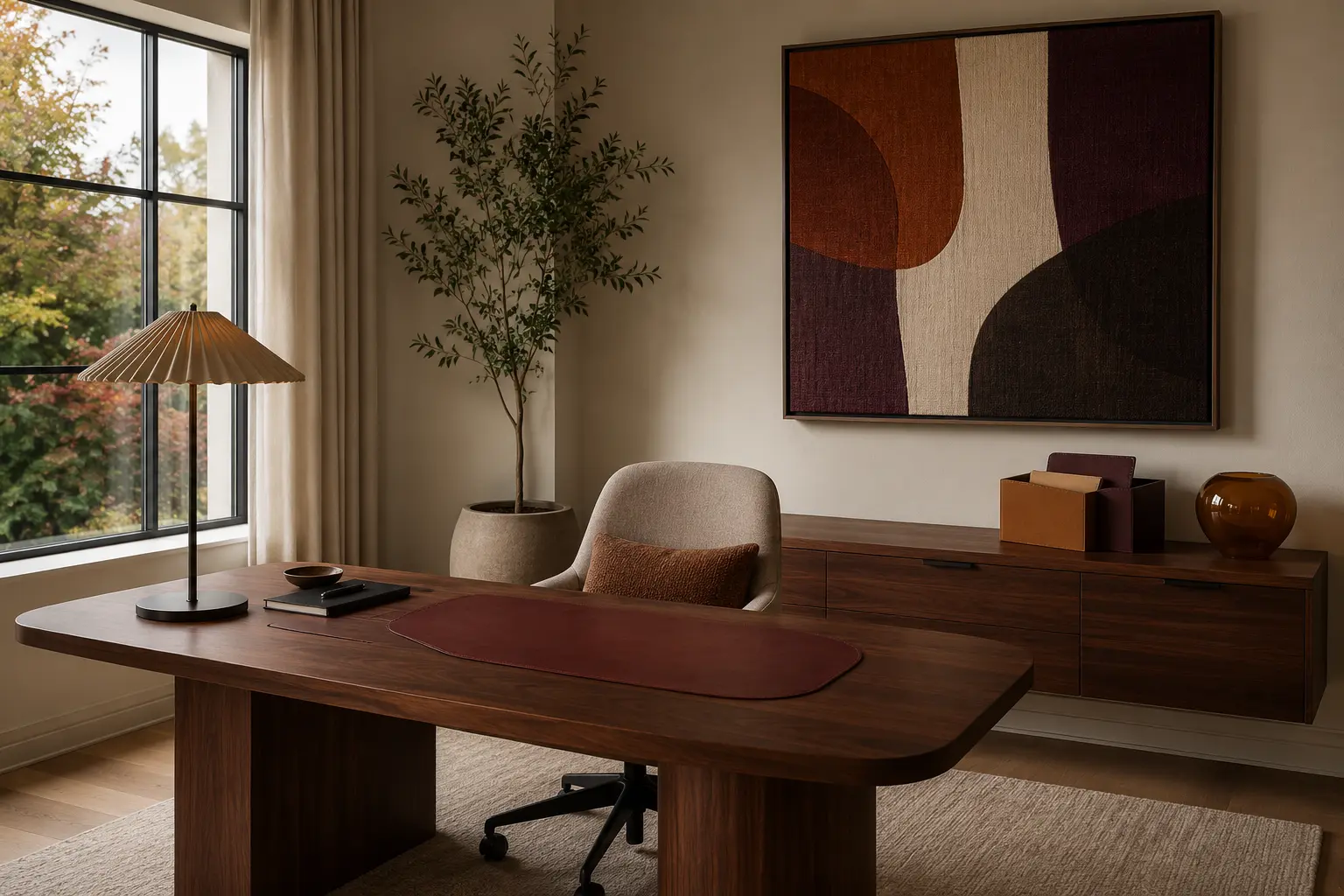
A home office can feel noticeably different in fall without pumpkins, artificial leaves, or a desk crowded with seasonal objects. The best fall office decor works as a removable layer over a clean, year-round workspace, using deeper color, tactile materials, and softer light to shift the mood.
These 15 ideas focus on pieces you can actually use, move, store, or replace when the season changes. The result is a modern workspace that feels warm and considered while remaining clear enough for focused work.
1. Create an Oxblood Fall Office Decor Layer
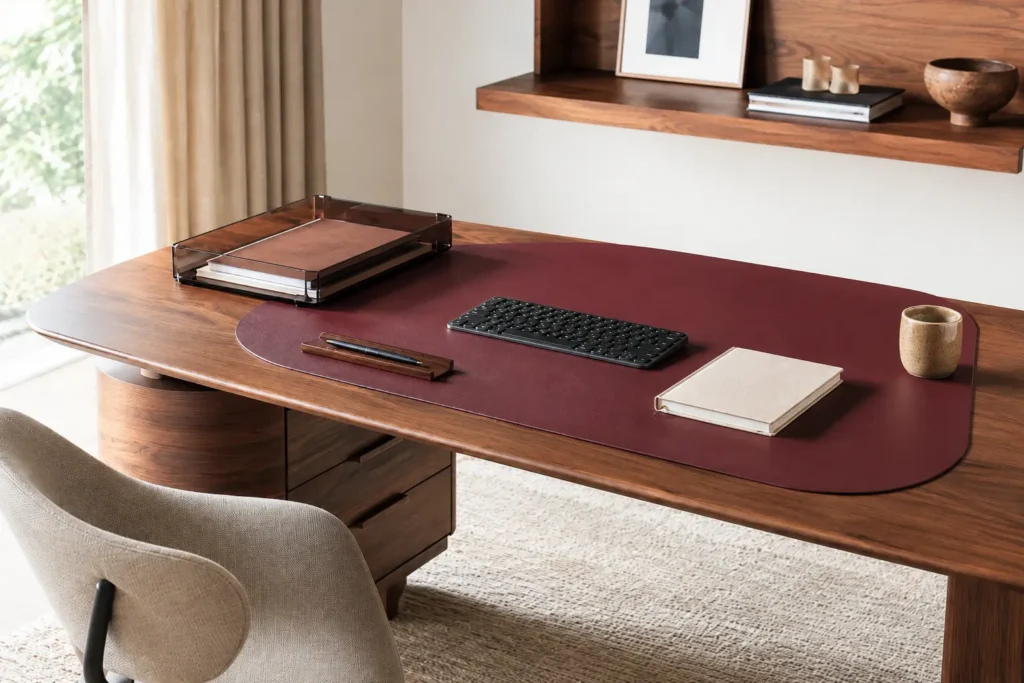
Start with an oversized vegan-leather desk mat in oxblood, dark cherry, or muted burgundy, covering about two-thirds of the desktop. Pair it with a smoked-acrylic document tray and a narrow walnut pen rest, leaving part of the original desk surface visible around the edges.
The large block of color has more visual impact than several small orange accessories. Matte or lightly grained faux leather tends to look more convincing than shiny vinyl, which can curl at the corners and show scratches quickly. Choose a wipeable mat if you regularly keep coffee beside your computer.
2. Style a Smoked-Glass Working Still Life
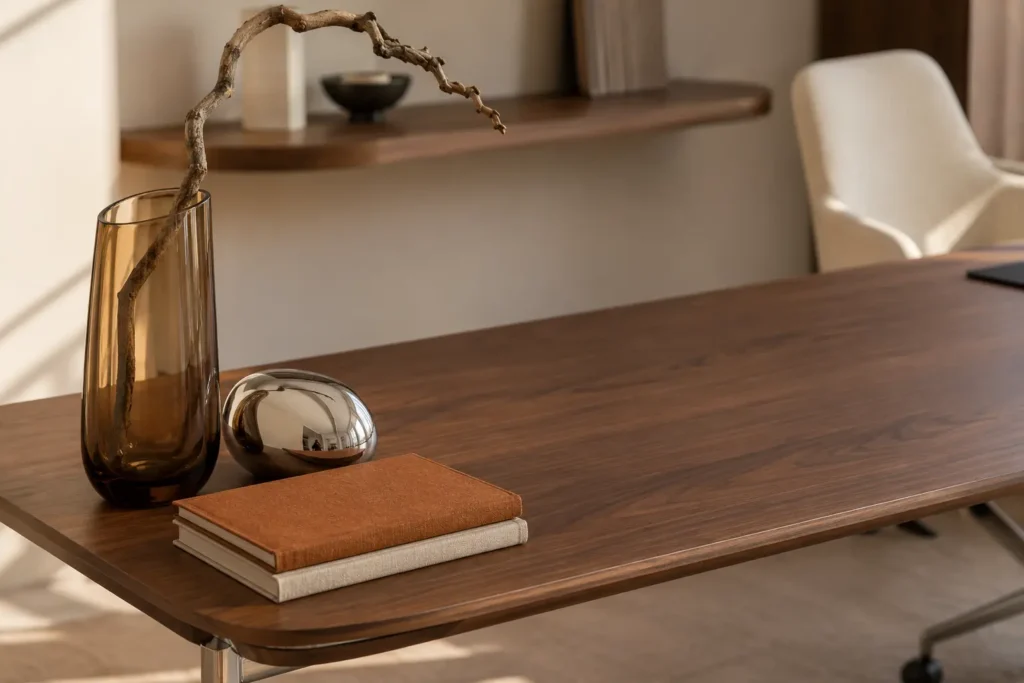
Use an unused desk corner for a controlled arrangement of three practical pieces: a smoky amber vessel, a metal paperweight, and two fabric-covered notebooks. Add one thin, curved branch or dried grass stem, keeping the arrangement below monitor height so it doesn’t interrupt your sight line.
Different finishes give the group depth without filling the desk. Glass reflects daylight, metal supplies a cooler contrast, and bookcloth introduces a soft fall tone. Keep at least 8 to 10 inches of clear surface between this arrangement and your keyboard so it reads as intentional rather than as clutter.
3. Choose a Sculptural Lumbar Cushion
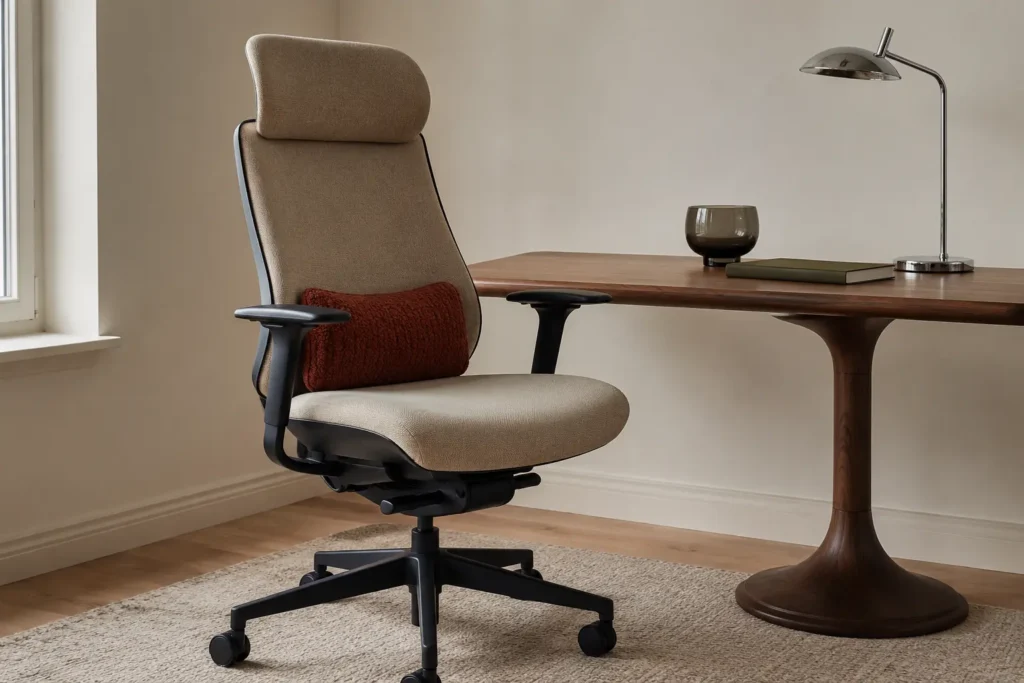
A small crescent, bolster, or rounded lumbar cushion looks more modern on an office chair than a standard square throw pillow. Look for rust bouclé, moss velvet, camel wool-look fabric, or a small brown-and-cream check that feels seasonal without showing leaves or harvest motifs.
The cushion should support the lower back without pushing you too far forward. A width of roughly 14 to 18 inches works for many task chairs, but check the space between the armrests first. Textured woven covers wear more evenly than inexpensive velvet, which can show pressure marks after daily use.
4. Build a Fall Material Stack on a Side Cabinet
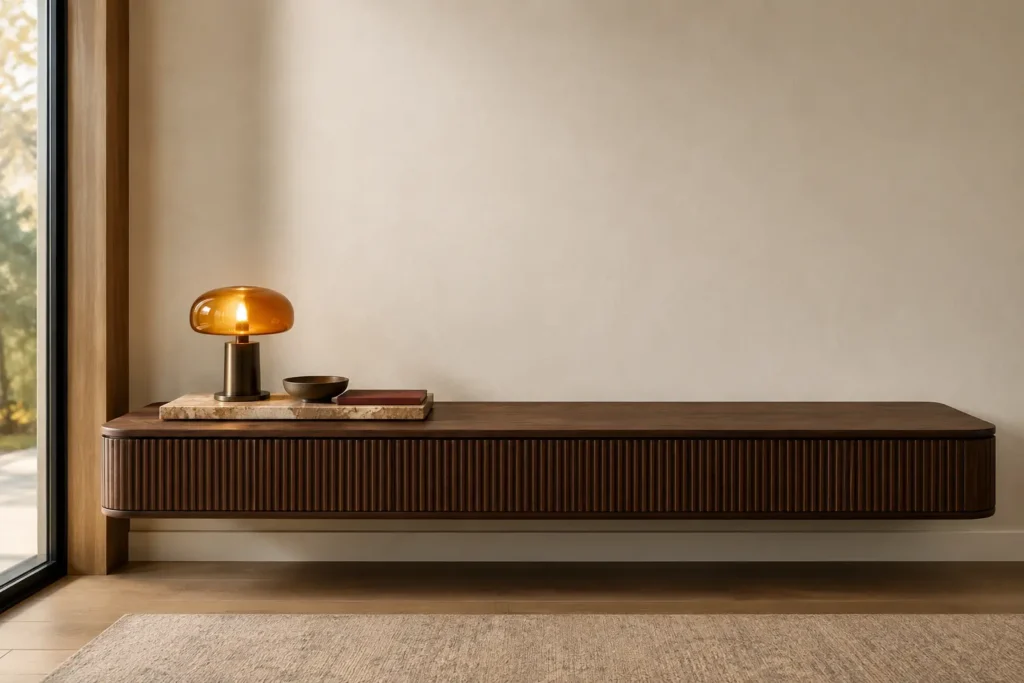
Turn a file cabinet or low side table into a small material study rather than a shelf full of seasonal ornaments. Begin with a travertine-look slab or thick wood board, then add an amber glass lamp, a dark ceramic catchall, and one burgundy or olive fabric-bound book.
Vary the heights, but leave at least half of the cabinet top empty. That negative space makes the stone, glass, ceramic, and bookcloth feel more deliberate. A convincing laminate stone tray can work well here; avoid printed marble contact paper with obvious repeating veining, which often looks cheaper in close-up photographs.
5. Add a Pleated Shade to an Existing Lamp
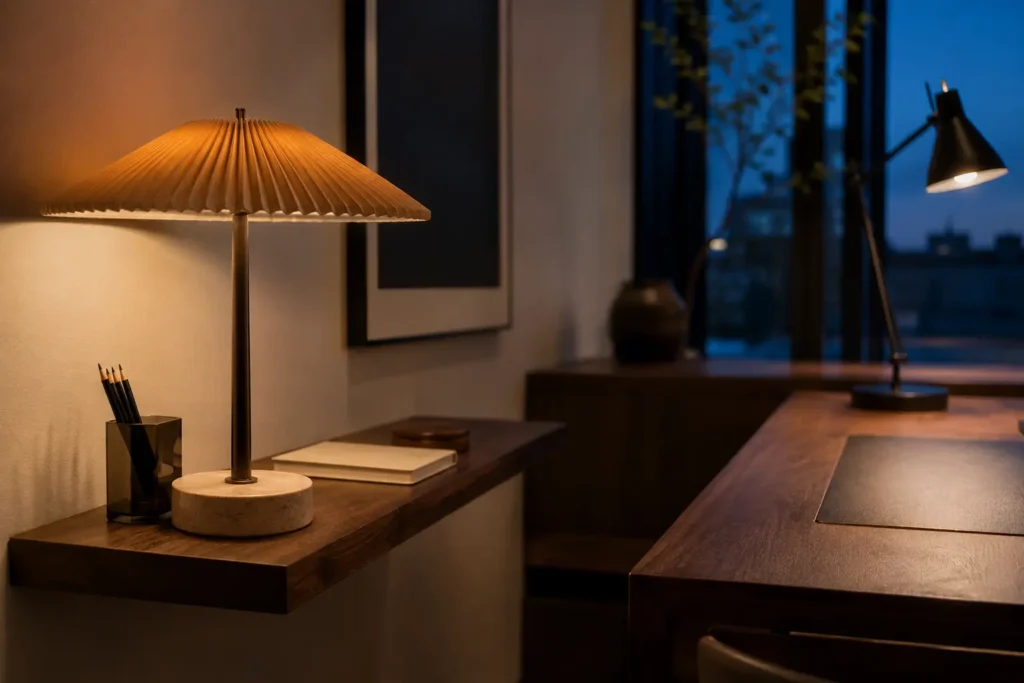
Instead of buying another table lamp, change the profile of one you already own with a removable micro-pleated shade in tea brown, mushroom, muted clay, or warm cream. A slightly wider shade softens the bulb and creates a broader pool of light after sunset.
Keep your task lamp clear enough for reading and computer work. Warm light is comfortable in the background, but an overly amber bulb can distort paper colors and make you feel sleepy. Use the pleated lamp for ambient light, then keep a neutral-white task bulb directed toward your keyboard or notebook.
6. Place a Mini Textile Beside the Desk
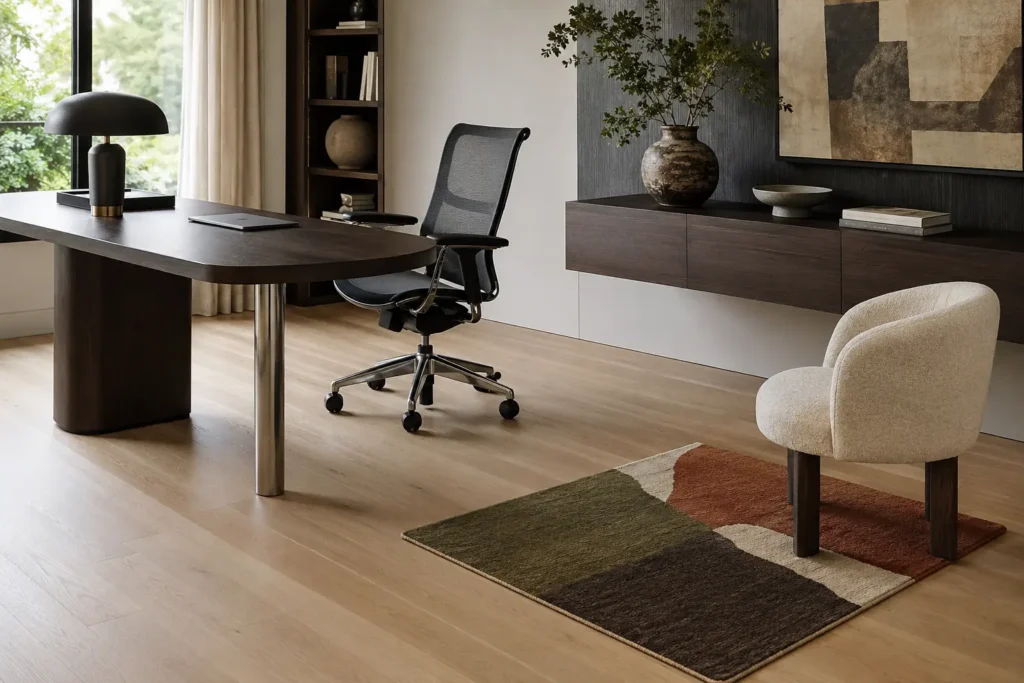
A small flatwoven textile can introduce pattern without interfering with a rolling chair. Position it beside the desk, beneath a stationary guest chair, or in front of a cabinet rather than directly under the chair’s main travel path.
Choose an abstract design with muted rust, espresso, olive, and cream instead of a literal fall pattern. A piece around 2 by 3 feet is large enough to register in the room but easy to roll and store. Flat cotton or indoor-outdoor weaves are easier to vacuum than thick wool and usually sit flatter on hard flooring.
7. Turn Storage Boxes Into a Tonal Color Installation
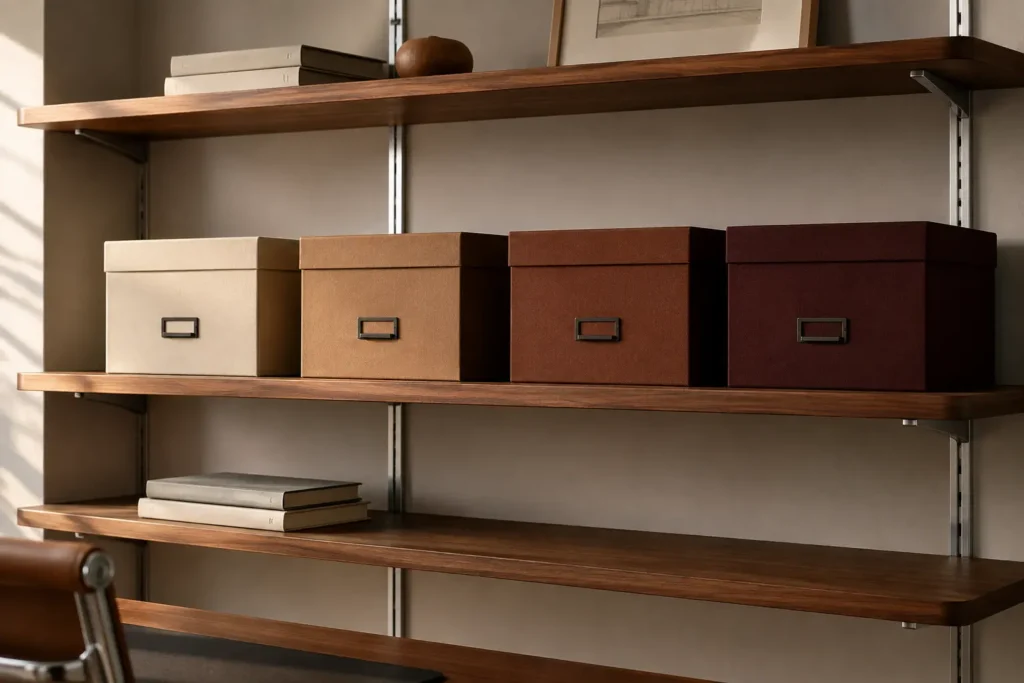
Arrange three or four archival boxes or magazine files in a controlled fall gradient: warm cream, camel, cinnamon, and oxblood. Keep the shapes identical so the color progression looks planned, and add small black or aged-brass label holders for easy identification.
This approach lets practical storage carry the seasonal palette, so you don’t need extra decor on the shelves. If buying new boxes every season feels wasteful, cover existing boxes with removable paper sleeves. Heavy kraft paper and bookbinding paper hold their shape better than thin gift wrap and are less likely to crease around the corners.
8. Display One Oversized Abstract Fabric Print
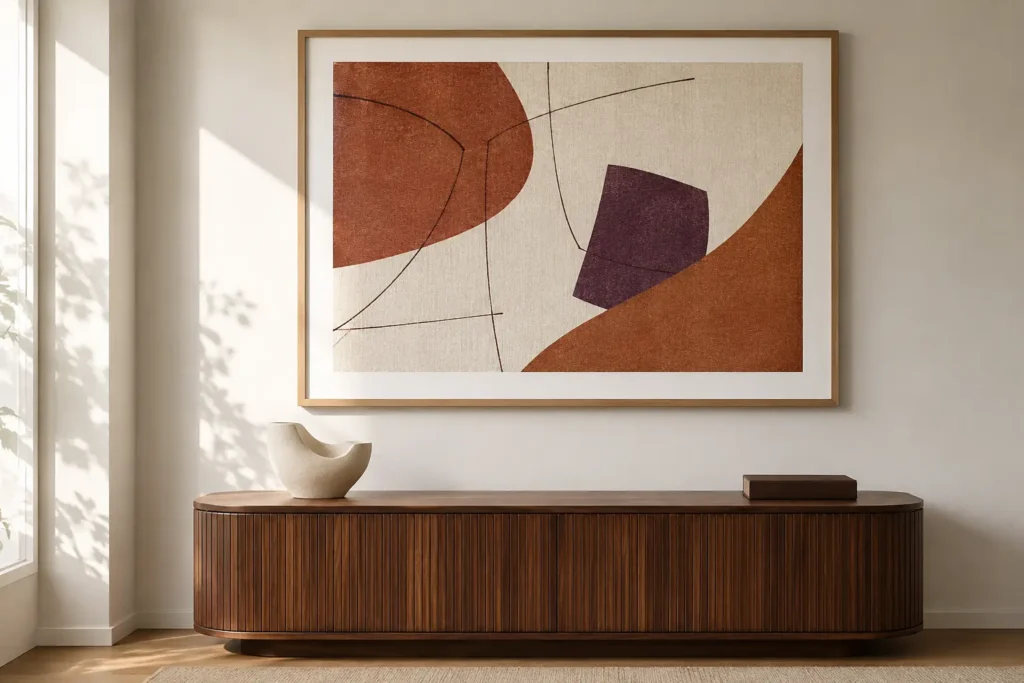
Replace literal leaf artwork with a large abstract print that suggests fall through color and texture. Look for cream negative space, rust curves, espresso lines, and a small amount of muted plum or olive, ideally printed to resemble woven fabric or cut paper.
One large piece usually looks calmer in an office than several small frames competing with notes, shelves, and computer equipment. Center the artwork around 57 to 60 inches from the floor when it hangs on an open wall. Above a cabinet, leave roughly 6 to 10 inches between the furniture and the frame.
9. Style a Single Floating Branch
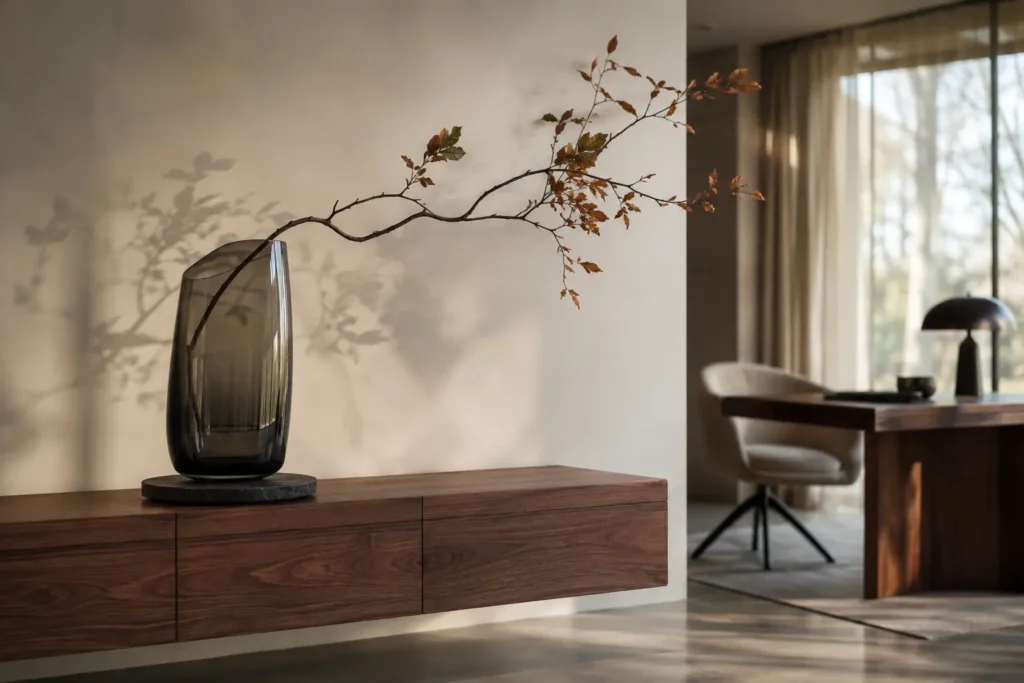
Choose one branch with a strong natural curve and place it in a tall clear, smoked, or amber vase. A branch with sparse turning leaves works well early in the season, while a mostly bare branch creates a quieter late-fall look.
Resist filling the vase with several stems. The open space around one branch makes its shape feel sculptural and prevents the office from resembling a seasonal store display. Keep it on a cabinet or shelf rather than beside your keyboard, and use a weighted vessel if children, pets, or frequent movement make a tall arrangement risky.
10. Add a Color-Blocked Linen Window Tie
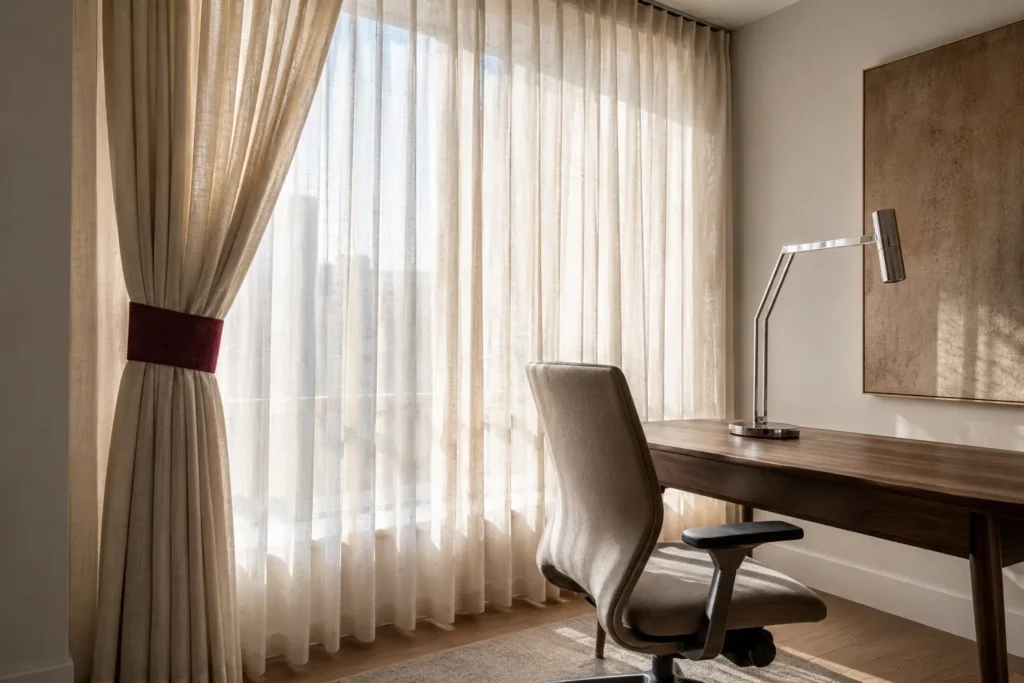
You don’t need to replace neutral curtains to adjust the window for fall. Gather one panel with a wide linen band in oxblood, tobacco, moss, or cinnamon, using concealed snaps or hook-and-loop tape instead of bows and tassels.
The small band of color changes the whole window composition because it sits against a much larger pale fabric surface. Keep the curtain loose enough to filter daylight rather than pulling it into a tight bundle. In a dark office, muted olive or warm camel will feel lighter than burgundy while still connecting to the season.
11. Curate a Tonal Stationery Gradient
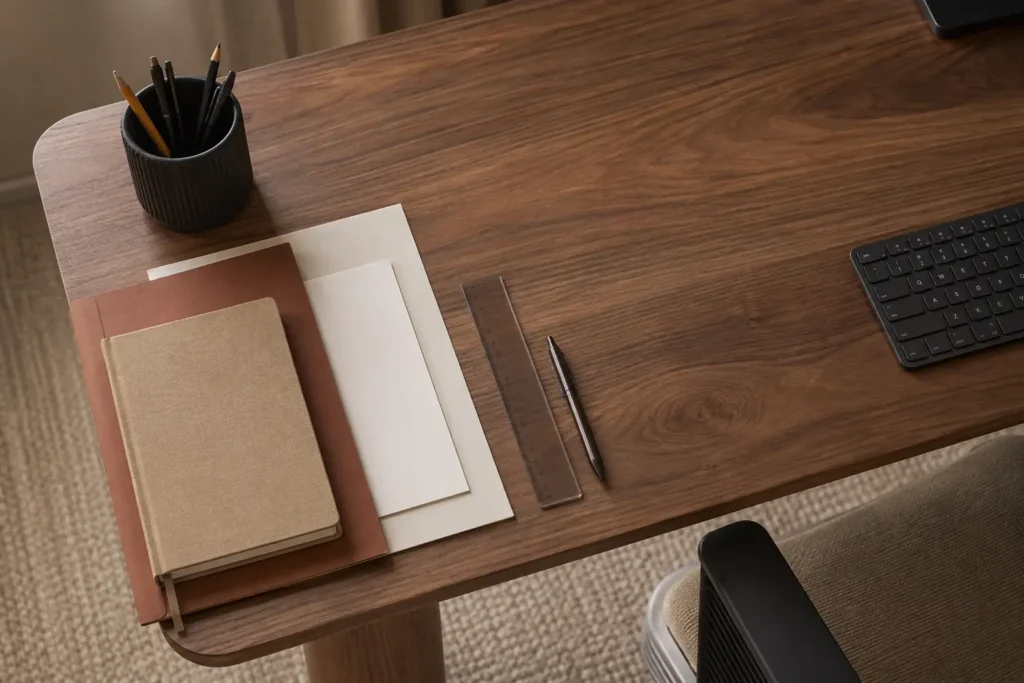
Let the tools you use every day form part of the room’s fall palette. Combine cream paper, a camel notebook, a rust document folder, an espresso pen, and a smoked-acrylic ruler or pencil cup rather than using unrelated bright colors.
The progression gives the desk a visual rhythm while keeping every item functional. Limit the palette to three main colors plus one dark neutral; too many brown and orange shades can look muddy under warm bulbs. Matte paper goods usually photograph and wear better than glossy folders, which catch glare and show fingerprints.
12. Wrap the Pinboard in Seasonal Fabric
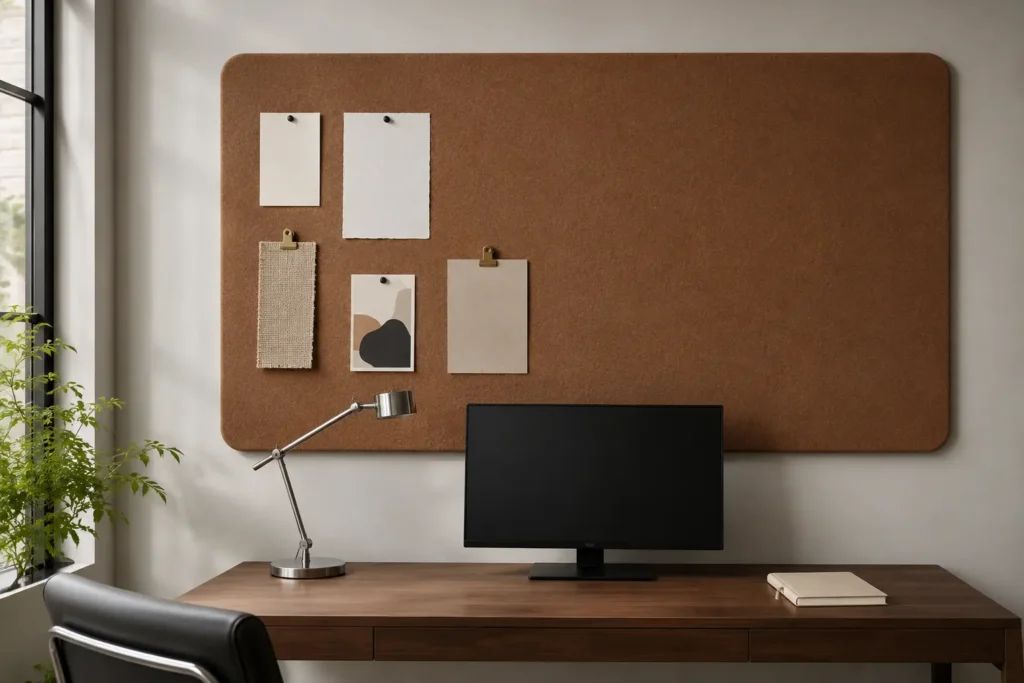
Cover an existing corkboard with removable mushroom linen, muted olive fabric, or cinnamon felt, securing the material at the back with staples or binder clips where possible. If you rent, cover a lightweight board separately and hang it with hardware suited to the board’s weight.
Keep the pinned papers mostly white, cream, and kraft, then add one small art card or textile swatch. Fabric softens the hard office surfaces and can reduce a little echo, but loose weaves may snag. Medium-weight linen blends and craft felt are usually easier to pin through and maintain.
13. Use a Three-Part Desk Tray Formula
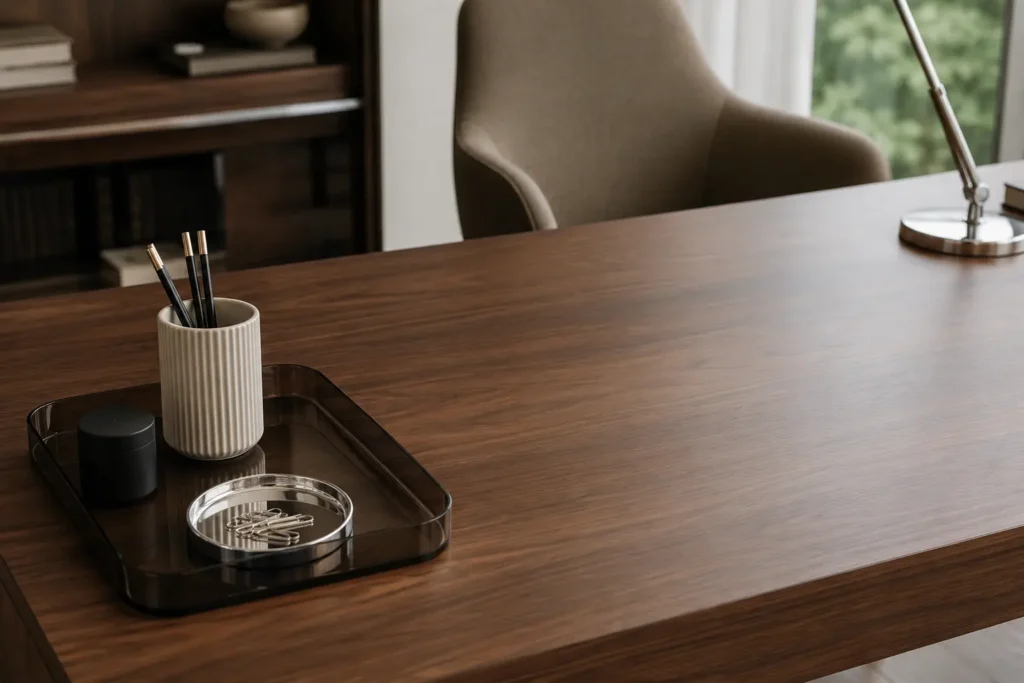
Choose one shallow tray in walnut, smoked brown acrylic, or oxblood leather-look material and limit its contents to three categories: one working tool, one tactile container, and one reflective detail. That might mean a timer, a ribbed ceramic pencil cup, and a small chrome clip dish.
Mixing matte, textured, and reflective finishes keeps the arrangement interesting even though it occupies little space. Use a tray no larger than about one-quarter of the desk surface, and place it opposite your dominant hand when possible. The goal is to collect necessary items, not create another obstacle during work.
14. Design a Small Scent Corner Away From the Desk
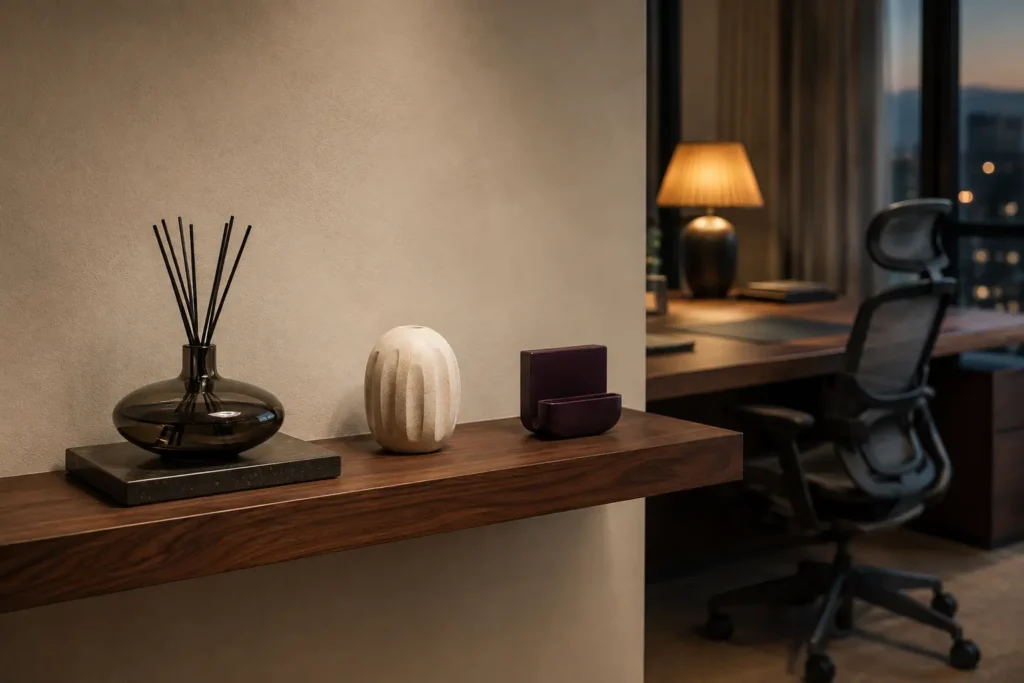
Place a minimal reed diffuser or low-heat wax warmer on a side shelf rather than beside papers, electronics, or your keyboard. Pair a smoked-glass vessel with a small stone dish and a narrow scent-card holder in espresso, amber, cream, or dark plum.
Concentrating fragrance in one spot makes it feel like part of the room rather than another desktop accessory. Use a lighter amount of scent in a closed office, since strong fragrances can become distracting over several hours. Keep oils off painted and wood surfaces by setting the vessel on a washable tray.
15. Assemble a Swappable Fall Styling Capsule
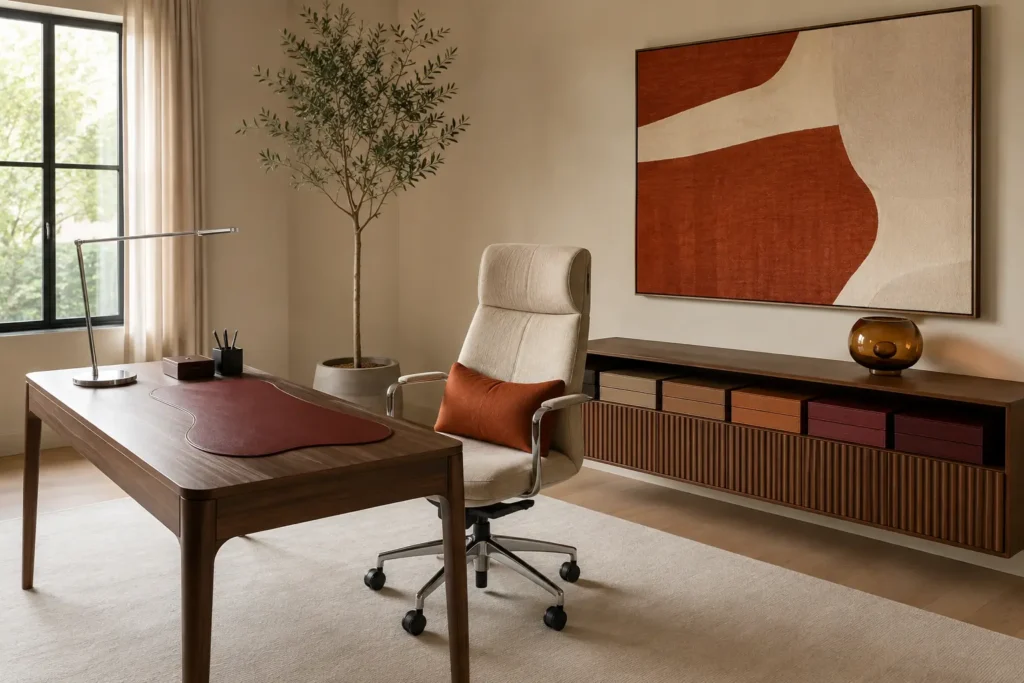
Choose five pieces to carry the entire seasonal update: an oxblood desk mat, a shaped chair cushion, an abstract print, one amber glass object, and warm-toned storage sleeves. Spread them across different zones so the fall color repeats without collecting in one crowded corner.
This limited approach gives the office a clear visual thread and makes the change easier to reverse. Store the off-season pieces together in one labeled box, then create a different five-piece capsule for winter or spring. Editing the number of additions also helps a small workspace remain focused.