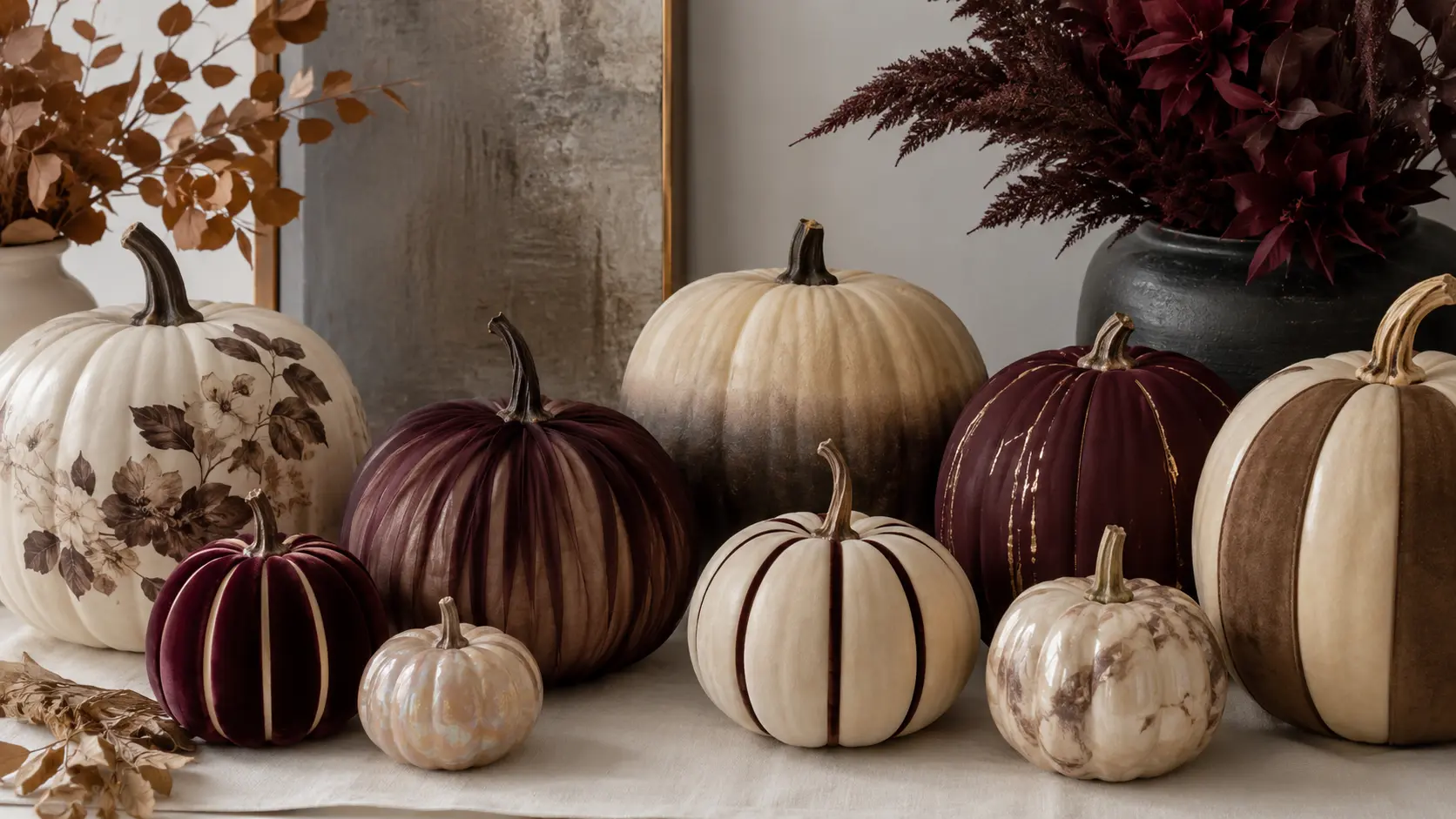
Pumpkin decorating can go wrong quickly when too many patterns, embellishments, or novelty details are added at once. If your style leans modern, moody, polished, or fashion-forward, the best approach is usually much simpler: keep the pumpkin recognizable and give it one strong finish or detail that makes it feel intentional.
These no-carve pumpkin ideas that look stylish, not crafty focus on elevated textures, rich fall colors, subtle pattern, and materials that feel more like home decor than a seasonal DIY project. Think tortoiseshell glaze, deep oxblood lacquer, chocolate marble, suede, velvet, and soft pearlescent finishes instead of cartoon faces, glitter, or busy painted motifs.
Most of these designs can work on either real or faux pumpkins, so you can choose the option that fits your space and how long you want the display to last. Style one as a statement piece on a console or coffee table, or repeat the same treatment across a few different pumpkin sizes for a more collected fall look.
1. Try a Tortoiseshell Glaze Pumpkin
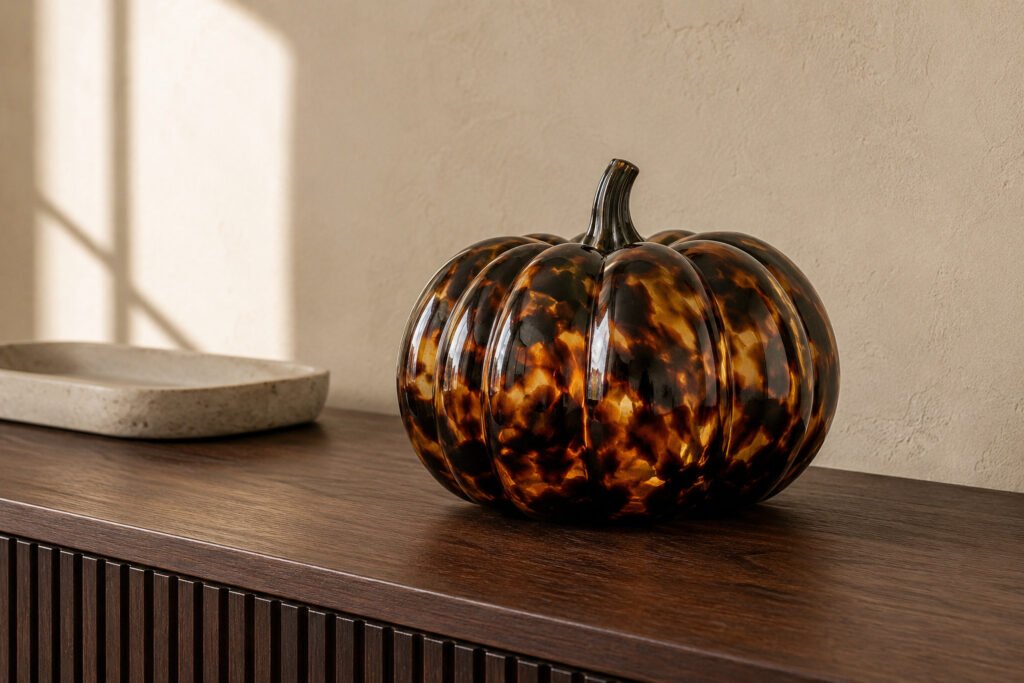
Tortoiseshell is one of the easiest ways to make a pumpkin feel completely different without disguising its natural shape. Start with a warm cream or tan base and layer translucent amber, espresso, and near-black patches across the surface. The markings should look irregular and softly blended rather than perfectly spotted.
Finish the surface with a glossy clear coat so the colors develop the depth and shine associated with tortoiseshell accessories. Keeping the stem natural or staining it a deep walnut shade helps ground the design and keeps it from becoming too decorative.
This pumpkin works especially well on a dark wood console, travertine tray, or simple stack of neutral books. It already has a strong pattern, so avoid surrounding it with other busy fall accents.
2. Go Rich With an Oxblood Lacquer Pumpkin
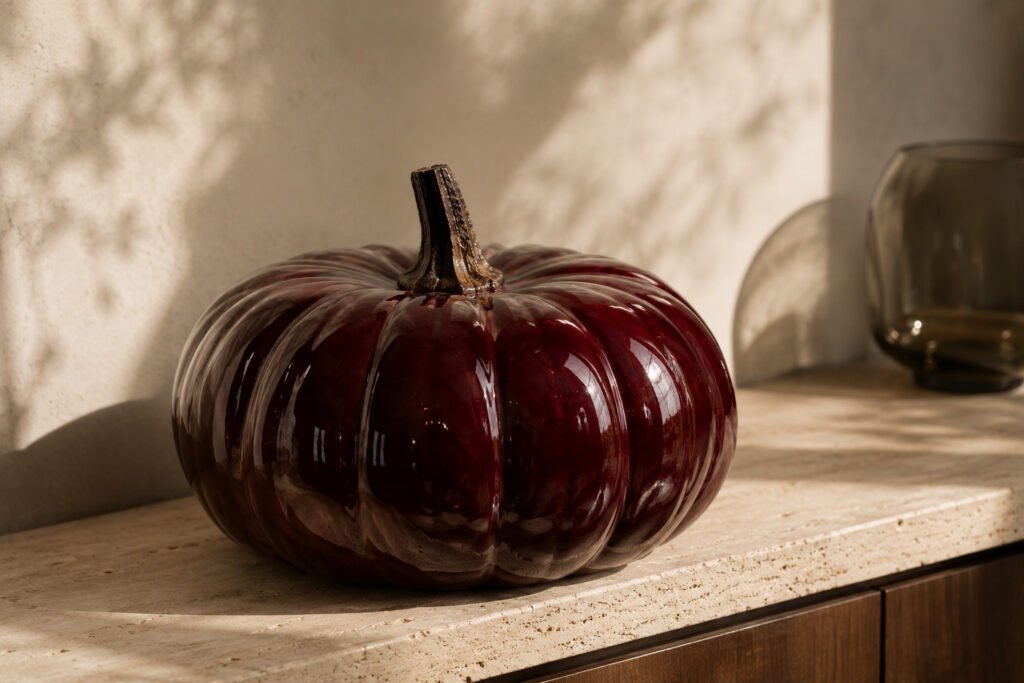
A deep oxblood pumpkin is simple, but the finish makes all the difference. Instead of using flat burgundy paint, choose a rich wine-red tone with a high-gloss lacquer effect that reflects light across the natural ribs.
The result should feel sleek and polished, almost like a ceramic or lacquered decorative object. Keep the stem dark brown or nearly black so the overall palette stays sophisticated.
This idea is perfect if you prefer minimal fall decor because it does not need any additional embellishment. Display one large pumpkin on a pale stone surface, or group three in slightly different wine and burgundy shades for a tonal arrangement.
The glossy finish also gives the pumpkin enough visual impact to work as a dining table or entryway centerpiece without adding traditional Halloween accessories.
3. Create a Chocolate Marble Pumpkin
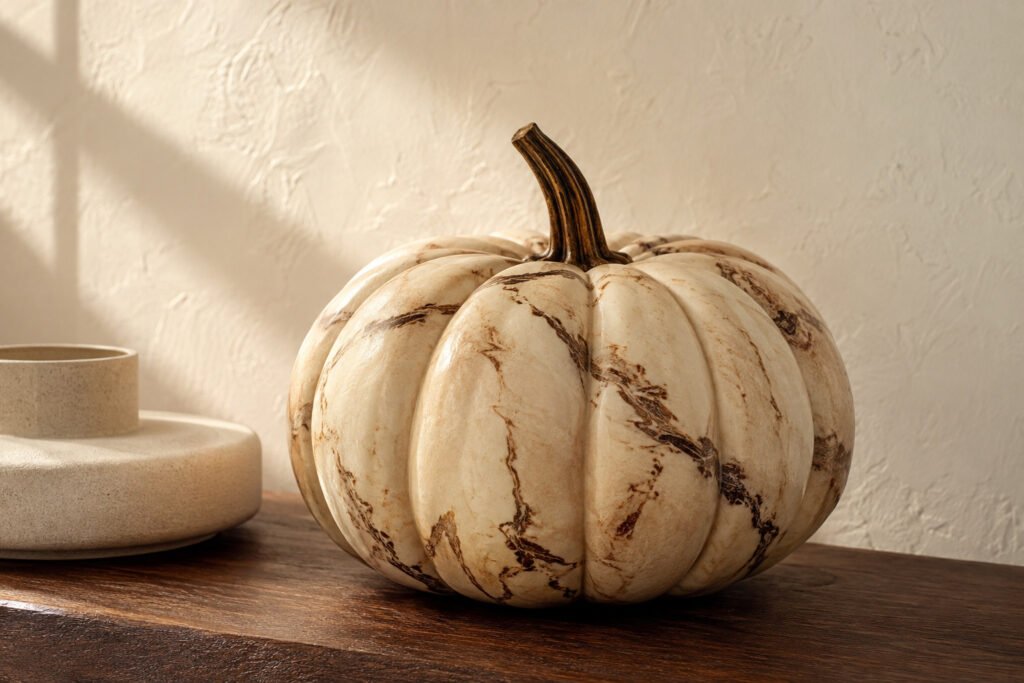
Marble pumpkins are not new, but shifting the palette away from basic gray and white makes the idea feel much fresher. Start with an ivory or warm beige pumpkin and add soft espresso, taupe, and chocolate-brown veining across the surface.
The key is restraint. Use only a few organic veins and allow plenty of the base color to remain visible. Overworking the pattern can quickly make the pumpkin look painted rather than stone-inspired.
A matte or soft satin finish works best because it gives the surface a natural mineral quality. Pair the pumpkin with dark walnut, cream boucle, limestone, or smoked glass for a rich neutral fall palette.
This is especially strong for modern organic interiors because it adds seasonal character without introducing bright orange.
4. Define the Ribs With Velvet
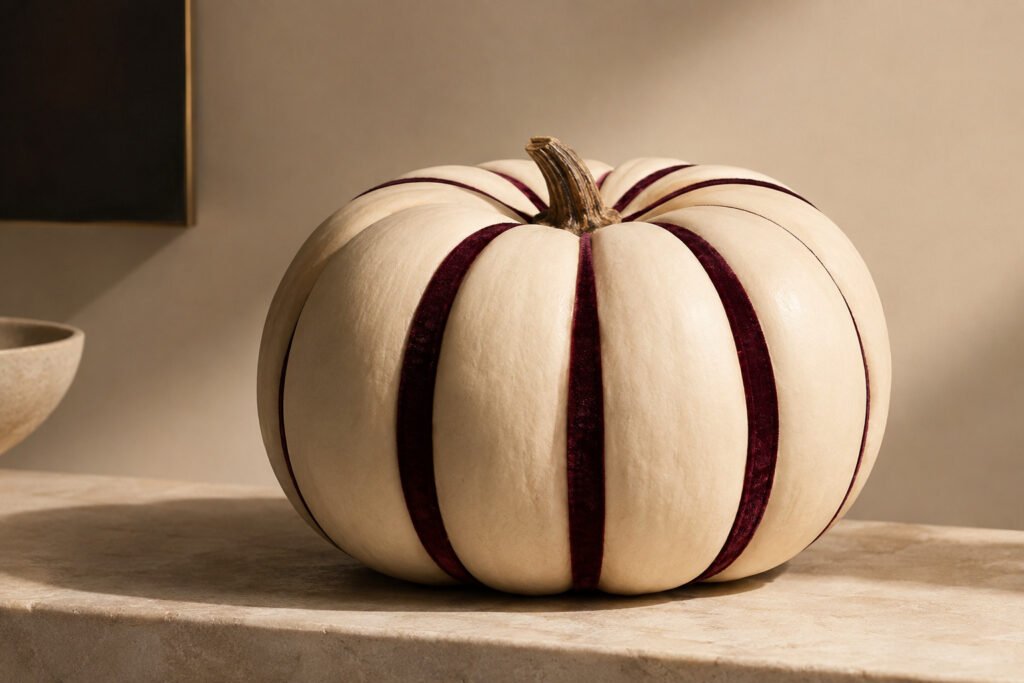
Instead of wrapping a pumpkin in ribbon or adding a large bow, use velvet as a subtle structural detail. Place very narrow strips of deep burgundy, espresso, or black velvet inside selected natural grooves so the pumpkin’s shape becomes more defined.
You do not need to cover every rib. Leaving alternating sections untouched keeps the design clean and prevents the ribbon from taking over the pumpkin.
Choose a matte pumpkin in cream, taupe, or muted brown so the soft sheen of the velvet provides gentle contrast. The effect is especially beautiful when photographed from an angle because the fabric catches light differently from the pumpkin surface.
Style it on a bedside dresser, entry console, or coffee table where viewers can notice the texture up close.
5. Add One Moody Botanical Detail
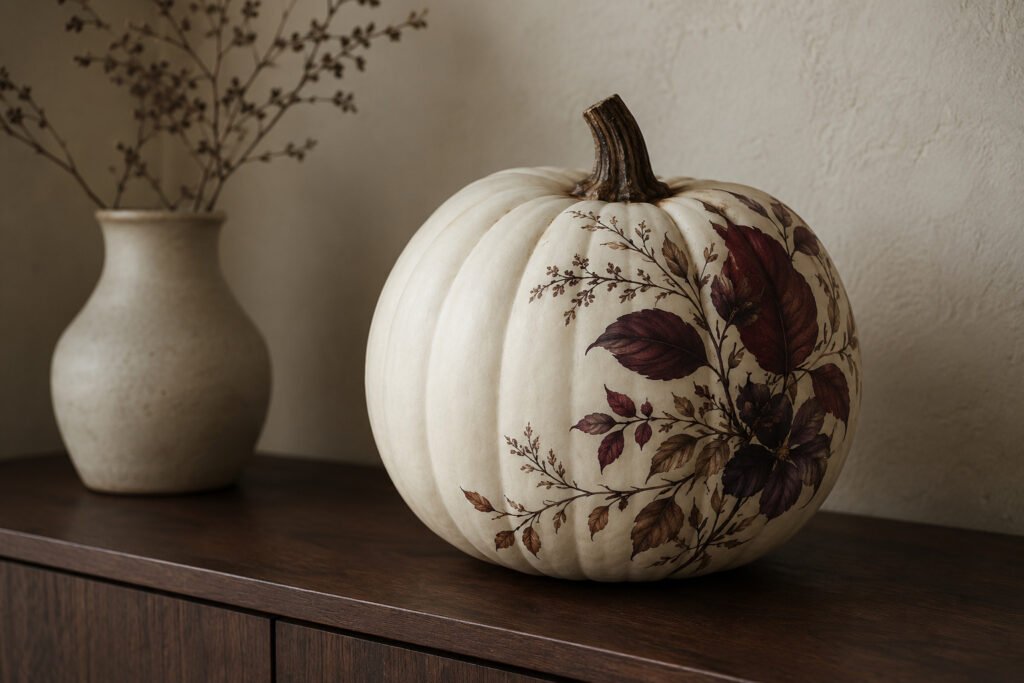
Floral pumpkins often become overly decorative because the entire surface is covered in flowers. A more modern approach is to use one oversized botanical design on only part of the pumpkin.
Start with a soft ivory or warm beige base, then add a dark botanical transfer featuring burgundy leaves, black stems, muted plum petals, or deep brown foliage. Let the design curve around one side while leaving most of the pumpkin completely plain.
The contrast between the clean surface and dramatic botanical artwork is what keeps the result elevated. Avoid bright multicolor flowers or small repetitive motifs.
This pumpkin looks beautiful in a moody fall bedroom, on a dark wood shelf, or as part of a modern dining room display. A single branch in a ceramic vase nearby is enough to complete the styling.
6. Add Espresso Suede Panels
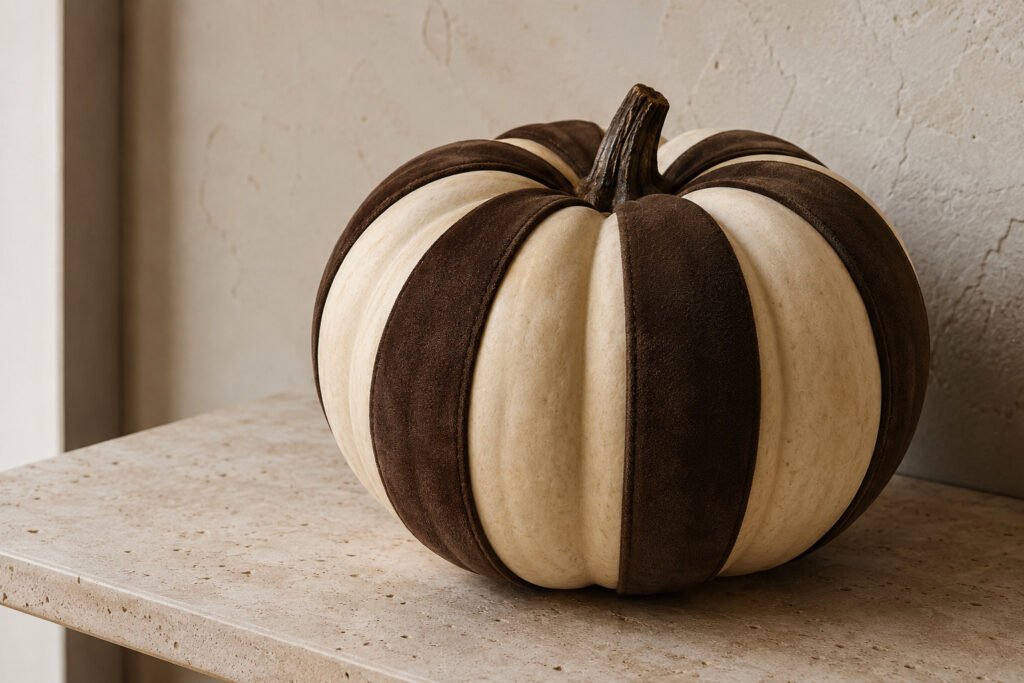
Suede gives a pumpkin a soft, tactile quality that paint alone cannot create. Instead of covering the entire pumpkin, apply fitted faux-suede panels to alternating ribs.
Choose a warm cream or muted taupe pumpkin and use espresso-brown suede for contrast. Each panel should follow the natural curved shape of the pumpkin so it looks integrated rather than attached as an afterthought.
The combination of matte pumpkin skin and soft suede makes this design especially effective in close-up images. It also pairs naturally with other fall materials such as walnut, linen, boucle, and stone.
Keep the stem simple and avoid adding hardware, bows, or decorative trims. The material contrast is already enough to make the pumpkin feel special.
7. Create a Smoked Ombré Finish
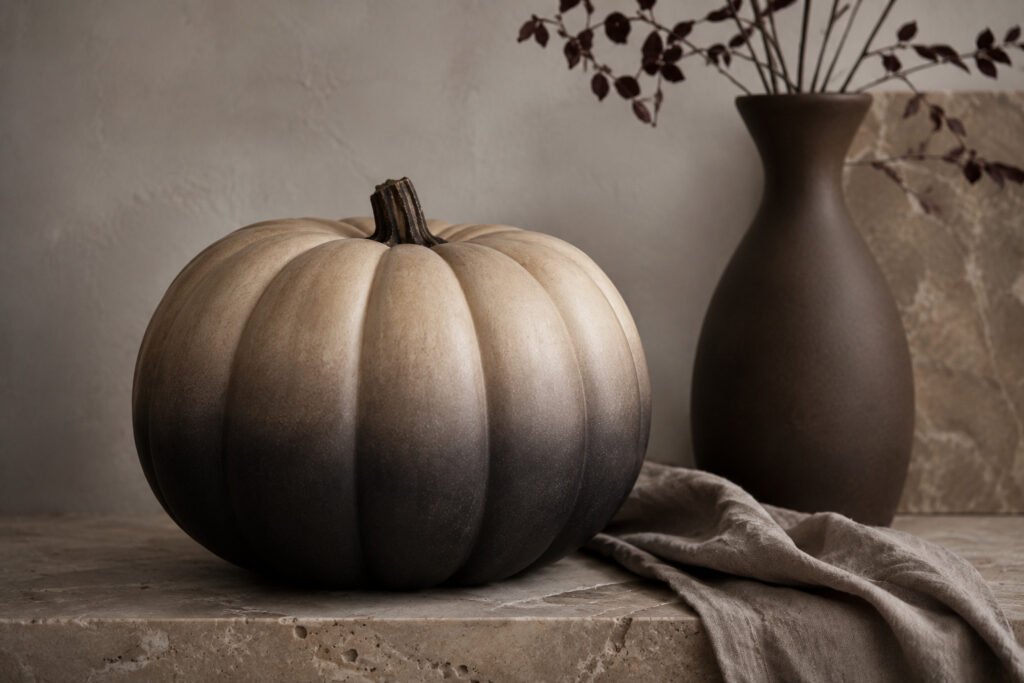
An ombré pumpkin can look sophisticated when the colors are muted and the transition is soft. Begin with a warm ivory, taupe, or light mushroom shade at the top and gradually deepen the color toward the base using espresso, charcoal, or smoky plum.
The gradient should feel diffused rather than striped. A soft airbrushed effect works best because it preserves the natural ribs while creating a subtle shadowed appearance.
This idea is particularly useful if you want Halloween decor that feels slightly moody without using black pumpkins everywhere. The darker base adds depth while the lighter top keeps the overall look soft.
Try styling it beside smoked-glass candleholders, dark wood, or cream ceramics for a layered neutral display.
8. Use a Soft Pearlescent Glaze
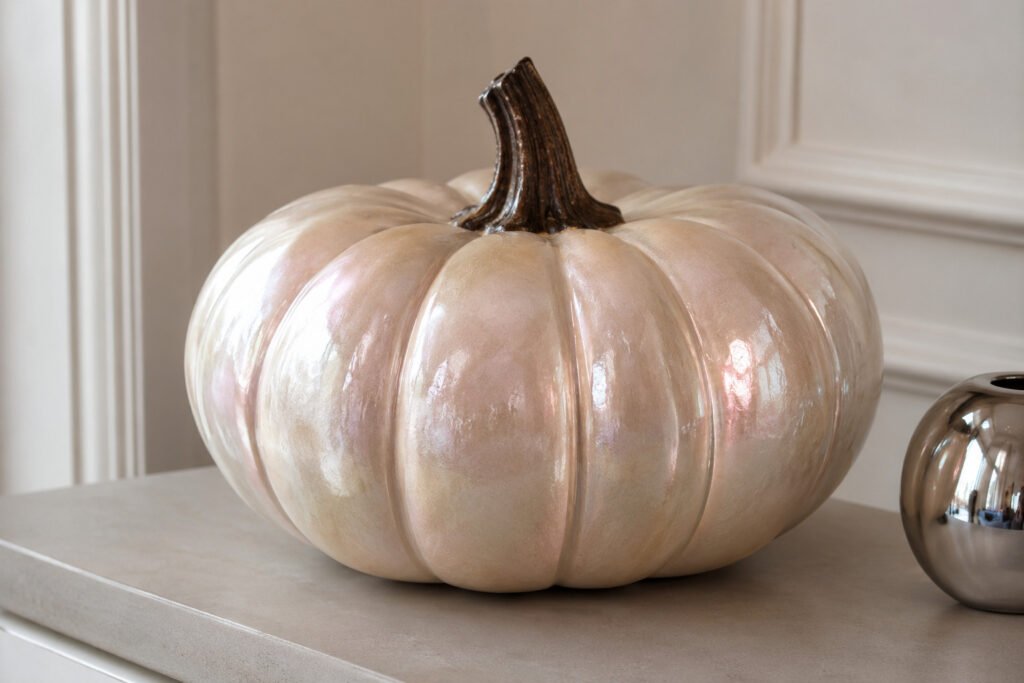
If you like a little shine but do not want glitter or obvious metallic paint, a pearlescent glaze is a much more refined choice. Start with an ivory or pale blush pumpkin and apply a thin iridescent finish that shifts gently between champagne, smoky pink, pearl, and soft silver as the light changes.
The glaze should remain translucent enough for the pumpkin’s original texture and ribs to show through. Avoid chunky shimmer or rainbow holographic effects, which can push the design back into craft territory.
This pumpkin works beautifully in lighter interiors and pairs well with glass, chrome, pale wood, or soft textiles. It is subtle from a distance but becomes more interesting as the light moves across the surface.
For a modern display, use one medium or oversized pearlescent pumpkin rather than a cluster of small shiny pumpkins.
9. Trace a Few Ribs With Metallic Leaf
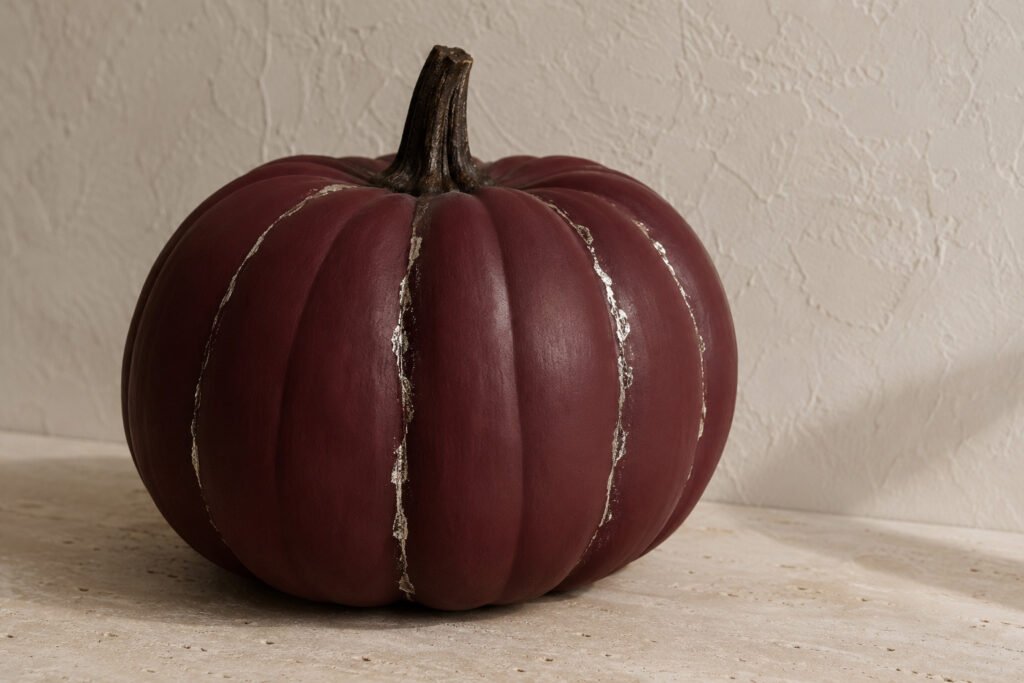
Metallic accents can look expensive when they are used sparingly. Instead of painting the entire pumpkin gold or silver, apply delicate metallic leaf or metallic paint along only a few natural grooves.
A matte burgundy pumpkin with fine silver accents feels dramatic, while a cream pumpkin with brushed champagne or muted bronze details creates a softer look.
Keep the lines imperfect and slightly broken rather than perfectly outlined. The result should resemble natural metallic veining, not decorative striping.
Because this treatment is subtle, it works particularly well on mantels, shelves, and coffee tables where directional light can catch the metallic detail without overwhelming the rest of the decor.
10. Wrap a Pumpkin in Sheer Smoky Fabric
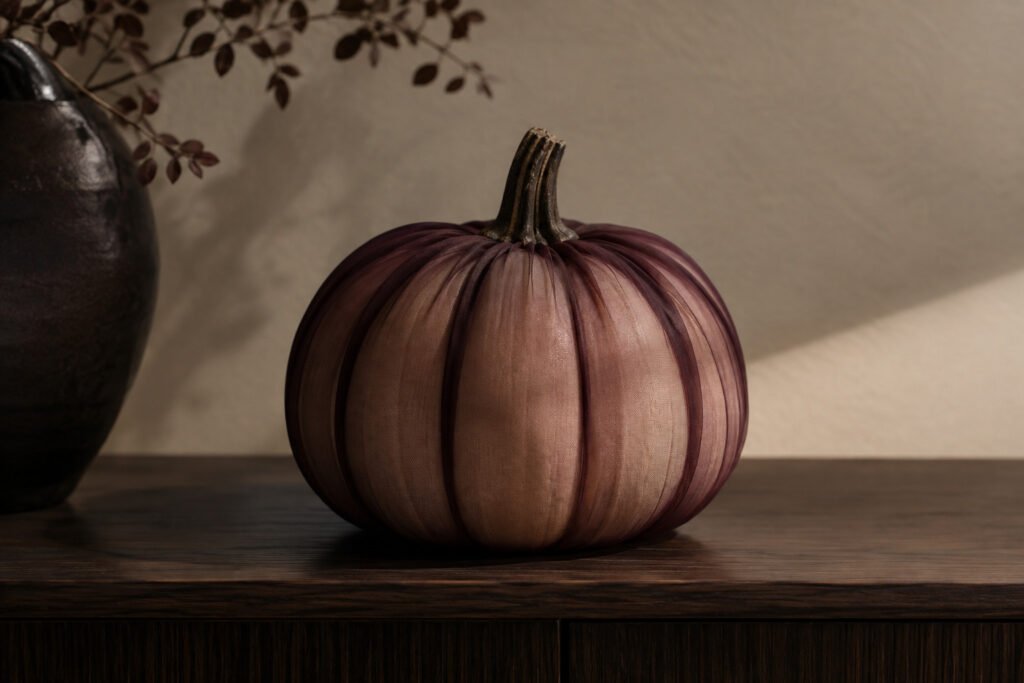
A thin layer of translucent fabric can completely change the appearance of a pumpkin while keeping its shape visible underneath. Use soft smoky black, muted burgundy, or deep brown stretch fabric and smooth it closely over the surface.
Choose material that is extremely fine rather than lace, fishnet, or costume mesh. The pumpkin ribs should remain softly visible through the fabric, creating a shadowed, almost filtered effect.
Tuck all excess material underneath so there are no visible knots or bows. A dark natural stem emerging from the sheer surface completes the look.
This idea works especially well for Halloween because it feels mysterious without using literal spooky motifs. Pair it with a minimal dark wood or stone surface and allow the texture to be the focal point.