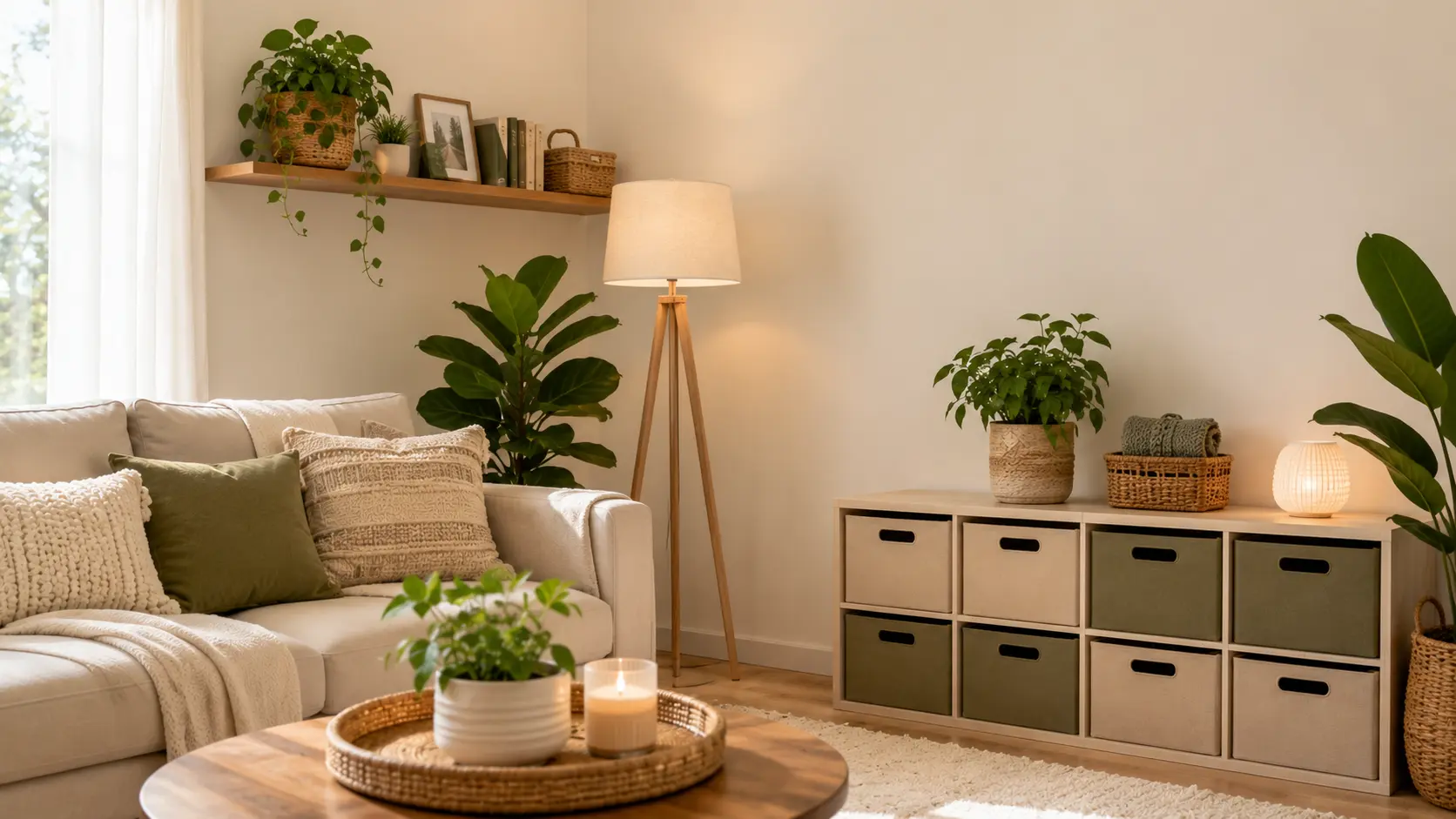
Renting a home does not mean living with blank walls, awkward layouts, or a space that never feels personal. The challenge is finding decor updates that create a noticeable transformation without drilling holes, repainting walls, or installing anything difficult to remove later. The best renter-friendly ideas work with the existing architecture rather than fighting against it, using freestanding structures, tension systems, textiles, lighting, and thoughtful styling to make a temporary space feel intentionally designed.
Instead of relying on basic throw pillows or small accessories, focus on changes that affect scale, height, layout, and atmosphere. A freestanding feature wall can create architecture where none exists, while a full-height curtain treatment can soften an entire room without touching the paint. Even small details such as hiding cords or repeating the same finish throughout the space can make inexpensive renter decor look polished and cohesive.
These renter-friendly decor ideas are designed for anyone who wants a stylish, Pinterest-worthy home without nails, paint, or permanent renovation.
1. Add a Freestanding Slatted Feature Wall
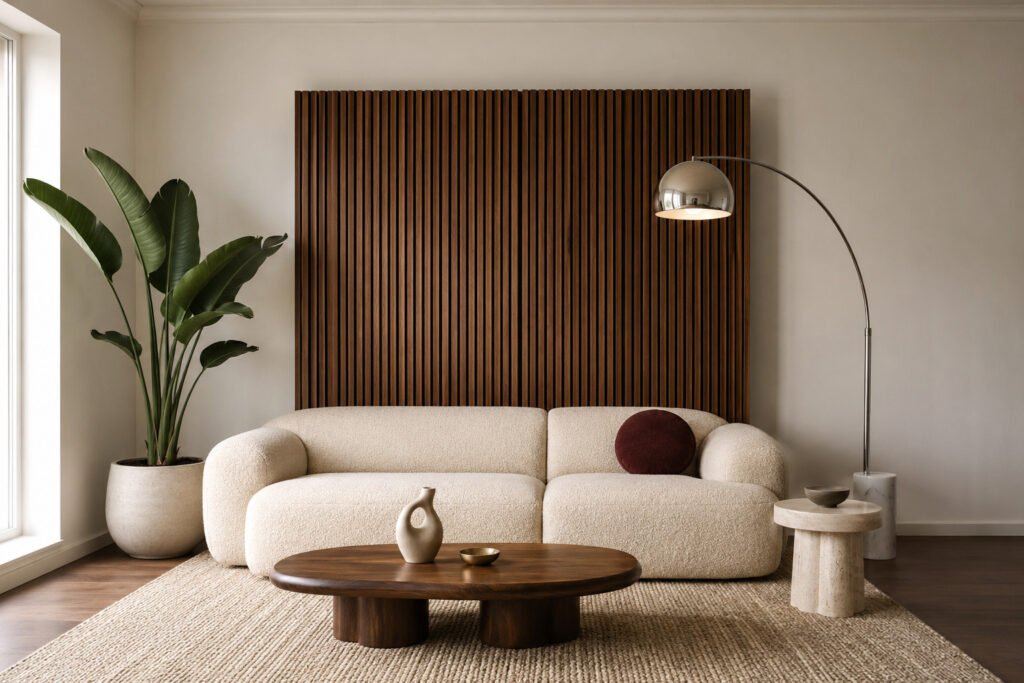
A freestanding slatted panel is one of the easiest ways to give a basic rental room an architectural focal point without modifying the actual wall. Choose a tall panel in warm walnut, natural oak, or a dark stained finish and position it behind a sofa, bed, console, or home office desk. The vertical lines naturally draw the eye upward, which can also make a room feel taller.
Keep the styling around the panel simple so the texture remains the main feature. A sculptural floor lamp, low console, or large plant is usually enough. If the panel includes its own freestanding shelves, use only a few decorative objects rather than filling every surface. The finished look feels closer to a custom interior installation than a temporary rental solution.
2. Create a Floor-to-Ceiling Tension Pole Styling System
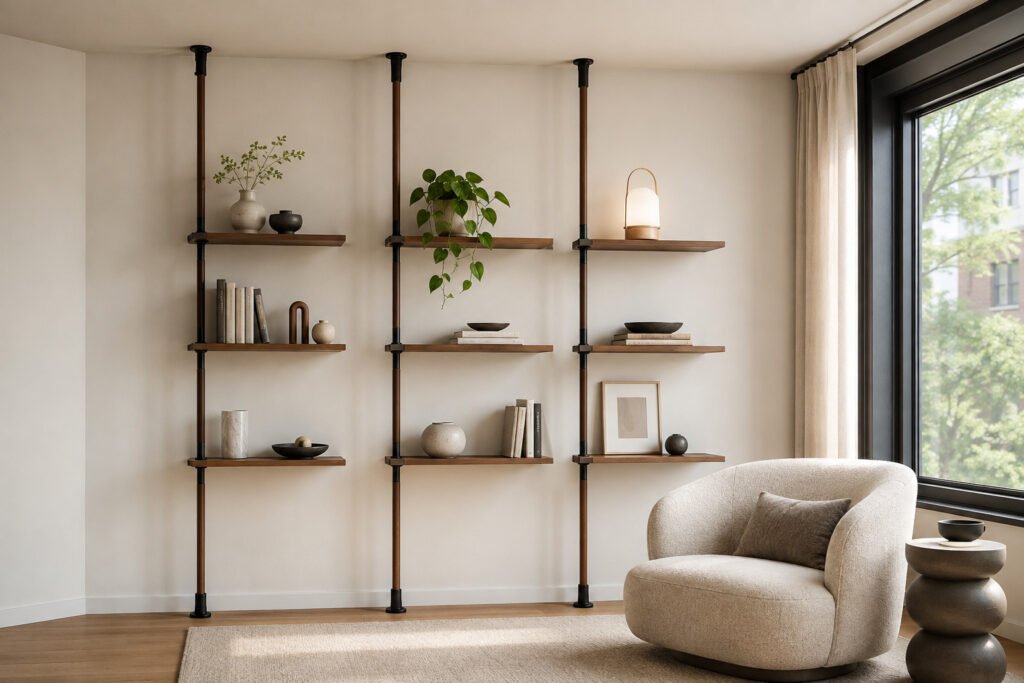
A tension pole system can turn an unused wall into an organized display without drilling into it. Instead of using one basic rod, create a vertical arrangement with slim poles that extend between the floor and ceiling. Depending on the system, you can incorporate lightweight shelves, small framed art, plants, or compact rechargeable lights.
This idea works particularly well in small apartments because it uses vertical space without adding a bulky cabinet. Place the system beside a desk for books and supplies, near the sofa for decorative objects, or in the bedroom as an alternative to wall-mounted shelves. Keep the materials consistent—black metal, chrome, or warm wood—to make the setup look intentional rather than improvised.
3. Cover a Blank Wall With Full-Height Curtains
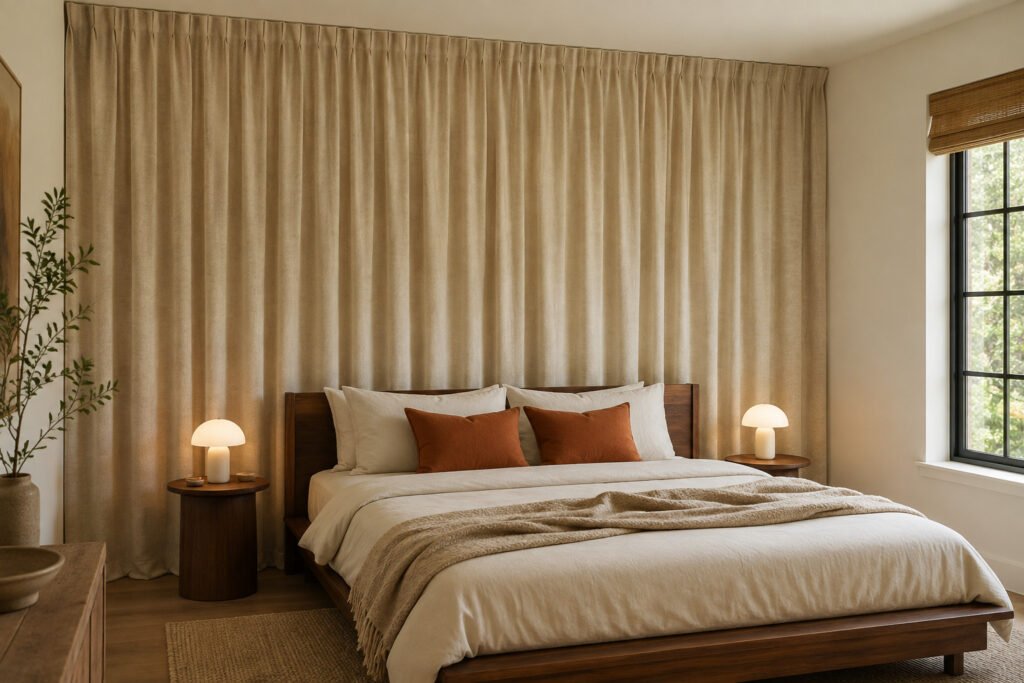
Curtains do not have to be limited to windows. Covering an entire wall with floor-to-ceiling fabric can dramatically change the mood of a rental bedroom or living room while leaving the wall itself untouched. A sturdy tension system or other no-drill curtain setup can support lightweight linen, cotton, or soft textured panels.
Choose fabric that complements the rest of the room rather than treating it as an isolated accent. Oatmeal linen creates a calm organic look, while chocolate, burgundy, or muted olive can give the space a richer atmosphere. Allow the panels to fall neatly to the floor without excessive pooling. The uninterrupted fabric creates softness, disguises an unattractive wall, and gives even a basic rental room a boutique-hotel feel.
4. Use a Sculptural Screen as a Headboard
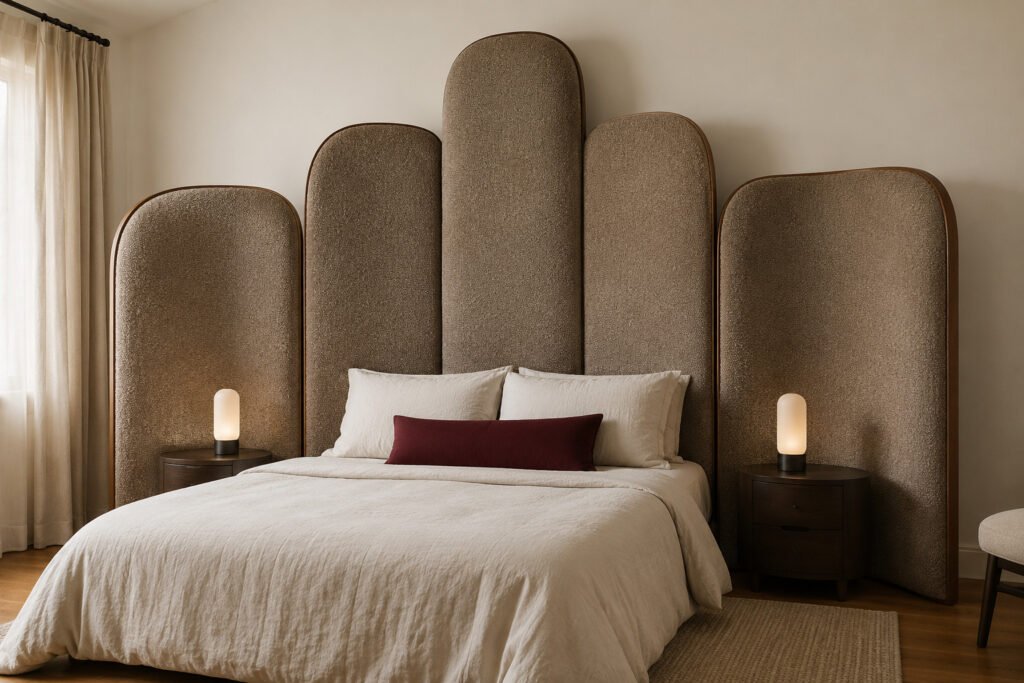
A folding screen can be much more than a room divider. Positioned directly behind the bed, an oversized screen becomes an instant statement headboard and gives a plain bedroom much-needed height and texture. Look for curved wood, cane, upholstered panels, pleated fabric, or softly ribbed designs rather than traditional decorative screens.
For the strongest effect, choose a screen that extends beyond the width of the mattress or reaches noticeably above the pillows. Keep bedside styling restrained with simple tables and rechargeable lamps so the screen remains the focal point. Because nothing is attached to the wall, the entire setup can move with you and be reused later as a divider or backdrop.
5. Build a Freestanding “Built-In” Library
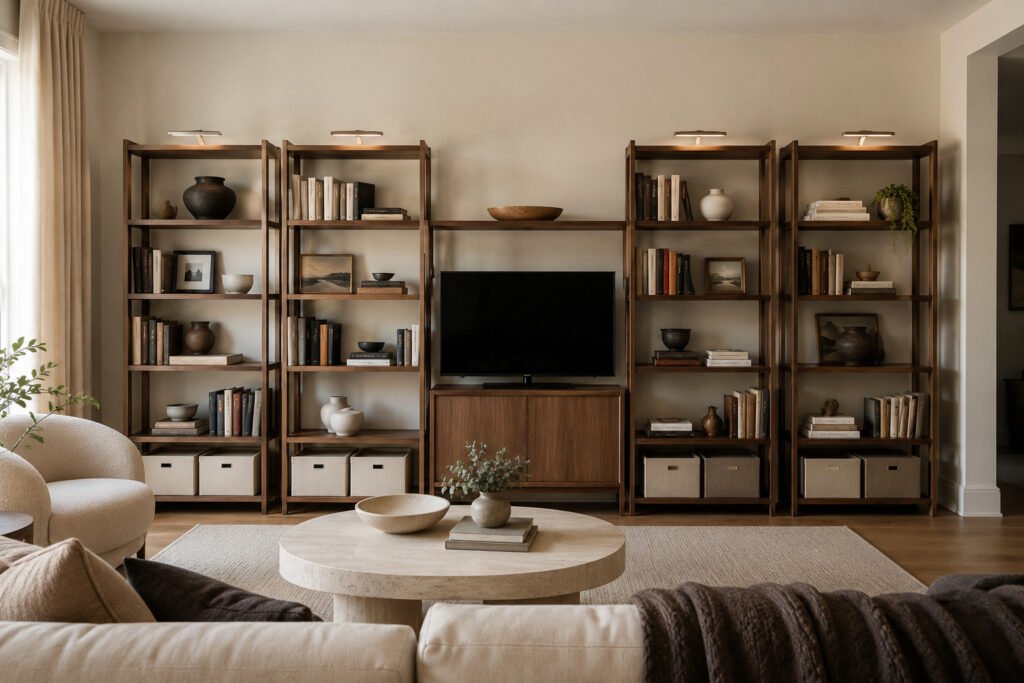
Built-in shelving can completely transform a room, but renters rarely have the option to add permanent cabinetry. You can create a similar visual effect by lining up matching freestanding bookcases across one wall. The secret is making the units read as a single composition rather than several separate pieces of furniture.
Style the shelves with a mix of books, closed storage boxes, ceramics, and larger objects while leaving some breathing room. If possible, place a low console or media unit in the center to break up the repetition. Rechargeable picture lights or small lamps can add another layer without requiring electrical work. When the colors and proportions are coordinated, the finished wall can look surprisingly close to custom millwork.
6. Create a Freestanding Arched Portal
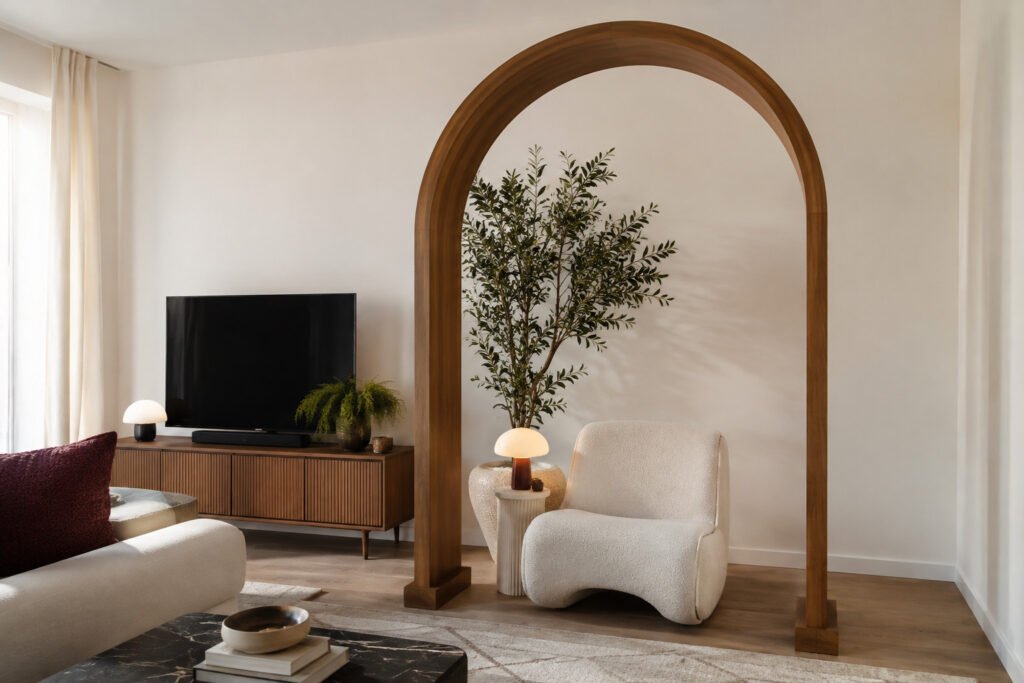
An oversized arch frame can introduce architectural character to a rental that feels completely plain. Position a lightweight freestanding arch around a reading corner, behind a console, beside a bed, or near an open transition between two areas. Warm wood creates an organic look, while black, burgundy, or soft cream makes the feature more graphic.
The key is to keep the frame simple enough that it feels like part of the room rather than temporary event decor. You can leave it completely bare or add a small amount of fabric, lighting, or greenery. The shape naturally frames whatever sits inside it, helping a previously undefined area feel like a deliberate destination.
7. Make a Moving Gallery Wall
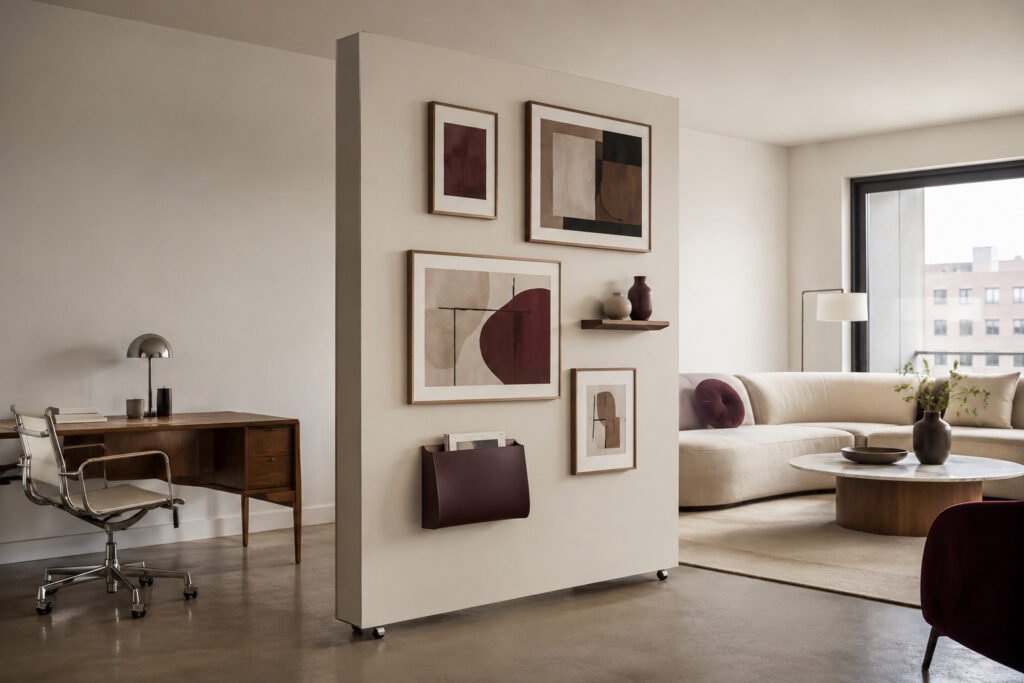
If you love artwork but do not want dozens of adhesive strips or holes, create the gallery wall on a freestanding panel instead. A tall lightweight display board or panel on discreet casters can hold framed prints, small shelves, postcards, or magazine racks. Because the panel is movable, it can also serve as a flexible divider in a studio apartment.
Keep the layout curated instead of covering the entire surface. Combine one or two larger pieces with smaller artwork and leave visible negative space between them. The panel can sit behind a sofa, beside a desk, or between sleeping and living zones. It gives you the visual impact of a gallery wall while adding functionality that a fixed arrangement cannot provide.
8. Build a Freestanding Bed Cocoon
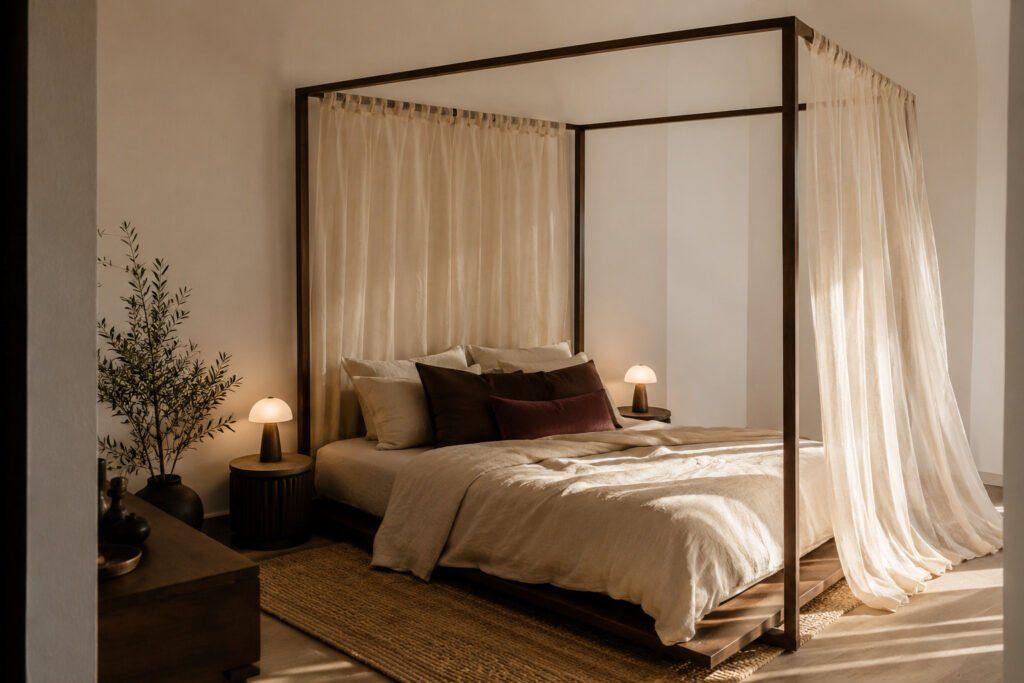
A rental bedroom can feel much more intimate when the bed is visually defined as its own zone. Instead of suspending fabric from the ceiling, use a minimal freestanding canopy or four-post frame around the bed. Selectively drape sheer linen, gauze, or another lightweight textile across one or two sides.
Avoid covering the entire frame unless you want a very enclosed effect. Leaving sections open keeps the arrangement modern and allows natural light to move through the room. Add warm bedside lighting and simple bedding in complementary tones. The result feels soft and intentional, especially in larger bedrooms where the bed otherwise seems to float in an empty space.
9. Divide the Room With a Curved Ribbed Screen
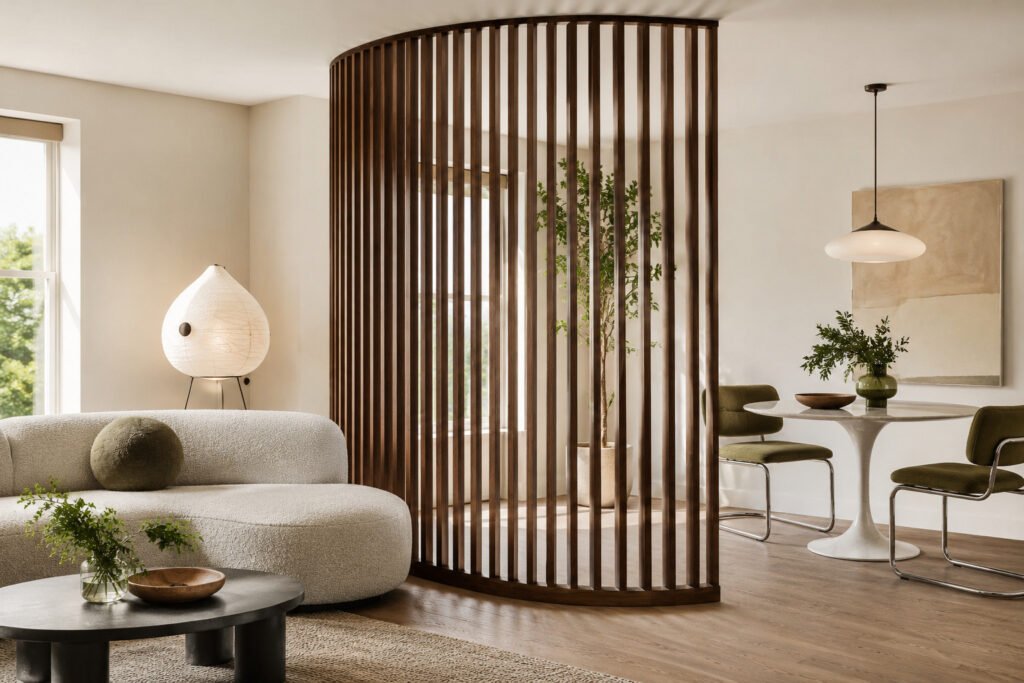
Open-plan rentals often need better zoning, but permanent walls are obviously not an option. A curved ribbed or slatted divider can separate a living area from a workspace, dining zone, or sleeping corner while still allowing light to pass through. The curved shape tends to feel softer and more contemporary than a basic flat folding partition.
Place the divider where furniture naturally changes function rather than in the middle of a circulation path. For example, use it behind a sofa to mark the edge of the living room or beside a desk to create a more private work area. Choose a finish that already appears elsewhere in the room so the divider feels integrated rather than added as an afterthought.
10. Create a “Box Within the Room”
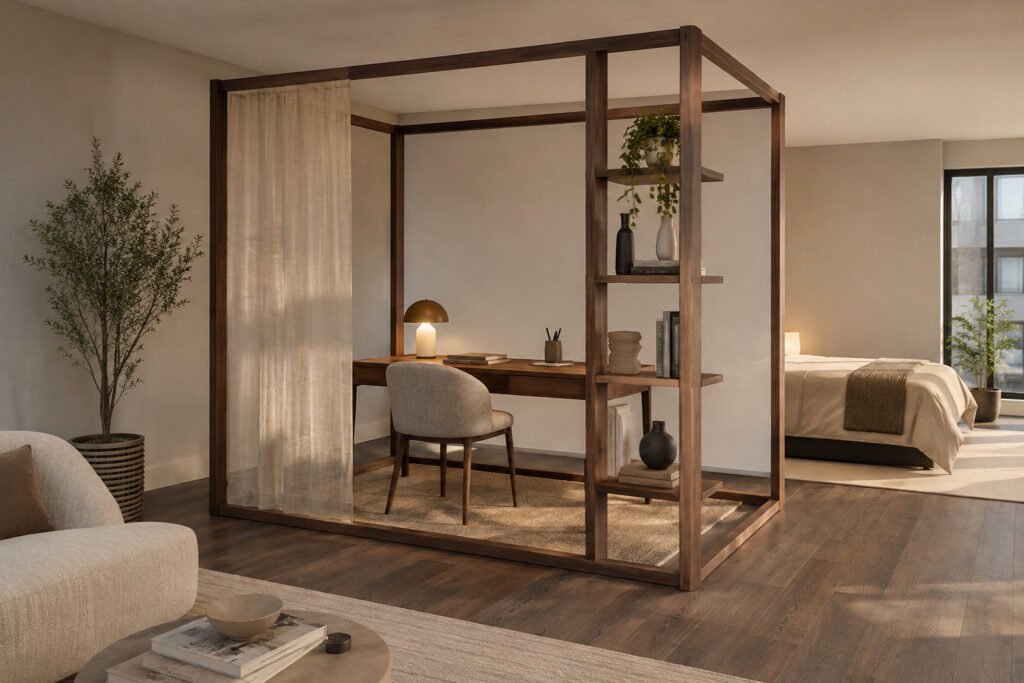
For a larger transformation, visually build a smaller zone inside the rental using a lightweight freestanding frame. Two vertical supports connected by an overhead section can define a desk, reading nook, dressing area, or even part of the bedroom. Add fabric, shelving, or soft lighting to selected sections rather than enclosing the entire structure.
This approach works particularly well in open rooms because it gives a specific activity its own architectural boundary. Keep the frame slim and minimal so it does not overwhelm the space. When combined with a rug and appropriately scaled furniture, the structure can make the area feel almost like a separate room without adding a single permanent wall.
11. Layer Lighting at Different Heights
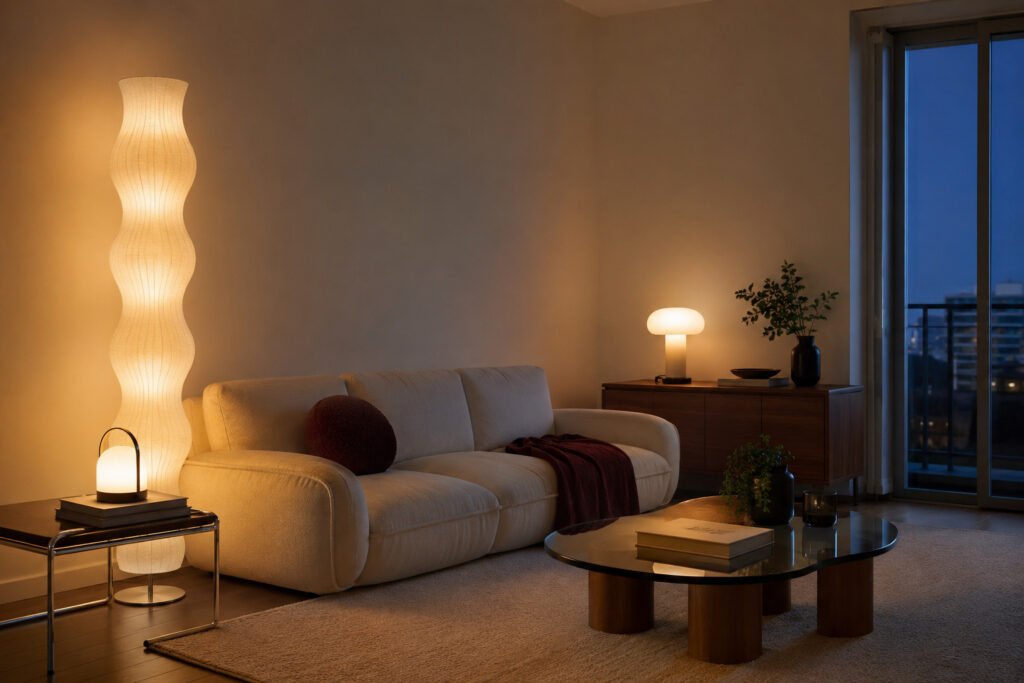
Lighting is one of the smallest changes that can produce one of the biggest visual improvements. Instead of relying only on a ceiling fixture, create light at several levels throughout the room. Combine a tall floor lamp with a mid-height table or rechargeable lamp and a lower accent source near a shelf or console.
This layered approach creates depth after sunset and makes individual areas of the room feel more intentional. Keep bulb temperatures similar so the space does not look visually disconnected. Rechargeable lamps are especially useful in rentals because they can be placed where outlets are limited. Even a simple room can feel significantly more polished once lighting is distributed properly.
12. Choose One Oversized Statement Piece
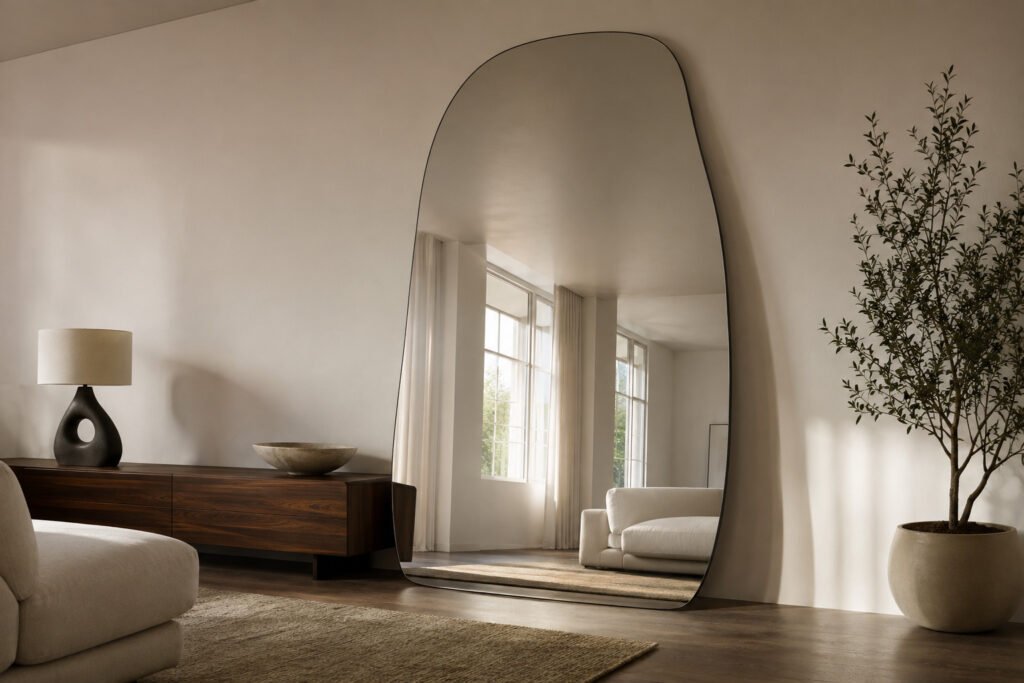
A common decorating mistake in rentals is filling every empty area with several small accessories. Instead, use one oversized object to create a stronger focal point. A large leaning artwork, sculptural mirror, tall ceramic vessel, dramatic floor lamp, or substantial planter can give the room much more presence than a collection of tiny pieces.
Choose the object according to the scale of the furniture around it. Behind a long sofa, for example, a single large artwork often looks more intentional than five unrelated small frames. Keep nearby decor quiet so the statement piece has enough visual space. This approach also makes the room easier to restyle when you move.
13. Layer Artwork Instead of Hanging It
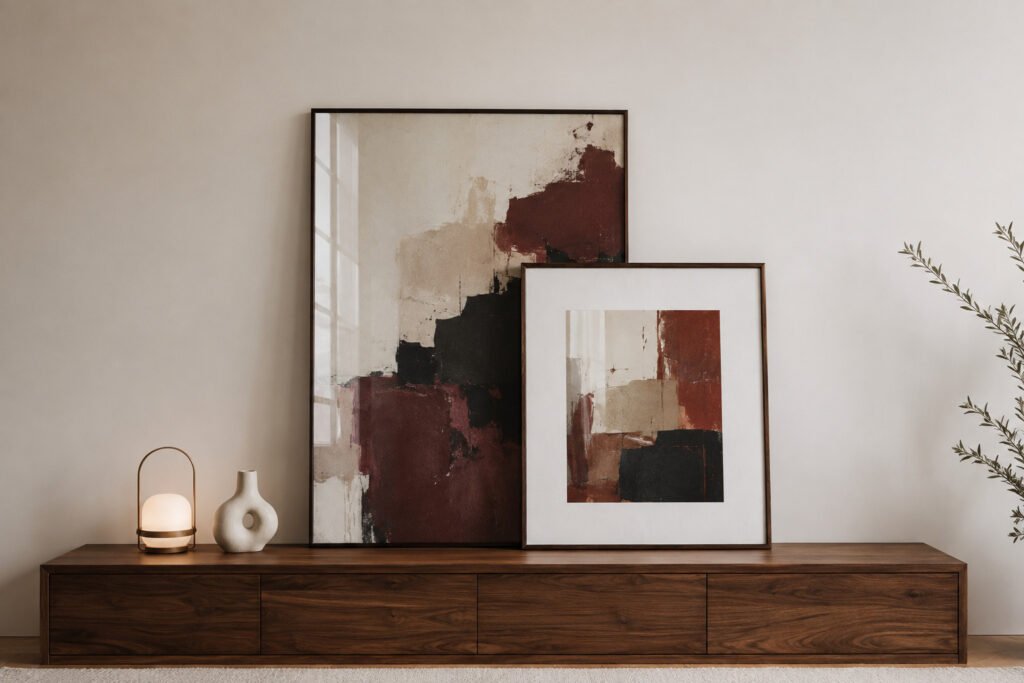
Artwork can still become a major part of your home even if you never attach a frame to the wall. Place a large framed print or canvas on the floor or a wide console and lean it securely against the wall. Add a smaller frame slightly in front of it to create depth rather than displaying everything in one flat line.
Complete the composition with one sculptural object, lamp, or small vase. Keep the overlap intentional so important parts of the artwork remain visible. This style looks particularly good on long consoles, low cabinets, mantels, and wide bedside surfaces. It feels relaxed and editorial while remaining completely renter-friendly.
14. Repeat One Finish Throughout the Room
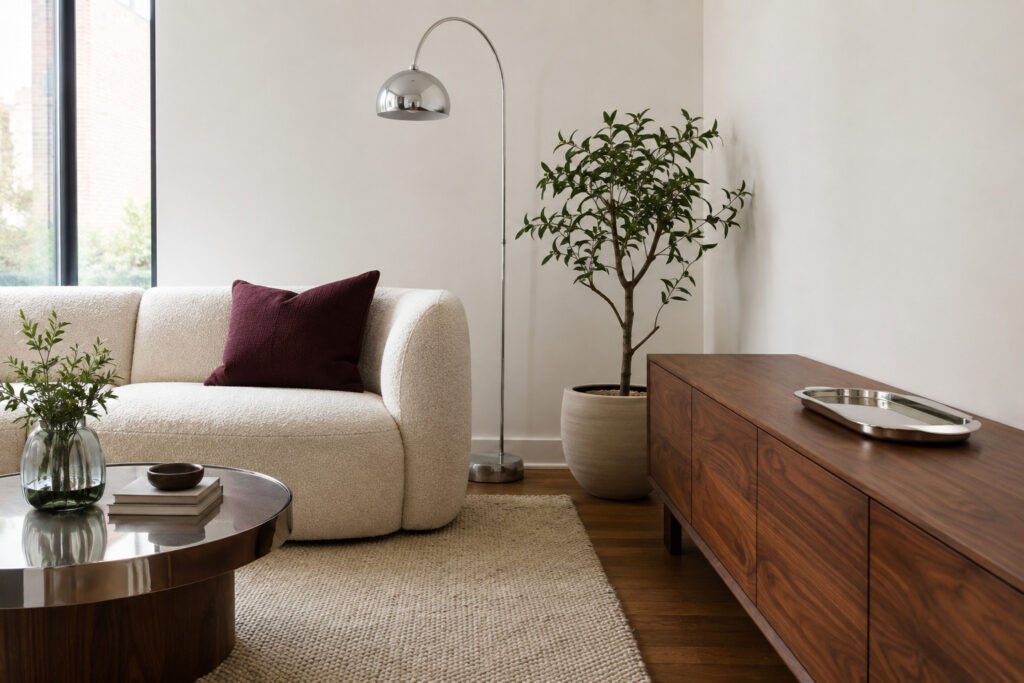
Even beautiful renter decor can look disconnected when every item has a different finish. Repeating one material or metal in several areas helps unrelated furniture feel like part of the same design. If you choose chrome, for example, repeat it through a lamp, tray, frame edge, or small table.
The same principle works with warm walnut, black metal, brass, or pale oak. Avoid matching everything exactly; subtle repetition is enough. Two or three appearances of the same finish usually create cohesion without making the space look overly coordinated. This is an especially useful technique when your rental contains furniture collected from different homes, stores, or stages of life.
15. Hide Cords and Everyday Visual Clutter
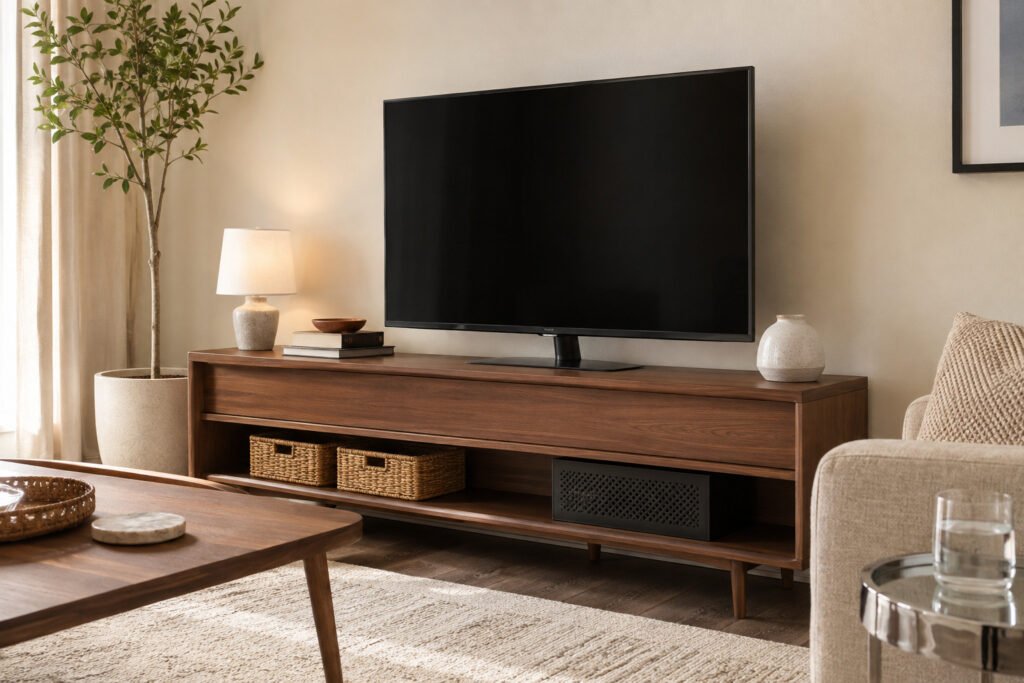
A beautifully styled room can quickly lose its impact when extension leads, charging cables, routers, and random storage items remain visible. Hiding these practical necessities is one of the most effective finishing details in renter-friendly decorating. Use removable cord covers where appropriate, route cables behind furniture, and place small electronics inside ventilated decorative boxes or discreet organizers.
Lower shelves are ideal places for matching baskets that hide objects you need but do not want on display. Keep chargers together rather than leaving several cables across different surfaces. These changes may seem minor compared with furniture or wall treatments, but they make the entire room photograph better and feel much calmer in everyday life.