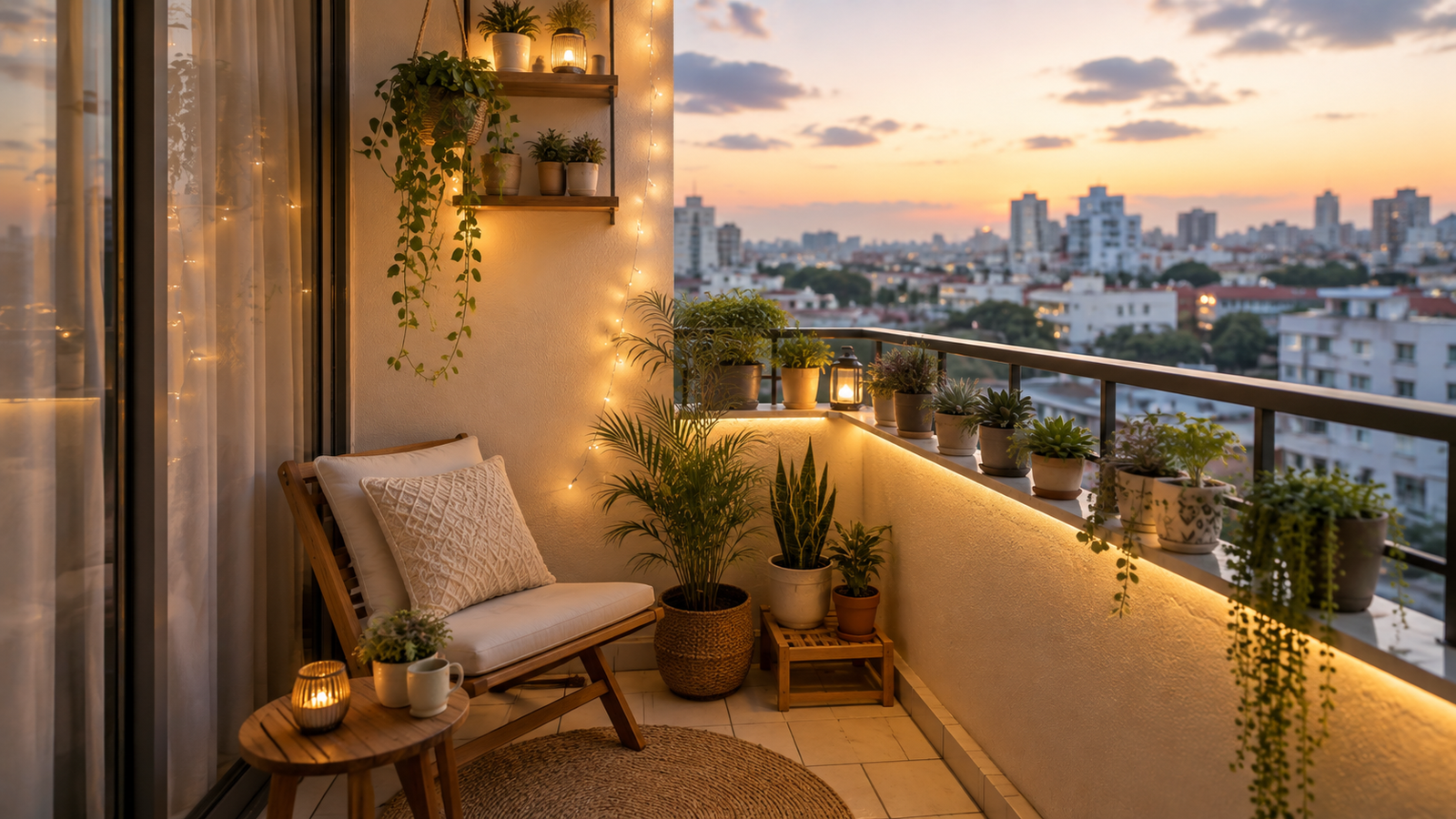
A small apartment balcony may have limited square footage, but that does not mean it has to feel unfinished or crowded. The best balcony gardens work like thoughtfully designed outdoor rooms, combining greenery with privacy, comfortable seating, smart storage, and features that make the space genuinely useful. Instead of filling every corner with random pots, focus on one strong garden technique and build the rest of the balcony around it.
These apartment balcony garden ideas are designed for small spaces where every inch matters. From living privacy curtains and movable garden walls to miniature forests and herb-filled counters, each idea creates a distinct look while keeping the balcony practical. Whether your style leans modern, organic, minimal, or slightly whimsical, these concepts can turn an ordinary balcony into a lush escape that feels intentional and complete.
1. Create a Living Curtain Garden
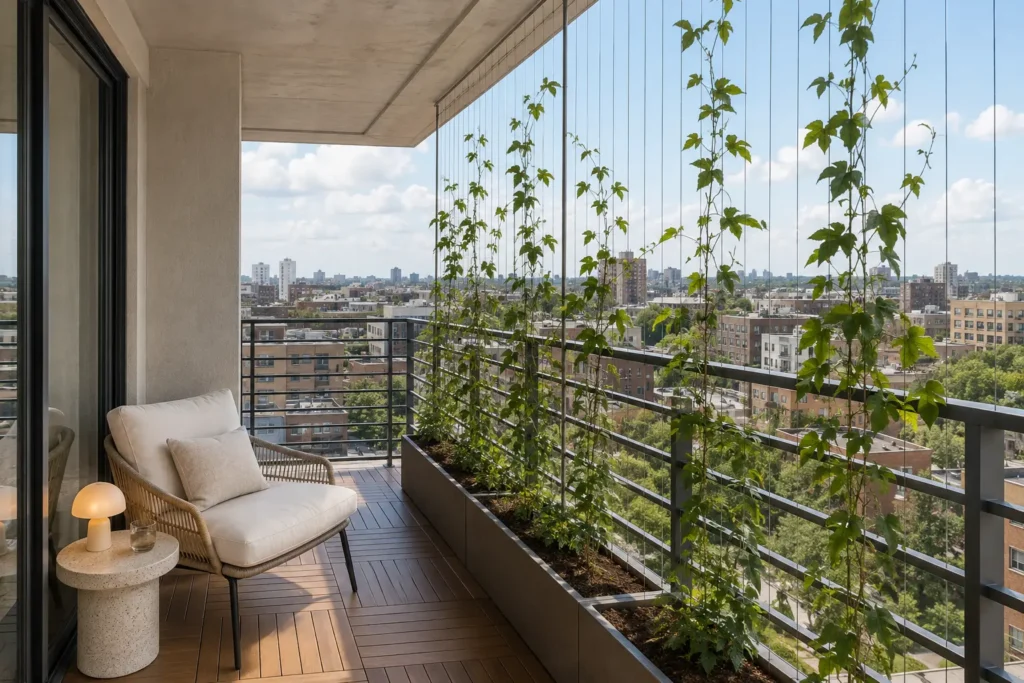
Turn privacy into part of the planting design by growing a soft living curtain instead of installing a bulky solid screen. Place one long, narrow planter along the side that needs coverage and run slim tension cables from the planter toward the ceiling or balcony beam. Train lightweight climbing plants upward so the foliage gradually creates a semi-transparent green curtain.
Keep a small chair or loveseat slightly in front of the greenery and add a compact side table for drinks or books. Because light can still pass through the leaves, the balcony feels private without becoming dark or enclosed. It is especially effective for apartment balconies facing neighboring units.
2. Build a Green Portal Trellis
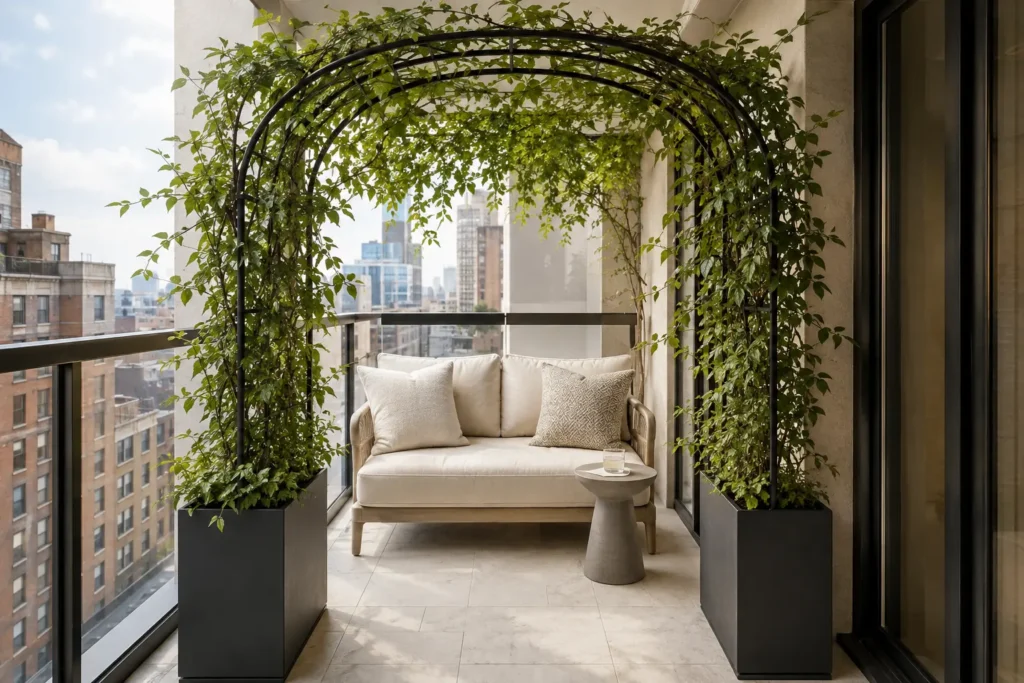
Give a tiny balcony a dramatic garden entrance with two narrow vertical planters connected by a lightweight curved trellis. Allow climbing greenery to travel upward and eventually meet across the top, creating a leafy arch around the main seating area.
Position a compact lounge chair, small bench, or two petite chairs directly inside the green portal. Keep the remaining decor simple so the arch stays visually dominant. The structure uses vertical space instead of valuable floor area and creates a sense of depth that can make a short balcony appear longer. It feels more architectural than a standard trellis wall while still being renter-friendly when built as a freestanding piece.
3. Design a One-Tree Micro Landscape
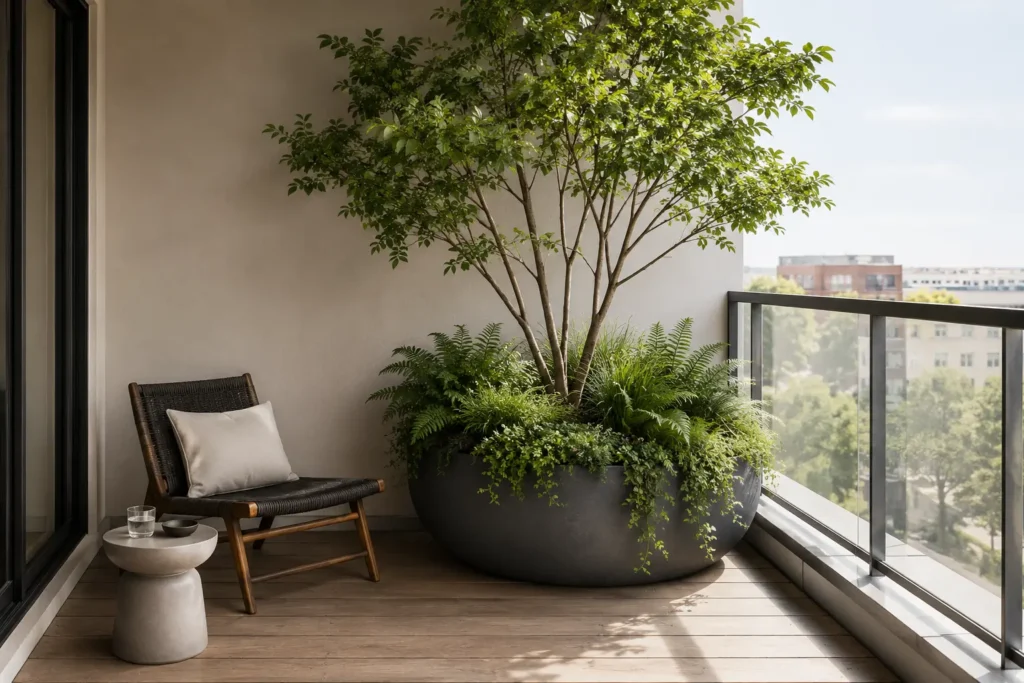
Instead of spreading many small pots across the balcony, create one concentrated landscape around a single dwarf tree. Choose a large lightweight planter and place a small multi-stem tree in the center, then add lower plants such as ferns, herbs, ornamental grasses, or trailing greenery around its base.
This layered approach mimics the structure of a full-size garden while using only one main footprint. Add a simple chair nearby and let the tree provide the visual focus and a little natural shade. Keeping surrounding furniture low and neutral helps the planting feel larger. The result looks more like a miniature courtyard garden than a collection of container plants.
4. Add a Rolling Garden Wall
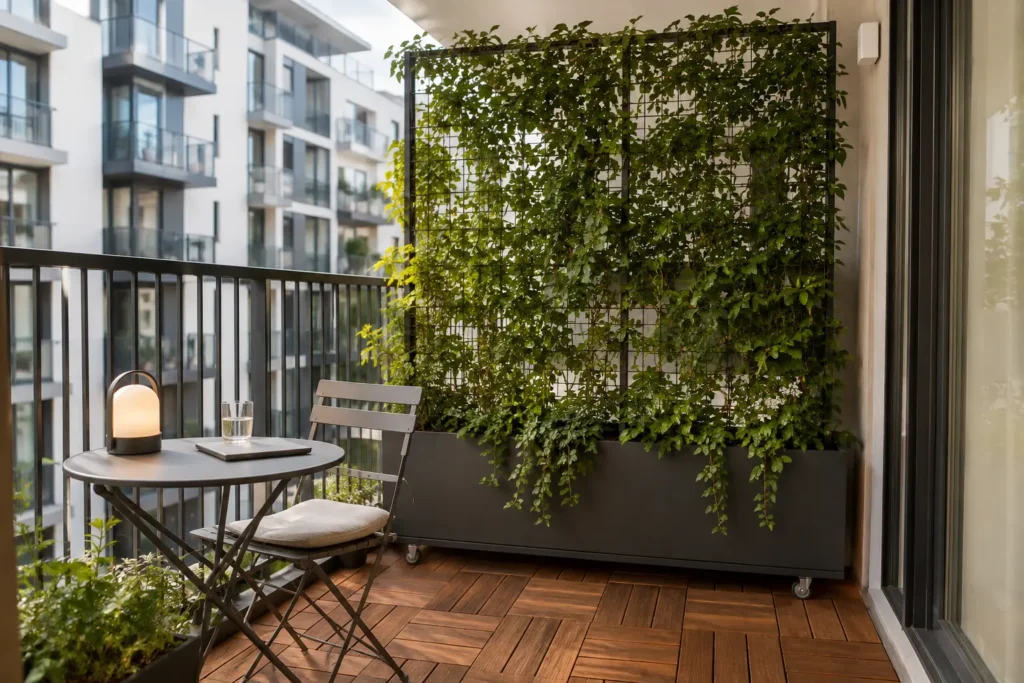
A movable garden wall is especially useful when balcony conditions change throughout the day. Start with a long rectangular planter mounted on concealed lockable casters and attach a slim trellis to the back. Fill it with climbing or upright plants that provide enough density for privacy.
Roll the planter toward one side when you want to block a neighboring view, then move it again when plants need stronger sunlight or when you need more room for guests. Pair it with flexible furniture such as a folding chair or lightweight café table. The garden becomes adaptable instead of fixed, making this one of the most practical ideas for renters and small urban balconies.
5. Combine Seating With Self-Watering Planters
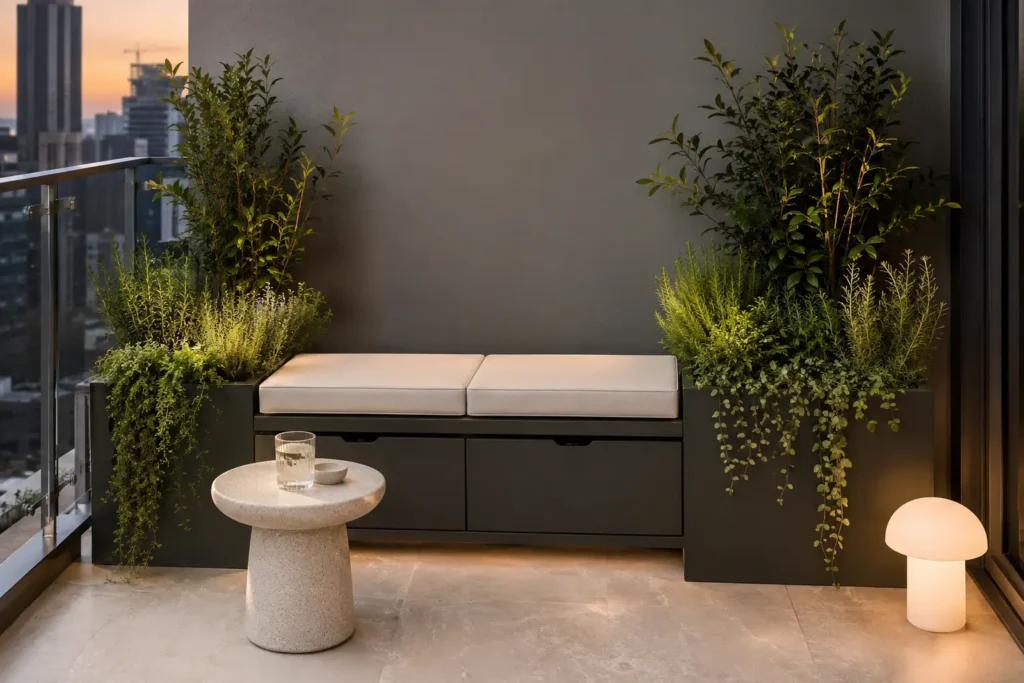
Make one piece of furniture perform several jobs by using a slim storage bench with integrated planters at both ends. Choose planter inserts with reservoirs or self-watering systems so plants can draw moisture gradually instead of requiring constant attention.
Store spare cushions, gardening tools, or outdoor accessories inside the bench while keeping the visible area clean and uncluttered. Add one small table rather than more furniture, and use a mix of upright foliage and soft trailing plants to frame the seat. This approach creates the look of custom built-in landscaping while solving storage, seating, greenery, and plant-care needs in a single compact zone.
6. Try a Balcony Crevice Garden
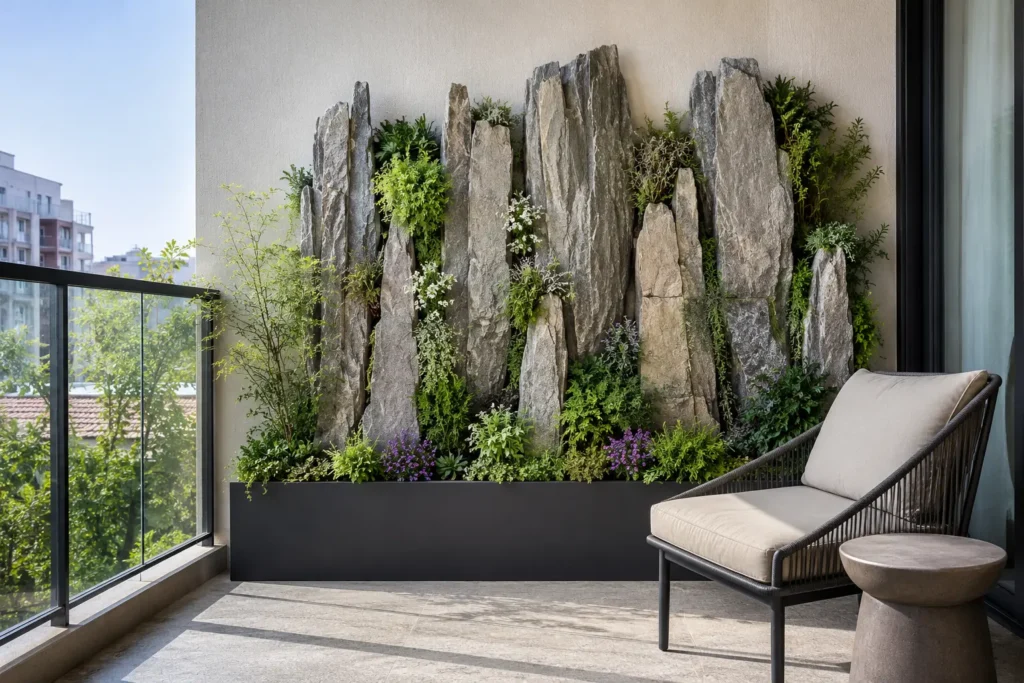
For something far removed from the usual balcony planter arrangement, create a miniature crevice garden. Use one broad rectangular container and position thin natural stone or stone-look slabs vertically inside it, leaving narrow spaces between them. Plant drought-tolerant greenery and compact flowering plants within those gaps.
The stones create natural height and make the container look like a tiny rocky landscape rather than a flower box. Place it against a plain wall or railing where its sculptural shape can stand out. A simple stool or low chair nearby is enough to complete the setting. It is an especially strong choice for sunny balconies where lower-water plants perform well.
7. Grow Herbs Inside a Balcony Bar
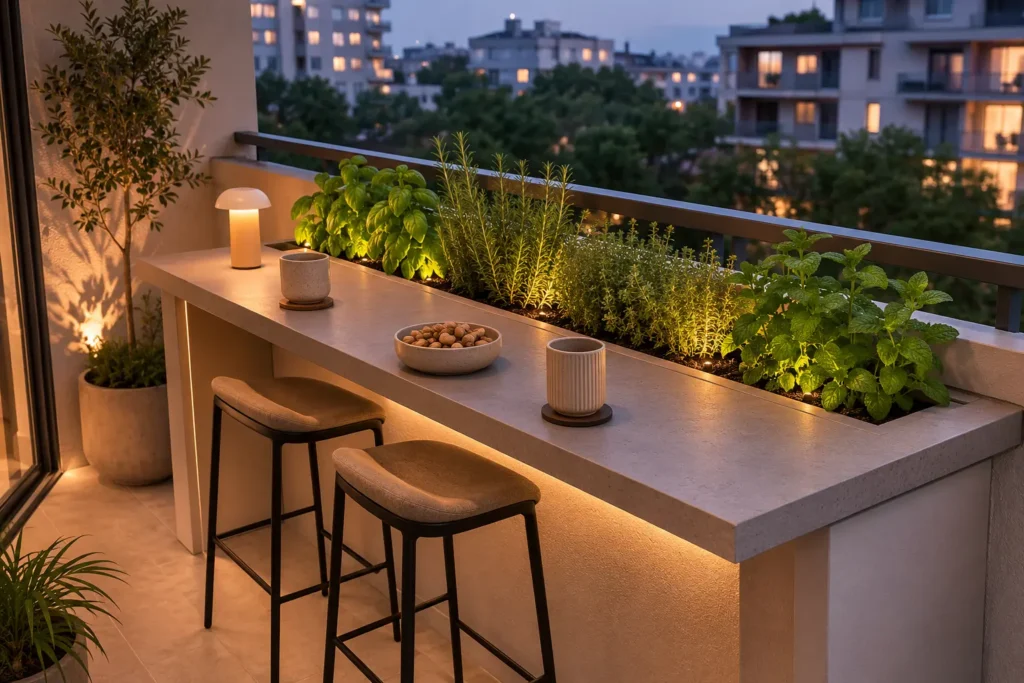
Turn a narrow balcony counter into a garden feature by incorporating a recessed herb channel directly into the surface. Run a slim planter through the center or along the back edge of a railing-height bar and fill it with herbs such as rosemary, basil, thyme, or mint.
Add one or two compact stools that can slide beneath the counter when they are not being used. A small rechargeable lamp makes the setup useful for evening drinks or casual meals. Instead of dedicating separate floor space to an herb garden, the plants become part of the furniture itself. This keeps the balcony functional while giving the entire space a distinctive, modern look.
8. Create a Living Railing Cascade
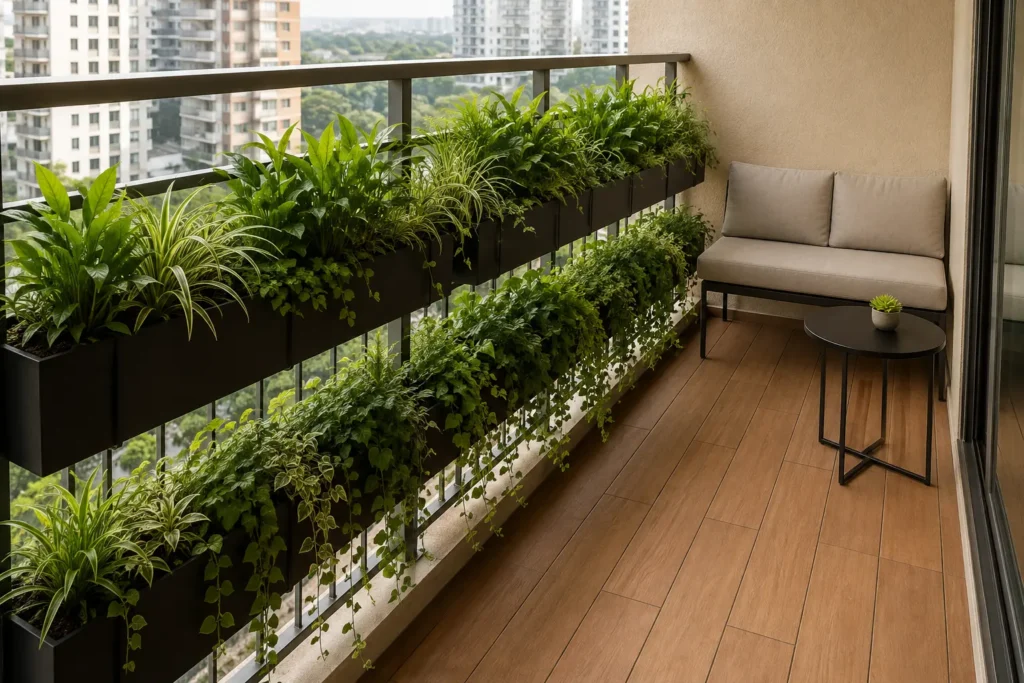
Use the railing vertically by installing two narrow rows of planters at staggered heights on its interior side. Place upright grasses, herbs, or leafy plants in the upper row and cascading varieties in the lower row so greenery falls naturally toward the floor.
The layered effect produces much more visual fullness than a single railing box while keeping the actual balcony floor clear. Leave enough space between plants so the arrangement feels designed rather than overgrown. A small loveseat or pair of chairs can then sit against the opposite wall without competing with floor planters. This technique works particularly well on very narrow balconies where circulation space is limited.
9. Build a Split-Level Plant Landscape
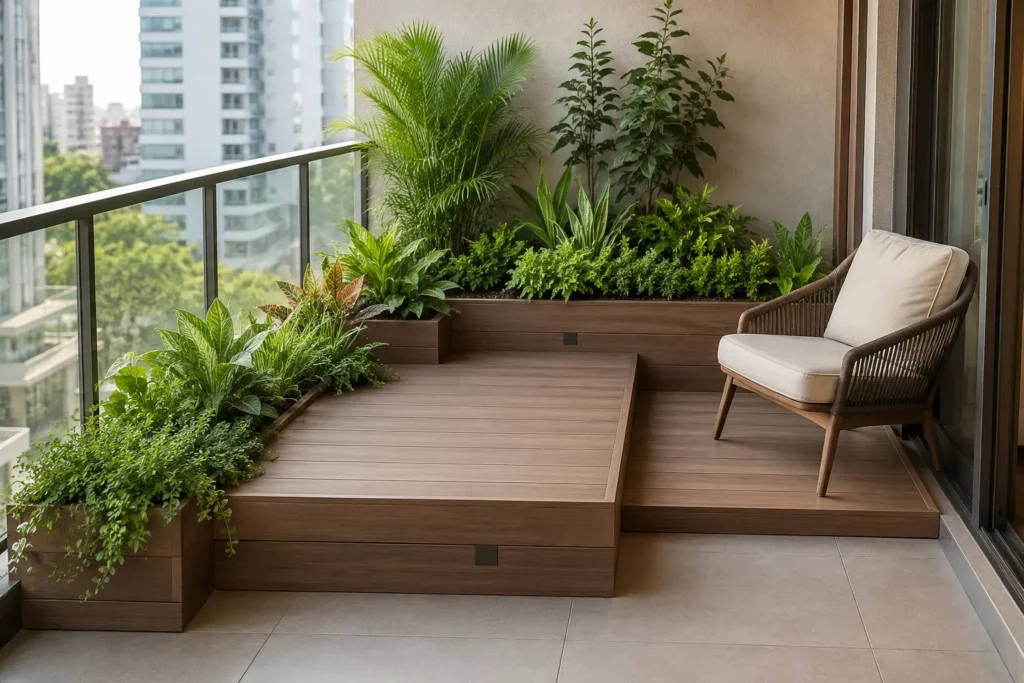
Instead of relying on traditional tiered plant stands, change the landscape itself with two broad removable platforms at different heights. Cover them in weather-resistant wood-look decking or another lightweight outdoor material and arrange planters so some sit directly on the balcony floor while others rise from the platforms.
This creates visual depth and gives smaller plants more presence without filling the space with shelves. Use one platform to support greenery and the other as a low seating or display edge if the structure is designed safely. Keeping all planters within one coordinated palette makes the levels read as a single landscape rather than separate pieces of furniture.
10. Grow a Mini Balcony Forest
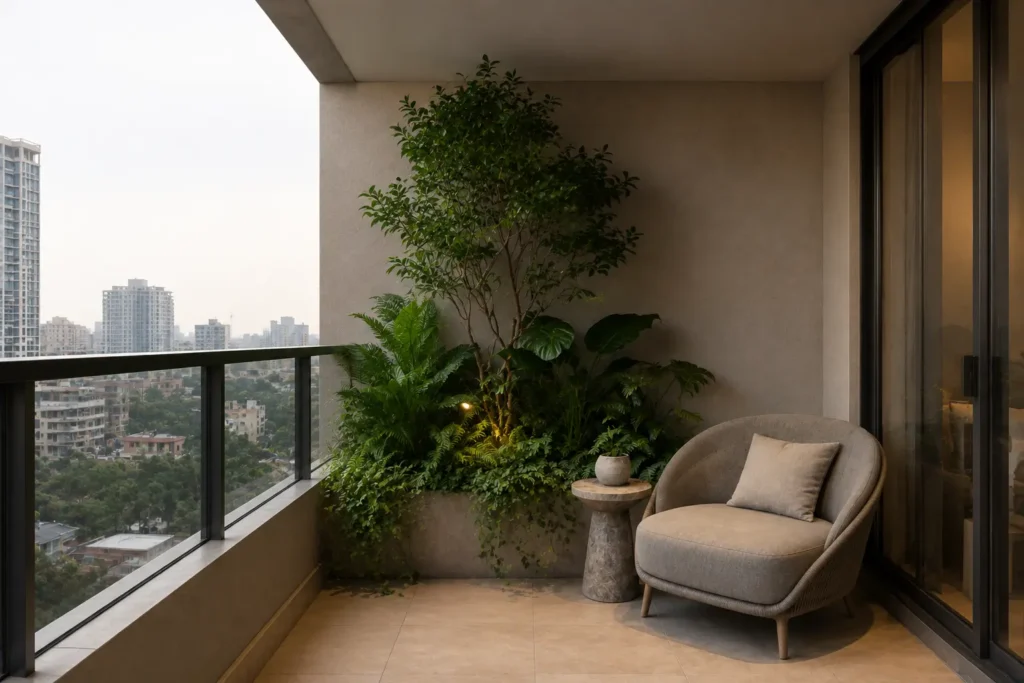
Re-create the layered structure of a forest in one balcony corner. Start with the tallest element, such as a dwarf tree or large upright plant, then place medium leafy plants in front of it. Finish the lowest level with ferns, ground-cover-style plants, and trailing foliage that softens the planter edges.
Concentrating the greenery in one lush zone leaves enough open space for a chair or small table while still making the balcony feel immersive. Use planters in similar finishes so the foliage, rather than the containers, becomes the focus. This method works especially well when you want a dramatic garden feeling without sacrificing the entire floor to plants.
11. Frame the City View With Plants
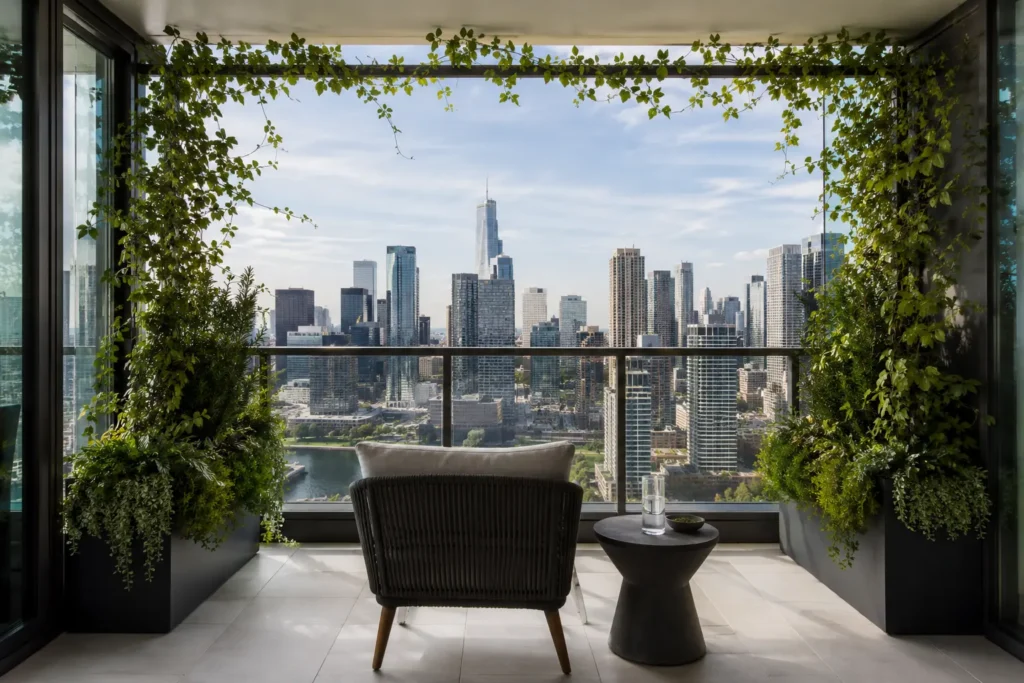
If your apartment has an attractive skyline, sunset, courtyard, or tree view, avoid covering it with dense greenery. Instead, place taller plants along both sides of the balcony and keep the central railing area open. Light climbing foliage can be trained across the upper edge to complete a subtle botanical frame.
Angle the main chair or loveseat toward the open view and add only a small drink table. The plants create privacy around the edges while making the view itself feel like part of the garden design. This is a particularly effective approach for high-rise balconies because it celebrates the urban setting rather than trying to hide it.
12. Add a Portable Greenhouse Cabinet
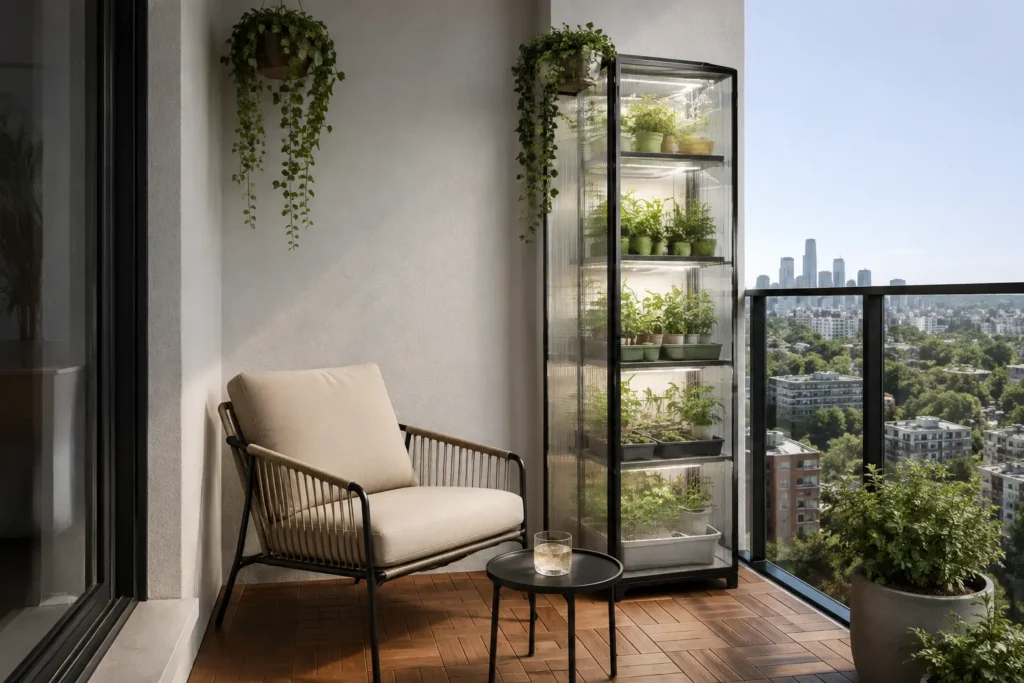
Transform one empty corner into a compact growing station with a narrow transparent greenhouse-style cabinet. Use it to protect herbs, propagation trays, or plants that prefer a more controlled environment. Keep the cabinet visually light by choosing clear panels and a slim frame.
Place one trailing plant on the top so greenery spills over the structure and helps it blend into the balcony garden. A small chair nearby turns the corner into a relaxing plant-care nook rather than a purely functional storage area. This concept works especially well for apartment gardeners who enjoy growing delicate plants but do not have space for a full greenhouse.
13. Plant a Pocket Prairie
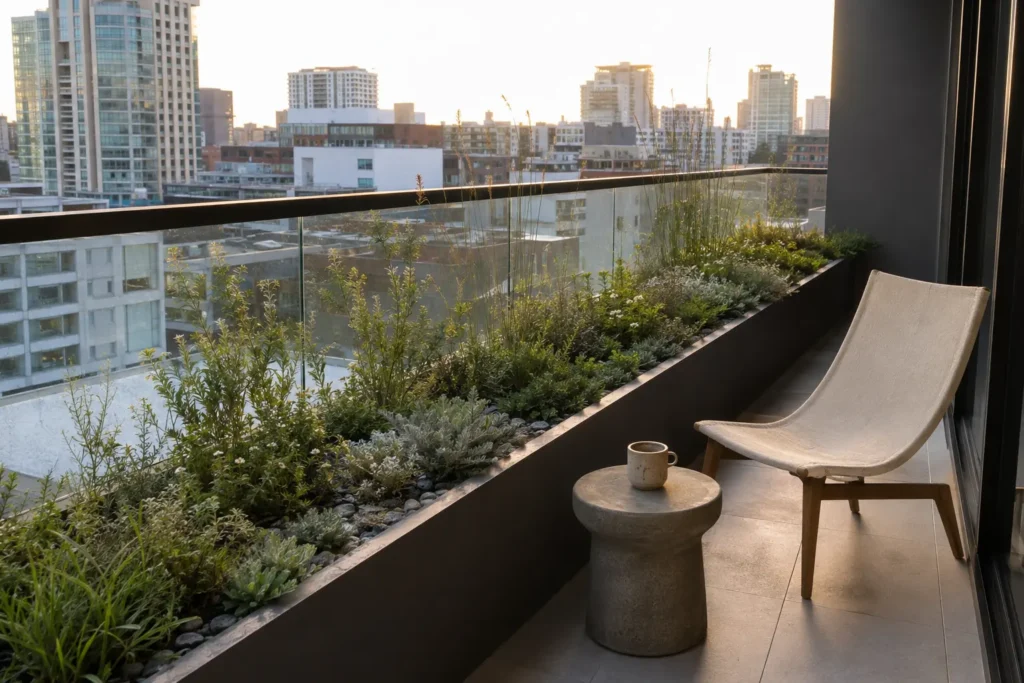
Give a modern apartment balcony a softer, more natural character with one continuous prairie-style planter. Combine ornamental grasses with airy flowering plants and foliage that moves gently in the breeze. Instead of arranging plants in formal rows, allow different heights and textures to blend together naturally.
Keep the furniture simple, such as one low-profile lounge chair and a small stone-look table. The flowing planting creates movement and makes the garden feel larger than its footprint. This is a strong alternative to tightly clipped or tropical balcony gardens because it introduces a relaxed landscape feeling while still looking intentional when the color palette is controlled.
14. Create an Evening Moon Garden
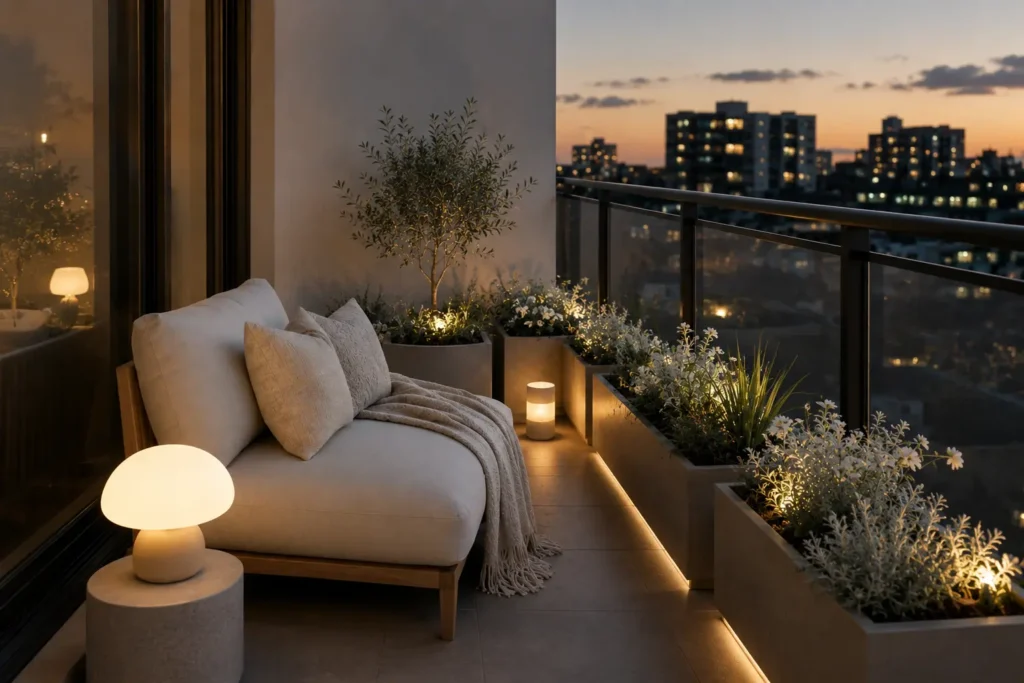
Design a balcony that becomes especially beautiful after sunset by focusing on pale plants and warm lighting. Use white flowering plants, silver-toned foliage, soft green leaves, and pale ornamental grasses in a small group of coordinated planters.
Add a rechargeable mushroom lamp or discreet warm wall light near the seating area. The lighter foliage reflects evening light and becomes more noticeable as the surroundings get darker. Keep cushions and furniture in cream, taupe, or light wood tones to support the calm atmosphere. This creates a balcony garden that feels useful beyond daylight hours and offers a peaceful place to unwind after a busy day.
15. Continue the Garden Indoors
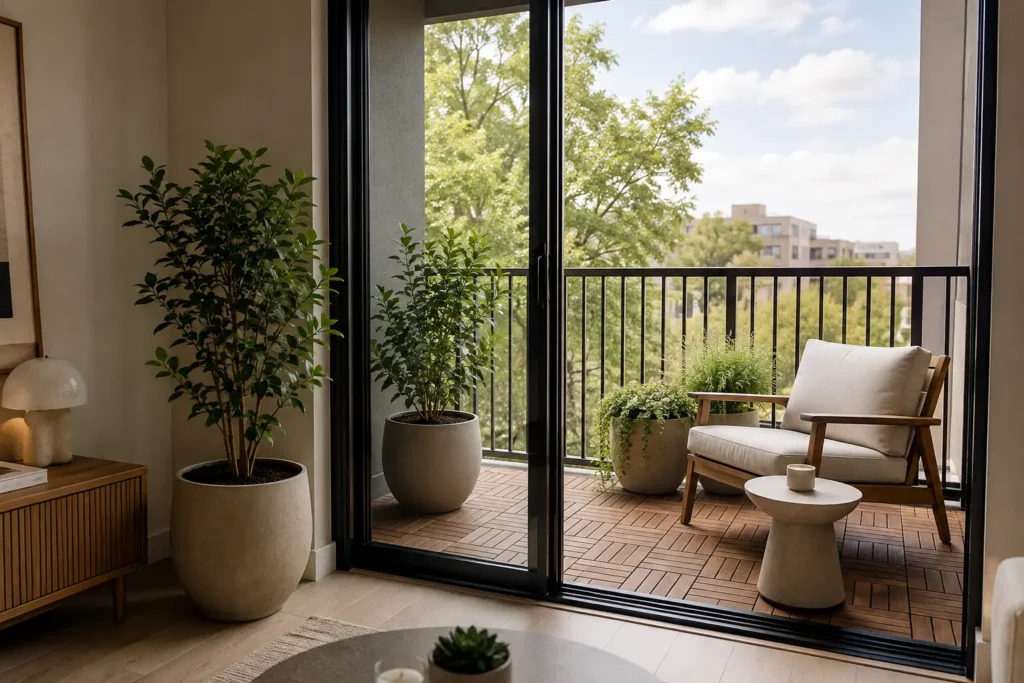
Make a tiny balcony appear larger by visually connecting it with the room inside. Place a tall indoor plant near the sliding glass door and position a similar plant directly outside on the same sightline. Repeat the same planter finish, wood tone, or neutral color on both sides of the doorway.
When the doors are open, the greenery will appear to continue from the living room into the balcony rather than stopping at the glass. Add a compact outdoor seat and keep the balcony floor relatively open so the transition remains clear. This technique is particularly effective in studio apartments and small living rooms where the balcony can function as an extension of the interior.