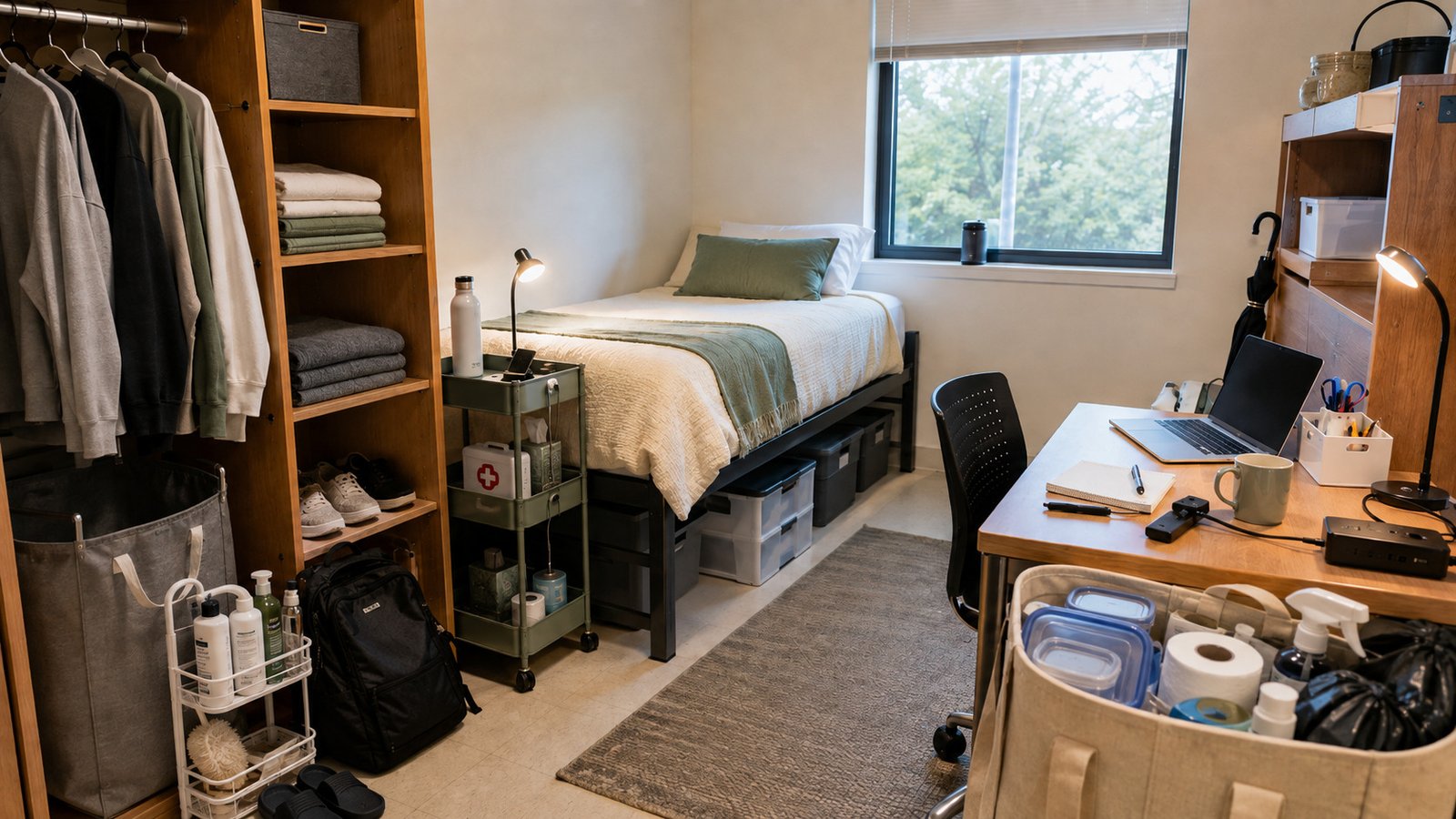
Moving into a dorm has a funny way of making you remember the comforter and forget the scissors you need to open its box. A useful college dorm essentials checklist should cover the small, practical items that become important the minute your parents leave—not fill your room with products that looked cute in a shopping haul.
This guide focuses on what you’ll actually use: sleep basics, shared-bathroom gear, laundry supplies, charging equipment, compact storage, cleaning tools, and those easy-to-forget move-in items. The goal is a dorm that works well from your first night without wasting money or precious floor space.
1. Build a Twin XL Sleep Setup That Doesn’t Waste Half the Dorm Budget
Start by confirming the mattress size with your housing department; Twin XL is common in US residence halls, but you shouldn’t assume. Pack two fitted sheet sets, a washable mattress protector, comforter or duvet, one or two supportive pillows, pillow protectors, and an extra lightweight blanket. Add a mattress topper only if you know you’ll need the extra cushioning.
Keep decorative layers restrained. A bed covered with seven throw pillows may photograph well, but those pillows usually end up on the floor every night. Two or three coordinated bedding colors make the largest piece of furniture in the room look finished without creating more stuff to manage.
Useful sleep checklist:
- 2 fitted sheet sets
- Mattress protector
- Mattress topper if needed
- Comforter or duvet
- 1–2 sleeping pillows
- Pillow protectors
- Extra pillowcases
- Lightweight blanket
- Sleep mask
- Earplugs
- Clip-on reading light
- Sheet straps if your fitted sheet tends to slip
Measure the clearance beneath a raised bed before ordering storage containers. Dorm furniture dimensions vary more than online dorm-shopping lists suggest.
2. Turn the Bedside Gap Into a Vertical Nightstand Instead of Adding Furniture
A full-size nightstand rarely earns its footprint in a dorm. Use a slim three-tier rolling cart, a bed-mounted shelf, or a fabric bedside caddy instead. The setup should hold only what you reach for after getting into bed: your phone, glasses, water bottle, medication, lip balm, tissues, and perhaps a book.
If you choose a cart, keep the upper tier nearly empty so a water bottle or phone can be set down without knocking over toiletries. Use the lower tiers for less-used supplies.
Don’t forget:
- Bedside caddy or narrow cart
- Water bottle
- Glasses case
- Small tissue pack
- Charging cable
- Medication you routinely need
- Clip-on light
- Small step stool if the bed is lofted high
A narrow vertical solution preserves the walking path between beds, desks, and wardrobes, which matters far more once two people are using the room every day.
3. Create a Desk Landing Strip for Class Gear, Charging and Daily Essentials
Your dorm desk needs open working space more than it needs matching organizers. Reserve one side for a small desk lamp, pen cup, charging point, and vertical file holder, then leave the center open for your laptop and textbook.
A shallow tray can hold your student ID, keys, earbuds, and other small items that tend to disappear beneath notebooks. Avoid wide desktop drawer units unless you’ve measured the surface first; many residence-hall desks are surprisingly shallow.
Desk essentials worth packing include:
- Pens and pencils
- Highlighters
- Permanent marker
- Sticky notes
- Notebook
- Scissors
- Clear tape
- Stapler and staples
- Paper clips
- File folder
- USB flash drive
- Calculator if your courses require one
- Laptop mouse if you use one
- Spare batteries for devices that need them
The permanent marker and scissors are especially useful on move-in day, when boxes, storage bins, and cables need labeling or opening.
4. Plan the Power Setup Before Plugging In Every Device
Limited outlets become frustrating quickly when you have a phone, laptop, watch, headphones, lamp, and other devices to charge. Bring a residence-hall-approved surge protector, a multi-port USB charger, cable clips, and at least one spare charging cable.
Check your school’s housing rules before buying extension cords or high-wattage appliances. Some residence halls prohibit certain power strips, adapters, heating devices, or extension cords entirely.
Useful electronics checklist:
- Phone charger
- Laptop charger
- Spare phone cable
- Extra-long charging cable
- Multi-port USB charger
- Approved surge protector
- Power bank
- Cable clips
- Headphones or earbuds
- Headphone adapter if required
- Ethernet cable if your residence hall supports wired connections
- HDMI cable if you’ll genuinely use one
Label expensive chargers before move-in. In a shared room, identical black or white charging blocks are surprisingly easy to mix up.
5. Use One Focused Reading Light and One Soft Ambient Light
Dorm ceiling fixtures can be harsh, especially late at night when your roommate is sleeping. A compact LED desk lamp gives you focused light for studying, while a small bedside or clip-on lamp can handle lower-level evening lighting.
Choose fixtures with a small footprint rather than adding a large floor lamp. If possible, pick adjustable lamps so the light can be aimed toward a book or desk instead of spilling across your roommate’s side of the room.
Pack:
- Adjustable desk lamp
- Clip-on reading light if useful
- Replacement bulb only if the fixture uses one
- Small flashlight
Warm-white bulbs generally feel softer in a bedroom than very cool white LEDs, which can make pale dorm walls look stark. Always check residence-hall rules before bringing plug-in decorative lighting.
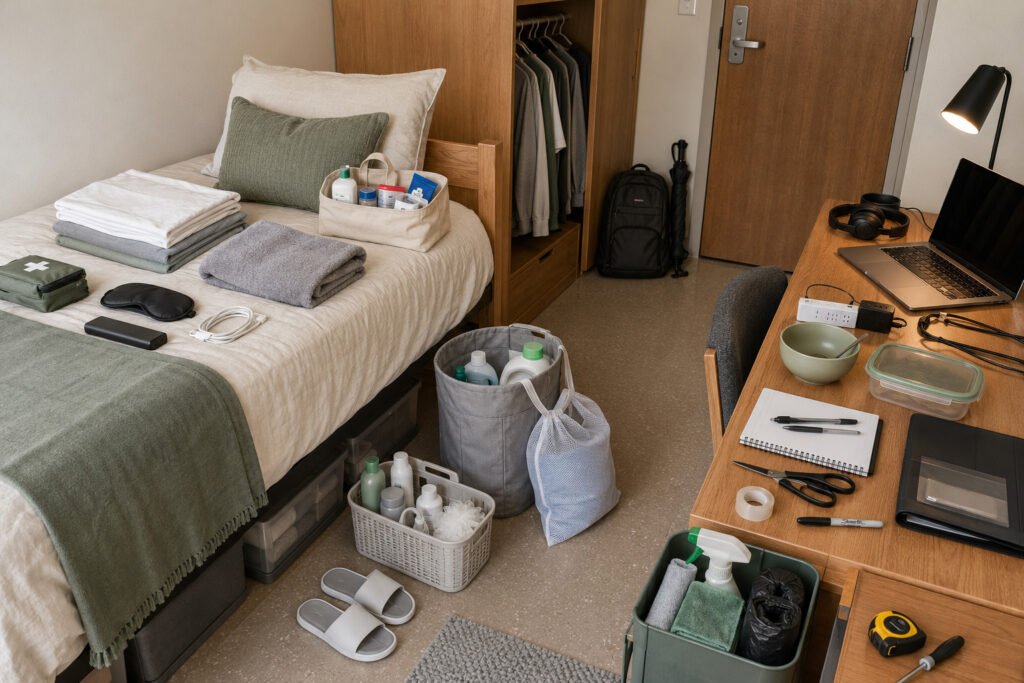
6. Build the Closet Upward Instead of Buying Another Clothing Rack
Dorm wardrobes usually need better organization, not more furniture. Slim nonslip hangers use less rod space than bulky plastic versions, while a hanging shelf unit can hold sweaters, pajamas, or folded workout clothes without taking floor area.
Use the highest shelf for items you don’t need daily and the most reachable section for the clothes you wear constantly. If your wardrobe has enough height and housing rules allow it, a removable second hanging rod may help with shorter garments.
Useful closet essentials:
- Slim hangers
- Hanging shelf organizer
- Shelf bins
- Shoe organizer if space allows
- Lint roller
- Sewing kit
- Safety pins
- Stain remover
- Umbrella
- Rain jacket
- Slippers
- Comfortable walking shoes
Also pack at least one presentable outfit for interviews, presentations, dinners, or campus events. It’s one of those things students often don’t think about during casual dorm shopping.
7. Make Under-Bed Storage Behave Like Built-In Drawers
The area below the bed is some of the most valuable storage space in a dorm, but random plastic tubs can make it harder to use. Measure the available height and depth first, then choose low rolling bins, zippered fabric boxes, or rigid containers that can slide out easily.
Assign each container one category. Keep extra bedding together, shoes together, and backup toiletries together instead of creating three mystery bins full of unrelated items.
Useful under-bed items include:
- Low storage bins
- Zippered fabric boxes
- Vacuum storage bags for bulky seasonal items
- Labels
- Bed risers only if the housing department specifically allows them
Don’t buy tall bins before seeing the room. Lofting hardware, bed frames, heating units, and built-in furniture can change the usable clearance.
8. Pack a Shower System You Can Carry in One Trip
A communal bathroom changes what “bathroom organization” means. Your toiletries need to travel down the hall, survive wet floors, and return to your room without leaking.
Choose a structured shower caddy with drainage holes and comfortable handles. Pack quick-drying towels, shower shoes, a robe, and smaller bottles instead of hauling full-size backups each time.
Communal bathroom checklist:
- Shower caddy
- Shower shoes
- 2 bath towels
- Hand towel
- Washcloths if you use them
- Bathrobe
- Shampoo and conditioner
- Body wash or soap
- Toothbrush and toothbrush cover
- Toothpaste
- Deodorant
- Razor
- Hairbrush or comb
- Hair ties and clips
- Nail clippers
- Tweezers
- Menstrual products if applicable
- Contact lens solution and case if needed
- Small waterproof pouch
- Wet-item bag
A robe is particularly useful in communal bathrooms because carrying clothes, towels, toiletries, and shoes at once gets awkward fast.
9. Choose Laundry Gear That Works on Stairs and Long Hallways
A rigid hamper may fit beautifully beside the wardrobe, but it becomes annoying if the laundry room is three floors away. A soft hamper with sturdy handles or a backpack-style laundry bag is easier to carry through hallways, elevators, and stairwells.
Pack only the laundry products you actually use. Huge detergent bottles are heavy and can leak; a compact bottle or detergent sheets may be easier to store.
Laundry checklist:
- Laundry hamper
- Portable laundry bag
- Detergent
- Stain remover
- Dryer sheets or dryer balls if used
- Mesh bag for delicates
- Lint roller
- Small sewing kit
- Safety pins
Bring quarters only if you’ve confirmed that your dorm’s machines still require them. Many campuses use cards or apps, so an old-fashioned roll of coins may simply become extra clutter.
10. Build a One-Shelf Snack and Drink Station Instead of a Mini Kitchen
Wait until you know what your school provides before buying half a kitchen department. If permitted, keep a mini fridge and food basics within one compact area rather than spreading snacks across your desk, dresser, and windowsill.
You rarely need a full dinnerware set. One microwave-safe bowl, one plate, one mug, and a basic utensil set are much easier to wash and store.
Practical food essentials:
- Reusable water bottle
- Microwave-safe bowl
- Plate
- Mug
- Fork
- Spoon
- Butter knife
- Food containers
- Zip-top bags
- Chip clips
- Can opener
- Bottle opener if needed
- Paper towels
- Dish soap
- Sponge
- Reusable shopping tote
A mini fridge and microwave should only come after you confirm that they’re allowed and whether your roommate is already bringing them.
11. Store Cleaning Supplies in One Grab-and-Go Caddy
Dorm rooms get dusty quickly, and move-in day surfaces aren’t always ready for bedding and clothes straight away. Keep cleaning supplies inside one small handled caddy so you can pull everything out at once instead of hunting beneath the bed.
A basic kit is usually enough:
- Multipurpose cleaner suitable for dorm surfaces
- Disinfecting wipes
- Microfiber cloths
- Paper towels
- Trash bags
- Dish soap
- Sponge
- Rubber gloves
- Small broom and dustpan
- Compact vacuum if practical and permitted
- Small trash can
Trash bags are easy to forget and especially useful during move-in because packaging starts accumulating almost immediately.
Avoid stocking six specialized cleaning sprays. Limited dorm storage makes one reliable multipurpose product far more practical.
12. Make Damage-Free Wall Organization Do Real Work
Before attaching anything to a wall, read your housing rules. Some residence halls allow certain removable hooks, while others restrict adhesive products because they can peel paint from older walls.
Use approved wall organization for objects you handle every day rather than covering the room with decorative accessories. A few hooks near the door can hold a backpack, robe, lightweight tote, or headphones without stealing floor space.
Useful items may include:
- Residence-hall-approved removable hooks
- Lightweight hanging organizer
- Small calendar
- Key hook
- Removable cable clips
Avoid buying heavy mirrors or shelves with plans to “figure out” installation once you arrive. Temporary mounting products have weight limits, and painted cinder block or textured dorm walls can be difficult to work with.
13. Create a Door-Side Drop Zone for Everything Students Lose
Keys, student IDs, earbuds, and wallets need one predictable place. A shallow tray on the dresser or desk paired with an approved hook for your backpack can stop small essentials from disappearing beneath blankets and notebooks.
Keep the zone compact. It should hold only what you need while leaving the room, not become storage for unopened mail, receipts, hair products, and random campus flyers.
Don’t forget:
- Lanyard or keychain
- Student ID holder
- Small tray for keys and wallet
- Backpack
- Reusable tote
- Compact umbrella
- Sunglasses
- Water bottle
Place this setup near the door if your furniture arrangement allows it. It’s a small organizational decision that becomes useful several times a day.
14. Pack a Small Health, First-Aid and Personal-Care Box
Dorm shopping tends to focus on bedding and storage, which makes basic health supplies surprisingly easy to overlook. Keep a clearly labeled container with first-aid items, personal medications, and the products you’d normally reach for when you feel unwell.
Include:
- Adhesive bandages
- Antiseptic wipes
- Gauze
- Medical tape
- Thermometer
- Cold pack
- Prescription medications
- Medication organizer if used
- Personal OTC medications you normally use
- Allergy medication if relevant
- Hand sanitizer
- Tissues
- Spare toothbrush
- Contact lenses and solution if applicable
- Spare prescription glasses if you have them
Store medications according to their instructions and your residence-hall policies. Keep prescription information accessible rather than buried inside a moving box.
15. Finish With a First-24-Hours Move-In Bin That Never Goes Under the Bed
Your first-night bin may be the most useful container you pack. Put everything you’ll need before the room is fully unpacked into one obvious tote and keep it on top of the pile during the drive.
Pack:
- Fitted sheet
- Pillow
- Blanket
- Pajamas
- Change of clothes
- Toothbrush and toothpaste
- Shower supplies
- Towel
- Shower shoes
- Regular medication
- Phone charger
- Power bank
- Water bottle
- Snacks
- Tissues
- Trash bags
- Cleaning wipes
- Scissors
- Box cutter
- Packing tape
- Permanent marker
- Measuring tape
- Screwdriver
- Small flashlight
Keep your student ID, driver’s license or state ID, health insurance information, housing paperwork, parking information, emergency contacts, and other important documents separately with you.
You don’t want your phone charger, medication, or sheets sitting underneath six identical boxes when you’re exhausted at the end of move-in day.
What to Check Before You Buy Dorm Supplies
Start with your college housing website instead of a shopping cart. Confirm the mattress size, room dimensions if available, included furniture, closet configuration, floor type, appliance restrictions, wall-mounting rules, and what you share with your roommate.
Coordinate larger items before either person buys them. A mini fridge, microwave, full-length mirror, vacuum, trash can, water-filter pitcher, and basic tool kit rarely need to be duplicated. Waiting until you’ve seen the actual room can also prevent expensive mistakes with rugs, drawer units, storage cubes, and under-bed bins.