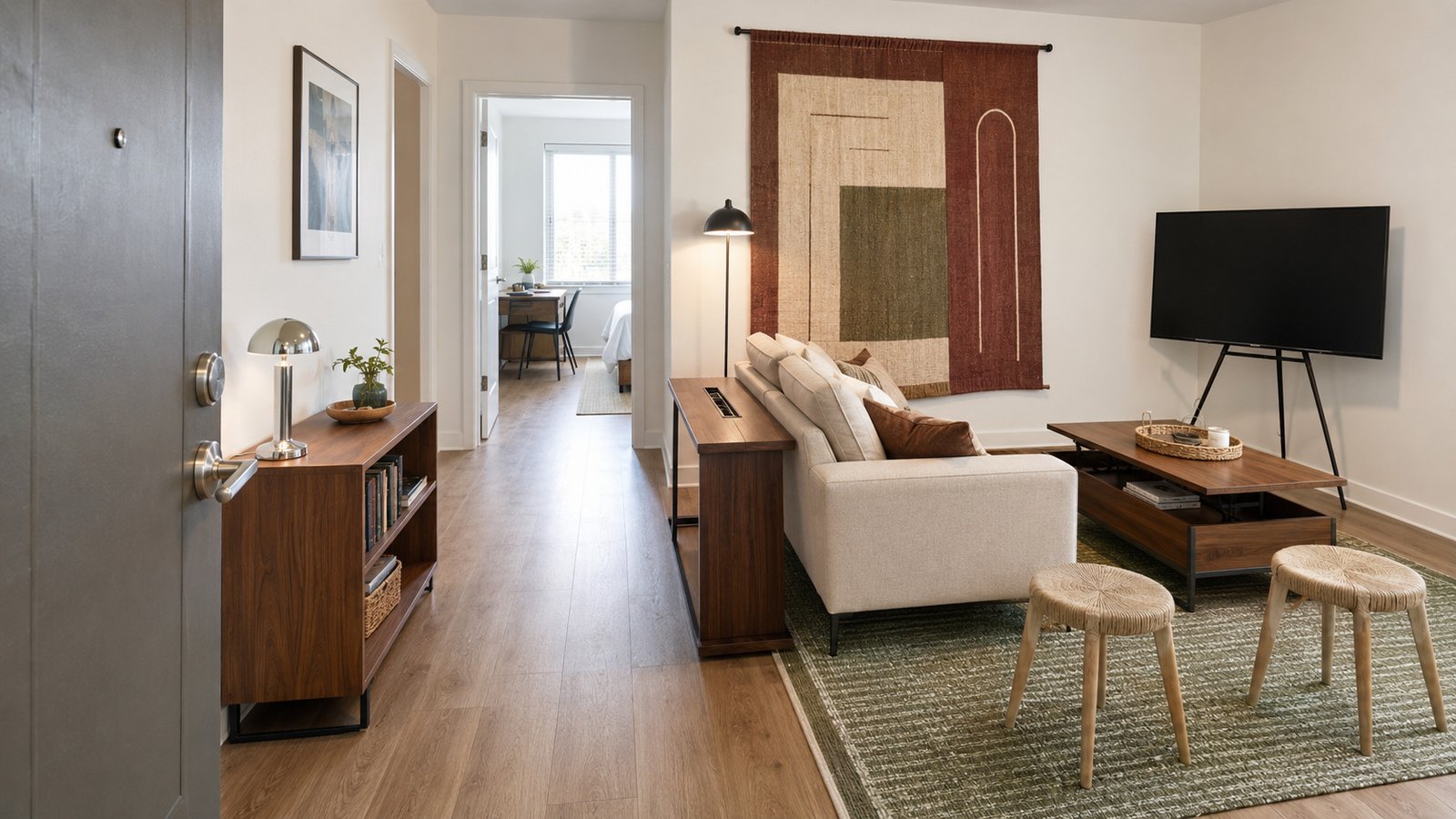
A college apartment living room often gets furnished in one rushed weekend, then spends the rest of the lease revealing every decision that wasn’t considered. Afternoon glare covers the television, charging cords cross the floor, and furniture that looked compact online overwhelms the actual room.
This first-timer’s guide focuses on the less obvious choices that prevent those problems. You’ll learn how to plan around changing daylight, roommates, spills, noise, rental damage and the next move—while still creating a living room that feels pulled together rather than temporary.
Photograph the Room at Three Different Times Before Choosing the Layout
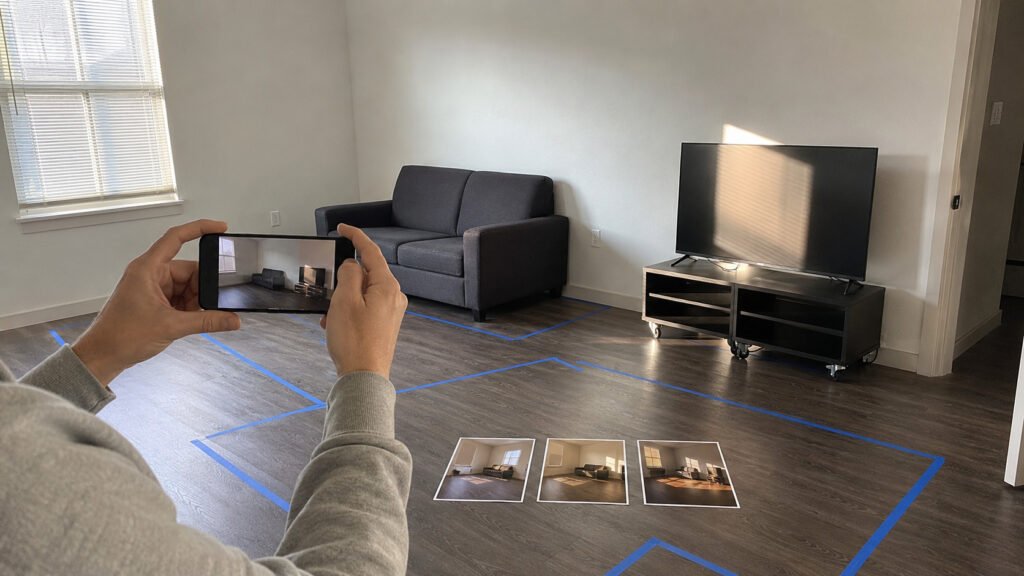
Before unpacking furniture, photograph the empty room in the morning, afternoon and evening. Note where direct sun hits the floor, which wall develops television glare and which corners become dark once the sun moves behind another building.
Arrange the sofa and screen only after comparing the photos. A television opposite a bright window can be nearly unwatchable in the afternoon, while a sofa placed against a backlit wall makes video calls look shadowy. If the layout has limited options, light-filtering curtains can soften glare without making the room feel closed in.
Match the College Apartment Living Room Palette to the Floor You Cannot Change
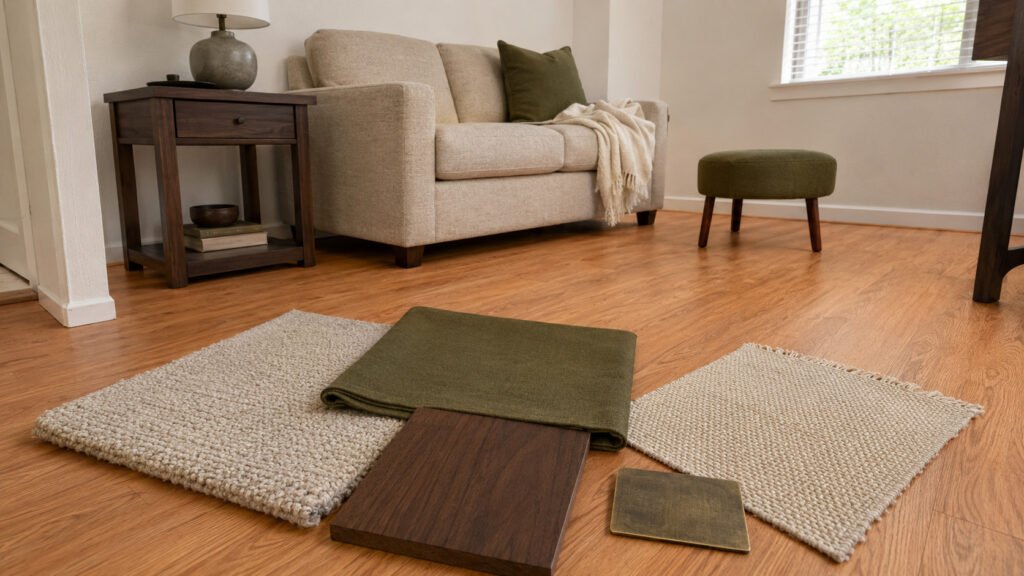
The floor is usually the largest surface you can’t alter, so use it as the starting point for your color palette. Cool gray carpet looks more intentional beside oatmeal upholstery, cobalt accents and chrome, while orange-toned laminate settles down around cream, olive and dark walnut.
Order fabric swatches and view them directly on the floor during daylight and under your lamps. Beige upholstery can turn yellow beside warm flooring, and blue-gray fabric may look icy beneath cool LED bulbs. Small swatches expose these undertone clashes before you buy an entire sofa or rug.
Build a Living Room That Can Split Up at Move-Out
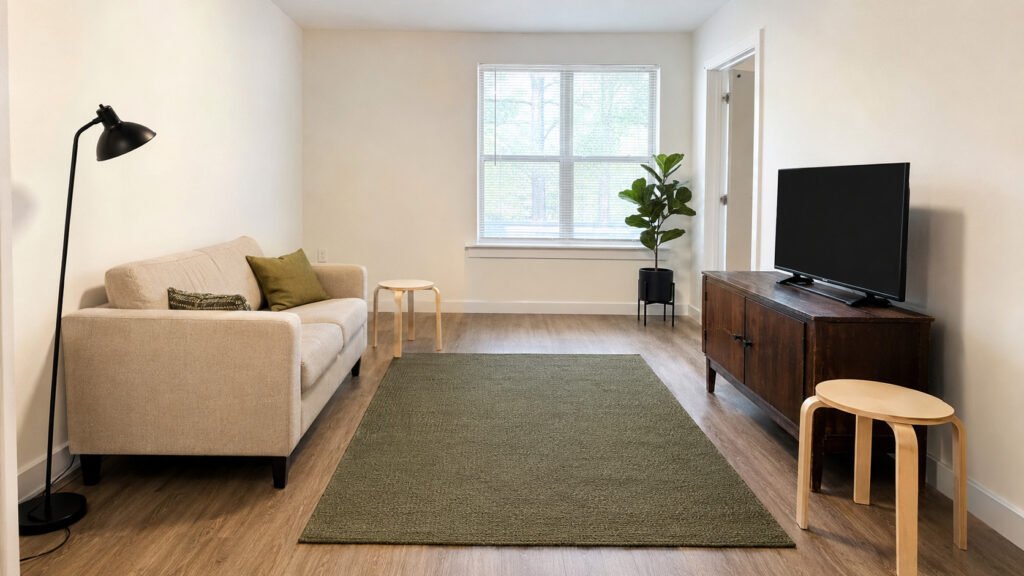
Avoid buying a complete matching furniture set with several roommates. Instead, assign clear ownership: one person buys the sofa, another owns the media cabinet, and someone else purchases the rug and lamps. A shared palette will make separately owned pieces look coordinated.
Record each purchase in a shared note and save receipts, including delivery fees. When the lease ends, everyone can take complete, useful pieces rather than debating how to divide a large group purchase. Repeating one wood tone or accent color across the individually owned items creates enough visual continuity.
Give the Sofa a Hidden Charging Spine
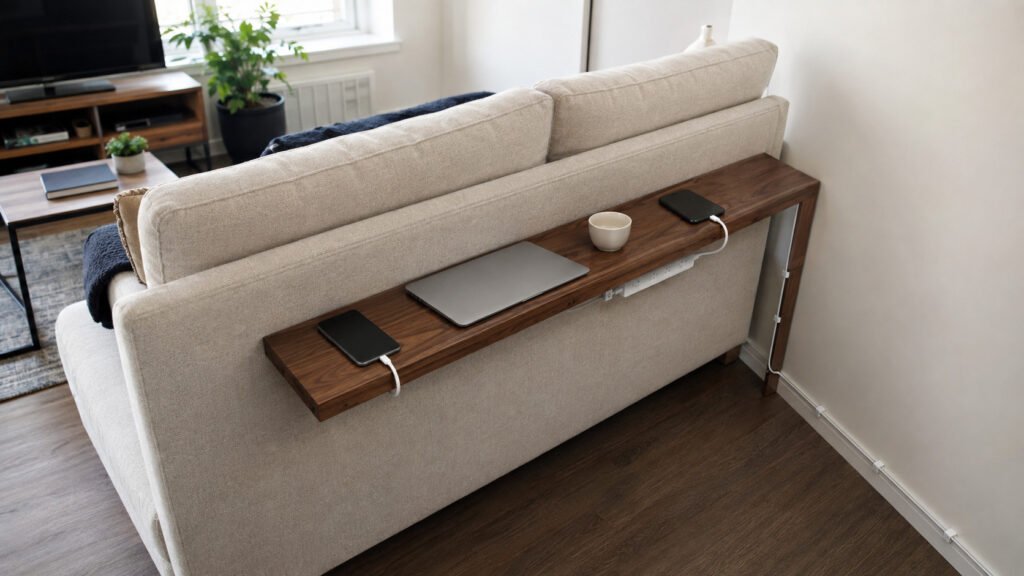
If the room allows it, pull the sofa 8 to 10 inches from the wall and place a narrow console behind it. The surface can hold drinks and small lamps while a secured power strip underneath creates a shared charging station for phones, laptops and controllers.
Choose a console no taller than the sofa back so it disappears from the main sight line. Secure loose cords along the console legs and baseboard with removable clips, and don’t overload one outlet. This arrangement keeps cables away from the coffee table and stops roommates from moving furniture whenever they need a charger.
Create a Ten-Minute “Company Mode” Cabinet
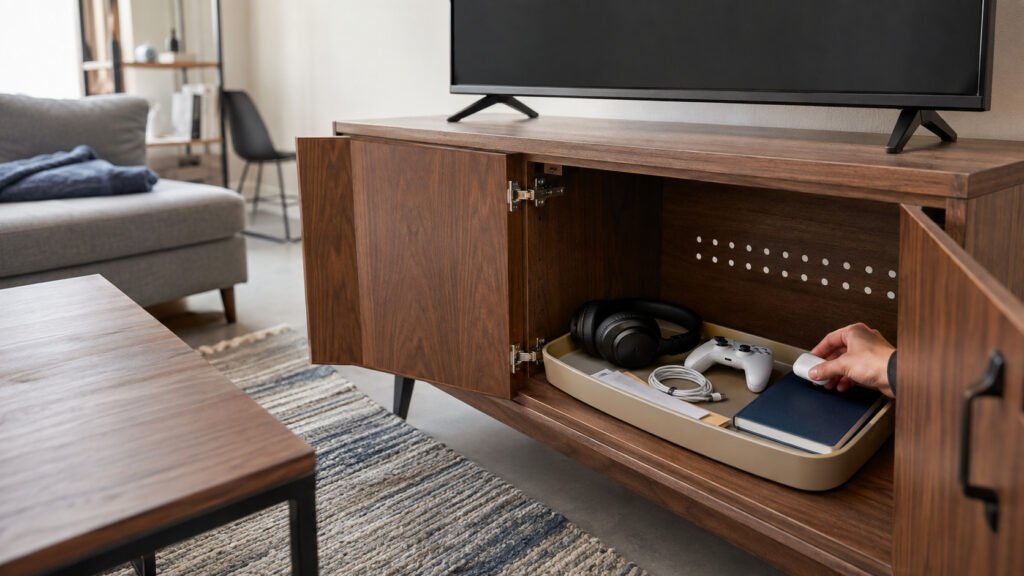
Leave one media-console compartment deliberately empty instead of filling every inch on move-in day. When friends arrive unexpectedly, use it to hold notebooks, mail, headphones, remotes and other loose items that usually spread across the seating area.
A shallow tray inside keeps small objects from disappearing at the back. This isn’t permanent storage, so return everything to its proper place after guests leave. The empty compartment gives the room a fast reset without creating hidden piles in bedrooms, and clear tabletops make affordable furnishings appear calmer and more considered.
Use a Drop-Leaf Table as the Sofa Console
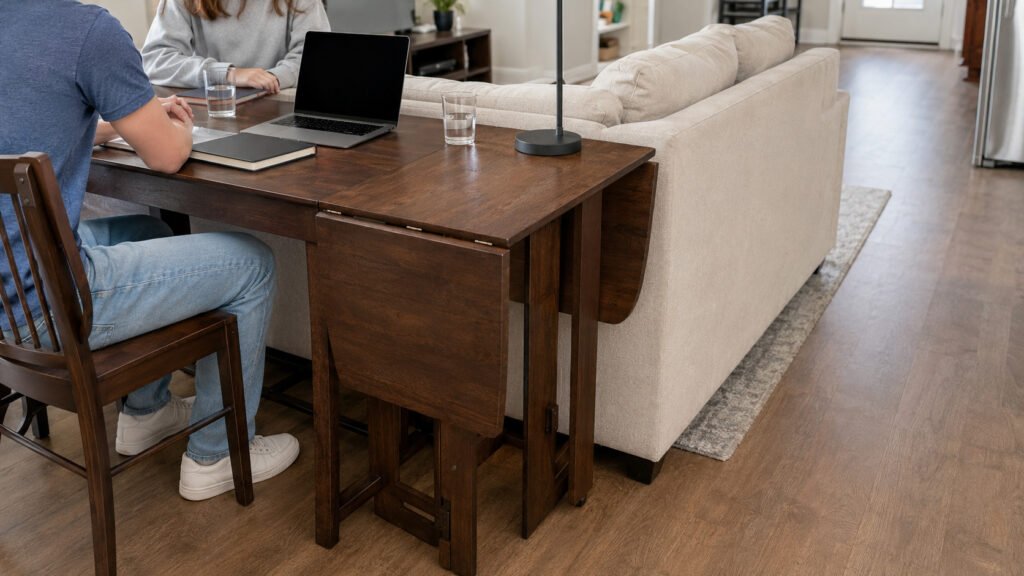
A narrow drop-leaf table can replace a decorative console that performs only one job. Keep it closed behind the sofa or along a side wall for a lamp and charging tray, then open it for group studying, takeout dinners or game night.
Check the opened depth before buying and maintain a 30- to 36-inch route through the room whenever possible. A gateleg design offers better support than a lightweight folding table, but its hinges and legs should feel firm rather than wobbly. Secondhand solid-wood versions often wear better than inexpensive particleboard with thin printed finishes.
Turn a Twin Headboard Into an Upholstered Wall Panel
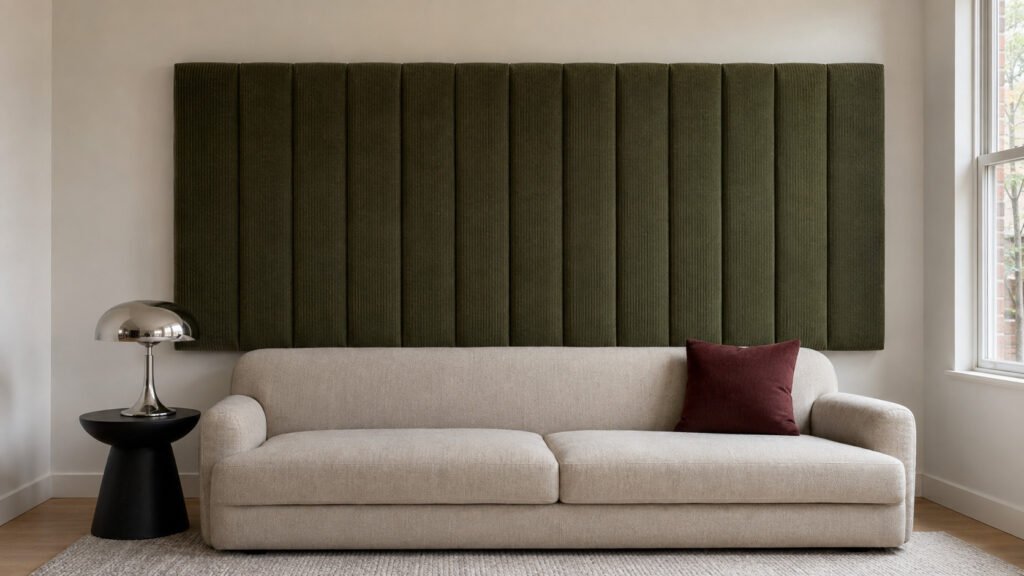
A twin-size upholstered headboard can create a broad panel of color behind a plain sofa. Choose channel-tufted linen-look fabric, corduroy or a tightly woven neutral rather than shiny velvet, which tends to show pressure marks and handprints.
Use a freestanding model with legs and secure it according to its anti-tip instructions; don’t rely on adhesive strips to support a heavy headboard. Position it slightly above the sofa back so the panel remains visible without resembling bedroom furniture. Later, it can move into a bedroom instead of becoming single-use wall decor.
Park the Television on a Mobile Easel Stand
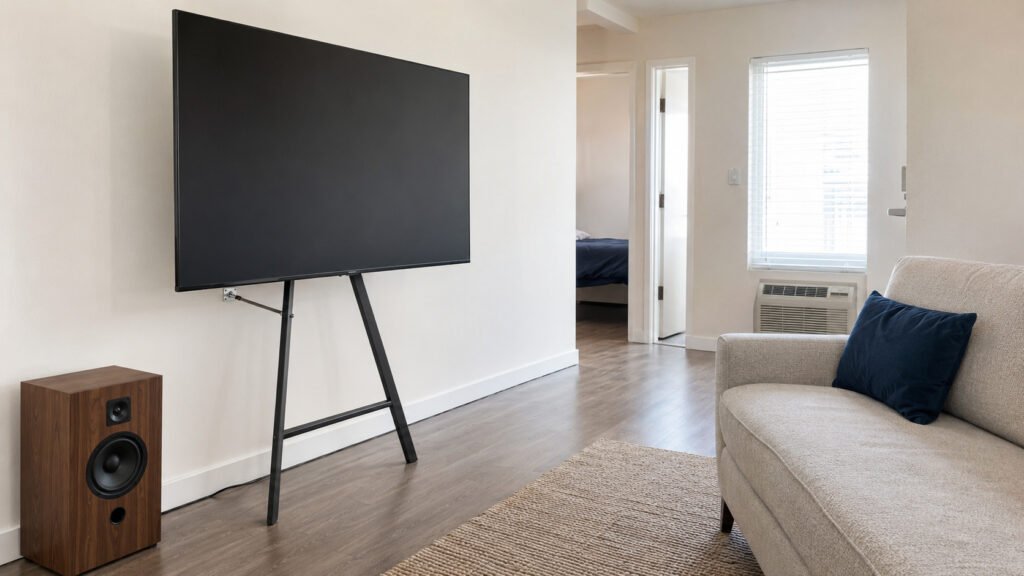
When wall mounting isn’t permitted, consider a VESA-compatible easel stand instead of a bulky entertainment center. Its open tripod-like shape leaves more flooring visible and lets you angle the screen away from window glare or toward different seats.
Confirm the stand’s screen-size and weight limits, tighten every fitting and use the supplied anti-tip system. Route the power cord down the rear leg so it doesn’t hang across the room. This option works best when you have a safe wall-adjacent parking position; it shouldn’t float in a busy walkway where bags or people can strike it.
Protect the Rug’s Spill Zone, Not Just the Entire Floor
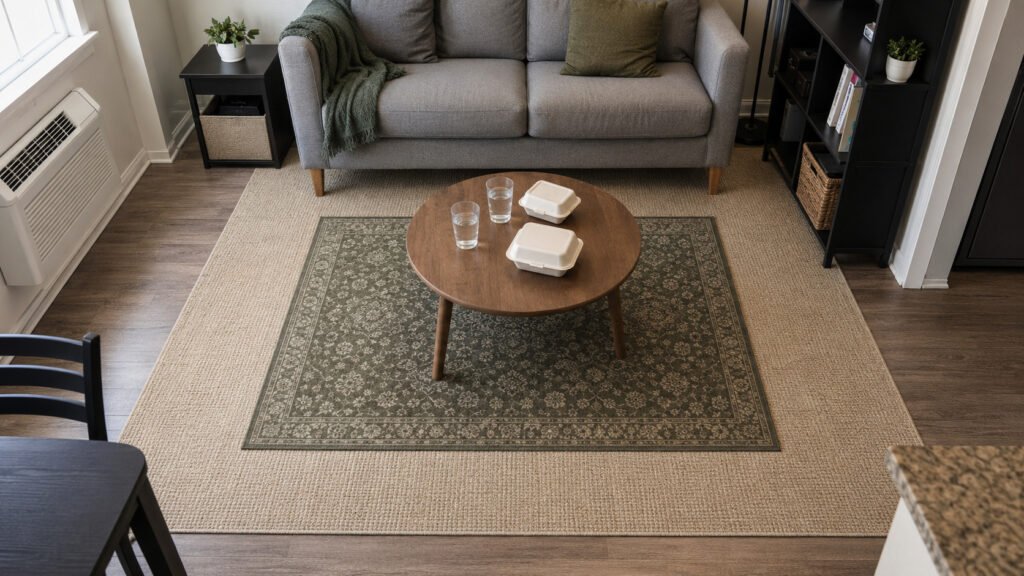
Most living-room spills happen between the sofa and coffee table, not around the room’s outer edges. Instead of spending the whole budget on a delicate oversized rug, use replaceable carpet tiles in that high-risk area or layer a small washable rug over a larger low-pile flatweave.
Use a proper nonslip pad and avoid thick layers that create curled edges. Medium-scale patterns in taupe, olive or charcoal hide minor marks better than solid cream. Natural jute photographs well but can hold stains and feel rough under bare feet, so it isn’t always the most forgiving choice for takeout-heavy student life.
Make a Low Bookcase Work as an Entry Wall
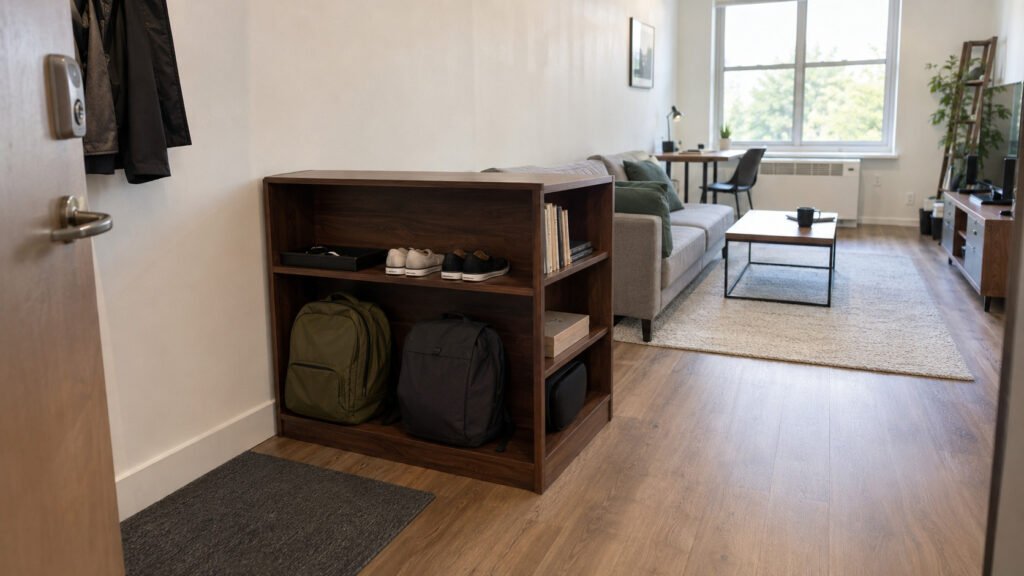
If the front door opens directly into the living room, place a low open bookcase perpendicular to the wall to suggest a small entry. Keep it close to sofa height so daylight and sight lines can travel across the room.
Use the entry-facing shelves for shoes, keys and bags, while the living-room side can hold games, books or speakers. Anchor the unit with the manufacturer’s approved hardware, especially if guests may lean on it. A tall bookcase would provide more storage, but it can make a compact rental feel divided, dark and difficult to supervise.
Absorb Echo Where Voices Actually Travel
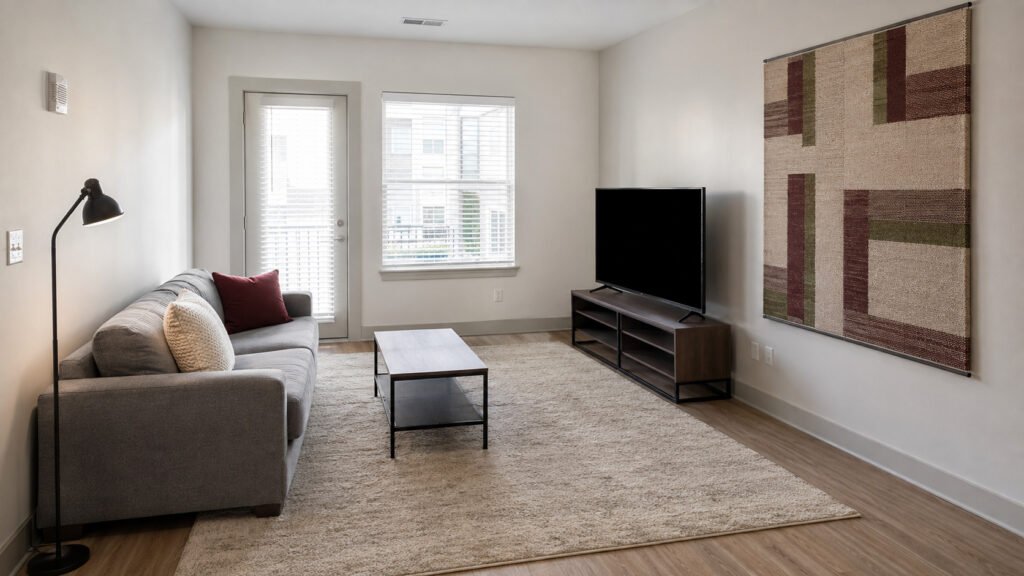
Empty college apartments often have hard floors, bare drywall and very little upholstered furniture, so voices and television sound bounce across the room. Place the main rug between the sofa and screen, then hang one large fabric panel on the wall opposite the seating area.
A quilt fragment, woven cotton cloth or lightweight padded textile can cover more sound-reflective surface than several small prints. Mount it with a slim removable system that suits its actual weight. The combination won’t soundproof the apartment, but it can reduce the sharp, hollow quality that makes group conversations feel louder than they are.
Install Invisible Security-Deposit Protection
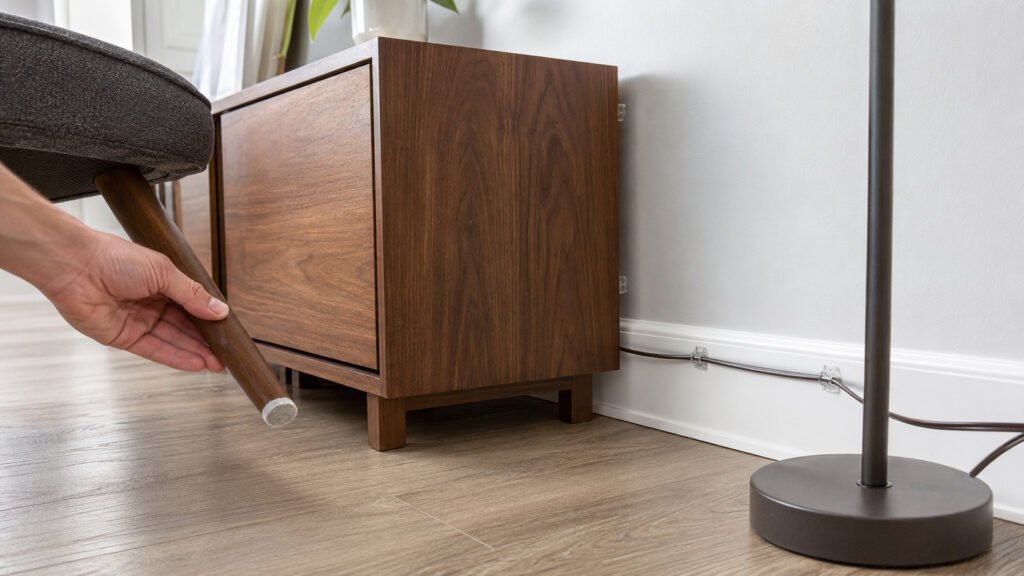
Protect contact points while arranging the furniture, not after scratches appear. Apply felt pads beneath chair legs, clear bumpers where a sofa or lamp might touch the wall, and removable cable clips along baseboards. Recheck the pads every few months because grit caught underneath can still scratch vinyl or laminate.
Avoid allowing rubber-backed items to sit on rental flooring without checking the care guidance; some materials can leave discoloration. These details disappear once the room is finished, yet they help prevent black wall marks, chipped paint and dragged-furniture scratches during daily use.
Make Every Statement Piece Fit Into a Car
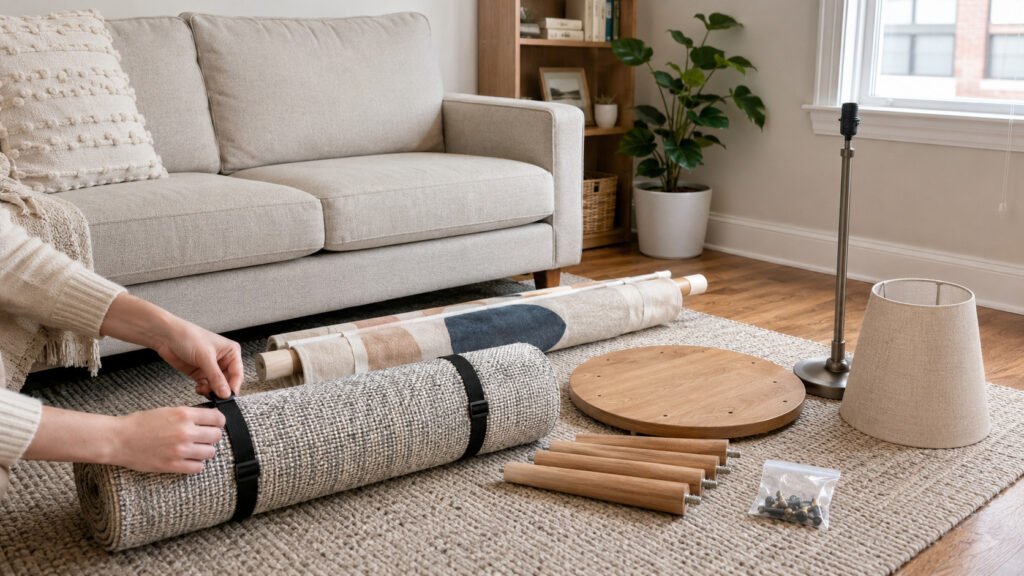
Let the room’s strongest visual elements come from pieces that fold, roll or disassemble. An oversized fabric hanging, flatweave rug, knock-down side table, removable lamp shade and coordinated cushion covers can give the room a clear identity without requiring a moving truck later.
Check how furniture comes apart before buying it, and keep bolts in labeled bags taped securely to the matching piece during a move. Skip large framed glass, one-piece media walls and fragile sculptural lamps. Apart from essential seating, the room should pack into manageable components that can work in a different layout next year.